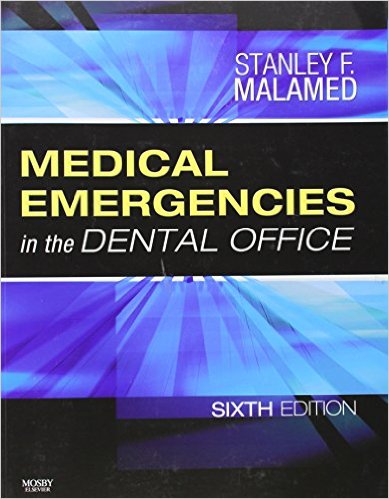
Medical Emergencies In the Dental Office 6th Edition by Stanley F. Malamed - Test Bank

Medical Emergencies In the Dental Office 6th Edition by Stanley F. Malamed - Test Bank   Instant Download - Complete Test Bank With Answers     Sample Questions Are Posted Below   Malamed: Medical Emergencies in the Dental Office, 6th Edition   Test Bank   Chapter 5: Unconsciousness: General Considerations              MULTIPLE CHOICE   …

$19.99

Medical Emergencies In the Dental Office 6th Edition by Stanley F. Malamed – Test Bank


Instant Download – Complete Test Bank With Answers


Sample Questions Are Posted Below


Malamed: Medical Emergencies in the Dental Office, 6th Edition


Test Bank


Chapter 5: Unconsciousness: General Considerations


           MULTIPLE CHOICE


  1. Which of the following steps should come last in management of unconsciousness?
a. P—position
b. A—airway
c. B—breathing
d. C—circulation
e. D—definitive care


  1. Which of the following is the most common cause of loss of consciousness in the dental environment?
a. seizures
b. orthostatic hypertension
c. hyperventilation
d. vasodepressor syncope
e. acute adrenal insufficiency


  1. Which of the following is a cardiogenic cause of syncope?
a. carotid sinus disease
b. pulmonary embolism
c. pheochromocytoma
d. hypertrophic cardiomyopathy


  1. Which of the following is not one of the three major categories of drugs used in dentistry?
a. analgesics
b. antianxiety agents
c. antiinflammatory agents
d. antibiotics


  1. Most adverse reactions to local anesthetics are:
a. emboli in the brain or heart
b. stress induced
c. overdose reactions
d. allergy


  1. _______________ is the most common mechanism producing syncope.
a. Transient ischemia
b. Bradycardia
c. Cerebral anoxia
d. Tardive dyskinesia


  1. __________ is the most common cause of loss of consciousness in humans.
a. Hypotension
b. Blunt force trauma
c. Tachypnea
d. Opioid overdose


  1. Physiologic disturbances that decrease the blood supply to the brain include:
a. constriction of the peripheral arterioles
b. an increase in cardiac output
c. failure of normal peripheral vasoconstrictor activity
d. dilation of cerebral vessels as carbon dioxide is lost through hyperventilation


  1. The human brain uses about __% of the total glucose the body consumes.
a. 2
b. 20
c. 65
d. 90


  1. The unconscious victim should be positioned:
a. in the Trendelenburg position
b. with the brain below the heart
c. with the feet elevated slightly (a 10- to 15-degree angle)
d. with pillows under the head


  1. The only sign of adequate ventilation after performing head tilt–chin lift is:
a. hearing and feeling air against your (the rescuer’s) cheek
b. seeing the victim’s chest rise with each ventilation
c. observing respiratory monitoring devices
d. all of the above are signs of adequate ventilation


  1. Which of the following sounds associated with partial airway obstruction is cause for use of positive-pressure oxygen?
a. snoring
b. gurgling
c. wheezing
d. crowing

Chapter 5: Unconsciousness: General Considerations


MULTIPLE CHOICE


  1. ANS: E
  2. ANS: D
  3. ANS: D
  4. ANS: C


  1. ANS: B
  2. ANS: C
  3. ANS: A
  4. ANS: C
  5. ANS: C
  6. ANS: C
  7. ANS: A
  8. ANS: D

Additional information

Add Review

Your email address will not be published. Required fields are marked *