No products in the cart.

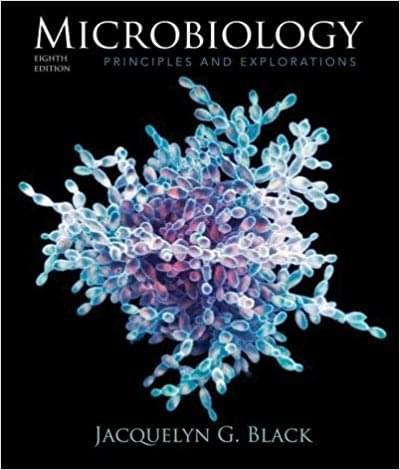
Microbiology Principles And Explorations 8th Edition by Jacquelyn G. Black - Test bank 

Microbiology Principles And Explorations 8th Edition by Jacquelyn G. Black - Test bank    Instant Download - Complete Test Bank With Answers     Sample Questions Are Posted Below   Chapter 5: Essential Concepts of Metabolism     Question Type: Multiple Choice     1) The synthesis of DNA, in which small nucleotides are …

$19.99

Microbiology Principles And Explorations 8th Edition by Jacquelyn G. Black – Test bank 


Instant Download – Complete Test Bank With Answers


Sample Questions Are Posted Below


Chapter 5: Essential Concepts of Metabolism


Question Type: Multiple Choice


1) The synthesis of DNA, in which small nucleotides are joined together to make a single large molecule would be most correctly described as being a/n ________ reaction.


  1. a) metabolic
  2. b) anabolic
  3. c) catabolic
  4. d) cytobolic


Answer: b


Difficulty: Easy

Learning Objective 1: LO 5.1 Explain how anabolism and catabolism are interrelated and metabolic processes that occur in cells.

Section Reference 1: Section 5.1 Metabolism: An Overview


2) Oxidation is defined as the ________ while reduction is the ________ .


  1. a) gain of electrons, loss of protons
  2. b) loss of electrons, gain of protons
  3. c) loss of electrons, gain of electrons
  4. d) loss of protons, gain of protons


Answer: c


Difficulty: Medium

Learning Objective 1: LO 5.1 Explain how anabolism and catabolism are interrelated and metabolic processes that occur in cells.

Section Reference 1: Section 5.1 Metabolism: An Overview


3) Photoautotrophs obtain energy from:


  1. a) light and use carbon dioxide as a carbon source
  2. b) organic molecules and use carbon dioxide as a carbon source
  3. c) inorganic substances and use carbon dioxide as a carbon source
  4. d) light and use organic substances as a carbon source


Answer: a


Difficulty: Medium

Learning Objective 1: LO 5.1 Explain how anabolism and catabolism are interrelated and metabolic processes that occur in cells.

Section Reference 1: Section 5.1 Metabolism: An Overview


4) Organisms which get their carbon from other organisms are:


  1. a) autotrophs
  2. b) chemotrophs
  3. c) phototrophs
  4. d) heterotrophs


Answer: d


Difficulty: Medium

Learning Objective 1: LO 5.1 Explain how anabolism and catabolism are interrelated and metabolic processes that occur in cells.

Section Reference 1: Section 5.1 Metabolism: An Overview


5) Animals (humans for example) are:


  1. a) photoautotrophs
  2. b) photheterotrophs
  3. c) chemoautotrophs
  4. d) chemoheterotrophs


Answer: d


Difficulty: Medium

Learning Objective 1: LO 5.1 Explain how anabolism and catabolism are interrelated and metabolic processes that occur in cells.

Section Reference 1: Section 5.1 Metabolism: An Overview


6) Degradation reactions where large molecules are broken down into smaller molecule is referred to as:


  1. a) metabolism
  2. b) catabolism
  3. c) biosynthesis
  4. d) anabolism


Answer: b


Difficulty: Easy

Learning Objective 1: LO 5.1 Explain how anabolism and catabolism are interrelated and metabolic processes that occur in cells.

Section Reference 1: Section 5.1 Metabolism: An Overview


7) Chemoautotrophic bacteria obtain the energy they need from:


  1. a) the reactions of photosynthesis
  2. b) sunlight
  3. c) carbon dioxide in the atmosphere
  4. d) chemical reactions in their cytoplasm centered around the use of inorganic substances


Answer: d


Difficulty: Medium

Learning Objective 1: LO 5.1 Explain how anabolism and catabolism are interrelated and metabolic processes that occur in cells.

Section Reference 1: Section 5.1 Metabolism: An Overview


8) Enzymes work by:


  1. a) lowering the energy of the reactants.
  2. b) raising the energy of the products.
  3. c) decreasing the activation energy of the reaction.
  4. d) increasing the activation energy of the reaction.


Answer: c


Difficulty: Easy

Learning Objective 1: LO 5.2 Describe the structure and properties of enzymes.

Section Reference 1: Section 5.2 Enzymes


9) An enzyme-substrate complex forms when substrate binds to an enzyme at the enzyme’s ______ site.


  1. a) catalytic
  2. b) allosteric
  3. c) operative
  4. d) active


Answer: d


Difficulty: Easy

Learning Objective 1: LO 5.2 Describe the structure and properties of enzymes.

Section Reference 1: Section 5.2 Enzymes


10) A holoenzyme consists of:


  1. a) an apoenzyme plus a cofactor
  2. b) an apoenzyme plus a coenzyme
  3. c) an protein and non-protein component
  4. d) all of the above


Answer: d


Difficulty: Medium

Learning Objective 1: LO 5.2 Describe the structure and properties of enzymes.

Section Reference 1: Section 5.2 Enzymes


11) Which statement is true about enzymes?


  1. a) Enzyme catalyzed reactions would not go forward without their specific enzymes.
  2. b) Most enzymes catalyze several different reactions.
  3. c) Coenzymes are organic molecules while cofactors are inorganic molecules.
  4. d) An apoenzyme is a holoenzyme that is missing its cofactor.


Answer: c


Difficulty: Medium

Learning Objective 1: LO 5.2 Describe the structure and properties of enzymes.

Section Reference 1: Section 5.2 Enzymes


12) Competitive inhibition of enzymes occurs when the inhibitor:


  1. a) binds to the active site of the enzyme.
  2. b) binds to the allosteric site of the enzyme.
  3. c) inhibitor changes the shape of the enzyme.
  4. d) inhibitor is acted upon by the enzyme.


Answer: a


Difficulty: Easy

Learning Objective 1: LO 5.3 Describe competitive and noncompetitive enzyme inhibition and as well as other physical factors that can influence reaction rates.

Section Reference 1: Section 5.3 Enzyme Inhibition


13) Sulfa drugs bind to the active site of the enzyme which normally converts para-amino benzoic acid (PABA) to folic acid, preventing the production of folic acid and, eventually purine synthesis.  In this case, the sulfa drug is acting as a/an:


  1. a) allosteric inhibitor
  2. b) competitive inhibitor
  3. c) noncompetitive inhibitor
  4. d) uncompetitive inhibitor


Answer: b


Difficulty: Medium

Learning Objective 1: LO 5.3 Describe competitive and noncompetitive enzyme inhibition and as well as other physical factors that can influence reaction rates.

Section Reference 1: Section 5.3 Enzyme Inhibition


14) Factors that affect the rate of enzyme catalyzed reactions include:


  1. a) temperature
  2. b) pH
  3. c) concentration of enzyme
  4. d) all of the above


Answer: d


Difficulty: Easy

Learning Objective 1: LO 5.3 Describe competitive and noncompetitive enzyme inhibition and as well as other physical factors that can influence reaction rates.

Section Reference 1: Section 5.3 Enzyme Inhibition


15) Which of the following statements about enzyme inhibition is true?


  1. a) Most noncompetitive inhibitors bind to several different sites on an enzyme.
  2. b) Enzymes become less efficient as temperatures drop because they begin to denature.
  3. c) Noncompetitive inhibitors bind to a site other than the active site.
  4. d) Most human enzymes have an optimum temperature below normal body temperature.


Answer: c


Difficulty: Hard

Learning Objective 1: LO 5.3 Describe competitive and noncompetitive enzyme inhibition and as well as other physical factors that can influence reaction rates.

Section Reference 1: Section 5.3 Enzyme Inhibition


16) How does concentration affect enzyme-catalyzed reactions?


  1. a) As the concentration of the product goes up the enzyme increases the rate it produces the product.
  2. b) Concentration does not affect enzyme-catalyzed reactions because they are irreversible.
  3. c) At chemical equilibrium, no net change in the concentration of the product or substrate occurs.
  4. d) The quantity of enzyme available usually controls the rate of a metabolic reaction.


Answer: c


Difficulty: Hard

Learning Objective 1: LO 5.3 Describe competitive and noncompetitive enzyme inhibition and as well as other physical factors that can influence reaction rates.

Section Reference 1: Section 5.3 Enzyme Inhibition


17) Which one of the following pairs is mismatched?


  1. a) Alcohol – Fermentation
  2. b) Pyruvate – Glycolysis
  3. c) Carbon dioxide – Glycolysis
  4. d) Oxaloacetic acid – Krebs cycle


Answer: c


Difficulty: Hard

Learning Objective 1: LO 5.4 Examine anaerobic biochemical pathways within the cell in terms of their substrates, products, and energy yields.

Section Reference 1: Section 5.4 Anaerobic Metabolism: Glycolysis and Fermentation


18) Which of the following is not a carrier molecule that carries hydrogen atoms or electrons in oxidative reactions?


  1. a) Cytochrome
  2. b) FAD
  3. c) Niacin
  4. d) NAD+


Answer: c


Difficulty: Medium

Learning Objective 1: LO 5.5 Compare the energy yield from aerobic respiration with that of fermentation through a description of the Krebs cycle, the electron transport chain, and chemiosmosis.

Section Reference 1: Section 5.5 Aerobic Metabolism: Respiration


19) In glycolysis, each molecule of glucose eventually produces ________ molecules of pyruvic acid.


  1. a) one
  2. b) two
  3. c) three
  4. d) four


Answer: b


Difficulty: Easy

Learning Objective 1: LO 5.4 Examine anaerobic biochemical pathways within the cell in terms of their substrates, products, and energy yields.

Section Reference 1: Section 5.4 Anaerobic Metabolism: Glycolysis and Fermentation


20) Substrate level phosphorylation during glycolysis refers to the transfer of phosphate groups from:


  1. a) ATP to glucose
  2. b) 1,3 diphosphoglyceric acid to ADP
  3. c) phosphoenolpyruvic acid to ADP
  4. d) ATP to ADP


Answer: a


Difficulty: Medium

Learning Objective 1: LO 5.4 Examine anaerobic biochemical pathways within the cell in terms of their substrates, products, and energy yields.

Section Reference 1: Section 5.4 Anaerobic Metabolism: Glycolysis and Fermentation


21) Which of the following is true about glycolysis?


  1. a) The net yield of ATP is two ATPs for each molecule of glucose.
  2. b) It provides cells with a relatively large amount of energy.
  3. c) Four molecules of ATP are used in the initial phosphorylation steps.
  4. d) The ATP that is used up during glycolysis is not considered in calculating the net yield of ATP.


Answer: a


Difficulty: Medium

Learning Objective 1: LO 5.4 Examine anaerobic biochemical pathways within the cell in terms of their substrates, products, and energy yields.

Section Reference 1: Section 5.4 Anaerobic Metabolism: Glycolysis and Fermentation


22) During glycolysis, electrons are initially transferred to:


  1. a) NAD+
  2. b) FAD
  3. c) NADP
  4. d) H2O


Answer: a


Difficulty: Medium

Learning Objective 1: LO 5.4 Examine anaerobic biochemical pathways within the cell in terms of their substrates, products, and energy yields.

Section Reference 1: Section 5.4 Anaerobic Metabolism: Glycolysis and Fermentation


23) The end product of glycolysis is:


  1. a) fructose-1,6-diphosphate
  2. b) 1,3 diphosphoglyceric acid
  3. c) phosphoenolpyruvic acid
  4. d) pyruvic acid


Answer: d


Difficulty: Easy

Learning Objective 1: LO 5.4 Examine anaerobic biochemical pathways within the cell in terms of their substrates, products, and energy yields.

Section Reference 1: Section 5.4 Anaerobic Metabolism: Glycolysis and Fermentation


24) Pyruvic acid is metabolized in the absence of oxygen during the process of:


  1. a) glycolysis
  2. b) fermentation
  3. c) oxidation
  4. d) dark reactions


Answer: b


Difficulty: Medium

Learning Objective 1: LO 5.4 Examine anaerobic biochemical pathways within the cell in terms of their substrates, products, and energy yields.

Section Reference 1: Section 5.4 Anaerobic Metabolism: Glycolysis and Fermentation


25) Organisms that can use oxygen for metabolic reactions but can also function in an environment devoid of oxygen are termed _____.


  1. a) aerobes
  2. b) anaerobes
  3. c) aerophiles
  4. d) facultative anaerobes


Answer: d


Difficulty: Medium (this is from Ch. 6, I suggest omitting it))

Learning Objective 1: LO 5.4 Examine anaerobic biochemical pathways within the cell in terms of their substrates, products, and energy yields.

Section Reference 1: Section 5.4 Anaerobic Metabolism: Glycolysis and Fermentation


26) In fermentation reactions occurring in yeast to produce wine, two products of the reaction are __________ and _________.


  1. a) acid; hydrogen gas
  2. b) hydrogen gas; propionic acid
  3. c) ethyl alcohol; methane
  4. d) carbon dioxide; ethyl alcohol


Answer: d


Difficulty: Medium

Learning Objective 1: LO 5.4 Examine anaerobic biochemical pathways within the cell in terms of their substrates, products, and energy yields.

Section Reference 1: Section 5.4 Anaerobic Metabolism: Glycolysis and Fermentation


27) All of the following are electron acceptors for anaerobic respiration, except:


  1. a) carbon dioxide
  2. b) oxygen
  3. c) nitrate ions
  4. d) sulfate ions


Answer: b


Difficulty: Medium

Learning Objective 1: LO 5.5 Compare the energy yield from aerobic respiration with that of fermentation through a description of the Krebs cycle, the electron transport chain, and chemiosmosis.

Section Reference 1: Section 5.5 Aerobic Metabolism: Respiration


28) Which statement about fermentation is true?


  1. a) All fermentation of pyruvic acid always results in the same end product.
  2. b) All fermentation of glucose begins with pyruvic acid as a substrate.
  3. c) The same fermentation reaction produces both wine and cheese.
  4. d) None of the above


Answer: d


Difficulty: Hard

Learning Objective 1: LO 5.4 Examine anaerobic biochemical pathways within the cell in terms of their substrates, products, and energy yields.

Section Reference 1: Section 5.4 Anaerobic Metabolism: Glycolysis and Fermentation


29) The initial substrate molecule for the Krebs cycle is:


  1. a) pyruvic acid
  2. b) acetyl-CoA
  3. c) acetic acid
  4. d) butanediol


Answer: b


Difficulty: Medium

Learning Objective 1: LO 5.5 Compare the energy yield from aerobic respiration with that of fermentation through a description of the Krebs cycle, the electron transport chain, and chemiosmosis.

Section Reference 1: Section 5.5 Aerobic Metabolism: Respiration


30) The electrons transferred from acetyl groups in the Krebs cycle are transferred to:


  1. a) NAD+ only
  2. b) FAD only
  3. c) neither NAD+ and FAD
  4. d) both NAD+ and FAD


Answer: d


Difficulty: Medium

Learning Objective 1: LO 5.5 Compare the energy yield from aerobic respiration with that of fermentation through a description of the Krebs cycle, the electron transport chain, and chemiosmosis.

Section Reference 1: Section 5.5 Aerobic Metabolism: Respiration


31) Each acetyl-CoA molecule will eventually produce ________ in the Krebs cycle.


  1. a) four pairs of electrons
  2. b) three molecules of NADH
  3. c) one molecule of GTP
  4. d) all of these choices


Answer: d


Difficulty: Hard

Learning Objective 1: LO 5.5 Compare the energy yield from aerobic respiration with that of fermentation through a description of the Krebs cycle, the electron transport chain, and chemiosmosis.

Section Reference 1: Section 5.5 Aerobic Metabolism: Respiration


32) In the electron transport chain, the energy to make ATP comes directly from _____.


  1. a) FAD
  2. b) NADH
  3. c) both FAD and NADH
  4. d) neither FAD nor NADH


Answer: c


Difficulty: Medium

Learning Objective 1: LO 5.5 Compare the energy yield from aerobic respiration with that of fermentation through a description of the Krebs cycle, the electron transport chain, and chemiosmosis.

Section Reference 1: Section 5.5 Aerobic Metabolism: Respiration


33) In aerobic respiration, the final electron acceptor is:


  1. a) water
  2. b) oxygen
  3. c) sulfur
  4. d) coenzyme Q


Answer: b


Difficulty: Easy

Learning Objective 1: LO 5.5 Compare the energy yield from aerobic respiration with that of fermentation through a description of the Krebs cycle, the electron transport chain, and chemiosmosis.

Section Reference 1: Section 5.5 Aerobic Metabolism: Respiration


34) The prokaryotic aerobic metabolism of glucose produces a total (net) of ________ molecules of ATP.


  1. a) 24
  2. b) 30
  3. c) 34
  4. d) 38


Answer: d


Difficulty: Medium

Learning Objective 1: LO 5.5 Compare the energy yield from aerobic respiration with that of fermentation through a description of the Krebs cycle, the electron transport chain, and chemiosmosis.

Section Reference 1: Section 5.5 Aerobic Metabolism: Respiration


35) Which reaction takes place in the mitochondrial membrane?


  1. a) Glycolysis
  2. b) Fermentation
  3. c) Krebs cycle
  4. d) Electron transport chain


Answer: d


Difficulty: Medium

Learning Objective 1: LO 5.5 Compare the energy yield from aerobic respiration with that of fermentation through a description of the Krebs cycle, the electron transport chain, and chemiosmosis.

Section Reference 1: Section 5.5 Aerobic Metabolism: Respiration


36) Electron transport chain:


  1. a) involves transfer of O2 to electrons in the substrate
  2. b) results in a net consumption of ATP
  3. c) can be thought of as electrons acting as fish increasing in energy as they jump up a waterfall
  4. d) none of the above


Answer: d


Difficulty: Hard

Learning Objective 1: LO 5.5 Compare the energy yield from aerobic respiration with that of fermentation through a description of the Krebs cycle, the electron transport chain, and chemiosmosis.

Section Reference 1: Section 5.5 Aerobic Metabolism: Respiration


37) Chemiosmosis:


  1. a) forms ATP
  2. b) occurs in the cell membrane of prokaryotes
  3. c) uses a proton gradient to activate ATP synthase
  4. d) all the above


Answer: d


Difficulty: Medium

Learning Objective 1: LO 5.5 Compare the energy yield from aerobic respiration with that of fermentation through a description of the Krebs cycle, the electron transport chain, and chemiosmosis.

Section Reference 1: Section 5.5 Aerobic Metabolism: Respiration


38) How is ATP formed by chemiosmosis?


  1. a) Charge difference of outer and inner membrane gives motive force to generate ATP
  2. b) Nitrates are used as their final electron acceptor
  3. c) The last step involves H2O to be split into O2
  4. d) All of the metabolites enter the Krebs cycle


Answer: a


Difficulty: Hard

Learning Objective 1: LO 5.5 Compare the energy yield from aerobic respiration with that of fermentation through a description of the Krebs cycle, the electron transport chain, and chemiosmosis.

Section Reference 1: Section 5.5 Aerobic Metabolism: Respiration


39) During the metabolism of fats, the product of beta-oxidation enters:


  1. a) glycolysis
  2. b) Krebs cycle
  3. c) oxidative phosphorylation
  4. d) electron transport chain


Answer: b


Difficulty: Medium

Learning Objective 1: LO 5.6 Describe how the energy of lipid and protein molecules can be extracted using the carbohydrate catabolism pathways described in this chapter.

Section Reference 1: Section 5.6 The Metabolism of Fats and Proteins


40) The first step in protein metabolism is the breakdown of proteins into:


  1. a) nucleotides
  2. b) fatty acids
  3. c) amino acids
  4. d) coenzymes


Answer: c


Difficulty: Easy

Learning Objective 1: LO 5.6 Describe how the energy of lipid and protein molecules can be extracted using the carbohydrate catabolism pathways described in this chapter.

Section Reference 1: Section 5.6 The Metabolism of Fats and Proteins


41) Glucose is to photosynthesis as pyruvate is to:


  1. a) oxidative phosphorylation
  2. b) glycolysis
  3. c) fermentation
  4. d) Krebs cycle


Answer: b


Difficulty: Medium

Learning Objective 1: LO 5.6 Describe how the energy of lipid and protein molecules can be extracted using the carbohydrate catabolism pathways described in this chapter.

Section Reference 1: Section 5.6 The Metabolism of Fats and Proteins


42) The green sulfur and purple sulfur bacteria are capable of:


  1. a) carrying out photosynthesis
  2. b) only obtaining energy from organic molecules
  3. c) bypassing glycolysis for the Krebs cycle
  4. d) metabolizing without enzymes


Answer: a


Difficulty: Medium

Learning Objective 1: LO 5.7 Discuss the energy capture pathways used by photoautotrophs, chemoautotrophs, and photoheterotrophs.

Section Reference 1: Section 5.7 Other Metabolic Processes


43) In photosynthesis, light energy is used to:


  1. a) break down proteins
  2. b) phosphorylate ADP to form ATP
  3. c) synthesize carbohydrates
  4. d) two of these choices


Answer: d


Difficulty: Medium

Learning Objective 1: LO 5.7 Discuss the energy capture pathways used by photoautotrophs, chemoautotrophs, and photoheterotrophs.

Section Reference 1: Section 5.7 Other Metabolic Processes


44) In photosynthesis, chemical energy is used to make organic molecules in the:


  1. a) light reaction
  2. b) dark reaction
  3. c) hydrolytic reaction
  4. d) photophosphorylation reaction


Answer: b


Difficulty: Medium

Learning Objective 1: LO 5.7 Discuss the energy capture pathways used by photoautotrophs, chemoautotrophs, and photoheterotrophs.

Section Reference 1: Section 5.7 Other Metabolic Processes


45) In algae, the dark reactions of photosynthesis occur in the:


  1. a) cell membrane
  2. b) matrix of the mitochondria
  3. c) stroma of the chloroplast
  4. d) nucleus


Answer: c


Difficulty: Medium

Learning Objective 1: LO 5.7 Discuss the energy capture pathways used by photoautotrophs, chemoautotrophs, and photoheterotrophs.

Section Reference 1: Section 5.7 Other Metabolic Processes


46) What is returned to chlorophyll in cyclic photophosphorylation that is not returned in non-cyclic photoreduction?


  1. a) ATP
  2. b) Light
  3. c) Energy
  4. d) Electrons


Answer: d


Difficulty: Hard

Learning Objective 1: LO 5.7 Discuss the energy capture pathways used by photoautotrophs, chemoautotrophs, and photoheterotrophs.

Section Reference 1: Section 5.7 Other Metabolic Processes


47) A metabolic pathway that is involved in both breakdown and synthetic reactions is properly termed _____.


  1. a) catabolic
  2. b) amphibolic
  3. c) metabolic
  4. d) anabolic


Answer: b


Difficulty: Easy

Learning Objective 1: LO 5.8 Identify some of the important cellular processes that require energy.

Section Reference 1: Section 5.8 The Uses of Energy


48) The initial breakdown of glucose in a eukaryotic cell takes place in the _____.


  1. a) cytoplasm
  2. b) golgi
  3. c) nucleus
  4. d) cell membranes


Answer: a


Difficulty: Easy

Learning Objective 1: LO 5.8 Identify some of the important cellular processes that require energy.

Section Reference 1: Section 5.8 The Uses of Energy


49) A surfactant:


  1. a) lowers the surface tension at the bacterium’s posterior end allowing Myxococcus to glide
  2. b) is metabolized to produce phosphoenolpyruvate
  3. c) forms channels thorugh the outer membrane
  4. d) emits light as it returns to its unexcited state


Answer: a


Difficulty: Easy

Learning Objective 1: LO 5.8 Identify some of the important cellular processes that require energy.

Section Reference 1: Section 5.8 The Uses of Energy


50) Bioluminescent microbes:


  1. a) may have evolved to remove oxygen from the atmosphere
  2. b) are often beneficiaries of symbiotic relationships with a larger host, producing light in exchange for nutrients
  3. c) often have the enzyme luciferase which catalyzes the oxidation reaction that emits light
  4. d) all of the above


Answer: d


Difficulty: Medium

Learning Objective 1: LO 5.8 Identify some of the important cellular processes that require energy.

Section Reference 1: Section 5.8 The Uses of Energy


51) At which temperature do enzymes begin to denature?

  1. a) 20 degrees Celsius
  2. b) 30 degrees Celsius
  3. c) 40 degrees Celsius
  4. d) 50 degrees Celsius


Answer: c


Difficulty: Easy

Learning Objective 1: LO 5.3 Describe competitive and noncompetitive enzyme inhibition and as well as other physical factors that can influence reaction rates.

Section Reference 1: Section 5.3 Enzyme Inhibition


52) As electrons are passed from carrier to carrier, their energy changes. At which point in the chain, would you expect the energy of the electrons to be the lowest?

  1. a) A
  2. b) G
  3. c) C
  4. d) F
  5. e) E


Answer: b


Difficulty: Medium

Learning Objective 1: LO 5.5 Compare the energy yield from aerobic respiration with that of fermentation through a description of the Krebs cycle, the electron transport chain, and chemiosmosis.

Section Reference 1: Section 5.5 Aerobic Metabolism: Respiration


53) As electrons are passed from carrier to carrier, their energy changes. At which point in the chain, would you expect the energy of the electrons to be the highest?

  1. a) A
  2. b) B
  3. c) C
  4. d) D
  5. e) E


Answer: a


Difficulty: Medium

Learning Objective 1: LO 5.5 Compare the energy yield from aerobic respiration with that of fermentation through a description of the Krebs cycle, the electron transport chain, and chemiosmosis.

Section Reference 1: Section 5.5 Aerobic Metabolism: Respiration


Question Type: Essay


54) Describe the chemical characteristics of enzymes and indicate why they are important in the metabolism of large molecules and how they determine which metabolic pathways occur in a cell.


Answer: Enzymes are proteins that catalyze chemical reactions by lowering the activation energy needed for a reaction to occur.  They have an active site, where the binding of the substrate attaches and which shows a high degree of specificity.  In addition, enzymes are not consumed in the reactions that they catalyze, allowing enzymes to continually catalyze reactions as long as the substrate is present and the conditions remain favorable.  Almost all processes in a cell need enzymes in order to accelerate the rate of the reactions. This is particularly true of the metabolism of large molecules.

Other molecules (such as inhibitors, coenzymes, cofactors) along with the temperature and the amount of substrate available, can affect enzyme activity. Because enzymes are extremely selective for their substrates and speed up only a few reactions from among many possibilities, the set of enzymes present in a cell helps determine which metabolic pathways are active at any time within a cell.


Difficulty: Medium

Learning Objective 1: LO 5.2 Describe the structure and properties of enzymes.

Section Reference 1: Section 5.2 Enzymes


55) Compare anaerobic and anaerobic respiration in terms of energy yields and reactants within the pathways.  Anaerobic respiration and fermentation are both pathways that may occur in the absence of oxygen.  Which confers a greater advantage to the cell?  Why is the less advantageous pathway in existence within cells at all?”


Answer:.  Aerobic and anaerobic respiration differ in their final electron acceptors.  Aerobic respiration uses oxygen while other forms of anaerobic respiration uses inorganic molecules (such as nitrate, nitrite and sulfate).  The energy yield of aerobic respiration is somewhat higher than that of aerobic respiration due to differing electron carriers within the electron transport chain.  Both these pathways yield large quantities of ATP while fermentation yields none.

Fermentation is not a form of respiration since respiration is a pathway characterized by the activities of the Krebs cycle to oxidize carbon skeletons and an electron transport chain to extract the energy from high energy electron carriers such as NADH and FADH2Fermentation is a contingency pathway, allowing cells that lack the genes encoding for respiration enzymes and carriers to reoxidize NADH and make NAD+ available to drive glycolysis..  They will at least allow glycolysis to continue to supply the cell with small amounts of energy..  In addition, a wide range of carbohydrates and proteins can serve as substrates for microbial fermentation, which allows for microorganisms that ferment access to a wide variety of catabolic options.


Difficulty: Hard

Learning Objective 1: LO 5.4 Examine anaerobic biochemical pathways within the cell in terms of their substrates, products, and energy yields. LO 5.5 Compare the energy yield from aerobic respiration with that of fermentation through a description of the Krebs cycle, the electron transport chain, and chemiosmosis.

Section Reference 1: Section 5.4 Anaerobic Metabolism: Glycolysis and Fermentation; Section 5.5 Aerobic Metabolism: Respiration


56) What are chemoheterotrophs and how do they obtain energy?  Name and describe two other ways microorganisms obtain energy.  Why do you think so many different ways of obtaining energy evolved?


Answer: Chemoheterotrophs derive energy from organic molecules that they ingest, as they are dependent on others to make the molecules.  Other ways to obtain energy include photoautotrophy, photoheterotrophy, and chemoautotrophy.  Photoautotrophs obtain energy by using light energy to synthesize carbohydrates from inorganic carbon sources.  Photoheterotrophy also uses sunlight as a source of energy but in this case the microbes require organic compounds as sources of carbon.  Chemoautotrophic bacteria are unable to carry out photosynthesis but instead oxidize inorganic substances (such as nitrogen compounds, sulfur, iron and hydrogen) for energy and also utilize inorganic carbon sources for anabolism.

Many different metabolic lifestyles evolved because competition is fiercest between organisms that are dependent on the same nutrients.  This can be explained through either competitive exclusion or niche expansion.  In competitive exclusion, when any two organisms are dependent on the same nutrient and live in the same environment, eventually the more efficient consumer of that nutrient will drive the other to extinction.  Another way to explain why there are so many lifestyles is to consider the lack of competition that an organism encounters when they alone are able to metabolize a particular nutrient.  For example if many organisms encounter a location with some glucose and lots of nitrogen, then while all the other organisms are competing to secure the available glucose the organism that can use the nitrogen will be the most fit.


Difficulty: Medium

Learning Objective 1: LO 5.7 Discuss the energy capture pathways used by photoautotrophs, chemoautotrophs, and photoheterotrophs.

Section Reference 1: Section 5.7 Other Metabolic Processes


Additional information

Add Review

Your email address will not be published. Required fields are marked *