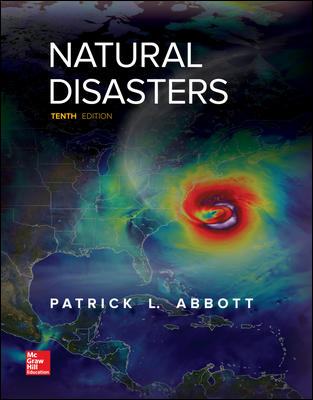
Natural Disasters 10Th Edition Patrick Leon Abbott -Test Bank

Natural Disasters 10Th Edition Patrick Leon Abbott -Test Bank   Instant Download - Complete Test Bank With Answers     Sample Questions Are Posted Below   Chapter 05 Test Bank: Earthquakes Throughout the United States and Canada KEY     Multiple Choice Questions     In the last 5.5 million years, rifting action tore Baja …

$19.99

Natural Disasters 10Th Edition Patrick Leon Abbott -Test Bank


Instant Download – Complete Test Bank With Answers


Sample Questions Are Posted Below


Chapter 05 Test Bank: Earthquakes Throughout the United States and Canada KEY


Multiple Choice Questions


  1. In the last 5.5 million years, rifting action tore Baja California and California west of the San Andreas Fault from the ______________.


  1. Pacific Plate and piggybacked them onto the Juan de Fuca Plate
  2. Pacific Plate and piggybacked them onto the North American Plate
  3. North American Plate and piggybacked them onto the Juan de Fuca Plate
  4. North American Plate and piggybacked them onto the Pacific Plate
  5. Nazca Plate and piggybacked them onto the Cocos Plate

Accessibility: Keyboard Navigation

Bloom’s Level: 1. Remember

Chapter: 05

Gradable: automatic

Section: Earthquake Prediction

Topic: Earthquake Prediction


  1. We know that the part of California on the Pacific Plate will not break off in a giant earthquake and sink into the Pacific Ocean because ______________________.


  1. the Pacific Plate is being subducted beneath California instead
  2. the San Andreas Fault is a thrust Fault, not a normal Fault
  3. of isostasy
  4. convective forces
  5. oceanic circulation

Accessibility: Keyboard Navigation

Bloom’s Level: 1. Remember

Chapter: 05

Gradable: automatic

Section: Earthquake Prediction

Topic: Earthquake Prediction


  1. When the part of California west of the San Andreas Fault plows into Alaska it will __________.


  1. become subducted beneath Alaska’s southern margin
  2. become part of Alaska’s southern margin
  3. turn into a spreading ridge, changing the direction of movement of the Pacific Plate
  4. turn and head westward along Alaska’s southern margin

Accessibility: Keyboard Navigation

Bloom’s Level: 1. Remember

Chapter: 05

Gradable: automatic

Section: Earthquake Prediction

Topic: Earthquake Prediction


  1. Today, North America has several small- to medium-sized plates subducting beneath its ____________.


  1. eastern margin
  2. western margin
  3. northern margin
  4. southeastern margin
  5. margins, all around the North American Plate

Accessibility: Keyboard Navigation

Bloom’s Level: 1. Remember

Chapter: 05

Gradable: automatic

Section: Western North America: Plate Boundary-Zone Earthquakes

Topic: Western North America: Plate Boundary-Zone Earthquakes


  1. The large left step in the San Andreas Fault in the Los Angeles area causes compressive ruptures along east-west-

oriented ________ faults as in the 1971 San Fernando and 1994 Northridge events.


  1. normal
  2. thrust
  3. strike-slip
  4. transform

Accessibility: Keyboard Navigation

Bloom’s Level: 1. Remember

Chapter: 05

Gradable: automatic

Section: Thrust-Fault Earthquakes

Topic: Thrust-Fault Earthquakes


  1. Another class of active faults is created by southern California pushing into the “Big Bend” of the San Andreas Fault; these faults are __________.


  1. mostly east-west-oriented normal faults
  2. mostly north-south-oriented thrust faults (reverse faults)
  3. mostly east-west-oriented thrust faults (reverse faults)
  4. mostly north-south-oriented normal faults

Accessibility: Keyboard Navigation

Bloom’s Level: 1. Remember

Chapter: 05

Gradable: automatic

Section: California Earthquake Scenario

Topic: California Earthquake Scenario


  1. Prehistoric earthquakes may be interpreted using faulted pond sediments. The amount of offset of sediment layers from one earthquake is proportional to the ________________.


  1. amount of time since the last major earthquake
  2. amount of radioactive material in the sediment
  3. earthquake magnitude
  4. isostatic anomaly

Accessibility: Keyboard Navigation

Bloom’s Level: 1. Remember

Chapter: 05

Gradable: automatic

Section: Neotectonics and Paleoseismology

Topic: Neotectonics and Paleoseismology


  1. Organic material in sediment layers is dated by measuring the amount of radioactive ________ present.


  1. oxygen
  2. hydrogen
  3. uranium
  4. carbon
  5. sodium

Accessibility: Keyboard Navigation

Bloom’s Level: 1. Remember

Chapter: 05

Gradable: automatic

Section: Neotectonics and Paleoseismology

Topic: Neotectonics and Paleoseismology


  1. On 3 November 2002, a large earthquake occurred in __________. Because of its similarity to the 1857 Fort Tejon earthquake on the San Andreas Fault, this event has been compared to the much-anticipated “Big One” in Southern California.


  1. Oregon
  2. Mexico
  3. Alaska
  4. Canada
  5. Nevada

Accessibility: Keyboard Navigation

Bloom’s Level: 1. Remember

Chapter: 05

Gradable: automatic

Section: California Earthquake Scenario

Topic: California Earthquake Scenario


  1. The 17 January 1994 Northridge earthquake in Los Angeles was generated on a _______ thrust fault.


  1. slow
  2. elliptical
  3. upside-down
  4. trap-door
  5. blind

Accessibility: Keyboard Navigation

Bloom’s Level: 1. Remember

Chapter: 05

Gradable: automatic

Section: California Earthquake Scenario

Topic: California Earthquake Scenario


  1. If Alaska and California are ignored, the list of 10 largest U.S. earthquakes shows ____________.


  1. only events centered in Washington and Oregon
  2. only events centered in Washington, Montana, and Hawaii
  3. only events centered in Washington, Oregon, Hawaii, and Nevada
  4. 8 events centered in western states and 2 events centered in Missouri
  5. 10 events affecting at least 10 different states

Accessibility: Keyboard Navigation

Bloom’s Level: 1. Remember

Chapter: 05

Gradable: automatic

Section: United States and Canada Earthquakes

Topic: United States and Canada Earthquakes


  1. Which state accounts for the greatest percentage of all U.S. earthquakes of magnitude 3.5 and above?


  1. California
  2. Hawaii
  3. Alaska
  4. Washington
  5. Nevada

Accessibility: Keyboard Navigation

Bloom’s Level: 1. Remember

Chapter: 05

Gradable: automatic

Section: United States and Canada Earthquakes

Topic: United States and Canada Earthquakes


  1. California accounts for _______ of all U.S. earthquakes of magnitude 3.5 and above.


  1. 82%
  2. 64%
  3. 57%
  4. 23%
  5. 7%

Accessibility: Keyboard Navigation

Bloom’s Level: 1. Remember

Chapter: 05

Gradable: automatic

Section: United States and Canada Earthquakes

Topic: United States and Canada Earthquakes


  1. Which four states account for 91% of all U.S. earthquakes of magnitude 3.5 and above?


  1. California, Alaska, Washington, and Oregon
  2. California, Montana, Washington, and Hawaii
  3. California, Alaska, Hawaii, and Nevada
  4. California, Hawaii, Washington, and Nevada
  5. California, Iowa, Nevada, and Idaho

Accessibility: Keyboard Navigation

Bloom’s Level: 1. Remember

Chapter: 05

Gradable: automatic

Section: United States and Canada Earthquakes

Topic: United States and Canada Earthquakes


  1. Which of the following states has the lowest earthquake risk?


  1. Arkansas
  2. Massachusetts
  3. South Carolina
  4. Nevada
  5. Florida

Accessibility: Keyboard Navigation

Bloom’s Level: 1. Remember

Chapter: 05

Gradable: automatic

Section: United States and Canada Earthquakes

Topic: United States and Canada Earthquakes


  1. Which of the following states has the highest earthquake risk?


  1. Michigan
  2. Wisconsin
  3. Arkansas
  4. North Dakota
  5. Florida

Accessibility: Keyboard Navigation

Bloom’s Level: 1. Remember

Chapter: 05

Gradable: automatic

Section: Intraplate Earthquakes: “Stable” Central United States

Topic: Intraplate Earthquakes: “Stable” Central United States


  1. Which state listed below is most likely to have a magnitude 9 or larger earthquake in the next several hundred years?


  1. Florida
  2. Washington
  3. Texas
  4. Wisconsin
  5. South Carolina

Accessibility: Keyboard Navigation

Bloom’s Level: 1. Remember

Chapter: 05

Gradable: automatic

Section: Western North America: Plate Boundary-Zone Earthquakes

Topic: Western North America: Plate Boundary-Zone Earthquakes


  1. Several recent earthquakes in Washington’s Puget Sound region were caused by movement of the subducting ______________ Plate.


  1. Pacific
  2. North American
  3. Cocos
  4. Juan de Fuca
  5. Nazca

Accessibility: Keyboard Navigation

Bloom’s Level: 1. Remember

Chapter: 05

Gradable: automatic

Section: Normal-Fault Earthquakes

Topic: Normal-Fault Earthquakes


  1. Which of the following represents evidence for major fault movement on the Seattle Fault zone about 1,100 years ago?


  1. The former shoreline at Restoration Point was uplifted 7 meters above the high-tide line in a single event.
  2. Numerous large landslides occurred at this time, including some that carried trees in growth position to the bottom of Lake Washington.
  3. Several tsunami deposits have been recognized in the sediment layers of the area.
  4. The same date appears in the ages of six major rock avalanches in the Olympic Mountains.
  5. All of these choices are correct.

Accessibility: Keyboard Navigation

Bloom’s Level: 1. Remember

Chapter: 05

Gradable: automatic

Section: Thrust-Fault Earthquakes

Topic: Thrust-Fault Earthquakes


  1. The Great Basin region between the eastern Sierra Nevada in California and the Wasatch Mountains in Utah ______________________ in response to plate-tectonic forces.


  1. has been compressed in an east-west direction
  2. has expanded in an east-west direction
  3. has been compressed in a north-south direction
  4. has expanded in a north-south direction
  5. is now a subduction zone

Accessibility: Keyboard Navigation

Bloom’s Level: 1. Remember

Chapter: 05

Gradable: automatic

Section: Western North America: Plate Boundary-Zone Earthquakes

Topic: Western North America: Plate Boundary-Zone Earthquakes


  1. The dominant type of faulting in the Great Basin region is ______________.


  1. normal faulting
  2. reverse faulting
  3. strike-slip faulting
  4. thrust faulting
  5. transform faulting

Accessibility: Keyboard Navigation

Bloom’s Level: 1. Remember

Chapter: 05

Gradable: automatic

Section: Western North America: Plate Boundary-Zone Earthquakes

Topic: Western North America: Plate Boundary-Zone Earthquakes


  1. The crustal thickness in the Great Basin is __________ than mid-continental North American crust.


  1. thicker
  2. thinner
  3. thinner than oceanic crust and thinner
  4. thicker than oceanic crust and thinner
  5. thicker than oceanic crust and thicker

Accessibility: Keyboard Navigation

Bloom’s Level: 1. Remember

Chapter: 05

Gradable: automatic

Section: Western North America: Plate Boundary-Zone Earthquakes

Topic: Western North America: Plate Boundary-Zone Earthquakes


  1. At Hebgen Lake in 1959 an earthquake larger than magnitude 7 greatly affected ____________.


  1. Yellowstone National Park
  2. Olympia National Park
  3. Denali National Park
  4. Yosemite National Park
  5. Grand Canyon National Park

Accessibility: Keyboard Navigation

Bloom’s Level: 1. Remember

Chapter: 05

Gradable: automatic

Section: Western North America: Plate Boundary-Zone Earthquakes

Topic: Western North America: Plate Boundary-Zone Earthquakes


  1. The New Madrid earthquakes are apparently related to an old buried ____________.


  1. transform fault
  2. rift zone
  3. subduction zone
  4. hazardous waste dump
  5. oil pipeline

Accessibility: Keyboard Navigation

Bloom’s Level: 1. Remember

Chapter: 05

Gradable: automatic

Section: Intraplate Earthquakes: “Stable” Central United States

Topic: Intraplate Earthquakes: “Stable” Central United States


  1. When compared to California, seismic energy in the eastern U.S. is transmitted __________.


  1. more effectively in the older, more solid rocks
  2. less effectively in the older, more solid rocks
  3. more effectively in the younger, more solid rocks
  4. less effectively in the younger, more solid rocks
  5. less effectively because the earthquakes are smaller

Accessibility: Keyboard Navigation

Bloom’s Level: 1. Remember

Chapter: 05

Gradable: automatic

Section: Intraplate Earthquakes: Eastern North America

Topic: Intraplate Earthquakes: Eastern North America


  1. Paleoseismologic analysis of trenches cut across faults and folds in the New Madrid, Missouri, area has led the U.S. Geological Survey to forecast a 25% chance of a magnitude __________ earthquake here within the next 50 years.


  1. 7.5 to 8.5
  2. 6 to 7
  3. 8.5 to 9
  4. 9+

Accessibility: Keyboard Navigation

Bloom’s Level: 1. Remember

Chapter: 05

Gradable: automatic

Section: Intraplate Earthquakes: Eastern North America

Topic: Intraplate Earthquakes: Eastern North America


  1. The Charleston, South Carolina, earthquake of 1886 occurred along a seismic belt that may be related to _________________.


  1. tectonic stresses transmitted across the North American continent from California
  2. an ancient subduction zone beneath the Appalachian Mountains
  3. an adjacent oceanic fracture zone on the Atlantic seafloor
  4. canal building prior to the Civil War
  5. remnants of the African Plate attached to North America

Accessibility: Keyboard Navigation

Bloom’s Level: 1. Remember

Chapter: 05

Gradable: automatic

Section: Intraplate Earthquakes: Eastern North America

Topic: Intraplate Earthquakes: Eastern North America


  1. Earthquakes in Hawaii are mostly related to ________________.


  1. subduction along the Pacific Plate margin
  2. strike-slip faulting along the Hawaiian Islands transform fault
  3. lava flows erupting from the volcanic craters
  4. movement of volcanic magma beneath the ground
  5. the Emperor Seamounts colliding

Accessibility: Keyboard Navigation

Bloom’s Level: 1. Remember

Chapter: 05

Gradable: automatic

Section: Earthquakes and Volcanism in Hawaii

Topic: Earthquakes and Volcanism in Hawaii


  1. When rock heats and liquefies into magma its volume _____________.


  1. expands, and neighboring brittle rock must fracture and move out of the way
  2. decreases and neighboring brittle rock collapses to make up for the loss of volume
  3. does not change
  4. decreases due to sublimation

Accessibility: Keyboard Navigation

Bloom’s Level: 1. Remember

Chapter: 05

Gradable: automatic

Section: Earthquakes and Volcanism in Hawaii

Topic: Earthquakes and Volcanism in Hawaii


  1. When magma is on the move at shallow depths it commonly generates a swarm of __________.


  1. small earthquakes referred to as delirium tremens
  2. large earthquakes referred to as delirium tremens
  3. small earthquakes referred to as harmonic tremors
  4. large earthquakes referred to as harmonic tremors

Accessibility: Keyboard Navigation

Bloom’s Level: 1. Remember

Chapter: 05

Gradable: automatic

Section: Earthquakes and Volcanism in Hawaii

Topic: Earthquakes and Volcanism in Hawaii


True / False Questions


  1. The Imperial Valley sits on an actively closing ocean floor.


FALSE

Accessibility: Keyboard Navigation

Bloom’s Level: 1. Remember

Chapter: 05

Gradable: automatic

Section: Western North America: Plate Boundary-Zone Earthquakes

Topic: Western North America: Plate Boundary-Zone Earthquakes


  1. The duration of shaking in 1985 in Mexico City was decreased due to seismic energy being trapped within the soft sediments.


FALSE

Accessibility: Keyboard Navigation

Bloom’s Level: 1. Remember

Chapter: 05

Gradable: automatic

Section: Intraplate Earthquakes: “Stable” Central United States

Topic: Intraplate Earthquakes: “Stable” Central United States


  1. The southernmost segment of the San Andreas Fault, from San Bernardino to the Salton Sea, is a complex zone that has generated several truly large earthquakes in historic times, but it has no locked zones within it.


FALSE

Accessibility: Keyboard Navigation

Bloom’s Level: 1. Remember

Chapter: 05

Gradable: automatic

Section: California Earthquake Scenario

Topic: California Earthquake Scenario


  1. The zone of dangerous faults in Southern California is much wider than in the San Francisco Bay area, largely because the major plate-bounding fault (the San Andreas) is bent so far to the west that it makes it difficult for the Pacific Plate to slide along on its northwestward journey.


TRUE

Accessibility: Keyboard Navigation

Bloom’s Level: 1. Remember

Chapter: 05

Gradable: automatic

Section: California Earthquake Scenario

Topic: California Earthquake Scenario


  1. Thrust faults that do not reach the surface are called dark thrusts.


FALSE

Accessibility: Keyboard Navigation

Bloom’s Level: 1. Remember

Chapter: 05

Gradable: automatic

Section: Transform-Fault Earthquakes

Topic: Transform-Fault Earthquakes


  1. The 1994 Northridge event was similar to the 1971 San Fernando earthquake in magnitude, number of people killed, and type of faulting.


TRUE

Accessibility: Keyboard Navigation

Bloom’s Level: 1. Remember

Chapter: 05

Gradable: automatic

Section: Transform-Fault Earthquakes

Topic: Transform-Fault Earthquakes


  1. Ocean ridge spreading still occurs offshore of northernmost California, Oregon, Washington, and southern British Columbia, as well as in the Gulf of California.


TRUE

Accessibility: Keyboard Navigation

Bloom’s Level: 1. Remember

Chapter: 05

Gradable: automatic

Section: Western North America: Plate Boundary-Zone Earthquakes

Topic: Western North America: Plate Boundary-Zone Earthquakes


  1. Earthquake epicenters east of the Rocky Mountains are in random locations and do not cluster in certain areas.


FALSE

Accessibility: Keyboard Navigation

Bloom’s Level: 1. Remember

Chapter: 05

Gradable: automatic

Section: Intraplate Earthquakes: “Stable” Central United States

Topic: Intraplate Earthquakes: “Stable” Central United States


  1. Adjustments related to plate-tectonic activity cause earthquakes from Washington to New Mexico, from Montana to California, and at other points throughout the West.


TRUE

Accessibility: Keyboard Navigation

Bloom’s Level: 1. Remember

Chapter: 05

Gradable: automatic

Section: Western North America: Plate Boundary-Zone Earthquakes

Topic: Western North America: Plate Boundary-Zone Earthquakes


  1. The subducting Juan de Fuca Plate is only 10- to 15-million-years old and is warm and buoyant. However as it is subducted, its density increases, causing a buildup of stress.


TRUE

Accessibility: Keyboard Navigation

Bloom’s Level: 1. Remember

Chapter: 05

Gradable: automatic

Section: Normal-Fault Earthquakes

Topic: Normal-Fault Earthquakes


  1. The Owens Valley quake of 1872 is estimated to have had a magnitude of 7.8 to 8, indicating that big earthquakes can and do happen far away from the coastal zone and the San Andreas Fault.


TRUE

Accessibility: Keyboard Navigation

Bloom’s Level: 1. Remember

Chapter: 05

Gradable: automatic

Section: Western North America: Plate Boundary-Zone Earthquakes

Topic: Western North America: Plate Boundary-Zone Earthquakes


  1. In historic time, Nevada has averaged one earthquake with a magnitude in the 6s per decade and one with a magnitude in the 7s every 27 years.


TRUE

Accessibility: Keyboard Navigation

Bloom’s Level: 1. Remember

Chapter: 05

Gradable: automatic

Section: Western North America: Plate Boundary-Zone Earthquakes

Topic: Western North America: Plate Boundary-Zone Earthquakes


  1. In the last 30 million years, the region between the eastern Sierra Nevada in California and the Wasatch Mountain front in central Utah has contracted in an east-west direction, so Nevada is now half of its former width.


FALSE

Accessibility: Keyboard Navigation

Bloom’s Level: 1. Remember

Chapter: 05

Gradable: automatic

Section: Western North America: Plate Boundary-Zone Earthquakes

Topic: Western North America: Plate Boundary-Zone Earthquakes


  1. As much as 20% of the relative motion between the Pacific and North American Plates may be accommodated by the extensional stretching of the Basin and Range province, leaving numerous north-south-oriented mountain ranges separated by down-dropped, sediment-filled basins.


TRUE

Accessibility: Keyboard Navigation

Bloom’s Level: 1. Remember

Chapter: 05

Gradable: automatic

Section: Western North America: Plate Boundary-Zone Earthquakes

Topic: Western North America: Plate Boundary-Zone Earthquakes


  1. Nevada has several gaps in the belt of historic seismicity, suggesting residents in these seismic gaps may be in for some future earthquakes.


TRUE

Accessibility: Keyboard Navigation

Bloom’s Level: 1. Remember

Chapter: 05

Gradable: automatic

Section: Western North America: Plate Boundary-Zone Earthquakes

Topic: Western North America: Plate Boundary-Zone Earthquakes


  1. On 28 October 1983, the Lost River Fault broke free for a magnitude 7.3 MS event, moving Borah Peak, Idaho’s highest point, 4 m lower.


FALSE

Accessibility: Keyboard Navigation

Bloom’s Level: 1. Remember

Chapter: 05

Gradable: automatic

Section: Western North America: Plate Boundary-Zone Earthquakes

Topic: Western North America: Plate Boundary-Zone Earthquakes


  1. The bounding faults on the eastern side of the Great Basin are mostly down to the east, whereas the bounding faults on the western side (in eastern California and western Nevada) are down to the west.


FALSE

Accessibility: Keyboard Navigation

Bloom’s Level: 1. Remember

Chapter: 05

Gradable: automatic

Section: Western North America: Plate Boundary-Zone Earthquakes

Topic: Western North America: Plate Boundary-Zone Earthquakes


  1. Much of Utah’s population lives within sight of the scarps of the 370 km-long Wasatch Front, the zone of reverse faults separating the mountains from the Great Basin.


FALSE

Accessibility: Keyboard Navigation

Bloom’s Level: 1. Remember

Chapter: 05

Gradable: automatic

Section: Western North America: Plate Boundary-Zone Earthquakes

Topic: Western North America: Plate Boundary-Zone Earthquakes


  1. In the last 6,000 years, a magnitude 6.5 or stronger earthquake has occurred about once every 350 years on one of the Wasatch System Faults, but no large earthquakes have been reported along the Wasatch Front Faults since the arrival of Brigham Young in 1847.


TRUE

Accessibility: Keyboard Navigation

Bloom’s Level: 1. Remember

Chapter: 05

Gradable: automatic

Section: Western North America: Plate Boundary-Zone Earthquakes

Topic: Western North America: Plate Boundary-Zone Earthquakes


  1. The Rio Grande Rift in New Mexico, Colorado, westernmost Texas, and Mexico is one of the major continental rifts in the world where the continental crust is being heated and stretched from below.


TRUE

Accessibility: Keyboard Navigation

Bloom’s Level: 1. Remember

Chapter: 05

Gradable: automatic

Section: Intraplate Earthquakes: “Stable” Central United States

Topic: Intraplate Earthquakes: “Stable” Central United States


  1. Historic earthquakes in the Rio Grande Rift area have had only small to moderate magnitudes, but the continental lithosphere continues to compress and shorten, thus presenting a real hazard for large earthquakes.


FALSE

Accessibility: Keyboard Navigation

Bloom’s Level: 1. Remember

Chapter: 05

Gradable: automatic

Section: Intraplate Earthquakes: “Stable” Central United States

Topic: Intraplate Earthquakes: “Stable” Central United States


  1. The New Madrid, Missouri, 1811–1812 earthquakes have never been equaled in the history of the United States for the number of closely-spaced, large seisms and for the size of the felt area.


TRUE

Accessibility: Keyboard Navigation

Bloom’s Level: 1. Remember

Chapter: 05

Gradable: automatic

Section: Intraplate Earthquakes: “Stable” Central United States

Topic: Intraplate Earthquakes: “Stable” Central United States


  1. The New Madrid, Missouri, 1811–1812 earthquakes were felt from Canada to the Gulf of Mexico and from the Rocky Mountains to the Atlantic seaboard, where clocks stopped, bells rang, and plaster cracked.


TRUE

Accessibility: Keyboard Navigation

Bloom’s Level: 1. Remember

Chapter: 05

Gradable: automatic

Section: Intraplate Earthquakes: “Stable” Central United States

Topic: Intraplate Earthquakes: “Stable” Central United States


  1. The sizes of the felt areas of large earthquakes in North America are always the best indicator of earthquake magnitude.


FALSE

Accessibility: Keyboard Navigation

Bloom’s Level: 1. Remember

Chapter: 05

Gradable: automatic

Section: Intraplate Earthquakes: “Stable” Central United States

Topic: Intraplate Earthquakes: “Stable” Central United States


  1. The New Madrid and San Francisco earthquakes were of similar magnitudes, but the felt area of the New Madrid quakes was much smaller.


FALSE

Accessibility: Keyboard Navigation

Bloom’s Level: 1. Remember

Chapter: 05

Gradable: automatic

Section: Intraplate Earthquakes: “Stable” Central United States

Topic: Intraplate Earthquakes: “Stable” Central United States


  1. The epicenters of the larger New Madrid, Missouri, earthquakes line up along the Mississippi River Valley, possibly because of an ancient rift valley, known as the Reelfoot Rift, formed about 550 million years ago.


TRUE

Accessibility: Keyboard Navigation

Bloom’s Level: 1. Remember

Chapter: 05

Gradable: automatic

Section: Intraplate Earthquakes: “Stable” Central United States

Topic: Intraplate Earthquakes: “Stable” Central United States


  1. Aftershocks of the 1811–12 New Madrid, Missouri, earthquakes are still occurring today.


TRUE

Accessibility: Keyboard Navigation

Bloom’s Level: 1. Remember

Chapter: 05

Gradable: automatic

Section: Intraplate Earthquakes: Eastern North America

Topic: Intraplate Earthquakes: Eastern North America


  1. Human activity has likely triggered earthquakes with magnitudes between 3 and 5.


TRUE

Accessibility: Keyboard Navigation

Bloom’s Level: 1. Remember

Chapter: 05

Gradable: automatic

Section: Human-Triggered Earthquakes

Topic: Human-Triggered Earthquakes


  1. Failed rifts remain as zones of weakness that may be reactivated by later plate-tectonic stresses to once again

generate earthquakes.


TRUE

Accessibility: Keyboard Navigation

Bloom’s Level: 1. Remember

Chapter: 05

Gradable: automatic

Section: Intraplate Earthquakes: “Stable” Central United States

Topic: Intraplate Earthquakes: “Stable” Central United States


  1. New England has a long record of significant earthquakes.


TRUE

Accessibility: Keyboard Navigation

Bloom’s Level: 1. Remember

Chapter: 05

Gradable: automatic

Section: Intraplate Earthquakes: Eastern North America

Topic: Intraplate Earthquakes: Eastern North America


  1. Eastern U.S. damages may be experienced over a smaller area than they would be for an equivalent-sized earthquake in California.


FALSE

Accessibility: Keyboard Navigation

Bloom’s Level: 1. Remember

Chapter: 05

Gradable: automatic

Section: Intraplate Earthquakes: Eastern North America

Topic: Intraplate Earthquakes: Eastern North America


  1. Earthquakes below Kilauea volcano are dominantly deep events in the mantle.


FALSE

Accessibility: Keyboard Navigation

Bloom’s Level: 1. Remember

Chapter: 05

Gradable: automatic

Section: Earthquakes and Volcanism in Hawaii

Topic: Earthquakes and Volcanism in Hawaii


  1. In the central United States, ancient rift valleys remain from failed spreading centers and these ancient rifts today are zones of weakness whose faults can be reactivated due to long-distance effects of Atlantic Plate spreading and Pacific Plate collision.


TRUE

Accessibility: Keyboard Navigation

Bloom’s Level: 1. Remember

Chapter: 05

Gradable: automatic

Section: Intraplate Earthquakes: “Stable” Central United States

Topic: Intraplate Earthquakes: “Stable” Central United States


  1. Most North American earthquakes occur in the west along the edges of the active plates, but the central and eastern regions also have earthquakes—not as many but just as large.


TRUE

Accessibility: Keyboard Navigation

Bloom’s Level: 1. Remember

Chapter: 05

Gradable: automatic

Section: United States and Canada Earthquakes

Topic: United States and Canada Earthquakes


  1. In the Pacific Northwest, stresses are transmitted upward from the subducting plates, forming strike-slip faults that rupture the surface, as in Seattle.


TRUE

Accessibility: Keyboard Navigation

Bloom’s Level: 1. Remember

Chapter: 05

Gradable: automatic

Section: Western North America: Plate Boundary-Zone Earthquakes

Topic: Western North America: Plate Boundary-Zone Earthquakes


  1. Pumping fluids into Earth has been found to sometimes trigger small earthquakes (magnitudes < 5).


TRUE

Accessibility: Keyboard Navigation

Bloom’s Level: 1. Remember

Chapter: 05

Gradable: automatic

Section: Human-Triggered Earthquakes

Topic: Human-Triggered Earthquakes


Chapter 05 Test Bank: Earthquakes Throughout the United States and Canada Summary

Category # of Questions
Accessibility: Keyboard Navigation 66
Bloom’s Level: 1. Remember 66
Chapter: 05 66
Gradable: automatic 66
Section: California Earthquake Scenario 5
Section: Earthquake Prediction 3
Section: Earthquakes and Volcanism in Hawaii 4
Section: Human-Triggered Earthquakes 2
Section: Intraplate Earthquakes: “Stable” Central United States 13
Section: Intraplate Earthquakes: Eastern North America 6
Section: Neotectonics and Paleoseismology 2
Section: Normal-Fault Earthquakes 2
Section: Thrust-Fault Earthquakes 2
Section: Transform-Fault Earthquakes 2
Section: United States and Canada Earthquakes 6
Section: Western North America: Plate Boundary-Zone Earthquakes 19
Topic: California Earthquake Scenario 5
Topic: Earthquake Prediction 3
Topic: Earthquakes and Volcanism in Hawaii 4
Topic: Human-Triggered Earthquakes 2
Topic: Intraplate Earthquakes: “Stable” Central United States 13
Topic: Intraplate Earthquakes: Eastern North America 6
Topic: Neotectonics and Paleoseismology 2
Topic: Normal-Fault Earthquakes 2
Topic: Thrust-Fault Earthquakes 2
Topic: Transform-Fault Earthquakes 2
Topic: United States and Canada Earthquakes 6
Topic: Western North America: Plate Boundary-Zone Earthquakes 19


Additional information

Add Review

Your email address will not be published. Required fields are marked *