No products in the cart.

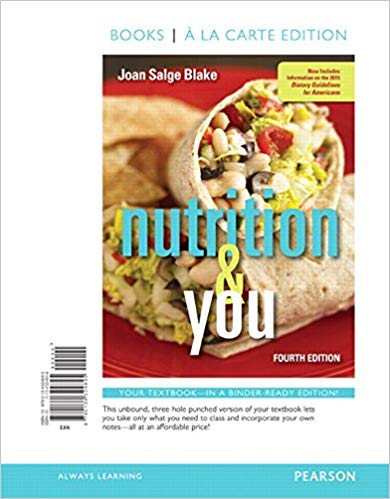
Nutrition And You 4th Edition By Blake - Test Bank

Nutrition And You 4th Edition By Blake - Test Bank   Instant Download - Complete Test Bank With Answers     Sample Questions Are Posted Below   MULTIPLE CHOICE. Choose the one alternative that best completes the statement or answers the question. 1) Which of the following statements about vitamins is incorrect? A) They are …

$19.99

Nutrition And You 4th Edition By Blake – Test Bank


Instant Download – Complete Test Bank With Answers


Sample Questions Are Posted Below


MULTIPLE CHOICE. Choose the one alternative that best completes the statement or answers the question.
1) Which of the following statements about vitamins is incorrect?
A) They are organic compounds.
B) They are needed for growth.
C) They provide energy.
D) They are tasteless.
Answer: C
2) Which of the following vitamins is transported in a micelle along with bile and fatty acids?
A) niacin
B) riboflavin
C) vitamin C
D) vitamin A
Answer: D
3) Which of the following conditions will not destroy the vitamin content of foods?
A) cold
B) air
C) heat

D) water

Answer: A
4) Which of the following statements about xerophthalmia is correct?
A) It mainly affects the gallbladder.
B) It often results from an overdose of vitamin A.
C) It can result from the consumption of too many carrots.
D) It is defined as permanent damage to the cornea resulting from a vitamin A deficiency.
Answer: D
5) Which of the following substances is a form of naturally occurring vitamin E?
A) beta-carotene
B) riboflavin
C) pantothenic acid

D) alpha-tocopherol

Answer: D
6) Which of the following vitamins is light sensitive and abundant in milk?
A) alpha-tocopherol
B) thiamin
C) riboflavin

D) vitamin C

Answer: C
7) Which of the following vitamins is essential for blood clotting?
A) vitamin D
B) vitamin K
C) vitamin A

D) vitamin C

Answer: B
8) Which of the following vitamins is important in a woman’s diet before she conceives a baby?
A) pantothenic acid
B) riboflavin
C) vitamin D
D) folate
Answer: D
9) Which of the following vitamins has been shown to reduce the risk of certain cancers, especially colon cancer?
A) thiamin
B) vitamin C
C) alpha-tocopherol
D) folate
Answer: D
10) Vitamin C is necessary for which of the following processes?
A) vitamin B12 synthesis
B) blood clotting
C) bone growth

D) collagen production

Answer: D
11) Pellagra is a condition associated with a deficiency of which vitamin?
A) vitamin D
B) vitamin B3
C) vitamin C
Answer: B

1

D) vitamin B2

12) Which of the following conditions is a vitamin D deficiency disease in children?
A) osteoporosis
B) beriberi
C) rickets

D) osteomalacia

Answer: C
13) Which of the following conditions is not caused by a vitamin D deficiency?
A) scurvy
B) rickets
C) osteoporosis

D) osteomalacia

Answer: A
14) Which of the following factors is not responsible for the increase in cases of rickets in the United States?
A) increased use of sunscreens
B) consumption of low-fat milk
C) air pollution
D) scarcity of outdoor activities
Answer: B
15) Which of the following vitamins cannot be synthesized by your body?
A) biotin
B) vitamin C
C) vitamin D

D) vitamin K

Answer: B
16) Thiamin deficiency results in which of the following conditions?
A) pellagra
B) rickets
C) scurvy

D) beriberi

Answer: D
17) The phytochemical anthocyanin is found in
A) barley.
B) bananas.

C) broccoli.

D) beets.

Answer: D
18) Which of the following vitamins has been shown to beneficially alter the serum levels of triglycerides?
A) thiamin
B) vitamin B
C) niacin
D) vitamin C
Answer: C
19) Which of the following actions is the best way to reduce your chances of catching a cold?
A) frequent hand-washing with soap and water
B) taking vitamin C supplements
C) avoiding outside activities on very cold days
D) consuming the herb Echinacea
Answer: A
20) Which of the following vitamins is involved in breaking down homocysteine in the blood?
A) thiamin
B) folate
C) vitamin D
D) niacin
Answer: B
21) Which of the following substances is not an antioxidant?
A) biotin
B) beta-carotene

C) vitamin E

D) vitamin C

Answer: A
22) Folate can be found in the highest levels in which of the following foods?
A) beans
B) oranges
C) meat

D) asparagus

Answer: D
23) Naturally occurring vitamin B12 is found in which of the following foods?
A) oranges
B) peanuts
C) eggs
Answer: C

2

D) cantaloupe

24) Which of the following statements about vitamin B12 is false?
A) The body’s ability to absorb this vitamin increases with age.
B) When it is deficient in the diet, pernicious anemia may result.
C) Its naturally occurring form is found only in foods from animal sources.
D) For its absorption to occur, intrinsic factor is required.
Answer: A
25) Pernicious anemia occurs when there is a deficiency of which vitamin?
A) B12
B) B2
C) B5

D) B6

Answer: A
26) Which of the following people might not benefit from a vitamin supplement?
A) strict vegetarians
B) individuals who don’t drink milk or go out in the sun
C) women of childbearing age
D) individuals who regularly eat fortified foods
Answer: D
27) According to a study conducted by the National Eye Institute, which of the following lists of supplements may
lower the risk of age-related macular degeneration?
A) vitamin D, vitamin K, and niacin
B) choline, carnitine, and inositol
C) pantothenic acid, biotin, and thiamin
D) vitamin C, vitamin E, and beta-carotene
Answer: D
28) At which sites is the inactive form of vitamin D converted to the active form?
A) in the stomach and then in the small intestine
B) in the liver and then in the kidneys
C) in the blood and then in the skin
D) in the liver and then in the gallbladder
Answer: B
29) Which of the following vitamins helps bone health by regulating calcium and phosphorus?
A) vitamin E
B) vitamin D
C) vitamin K
D) choline
Answer: B
30) Vitamin K has a role
A) as an anticoagulant.
B) in the production of the proteins rhodopsin and iodopsin.
C) in enabling osteocalcin to bind with calcium in bones.
D) in the synthesis of collagen.
Answer: C
31) When the B vitamins help numerous enzymes produce reactions within cells, they are acting as
A) anticoagulants.
B) coenzymes.
C) hormones.
D) antioxidants.
Answer: B
32) Vitamin C is also known as ________ acid.
A) nicotinic
B) folic

C) pantothenic

Answer: D

3

D) ascorbic

33) Foods that have had nutrients added to them are designated as ________ foods.
A) adulterated
B) refined
C) fortified

D) supplemented

Answer: C
34) Which of the following organizations sets purity and reliability standards for dietary supplements?
A) ADA
B) USDA
C) FDA
D) USP
Answer: D
35) ________ and vitamin B12 are B vitamins needed for keeping red blood cells healthy.
A) Vitamin B6
B) Niacin
C) Thiamin

D) Folate

Answer: D
36) ________ is a vitamin-like substance that is abundant in foods from animal sources and is needed to properly
utilize fat.
A) Inositol
B) Lipoic acid
C) Choline
D) Carnitine
Answer: D
37) Oxygen-containing molecules that can damage cells and possibly contribute to the increased risk of certain
chronic diseases are called
A) antioxidants.
B) free radicals.
C) supplements.
D) phytochemicals.
Answer: B
38) Excessive amounts of water-soluble vitamins are often excreted in
A) mucus.
B) the feces.
C) urine.

D) the blood.

Answer: C
39) ________ plays a role in breaking down alcohol in the body.
A) Riboflavin
B) Folate
C) Thiamin

D) Niacin

Answer: C
40) The signs and symptoms of ________ include dermatitis, dementia, and diarrhea.
A) rickets
B) beriberi
C) anemia

D) pellagra

Answer: D
41) The body can synthesize ________ from the amino acid tryptophan.
A) riboflavin
B) niacin
C) folate

D) thiamin

Answer: B
42) Vitamin B6 is a collective name for several related compounds, including
A) cobalamin.
B) folic acid.
C) choline.

D) pyridoxine.

Answer: D
43) ________ boosts the immune system by enabling the body to make white blood cells.
A) Vitamin A
B) Vitamin K
C) Vitamin D
Answer: D

4

D) Vitamin C

44) Vitamin E, vitamin C, and beta-carotene act as ________, which may reduce the risk of heart disease, cancer,
arthritis, and Alzheimer’s disease.
A) antioxidants
B) provitamins
C) anticoagulants
D) free radicals
Answer: A
45) Vitamin C helps the body absorb ________ from plant foods such as grains and cereals.
A) calories
B) protein
C) calcium

D) iron

Answer: D
46) Ascorbic acid acts as a coenzyme and is needed for the production of
A) hemoglobin.
B) glycogen.
C) osteocalcin.

D) collagen.

Answer: D
47) The disease resulting from vitamin C deficiency is called
A) hemochromatosis.
B) rickets.

C) scurvy.

D) beriberi.

Answer: C
48) The condition in which the lens of the eye becomes cloudy is called
A) a cataract.
B) glaucoma.
C) marasmus.
D) age-related macular degeneration.
Answer: A
49) ________ are naturally occurring plant compounds that act as antioxidants and give fruits and vegetables their
vibrant colors.
A) Fat-soluble vitamins
B) Phytochemicals
C) Antioxidants
D) Free radicals
Answer: B
50) Individuals who cannot produce intrinsic factor and thus cannot absorb vitamin B12 may develop ________
anemia.
A) sickle cell
B) pernicious
C) macrocytic
D) aplastic
Answer: B
TRUE/FALSE. Write ‘T’ if the statement is true and ‘F’ if the statement is false.
51) Excessive amounts of vitamin E in the body increase the risk of hemorrhage.
Answer:

True

False

52) To produce vitamin D from sunlight, individuals with dark skin require a shorter period of sun exposure than
people with lighter skin.
Answer:

True

False

53) The disease that occurs in humans who have a thiamin deficiency is called beriberi.
Answer:

True

False

54) Protein-rich foods are good sources of tryptophan and thus of thiamin.
Answer:

True

False

55) Consuming too much niacin can cause flushing of the skin.
Answer:

True

False
5

56) Prolonged heat from cooking will destroy water-soluble vitamins.
Answer:

True

False

57) Cutting vegetables and fruits hours before eating them will have no effect on their vitamin content.
Answer:

True

False

58) Overconsumption of fat-soluble vitamins is more likely to be toxic than overconsumption of water-soluble
vitamins.
Answer:

True

False

59) Nerve damage caused by pernicious anemia, if diagnosed early enough, can be reversed with treatments of
vitamin B12.
Answer:

True

False

60) The most usable form of vitamin A is retinoic acid.
Answer:

True

False

61) Using retinoids during pregnancy can cause birth defects.
Answer:

True

False

62) Carotenodermia is a life-threatening toxic reaction to the overconsumption of vitamin A.
Answer:

True

False

63) The water-soluble vitamins include the B vitamins and vitamin E.
Answer:

True

False

64) Vitamin K is a component of two light-sensitive proteins that are essential for vision.
Answer:

True

False

65) A deficiency of vitamin A can lead to night blindness and xerophthalmia.
Answer:

True

False

66) One of the easiest ways to get vitamin D is by drinking fortified milk.
Answer:

True

False

67) The adult equivalent of rickets is called osteomalacia.
Answer:

True

False

68) One of the best ways to reduce your chances of catching a cold is to take vitamin C supplements.
Answer:

True

False

69) Vitamins do not provide energy.
Answer:

True

False

70) Large amounts of vitamin B6 taken through supplements may be associated with nerve damage.
Answer:

True

False

71) A diet deficient in vitamin C can result in macrocytic anemia.
Answer:

True

False
6

72) A diet deficient in vitamin B6 can result in pernicious anemia.
Answer:

True

False

73) A diet that contains too much niacin may result in pellagra.
Answer:

True

False

74) A diet deficient in vitamin C can result in rickets.
Answer:

True

False

75) A diet deficient in vitamin D can result in osteomalacia.
Answer:

True

False

76) Vitamin D helps maintain calcium balance in the blood.
Answer:

True

False

77) Vitamin B6 acts as a coenzyme with more than 100 enzymes involved in the metabolism of proteins.
Answer:

True

False

78) Vitamin C is needed to make hemoglobin, the most abundant protein in the human body.
Answer:

True

False

79) Vitamin K is an important anticoagulant.
Answer:

True

False

80) Biotin plays a part in DNA formation.
Answer:

True

False

ESSAY. Write your answer in the space provided or on a separate sheet of paper.
81) What are coenzymes, and which vitamins play this role in the body?
Answer: Coenzymes are substances needed by enzymes to perform many chemical reactions in your body.
Thiamin, riboflavin, niacin, vitamin B6 , folate, vitamin B12, pantothenic acid, and biotin are all
coenzymes. All are B vitamins.
82) What is an antioxidant and which vitamins play this role in the body?
Answer: Antioxidants are substances that neutralize harmful oxygen-containing free radicals that can cause cell
damage. Vitamin C, vitamin E, and beta-carotene are antioxidants.
83) Vegans are particularly at risk for deficiencies of which vitamins?
Answer: B12 is only found in animal foods, and the best source of vitamin D is dairy, which vegans would not
consume.
84) What are the first physical signs of riboflavin deficiency? What is one of the best food sources for riboflavin?
Answer: The throat, mouth, and tongue will become red and inflamed (glossitis), and the lips will become dry and
scaly. Milk is an excellent source of riboflavin.

7

85) Name four diseases that free radicals are thought to promote.
Answer: Free radicals may promote oxidative stress, which can contribute to heart disease, cancer, aging, diabetes
mellitus, arthritis, cataracts, age-related macular degeneration, Parkinson’s disease, and Alzheimer’s
disease.
86) What is “intrinsic factor” and what is its relationship to vitamin B12? What happens if a person no longer makes
intrinsic factor?
Answer: Intrinsic factor is a protein produced in your stomach that helps promote vitamin B12 absorption. It binds
with B12 in the small intestine, where the vitamin is absorbed. Individuals who cannot make intrinsic
factor are diagnosed with pernicious anemia and must be given injections of B12 directly into the blood,
bypassing the intestine.
87) What is age-related macular degeneration (AMD)? Which vitamins and minerals were shown in a study by the
National Eye Institute to reduce the risk of this disease?
Answer: AMD is a disease that affects the macula of the retina, causing blurry vision in the center of the eye and
eventually blindness. Free radical accumulation contributes to AMD. A study by the NEI discovered that
supplements containing large amounts of antioxidants (vitamin C, vitamin E, and beta-carotene) along
with the minerals zinc and copper, were effective in reducing the risk of AMD as well as the loss of vision
in people with advanced stages of AMD.
88) Wernicke-Korsakoff syndrome is a result of a severe deficiency of which vitamin? Why is this disease caused by
chronic alcohol abuse? What are the common symptoms of this syndrome?
Answer: Wernicke-Korsakoff syndrome is a result of a severe deficiency of thiamine. Chronic alcohol
consumption/abuse interferes with the absorption of dietary thiamin, thus accelerating its excretion from
the body. The common symptoms of Wernicke-Korsakoff syndrome include memory loss, difficulty
seeing, mental confusion, low blood pressure, uncontrolled movement of the arms and legs, and even
coma.
89) Discuss the role folate plays during pregnancy.
Answer: Folate is very important, especially in the first few weeks after conception. A deficiency during
pregnancy may cause birth defects called neural tube defects. One result is anencephaly, where the brain
doesn’t completely form and the baby dies soon after birth. Another result is spina bifida where the
neural tube doesn’t form correctly and the baby is born with its spinal cord exposed. Folic acid reduces
the risk of these birth defects by 50 to 70 percent if consumed at least the month prior to conception and
during the early part of pregnancy.
90) What is rickets, and why is its incidence increasing in the United States?
Answer: Rickets is a vitamin D deficiency in children. The bones of children with rickets do not adequately
mineralize with calcium and phosphorus, and this causes them to weaken. Due to these “soft bones,”
these children develop bowed legs. The disease is on the rise, in spite of milk being fortified with vitamin
D, probably due to changes in the lifestyles and diets of children in America. One reason may be the
increase in the consumption of soft drinks instead of milk. Another reason may be concern over skin
cancer; childhood exposure to sunlight appears to increase the risk of skin cancer, but exposure to
sunlight is also a way self-synthesis of vitamin D can occur. A last factor may be that air pollution
reduces ultraviolet rays of the sun by as much as 60 percent.

8


Additional information

Add Review

Your email address will not be published. Required fields are marked *