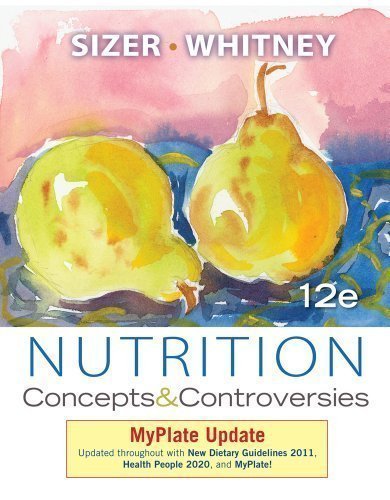
Nutrition Concepts and Controversies My Plate Update 12th Edition By Frances Sizer - Test Bank

Nutrition Concepts and Controversies My Plate Update 12th Edition By Frances Sizer - Test Bank   Instant Download - Complete Test Bank With Answers     Sample Questions Are Posted Below   Chapter 5 – The Lipids: Fats, Oils, Phospholipids, and Sterols   Chapter Learning Objectives   5.1  Discuss the reasons why a moderate intake …

$19.99

Nutrition Concepts and Controversies My Plate Update 12th Edition By Frances Sizer – Test Bank


Instant Download – Complete Test Bank With Answers


Sample Questions Are Posted Below


Chapter 5 – The Lipids: Fats, Oils, Phospholipids, and Sterols


Chapter Learning Objectives


5.1  Discuss the reasons why a moderate intake of lipids is an essential part of a healthy diet.

5.2  Compare and contrast the physical properties and the sources of saturated, polyunsaturated, and monounsaturated fats.

5.3  Describe how and where dietary lipids are broken down and absorbed during digestion and how they are transported throughout the body.

5.4  Describe the significance of the blood tests for HDL and LDL cholesterol.

5.5  Describe the roles of omega-3 and omega-6 fatty acids in the body, and discuss which may be too low in some people’s diets and how they can increase their intakes.

5.6  Justify the recommendation to eat fatty fish instead of relying on fish-oil supplements, and discuss safety issues surrounding both choices.

5.7  Describe the formation and structure of a trans-fatty acid, and state ways in which consumers may reduce their intakes.

5.8  Develop a diet plan that provides enough of the right kinds of fats within calorie limits.

5.9  Discuss evidence for the benefits and drawbacks of specific dietary fats in terms of their potential effects on human health.


True/False Items


L.O.#     Ans.        Page #


5.2          T             153                 1.     Fatty acids in foods influence the composition of fats in the body.


5.8          T             175                 2.     According to the USDA Food Guide, most adults should limit meat intake to 5 oz./day.


5.8          T             175                 3.     Pork loin is an example of a lean cut of meat from which the fat can be trimmed.


5.8          T             175                 4.     Some ground turkey and chicken products in which the skin is ground in are much higher in fats than lean beef.


Controversy 5 True/False Items


L.O.#     Ans.        Page #


5.9          T             185                 5.     The Mediterranean diet includes an eating style famous for supporting the health of the heart while including foods high in fat.


Comprehension-Level Multiple-Choice Items


L.O.#     Ans.        Page #


5.1          b              150                 1.     A family of organic compounds soluble in organic solvents but not in water is called:

  1. triglycerides.
  2. lipids.
  3. fats.
  4. oils.


5.1          a              150                 2.     About 95% of the lipids in foods and in the human body are:

  1. triglycerides.
  2. phospholipids.
  3. sterols.
  4. cholesterol.


5.4          c              150                 3.     Cholesterol is the best known of the:

  1. phospholipids.
  2. lipids.
  3. sterols.
  4. triglycerides.


5.1          b              151                 4.     All of the following are found mainly in foods that contain fat except:

  1. vitamin A.
  2. vitamin C.
  3. vitamin D.
  4. vitamin K.


5.1          c              151                 5.     Which of the following is not a function of fat in the human body?

  1. protects the body from temperature extremes
  2. cushions the internal organs from physical shock
  3. carries the water-soluble nutrients
  4. provides the major material from which cell membranes are made


5.2          d              152                 6.     Fatty acids may differ from one another:

  1. in chain length.
  2. in degree of saturation.
  3. in number of calories.
  4. a and b
  5. b and c


5.2          e              152                 7.     Triglycerides consist of:

  1. three fatty acids.
  2. trans fatty acids.
  3. glycerol.
  4. a and b
  5. a and c


5.1          b              152                 8.     Which one of the following statements about fatty foods is true?

  1. a hunter or hiker must eat large amounts of fat to travel long distances
  2. fat contributes to satiety, contributing to the feeling of fullness
  3. people do not prefer the taste of foods high in fat
  4. fat causes toughness in foods


5.2          c              153-154         9.     If the fat in a container is solid at room temperature, what type of fat is it?

  1. polyunsaturated fat
  2. monounsaturated fat
  3. saturated fat
  4. short-chain fatty acids


5.2          c              156                 10.  Which of the following statements concerning lecithin is not true?

  1. It plays a key role in the structure of cell membranes.
  2. It is an emulsifier.
  3. It has the ability to lower blood cholesterol.
  4. It has no special ability to promote health.


5.3          b              156-157         11.  The role of bile in fat digestion is to:

  1. digest fats in the stomach.
  2. emulsify fats in the small intestine.
  3. transport fats through the circulatory system.
  4. split fats into smaller components.


5.4,5.8    d              161                 12.  DRI recommendations concerning intakes of fats include:

  1. consume up to 35% of calories as fat.
  2. keep saturated fat intake as low as possible.
  3. keep cholesterol intake at 100 mg.
  4. a and b
  5. b and c


5.4          c              163                 13.  The main dietary factor associated with elevated blood cholesterol is:

  1. high cholesterol intake.
  2. high food fat intake.
  3. high saturated and trans fat intake.
  4. high polyunsaturated fat intake.


5.4          c              163                 14.  Which of the following is characteristic of a diet to oppose heart disease?

  1. high in saturated fats
  2. low in vegetables and fruits
  3. low in trans fats
  4. low in whole grains and legumes


5.4          b              163                 15.  Which of the following is not a desirable blood lipid value?

  1. low total cholesterol
  2. high LDL
  3. high HDL
  4. low blood triglycerides


5.5          e              166                 16.  Characteristics of the essential fatty acids include:

  1. they must be supplied by the diet.
  2. they can be made from the substances in the body.
  3. they are polyunsaturated fatty acids.
  4. b and c
  5. a and c


5.5          d              166-167         17.  A deficiency of fatty acids can cause:

  1. extreme weight loss in adults.
  2. low blood pressure.
  3. diabetes.
  4. abnormal brain development in infants.


5.5          c              167                 18.  EPA and DHA are:

  1. not important in nutrition.
  2. essential fatty acids.
  3. found in the oils of fish.
  4. omega-6 fatty acids.


5.5          a              168                 19.  Consuming _____ fatty fish meals a week will result in the right balance between omega-3 and omega-6 intakes.

  1. 2
  2. 3
  3. 4
  4. 5


5.6          b              168                 20.  The best way to increase consumption of omega-3 fatty acids is to:

  1. increase intake of seed oils.
  2. consume 2 fish meals per week.
  3. limit intake of polyunsaturated fats.
  4. take fish oil in supplements.


5.6          d              170                 21.  To protect yourself from consuming too much _____, you would limit your consumption of swordfish, king mackerel, and shark.

  1. lead
  2. arsenic
  3. iodine
  4. mercury


5.7          d              171                 22.  Cooking oils should be stored in tightly covered containers in order to:

  1. prevent them from becoming rancid.
  2. retard the oxidation process.
  3. prevent them from losing fat-soluble vitamins.
  4. a and b
  5. a and c


5.7          e              171                 23.  Vegetable oils comprise most of the added fat in the diet because:

  1. fast-food chains use them for frying.
  2. consumers prefer their taste.
  3. food manufacturers add them to processed foods.
  4. a and b
  5. a and c


5.7          d              171                 24.  Which of the following is(are) characteristic(s) of spreadable margarines made from polyunsaturated oils?

  1. Hydrogen is forced into the oil and some of the unsaturated fatty acids accept it.
  2. The oil becomes harder after the hydrogen is added.
  3. The margarine becomes less saturated than the original oil.
  4. a and b
  5. b and c


5.7          c              172                 25.  BHA and BHT are examples of:

  1. hydrogenated fats.
  2. unsaturated fatty acids.
  3. antioxidants.
  4. snack foods.


5.7          c              173                 26.  Which of the following statements about trans fatty acids is true?

  1. They are made by the body.
  2. Their amounts are never listed on food labels.
  3. They arise when polyunsaturated oils are hydrogenated.
  4. They occur naturally in foods to a large extent.


5.8          d              174                 27.  Foods with hidden fat include:

  1. coconuts.
  2. biscuits.
  3. fat on a steak.
  4. a and b
  5. b and c


5.8          e              174-177         28.  Which of the following food groups in the USDA Food Guide always contains fat?

  1. oils
  2. milk
  3. meats, poultry, fish, legumes, eggs and nuts
  4. a and b
  5. a and c


Application-Level Multiple-Choice Items


L.O.#     Ans.        Page #


5.1          b              150                 29.  What would you tell a person who says “We shouldn’t eat fat because all it does is make us gain weight”?

  1. You are correct, because fat we eat is stored in fat cells in unlimited amounts and can’t be used for energy.
  2. You are not correct, because fats provide most of the energy to fuel the work of our muscles.
  3. You are correct, because fat is stored under the surface of the skin and causes our bodies to overheat.
  4. You are not correct, because excess fat is converted to glycogen and stored in the muscles.


5.1          d              150-152         30.  As you are deciding how much fat to include in your meal, which aspects of its contribution in foods would you want to consider?

  1. foods containing fat are much bulkier and heavier than low-fat foods
  2. fat in foods will create a strong odor that may reduce your appetite
  3. when fat is eaten with phytochemicals it will block their absorption
  4. fat in your meal will contribute to satiety, the feeling of fullness after a meal


5.1          b              152                 31.  Approximately what percent calories from fat would be provided by a bowl of soup containing 200 calories and 99 calories from fat?

  1. 44%
  2. 50%
  3. 67%
  4. 72%


5.1          a              152                 32.  Which snack would a long-distance hiker prefer to carry as an energy-dense snack?

  1. granola bar, roasted peanuts, dried apricots (250 calories)
  2. baby carrots, yogurt, apple, wheat crackers (250 calories)
  3. juice box, pretzels, banana, 2 oz. string cheese (250 calories)
  4. bagel, fresh grapes, sport drink bottle (250 calories)

5.2          a              152-156         33.  The major storage form of fats in our body is:

  1. triglycerides, which are made up of fatty acids and glycerol.
  2. fatty acids, which are made up of trans fats and bile.
  3. cholesterol, which is stored in the blood.
  4. lecithin, which is stored in the liver.


5.2          c              153                 34.  What does the term “point of unsaturation” mean?

  1. the area on a fatty acid chain where the carbon bond is holding a hydrogen
  2. the area on a fatty acid chain where a nitrogen is attached
  3. the area on a fatty acid chain where a hydrogen is missing from the bond
  4. the area on the fatty acid chain where there is a zig-zag formation.


5.2          c              153-155         35.  To determine whether the main type of fatty acid in a fat is saturated or unsaturated the following guidance can be used:

  1. all plant oils are unsaturated because they are liquid at room temperature.
  2. solid fats that melt at a high temperature are unsaturated.
  3. oils that remain a clear color in the refrigerator are unsaturated.
  4. beef fat is considered unsaturated because cattle eat plants for their feed.


5.2          e              155                 36.  Recent recommendations suggest that we consume monounsaturated fats in the place of saturated fat. Which of the following items would achieve this goal?

  1. canola oil
  2. safflower oil
  3. olive oil
  4. a and b
  5. a and c


5.2          d              155                 37.  Which of the following fats is the most saturated?

  1. safflower oil
  2. palm oil
  3. olive oil
  4. coconut oil


5.2          b              156                 38. All of the following statements concerning cholesterol are true except:

  1. it is a part of every cell.
  2. it is an essential nutrient.
  3. it is important in the structure of brain and nerve cells.
  4. it can be made by the body.


5.3          b              156                 39.  Cholesterol is important in nutrition because:

  1. your body is not able to produce it so cholesterol is considered an essential nutrient.
  2. it is necessary for the production of the emulsifier bile by the liver.
  3. it is found in most foods we consume, though its main source is plants.
  4. it can contribute to weight loss when too much is eaten.


5.3          c              156-158         40.  Which of the following mechanisms is important for the digestion of fat in foods?

  1. in the mouth chewing and enzyme action dissolve the fat in saliva
  2. lecithin in the stomach emulsifies the fat and begins its digestion
  3. bile in the small intestine emulsifies the fat for enzyme action
  4. if the gallbladder is removed, the body is not able to digest fat


5.3          c              157                 41. Which of the following statements best describes individuals who have had their gallbladder removed?

  1. The liver stops producing bile.
  2. They cannot digest food.
  3. Bile is released directly into the small intestine.
  4. Bile is not delivered into the small intestine.


5.3          b              158                 42.  As fatty acids are absorbed through the intestinal lining for transport through the body, which of the following actions takes place?

  1. short-chain fatty acids pass directly through the blood to individual body cells
  2. large-chain fatty acids are formed into lipoproteins for transport in the blood
  3. fatty acids are transported through the blood as a separate top layer
  4. only a small percentage of fats are absorbed through the intestinal lining


5.3          c              159                 43.  Fat stored in the body is used as a source of energy when not enough energy is available from food. This process involves:

  1. retrieving fatty acids that have been stored in the liver.
  2. transporting cholesterol to the muscles to be broken down for energy.
  3. dismantling stored fat in fat cells and releasing components into blood.
  4. converting glucose into fat as a more efficient method of producing energy.


5.3          e              159                 44.  Which of the following supports the statement that “you can get fatter on fat calories than on the same number of carbohydrate calories”?

  1. To be stored as fat, glucose must undergo many chemical conversions in the body and each requires energy.
  2. Compared to glucose, fat requires fewer chemical conversions in the body.
  3. The body spends less energy assimilating carbohydrate than assimilating fat.
  4. a and c
  5. a and b


5.4          b              160-161         45.  Your diet has been evaluated and you are consuming an average of 2800 calories, 62 grams of saturated fat, and 5 grams of trans fat daily. Are these values within recommendations for heart health?

  1. yes, because the energy from saturated fat is within the recommended percentage for total fat energy
  2. no, because the energy from saturated fat is higher than the recommended percentage for saturated fat
  3. yes, because trans fat is within the recommendation for trans fat energy percentage in the diet
  4. no, because the trans fat energy percentage is lower than the recommendation for total fat energy


5.4          d              161-164         46.  The lipoproteins LDL and HDL are important in heart disease risk because of the following properties and actions:

  1. LDL are much lighter in weight because they do not contain as much cholesterol to take to the cells.
  2. HDL are affected by the amount of cholesterol we eat in our diet.
  3. LDL are beneficial because they transport cholesterol to the tissues and away from blood.
  4. HDL play an important role in scavenging cholesterol from the tissues for disposal.


5.4          c              161-165         47.  Which of the following would be the best dietary advice for someone who needs to lower her blood cholesterol levels?

  1. there is nothing you can do with your diet if you have a genetic tendency toward high blood cholesterol
  2. you need to drastically limit the amount of cholesterol-containing foods in your diet
  3. reduce the intake of saturated and trans fat in your diet to lower LDL levels in the blood
  4. increase HDL levels in the blood by eating more grains, fruits, and vegetables


5.4          c              163                 48.  A 26-year-old male works in a high-stress sales position. He has a family history of premature heart disease and he is physically inactive. How many risk factors for CVD does he have?

  1. 1
  2. 2
  3. 3
  4. 4


5.4          d              163                 49.  People should not make efforts to reduce their intakes of food cholesterol very stringently because:

  1. cholesterol is too widespread in all foods and it would result in a monotonous diet.
  2. cholesterol-containing foods have a minimal effect on blood cholesterol in most people.
  3. cholesterol-containing foods are nutritious and should not be eliminated from the diet.
  4. b and c
  5. a and b


5.5,5.6    b              167-168         50.  When attempting to increase intake of the essential fatty acids it would be best to adjust your diet to:

  1. eat more omega-6 fatty acids because they are more abundant in foods than omega-3 fatty acids.
  2. increase intake of fish containing EPA and DHA because of heart health benefits.
  3. consume foods that help the body to make linoleic and linolenic acid.
  4. include a fish oil supplement to make up for the deficiency in omega-3 fatty acids in your diet.


5.6          a              167-168         51.  Ocean fish has been suggested to provide health benefits if eaten on a regular basis. What would be your recommendation for whether or not to eat fish?

  1. fatty fish has been shown in studies to be beneficial in reducing blood triglyceride levels
  2. DHA in fish is harmful to eye development in the fetus if eaten during pregnancy
  3. eating fried fish will provide the greatest benefit from the omega-3 fats it contains
  4. people with existing heart disease should never eat fish because of the danger of mercury contamination


5.5          d              167-168         52.  Research on the benefits of fatty acids and their components has shown that:

  1. DHA may delay the loss of brain functions in aging.
  2. omega-3 fatty acids have shown a definite benefit in reducing chronic inflammation.
  3. supplements of fish oil have improved depression.
  4. seafood-consuming populations have a lower rate of death from heart disease.


5.5,5.6    a              167-169         53.  A woman who is pregnant is concerned about eating fish because of its potential contamination with mercury. What would you tell her about the need for essential fatty acids in her diet?

  1. it is important for her to find alternative sources of omega-3 fatty acids to provide DHA and EPA for growth and development of her fetus
  2. she can substitute foods with high omega-6 fatty acid content because it can be converted to omega-3 fatty acids
  3. she needs to increase her intake of omega-6 fatty acids to provide protection from heart disease
  4. margarines and vegetable oils are excellent sources of omega-3 fatty acids and can be used instead of fish


5.6          d              168                 54.  If you are considering using fish oil supplements for heart health, you need to consider that:

  1. fish oil supplements are an excellent way to provide the essential fatty acids you need without the danger of contamination.
  2. most coldwater fish do not have adequate levels of omega-3 fatty acids to protect the heart.
  3. fish oil supplements are an excellent source of vitamins A and D to meet RDA levels.
  4. fish oil supplements contain high levels of omega-3 fatty acids, which may suppress immune function.


5.6          b              170-171         55.  When you are selecting the type of fish to eat, which of the following should you consider?

  1. farm-raised fish are protected from contaminants so they are much safer to eat
  2. the species of fish chosen for grilled, baked, or broiled dishes contain higher levels of EPA and DHA
  3. consumption of any amount of fish that might contain mercury should be avoided
  4. temporarily discontinuing consumption of fish will allow the body to eliminate mercury from its tissues


5.7          e              171-172         56. Which of the following words on an ingredient list would alert you to the presence of trans fatty acids in the product?

  1. hydrogenated vegetable oil
  2. liquid corn oil
  3. shortening
  4. a and b
  5. a and c


5.7          b              171-172         57.  What is the most accurate statement to make about the process of hydrogenation of liquid vegetable oils?

  1. hydrogenation makes the oils more healthy because of the addition of hydrogen to keep them liquid in food products
  2. oils that have been hydrogenated are more resistant to oxidation that will spoil them and make them rancid
  3. hydrogenation will increase the activity of vitamins found in the oils
  4. eating hydrogenated oils has the same health benefits as eating liquid vegetable oils


5.7          e              172                 58.  You see BHA listed in the ingredient list on a food product label. This is an example of:

  1. an additive.
  2. an emulsifier.
  3. an antioxidant.
  4. a and b
  5. a and c


5.7          c              172-173         59.  Current recommendations for heart health are to reduce intake of trans fats in the diet. How would this be best accomplished?

  1. simply eliminate all foods with trans fats from your diet because they are not currently found in many foods
  2. read labels to select foods that say “trans-fat free” because all are healthier food selections
  3. consume as little trans fat as possible because of the harmful health effects that are similar to saturated fats
  4. use fat replacers such as olestra, which provide the same nutrient content as regular fats without being saturated


5.8          a              174                 60.  When controlling the fat intake in your diet it is best to use the following suggestion:

  1. consume about 20 percent of your daily energy from unsaturated fat in foods you eat.
  2. reduce the amount of visible fats in your diet because they are the majority of added fats you eat.
  3. invisible fats in foods provide only a minimum contribution to total fat in the diet so they don’t need to be reduced.
  4. select fat-free versions of high-fat foods because they are lower in calories.


5.8          a              174                 61.  All of the following provide about 5 grams of pure fat except:

  1. 2 tablespoons sour cream.
  2. 1 teaspoon oil.
  3. 1 tablespoon salad dressing.
  4. 1 ½ teaspoons margarine.


5.8          b              174-178         62.  A person eating at a restaurant has selected for his meal a trimmed grilled pork cutlet, tossed green salad with 2 tablespoons of Italian dressing, sweet potatoes with sugar glaze, cheese biscuit, and chocolate mousse for dessert. What comments would you make about the fat contribution of his meal?

  1. the meal does not have much visible fat content so it is low in fat
  2. the calorie content of this meal is high because of the invisible fat in the foods
  3. trimming the pork cutlet has removed most of the fat from the meat
  4. the amount of essential fatty acids are very high in this meal


5.8,5.9    c              176, 188        63.  You are talking with someone who is trying to decrease his intake of saturated and trans fat. Which of the following items would you recommend as a coffee whitener?

  1. cream
  2. non-dairy creamer
  3. skim milk
  4. half and half


5.8          e              178-179         64.  In an effort to lower LDL you would tell someone to:

  1. use olive oil in the place of saturated fat.
  2. use vegetable shortening in the place of lard.
  3. use corn oil in the place of vegetable shortening.
  4. a and b
  5. a and c


Controversy 5 Multiple-Choice Items


L.O.#     Ans.        Page #


5.9          d              184                 65.  All of the following problems are associated with low-fat diets except:

  1. they are difficult to maintain over time.
  2. they are not necessarily low-calorie diets.
  3. they may exclude nutritious foods.
  4. they result in nutrient deficiencies.


5.9          c              184-186         66.  The current advice on following a diet to prevent heart disease is to:

  1. reduce the total fat content to 20% so as to result in a reduction of total calorie intake.
  2. switch to butter on your foods because margarine is higher in trans fats.
  3. substitute olive oil for saturated and trans fat in spreads and sauces.
  4. use the Mediterranean diet recommendations because it is a low-fat diet.


5.9          e              185                 67.  Overall, the diets of the Mediterranean people are:

  1. low in saturated fat.
  2. high in animal protein.
  3. high in complex carbohydrates and fiber.
  4. a and b
  5. a and c


5.9          c              185-186         68.  Key heart-healthy foods in the Mediterranean diet include all of the following except:

  1. nuts.
  2. fish.
  3. margarine.
  4. olive oil.


5.9          d              186                 69.  Nutrient characteristics of nuts that may lower heart disease risk include:

  1. they are high in dietary fiber.
  2. they contain vitamin E, an antioxidant.
  3. they are low in total fat.
  4. a and b
  5. a and c


5.9          a              186-187         70.  The most heart-healthy margarines are those:

  1. which list liquid oil as the first ingredient.
  2. which are the most resistant to rancidity.
  3. which have received the most hydrogenation.
  4. which are the most expensive products.


5.9          a              187                 71.  You are trying to teach someone how to select an appropriate margarine to protect against heart disease. Therefore, you would tell the person to:

  1. choose one that lists liquid oil as the first ingredient.
  2. choose one that contains palm oil.
  3. choose one that is labeled “vegetable oil.”
  4. choose one that is sold in a stick.


5.9          d              188                 72.  The Mediterranean Diet Pyramid classifies legumes as:

  1. part of the meats group.
  2. part of the poultry, eggs, and cheese group.
  3. part of the “eat less often” group.
  4. part of the fruits, vegetables, nuts, and grains group.


5.9          b              188                 73.  All of the following foods are major contributors of healthful fatty acids except:

  1. olives, which are high in monounsaturated fats.
  2. nondairy creamer, which is high in trans fats.
  3. mayonnaise, which is high in omega-6 fatty acids.
  4. flaxseed, which is high in omega-3 fatty acids.


5.8,5.9    c              188                 74.  The benefits of the Mediterranean diet are a result of:

  1. the elimination of all red meats from the diet.
  2. the use of only olive oil as the preferred fat in the diet.
  3. a combination of vegetables, fruits, legumes, whole grains, and seafoods.
  4. the addition of larger portions of chicken and fish.


Matching Items


Match the fat-related terms on the right to their appropriate definitions on the left.


L.O.#     Ans.        Page #


5.1 d 150 1.     a lipid that is solid at room temperature a.             cholesterol

b.             phospholipid

c.             sterol

d.             fat

e.             triglyceride

f.             lecithin

g.             oil

5.1 e 150 2.     one of the three main classes of dietary lipids; chief form of fat in foods
5.1 f 150 3.     a phospholipid that is a major constituent of cell membranes
5.1 a 150 4.     one of the sterols manufactured in the body
5.1 c 150 5.     one of the three main classes of lipids with a structure similar to cholesterol
5.1 b 150 6.     one of the three main classes of lipids, which is similar to a triglyceride
5.1 g 150 7.     a lipid that is liquid at room temperature


Essay Items


L.O.#                     Page #


5.1                          150-151         1.     Describe the useful functions of fats in the body.


5.2                          156                 2.     Define the term emulsification and describe how the process of emulsification is used by food processors.


5.4                          160-163         3.     Differentiate between LDL and HDL and explain why elevated LDL concentrations in the blood are a sign of high heart attack risk.


5.6                          167-168         4.     Discuss arguments you would use in trying to convince someone to consume fish rather than take fish oil supplements.


5.7                          171-172         5.     Describe the process of hydrogenation used to prevent spoilage of oils containing unsaturated fatty acids and discuss the advantages and disadvantages of this process.


5.7                          172-173         6.     What are trans fatty acids and what is their role in the promotion of heart disease?


5.9                          184-6,188     7.     Compare and contrast the Mediterranean diet pattern and the USDA Food Guide recommendations.


Additional information

Add Review

Your email address will not be published. Required fields are marked *