Subtotal: $314.85

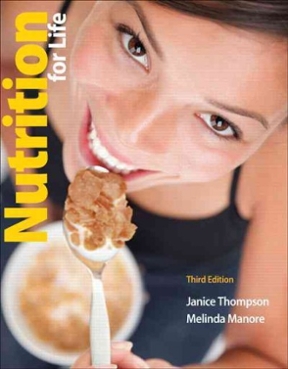
Nutrition For Life 3rd Edition by Thompson -Test Bank

Nutrition For Life 3rd Edition by Thompson -Test Bank   Instant Download - Complete Test Bank With Answers     Sample Questions Are Posted Below   Nutrition: An Applied Approach, 3e, My Plate Edition (Thompson/Manore) Chapter 5  Fats: Essential Energy-Supplying Nutrients   Multiple-Choice Questions   1) Which of the following describes lipids? A) organic nutrients …

$19.99

Nutrition For Life 3rd Edition by Thompson -Test Bank


Instant Download – Complete Test Bank With Answers


Sample Questions Are Posted Below


Nutrition: An Applied Approach, 3e, My Plate Edition (Thompson/Manore)

Chapter 5  Fats: Essential Energy-Supplying Nutrients


Multiple-Choice Questions


1) Which of the following describes lipids?

  1. A) organic nutrients that are insoluble in water
  2. B) inorganic nutrients that are insoluble in water
  3. C) organic nutrients that are insoluble in fat
  4. D) inorganic nutrients that are insoluble in fat

Answer:  A

Page Ref: 144

Skill:  Factual


2) Which of the following are NOT major classes of dietary lipids?

  1. A) glycogens
  2. B) triglycerides
  3. C) sterols
  4. D) phospholipids

Answer:  A

Page Ref: 144

Skill:  Factual


3) What is the primary form of fat in the diet?

  1. A) sterols
  2. B) triglycerides
  3. C) phospholipids
  4. D) glycerols

Answer:  B

Page Ref: 144

Skill:  Factual


4) A triglyceride is comprised of

  1. A) three fatty acids and one glycerol.
  2. B) three glycerols and one fatty acid.
  3. C) three phospholipids and one glycerol.
  4. D) three glycerols and one phospholipid.

Answer:  A

Page Ref: 144

Skill:  Factual


5) Medium-chain fatty acids are how many carbon atoms in length?

  1. A) at least 6
  2. B) at least 12
  3. C) at least 14
  4. D) at least 16

Answer:  A

Page Ref: 145

Skill:  Factual

6) A fatty acid that contains a chain of ten carbons and one double bond is called what?

  1. A) a saturated, medium-chain fatty acid
  2. B) a saturated, long-chain fatty acid
  3. C) a monounsaturated, medium-chain fatty acid
  4. D) a monounsaturated, long-chain fatty acid

Answer:  C

Page Ref: 145

Skill:  Conceptual


7) Which of the following fatty acids is generally solid at room temperature?

  1. A) short-chain
  2. B) monounsaturated
  3. C) saturated
  4. D) polyunsaturated

Answer:  C

Page Ref: 145

Skill:  Factual


8) Which of the following foods are rich sources of monounsaturated fatty acids?

  1. A) coconut and palm oils
  2. B) olive oil and cashew nuts
  3. C) safflower and corn oils
  4. D) butter and lard

Answer:  B

Page Ref: 145

Skill:  Conceptual


9) Which of the following foods contain a large quantity of saturated fatty acids?

  1. A) cashew nuts and almonds
  2. B) olive and canola oils
  3. C) canola and corn oils
  4. D) palm kernel and coconut oils

Answer:  D

Page Ref: 145

Skill:  Conceptual


10) Which of the following is a rich source of polyunsaturated fatty acids?

  1. A) corn oil
  2. B) coconut oil
  3. C) beef fat
  4. D) butter

Answer:  A

Page Ref: 145

Skill:  Conceptual

11) Saturated fats are

  1. A) liquid at room temperature.
  2. B) found primarily in foods derived from plants.
  3. C) found in whole milk and beef.
  4. D) protective of our health.

Answer:  C

Page Ref: 145

Skill:  Conceptual


12) The process of adding hydrogen to an unsaturated fatty acid and creating a more solid fat is called

  1. A) emulsification.
  2. B) pressurization.
  3. C) hydrogenation.
  4. D) deamination.

Answer:  C

Page Ref: 147

Skill:  Factual


13) Which of the following statements is TRUE about trans fatty acids?

  1. A) They are made by the body in large quantities.
  2. B) They are found only in plant products.
  3. C) They decrease the risk of developing heart disease.
  4. D) They are created during the hydrogenation process.

Answer:  D

Page Ref: 147

Skill:  Factual


14) Which of the following ingredients would alert you to the likely presence of trans fatty acids in a product?

  1. A) partially hydrogenated vegetable oil
  2. B) lecithin
  3. C) liquid corn oil
  4. D) vitamin E

Answer:  A

Page Ref: 147

Skill:  Conceptual


15) Which of the following is a rich source of omega-6 fatty acids?

  1. A) margarine made from corn or safflower oil
  2. B) flax seed oil
  3. C) leafy green vegetables
  4. D) salmon

Answer:  A

Page Ref: 150

Skill:  Factual

16) Which of the following is NOT TRUE about essential fatty acids?

  1. A) They cannot be made by our body.
  2. B) We need to obtain omega-3 fatty acids and omega-6 fatty acids from food.
  3. C) They are found in meat and dairy products.
  4. D) They are found in fish, shellfish, and fish oils.

Answer:  C

Page Ref: 148-151

Skill:  Conceptual


17) Why are phospholipids NOT an essential nutrient?

  1. A) Our bodies manufacture phospholipids.
  2. B) Phospholipids are not naturally found in the healthy body.
  3. C) Beneficial GI bacteria produce phospholipids.
  4. D) They provide no useful function in the human body.

Answer:  A

Page Ref: 151

Skill:  Conceptual


18) Which of the following statements is FALSE about sterols?

  1. A) Sterols are found in both plant and animal foods.
  2. B) Cholesterol is the most common sterol found in the human diet.
  3. C) The human body produces sterols.
  4. D) Sterols contain a glycerol backbone and one fatty acid.

Answer:  D

Page Ref: 151-152

Skill:  Factual


19) The key structural component(s) of a cell’s membrane is(are)

  1. A) estrogen.
  2. B) glycerol.
  3. C) phospholipids.
  4. D) triglycerides.

Answer:  C

Page Ref: 151

Skill:  Factual


20) Which of the following food items would contain the highest amount of saturated fat?

  1. A) steamed broccoli
  2. B) canola oil
  3. C) skim milk
  4. D) butter

Answer:  D

Page Ref: 145

Skill:  Applied

21) Sex hormones and adrenal hormones are substances derived from which class of lipid?

  1. A) fatty acids
  2. B) triglycerides
  3. C) phospholipids
  4. D) sterols

Answer:  D

Page Ref: 151-152

Skill:  Factual


22) Which of the following is NOT a function of fat in the human body?

  1. A) Fat assists in the transport of fat-soluble vitamins.
  2. B) Fat maintains the integrity of cell membranes.
  3. C) Fat provides insulation to help retain body heat.
  4. D) Fats make us feel hungry.

Answer:  D

Page Ref: 153-154

Skill:  Factual


23) Which of the following organs does NOT assist in the digestion of lipids?

  1. A) liver
  2. B) large intestine
  3. C) gallbladder
  4. D) pancreas

Answer:  B

Page Ref: 155-156

Skill:  Factual


24) The vast majority of fat digestion and absorption occurs in the

  1. A) stomach.
  2. B) liver.
  3. C) small intestine.
  4. D) large intestine.

Answer:  C

Page Ref: 156

Skill:  Factual


25) To facilitate the digestion of dietary fats, the gallbladder stores and releases a substance known as

  1. A) lipase.
  2. B) bile.
  3. C) hydrochloric acid.
  4. D) bicarbonate.

Answer:  B

Page Ref: 156

Skill:  Factual

26) Where in the body are the majority of triglycerides stored for future energy needs?

  1. A) lipoproteins
  2. B) beta cells of the pancreas
  3. C) liver
  4. D) adipose tissue

Answer:  D

Page Ref: 156

Skill:  Factual


27) Which lipoprotein transports dietary fat out of the small intestine?

  1. A) chylomicron
  2. B) sterol
  3. C) low density lipoprotein (LDL)
  4. D) phospholipid

Answer:  A

Page Ref: 156

Skill:  Factual


28) Fat leaves the chylomicron and moves into adipose cells when what substance comes in contact with it (causing the triglyceride to break up and be taken into the adipose cell)?

  1. A) insulin
  2. B) lipoprotein lipase
  3. C) trypsin
  4. D) adrenaline

Answer:  B

Page Ref: 157

Skill:  Factual


29) How many calories are potentially provided by 25 grams of fat?

  1. A) 23 kilocalories
  2. B) 100 kilocalories
  3. C) 225 kilocalories
  4. D) 2,250 kilocalories

Answer:  C

Page Ref: 152

Skill:  Applied


30) During exercise, which of the following triggers the breakdown of stored fat?

  1. A) lipoprotein lipase
  2. B) adrenaline
  3. C) insulin
  4. D) estrogen

Answer:  B

Page Ref: 152

Skill:  Factual

31) One of the two essential fatty acids is alpha-linolenic acid. What is the other one?

  1. A) cholesterol
  2. B) linoleic
  3. C) butyric
  4. D) cis

Answer:  B

Page Ref: 150

Skill:  Factual


32) Eicosapentaenoic acid (EPA) and docosahexaenoic acid (DHA) are metabolic derivatives of

  1. A) trans
  2. B) linoleic acid.
  3. C) alpha-linolenic acid.
  4. D) cholesterol.

Answer:  C

Page Ref: 151

Skill:  Factual


33) The Acceptable Macronutrient Distribution Range (AMDR) for fat is what percentage of total energy intake?

  1. A) no more than 15%
  2. B) no more than 20%
  3. C) no more than 35%
  4. D) no more than 50%

Answer:  C

Page Ref: 158

Skill:  Factual


34) Which of the following foods contains hidden fats?

  1. A) olive oil
  2. B) zucchini
  3. C) chocolate cake
  4. D) butter

Answer:  C

Page Ref: 160

Skill:  Applied


35) Which of the following species of fish would likely contain the highest levels of contaminants?

  1. A) swordfish
  2. B) salmon
  3. C) flounder
  4. D) mahi-mahi

Answer:  A

Page Ref: 165

Skill:  Factual

36) Which of the following health problems has been associated with high intakes of fat replacers?

  1. A) allergies
  2. B) gastrointestinal distress
  3. C) elevated blood cholesterol levels
  4. D) hypertension

Answer:  B

Page Ref: 166

Skill:  Factual


37) Which of the following statements is FALSE regarding the process of hydrogenation?

  1. A) Hydrogenation creates trans fatty acids.
  2. B) Hydrogenation is the process in which hydrogen atoms are added to double bonds.
  3. C) Hydrogenation creates a “heart healthy” product.
  4. D) Hydrogenation makes a product more solid at room temperature.

Answer:  C

Page Ref: 147

Skill:  Factual


38) Which of the following is a fat replacer?

  1. A) phosphate
  2. B) saccharin
  3. C) olestra
  4. D) trans fat

Answer:  C

Page Ref: 166

Skill:  Factual


39) Research has found the strongest association between dietary fat intake and what type of cancer?

  1. A) lung
  2. B) breast
  3. C) prostate
  4. D) colon

Answer:  C

Page Ref: 167

Skill:  Factual

40) The major form of fat in both food and the body is

  1. A) phospholipids.
  2. B) triglycerides.
  3. C) glycerols.
  4. D) sterols.

Answer:  B

Page Ref: 144

Skill:  Factual

41) Which of the following types of fat is required to be listed on the Nutrition Facts Panel by the U.S. Food and Drug Administration?

  1. A) phospholipids
  2. B) sterols
  3. C) essential fatty acids
  4. D) trans fatty acids

Answer:  D

Page Ref: 164

Skill:  Factual


42) Which of the following are excellent sources of unsaturated fats?

  1. A) nuts and nut butters
  2. B) full-fat dairy products
  3. C) meat
  4. D) beans and rice

Answer:  A

Page Ref: 165

Skill:  Conceptual


43) How much trans fat is recommended in the diet?

  1. A) as little as possible
  2. B) 3% of total energy intake
  3. C) 9% of total energy intake
  4. D) 20% of total energy intake

Answer:  A

Page Ref: 164

Skill:  Applied


44) The label on a box of chocolate cookies claims that they are “low-fat.” By law each serving must contain

  1. A) less than 0.5 grams of fat.
  2. B) 3 grams or less of fat.
  3. C) at least 25% less fat as compared to a standard serving.
  4. D) at least 50% less fat as compared to a standard serving.

Answer:  B

Page Ref: 160

Skill:  Factual


45) In people who are physically active, extra fat consumed in the diet is stored first in

  1. A) adipose cells.
  2. B) the liver.
  3. C) muscle tissue.
  4. D) lymphatic tissue.

Answer:  C

Page Ref: 157

Skill:  Factual

46) What is the daily recommended intake of saturated fat?

  1. A) as little as possible
  2. B) no more than 2% of total energy intake
  3. C) no more than 5% of total energy intake
  4. D) no more than 10% of total energy intake

Answer:  D

Page Ref: 163

Skill:  Factual


47) The most common sterol in our diet is

  1. A) olestra.
  2. B) cholesterol.
  3. C) phytosterol.
  4. D) stanol.

Answer:  B

Page Ref: 151

Skill:  Factual


48) Which of the following groups would have the lowest risk for toxicity from eating shark and other fish with high levels of environmental contaminants?

  1. A) teenaged boys
  2. B) pregnant women
  3. C) breastfeeding women
  4. D) children

Answer:  A

Page Ref: 165

Skill:  Applied


49) Fatty acids released from storage travel in the blood attached to the protein

  1. A) lysine.
  2. B) cysteine.
  3. C) albumin.
  4. D) methionine.

Answer:  C

Page Ref: 153

Skill:  Factual


50) How many double bonds does a saturated fatty acid contain between carbons?

  1. A) none
  2. B) one
  3. C) two
  4. D) more than two

Answer:  A

Page Ref: 145

Skill:  Conceptual

51) The spherical compounds made up of bile and phospholipids that transport dietary fat into the intestinal mucosal cells are the

  1. A) chylomicrons.
  2. B) salivary enzymes.
  3. C) albumins.
  4. D) micelles.

Answer:  D

Page Ref: 156

Skill:  Factual


52) Which type of fatty acid has hydrogen atoms located on the same side of the double bond?

  1. A) trans
  2. B) cis
  3. C) saturated
  4. D) glycerol

Answer:  B

Page Ref: 147

Skill:  Factual


53) Diets high in trans and what other type of fatty acid contribute to chronic diseases, including heart disease and cancer?

  1. A) polyunsaturated
  2. B) monounsaturated
  3. C) saturated
  4. D) linoleic

Answer:  C

Page Ref: 167

Skill:  Factual


True/False Questions


1) Lipids can be either solid or liquid at room temperature.

Answer:  TRUE

Page Ref: 145

Skill:  Factual


2) Only plants can synthesize cholesterol.

Answer:  FALSE

Page Ref: 151

Skill:  Factual


3) Fat is the most energy dense of all the macronutrients.

Answer:  TRUE

Page Ref: 152

Skill:  Factual


4) In general, animal-based fats are high in saturated fats.

Answer:  TRUE

Page Ref: 145

Skill:  Factual

5) Plant fats provide 80-90% of their energy from saturated fats.

Answer:  FALSE

Page Ref: 145

Skill:  Factual


6) Unless labeled as zero trans fatty acids, most margarines will have more trans fatty acids than butter.

Answer:  TRUE

Page Ref: 147

Skill:  Factual


7) Short- and medium-chain fatty acids are absorbed and transported more quickly than long-chain fatty acids.

Answer:  TRUE

Page Ref: 145

Skill:  Factual


8) Olive oil, canola oil, and cashew nuts are rich in monounsaturated fatty acids.

Answer:  TRUE

Page Ref: 145

Skill:  Conceptual


9) Saturated fatty acids can occur in either a cis or trans shape.

Answer:  FALSE

Page Ref: 145, 147

Skill:  Conceptual


10) People attempting to lose weight will be most successful if they limit their consumption of fat to less than 15% of kilocalories.

Answer:  FALSE

Page Ref: 158

Skill:  Factual

11) Even if the Nutrition Facts panel states 0 g trans fats, the product could still have 1/2 g of trans fat per serving.

Answer:  TRUE

Page Ref: 148

Skill:  Factual


12) Despite having decreased their overall percentage of fat calories since the 1960s, Americans are now consuming more calories overall, including total fat.

Answer:  TRUE

Page Ref: 158

Skill:  Factual


13) In January 2006 the Food and Drug Administration issued an optional recommendation to list the amounts of trans fatty acids on the Nutrition Facts panel of food products.

Answer:  FALSE

Page Ref: 164

Skill:  Factual

14) If an ingredient label indicates a product contains partially hydrogenated oils, it will almost assuredly contain trans fats.

Answer:  TRUE

Page Ref: 148

Skill:  Conceptual


15) Women are advised to avoid all fish products during pregnancy.

Answer:  FALSE

Page Ref: 165

Skill:  Factual


16) Saturated fats are typically liquid at room temperature.

Answer:  FALSE

Page Ref: 145

Skill:  Conceptual


17) Invisible or “hidden” fats are ones that are translucent at room temperature.

Answer:  FALSE

Page Ref: 160

Skill:  Conceptual


18) Studies show that the use of fat replacers will reduce the risk of cardiovascular disease and obesity.

Answer:  FALSE

Page Ref: 166

Skill:  Factual


19) Fat is digested more slowly than carbohydrate or protein.

Answer:  TRUE

Page Ref: 154

Skill:  Conceptual


20) The human body cannot make cholesterol, thus it is an essential nutrient we must consume in our diet in moderation.

Answer:  FALSE

Page Ref: 152

Skill:  Factual


21) Triglycerides, phospholipids, and glycerols are the three types of lipids commonly found in foods.

Answer:  FALSE

Page Ref: 144

Skill:  Factual


22) The term monounsaturated describes a fatty acid containing one double bond between two carbon atoms along the chain.

Answer:  TRUE

Page Ref: 145

Skill:  Conceptual

23) Lipids with a glycerol backbone and two fatty acids with a phosphate group are known as sterols.

Answer:  FALSE

Page Ref: 151

Skill:  Factual


24) Lipids that contain multiple carbon-ring structures are known as phospholipids.

Answer:  FALSE

Page Ref: 151

Skill:  Factual


25) Cashews are high in saturated fats.

Answer:  FALSE

Page Ref: 145

Skill:  Applied


Essay Questions


1) What is hydrogenation? Why do food manufacturers utilize this process, and what are the potential health impacts of hydrogenation?

Answer:  Answers will vary.

Page Ref: 147

Skill:  Applied


2) Discuss the impact of environmental contaminants on the current recommendations for safe fish consumption. How does this relate to the advice to consume abundant sources of omega-3 fatty acids?

Answer:  Answers will vary.

Page Ref: 165

Skill:  Conceptual


3) Describe some specific steps you could take to select foods with a healthier fat content when you are grocery shopping and when you are eating at a restaurant.

Answer:  Answers will vary.

Page Ref: 160, 162-166

Skill:  Applied


Nutrition Debate Questions


1) One of your friends has decided to purchase a chitosan supplement to help her lose weight. She is convinced the $40 for a one-month supply is worth it if she can just lose 10 pounds. After examining the data, how would you counsel your friend? Does the data convince you that fat blockers are worth the money and the side effects?

Answer:  Answers will vary.

Page Ref: 169

Skill:  Conceptual

Questions from Chapter Boxes


1) Nuts are a good source of

  1. A) healthful unsaturated fats.
  2. B) unnecessary calories.
  3. C) lean protein.
  4. D) sodium.

Answer:  A

Page Ref: 147

Skill:  Factual


2) Several recent research studies have indicated people who eat an ounce or two of nuts each day in addition to their usual diet did NOT gain weight as would be expected from their increased caloric intake.

Answer:  TRUE

Page Ref: 147

Skill:  Factual


3) The American Heart Association advises consumers to

  1. A) choose trans fat free margarines over butter.
  2. B) choose butter over trans fat free margarine.
  3. C) avoid butter and margarine all together.
  4. D) use mayonnaise instead or butter or margarine.

Answer:  A

Page Ref: 149

Skill:  Factual


4) Yesterday Nadia consumed 250 grams of carbohydrate, 75 grams of protein, and 60 grams of fat. What percentage of calories of her day’s intake came from fat?

  1. A) 13%
  2. B) 15%
  3. C) 29%
  4. D) 35%

Answer:  C

Page Ref: 161

Skill:  Applied


5) Which of the following is a rich source of monounsaturated fatty acids, yet neutral in flavor, making it a good choice for cooking oil?

  1. A) corn oil
  2. B) coconut oil
  3. C) canola oil
  4. D) butter

Answer:  C

Page Ref: 165

Skill:  Applied

6) One of your friends is trying to decrease his intake of saturated fat. Which of the following items would you recommend he choose to add to his coffee?

  1. A) whipping cream
  2. B) half and half
  3. C) non dairy creamer
  4. D) fat free milk or 1% milk

Answer:  D

Page Ref: 168

Skill:  Applied


Nutrition: An Applied Approach, 3e, My Plate Edition (Thompson/Manore)

In Depth: Cardiovascular Disease


Multiple-Choice Questions


1) What is the leading cause of death in the United States?

  1. A) cancer
  2. B) heart disease
  3. C) diabetes
  4. D) infection

Answer:  B

Page Ref: 176

Skill:  Factual


2) An optimal systolic blood pressure reading would be less than

  1. A) 60 mm Hg.
  2. B) 80 mm Hg.
  3. C) 120 mm Hg.
  4. D) 200 mg.

Answer:  C

Page Ref: 176

Skill:  Factual


3) You would be diagnosed with true hypertension if your systolic blood pressure was greater than or equal to 140 mm Hg or your diastolic blood pressure was greater than or equal to

  1. A) 90 mm Hg.
  2. B) 120 mm Hg.
  3. C) 140 mm Hg.
  4. D) 160 mm Hg.

Answer:  A

Page Ref: 176

Skill:  Factual


4) Which of the following is a modifiable risk factor for cardiovascular disease?

  1. A) age
  2. B) gender
  3. C) being overweight
  4. D) family history

Answer:  C

Page Ref: 176

Skill:  Conceptual


5) A nonspecific marker of inflammation associated with cardiovascular disease is

  1. A) C-reactive protein (CRP).
  2. B) LDL-cholesterol.
  3. C) hypertension.
  4. D) HDL-cholesterol.

Answer:  A

Page Ref: 177

Skill:  Factual

6) What lifestyle changes can a person take to improve his or her blood lipid profile?

  1. A) lower intake of saturated fat and trans fat
  2. B) decrease intake of soluble fiber
  3. C) maintain lower-than-normal body weight
  4. D) decrease amount of physical activity

Answer:  A

Page Ref: 179, 181-182

Skill:  Applied


7) The production of endogenous very-low-density-lipoproteins (VLDL) is decreased by

  1. A) exercise.
  2. B) simple sugars.
  3. C) extra calories.
  4. D) dietary cholesterol.

Answer:  A

Page Ref: 177

Skill:  Factual


8) A desirable total blood cholesterol level, associated with a reduced risk for cardiovascular disease, is less than

  1. A) 40 mg/dl.
  2. B) 100 mg/dl.
  3. C) 200 mg/dl.
  4. D) 300 mg/dl.

Answer:  C

Page Ref: 179

Skill:  Applied


9) Which of the following recommendations have been shown to improve blood lipid levels and reduce the risk for cardiovascular disease?

  1. A) maintaining fat intake to within 20-35% of total energy
  2. B) increasing saturated fat to more than 7% of total energy
  3. C) decreasing intake of dietary omega-3 fatty acids from cold-water fish, nuts, and canola oil
  4. D) consuming 200 μg/day of folate from supplements

Answer:  A

Page Ref: 179

Skill:  Applied


10) The National Institutes of Health (NIH) recommends a reduction in dietary sodium intake to how many mg per day?

  1. A) less than 200
  2. B) less than 2,400
  3. C) less than 3,300
  4. D) less than 3,600

Answer:  B

Page Ref: 182

Skill:  Factual

True/False Questions


1) Hypertension is often a sign of underlying atherosclerosis.

Answer:  TRUE

Page Ref: 174

Skill:  Factual


2) Hypertension is a disease in which arterial walls accumulate deposits of lipids and scar tissue that impairs blood flow.

Answer:  FALSE

Page Ref: 174

Skill:  Factual


3) Primary or essential hypertension, accounting for approximately 45-55% of people, is hereditary.

Answer:  TRUE

Page Ref: 176

Skill:  Factual


4) Hypertension contributes to both coronary heart disease and stroke.

Answer:  TRUE

Page Ref: 174

Skill:  Factual


5) High blood levels of LDL-cholesterol increase the risk of heart disease.

Answer:  TRUE

Page Ref: 178

Skill:  Factual


6) High blood levels of HDL-cholesterol is associated with a low risk for coronary artery disease.

Answer:  TRUE

Page Ref: 178

Skill:  Factual


7) Minimizing your intake of unsaturated fatty acids as much as possible will lower your risk of heart disease.

Answer:  FALSE

Page Ref: 179

Skill:  Conceptual


8) Diabetes decreases an individual’s risk for developing heart disease.

Answer:  FALSE

Page Ref: 181

Skill:  Factual


9) Replacing saturated fats with unsaturated fats and increasing physical activity are associated with increased HDL-cholesterol levels.

Answer:  TRUE

Page Ref: 178

Skill:  Factual

10) Research indicates eating a diet low in sodium and high in fruits and vegetables has no effect on blood pressure or risk for heart attack and stroke.

Answer:  FALSE

Page Ref: 182

Skill:  Conceptual

Additional information

Add Review

Your email address will not be published. Required fields are marked *