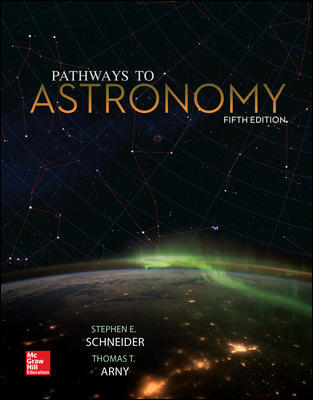
Pathways to Astronomy 5Th Edition By Steven Schneider - Test Bank

Pathways to Astronomy 5Th Edition By Steven Schneider - Test Bank   Instant Download - Complete Test Bank With Answers     Sample Questions Are Posted Below   Part 4 Test Bank - Stars and Stellar Evolution   The study of waves inside the sun is called ...   1. The study of waves inside …

$19.99

Pathways to Astronomy 5Th Edition By Steven Schneider – Test Bank


Instant Download – Complete Test Bank With Answers


Sample Questions Are Posted Below


Part 4 Test Bank – Stars and Stellar Evolution


The study of waves inside the sun is called …


1. The study of waves inside the sun is called _____.

A. solar waveology


B. helioseismology


C. corona holes


D. photospheric waves

Began in 1960s.


Accessibility: Keyboard Navigation
Bloom’s Level: 1. Remember
Difficulty: Medium
Gradable: automatic
Part 4
Section: 51.05
Section: 54.02
Subtopic: Solar Activity
Subtopic: Solar Interior Structure
Topic: The Sun
Unit: 51

The sun does not expand or contract because…


2. The sun does not expand or contract because it is in a state of ______.

A. convective equilibrium


B. coronal equilibrium


C. photosphere equilibrium


D. hydrostatic equilibrium

All stars that are normal are doing this.


Accessibility: Keyboard Navigation
Bloom’s Level: 1. Remember
Difficulty: Medium
Gradable: automatic
Part 4
Section: 51.02
Subtopic: Interior Dynamics of the Sun
Subtopic: Interior Processes for the Sun
Subtopic: Solar Interior Structure
Topic: The Sun
Unit: 51

This part of the sun’s atmosphere is at a temperature about 1,000,000 K:


3. This part of the sun’s atmosphere is at a temperature about 1,000,000 K:

A. photosphere


B. chromosphere


C. corona


D. spicule

Thin, but molecules are moving fast.


Accessibility: Keyboard Navigation
Bloom’s Level: 1. Remember
Difficulty: Easy
Gradable: automatic
Part 4
Section: 51.04
Subtopic: Solar Atmosphere
Topic: The Sun
Unit: 51

Granulation on the Sun is evidence of


4. Granulation on the Sun is evidence of

A. convection in the photosphere.


B. seismic activity in the core of the Sun.


C. magnetic activity in the corona.


D. spicules in the chromosphere.


Accessibility: Keyboard Navigation
Bloom’s Level: 2. Understand
Difficulty: Medium
Gradable: automatic
Part 4
Section: 51.03
Subtopic: Interior Processes for the Sun
Subtopic: Solar Interior Structure
Topic: The Sun
Unit: 51

The core of the sun moves energy primarily b…


5. The core of the sun moves energy primarily by convection.

FALSE


Accessibility: Keyboard Navigation
Bloom’s Level: 2. Understand
Difficulty: Medium
Gradable: automatic
Part 4
Section: 51.03
Subtopic: Interior Processes for the Sun
Subtopic: Solar Interior Structure
Topic: The Sun
Unit: 51

A good analogy for magnetic waves in the sol…


6. A good analogy for magnetic waves in the solar atmosphere is similar to cracking a whip.

TRUE


Accessibility: Keyboard Navigation
Bloom’s Level: 2. Understand
Difficulty: Medium
Gradable: automatic
Part 4
Section: 51.04
Subtopic: Solar Atmosphere
Subtopic: Solar Magnetic Field
Topic: The Sun
Unit: 51

In E=mc2 -c stands for _____.


7. In E=mc2 -c stands for _____.

A. speed of sound


B. energy construction


C. speed of light


D. energy of fusion

300,000 km/sec


Accessibility: Keyboard Navigation
Bloom’s Level: 1. Remember
Difficulty: Easy
Gradable: automatic
Part 4
Section: 52.01
Subtopic: Interior Processes for the Sun
Subtopic: Proton-proton Chain
Topic: The Sun
Unit: 52

The force that holds the nucleus of the atom…


8. The force that holds the nucleus of the atom together is called the _____.

A. weak force


B. nuclear force


C. neutron force


D. E-M force

Strongest but short ranged.


Accessibility: Keyboard Navigation
Bloom’s Level: 1. Remember
Difficulty: Easy
Gradable: automatic
Part 4
Section: 52.01
Subtopic: Interior Processes for the Sun
Subtopic: Proton-proton Chain
Topic: The Sun
Unit: 52

This is an almost massless particle that is …


9. This is an almost massless particle that is produced in fusion:

A. proton


B. electron


C. neutron


D. neutrino

Means ghost particle.


Accessibility: Keyboard Navigation
Bloom’s Level: 1. Remember
Difficulty: Easy
Gradable: automatic
Part 4
Section: 52.02
Subtopic: Interior Processes for the Sun
Subtopic: Neutrinos
Subtopic: Proton-proton Chain
Topic: The Sun
Unit: 52

The Sun’s source of energy is


10. The Sun’s source of energy is

A. fission of heavy elements.


B. fusion of hydrogen into helium.


C. combustion of hydrogen with oxygen.


D. heat generated by gravity.


Accessibility: Keyboard Navigation
Bloom’s Level: 1. Remember
Difficulty: Easy
Gradable: automatic
Part 4
Section: 52.02
Subtopic: Interior Processes for the Sun
Subtopic: Proton-proton Chain
Topic: The Sun
Unit: 52

Cosmic rays are fast moving particles in spa…


11. Cosmic rays are fast moving particles in space.

TRUE


Accessibility: Keyboard Navigation
Bloom’s Level: 1. Remember
Difficulty: Easy
Gradable: automatic
Part 4
Section: 52.03
Subtopic: Solar Activity
Subtopic: Solar Magnetic Field
Subtopic: Sunspots and Sunspot Cycle
Topic: The Sun
Unit: 52

The three-step process that creates energy i…


12. The three-step process that creates energy in the sun is called the helium helium chain.

FALSE


Accessibility: Keyboard Navigation
Bloom’s Level: 1. Remember
Difficulty: Easy
Gradable: automatic
Part 4
Section: 52.02
Subtopic: Interior Processes for the Sun
Subtopic: Proton-proton Chain
Topic: The Sun
Unit: 52

Sunspots appear dark because


13. Sunspots appear dark because

A. they have a different composition than the surrounding surface of the Sun.


B. they are holes in the photosphere of the Sun.


C. they are cooler than the surrounding surface of the Sun.


D. light is prevented from escaping because of the strong magnetic field.


Accessibility: Keyboard Navigation
Bloom’s Level: 2. Understand
Difficulty: Easy
Gradable: automatic
Part 4
Section: 53.01
Subtopic: Solar Magnetic Field
Subtopic: Sunspots and Sunspot Cycle
Topic: The Sun
Unit: 53

The sunspot cycle going from low point to l…


14. The sunspot cycle going from low point to low point in its cycle takes about ______.

A. 7 yrs


B. 25 yrs


C. 11 yrs


D. 3 yrs

The cycle is more complicated because if you go from polarity of the spots back to polarity of the spots it is 22 years.


Accessibility: Keyboard Navigation
Bloom’s Level: 1. Remember
Difficulty: Easy
Gradable: automatic
Part 4
Section: 53.03
Subtopic: Sunspots and Sunspot Cycle
Topic: The Sun
Unit: 53

Sunspots are a ________ storm on the sun.


15. Sunspots are a ________ storm on the sun.

A. magnetic

S

B. wind


C. tornado


D. hurricane

Can be 1000s of times Earth’s magnetism.


Accessibility: Keyboard Navigation
Bloom’s Level: 1. Remember
Difficulty: Easy
Gradable: automatic
Part 4
Section: 53.01
Subtopic: Solar Magnetic Field
Subtopic: Sunspots and Sunspot Cycle
Topic: The Sun
Unit: 53

Huge plumes in the lower chromosphere of th…


16. Huge plumes in the lower chromosphere of the sun following magnetic lines are called _____.

A. flares


B. spicules


C. prominences


D. sunspots

Can dwarf the Earth in size.


Accessibility: Keyboard Navigation
Bloom’s Level: 1. Remember
Difficulty: Easy
Gradable: automatic
Part 4
Section: 53.02
Subtopic: Solar Activity
Subtopic: Solar Magnetic Field
Topic: The Sun
Unit: 53

Sunspots can be 4500 K.


17. Sunspots can be 4500 K.

TRUE


Accessibility: Keyboard Navigation
Bloom’s Level: 1. Remember
Difficulty: Easy
Gradable: automatic
Part 4
Section: 53.01
Subtopic: Sunspots and Sunspot Cycle
Topic: The Sun
Unit: 53

A flare is exactly the same as a sunspot.


18. A flare is exactly the same as a sunspot.

FALSE


Accessibility: Keyboard Navigation
Bloom’s Level: 1. Remember
Difficulty: Easy
Gradable: automatic
Part 4
Section: 53.02
Subtopic: Solar Activity
Topic: The Sun
Unit: 53

The baseline used in measuring the parallax…


19. The baseline used in measuring the parallax of stars is

A. 1 arc second


B. 2 AU


C. 1 parsec


D. 2 parsecs


Accessibility: Keyboard Navigation
Bloom’s Level: 2. Understand
Difficulty: Medium
Gradable: automatic
Part 4
Section: 54.02
Subtopic: Measuring Distance to Stars
Subtopic: Parallax
Topic: History of Astronomy
Topic: Properties of Stars
Unit: 54

The motion along the line of sight is common…


20. The motion along the line of sight is commonly called _____.

A. proper motion


B. transverse velocity


C. radial motion


D. space motion

Measured by Doppler Effect.


Accessibility: Keyboard Navigation
Bloom’s Level: 1. Remember
Difficulty: Medium
Gradable: automatic
Part 4
Section: 54.04
Subtopic: Stellar Motion
Topic: Properties of Stars
Unit: 54

This is the motion of the star with respect …


21. This is the motion of the star with respect to the background stars:

A. proper motion


B. transverse velocity


C. radial motion


D. space motion

Very hard to detect.


Accessibility: Keyboard Navigation
Bloom’s Level: 1. Remember
Difficulty: Medium
Gradable: automatic
Part 4
Section: 54.04
Subtopic: Stellar Motion
Topic: Properties of Stars
Unit: 54

The Earth-sun distance is known as a(an) ___…


22. The Earth-sun distance is known as a(an) ______.

A. astronomical unit


B. parsec


C. light year


D. kilometer

About 150 million km.


Accessibility: Keyboard Navigation
Bloom’s Level: 1. Remember
Difficulty: Easy
Gradable: automatic
Part 4
Section: 54.01
Subtopic: Astronomical Unit (AU)
Subtopic: Measuring Distance to Stars
Topic: Language of Astronomy
Topic: Properties of Stars
Unit: 54

The nearest star to the Earth is Proxima Cen…


23. The nearest star to the Earth is Proxima Centauri.

TRUE


Accessibility: Keyboard Navigation
Bloom’s Level: 1. Remember
Difficulty: Easy
Gradable: automatic
Part 4
Section: 54.03
Subtopic: Measuring Distance to Stars
Topic: Properties of Stars
Unit: 54

Hipparchus used triangulation to estimate th…


24. Hipparchus used triangulation to estimate the distance to the moon.

TRUE


Accessibility: Keyboard Navigation
Bloom’s Level: 1. Remember
Difficulty: Medium
Gradable: automatic
Part 4
Section: 54.01
Subtopic: Historical: Distances and Sizes of the Sun and Moon
Subtopic: Measuring Distance to Stars
Topic: History of Astronomy
Topic: Properties of Stars
Unit: 54

The total amount of energy that a star emits…


25. The total amount of energy that a star emits is called its ______.

A. astro energy


B. luminosity


C. apparent magnitude


D. apparent brightness

Usually given in sun units for comparison.


Accessibility: Keyboard Navigation
Bloom’s Level: 1. Remember
Difficulty: Easy
Gradable: automatic
Part 4
Section: 55.01
Subtopic: Luminosity, Brightness, and the Inverse-square Law
Topic: Properties of Stars
Unit: 55

The brightness of a star at 10 parsecs is ca…


26. The brightness of a star at 10 parsecs is called the star’s ______.

A. apparent brightness


B. apparent luminosity


C. absolute magnitude


D. parsec magnitude

Apparent brightness of the star at 10 parsecs or 32.6 light years.


Accessibility: Keyboard Navigation
Bloom’s Level: 1. Remember
Difficulty: Easy
Gradable: automatic
Part 4
Section: 55.04
Subtopic: Luminosity, Brightness, and the Inverse-square Law
Subtopic: Magnitude System
Topic: Properties of Stars
Unit: 55

The person who first started the magnitude s…


27. The person who first started the magnitude scale for stars was _____.

A. Kepler


B. Aristotle


C. Hipparchus


D. Copernicus

Started in 140 BCE.


Accessibility: Keyboard Navigation
Bloom’s Level: 1. Remember
Difficulty: Easy
Gradable: automatic
Part 4
Section: 55.04
Subtopic: Magnitude System
Topic: Properties of Stars
Unit: 55

Star A has an apparent magnitude of 5. …


28. Star A has an apparent magnitude of 5.  Star B has an apparent magnitude of 3.

A. Star A is 2.512 times brighter than star B.


B. Star A is 6.310 times brighter than star B.


C. Star B is 2.512 times brighter than star A.


D. Star B is 6.310 times brighter than star A.


Accessibility: Keyboard Navigation
Bloom’s Level: 3. Apply
Difficulty: Medium
Gradable: automatic
Part 4
Section: 55.04
Subtopic: Luminosity, Brightness, and the Inverse-square Law
Subtopic: Magnitude System
Topic: Properties of Stars
Unit: 55

Absolute magnitude is the brightness of a s…


29. Absolute magnitude is the brightness of a star in the night sky.

FALSE


Accessibility: Keyboard Navigation
Bloom’s Level: 1. Remember
Difficulty: Easy
Gradable: automatic
Part 4
Section: 55.04
Subtopic: Luminosity, Brightness, and the Inverse-square Law
Subtopic: Magnitude System
Topic: Properties of Stars
Unit: 55

Luminosity is expressed as watts or wattage…


30. Luminosity is expressed as watts or wattage.

TRUE


Accessibility: Keyboard Navigation
Bloom’s Level: 1. Remember
Difficulty: Easy
Gradable: automatic
Part 4
Section: 55.01
Subtopic: Luminosity, Brightness, and the Inverse-square Law
Topic: Properties of Stars
Unit: 55

An O star is about _______ degrees surface t…


31. An O star is about _______ degrees surface temperature.

A. 3000 K


B. 6000 K


C. 12,000 K


D. 30,000 K

O stars are above 25,000.


Accessibility: Keyboard Navigation
Bloom’s Level: 1. Remember
Difficulty: Medium
Gradable: automatic
Part 4
Section: 56.03
Subtopic: Stellar Spectra
Topic: Properties of Stars
Unit: 56

The hotter the star, the bluer it is.  …


32. The hotter the star, the bluer it is.  This is a consequence of _______.

A. Planck’s Law


B. Wien’s Law


C. Stefan’s Law


D. Kepler’s Law

The hotter the bluer, the cooler the redder.


Accessibility: Keyboard Navigation
Bloom’s Level: 2. Understand
Difficulty: Medium
Gradable: automatic
Part 4
Section: 56.02
Subtopic: Stellar Spectra
Subtopic: Temperature, Wien’s Law, and the Stefan-Boltzmann Law
Topic: Properties of Stars
Unit: 56

M stars have a surface temperature of …


33. M stars have a surface temperature of about ______ .

A. 3000 K


B. 6000 K


C. 12,000 K


D. 30,000 K

Many absorption lines are in the spectrum.


Accessibility: Keyboard Navigation
Bloom’s Level: 1. Remember
Difficulty: Medium
Gradable: automatic
Part 4
Section: 56.03
Subtopic: Stellar Spectra
Subtopic: Temperature, Wien’s Law, and the Stefan-Boltzmann Law
Topic: Properties of Stars
Unit: 56

The Balmer lines in a spectrum are the sign…


34. The Balmer lines in a spectrum are the signature of

A. hydrogen


B. helium


C. calcium


D. mercury


Accessibility: Keyboard Navigation
Bloom’s Level: 1. Remember
Difficulty: Medium
Gradable: automatic
Part 4
Section: 56.04
Subtopic: Stellar Spectra
Topic: Properties of Stars
Unit: 56

Our sun is a G star.


35. Our sun is a G star.

TRUE


Accessibility: Keyboard Navigation
Bloom’s Level: 1. Remember
Difficulty: Easy
Gradable: automatic
Part 4
Section: 56.03
Subtopic: Stellar Spectra
Topic: Properties of Stars
Unit: 56

The star temperature classification that is…


36. The star temperature classification that is just cooler than the sun is the F star.

FALSE


Accessibility: Keyboard Navigation
Bloom’s Level: 1. Remember
Difficulty: Medium
Gradable: automatic
Part 4
Section: 56.03
Subtopic: Stellar Spectra
Topic: Properties of Stars
Unit: 56

This type of binary star system is detected…


37. This type of binary star system is detected by using the Doppler shift:

A. eclipsing binary


B. spectral binary


C. visual binary


D. apparent double star


Accessibility: Keyboard Navigation
Bloom’s Level: 2. Understand
Difficulty: Easy
Gradable: automatic
Part 4
Section: 57.01
Subtopic: Binary Stars
Topic: Properties of Stars
Unit: 57

Binary stars are used to measure _____.


38. Binary stars are used to measure _____.

A. temperature


B. distance


C. mass

Used to measure the most important item of a star.


Accessibility: Keyboard Navigation
Bloom’s Level: 1. Remember
Difficulty: Easy
Gradable: automatic
Part 4
Section: 57.00
Subtopic: Binary Stars
Topic: Properties of Stars
Unit: 57

The ______ is the point between two stars th…


39. The ______ is the point between two stars that they revolve around.

A. center of mass


B. center of light


C. center of revolution


D. center of rotation

Can be hard to determine if plane of orbits are not known.


Accessibility: Keyboard Navigation
Bloom’s Level: 1. Remember
Difficulty: Easy
Gradable: automatic
Part 4
Section: 57.03
Subtopic: Binary Stars
Topic: Properties of Stars
Unit: 57

Stars whose absorption lines move back and f…


40. Stars whose absorption lines move back and forth are called ______.

A. visual binaries


B. eclipsing binaries


C. astrometry binaries


D. Spectroscopic binaries

The lines shift to give indication there are two stars.


Accessibility: Keyboard Navigation
Bloom’s Level: 1. Remember
Difficulty: Easy
Gradable: automatic
Part 4
Section: 57.02
Subtopic: Binary Stars
Topic: Properties of Stars
Unit: 57

Apparent double stars are two stars go…


41. Apparent double stars are two stars going around each other.

FALSE


Accessibility: Keyboard Navigation
Bloom’s Level: 1. Remember
Difficulty: Easy
Gradable: automatic
Part 4
Section: 57.02
Subtopic: Binary Stars
Topic: Properties of Stars
Unit: 57

40 percent of visible stars are binary syste…


42. 40 percent of visible stars are binary systems.

TRUE


Accessibility: Keyboard Navigation
Bloom’s Level: 1. Remember
Difficulty: Easy
Gradable: automatic
Part 4
Section: 57.00
Subtopic: Binary Stars
Topic: Properties of Stars
Unit: 57

If you know a star’s temperature and use the Stefan-Boltzmann law you can find ______.


43. If you know a star’s temperature and use the Stefan-Boltzmann law you can find ______.

A. luminosity


B. distance


C. size


D. mass

Luminosity is the first to be figured by the law.


Accessibility: Keyboard Navigation
Bloom’s Level: 2. Understand
Difficulty: Medium
Gradable: automatic
Part 4
Section: 58.03
Subtopic: Temperature, Wien’s Law, and the Stefan-Boltzmann Law
Topic: Properties of Stars
Unit: 58

A technique to find diameters of stars using…


44. A technique to find diameters of stars using short exposures is called

A. luminosity measurements.


B. speckle interferometry.


C. mass interferometry.


D. parallax.

Used for the largest stars.


Accessibility: Keyboard Navigation
Bloom’s Level: 1. Remember
Difficulty: Medium
Gradable: automatic
Part 4
Section: 58.01
Subtopic: H-R Diagram
Subtopic: Temperature, Wien’s Law, and the Stefan-Boltzmann Law
Topic: Properties of Stars
Unit: 58

Using the Stefan-Boltzmann law to find lumin…


45. Using the Stefan-Boltzmann law to find luminosity requires _______.

A. radius and temperature


B. velocity and distance


C. brightness and radius


D. period and temperature

The formula is the using areas which is radius and temperature in K to the 4th power


Accessibility: Keyboard Navigation
Bloom’s Level: 2. Understand
Difficulty: Medium
Gradable: automatic
Part 4
Section: 58.03
Subtopic: Temperature, Wien’s Law, and the Stefan-Boltzmann Law
Topic: Properties of Stars
Unit: 58

The technique of combining the light from t…


46. The technique of combining the light from two or more smaller telescopes to obtain an image that is equivalent to that of a much larger telescope is called

A. speckle imaging


B. adaptive optics


C. interferometry


D. angular resolution


Accessibility: Keyboard Navigation
Bloom’s Level: 1. Remember
Difficulty: Easy
Gradable: automatic
Part 4
Section: 58.01
Subtopic: Collecting and Filtering Light
Topic: Telescopes
Unit: 58

Eclipsing binaries cannot be used to measur…


47. Eclipsing binaries cannot be used to measure masses of stars.

FALSE


Accessibility: Keyboard Navigation
Bloom’s Level: 2. Understand
Difficulty: Medium
Gradable: automatic
Part 4
Section: 58.02
Subtopic: Binary Stars
Topic: Properties of Stars
Unit: 58

New interferometry techniques have mea…


48. New interferometry techniques have measured many sizes of stars far from Earth.

FALSE


Accessibility: Keyboard Navigation
Bloom’s Level: 1. Remember
Difficulty: Easy
Gradable: automatic
Part 4
Section: 58.01
Subtopic: Collecting and Filtering Light
Topic: Telescopes
Unit: 58

A plot of temperature vs. luminosity for st…


49. A plot of temperature vs. luminosity for stars is known as the ______.

A. Einstein graph


B. HR diagram


C. mass graph


D. luminosity graph

Hertzsprung and Russell did independently.


Accessibility: Keyboard Navigation
Bloom’s Level: 1. Remember
Difficulty: Easy
Gradable: automatic
Part 4
Section: 59.00
Subtopic: H-R Diagram
Topic: Properties of Stars
Unit: 59

_____ of stars will lie on the main sequence…


50. _____ of stars will lie on the main sequence.

A. 45%


B. 50%


C. 75%


D. 90%

Most stars are normal stars.


Accessibility: Keyboard Navigation
Bloom’s Level: 1. Remember
Difficulty: Medium
Gradable: automatic
Part 4
Section: 59.01
Subtopic: H-R Diagram
Subtopic: Main Sequence Stars
Topic: Properties of Stars
Unit: 59

__________ are small bright dead cores of s…


51. __________ are small bright dead cores of stars like our sun.

A. Neutron stars


B. Black holes


C. White holes


D. White dwarfs

Our sun will be one in 5 billion years.


Accessibility: Keyboard Navigation
Bloom’s Level: 1. Remember
Difficulty: Easy
Gradable: automatic
Part 4
Section: 59.01
Subtopic: Giants and Dwarfs
Subtopic: H-R Diagram
Subtopic: White Dwarfs
Topic: Properties of Stars
Topic: Stellar Remnants
Unit: 59

A main sequence star has a luminosity class…


52. A main sequence star has a luminosity class of

A. III


B. IV


C. V


D. Ib


Accessibility: Keyboard Navigation
Bloom’s Level: 1. Remember
Difficulty: Medium
Gradable: automatic
Part 4
Section: 59.03
Subtopic: H-R Diagram
Topic: Properties of Stars
Unit: 59

Most stars are not on the main sequence.


53. Most stars are not on the main sequence.

FALSE


Accessibility: Keyboard Navigation
Bloom’s Level: 1. Remember
Difficulty: Easy
Gradable: automatic
Part 4
Section: 59.01
Subtopic: H-R Diagram
Subtopic: Main Sequence Stars
Topic: Properties of Stars
Unit: 59

Stars on the main sequence that are more lum…


54. Stars on the main sequence that are more luminous are smaller in size.

FALSE


Accessibility: Keyboard Navigation
Bloom’s Level: 2. Understand
Difficulty: Easy
Gradable: automatic
Part 4
Section: 59.01
Subtopic: H-R Diagram
Subtopic: Main Sequence Stars
Topic: Properties of Stars
Unit: 59

Stars that are forming are called ______.


55. Stars that are forming are called ______.

A. protostars


B. newbies


C. protoplanets


D. proto bodies

Our sun was one and then formed our solar system.


Accessibility: Keyboard Navigation
Bloom’s Level: 1. Remember
Difficulty: Easy
Gradable: automatic
Part 4
Section: 60.02
Subtopic: Star Formation
Topic: Stellar Evolution
Unit: 60

Stars that pulsate in and out are called ___…


56. Stars that pulsate in and out are called ______.

A. protostars


B. protoplanets


C. variable stars


D. pulsating clouds

Many types and reasons for the pulsations.


Accessibility: Keyboard Navigation
Bloom’s Level: 1. Remember
Difficulty: Easy
Gradable: automatic
Part 4
Section: 60.02
Subtopic: Mechanics of Variable Stars
Subtopic: Period-luminosity Relation for Variable Stars
Topic: Stellar Evolution
Unit: 60

A cloud of ejected gas surrounding a dying …


57. A cloud of ejected gas surrounding a dying star is called a ______.

A. planetary nebula


B. star cloud


C. reflection nebula


D. absorption nebula

Our sun will have this at death.


Accessibility: Keyboard Navigation
Bloom’s Level: 1. Remember
Difficulty: Easy
Gradable: automatic
Part 4
Section: 60.02
Subtopic: Death of Low-mass Stars
Topic: Stellar Evolution
Unit: 60

The proper sequence of stages in the life o…


58. The proper sequence of stages in the life of a star is

A. red giant, protostar, main sequence.


B. protostar, red giant, main sequence.


C. red giant, main sequence, protostar.


D. protostar, main sequence, red giant.


Accessibility: Keyboard Navigation
Bloom’s Level: 2. Understand
Difficulty: Medium
Gradable: automatic
Part 4
Section: 60.02
Subtopic: High-mass Stellar Evolution
Subtopic: Low-mass Stellar Evolution
Subtopic: Main Sequence Stellar Lifetimes and Structures
Topic: Stellar Evolution
Unit: 60

Our sun will die as a white dwarf.


59. Our sun will die as a white dwarf.

TRUE


Accessibility: Keyboard Navigation
Bloom’s Level: 1. Remember
Difficulty: Easy
Gradable: automatic
Part 4
Section: 60.02
Subtopic: Death of Low-mass Stars
Subtopic: White Dwarfs
Topic: Stellar Evolution
Topic: Stellar Remnants
Unit: 60

Stellar computer models help us trace a star…


60. Stellar computer models help us trace a star’s life from birth to death.

TRUE


Accessibility: Keyboard Navigation
Bloom’s Level: 1. Remember
Difficulty: Easy
Gradable: automatic
Part 4
Section: 60.01
Subtopic: High-mass Stellar Evolution
Subtopic: Low-mass Stellar Evolution
Topic: Stellar Evolution
Unit: 60

The best place to find star formation …


61. The best place to find star formation is in a ______.

A. nebula


B. molecular cloud


C. supernova


D. nova

Molecular clouds are dense enough to make stars.


Accessibility: Keyboard Navigation
Bloom’s Level: 1. Remember
Difficulty: Medium
Gradable: automatic
Part 4
Section: 61.01
Subtopic: Star Formation
Topic: Stellar Evolution
Unit: 61

When a new star ejects gas in opposite dire…


62. When a new star ejects gas in opposite directions, this is known as _______.

A. tri flow


B. ejection flow


C. bipolar flow


D. opposite flow

Older stars can do this too.


Accessibility: Keyboard Navigation
Bloom’s Level: 1. Remember
Difficulty: Easy
Gradable: automatic
Part 4
Section: 61.02
Subtopic: Star Formation
Topic: Stellar Evolution
Unit: 61

Small dark areas in gas clouds that may be p…


63. Small dark areas in gas clouds that may be prime stellar formation areas are called ______.

A. Dark Globules


B. Bok Globules


C. Proto Globules


D. Molecular Globules

Named after Bart Bok.


Accessibility: Keyboard Navigation
Bloom’s Level: 1. Remember
Difficulty: Medium
Gradable: automatic
Part 4
Section: 61.01
Subtopic: Star Formation
Topic: Stellar Evolution
Unit: 61

Objects with masses between about 0.08 and …


64. Objects with masses between about 0.08 and 0.016 times the mass of the Sun are called

A. white dwarfs.


B. red dwarfs.


C. yellow dwarfs.


D. brown dwarfs.


Accessibility: Keyboard Navigation
Bloom’s Level: 1. Remember
Difficulty: Medium
Gradable: automatic
Part 4
Section: 61.04
Subtopic: Low-mass Stellar Evolution
Subtopic: Star Formation
Topic: Stellar Evolution
Unit: 61

A star’s first energy source comes from gravitational collapse.


65. A star’s first energy source comes from gravitational collapse.

TRUE


Accessibility: Keyboard Navigation
Bloom’s Level: 2. Understand
Difficulty: Medium
Gradable: automatic
Part 4
Section: 61.02
Subtopic: Star Formation
Topic: Stellar Evolution
Unit: 61

The lower limit for a normal star is about …


66. The lower limit for a normal star is about .1 solar masses.

TRUE


Accessibility: Keyboard Navigation
Bloom’s Level: 1. Remember
Difficulty: Medium
Gradable: automatic
Part 4
Section: 61.04
Subtopic: Main Sequence Stellar Lifetimes and Structures
Subtopic: Star Formation
Topic: Stellar Evolution
Unit: 61

Stars with a core temperature in excess of …


67. Stars with a core temperature in excess of 20 million K probably have this hydrogen fusion type:

A. proton-proton


B. helium


C. iron


D. CNO

Our sun does not use this much.


Accessibility: Keyboard Navigation
Bloom’s Level: 1. Remember
Difficulty: Medium
Gradable: automatic
Part 4
Section: 62.02
Subtopic: High-mass Stellar Evolution
Subtopic: Main Sequence Stellar Lifetimes and Structures
Subtopic: Star Formation
Topic: Stellar Evolution
Unit: 62

The sun is expected to live about ____ years…


68. The sun is expected to live about ____ years.

A. 10 million


B. 10 trillion


C. 10 billion


D. 10 thousand

Based on current theory of stellar evolution.


Accessibility: Keyboard Navigation
Bloom’s Level: 1. Remember
Difficulty: Easy
Gradable: automatic
Part 4
Section: 62.03
Subtopic: Low-mass Stellar Evolution
Subtopic: Main Sequence Stellar Lifetimes and Structures
Topic: Stellar Evolution
Unit: 62

Stars with less than about 0.4 times the ma…


69. Stars with less than about 0.4 times the mass of the Sun are probably

A. fully functional.


B. fully convective.


C. fully radiative.


D. convective only in the core.


Accessibility: Keyboard Navigation
Bloom’s Level: 2. Understand
Difficulty: Medium
Gradable: automatic
Part 4
Section: 60.01
Subtopic: Low-mass Stellar Evolution
Subtopic: Main Sequence Stellar Lifetimes and Structures
Topic: Stellar Evolution
Unit: 62

The stars with the shortest main sequence l…


70. The stars with the shortest main sequence lifetimes will be

A. stars like the Sun.


B. the lowest mass stars.


C. the highest mass stars.


D. the coolest stars.


Accessibility: Keyboard Navigation
Bloom’s Level: 1. Remember
Difficulty: Easy
Gradable: automatic
Part 4
Section: 62.03
Subtopic: High-mass Stellar Evolution
Subtopic: Main Sequence Stellar Lifetimes and Structures
Topic: Stellar Evolution
Unit: 62

Very massive stars live relatively short liv…


71. Very massive stars live relatively short lives.

TRUE


Accessibility: Keyboard Navigation
Bloom’s Level: 1. Remember
Difficulty: Easy
Gradable: automatic
Part 4
Section: 62.03
Subtopic: High-mass Stellar Evolution
Subtopic: Main Sequence Stellar Lifetimes and Structures
Topic: Stellar Evolution
Unit: 62

The Earth’s history shows temperature has …


72. The Earth’s history shows temperature has remained stable due to constant increases in greenhouses gases.

FALSE


Accessibility: Keyboard Navigation
Bloom’s Level: 1. Remember
Difficulty: Medium
Gradable: automatic
Part 4
Section: 62.04
Subtopic: Low-mass Stellar Evolution
Subtopic: Main Sequence Stellar Lifetimes and Structures
Topic: Stellar Evolution
Unit: 62

As core helium builds up it pushes the hydr…


73. As core helium builds up it pushes the hydrogen into a _______.

A. core


B. atmosphere


C. wind


D. shell

The hydrogen shell is presently in our sun.


Accessibility: Keyboard Navigation
Bloom’s Level: 2. Understand
Difficulty: Medium
Gradable: automatic
Part 4
Section: 63.01
Subtopic: Low-mass Stellar Evolution
Subtopic: Main Sequence Stellar Lifetimes and Structures
Topic: Stellar Evolution
Unit: 63

As the sun’s core heats up, the helium will begin to fuse in a process called __________.


74. As the sun’s core heats up, the helium will begin to fuse in a process called __________.

A. triple alpha fusion


B. neutron fusion


C. electron fusion


D. neutrino fusion

Three helium is fused into one carbon.


Accessibility: Keyboard Navigation
Bloom’s Level: 1. Remember
Difficulty: Medium
Gradable: automatic
Part 4
Section: 63.02
Subtopic: Low-mass Stellar Evolution
Subtopic: Main Sequence Stellar Lifetimes and Structures
Topic: Stellar Evolution
Unit: 63

When electrons are forced very close t…


75. When electrons are forced very close together, they can stop collapse of a star.  This is known as ________.

A. neutral degeneracy


B. electron degeneracy


C. black hole degeneracy


D. red giant degeneracy

Stops the star at a white dwarf stage.


Accessibility: Keyboard Navigation
Bloom’s Level: 1. Remember
Difficulty: Medium
Gradable: automatic
Part 4
Section: 63.03
Subtopic: Death of High-mass Stars
Subtopic: Death of Low-mass Stars
Subtopic: Degeneracy and the Chandrasekhar Limit
Subtopic: White Dwarfs
Topic: Stellar Evolution
Topic: Stellar Remnants
Unit: 63

The Sun will ascend into the giant region o…


76. The Sun will ascend into the giant region of the HR diagram.

A. once.


B. twice.


C. three times.


D. four times.


Accessibility: Keyboard Navigation
Bloom’s Level: 2. Understand
Difficulty: Medium
Gradable: automatic
Part 4
Section: 63.04
Subtopic: Death of Low-mass Stars
Subtopic: Low-mass Stellar Evolution
Topic: Stellar Evolution
Unit: 63

Stars spend as much time as a giant as a ma…


77. Stars spend as much time as a giant as a main sequence star.

FALSE


Accessibility: Keyboard Navigation
Bloom’s Level: 2. Understand
Difficulty: Medium
Gradable: automatic
Part 4
Section: 63.02
Subtopic: High-mass Stellar Evolution
Subtopic: Low-mass Stellar Evolution
Topic: Stellar Evolution
Unit: 63

High mass stars traverse the HR diagram hori…


78. High mass stars traverse the HR diagram horizontally as they evolve.

TRUE


Accessibility: Keyboard Navigation
Bloom’s Level: 2. Understand
Difficulty: Hard
Gradable: automatic
Part 4
Section: 63.04
Subtopic: High-mass Stellar Evolution
Subtopic: Main Sequence Stellar Lifetimes and Structures
Topic: Stellar Evolution
Unit: 63

Cepheids have pulsation periods in the range of _____.


79. Cepheids have pulsation periods in the range of _____.

A. 1-700 hours


B. 1-70 days


C. 1-70 minutes


D. 1-70 hours

Some can go to 100 days but not very common.


Accessibility: Keyboard Navigation
Bloom’s Level: 1. Remember
Difficulty: Medium
Gradable: automatic
Part 4
Section: 64.02
Subtopic: Mechanics of Variable Stars
Subtopic: Period-luminosity Relation for Variable Stars
Topic: Stellar Evolution
Unit: 64

Mira variable stars change their brightness…


80. Mira variable stars change their brightness by

A. carbon fusion.


B. hydrogen fusion.


C. molecules in cool atmosphere.


D. PP reaction.

The period Mira variable is in 100s of days and they have irregular period and changes in brightness.


Accessibility: Keyboard Navigation
Bloom’s Level: 1. Remember
Difficulty: Medium
Gradable: automatic
Part 4
Section: 64.02
Subtopic: Mechanics of Variable Stars
Subtopic: Period-luminosity Relation for Variable Stars
Topic: Stellar Evolution
Unit: 64

We use this to help measure the distance to …


81. We use this to help measure the distance to variable stars:

A. period-mass


B. period-size


C. period luminosity


D. mass-distance

Can be used for many types of variable stars but Cepheid’s are the most important.


Accessibility: Keyboard Navigation
Bloom’s Level: 1. Remember
Difficulty: Easy
Gradable: automatic
Part 4
Section: 64.03
Subtopic: Mechanics of Variable Stars
Subtopic: Period-luminosity Relation for Variable Stars
Topic: Stellar Evolution
Unit: 64

The layer in a variable that star that is r…


82. The layer in a variable that star that is responsible for alternately absorbing and releasing the energy flowing from the center of the star is made up of

A. fusing hydrogen.


B. molecules of metal oxides.


C. fusing helium.


D. partially ionized helium.


Accessibility: Keyboard Navigation
Bloom’s Level: 2. Understand
Difficulty: Medium
Gradable: automatic
Part 4
Section: 64.02
Subtopic: Mechanics of Variable Stars
Subtopic: Period-luminosity Relation for Variable Stars
Topic: Stellar Evolution
Unit: 64

Mira variables have a period of about a day.


83. Mira variables have a period of about a day.

FALSE


Accessibility: Keyboard Navigation
Bloom’s Level: 1. Remember
Difficulty: Easy
Gradable: automatic
Part 4
Section: 65.02
Subtopic: Mechanics of Variable Stars
Topic: Stellar Evolution
Unit: 64

Using the period of bright stars and the sta…


84. Using the period of bright stars and the standard candle formula you can measure distances to galaxies at the edge of the universe.

FALSE


Accessibility: Keyboard Navigation
Bloom’s Level: 2. Understand
Difficulty: Medium
Gradable: automatic
Part 4
Section: 64.03
Subtopic: Period-luminosity Relation for Variable Stars
Topic: Stellar Evolution
Unit: 64

Stars like our sun will leave this type of r…


85. Stars like our sun will leave this type of remnant after they die:

A. neutron star


B. black hole


C. T-Tauri


D. white dwarf

Stars from 0.1 to 1.44 solar mass will become this.


Accessibility: Keyboard Navigation
Bloom’s Level: 1. Remember
Difficulty: Easy
Gradable: automatic
Part 4
Section: 65.01
Subtopic: Death of Low-mass Stars
Subtopic: Low-mass Stellar Evolution
Subtopic: White Dwarfs
Topic: Stellar Evolution
Topic: Stellar Remnants
Unit: 65

Helium core fusion in the Sun will last abo…


86. Helium core fusion in the Sun will last about _____ years.

A. 10 million


B. 1 million


C. 100 million


D. 1000 million

Carbon fusion needs this high of a temperature to fuse large atoms.


Accessibility: Keyboard Navigation
Bloom’s Level: 1. Remember
Difficulty: Medium
Gradable: automatic
Part 4
Section: 65.01
Subtopic: Death of Low-mass Stars
Subtopic: Low-mass Stellar Evolution
Topic: Stellar Evolution
Unit: 65

Stars like our sun will in their final phas…


87. Stars like our sun will in their final phases become

A. RR Lyra variable.


B. Mira variable.


C. Cepheid variable.


D. T-Tauri variable.

This is a red light with long irregular periods.


Accessibility: Keyboard Navigation
Bloom’s Level: 1. Remember
Difficulty: Medium
Gradable: automatic
Part 4
Section: 65.01
Subtopic: Low-mass Stellar Evolution
Topic: Stellar Evolution
Unit: 65

The process that generates energy in a whit…


88. The process that generates energy in a white dwarf is

A. the fusion of hydrogen into helium.


B. the fusion of helium into carbon.


C. the helium flash.


D. nonexistent.  A white dwarf no longer generates energy.


Accessibility: Keyboard Navigation
Bloom’s Level: 1. Remember
Difficulty: Easy
Gradable: automatic
Part 4
Section: 65.04
Subtopic: White Dwarfs
Topic: Stellar Remnants
Unit: 65

Eventually a white dwarf cools to a black dw…


89. Eventually a white dwarf cools to a black dwarf.

TRUE


Accessibility: Keyboard Navigation
Bloom’s Level: 1. Remember
Difficulty: Easy
Gradable: automatic
Part 4
Section: 65.04
Subtopic: White Dwarfs
Topic: Stellar Remnants
Unit: 65

A low mass star is usually less than 12 sola…


90. A low mass star is usually less than 12 solar masses.

FALSE


Accessibility: Keyboard Navigation
Bloom’s Level: 1. Remember
Difficulty: Medium
Gradable: automatic
Part 4
Section: 65.00
Subtopic: High-mass Stellar Evolution
Subtopic: Low-mass Stellar Evolution
Topic: Stellar Evolution
Unit: 65

A supernova type ___ is from a white dwarf e…


91. A supernova type ___ is from a white dwarf explosion.

A. II


B. IIa


C. Ia


D. IIb

A white dwarf exploding from gases from its companion.


Accessibility: Keyboard Navigation
Bloom’s Level: 1. Remember
Difficulty: Easy
Gradable: automatic
Part 4
Section: 66.03
Subtopic: Degeneracy and the Chandrasekhar Limit
Subtopic: Type Ia Supernovas
Subtopic: White Dwarfs
Topic: Stellar Remnants
Unit: 66

Spiraling gas around an object is known as a…


92. Spiraling gas around an object is known as a(an) ____.

A. accretion disk


B. bipolar jets


C. Roche lobe


D. nova

Can produce 10 times more energy as fusion.


Accessibility: Keyboard Navigation
Bloom’s Level: 1. Remember
Difficulty: Easy
Gradable: automatic
Part 4
Section: 66.01
Subtopic: Novas
Subtopic: Observation of Black Holes
Topic: Stellar Remnants
Unit: 66

The Chandrasekhar limit is about


93. The Chandrasekhar limit is about

A. 4.1 times the mass of the Sun.


B. 1.4 times the mass of the Sun.


C. 3 times the mass of the Sun.


D. 14 times the mass of the Sun.


Accessibility: Keyboard Navigation
Bloom’s Level: 1. Remember
Difficulty: Easy
Gradable: automatic
Part 4
Section: 66.02
Subtopic: Degeneracy and the Chandrasekhar Limit
Topic: Stellar Remnants
Unit: 66

A white dwarf can explode in a supernova if…


94. A white dwarf can explode in a supernova if it

A. acquires enough extra mass.


B. gets hot enough.


C. spins fast enough.


D. has a high enough velocity.


Accessibility: Keyboard Navigation
Bloom’s Level: 2. Understand
Difficulty: Medium
Gradable: automatic
Part 4
Section: 66.03
Subtopic: Degeneracy and the Chandrasekhar Limit
Subtopic: Type Ia Supernovas
Topic: Stellar Remnants
Unit: 66

A recurrent nova is usually in a binar…


95. A recurrent nova is usually in a binary star system.

TRUE


Accessibility: Keyboard Navigation
Bloom’s Level: 1. Remember
Difficulty: Easy
Gradable: automatic
Part 4
Section: 66.01
Subtopic: Novas
Topic: Stellar Remnants
Unit: 66

Type II supernovas are white dwarf explosio…


96. Type II supernovas are white dwarf explosions.

FALSE


Accessibility: Keyboard Navigation
Bloom’s Level: 1. Remember
Difficulty: Medium
Gradable: automatic
Part 4
Section: 66.03
Subtopic: Death of High-mass Stars
Subtopic: Type Ia Supernovas
Topic: Stellar Evolution
Topic: Stellar Remnants
Unit: 66

High mass stars are those above ___ solar ma…


97. High mass stars are those above ___ solar masses.

A. 5


B. 1.4


C. 3


D. 8

Stars retain this much mass after they spew much of it off.


Accessibility: Keyboard Navigation
Bloom’s Level: 1. Remember
Difficulty: Medium
Gradable: automatic
Part 4
Section: 67.00
Subtopic: Death of High-mass Stars
Subtopic: High-mass Stellar Evolution
Subtopic: Neutron Stars
Topic: Stellar Evolution
Topic: Stellar Remnants
Unit: 67

The production of heavy atoms from light ato…


98. The production of heavy atoms from light atoms inside of a star is called ___.

A. proton-proton cycle


B. CNO cycle


C. nucleosynthesis


D. helium flash

Was discovered in the 1950s.


Accessibility: Keyboard Navigation
Bloom’s Level: 1. Remember
Difficulty: Easy
Gradable: automatic
Part 4
Section: 67.02
Subtopic: Death of High-mass Stars
Subtopic: Nucleosynthesis
Topic: Stellar Evolution
Unit: 67

A type ___ supernova is a single massive sta…


99. A type ___ supernova is a single massive star exploding.

A. Ia


B. II


C. III


D. IV

1b and 1c are less common single star explosions.


Accessibility: Keyboard Navigation
Bloom’s Level: 1. Remember
Difficulty: Medium
Gradable: automatic
Part 4
Section: 67.03
Subtopic: Death of High-mass Stars
Topic: Stellar Evolution
Unit: 67

The last fusion stage in a massive star is


100. The last fusion stage in a massive star is

A. iron to silicon


B. oxygen to silicon


C. neon to oxygen


D. silicon to iron


Accessibility: Keyboard Navigation
Bloom’s Level: 2. Understand
Difficulty: Medium
Gradable: automatic
Part 4
Section: 67.01
Subtopic: Death of High-mass Stars
Subtopic: Nucleosynthesis
Topic: Stellar Evolution
Unit: 67

The sun will become a supernova.


101. The sun will become a supernova.

FALSE


Accessibility: Keyboard Navigation
Bloom’s Level: 1. Remember
Difficulty: Easy
Gradable: automatic
Part 4
Section: 67.03
Subtopic: Death of High-mass Stars
Subtopic: Death of Low-mass Stars
Topic: Stellar Evolution
Unit: 67

Large massive stars create a series of…


102. Large massive stars create a series of nested shells of fusion as they age.

TRUE


Accessibility: Keyboard Navigation
Bloom’s Level: 2. Understand
Difficulty: Medium
Gradable: automatic
Part 4
Section: 67.02
Subtopic: High-mass Stellar Evolution
Subtopic: Main Sequence Stellar Lifetimes and Structures
Topic: Stellar Evolution
Unit: 67

The process by which a spinning object…


103. The process by which a spinning object collapses and spins faster is called _____.

A. conservation of energy


B. conservation of torque


C. inertia


D. conservation of angular momentum

Similar to an ice skater.


Accessibility: Keyboard Navigation
Bloom’s Level: 2. Understand
Difficulty: Medium
Gradable: automatic
Part 4
Section: 68.01
Subtopic: Neutron Stars
Subtopic: Pulsars
Topic: Stellar Remnants
Unit: 68

Charges accelerating along a magnetic field …


104. Charges accelerating along a magnetic field give off _______.

A. synchrotron radiation


B. thermal radiation


C. gamma rays


D. X-rays

A non-thermal radiation from spiraling electrons.


Accessibility: Keyboard Navigation
Bloom’s Level: 2. Understand
Difficulty: Medium
Gradable: automatic
Part 4
Section: 68.02
Subtopic: Neutron Stars
Subtopic: Pulsars
Topic: Stellar Remnants
Unit: 68

A neutron star is typically about ____ acros…


105. A neutron star is typically about ____ across.

A. 600 km


B. 16 km


C. 1000 km


D. 1 km

About 10 miles across.


Accessibility: Keyboard Navigation
Bloom’s Level: 1. Remember
Difficulty: Medium
Gradable: automatic
Part 4
Section: 68.02
Subtopic: Neutron Stars
Topic: Stellar Remnants
Unit: 68

A pulsar is


106. A pulsar is

A. a type of variable star.


B. a rapidly spinning neutron star.


C. an accretion disk around a white dwarf.


D. a beacon of an alien civilization.


Accessibility: Keyboard Navigation
Bloom’s Level: 1. Remember
Difficulty: Easy
Gradable: automatic
Part 4
Section: 68.01
Subtopic: Neutron Stars
Subtopic: Pulsars
Topic: Stellar Remnants
Unit: 68 


The lengthening time of the pulsars pulsation…


107. The lengthening time of the pulsars pulsations is called its spinup time.

FALSE


Accessibility: Keyboard Navigation
Bloom’s Level: 1. Remember
Difficulty: Medium
Gradable: automatic
Part 4
Section: 68.02
Subtopic: Neutron Stars
Subtopic: Pulsars
Topic: Stellar Remnants
Unit: 68

Some neutron stars have periods in milliseco…


108. Some neutron stars have periods in milliseconds.

TRUE


Accessibility: Keyboard Navigation
Bloom’s Level: 1. Remember
Difficulty: Medium
Gradable: automatic
Part 4
Section: 68.02
Subtopic: Pulsars
Topic: Stellar Remnants
Unit: 68

The curvature of space under general relativ…


109. The curvature of space under general relativity can be caused by _____.

A. mass


B. light


C. heat


D. gamma rays

Mass tells space how to curve and space tells matter where to go.


Accessibility: Keyboard Navigation
Bloom’s Level: 1. Remember
Difficulty: Medium
Gradable: automatic
Part 4
Section: 69.02
Subtopic: General and Special Relativity
Subtopic: Warped Space Near a Black Hole
Topic: Gravity and Motion
Topic: Stellar Remnants
Unit: 69

Particles that exist in tiny energy fluctuat…


110. Particles that exist in tiny energy fluctuations and are then gone are called _____.

A. black hole particles


B. virtual particles


C. relative particles


D. non-existent particles

Matter and antimatter interactions can cause these.


Accessibility: Keyboard Navigation
Bloom’s Level: 1. Remember
Difficulty: Medium
Gradable: automatic
Part 4
Section: 69.03
Subtopic: Black Holes
Subtopic: Observation of Black Holes
Topic: Stellar Remnants
Unit: 69

If the Sun were to become a black hole, the…


111. If the Sun were to become a black hole, the Earth and other planets would

A. be pulled into the black hole.


B. move into orbits closer to the black hole than they were to the Sun.


C. fly off into space.


D. continue orbiting as they do now.


Accessibility: Keyboard Navigation
Bloom’s Level: 2. Understand
Difficulty: Medium
Gradable: automatic
Part 4
Section: 69.02
Subtopic: Black Holes
Topic: Stellar Remnants
Unit: 69

The shift of light toward the red end of th…


112. The shift of light toward the red end of the spectrum when it is near a black hole is caused by _____.

A. gravitational red shift


B. virtual shift


C. general relativity shift


D. radial shift

Large mass objects curve space and cause this effect.


Accessibility: Keyboard Navigation
Bloom’s Level: 1. Remember
Difficulty: Medium
Gradable: automatic
Part 4
Section: 69.02
Subtopic: Black Holes
Subtopic: Observation of Black Holes
Topic: Stellar Remnants
Unit: 69

One of the best candidates for a black hole …


113. One of the best candidates for a black hole is Cygnus X-1.

TRUE


Accessibility: Keyboard Navigation
Bloom’s Level: 1. Remember
Difficulty: Easy
Gradable: automatic
Part 4
Section: 69.03
Subtopic: Black Holes
Subtopic: Observation of Black Holes
Topic: Stellar Remnants
Unit: 69

A singularity is the collapse of a black hol…


114. A singularity is the collapse of a black hole to a point.

TRUE


Accessibility: Keyboard Navigation
Bloom’s Level: 1. Remember
Difficulty: Medium
Gradable: automatic
Part 4
Section: 69.01
Subtopic: Black Holes
Topic: Stellar Remnants
Unit: 69

Star clusters provide a way to test stellar…


115. Star clusters provide a way to test stellar evolution theory because

A. all the stars in a cluster are the same age and the same type.


B. all the stars in a cluster are different ages and come in many different types.


C. all the stars in a cluster are the same age and come in many different types.


D. all the stars in a cluster are different ages and the same type.


Accessibility: Keyboard Navigation
Bloom’s Level: 2. Understand
Difficulty: Medium
Gradable: automatic
Part 4
Section: 70.02
Subtopic: Clusters as Tests for Evolutionary Models
Topic: Stellar Evolution
Unit: 70

When looking at stars, the brightest are th…


116. When looking at stars, the brightest are the easiest to study. This is called

A. bright effect.


B. selection effect.


C. mass effect.


D. radius effect.

Go out at night and look up. The easiest to see are largest most massive stars, as they are the easiest to see and study.


Accessibility: Keyboard Navigation
Bloom’s Level: 1. Remember
Difficulty: Medium
Gradable: automatic
Part 4
Section: 70.03
Subtopic: Clusters as Tests for Evolutionary Models
Topic: Stellar Evolution
Unit: 70

This type of cluster has upwards of 1 milli…


117. This type of cluster has upwards of 1 million stars:

A. closed cluster


B. globular cluster


C. open cluster


D. stellar association

Found in the halo of our galaxy.


Accessibility: Keyboard Navigation
Bloom’s Level: 1. Remember
Difficulty: Easy
Gradable: automatic
Part 4
Section: 70.01
Subtopic: Clusters as Tests for Evolutionary Models
Subtopic: Star Clusters
Topic: Stellar Evolution
Topic: The Milky Way Galaxy
Unit: 70

A group of stars that is few hundred light …


118. A group of stars that is few hundred light years across and contains about 100 stars is likely a ______.

A. closed cluster


B. globular cluster


C. open cluster


D. stellar association

Our sun may belong to one of these.


Accessibility: Keyboard Navigation
Bloom’s Level: 1. Remember
Difficulty: Medium
Gradable: automatic
Part 4
Section: 70.01
Subtopic: Clusters as Tests for Evolutionary Models
Subtopic: Star Clusters
Topic: Stellar Evolution
Topic: The Milky Way Galaxy
Unit: 70

The Pleiades are most likely an open cluster…


119. The Pleiades are most likely an open cluster.

TRUE


Accessibility: Keyboard Navigation
Bloom’s Level: 1. Remember
Difficulty: Easy
Gradable: automatic
Part 4
Section: 70.01
Subtopic: Star Clusters
Topic: The Milky Way Galaxy
Unit: 70

The age of a star cluster can be determined…


120. The age of a star cluster can be determined by its turnoff point.

TRUE


Accessibility: Keyboard Navigation
Bloom’s Level: 2. Understand
Difficulty: Medium
Gradable: automatic
Part 4
Section: 70.02
Subtopic: Clusters as Tests for Evolutionary Models
Topic: Stellar Evolution
Unit: 70

Models of hydrostatic equilibrium …


121. Models of hydrostatic equilibrium have been confirmed by

A. studying the rising and falling of the photosphere of the sun.


B. sending probes to the interior of the sun.


C. studying the temperature of the Oort cloud around the sun.


D. studying gravitational waves emitted by the sun.


Accessibility: Keyboard Navigation
Bloom’s Level: 2. Understand
Difficulty: Medium
Gradable: automatic
Part 4
Section: 51.03
Subtopic: Interior Processes for the Sun
Subtopic: Solar Interior Structure
Topic: The Sun
Unit: 51

We can measure the temperature of a star by


122. We can measure the temperature of a star by

A. determining its spectral type.


B. observing it in a binary.


C. measuring its Doppler shift.


D. imaging its photosphere.


Accessibility: Keyboard Navigation
Bloom’s Level: 2. Understand
Difficulty: Easy
Gradable: automatic
Part 4
Section: 56.02
Subtopic: Stellar Spectra
Subtopic: Temperature, Wien’s Law, and the Stefan-Boltzmann Law
Topic: Properties of Stars
Unit: 56

Molecular absorption lines indicate a …


123. Molecular absorption lines indicate a star is which of the following spectral types?

A. O


B. B


C. G


D. L


Accessibility: Keyboard Navigation
Bloom’s Level: 1. Remember
Difficulty: Medium
Gradable: automatic
Part 4
Section: 56.04
Subtopic: Stellar Spectra
Topic: Properties of Stars
Unit: 56

Measuring the orbital period and semimajor …


124. Measuring the orbital period and semimajor axis of a binary star will give us each star’s own mass.

FALSE


Accessibility: Keyboard Navigation
Bloom’s Level: 1. Remember
Difficulty: Easy
Gradable: automatic
Part 4
Section: 57.02
Subtopic: Binary Stars
Topic: Properties of Stars
Unit: 57

An eclipsing binary can tell us …


125. An eclipsing binary can tell us each star’s radius if we observe

A. the eclipse duration and orbital speed.


B. the relative darkness of the two eclipses.


C. the frequency of eclipses.


D. the angular separation between the stars.


Accessibility: Keyboard Navigation
Bloom’s Level: 1. Remember
Difficulty: Medium
Gradable: automatic
Part 4
Section: 58.02
Subtopic: Binary Stars
Topic: Properties of Stars
Unit: 58

Brown dwarfs are too small …\


126. Brown dwarfs are too small to fuse any elements in their cores.

FALSE

They can fuse deuterium or lithium.


Accessibility: Keyboard Navigation
Bloom’s Level: 1. Remember
Difficulty: Easy
Gradable: automatic
Part 4
Section: 61.04
Subtopic: Low-mass Stellar Evolution
Topic: Properties of Stars
Unit: 61

Before it leaves the main …


127. Before it leaves the main sequence, the Sun’s luminosity will

A. remain the same


B. double


C. reduce by half


D. reduce by 10%


Accessibility: Keyboard Navigation
Bloom’s Level: 1. Remember
Difficulty: Easy
Gradable: automatic
Part 4
Section: 62.04
Subtopic: Main Sequence Stellar Lifetimes and Structures
Topic: Properties of Stars
Unit: 62

As soon as any star’s …


128. As soon as any star’s core becomes degenerate, it collapses into a black hole.

FALSE

A degenerate core is already compressed as much as it can be. Black holes only form from massive stars.


Accessibility: Keyboard Navigation
Bloom’s Level: 1. Remember
Difficulty: Easy
Gradable: automatic
Part 4
Section: 63.03
Subtopic: Degeneracy and the Chandrasekhar Limit
Topic: Stellar Remnants
Unit: 63

A white dwarf will stay hotter than the sun for about


129. A white dwarf will stay hotter than the sun for about

A. 100,000 years


B. 1,000,000 years


C. 10,000,000 years


D. 1,000,000,000 years


Accessibility: Keyboard Navigation
Bloom’s Level: 1. Remember
Difficulty: Medium
Gradable: automatic
Part 4
Section: 65.04
Subtopic: White Dwarfs
Topic: Stellar Remnants
Unit: 65

Type Ia supernova have which …


130. Type Ia supernova have which of the following properties?

A. The spectra contain strong hydrogen lines.


B. The spectra contain strong silicon lines.


C. They cannot occur in binary stars.


D. They produce an unpredictable light curve.


Accessibility: Keyboard Navigation
Bloom’s Level: 1. Remember
Difficulty: Medium
Gradable: automatic
Part 4
Section: 65.04
Subtopic: Type Ia Supernovas
Topic: Stellar Remnants
Unit: 66


Part 4 Test Bank – Stars and Stellar Evolution Summary

Category # of Questions
Accessibility: Keyboard Navigation 130
Bloom’s Level: 1. Remember 99
Bloom’s Level: 2. Understand 30
Bloom’s Level: 3. Apply 1
Difficulty: Easy 62
Difficulty: Hard 1
Difficulty: Medium 67
Gradable: automatic 130
Part 4 130
Section:  51.02 1
Section:  51.03 3
Section:  51.04 2
Section:  51.05 1
Section:  52.01 2
Section:  52.02 3
Section:  52.03 1
Section:  53.01 3
Section:  53.02 2
Section:  53.03 1
Section:  54.01 2
Section:  54.03 1
Section:  54.04 2
Section:  55.01 2
Section:  55.04 4
Section:  56.02 2
Section:  56.03 4
Section:  56.04 2
Section:  57.00 2
Section:  57.01 1
Section:  57.02 3
Section:  57.03 1
Section:  58.01 3
Section:  58.02 2
Section:  58.03 2
Section:  59.00 1
Section:  59.01 4
Section:  59.03 1
Section:  60.01 2
Section:  60.02 5
Section:  61.01 2
Section:  61.02 2
Section:  61.04 3
Section:  62.02 1
Section:  62.03 3
Section:  62.04 2
Section:  63.01 1
Section:  63.02 2
Section:  63.03 2
Section:  63.04 2
Section:  64.02 3
Section:  64.03 2
Section:  65.00 1
Section:  65.01 3
Section:  65.04 4
Section:  66.01 2
Section:  66.02 1
Section:  66.03 3
Section:  67.00 1
Section:  67.01 1
Section:  67.02 2
Section:  67.03 2
Section:  68.01 2
Section:  68.02 4
Section:  69.01 1
Section:  69.02 3
Section:  69.03 2
Section:  70.01 3
Section:  70.02 2
Section:  70.03 1
Section: 54.02 2
Section: 65.02 1
Subtopic: Astronomical Unit (AU) 1
Subtopic: Binary Stars 9
Subtopic: Black Holes 5
Subtopic: Clusters as Tests for Evolutionary Models 5
Subtopic: Collecting and Filtering Light 2
Subtopic: Death of High-mass Stars 7
Subtopic: Death of Low-mass Stars 7
Subtopic: Degeneracy and the Chandrasekhar Limit 5
Subtopic: General and Special Relativity 1
Subtopic: Giants and Dwarfs 1
Subtopic: H-R Diagram 7
Subtopic: High-mass Stellar Evolution 10
Subtopic: Historical: Distances and Sizes of the Sun and Moon 1
Subtopic: Interior Dynamics of the Sun 1
Subtopic: Interior Processes for the Sun 9
Subtopic: Low-mass Stellar Evolution 15
Subtopic: Luminosity, Brightness, and the Inverse-square Law 5
Subtopic: Magnitude System 4
Subtopic: Main Sequence Stars 3
Subtopic: Main Sequence Stellar Lifetimes and Structures 13
Subtopic: Measuring Distance to Stars 4
Subtopic: Mechanics of Variable Stars 6
Subtopic: Neutrinos 1
Subtopic: Neutron Stars 6
Subtopic: Novas 2
Subtopic: Nucleosynthesis 2
Subtopic: Observation of Black Holes 4
Subtopic: Parallax 1
Subtopic: Period-luminosity Relation for Variable Stars 6
Subtopic: Proton-proton Chain 5
Subtopic: Pulsars 5
Subtopic: Solar Activity 4
Subtopic: Solar Atmosphere 2
Subtopic: Solar Interior Structure 5
Subtopic: Solar Magnetic Field 5
Subtopic: Star Clusters 3
Subtopic: Star Formation 8
Subtopic: Stellar Motion 2
Subtopic: Stellar Spectra 8
Subtopic: Sunspots and Sunspot Cycle 5
Subtopic: Temperature, Wien’s Law, and the Stefan-Boltzmann Law 6
Subtopic: Type Ia Supernovas 4
Subtopic: Warped Space Near a Black Hole 1
Subtopic: White Dwarfs 8
Topic: Gravity and Motion 1
Topic: History of Astronomy 2
Topic: Language of Astronomy 1
Topic: Properties of Stars 40
Topic: Stellar Evolution 46
Topic: Stellar Remnants 28
Topic: Telescopes 2
Topic: The Milky Way Galaxy 3
Topic: The Sun 19
Unit: 51 7
Unit: 52 6
Unit: 53 6
Unit: 54 6
Unit: 55 6
Unit: 56 8
Unit: 57 7
Unit: 58 7
Unit: 59 6
Unit: 60 6
Unit: 61 7
Unit: 62 7
Unit: 63 7
Unit: 64 6
Unit: 65 7
Unit: 66 7
Unit: 67 6
Unit: 68 6
Unit: 69 6
Unit: 70 6


Additional information

Add Review

Your email address will not be published. Required fields are marked *