No products in the cart.

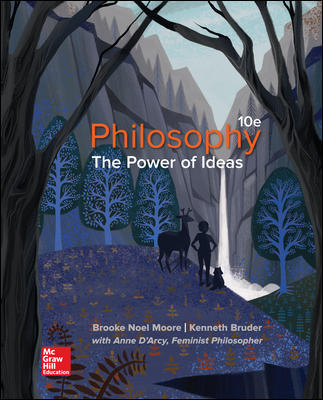
Philosophy The Power Of Ideas 10Th Edition By Brooke Noel - Test Bank

Philosophy The Power Of Ideas 10Th Edition By Brooke Noel - Test Bank   Instant Download - Complete Test Bank With Answers     Sample Questions Are Posted Below   Chapter 05 Philosophers of the Hellenistic and Christian Eras     Multiple Choice Questions Which of the following ancient traditions did Plotinus represent? A.Stoicism B. Epicureanism …

$19.99

Philosophy The Power Of Ideas 10Th Edition By Brooke Noel – Test Bank


Instant Download – Complete Test Bank With Answers


Sample Questions Are Posted Below


Chapter 05

Philosophers of the Hellenistic and Christian Eras


Multiple Choice Questions

  1. Which of the following ancient traditions did Plotinus represent?
    A.Stoicism
    B. Epicureanism
    C. Skepticism
    D. Neoplatonism


Accessibility: Keyboard Navigation

  1. What is asserted by the principle of noncontradiction?
    A.People who don’t contradict themselves are rational.
    B. A proposition and its contradiction cannot both be false at the same time.
    C. A proposition and its contradiction can’t both be true.
    D. If two propositions don’t contradict each other then both of them are true.


Accessibility: Keyboard Navigation

  1. What did Hypatia think about the study of mathematics and astronomy?
    A.The study was useful in finding practical solutions to practical problems on earth.
    B. The study was an amusing diversion and, like philosophy, just idle speculation.
    C. The study was a way of proving the truth of Christianity.
    D. The study was a way of checking metaphysical and epistemological features of Plato’s, Aristotle’s, and Plotinus’s philosophies against the physical universe.


Accessibility: Keyboard Navigation


  1. Those who think that universal terms like “man” denote something that exists outside the mind subscribe to _____.
    A.conceptualism
    B. realism
    C. druidism
    D. abstractionism


Accessibility: Keyboard Navigation

  1. Those who think that they can account for universal terms without invoking universals either as real things out there in the world or as concepts in the mind subscribe to _____.
    A.nominalism
    B. conceptualism
    C. abstractionism
    D. determinism


Accessibility: Keyboard Navigation

  1. Which of the following views did Aquinas accept?
    A.A physical thing is composed of matter and form.
    B. All reality is material.
    C. Forms exist independently of matter.
    D. Nothing changes.


Accessibility: Keyboard Navigation

  1. Which of the following views of Aristotle did Aquinas disagree with?
    A.Physical things are always a blend of matter plus form.
    B. The essence of a thing is the same as its existence.
    C. One and the same form (universal) can be in more than one physical thing (particular).
    D. Change is explained in terms of four causes: the formal, the material, the efficient, and the final.


Accessibility: Keyboard Navigation


  1. What did Aquinas maintain concerning the soul?
    A.It is the passive potentiality of the body.
    B. It is finite and destructible.
    C. It cannot exist without the body.
    D. It is a direct creation of God.


Accessibility: Keyboard Navigation


True / False Questions

  1. Plotinus believed in a personal God as the source of all reality and truth.
    FALSE


Accessibility: Keyboard Navigation

  1. St. Augustine regarded Plotinus and Plato as having prepared him for Christianity by exposing him to important Christian principles before he encountered them in scripture.
    TRUE


Accessibility: Keyboard Navigation

  1. Hypatia set forth the Ten Tropes, a collection of ten arguments by the ancient skeptics against the possibility of knowledge.
    FALSE


Accessibility: Keyboard Navigation

  1. Augustine thought that God was within time, which is an objective feature of the world.
    FALSE


Accessibility: Keyboard Navigation


  1. The Academics and the Pyrrhonists are modified skeptics.
    FALSE


Accessibility: Keyboard Navigation

  1. Sextus Empiricus believed that occasionally we perceive things as they really are.
    FALSE


Accessibility: Keyboard Navigation

  1. St. Augustine used the principle of noncontradiction to refute Academic skepticism.
    TRUE


Accessibility: Keyboard Navigation

  1. For Aquinas, “what” a thing is (its essence) is not the same as “that” it is (its existence).
    TRUE


Accessibility: Keyboard Navigation

  1. Thomistic cosmology (theory of the universe as an ordered whole) is based on a geocentric view of the universe, and this is also true of Aquinas’s psychology.
    TRUE


Accessibility: Keyboard Navigation


  1. Regarding universals, conceptualism is the thought that universal terms refer to something that really exists outside of the mind.
    FALSE


Accessibility: Keyboard Navigation

Additional information

Add Review

Your email address will not be published. Required fields are marked *