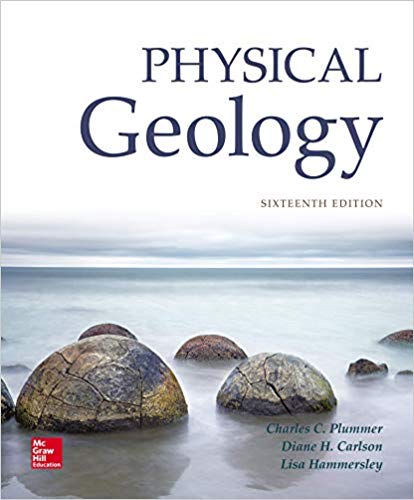
Physical Geology 16th Edition by Charles (Carlos) Plummer - Test Bank

Physical Geology 16th Edition by Charles (Carlos) Plummer - Test Bank   Instant Download - Complete Test Bank With Answers     Sample Questions Are Posted Below   Physical Geology, 16e (Plummer) Chapter 5   Weathering and Soil   1) The term mechanical weathering refers to changes in a rock that are physical; there is little …

$19.99

Physical Geology 16th Edition by Charles (Carlos) Plummer – Test Bank


Instant Download – Complete Test Bank With Answers


Sample Questions Are Posted Below


Physical Geology, 16e (Plummer)

Chapter 5   Weathering and Soil


1) The term mechanical weathering refers to changes in a rock that are physical; there is little or no chemical change.


Answer:  TRUE

Topic:  Weathering

Bloom’s:  2. Understand

Accessibility:  Keyboard Navigation

Chapter:  05


2) Chemical weathering will eventually change a quartz crystal into clay minerals.


Answer:  FALSE

Topic:  Weathering

Bloom’s:  2. Understand

Accessibility:  Keyboard Navigation

Chapter:  05


3) Because the crystal structure of ice is different from that of water, liquid water expands when it freezes.


Answer:  TRUE

Topic:  Weathering

Bloom’s:  2. Understand

Accessibility:  Keyboard Navigation

Chapter:  05


4) Expanding ice in soil pushes large boulders down into the ground.


Answer:  FALSE

Topic:  Soil

Bloom’s:  2. Understand

Accessibility:  Keyboard Navigation

Chapter:  05


5) The reduction of pressure on a body of rock can cause it to crack as it expands.


Answer:  TRUE

Topic:  Weathering

Bloom’s:  2. Understand

Accessibility:  Keyboard Navigation

Chapter:  05


6) Plants, such as roots growing in cracks, and animals compacting the soil, have little influence on mechanical weathering.


Answer:  FALSE

Topic:  Weathering

Bloom’s:  2. Understand

Accessibility:  Keyboard Navigation

Chapter:  05


7) All rocks chemically weather the same way.


Answer:  FALSE

Topic:  Weathering

Bloom’s:  2. Understand

Accessibility:  Keyboard Navigation

Chapter:  05


8) Without chemical weathering, the elevated levels of carbon dioxide in the atmosphere would have long ago made the Earth too hot to sustain life.


Answer:  TRUE

Topic:  Weathering

Bloom’s:  2. Understand

Accessibility:  Keyboard Navigation

Chapter:  05


9) Oxygen is abundant in the atmosphere but it does not combine with minerals of the Earth’s crust.


Answer:  FALSE

Topic:  Weathering

Bloom’s:  2. Understand

Accessibility:  Keyboard Navigation

Chapter:  05


10) An acid is a chemical compound that gives off hydrogen ions (H+) to a chemical reaction.


Answer:  TRUE

Topic:  Weathering

Bloom’s:  1. Remember

Accessibility:  Keyboard Navigation

Chapter:  05


11) Hydrogen ions given off by natural acids can disrupt the crystal structure of most minerals, making the structure susceptible to further decomposition.


Answer:  TRUE

Topic:  Weathering

Bloom’s:  2. Understand

Accessibility:  Keyboard Navigation

Chapter:  05


12) Ordinary rain has a pH of about 5.5 to 6 from the carbon dioxide in the atmosphere and from natural sources of acidic sulfur gases.


Answer:  TRUE

Topic:  Weathering

Bloom’s:  2. Understand

Accessibility:  Keyboard Navigation

Chapter:  05


13) The only processes that affect rock are weathering and climate.


Answer:  FALSE

Topic:  Weathering

Bloom’s:  2. Understand

Accessibility:  Keyboard Navigation

Chapter:  05


14) When feldspar is attacked by carbonic acid it forms clay minerals.


Answer:  TRUE

Topic:  Weathering

Bloom’s:  1. Remember

Accessibility:  Keyboard Navigation

Chapter:  05


15) The single most important agent for the chemical weathering is temperature.


Answer:  FALSE

Topic:  Weathering

Bloom’s:  2. Understand

Accessibility:  Keyboard Navigation

Chapter:  05


16) Clay minerals help hold water and clay nutrients in soil.


Answer:  TRUE

Topic:  Soil

Bloom’s:  2. Understand

Accessibility:  Keyboard Navigation

Chapter:  05


17) Because of the slow pace of weathering processes, it takes millions of years for a viable soil profile capable of supporting plant life to develop in most areas.


Answer:  FALSE

Topic:  Weathering; Soil

Bloom’s:  2. Understand

Accessibility:  Keyboard Navigation

Chapter:  05


18) The B-horizon in soil is the zone of accumulation.


Answer:  TRUE

Topic:  Soil

Bloom’s:  1. Remember

Accessibility:  Keyboard Navigation

Chapter:  05


19) Transportation is the picking up or physical removal of rock particles by an agent such as running water or glaciers.


Answer:  FALSE

Topic:  Erosion

Bloom’s:  1. Remember

Accessibility:  Keyboard Navigation

Chapter:  05


20) Sand-size grains of feldspar can be preserved in a soil profile over great time periods because of feldspar’s resistance to chemical weathering.


Answer:  FALSE

Topic:  Soil

Bloom’s:  2. Understand

Accessibility:  Keyboard Navigation

Chapter:  05


21) ________ is the picking up and physical removal of rock particles by an agent such as wind, flowing liquid water, or glaciers.

  1. A) Weathering
  2. B) Extraction
  3. C) Erosion
  4. D) Deposition
  5. E) Provenance


Answer:  C

Topic:  Erosion

Bloom’s:  1. Remember

Accessibility:  Keyboard Navigation

Chapter:  05


22) ________ refers to the group of destructive processes that change the physical and chemical character of rocks at the Earth’s surface.

  1. A) Weathering
  2. B) Extraction
  3. C) Erosion
  4. D) Deposition
  5. E) Provenance


Answer:  A

Topic:  Weathering

Bloom’s:  1. Remember

Accessibility:  Keyboard Navigation

Chapter:  05


23) Chemical weathering generally proceeds ________.

  1. A) at about the same rate throughout a rock body
  2. B) fastest in the intact interior of a rock body, where ions easily move short distances from grain to grain
  3. C) fastest on flat joint (crack) faces that are distant from any corners or edges
  4. D) along contacts between mineral grains
  5. E) fastest at the tip of growing cracks deep within the rock


Answer:  D

Topic:  Weathering

Bloom’s:  1. Remember

Accessibility:  Keyboard Navigation

Chapter:  05


24) ________ is a byproduct of rock weathering.

  1. A) Soil
  2. B) Metamorphic rock
  3. C) Igneous rock
  4. D) Water
  5. E) Oil


Answer:  A

Topic:  Soil

Bloom’s:  1. Remember

Accessibility:  Keyboard Navigation

Chapter:  05


25) Water that has trickled down into a joint in a rock can freeze, expand, and ________.

  1. A) glue the rock more tightly together
  2. B) make the rock harder
  3. C) seal the crack thereby preventing further weathering
  4. D) widen the crack and hastening the rock’s disintegration
  5. E) displace surface acids that may weaken the rock


Answer:  D

Topic:  Weathering

Bloom’s:  2. Understand

Accessibility:  Keyboard Navigation

Chapter:  05


26) ________ tend(s) to weather much faster than sandstone.

  1. A) Shale
  2. B) Granite
  3. C) Chert
  4. D) Gneiss
  5. E) Most other rock types


Answer:  A

Topic:  Weathering

Bloom’s:  2. Understand

Accessibility:  Keyboard Navigation

Chapter:  05


27) Frost wedging is most effective ________.

  1. A) in areas with many days of freezing and thawing
  2. B) in the winter when the rock is frozen solid for months on end
  3. C) in the spring and fall in very dry desert areas where temperatures dip down below 0°C at night and above 0°C during the day
  4. D) in the summer when abundant rainfall percolates through the cracks to freeze in contact with the very cold rock found deep below the surface


Answer:  A

Topic:  Weathering

Bloom’s:  1. Remember

Accessibility:  Keyboard Navigation

Chapter:  05


28) The removal of a great weight of rock above a batholith by erosion allows the granite to expand forming ________.

  1. A) sheet dikes
  2. B) weathering rinds
  3. C) sheet joints
  4. D) cooling fractures
  5. E) thermal cracks


Answer:  C

Topic:  Weathering

Bloom’s:  2. Understand

Accessibility:  Keyboard Navigation

Chapter:  05


29) ________, formed as water evaporates inside small spaces in rock, helps disintegrate desert rocks.

  1. A) Calcite
  2. B) Salt
  3. C) Quartz
  4. D) Hematite
  5. E) Ice


Answer:  B

Topic:  Weathering

Bloom’s:  1. Remember

Accessibility:  Keyboard Navigation

Chapter:  05


30) Ferromagnesian minerals such as pyroxene, amphibole, biotite, and olivine are chemically altered in the presence of ________.

  1. A) quartz
  2. B) helium
  3. C) oxygen
  4. D) argon
  5. E) mica


Answer:  C

Topic:  Weathering

Bloom’s:  2. Understand

Accessibility:  Keyboard Navigation

Chapter:  05


31) ________ forms as a chemical weathering product of iron-rich minerals.

  1. A) Hematite
  2. B) Limonite
  3. C) Quartz
  4. D) Both hematite and limonite are correct.
  5. E) All of the choices are correct.


Answer:  D

Topic:  Weathering

Bloom’s:  2. Understand

Accessibility:  Keyboard Navigation

Chapter:  05


32) The ________ describes the process in which this dominant greenhouse gas circulates among Earth systems.

  1. A) calcium cycle
  2. B) sodium cycle
  3. C) potassium cycle
  4. D) helium cycle
  5. E) carbon cycle


Answer:  E

Topic:  Weathering

Bloom’s:  1. Remember

Accessibility:  Keyboard Navigation

Chapter:  05


33) Water can combine with iron oxide to form ________.

  1. A) silica
  2. B) limonite
  3. C) calcium, sodium, or potassium ions
  4. D) galena
  5. E) hydrogen ions


Answer:  B

Topic:  Weathering

Bloom’s:  2. Understand

Accessibility:  Keyboard Navigation

Chapter:  05


34) The most important natural source for the formation of acid for rock weathering at the Earth’s surface is dissolved ________.

  1. A) carbon dioxide
  2. B) hydrothermal effluent
  3. C) seawater
  4. D) mantle plumes
  5. E) comets


Answer:  A

Topic:  Weathering

Bloom’s:  2. Understand

Accessibility:  Keyboard Navigation

Chapter:  05


35) Sulfuric acid is produced naturally during ________.

  1. A) emission of soil gas
  2. B) carbonate mineral decomposition
  3. C) normal life functions of plants and animals
  4. D) some volcanic eruptions
  5. E) the weathering process


Answer:  D

Topic:  Weathering

Bloom’s:  1. Remember

Accessibility:  Keyboard Navigation

Chapter:  05


36) ________ are commonly left after complete chemical weathering.

  1. A) Olivine and calcium plagioclase
  2. B) Orthoclase feldspars
  3. C) Halite and gypsum
  4. D) Calcite and dolomite
  5. E) Quartz and clay minerals


Answer:  E

Topic:  Weathering

Bloom’s:  2. Understand

Accessibility:  Keyboard Navigation

Chapter:  05


37) What, in terms of Earth systems, forms an essential interface between the geosphere, biosphere, hydrosphere, and atmosphere?

  1. A) chert
  2. B) quartz
  3. C) soil
  4. D) oxides of iron and aluminum
  5. E) ferromagnesian minerals


Answer:  C

Topic:  Soil

Bloom’s:  1. Remember

Accessibility:  Keyboard Navigation

Chapter:  05


38) When fossil fuels are burned, ________ enter the atmosphere to form acid rain.

  1. A) oxides of nitrogen (NO2) and sulfur (SO2)
  2. B) hydrochloric acids
  3. C) oxalic acids
  4. D) hydrogen and bicarbonate ions
  5. E) helium and argon


Answer:  A

Topic:  Weathering

Bloom’s:  2. Understand

Accessibility:  Keyboard Navigation

Chapter:  05


39) When feldspar is attacked by carbonic acid it forms ________.

  1. A) water, clay, and potassium
  2. B) a clay mineral
  3. C) clays and halite
  4. D) potassium, calcium, and bicarbonate ions
  5. E) potassium feldspar, which does not undergo chemical weathering


Answer:  B

Topic:  Weathering

Bloom’s:  2. Understand

Accessibility:  Keyboard Navigation

Chapter:  05


40) ________ is the mineral least susceptible to chemical attack on the Earth’s surface.

  1. A) Olivine
  2. B) Calcite
  3. C) Halite
  4. D) Quartz
  5. E) Feldspar


Answer:  D

Topic:  Weathering

Bloom’s:  2. Understand

Accessibility:  Keyboard Navigation

Chapter:  05


41) Compared with quartz, minerals that include the positively charged ions of aluminum, iron, magnesium, and calcium are ________ vulnerable to chemical weathering by acidic solutions.

  1. A) just as
  2. B) less
  3. C) more
  4. D) not


Answer:  C

Topic:  Weathering

Bloom’s:  2. Understand

Accessibility:  Keyboard Navigation

Chapter:  05


42) Olivine weathers rapidly because its isolated silicon-oxygen tetrahedra are held together by ________ ionic bonds to iron and magnesium.

  1. A) strong
  2. B) long
  3. C) weak
  4. D) acid resistant
  5. E) short


Answer:  C

Topic:  Weathering

Bloom’s:  2. Understand

Accessibility:  Keyboard Navigation

Chapter:  05


43) At the surface of the Earth, ultramafic rocks in kimberlite pipes weather away leaving behind concentrations of ________.

  1. A) diamonds
  2. B) pearls
  3. C) emeralds
  4. D) olivine
  5. E) topaz


Answer:  A

Topic:  Weathering; Erosion

Bloom’s:  2. Understand

Accessibility:  Keyboard Navigation

Chapter:  05


44) ________ is weathered unconsolidated material on top of solid bedrock.

  1. A) Clay
  2. B) Sand
  3. C) Mud
  4. D) Dirt
  5. E) Regolith


Answer:  E

Topic:  Soil

Bloom’s:  1. Remember

Accessibility:  Keyboard Navigation

Chapter:  05


45) The solution of calcite in a limestone supplies substantial amounts of ________ to ground water.

  1. A) calcium ions in solution
  2. B) an acid
  3. C) bicarbonate ions in solution
  4. D) both calcium ions in solution and bicarbonate ions in solution
  5. E) All of the choices are correct.


Answer:  D

Topic:  Weathering

Bloom’s:  2. Understand

Accessibility:  Keyboard Navigation

Chapter:  05


46) ________ are the most common materials precipitated as cement, which binds loose particles of sand into a solid sedimentary rock.

  1. A) Calcite and fluorite
  2. B) Silica and hematite
  3. C) Clay and silica
  4. D) Calcite and silica
  5. E) Feldspar and calcite


Answer:  D

Topic:  Weathering

Bloom’s:  2. Understand

Accessibility:  Keyboard Navigation

Chapter:  05


47) The ________ horizon is the uppermost layer of a soil; it consists of organic material.

  1. A) A
  2. B) B
  3. C) C
  4. D) O
  5. E) E


Answer:  D

Topic:  Soil

Bloom’s:  1. Remember

Accessibility:  Keyboard Navigation

Chapter:  05


48) The ________ horizon is the dark-colored soil horizon that is rich in organic material and forms just below the surface vegetation.

  1. A) A
  2. B) B
  3. C) C
  4. D) O
  5. E) E


Answer:  A

Topic:  Soil

Bloom’s:  1. Remember

Accessibility:  Keyboard Navigation

Chapter:  05


49) The ________ horizon is the incompletely weathered parent material lying below the B-horizon.

  1. A) A
  2. B) B
  3. C) C
  4. D) O
  5. E) E


Answer:  C

Topic:  Soil

Bloom’s:  1. Remember

Accessibility:  Keyboard Navigation

Chapter:  05


50) As soils mature, distinct layers called ________ appear.

  1. A) strata
  2. B) units
  3. C) beds
  4. D) layers
  5. E) horizons


Answer:  E

Topic:  Soil

Bloom’s:  1. Remember

Accessibility:  Keyboard Navigation

Chapter:  05


51) Under wet and humid tropical conditions the least soluble material is the aluminum oxide called ________.

  1. A) limonite
  2. B) chert
  3. C) bauxite
  4. D) peat
  5. E) humus


Answer:  C

Topic:  Soil

Bloom’s:  2. Understand

Accessibility:  Keyboard Navigation

Chapter:  05


52) The process of chemical weathering is also called ________.

  1. A) chemical decomposition
  2. B) rock decomposition
  3. C) dissolution
  4. D) decomposition
  5. E) weathering decomposition


Answer:  B

Topic:  Weathering; Soil

Bloom’s:  1. Remember

Accessibility:  Keyboard Navigation

Chapter:  05


53) A ________ soil is one that develops from the bedrock directly beneath it.

  1. A) residual
  2. B) residential
  3. C) regolith
  4. D) retransported
  5. E) retrograde


Answer:  A

Topic:  Soil

Bloom’s:  1. Remember

Accessibility:  Keyboard Navigation

Chapter:  05


54) ________ is wind transported and deposited sediment.

  1. A) Laterite
  2. B) Lahar
  3. C) Loam
  4. D) Loess
  5. E) Gelisol


Answer:  D

Topic:  Soil; Erosion

Bloom’s:  1. Remember

Accessibility:  Keyboard Navigation

Chapter:  05


55) Which of the following landforms are created from unloading?

  1. A) volcanoes
  2. B) pressure release domes
  3. C) sink holes
  4. D) exfoliation domes
  5. E) regolith


Answer:  D

Topic:  Weathering; Soil

Bloom’s:  3. Apply

Accessibility:  Keyboard Navigation

Chapter:  05


56) A soil formed entirely through the weathering of basalt would not contain sand-sized grains of ________.

  1. A) clay
  2. B) feldspar
  3. C) olivine
  4. D) pyroxene
  5. E) quartz


Answer:  E

Topic:  Weathering; Soil

Bloom’s:  3. Apply

Accessibility:  Keyboard Navigation

Chapter:  05


57) Plants and burrowing organisms contribute to soil development by ________.

  1. A) establishing small holes and pathways for water and nutrients to flow
  2. B) contributing carbon dioxide and organic acids
  3. C) contributing their waste products, which act as nutrients
  4. D) breaking up solid particles and churning the soil profile
  5. E) All of the answers are correct.


Answer:  E

Topic:  Weathering; Soil

Bloom’s:  3. Apply

Accessibility:  Keyboard Navigation

Chapter:  05


58) Of the many processes that cause rocks to disintegrate, the most effective are ________.

  1. A) animal burrowing and frost wedging
  2. B) pressure release and frost action
  3. C) weathering and erosion
  4. D) transportation and deposition
  5. E) All listed are effective.


Answer:  B

Topic:  Weathering

Bloom’s:  3. Apply

Accessibility:  Keyboard Navigation

Chapter:  05


59) In arid climates, soils are thin and soil water tends to move ________.

  1. A) laterally
  2. B) downward
  3. C) upward
  4. D) only within a given soil horizon
  5. E) sluggishly, if at all


Answer:  C

Topic:  Soil

Bloom’s:  2. Understand

Accessibility:  Keyboard Navigation

Chapter:  05


60) In tropical regions where temperatures are high and rainfall abundant, highly leached soils called ________ (oxisols) form.

  1. A) laterite soil
  2. B) lateral soil
  3. C) transported soil
  4. D) paleosol
  5. E) pelagic soil


Answer:  A

Topic:  Soil

Bloom’s:  1. Remember

Accessibility:  Keyboard Navigation

Chapter:  05


61) In which order do the following processes typically occur to loosen, pick up, and move a sediment particle?

  1. A) Weathering, erosion, transportation
  2. B) Erosion, weathering, transportation
  3. C) Erosion, transportation, weathering
  4. D) Transportation, weathering, erosion
  5. E) Transportation, erosion, weathering


Answer:  A

Topic:  Rocks

Bloom’s:  2. Understand

Accessibility:  Keyboard Navigation

Chapter:  05


62) Differential weathering results in ________.

  1. A) rounded rocks and landscapes
  2. B) the disintegration of feldspar into clay
  3. C) dynamic landscapes of steep cliffs and shallow slopes
  4. D) rocks peeling away in layers
  5. E) large rocks heaved to the surface


Answer:  C

Topic:  Rocks

Bloom’s:  2. Understand

Accessibility:  Keyboard Navigation

Chapter:  05


63) How do the actions of plants and animals affect weathering?

  1. A) They enlarge cracks and openings, allowing for more chemical weathering.
  2. B) They fill up existing spaces with roots and nests, decreasing the rate of weathering.
  3. C) Their actions result in a net neutral effect on weathering.


Answer:  A

Topic:  Rocks

Bloom’s:  2. Understand

Accessibility:  Keyboard Navigation

Chapter:  05


64) Which of the following is not involved in the creation of an exfoliation dome?

  1. A) Pressure release
  2. B) Unloading
  3. C) Sheet joints
  4. D) Oxidation


Answer:  D

Topic:  Rocks

Bloom’s:  2. Understand

Accessibility:  Keyboard Navigation

Chapter:  05


65) The rusting of material containing iron is an example of the chemical weathering process of ________.

  1. A) exfoliation
  2. B) unloading
  3. C) hydrolysis
  4. D) oxidation
  5. E) carbonation


Answer:  D

Topic:  Rocks

Bloom’s:  1. Remember

Accessibility:  Keyboard Navigation

Chapter:  05


66) Which of the following minerals is completely dissolved by carbonic acid?

  1. A) Hematite
  2. B) Feldspar
  3. C) Calcite
  4. D) Quartz
  5. E) Biotite


Answer:  C

Topic:  Rocks

Bloom’s:  2. Understand

Accessibility:  Keyboard Navigation

Chapter:  05


67) In which of these locations, all other factors being equal, would limestone most quickly weather?

  1. A) Florida
  2. B) Wyoming
  3. C) Wisconsin
  4. D) Arizona
  5. E) Maine


Answer:  A

Topic:  Rocks

Bloom’s:  3. Apply

Accessibility:  Keyboard Navigation

Chapter:  05


68) What is the effect of a warm global climate on chemical weathering, and what is its feedback to global climate?

  1. A) A warm climate decreases chemical weathering and the formation of limestone, increasing CO2levels, which in turn warms the climate more.
  2. B) A warm climate decreases chemical weathering and the formation of limestone, drawing down CO2levels, which in turn cools climate.
  3. C) A warm climate increases chemical weathering and the formation of limestone, increasing CO2levels, which in turn warms the climate more.
  4. D) A warm climate increases chemical weathering and the formation of limestone, drawing down CO2levels, which in turn cools climate.


Answer:  D

Topic:  Rocks

Bloom’s:  3. Apply

Accessibility:  Keyboard Navigation

Chapter:  05


69) Clay minerals are sheet silicates with flat surfaces that are ________ charged and attract ________.

  1. A) positively; carbonic acid
  2. B) negatively; water molecules
  3. C) neutrally; other clay minerals
  4. D) positively; insects
  5. E) negatively; nitrogen gas


Answer:  B

Topic:  Rocks

Bloom’s:  3. Apply

Accessibility:  Keyboard Navigation

Chapter:  05


70) Physical disintegration of rock into smaller pieces is called

  1. A) chemical weathering
  2. B) transportation
  3. C) deposition
  4. D) mechanical weathering


Answer:  D

Section:  05.01

Topic:  Rocks

Accessibility:  Keyboard Navigation

Chapter:  05


71) The decomposition of rock from exposure to water and atmospheric gases is called

  1. A) chemical weathering
  2. B) transportation
  3. C) deposition
  4. D) mechanical weathering


Answer:  A

Section:  05.01

Topic:  Rocks

Accessibility:  Keyboard Navigation

Chapter:  05


72) Which is not a type of mechanical weathering?

  1. A) frost wedging
  2. B) frost heaving
  3. C) pressure release
  4. D) oxidation


Answer:  D

Section:  05.01

Topic:  Rocks

Accessibility:  Keyboard Navigation

Chapter:  05


73) The single most effective agent of chemical weathering at Earth’s surface is

  1. A) carbonic acid H2CO3
  2. B) water H2O
  3. C) carbon dioxide CO2
  4. D) hydrochloric acid HCl


Answer:  A

Section:  05.01

Topic:  Rocks

Accessibility:  Keyboard Navigation

Chapter:  05


74) The most common end product of the chemical weathering of feldspar is

  1. A) clay minerals
  2. B) pyroxene
  3. C) amphibole
  4. D) calcite


Answer:  A

Topic:  Rocks

Accessibility:  Keyboard Navigation

Chapter:  05


75) The most common end product of the chemical weathering of quartz is

  1. A) clay minerals
  2. B) pyroxene
  3. C) amphibole
  4. D) calcite
  5. E) Quartz does not usually weather chemically.


Answer:  E

Section:  05.01

Topic:  Rocks

Accessibility:  Keyboard Navigation

Chapter:  05


76) Soil with approximately equal amounts of sand, silt, and clay along with a generous amount of organic matter is called

  1. A) loam
  2. B) inorganic
  3. C) humus
  4. D) caliche


Answer:  A

Section:  05.01

Topic:  Soils

Accessibility:  Keyboard Navigation

Chapter:  05


77) Which is characteristic of soil horizons?

  1. A) They can be distinguished from one another by appearance and chemical composition.
  2. B) Boundaries between soil horizons are usually transitional rather than sharp.
  3. C) They are classified by letters.
  4. D) All of the preceding


Answer:  D

Section:  05.01

Topic:  Soils

Accessibility:  Keyboard Navigation

Chapter:  05


78) The soil horizon containing only organic material is the

  1. A) A horizon
  2. B) B horizon
  3. C) C horizon
  4. D) O horizon
  5. E) E horizon


Answer:  D

Section:  05.01

Topic:  Soils

Accessibility:  Keyboard Navigation

Chapter:  05


79) Hardpan forms in the

  1. A) A horizon
  2. B) B horizon
  3. C) C horizon
  4. D) E horizon


Answer:  B

Section:  05.01

Topic:  Soils

Accessibility:  Keyboard Navigation

Chapter:  05

Additional information

Add Review

Your email address will not be published. Required fields are marked *