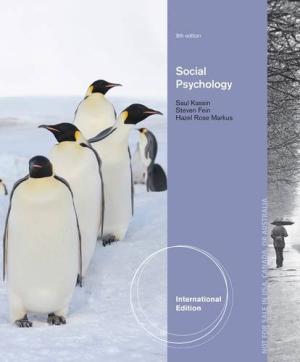
Social Psychology International Edition 9th Edition by Saul Kassin - Test Bank

Social Psychology International Edition 9th Edition by Saul Kassin - Test Bank   Instant Download - Complete Test Bank With Answers     Sample Questions Are Posted Below   CHAPTER 5: STEREOTYPES, PREJUDICE, AND DISCRIMINATION MULTIPLE CHOICE 1.Prejudice and discrimination based on a person’s racial background, or institutional and cultural practices that promote the domination …

$19.99

Social Psychology International Edition 9th Edition by Saul Kassin – Test Bank


Instant Download – Complete Test Bank With Answers


Sample Questions Are Posted Below


CHAPTER 5: STEREOTYPES, PREJUDICE, AND DISCRIMINATION
MULTIPLE CHOICE
1.Prejudice and discrimination based on a person’s racial background, or institutional and cultural practices that promote the domination of one racial group over another, is known as
a. racism.
b. implicit racism.
c. modern racism.
d. ambivalent racism.
ANS: A REF: The Nature of the Problem: Persistence and Change
OBJ: 1 KEY: Factual NOT: New
2.Prejudice and discrimination based on a person’s gender, or institutional and cultural practices that promote the domination of one gender over another, are known as
a. sexism.
b. implicit sexism.
c. hostile sexism.
d. ambivalent sexism.
ANS: A REF: The Nature of the Problem: Persistence and Change
OBJ: 1 KEY: Factual NOT: New
3.The ABCs of social psychology are affect, behavior, and cognition. Put the three major concepts of Chapter 5 in this ABC order by considering whether they correspond to affect, behavior, or cognition.
a. Stereotyping, prejudice, discrimination
b. Prejudice, discrimination, stereotyping
c. Discrimination, prejudice, stereotyping
d. Stereotyping, discrimination, prejudice
ANS: B REF: The Nature of the Problem: Persistence and Change
OBJ: 1 KEY: Conceptual
4.Which of the following is not discrimination?
a. Believing that baby-faced men are harmless
b. Giving a pink toy to a girl and a blue toy to a boy
c. Signing a petition to keep a minority group out of the neighborhood
d. Hiring a thin candidate rather than an obese one with the same credentials
ANS: A REF: The Nature of the Problem: Persistence and Change
OBJ: 1 KEY: Conceptual
5.Bridgette thinks short people are lazy, and Barbara refuses to let short people join her book club. Bridgette is exhibiting _____, whereas Barbara is exhibiting _____.
a. discrimination; prejudice
b. stereotyping; discrimination
c. prejudice; stereotyping
d. prejudice; discrimination
ANS: B REF: The Nature of the Problem: Persistence and Change
OBJ: 1 KEY: Applied
6.Samantha thinks that all social psychology professors are intelligent, attractive, and fabulously good dancers. This is an example of
a. prejudice.
b. discrimination.
c. social categorization.
d. a stereotype.
ANS: D REF: The Nature of the Problem: Persistence and Change
OBJ: 1 KEY: Applied
7.Bonnie dislikes all lawyers. This is an example of
a. prejudice.
b. discrimination.
c. social categorization.
d. a stereotype.
ANS: A REF: The Nature of the Problem: Persistence and Change
OBJ: 1 KEY: Applied
8.Negative feelings directed at others strictly because of their membership in a particular social category is called
a. discrimination.
b. prejudice.
c. the outgroup homogeneity effect.
d. the ingroup homogeneity effect.
ANS: B REF: The Nature of the Problem: Persistence and Change
OBJ: 1 KEY: Factual
9.Stereotypes differ from prejudice and discrimination in that stereotypes concern
a. positive feelings about a social group.
b. negative feelings about a social group.
c. positive or negative beliefs about a social group.
d. negative behavior directed at members of a social group.
ANS: C REF: The Nature of the Problem: Persistence and Change
OBJ: 1 KEY: Conceptual
10.A set of beliefs about a group cannot be considered a stereotype if it is
a. positive.
b. negative.
c. true.
d. None of these
ANS: D REF: The Nature of the Problem: Persistence and Change
OBJ: 1 KEY: Conceptual
11.Jane is from race X, and Jean is from race Y. Which of the following scenarios best demonstrates modern racism?
a. Jane yells racial slurs and spits on Jean who is a stranger.
b. Jane and Jean work together. Jane thinks Jean is not doing her share of the work. For this, Jane gives Jean a more negative evaluation than is deserved.
c. Jane and Jean are on the same athletic team. The social norm of the team is for everyone to be friendly and personable to one another. Jane never talks to Jean.
d. Jane is interviewing Jean as a pianist for her club. Jane is looking for a piano player who will play jazz. Jean plays classical music. Jane doesn’t hire Jean for the job.
ANS: B REF: The Nature of the Problem: Persistence and Change
OBJ: 1 KEY: Applied
12.A form of prejudice that surfaces in subtle ways when it is safe, socially acceptable, and easy to rationalize is called
a. modern racism.
b. relative deprivation.
c. illusory correlation.
d. reverse discrimination.
ANS: A REF: The Nature of the Problem: Persistence and Change
OBJ: 1 KEY: Factual
13.Racism that operates unconsciously and unintentionally is called
a. modern racism.
b. implicit racism.
c. benevolent racism.
d. ambivalent racism.
ANS: B REF: The Nature of the Problem: Persistence and Change
OBJ: 1 KEY: Factual NOT: New
14.Consider the Implicit Association Test in which people are asked to categorize words as well as Caucasian/African-American names. If you were to design a similar measure to assess implicit associations related to age, and more specifically, implicit negative beliefs about older people, which pattern of results might your IAT produce to indicate such ageism?
a. Participants report that they like younger-sounding names (e.g., Dylan, Carter) more than older-sounding names (e.g., Gladys, Sydney).
b. Participants take longer to pair positive words with older-sounding names and negative words with younger-sounding names than vice versa.
c. Participants primed with words related to old age (e.g., “Florida,” “Bingo,” “wheelchair”) internalize stereotypes regarding the elderly and demonstrate slower reaction times to the categorization tasks.
d. Participants are quicker to recognize and categorize photos of young faces than photos of older faces.
ANS: B REF: The Nature of the Problem: Persistence and Change
OBJ: 1 KEY: Applied
15.Research by Jennifer Richeson, Nicole Shelton, and colleagues demonstrates that Caucasian individuals who score high on a measure of implicit racism
a. must exert a great deal of cognitive effort in order to avoid prejudice when interacting with African Americans.
b. are usually good at hiding their biases and therefore tend to have comfortable interactions with African Americans.
c. have relatively low levels of amygdala activation when presented with photos of African-American faces.
d. All of these
ANS: A REF: The Nature of the Problem: Persistence and Change
OBJ: 2 KEY: Factual
16.Implicit racism is correlated with _____ for interactions with a minority group member.
a. reduced eye gaze
b. increased eye gaze
c. increased warmth
d. better communication
ANS: A REF: The Nature of the Problem: Persistence and Change
OBJ: 2 KEY: Conceptual NOT: New
17.Research indicates that Caucasian individuals’ concern about appearing prejudiced during interracial interactions can
a. lead them to try to avoid such interactions altogether.
b. lead them to sit closer to African-American conversation partners in the effort to make a good impression.
c. lead them to go out of their way to demonstrate how often they think about and notice race-related issues.
d. All of these
ANS: A REF: The Nature of the Problem: Persistence and Change
OBJ: 2 KEY: Conceptual
18.A metastereotype refers to
a. a person’s thoughts about the stereotypes outgroup members might hold about their own group.
b. a stereotype that applies to a large number of outgroups.
c. a stereotype that is positive, rather than negative, in nature.
d. a stereotype that is widely held.
ANS: A REF: The Nature of the Problem: Persistence and Change
OBJ: 2 KEY: Factual NOT: New
19.Research by Apfelbaum and colleagues (2008) indicates that when it comes to norms regarding the acknowledgment of race
a. the older Caucasian kids get, the more comfortable they are discussing race.
b. 8- and 9-year-old kids are even more concerned about political correctness than 10- and 11-year-olds.
c. it is not until early adulthood that people start to develop concerns about race-related norms.
d. unlike younger children, older children are sometimes willing to sacrifice task performance for the goal of avoiding uncomfortable race-related conversation.
ANS: D REF: The Nature of the Problem: Persistence and Change
OBJ: 2 KEY: Conceptual
20.Gender stereotypes are prescriptive. This means that gender stereotypes
a. identify what men and women should be like.
b. can be used to predict when men and women are likely to behave in stereotype-consistent ways.
c. are more accurate than other kinds of stereotypes.
d. are less influenced by cultural standards than other stereotypes.
ANS: A REF: The Nature of the Problem: Persistence and Change
OBJ: 3 KEY: Conceptual
21.Ambivalent sexism consists of _____ elements.
a. two
b. three
c. four
d. five
ANS: A REF: The Nature of the Problem: Persistence and Change
OBJ: 3 KEY: Factual NOT: New
22.Negative feelings directed at women’s abilities, values, and ability to challenge the power of men are referred to as
a. ambivalent sexism.
b. modern sexism.
c. benevolent sexism.
d. hostile sexism.
ANS: D REF: The Nature of the Problem: Persistence and Change
OBJ: 3 KEY: Factual
23.Affectionate feelings toward women based on the belief that women need protection are referred to as _____ sexism.
a. ambivalent
b. patronizing
c. benevolent
d. hostile
ANS: C REF: The Nature of the Problem: Persistence and Change
OBJ: 3 KEY: Factual
24.In their study of sexism in 19 different countries, Glick et al. (2000) found that countries with the greatest degree of political and economic inequality exhibited
a. the highest levels of both hostile and benevolent sexism.
b. the lowest levels of both hostile and benevolent sexism.
c. high levels of hostile sexism but low levels of benevolent sexism.
d. low levels of hostile sexism but high levels of benevolent sexism.
ANS: A REF: The Nature of the Problem: Persistence and Change
OBJ: 3 KEY: Factual
25.Stankiewicz and Rosselli (2008) found that about ____ percent of advertisements depicting women featured them as sex objects.
a. 25
b. 50
c. 67
d. 75
ANS: B REF: The Nature of the Problem: Persistence and Change
OBJ: 3 KEY: Factual NOT: New
26.In a study by Phelan and colleagues (2008), participants read about male and female candidates for a managerial position. Compared to comparable male candidates, female candidates who emphasized their independence and leadership ability were rated as
a. lower in competence and in social skills.
b. lower in both competence but higher in social skills.
c. higher in competence but lower in social skills.
d. higher in both competence and social skills.
ANS: C REF: The Nature of the Problem: Persistence and Change
OBJ: 3 KEY: Factual
27.Tilcsik (2011) sent pairs of resumes in response to 1,800 job postings. The resumes were nearly identical, except that one mentioned the job candidate volunteered for a gay campus organization. The results of this study showed
a. the two resumes were equally likely to receive interview invitations.
b. the resume with gay campus organization experience was 15 percent less likely to receive an interview invitation.
c. the resume with gay campus organization experience was 40 percent less likely to receive an interview invitation.
d. the resume with the gay campus organization experience was 15 percent more likely to receive an interview invitation.
ANS: C REF: The Nature of the Problem: Persistence and Change
OBJ: 4 KEY: Conceptual NOT: New
28.Being persistently stereotyped, perceived as deviant, or devalued in society because of membership in a particular social group or because of a particular characteristic is the definition of being
a. subliminally presented.
b. ambivalent.
c. threatened.
d. stigmatized.
ANS: D REF: The Nature of the Problem: Persistence and Change
OBJ: 5 KEY: Factual NOT: New
29.According to research by Crocker and colleagues (1991), African-American students who positive interpersonal feedback from a Caucasian student experienced
a. an increase in level of anger.
b. no change in self-esteem.
c. a reduction in self-esteem.
d. an increase in self-esteem.
ANS: C REF: The Nature of the Problem: Persistence and Change
OBJ: 5 KEY: Factual NOT: New
30.Which of the following is a risk for stigmatized targets?
a. Increased risk for short-term mental health problems
b. Increased risk for long-term mental health problems
c. Increased risk for short-term physical health problems
d. Increased risk for long-term physical and mental health problems
ANS: D REF: The Nature of the Problem: Persistence and Change
OBJ: 5 KEY: Conceptual NOT: New
31.A stereotype exists in many cultures that men are better than women at math. Ramya is about to take a diagnostic achievement test in math. According to research on stereotype threat, under which of the following conditions is Ramya most likely to perform poorly on the test?
a. Ramya does not believe that the test is an accurate measure of math ability.
b. Ramya is asked to indicate her gender at the beginning of the test.
c. Ramya does not include math as an important part of her identity.
d. Ramya has been raised in a cave by a mathematical genius and is unaware of the cultural stereotype concerning gender and math.
ANS: B REF: The Nature of the Problem: Persistence and Change
OBJ: 6 KEY: Applied
32.Research on stereotype threat suggests that underperformance by African Americans in academic settings may be due to
a. a fear of confirming negative stereotypes of African Americans.
b. an overemphasis on superordinate goals in instruction.
c. receiving negative feedback based on racist motives.
d. the desegregation that tends to occur even in so-called integrated schools.
ANS: A REF: The Nature of the Problem: Persistence and Change
OBJ: 6 KEY: Conceptual
33.Which of the following experimental procedures would a researcher investigating stereotype threat be least likely to use?
a. Having women complete a math test
b. Having non-English-speaking students complete a verbal skills test in English
c. Having African Americans complete an athletic task
d. Having individuals with a history of mental illness complete a logical reasoning task
ANS: C REF: The Nature of the Problem: Persistence and Change
OBJ: 6 KEY: Applied
34.Which of the following is an essential requirement for stereotype threat to occur?
a. The individual in question must be a member of a minority group.
b. The individual in question must be aware of negative stereotypes about his or her group.
c. The individual in question must have below-average ability for the task in question.
d. All of these
ANS: B REF: The Nature of the Problem: Persistence and Change
OBJ: 6 KEY: Conceptual
35.Social categorization is advantageous because it
a. leads to more accurate social perception.
b. encourages us to take longer to make judgments about others.
c. frees up cognitive resources.
d. is generally based on realistic assumptions.
ANS:C
REF: Causes of the Problem: Intergroup, Motivational, Cognitive, and Cultural Factors
OBJ: 7 KEY: Factual
36.Social categorization leads people to
a. perceive group members more accurately.
b. perceive others as individuals rather than group members.
c. overestimate differences between groups.
d. overestimate differences within groups.
ANS:C
REF: Causes of the Problem: Intergroup, Motivational, Cognitive, and Cultural Factors
OBJ: 7 KEY: Conceptual
37.All of the following result from social categorization except
a. overestimation of differences between groups.
b. underestimation of differences within groups.
c. increased confidence that differences between groups are biologically based.
d. increased tendency to notice behaviors inconsistent with group stereotype.
ANS:D
REF: Causes of the Problem: Intergroup, Motivational, Cognitive, and Cultural Factors
OBJ: 7 KEY: Conceptual
38.Groups to which the self belongs are called _____, and groups to which the self does not belong are called _____.
a. ingroups; outgroups
b. social categories; self categories
c. implicit categories; explicit categories
d. self-groups; social-groups
ANS:A
REF: Causes of the Problem: Intergroup, Motivational, Cognitive, and Cultural Factors
OBJ: 7 KEY: Factual
39.The tendency to perceive members of an outgroup as less variable, or more similar to one another, than members of the ingroup is called the
a. minimal group effect.
b. outgroup homogeneity effect.
c. ingroup homogeneity effect.
d. contrast effect.
ANS:B
REF: Causes of the Problem: Intergroup, Motivational, Cognitive, and Cultural Factors
OBJ: 7 KEY: Factual
40.The belief “they’re all the same” best epitomizes which of the following concepts?
a. Minimal group effect
b. Outgroup homogeneity effect
c. Ingroup heterogeneity effect
d. Contrast effect
ANS:B
REF: Causes of the Problem: Intergroup, Motivational, Cognitive, and Cultural Factors
OBJ: 7 KEY: Applied
41.Buffy is a member of a sorority. She considers the stereotypes about her sorority to be gross overgeneralizations, but claims that the stereotypes about other sororities seem to have a kernel of truth. Buffy’s thinking best illustrates
a. the outgroup homogeneity effect.
b. realistic conflict.
c. reverse discrimination.
d. social-role theory.
ANS:A
REF: Causes of the Problem: Intergroup, Motivational, Cognitive, and Cultural Factors
OBJ: 7 KEY: Applied
42.Ingroup members display the outgroup homogeneity effect because
a. ingroups and outgroups always compete for shared resources.
b. they lack familiarity with members of the outgroup.
c. they lack sufficient information to judge the variability of their own group.
d. they usually encounter the most typical members of the outgroup.
ANS:B
REF: Causes of the Problem: Intergroup, Motivational, Cognitive, and Cultural Factors
OBJ: 7 KEY: Conceptual
43.Which of the following does not contribute to the outgroup homogeneity effect?
a. Ingroup members have little information concerning outgroup members.
b. Ingroup members are unlikely to have frequent contact with outgroup members.
c. Ingroup members accurately perceive the lack of diversity within the outgroup.
d. Ingroup members interact with a non-representative sample of outgroup members.
ANS:C
REF: Causes of the Problem: Intergroup, Motivational, Cognitive, and Cultural Factors
OBJ: 7 KEY: Conceptual
44.Charles is a Red Sox fan who does not think highly of Yankees fans. Which of the following statements that Charles made in the past week is most consistent with the concept of outgroup homogeneity?
a. “Obnoxious, rude, and prone to throwing batteries… if you’ve seen one Yankees fan, you’ve seen them all.”
b. “I knew one Yankees fan who wasn’t bad, but his wife was a Red Sox fan, so he doesn’t count.”
c. “The thing about Yankees fans is that some of them just jump on the bandwagon and root for their team through good times and bad times.”
d. “My two favorite teams are the Red Sox and anyone who’s playing against the Yankees.”
ANS:A
REF: Causes of the Problem: Intergroup, Motivational, Cognitive, and Cultural Factors
OBJ: 7 KEY: Applied
45.Arnold is not a cheerleader and doesn’t know any cheerleaders personally, but when he sees them at the football games, they are always smiling. Arnold is likely to
a. think about specific cheerleaders rather than the group stereotype.
b. notice the ways in which each cheerleader is unique.
c. be able to distinguish cheerleaders from one another only if they are smiling.
d. think that all cheerleaders are happy.
ANS:D
REF: Causes of the Problem: Intergroup, Motivational, Cognitive, and Cultural Factors
OBJ: 7 KEY: Applied
46.Hugenberg and Corneille (2009) exposed Caucasian participants to the faces of unfamiliar people. They found that compared to faces of outgroup members, faces of ingroup members were processed more
a. slowly.
b. holistically.
c. sequentially.
d. reluctantly.
ANS:B
REF: Causes of the Problem: Intergroup, Motivational, Cognitive, and Cultural Factors
OBJ: 7 KEY: Factual
47.Research findings regarding dehumanization indicate that
a. people tend to process outgroup faces in a manner similar to their processing of nonhuman objects.
b. dehumanization of outgroups is typically associated with reactions of greater empathy.
c. only members of the racial majority tend to be aware of cultural associations between racial minority group members and particular animal characteristics.
d. All of these
ANS:A
REF: Causes of the Problem: Intergroup, Motivational, Cognitive, and Cultural Factors
OBJ: 7 KEY: Conceptual
48.Being asked to think about one’s mortality tends to
a. decrease ingroup bias.
b. increase ingroup bias.
c. have no impact on ingroup bias.
d. promote intergroup harmony.
ANS:B
REF: Causes of the Problem: Intergroup, Motivational, Cognitive, and Cultural Factors
OBJ: 7 KEY: Conceptual NOT: New
49.Individuals with a strong social dominance orientation are least likely to
a. prefer to live in an egalitarian society.
b. strongly identify with their ingroup.
c. want their ingroup to be of higher status than other groups.
d. endorse government policies that oppress outgroups.
ANS:A
REF: Causes of the Problem: Intergroup, Motivational, Cognitive, and Cultural Factors
OBJ: 7 KEY: Conceptual
50.System-justifying beliefs are
a. more likely to be held by groups in power.
b. rarely if ever found in collectivist cultures.
c. associated with decreased levels of ingroup/outgroup bias
d. more common among women than men in most cultures.
ANS:A
REF: Causes of the Problem: Intergroup, Motivational, Cognitive, and Cultural Factors
OBJ: 7 KEY: Conceptual
51.The stereotype content model of Cuddy, Fiske, and colleagues groups stereotypes along the two dimensions of
a. intelligence and morality.
b. competence and warmth.
c. directness and indirectness.
d. dehumanization and impulsivity.
ANS:B
REF: Causes of the Problem: Intergroup, Motivational, Cognitive, and Cultural Factors
OBJ: 7 KEY: Factual
52.According to the stereotype content model, migrant farm workers who move to an area with a shortage of farming jobs would likely be viewed as
a. high in warmth and low in competence.
b. low in warmth and high in competence.
c. low in warmth and low in competence.
d. None of these
ANS:C
REF: Causes of the Problem: Intergroup, Motivational, Cognitive, and Cultural Factors
OBJ: 7 KEY: Applied
53.A shared goal that can be achieved only through cooperation among individuals or groups is
a. subordinate.
b. superordinate.
c. competitive.
d. a jigsaw.
ANS:B
REF: Causes of the Problem: Intergroup, Motivational, Cognitive, and Cultural Factors
OBJ: 8 KEY: Factual NOT: New
54.Which of the following is an example of a superordinate goal?
a. A girl trying to set a new school record for running the mile
b. Two friends playing tennis against each other
c. A man trying to pick up a woman at a bar
d. Athletes who normally compete against each who are now on the same relay team
ANS:D
REF: Causes of the Problem: Intergroup, Motivational, Cognitive, and Cultural Factors
OBJ: 8 KEY: Applied NOT: New
55.Michigan and Ohio State are rival universities. Students at the two schools only interact when the athletic teams they play for compete against each other. Sherif’s Robbers Cave experiment suggests that the students will
a. limit their competition to the playing field and behave cooperatively off the field.
b. only change their negative stereotypes of one another once they have interacted on the playing field.
c. develop positive views of one another and behave in a friendly manner.
d. develop negative views of one another and behave in a hostile manner.
ANS:D
REF: Causes of the Problem: Intergroup, Motivational, Cognitive, and Cultural Factors
OBJ: 8 KEY: Applied
56.A junior high coach decides to separate his basketball players into an A team and a B team. These two teams regularly play each other and compete for rewards, such as time at the drinking fountain and use of the new basketballs. The Robbers Cave experiment would suggest that the coach’s new arrangement is likely to
a. promote team unity.
b. lead to animosity between the A team and the B team.
c. encourage the development of leadership skills.
d. lead to less vigorous practices.
ANS:B
REF: Causes of the Problem: Intergroup, Motivational, Cognitive, and Cultural Factors
OBJ: 8 KEY: Applied
57.The Robbers Cave experiment demonstrated that
a. ingroup favoritism is inevitable.
b. group categorization is automatic.
c. prejudice is a function of social class.
d. prejudice can result from intergroup competition.
ANS:D
REF: Causes of the Problem: Intergroup, Motivational, Cognitive, and Cultural Factors
OBJ: 8 KEY: Conceptual
58.The Jets and the Sharks are two groups of local youths who regularly—and belligerently—compete against each other. The Robbers Cave experiment would suggest that one way of healing the rift between these groups is to
a. allow the youths to date each other.
b. encourage them to “air” their differences.
c. have them work together on a goal that requires cooperative efforts.
d. have each group note the good qualities of the other group.
ANS:C
REF: Causes of the Problem: Intergroup, Motivational, Cognitive, and Cultural Factors
OBJ: 8 KEY: Applied
59.One conclusion that can be drawn from the Robbers Cave study is that
a. propaganda is not a particularly effective means of eliminating group conflict.
b. imaginary competition does not lead to group conflict.
c. the best way to reduce intergroup conflict is simply to bring group members together under noncompetitive circumstances, even if they do not get the chance to interact with each other.
d. young boys exhibit greater aggressive tendencies than young girls.
ANS:A
REF: Causes of the Problem: Intergroup, Motivational, Cognitive, and Cultural Factors
OBJ: 8 KEY: Conceptual
60.The results of the Robbers Cave experiment can be extrapolated to suggest that prejudice between groups can be increased when the groups are placed in a situation where
a. they compete against one another.
b. appropriate ways of interacting are unclear.
c. the groups communicate with one another.
d. groups must jointly carry out multiple tasks.
ANS:A
REF: Causes of the Problem: Intergroup, Motivational, Cognitive, and Cultural Factors
OBJ: 8 KEY: Factual
61.Which of the following best exemplifies realistic conflict theory?
a. The conflict over land ownership between Arabs and Israelis in the Middle East
b. The conflict between Protestants and the Catholics in Ireland due to religious differences
c. The conflict between Democrats and Republicans regarding U.S. political ideology
d. The conflict between those who support “Pro-Choice” and those who support “Right to Life” on the issue of abortion
ANS:A
REF: Causes of the Problem: Intergroup, Motivational, Cognitive, and Cultural Factors
OBJ: 8 KEY: Applied
62.Realistic conflict theory proposes that
a. conflict between groups is a function of interpersonal hostility.
b. intergroup hostility arises from competition among groups for scarce but valued resources.
c. intergroup conflict is largely a function of how realistically groups view one another.
d. realistic groups do not have to worry about intergroup conflict.
ANS:B
REF: Causes of the Problem: Intergroup, Motivational, Cognitive, and Cultural Factors
OBJ: 8 KEY: Factual
63.Some border-town residents dislike illegal immigrants because they fear that the immigrants will take jobs away from them. These feelings can best be explained by
a. social-role theory.
b. social identity theory.
c. social categorization theory.
d. realistic conflict theory.
ANS:D
REF: Causes of the Problem: Intergroup, Motivational, Cognitive, and Cultural Factors
OBJ: 8 KEY: Applied
64.Latrell is not satisfied with his $5 million annual salary because he feels that other basketball All-Stars are paid far more money. Latrell’s dissatisfaction is most likely the result of
a. realistic conflict theory.
b. ingroup favoritism.
c. outgroup homogeneity.
d. relative deprivation.
ANS:D
REF: Causes of the Problem: Intergroup, Motivational, Cognitive, and Cultural Factors
OBJ: 8 KEY: Applied
65.Which of the following statements concerning the relationship between competition and prejudice is false?
a. Imagined competition can lead to prejudice just as much as actual competition.
b. The perception that one is not doing as well as outgroup members is sufficient to produce prejudice.
c. Prejudice can result from competitive threat to the ingroup as well as the individual.
d. Superordinate goals help diffuse conflict between children, but not adults.
ANS:D
REF: Causes of the Problem: Intergroup, Motivational, Cognitive, and Cultural Factors
OBJ: 8 KEY: Conceptual
66.Minimal groups are groups
a. consisting of only two people.
b. that occupy low-status positions in society.
c. based on trivial, often arbitrary, distinctions.
d. with a long history of competition and antagonism.
ANS:C
REF: Causes of the Problem: Intergroup, Motivational, Cognitive, and Cultural Factors
OBJ: 9 KEY: Factual
67.Which of the following has been demonstrated through the use of minimal groups?
a. Competition for limited resources is necessary for ingroup favoritism.
b. Ingroup favoritism will not occur in trivial laboratory groups.
c. Ingroup cohesion is necessary to produce ingroup favoritism.
d. Mere categorization is sufficient to produce ingroup favoritism.
ANS:D
REF: Causes of the Problem: Intergroup, Motivational, Cognitive, and Cultural Factors
OBJ: 9 KEY: Conceptual
68.According to social identity theory, people display ingroup favoritism
a. as a way of displacing negative feelings toward the outgroup.
b. as a means of increasing self-esteem.
c. because they expect to be treated unfairly by outgroup members.
d. because intergroup competition demands it.
ANS:B
REF: Causes of the Problem: Intergroup, Motivational, Cognitive, and Cultural Factors
OBJ: 9 KEY: Conceptual
69.Fein and Spencer (1997) conducted a study in which participants evaluated a job applicant whom they believed to be either Jewish or Italian. Which of the following statements about this study is false?
a. Participants were more likely to discriminate against the Jewish applicant when they had previously been given negative feedback about their own abilities.
b. Participants who were able to avoid discriminating against the Jewish applicant demonstrated the biggest boost to their own self-esteem.
c. The study was conducted on a campus where negative stereotypes about Jewish women were pervasive.
d. Their results provide supporting evidence for one of the basic predictions of social identity theory.
ANS:B
REF: Causes of the Problem: Intergroup, Motivational, Cognitive, and Cultural Factors
OBJ: 9 KEY: Conceptual
70.Which of the following is not predicted by social identity theory?
a. Self-esteem is derived from positive ingroup associations.
b. Threats to self-esteem tend to decrease ingroup favoritism.
c. Expressions of ingroup favoritism tend to increase self-esteem.
d. Self-esteem is increased to the extent that the ingroup is perceived as better than the outgroup.
ANS:B
REF: Causes of the Problem: Intergroup, Motivational, Cognitive, and Cultural Factors
OBJ: 9 KEY: Conceptual
71.Zena just learned that she did not get into the college of her choice. She comes upon Alec, a resident of a nearby neighborhood and one that most outsiders find distasteful. It is likely that the news Zena just received will cause her to judge Alec more _____, making her feel _____ about herself.
a. positively; worse
b. negatively; worse
c. positively; better
d. negatively; better
ANS:D
REF: Causes of the Problem: Intergroup, Motivational, Cognitive, and Cultural Factors
OBJ: 9 KEY: Applied
72.Cross-cultural research indicates that people from collectivist cultures are ________ likely to boost their self-esteem through overt ingroup bias and ________ likely to draw sharp distinctions between ingroup and outgroup members than are people from individualist cultures.
a. more; more
b. more; less
c. less; more
d. less; less
ANS:C
REF: Causes of the Problem: Intergroup, Motivational, Cognitive, and Cultural Factors
OBJ: 10 KEY: Factual
73.Which of the following best epitomizes the role of socialization in explaining stereotypes?
a. Larry tends to sort objects into groups rather than thinking of each item as unique, and he does the same thing when perceiving other people.
b. Cheryl relies on stereotypes because it saves her cognitive effort and energy.
c. Jeff thinks that all Italians are loud and easily excited because he has heard his father describe them in this manner.
d. Susie responds to threats to her self-esteem by stereotyping other groups to make herself feel better.
ANS:C
REF: Causes of the Problem: Intergroup, Motivational, Cognitive, and Cultural Factors
OBJ: 11 KEY: Applied
74.Sociocultural factors that influence stereotyping include all of the following except
a. the effects of priming.
b. popular images of groups in the media.
c. group norms.
d. social roles.
ANS:A
REF: Causes of the Problem: Intergroup, Motivational, Cognitive, and Cultural Factors
OBJ: 11 KEY: Factual
75.Which of the following does not demonstrate the influence of gender stereotypes?
a. Parents see their newborn sons as stronger and more alert than their newborn daughters.
b. Parents underestimate the crawling ability of their infant girls and overestimate that of their infant boys.
c. When a baby boy cries in response to a toy, he is thought to be angry. When a baby girl exhibits the same response, she is thought to be afraid.
d. Newborn boys tend to be taller and weigh more than newborn girls.
ANS:D
REF: Causes of the Problem: Intergroup, Motivational, Cognitive, and Cultural Factors
OBJ: 11 KEY: Conceptual
76.Gerianne Alexander’s (2003) research on children’s sex-based preferences for toys indicates that such preferences are due to
a. peer socialization.
b. prenatal exposure to sex hormones.
c. parent socialization.
d. media exposure to stereotypes.
ANS:B
REF: Causes of the Problem: Intergroup, Motivational, Cognitive, and Cultural Factors
OBJ: 11 KEY: Conceptual NOT: New
77.According to social-role theory, gender differences in social behavior are the result of
a. the unequal gender-based division of labor.
b. unrealistic expectations about how men and women should behave.
c. biologically based differences in social dominance.
d. the forces of natural selection.
ANS:A
REF: Causes of the Problem: Intergroup, Motivational, Cognitive, and Cultural Factors
OBJ: 11 KEY: Conceptual
78.According to social-role theory, gender differences that arise from social roles provide a continuing basis for
a. minimal groups.
b. jigsaw classrooms.
c. old-fashioned racism.
d. gender stereotypes.
ANS:D
REF: Causes of the Problem: Intergroup, Motivational, Cognitive, and Cultural Factors
OBJ: 11 KEY: Conceptual
79.Both Jorge and Jocelyn are applying for two residencies after medical school: orthopedic surgery (a traditionally male-dominated residency) and pediatrics (a traditionally female-dominated residency). If Jorge and Jocelyn have similar academic records, it is likely that
a. Jorge will get more interviews for both types of residencies.
b. Jocelyn will get more interviews for both types of residencies.
c. Jorge will get more orthopedic surgery interviews and Jocelyn will get more pediatric interviews.
d. Jocelyn will get more orthopedic surgery interviews and Jorge will get more pediatric interviews.
ANS:C
REF: Causes of the Problem: Intergroup, Motivational, Cognitive, and Cultural Factors
OBJ: 11 KEY: Applied
80.Adelheid was watching a series of commercials in which women were portrayed as having relatively low self-confidence, less independence, and fewer career aspirations than men do. As a result, Adelheid will probably _______ than women who watched commercials portraying women in counter-stereotypical fashion.
a. perform better on a math test
b. perform worse on a math test
c. feel more powerful
d. feel less powerful
ANS:B
REF: Causes of the Problem: Intergroup, Motivational, Cognitive, and Cultural Factors
OBJ: 11 KEY: Applied NOT: New
81.All of the following are mechanisms that perpetuate stereotypes except
a. illusory correlations.
b. the jigsaw classroom.
c. subtyping.
d. self-fulfilling prophecies.
ANS:B
REF: Causes of the Problem: Intergroup, Motivational, Cognitive, and Cultural Factors
OBJ: 12 KEY: Conceptual
82.You think all professors are a bit nerdy and have esoteric interests. You find out that your social psychology professor can sing the theme song to any television show that aired in the 1970s or 1980s, and is also fluent in the Star Trek language of Klingon. You believe that your stereotype has been confirmed by this professor. This is an example of
a. confirmation bias.
b. implicit personality theory.
c. self-fulfilling prophecy.
d. None of these
ANS:A
REF: Causes of the Problem: Intergroup, Motivational, Cognitive, and Cultural Factors
OBJ: 12 KEY: Applied
83.Allport and Postman’s (1947) study using a photograph of a subway car demonstrated how racial stereotypes
a. evolve over generations.
b. facilitate memory accuracy and conserve cognitive energy.
c. can be controlled.
d. distort social perception and memory.
ANS:D
REF: Causes of the Problem: Intergroup, Motivational, Cognitive, and Cultural Factors
OBJ: 12 KEY: Factual
84.Lyons and Kashima (2001) had Australian participants transmit a story about a football player from one person to the next. Their results indicated that
a. as the story went from person to person, the stereotype-inconsistent information was eventually weeded out.
b. as the story went from person to person, the stereotype-inconsistent information was eventually exaggerated.
c. as the story went from person to person, the stereotype-consistent information was often distorted.
d. as the story went from person to person, its content remained relatively consistent.
ANS:A
REF: Causes of the Problem: Intergroup, Motivational, Cognitive, and Cultural Factors
OBJ: 12 KEY: Factual
85.Self-fulfilling prophecies perpetuate stereotypes by
a. increasing the likelihood that perceivers create subtypes.
b. eliciting stereotype-confirming behavior from targets.
c. threatening individual self-esteem.
d. reducing ingroup favoritism.
ANS:B
REF: Causes of the Problem: Intergroup, Motivational, Cognitive, and Cultural Factors
OBJ: 12 KEY: Conceptual
86.Word and colleagues (1974) conducted a study examining the influence of racial stereotyping on job interview performance. This study demonstrated that
a. a job interviewer’s nonverbal behavior is not influenced by an applicant’s race, though verbal behavior shows signs of self-fulfilling prophecy.
b. job interviewers who are trained with explicit instructions to treat job applicants the same way regardless of race are able to avoid the self-fulfilling prophecy.
c. a job interviewer’s behavior can create a self-fulfilling prophecy that leads applicants of a particular race to objectively perform more poorly than other applicants.
d. job applicants who are negatively stereotyped are more sensitive to nonverbal cues during the course of an interview and therefore more likely to fall victim to the self-fulfilling prophecy than are other applicants.
ANS:C
REF: Causes of the Problem: Intergroup, Motivational, Cognitive, and Cultural Factors
OBJ: 12 KEY: Conceptual
87.Gunner thinks that Jews are particularly funny. He overestimates the association between being a stand-up comedian and being Jewish because both characteristics are very distinctive from the normal population. This demonstrates
a. a contrast effect.
b. the outgroup homogeneity effect.
c. an illusory correlation.
d. social-role theory.
ANS:C
REF: Causes of the Problem: Intergroup, Motivational, Cognitive, and Cultural Factors
OBJ: 13 KEY: Applied
88.Participants in an experiment learn about eight positive and four negative behaviors performed by members of group A. They also learn about four positive and two negative behaviors performed by members of group B. Which pattern of results is most likely?
a. Group B will be liked more because they performed the fewest number of negative behaviors.
b. Group A and B will be liked equally well because the ratio of positive to negative behaviors is the same.
c. Group A will be liked less because of a perceived link between the distinctive events of membership in the larger group and performing more negative behaviors.
d. Group B will be liked less because of a perceived link between the distinctive events of membership in the smaller group and performing fewer negative behaviors.
ANS: D REF: Causes of the Problem: Intergroup, Motivational, Cognitive, and Cultural Factors OBJ: 13 KEY: Conceptual
89.The tendency to overestimate the extent to which members of stereotyped groups possess attributes and perform behaviors consistent with the group stereotype results from
a. subtyping.
b. illusory correlations.
c. stereotype threat.
d. ingroup favoritism.
ANS:B
REF: Causes of the Problem: Intergroup, Motivational, Cognitive, and Cultural Factors
OBJ: 13 KEY: Conceptual
90.Subtyping is least likely when confronted with a group member who
a. is dramatically different from the group.
b. causes observers to bring to mind others who confirm the stereotype.
c. is perceived to have violated a stereotype for situational reasons.
d. deviates from the stereotype on only a few dimensions.
ANS:D
REF: Causes of the Problem: Intergroup, Motivational, Cognitive, and Cultural Factors
OBJ: 13 KEY: Conceptual
91.The fundamental attribution error may promote stereotypes because
a. observers see stereotype-consistent behavior as dispositional.
b. it is so prevalent that it is unaffected by personal motivations.
c. the more a stereotype is violated, the more observers cling to that stereotype.
d. we often perceive members of outgroups as having ulterior motives.
ANS:A
REF: Causes of the Problem: Intergroup, Motivational, Cognitive, and Cultural Factors
OBJ: 13 KEY: Conceptual
92.Paloma thinks that all gay men have a superior fashion sense. She knows that her chemistry professor is gay, and notices that he is not a particularly snappy dresser. She rationalizes this by saying, “Well, he’s a gay professor—they don’t know how to dress that well.” This is an example of how
a. subtyping can lead to stereotype perpetuation.
b. social identity can influence stereotyping.
c. intergroup contact can alter stereotype exceptions.
d. social categorization can color stereotype formation.
ANS:A
REF: Causes of the Problem: Intergroup, Motivational, Cognitive, and Cultural Factors
OBJ: 13 KEY: Applied
93.Forming subtypes for individuals who do not conform to a group stereotype
a. makes it easier to change the content of the stereotype.
b. serves to protect the stereotype from change.
c. prevents the stereotype from being applied to other group members.
d. has the greatest impact on atypical group members.
ANS:B
REF: Causes of the Problem: Intergroup, Motivational, Cognitive, and Cultural Factors
OBJ: 13 KEY: Conceptual
94.You think all professors are uncoordinated, but then you see your social psychology professor make a diving catch down the left-field line at an intramural softball game against the Arts Department team. You also notice that your professor hits lead-off for the team and is able to score from second base on a ground-out. You maintain your original stereotype of professors as uncoordinated by deciding that this one individual is an exception to the rule because he is a “young professor.” This is an example of
a. social identity theory.
b. implicit personality theory.
c. subtyping.
d. None of these
ANS:C
REF: Causes of the Problem: Intergroup, Motivational, Cognitive, and Cultural Factors
OBJ: 13 KEY: Applied
95.A method of presenting material so faintly and rapidly that people do not have any conscious awareness of having been exposed to it is called _____ presentation.
a. subliminal
b. supraliminal
c. superordinate
d. subordinate
ANS:A
REF: Causes of the Problem: Intergroup, Motivational, Cognitive, and Cultural Factors
OBJ: 14 KEY: Factual NOT: New
96.Which of the following was not an argument of Devine’s (1989) early work on the automatic activation of stereotypes?
a. Exposure to a member of a stereotyped group is sufficient to activate the stereotype.
b. Stereotype activation is automatic, but stereotypes cannot influence judgments without conscious intent.
c. Exposure to some content of the stereotype will activate the general stereotype.
d. Automatic stereotype activation biases subsequent judgments in the direction of the activated stereotype.
ANS:B
REF: Causes of the Problem: Intergroup, Motivational, Cognitive, and Cultural Factors
OBJ: 14 KEY: Factual
97.Which of the following has been demonstrated in research on the automatic nature of stereotypes?
a. Exposure to stereotype content influences subsequent judgments for both high and low prejudiced individuals.
b. Exposure to category labels influences subsequent judgments for both high and low prejudiced individuals.
c. Automatic activation effects are less likely to occur if self-esteem is threatened.
d. Stereotypes influence subsequent judgment only when people are aware that the stereotype has been activated.
ANS:A
REF: Causes of the Problem: Intergroup, Motivational, Cognitive, and Cultural Factors
OBJ: 14 KEY: Conceptual
98.Whose judgments are least likely to be influenced by automatic stereotype activation?
a. A highly sexist person exposed to the label “woman.”
b. A non-sexist person exposed to the label “woman.”
c. A highly sexist person exposed to information consistent with negative stereotypes regarding women.
d. A non-sexist person exposed to information consistent with negative stereotypes regarding women.
ANS:B
REF: Causes of the Problem: Intergroup, Motivational, Cognitive, and Cultural Factors
OBJ: 14 KEY: Conceptual
99.Which of these factors increases the probability of automatic activation of stereotypes?
a. Exposure to neutral information about a group or target
b. A personal motivation to avoid prejudice
c. A low prevalence of the stereotype in the culture
d. None of these
ANS:D
REF: Causes of the Problem: Intergroup, Motivational, Cognitive, and Cultural Factors
OBJ: 14 KEY: Applied NOT: New
100.Stereotypes appear to bias perceptions
a. even when we don’t endorse them.
b. for outgroup members, but not for ingroup members.
c. only when we are aware that the stereotype was activated.
d. only when the stereotype was unconsciously activated.
ANS:A
REF: Causes of the Problem: Intergroup, Motivational, Cognitive, and Cultural Factors
OBJ: 15 KEY: Factual
101.In the aftermath of the Amadou Diallo shooting, several psychologists have investigated the influence that a suspect’s race might play in police decisions to shoot or not shoot. The results of these studies suggest that
a. race does not influence police officers who have been trained to look past a suspect’s skin color.
b. race can influence the thought processes of police officers, but very rarely their actual behavior.
c. police will react differently to an African-American suspect depending on their own level of racial prejudice.
d. mere awareness of racial stereotypes is enough to influence police behavior, even if the officers do not endorse these stereotypes.
ANS:D
REF: Causes of the Problem: Intergroup, Motivational, Cognitive and Cultural Factors
OBJ: 15 KEY: Conceptual
102.Hightower is a new recruit in the police academy, and is about to begin his very first day of training with a computer simulation task in which Caucasian and African-American men are portrayed holding ambiguous, weapon-like objects. Research on race and the perceptions of police officers would predict that Hightower
a. would have little trouble distinguishing between Caucasian and African-American targets in such a simulation.
b. would respond differently to the simulation depending on his personal endorsement of race-related stereotypes and prejudicial attitudes.
c. demonstrate more and more bias in his responses the longer his training went on.
d. None of these
ANS:D
REF: Causes of the Problem: Intergroup, Motivational, Cognitive, and Cultural Factors
OBJ: 15 KEY: Applied
103.Research on the impact of race on the decisions of undergraduates playing the role of a police officer to shoot or not shoot shows that
a. racial bias pervasively affects this decision.
b. racial bias affects decisions on early trials more than later trials.
c. racial bias affects decisions on later trials more than early trials.
d. racial bias does not affect this decision at all.
ANS:C
REF: Causes of the Problem: Intergroup, Motivational, Cognitive, and Cultural Factors
OBJ: 15 KEY: Factual NOT: New
104.The idea that, under certain conditions, direct contact between hostile groups can reduce prejudice is most consistent with
a. the theory of minimal groups.
b. contrast effects.
c. illusory correlation.
d. the contact hypothesis.
ANS: D REF: Reducing Stereotypes, Prejudice, and Discrimination
OBJ: 17 KEY: Conceptual
105.Which of the following is not one of the conditions deemed ideal for contact to serve as a treatment for racism?
a. Equal status
b. Cooperative activities
c. Personal interaction
d. Pleasant environmental conditions
ANS: D REF: Reducing Stereotypes, Prejudice, and Discrimination
OBJ: 17 KEY: Conceptual NOT: New
106.Linley is trying to reduce racism by having children of different races work on projects together. Each student is given information critical to the project and has to collaborate with their different-race group members by sharing that information to earn a good grade on the project. The classroom norms are supportive of cross-race interaction. Which condition essential to the success of the contact hypothesis is missing?
a. Equal status
b. Social norms
c. Cooperative activities
d. Personal interaction
ANS: D REF: Reducing Stereotypes, Prejudice, and Discrimination
OBJ: 17 KEY: Applied NOT: New
107.Two neighboring high schools have been feuding since the annual football game ended in a tie. The principals of the schools decide that the tension may subside if the two schools participate in joint activities, such as assemblies that would allow the students to hear a local band. The strategy is likely to be ineffective, however, because the
a. two groups have equal status.
b. students at the two schools know each other too well.
c. students at the two schools are unlikely to have personal contact.
d. principals have established the wrong social norm.
ANS: C REF: Reducing Stereotypes, Prejudice, and Discrimination
OBJ: 17 KEY: Applied
108.One possible explanation for the failure of school desegregation to promote better racial relations is that it was
a. a simplistic idea with no chance of working.
b. carried out on too large a scale.
c. often carried out without supportive social norms.
d. a strategy that provided too much racial contact.
ANS: C REF: Reducing Stereotypes, Prejudice, and Discrimination
OBJ: 17 KEY: Applied
109.Mr. Belding wants to reduce prejudice toward incoming minority students at his elementary school. Before the minority students arrive, Mr. Belding puts up posters showing children of all nationalities holding hands. Next, he plans a scavenger hunt in which incoming students are mixed with current students and divided into small groups. Each student receives a secret clue critical to his or her group’s success in finding the treasure. Mr. Belding’s actions reflect his understanding of
a. primacy effects.
b. social identity theory.
c. social-role theory.
d. the contact hypothesis.
ANS: D REF: Reducing Stereotypes, Prejudice, and Discrimination
OBJ: 17 KEY: Applied
110.Imagine a person high in implicit prejudice having to interact with a person of a different race in a laboratory setting over several meetings. Research by Page-Gould and others (2008) suggests that for this individual, cortisol levels will
a. be highest at the first meeting and decrease over time.
b. be lowest at the first meeting and increase over time.
c. remain level across all meetins.
d. wax and wane over the course of all meetings.
ANS: A REF: Reducing Stereotypes, Prejudice, and Discrimination
OBJ: 17 KEY: Factual NOT: New
111.Knowing that an ingroup friend has a close relationship with a member of the outgroup can produce positive intergroup benefits. This is called the _____ effect.
a. contact
b. extended contact
c. self-fulfilling prophecy
d. illusory correlation
ANS: B REF: Reducing Stereotypes, Prejudice, and Discrimination
OBJ: 17 KEY: Factual NOT: New
112.A cooperative learning method used to reduce racial prejudice through interaction in group efforts is called the
a. jigsaw classroom.
b. self-affirmation group.
c. indirect contact method.
d. Robbers Cave strategy.
ANS: A REF: Reducing Stereotypes, Prejudice, and Discrimination
OBJ: 18 KEY: Factual NOT: New
113.Research on the jigsaw method has found that jigsaw classrooms saw a(n)
a. improvement in minority group test scores.
b. decline in majority group test scores.
c. decline in minority group test scores.
d. improvement in minority group and maintenance of test scores for the majority group.
ANS: D REF: Reducing Stereotypes, Prejudice, and Discrimination
OBJ: 18 KEY: Conceptual NOT: New
114.Aronson’s jigsaw classroom work is similar to Sherif’s Robbers Cave experiment because both illustrated how
a. social roles can influence the use of stereotypes.
b. superordinate goals can reduce prejudice.
c. social identification with a group can increase ingroup favoritism.
d. overcoming feelings of relative deprivation can decrease prejudice.
ANS: B REF: Reducing Stereotypes, Prejudice, and Discrimination
OBJ: 18 KEY: Conceptual
115.What process does the Common Ingroup Identity Model emphasize?
a. Re-categorization
b. Self-affirmation
c. Thought suppression
d. Stigmatization
ANS: A REF: Reducing Stereotypes, Prejudice, and Discrimination
OBJ: 18 KEY: Conceptual NOT: New
116.Shortly after 9/11/01, even though a bitterly contested election had recently occurred, many Americans put aside their political differences in reaction to the national tragedy that occurred that day, viewing “American” as their primary identity rather than Republican or Democrat. This change is consistent with what the ____ proposes is necessary to reduce prejudice.
a. Common Ingroup Identity Model
b. social identity theory
c. Social Categorization Model
d. realistic conflict theory
ANS: A REF: Reducing Stereotypes, Prejudice, and Discrimination
OBJ: 18 KEY: Applied NOT: New
117.Research on stereotype threat indicates that
a. only a handful of minority groups experience such threats.
b. such threats can be attenuated by giving targets the opportunity to self-affirm.
c. stereotypes are just as likely to lift the math scores of women as they are to threaten them.
d. it is an exclusively American phenomenon.
ANS: B REF: Reducing Stereotypes, Prejudice, and Discrimination
OBJ: 19 KEY: Conceptual
118.Research on stereotype threat implies that females at an all-girls school may _____ in mathematics than females at a mixed-sex school.
a. perform better
b. perform worse
c. perform similarly
d. be less confident, but perform better
ANS: A REF: Reducing Stereotypes, Prejudice, and Discrimination
OBJ: 19 KEY: Conceptual NOT: New
119.LaShon is an African-Amercian student who believes intelligence is fixed. Persuading him that intelligence is malleable may
a. decrease his tendency to experience stereotype threat.
b. make him less prejudiced against outgroup members.
c. reduce his performance on an academic task.
d. increase the probability of him dropping out of school.
ANS: A REF: Reducing Stereotypes, Prejudice, and Discrimination
OBJ: 19 KEY: Applied NOT: New
120.Research on age and stereotype suppression indicates that
a. younger and older individuals are equally successful at suppressing stereotypes.
b. younger individuals have less success with stereotype suppression than older individuals.
c. older individuals have less success with stereotype suppression than younger individuals.
d. None of these
ANS: C REF: Reducing Stereotypes, Prejudice, and Discrimination
OBJ: 19 KEY: Factual
121.Research by Bodenhausen (1990) on the cognitive functioning of “morning people” vs. “night people” demonstrates that the influence of stereotypes depends on the
a. personal information a perceiver has about a target.
b. motivation of the perceiver.
c. age of the perceiver.
d. cognitive resources available to the perceiver.
ANS: D REF: Reducing Stereotypes, Prejudice, and Discrimination
OBJ: 20 KEY: Conceptual
122.People can counter the potentially negative effects of stereotype activation by
a. taking the perspective of a member of the stereotyped group.
b. trying very hard not to think about the stereotype.
c. thinking about the stereotyped group as a whole.
d. thinking about recent instances in which they made fair judgments.
ANS: A REF: Reducing Stereotypes, Prejudice, and Discrimination
OBJ: 21 KEY: Factual
123.Not wanting to appear prejudiced to others is an _____ motivation to control prejudiced responses and behaviors.
a. externally driven
b. internally driven
c. relative
d. modern
ANS: A REF: Reducing Stereotypes, Prejudice, and Discrimination
OBJ: 21 KEY: Conceptual NOT: New
124.According to the self-regulation of prejudiced responses model, _____ motivated individuals may learn to control their prejudices _____ effectively over time.
a. internally; more
b. internally; less
c. externally; more
d. externally; evenly
ANS: A REF: Reducing Stereotypes, Prejudice, and Discrimination
OBJ: 21 KEY: Factual NOT: New
125.Paluck’s (2009) field experiment in Rwanda in which civilians listened to a radio soap opera demonstrates
a. the intractability of many intergroup conflicts.
b. the cross-cultural differences in how prejudice manifests itself.
c. the potential influence of media on shaping norms related to intergroup relations.
d. the automaticity of many stereotypical beliefs.
ANS: C REF: Reducing Stereotypes, Prejudice, and Discrimination
OBJ: 21 KEY: Conceptual
ESSAY
1.Describe two ways in which gender stereotypes are strengthened and maintained.
ANS:
Gender stereotypes are strengthened and maintained through cultural institutions and social roles, among other mechanisms. Cultural institutions, particularly the media, portray women (as well as members of others groups) in a stereotypic fashion. These portrayals can have a cumulative effect on people’s views of women. Although social roles may have begun as a division of labor based in part on biology and in part on social factors, over time, many people act in ways that are consistent with their roles. In turn, the behaviors that result from these roles often come to justify the original division of labor.
REF: The Nature of the Problem: Persistence and Change
2.Describe the Robbers Cave experiment, and explain how it relates to realistic conflict theory.
ANS:
The Robbers Cave experiment, conducted at several summer camps, investigated the interactions among adolescent boys who were divided into two groups. Sherif found that competition between the two groups led to hostility and intense dislike that even propaganda could not eliminate. Peace was restored to some extent when the two groups worked together on tasks with superordinate goals that could be achieved only through cooperation from both groups. Simply bringing the two groups together under noncompetitive circumstances or exposing them to positive propaganda concerning the other group did not alleviate the conflict. The study suggests that group animosity can grow out of competition—the main tenet of realistic conflict theory.
REF: Causes of the Problem: Intergroup, Motivational, Cognitive, and Cultural Factors
3.Explain how social identity theory accounts for ingroup favoritism.
ANS:
Social identity theory proposes that people favor their own group over others in order to maintain a positive image of their group. The theory further argues that people seek to have a positive image of their group in order to promote positive self-esteem. When their self-esteem is challenged, people are more likely to be prejudiced toward others, a tendency that then restores positive self-regard.
REF: Causes of the Problem: Intergroup, Motivational, Cognitive, and Cultural Factors
4.Describe three mechanisms that help explain why stereotypes persist even when people are presented with stereotype-inconsistent information.
ANS:
Illusory correlation is one mechanism that can lead to the maintenance of stereotypes even in the presence of disconfirming information. It results from the tendency of people to see a relationship between infrequent events and negative events. People tend to think that groups that are in the minority are more likely to engage in infrequent acts. Because stereotypes are often about minority groups and because negative events are usually infrequent, illusory correlation can lead to the maintenance of negative evaluations of minority groups. A second mechanism is subtyping, the process whereby people refine a stereotype to include inconsistent individual members of a group while maintaining the overall negative evaluation of the group. Throughout this process, although evaluations of an individual member may not be consistent with the stereotype, evaluations of the group remain the same. A third mechanism is the confirmation bias, which causes people to seek out and pay more attention to stereotype-consistent information than to stereotype-inconsistent information. Confirmation biases lead people to discount information that is inconsistent with the stereotype, to interpret ambiguous information in an expectation-consistent manner, and even to elicit behavior that confirms their expectations.
REF: Causes of the Problem: Intergroup, Motivational, Cognitive, and Cultural Factors
5.Name at least three strategies that can be employed to reduce stereotype threat.
ANS:
Stereotype threat can be reduced with a number of situational changes, some of which are very minor. First, simply telling a test-taker that the task is not indicative of his or her intellectual abilities can reduce stereotype threat. Second, encouraging students to think of intelligence as malleable rather than fixed can make those students less vulnerable to stereotype threat. Finally, simply asking students to think about the values and interests that are very important to them (and that are not under threat) can reduce the risk of them falling prey to stereotype threat on an assessment.
REF: Reducing Stereotypes, Prejudice, and Discrimination NOT: New

Additional information

Add Review

Your email address will not be published. Required fields are marked *