No products in the cart.

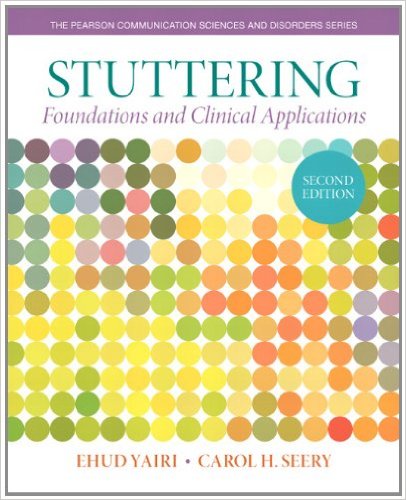
Stuttering Foundations And Clinical Applications 2nd Edition By Ehud Yairi - Test Bank

Stuttering Foundations And Clinical Applications 2nd Edition By Ehud Yairi - Test Bank   Instant Download - Complete Test Bank With Answers     Sample Questions Are Posted Below   Chapter 1.  What Is Stuttering?   Multiple Choice Questions   A clear, workable definition of stuttering is important for: determining treatment outcome differential diagnosis of …

$19.99

Stuttering Foundations And Clinical Applications 2nd Edition By Ehud Yairi – Test Bank


Instant Download – Complete Test Bank With Answers


Sample Questions Are Posted Below


Chapter 1.  What Is Stuttering?


Multiple Choice Questions


  1. A clear, workable definition of stuttering is important for:
  2. determining treatment outcome
  3. differential diagnosis of stuttering
  4. measuring the effect of experimental conditions
  5. all of the above


  1. In addition to theoretical, research and clinical purposes, a clear, acceptable definition of stuttering is important for:
  2. economic reasons
  3. syntactic reasons
  4. anatomical reasons
  5. subjective reasons


  1. The term stuttering may refer to certain speech events or to the:
  2. linguistic parameters
  3. fluent parameters
  4. complex disorder
  5. normal disfluencies


  1. Definitions of stuttering can be based on the following orientation:
    1. listener-based perspectives
    2. psychopathogenic-based perspectives
    3. organic-based perspectives
    4. all of the above


  1. A definition of stuttering is not important in:
  2. selecting measures for what is quantified about stuttering
  3. estimating levels of alcohol consumption
  4. identifying research subjects who stutter
  5. deciding who receives treatment


  1. Stuttering-like-disfluencies (Yairi & Ambrose, 1999) do not include:
  2. repetitions of single syllable words
  3.   repetitions of parts of words
  4.   repetitions of phrases
  5.   dysrhythmic phonations


  1. The “tip of the iceberg”(Sheehan, 1958) refers to the:
  2. overt (surface) features of stuttering
  3. covert (hidden) features of stuttering
  4.    fluent segments of speech
  5.    overt emotional reactions


  1. The term “disfluency” refers to:
  2. normal interruptions in speech
  3. abnormal interruptions in speech
  4. associated non-speech behaviors
  5. both a and b above


  1. Disfluency types most typical of stuttering:
  2. interjections, revisions, pauses
  3. whole word, phrase and multisyllable repetitions
  4. sound prolongations, sound and syllable repetitions
  5. both b and c above


  1. Van Riper suggested that stuttering is best defined as:
  2. a defect in the structure and function of the speech mechanism
  3. a forward flow of speech is interrupted and the speaker’s reaction to it
  4. a difficulty changing position of the tongue when moving from one sound to the next
  5. a momentary disruption of ongoing speech


  1. Stuttering has occurred when the speaker:
  2. holds out a speech sound while falling off a chair
  3. repeats a phrase again because the listener failed to understand
  4. repeats a word because a siren blared when it was said the first time
  5. none of the above


  1. An example of a covert aspect of stuttering:
  2. sound repetitions
  3. sense of a loss of control over speech
  4. disrhythmic phonations
  5. eye blinks


  1. Yaruss and & Quesal’s (2006) model of stuttering:
  2. defines stuttering as primarily an organic speech impairment
  3. defines stuttering as a psychologically- and environmentally-based disorder
  4. defines stuttering as a personal handicap regardless of its etiology
  5. does not define what stuttering is but represents what it involves


  1. Which of the following aspects of speech and language is most impaired in the disorder of stuttering.
  2. vocabulary
  3. pitch
  4. rate
  5. syntax


  1. Which disfluency type is not common to normally fluent speakers (i.e., not Other Disfluency)?
  2. sound repetitions
  3. phrase repetitions
  4. interjections
  5. revisions


True – False Questions


  1. The definition and clinical diagnosis of stuttering are not the same. However, arriving at a clinical diagnosis often involves use of specifications of, e.g., the frequency, of the parameters found in the definition of the disorder.


  1. One reason why definitions of stuttering differ is that some of them are based entirely, or partially, on hypotheses about the cause of the disorder instead of describing it.


  1. The inner, affective reactions of the person who stutters that are associated with stuttering events are known as the “core behaviors.”


  1. Research has indicated that fluent speech of stutterers may also be different from fluent speech of normally speaking individuals.


  1. Various surface interruptions that occur in ongoing speech are referred to as “disfluencies.”


Essay Questions


  1. List three situations or conditions where a definition of stuttering is important and has practical implications.  After listing a situation, briefly (5-7 lines) explain/discuss.   P. 3-4


  1. What is meant by “stuttering as an event”?  What is meant by “stuttering as a disorder”?

Give examples of the features that might characterize a stuttering event and the features that may broadly characterize a stuttering disorder.   P. 5; 9-16


  1. Your textbook stated that not all speech disfluencies are stuttering.  What does this mean?   What factors influence the distinction between just “speech disfluencies” and “stuttering”? P. 7-10
  2. List and discuss six dimensions of stuttering.  P. 12-13


  1. What are the reasons that there is such a wide variation in the definitions of the same term “stuttering”?  P. 14


  1. The authors of your textbook explained that the fluent speech of adults who stutter may not be free of the stuttering disorder. Why investigate fluent speech?  What is one point of evidence characteristic of their fluent speech that may indicate that there is an underlying problem?   P. 12


  1. What are the three dimensions of normally fluent speech production, and how does each dimension contribute to the flow of a spoken utterance? P.6

Additional information

Add Review

Your email address will not be published. Required fields are marked *