Subtotal: $309.86

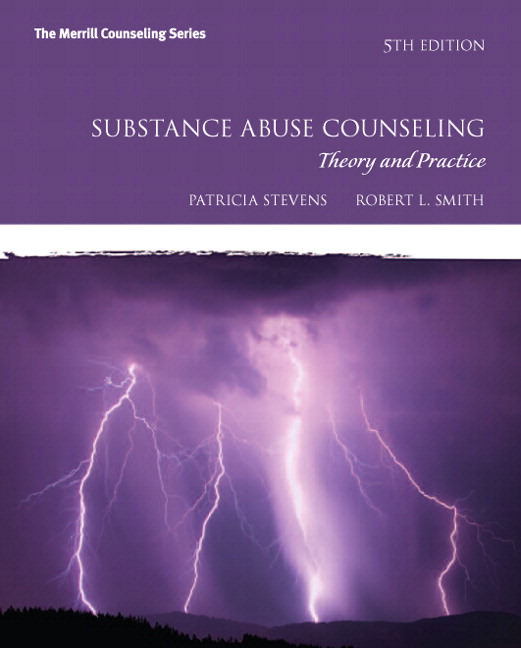
Substance Abuse Counseling Theory and Practice 5th Edition - Test Bank

Substance Abuse Counseling Theory and Practice 5th Edition - Test Bank   Instant Download - Complete Test Bank With Answers     Sample Questions Are Posted Below   Chapter 1: Introduction to Substance Abuse Counseling Objectives         To provide a historical perspective of the prevalence of drug use …

$19.99

Substance Abuse Counseling Theory and Practice 5th Edition – Test Bank


Instant Download – Complete Test Bank With Answers


Sample Questions Are Posted Below


Chapter 1: Introduction to Substance Abuse Counseling
Objectives


To provide a historical perspective of the prevalence of drug use and abuse including the impact on current
substance abuse issues, ensuing ramifications, and treatments.
Describe the history, use, impact, and current statistical trends of commonly used drugs such as alcohol,
marijuana, and tobacco.
Identify patterns and societal costs of substance use and abuse.
Present an organized and logical progression of substance abuse and counseling information and
definitions.
Emphasize the importance of comprehensive training in substance abuse intervention and prevention,
which will help address issues such as ―process addiction.‖
What are salient issues for substance abuse counselors to consider?
Why is a continuum model important for substance abuse assessment and interventions?
What are the multiple factors affecting the choice of treatment setting and results?

Key Terms and Definitions
Biopsychosocial model: Holistic model incorporating all aspects of the individual’s life and the interactive
factors of physical, emotional, familial, and societal influences on a person’s growth and development.
Continuum of behavior: View in assessment and diagnosis in recognizing a range in usage patterns to provide
more effective and individualized treatment, contrasted to a generalized treatment plan.
Disease concept: View of addiction as a progressive, terminal disease over which the individual has no control
as long as the use is continued.
Drug of choice: The specific drug a person would use if given the choice among options used through the years,
which is important as the number of polydrug users increases.
Drug misuse: Using a substance in a manner that causes detrimental effects in some area of the person’s life.
Drug use: Intake of a chemical substance, but does not distinguish whether the drug is used therapeutically,
legally, or illegally.
Drug user or substance abuser: Person who intentionally takes legal or illegal drugs to alter his or her
functioning or state of consciousness.
Enkephalins and endorphins: Neurotransmitters in the brain which are naturally produced pain-killing chemical
which have a strong molecular resemblance to alcohol and opiates.
Social learning systems model: View of substance abuse as a learned coping behavior that is regulated and
maintained by interacting systems, including the family and society.
Substance or chemical: Terms refer to use of alcohol, nicotine, caffeine, prescription drugs, and illegal drugs.
Substance abuse: Continued use of a psychoactive drug despite the occurrence of major detrimental effects
associated with its use, such as, social, vocational, health, scholastic, or economic difficulties.
Tolerance: A higher dosage of is needed to produce the same level of effect over time.

1

Withdrawal: A specific set of symptoms that occur when use of the drug is discontinued or withdrawn from the
central nervous system.

Key Websites
American Psychological Association home page, http://www.apa.org/
American Counseling Association home page, http://www.counseling.org/
Community Anti-Drug Coalitions of America (CADCA), http://www.cadca.org
CSAP Resource Guide, http://store.health.org/catalog/results.aspx?topic=95
HHS, National Institutes of Health (NIH), http://www.nih.gov/
HHS, NIH National Institute of Mental Health (NIHM), http://www.nimh.nih.gov/
HHS, SAMHSA Center for Mental Health Services (CMHS), http://mentalhealth.samhsa.gov/cmhs/
History of Drug Use in the United States, http://www.a1b2c3.com/drugs/gen003.htm
Iowa Substance Abuse Information Center (ISAIC On-line), http://www.drugfreeinfo.org/
Minnesota Institute of Public Health, http://www.miph.org/links.html
National Association of Alcoholism and Drug Abuse Counselors (NAADAC), http://www.naadac.org
National Association of Social Workers home page, http://www.socialworkers.org/
National Clearinghouse for Alcohol and Drug Information (NCADI), http://www.health.org
National Council on Alcoholism and Drug Dependence, http://www.ncadd.org/
National Household Survey of Drug Use and Health, http://www.samhsa.gov/oas/nhsda.htm#NHSDAinfo
National Institute on Alcohol Abuse and Alcoholism (NIAAA), http://www.niaaa.nih.gov/
National Institute on Chemical Dependency, http://www.ni-cor.com/addictions.html
National Institute on Drug Abuse, http://www.nida.nih.gov/
Partnership for Drug-Free America, http://www.drugfreeamerica.org
SAMHSA’s National Mental Health Information Center,
http://www.mentalhealth.samhsa.gov/topics/explore/substanceabuse/
SAMHSA’s Office of Applied Studies, http://www.drugabusestatistics.samhsa.gov/
Sober Houses, http://www.sober.com
Starfish Foundation, http://www.starfishfoundation.org/
U.S. Department of Health and Human Services (HHS), http://www.hhs.gov/
U.S. Department of Justice (DOJ) & Drug Enforcement Administration (DEA), http://www.dea.gov
White House Office of National Drug Control Policy (ONDCP), http://www.whitehousedrugpolicy.gov
World Health Organization, http://www.who.org

2

Activities
1.

Drugs are often in the news – drug abuse, drug dealing and more. As a class, over a period of several days,
search the newspaper for stories that involve drugs.
 Separate the stories you find into categories under the headings, “Local”, “National”, and
“International”.
 Which type of story is most common in your newspaper?
 Why do you think that is the case?

2.

Look on the internet for recent statistics on local trends in substance use or abuse for your community.
 How do these patterns compare to the national statistics presented in this chapter?

3.

Interview someone about the effect that alcohol and/or drugs have had on his or her family.
 What are the ―costs‖ (i.e. financial, physical, and psychological) that he or she perceives alcohol and/or
drugs have had on his or her family?

4.

Think of a client who might be moving along the continuum from use to abuse.
 How might you explain this progression to that individual?

5.

Compare 2 to 3 substance abuse journals (that are both refereed and non-refereed).
 Discuss the topics, trends, and population samples.
 What differentiates the journals from each other?
 Rate the helpfulness of the articles (Would you use these particular types of journals?).
 What differences, if any, are there between refereed vs. non-refereed journals?

6.

Group discussion: There has been a longstanding debate about the pros and cons of legalizing marijuana.
Defend your stance on this topic.

7.

Group discussion: Identify historical/cultural influences on the ways in which substances have traditionally
been used in your community or within your family, e.g. in celebrating religious or national holidays.
 Would modifying or removing substance use strongly affect community or family traditions?

Essay Questions/ Discussion Starters
1.

Discuss the relationship between social structures, culture, and the use of substances throughout history.
Answer
 Use as medicinal substance
 Use in religious rituals
 Use in celebratory situations
 Use instead of water

2.

Explain the differences between substance use, misuse, abuse and dependence.
Answer
 Use DSM diagnosis to provide differences in categories

3.

Either from your own experiences, from observing others, or from readings, analyze the factors influencing the
use of different drugs—tobacco, alcohol, marijuana, cocaine, etc.
Answer
 Include social, cultural, familial, genetic and legal aspects of use. Include psychological mindset of
individual.

4.

Critique or defend the concept of ―we live and always will live in a society of drug use and abuse.‖ Discuss
factors related to this statement and costs involved.
Answer
 Include aspects of historical overview of the use of drugs throughout history.

3

Include psychological need as well as medicinal use.

Multiple Choice Questions
1.

Throughout history, drugs have been used for _____________ purposes.
(a) Medicinal
(b) Religious
(c) Social
(d) All of these

2.

Substance abuse _______________.
(a) Is so prevalent that it is viewed outside of the context of other problems presented by clients
(b) Is considered no longer a ―major‖ problem among adolescents
(c) Is intertwined with the majority of other problems that clients present in therapy
(d) Is affecting a smaller percent of the population today when excluding the misuse of tobacco

3.

According to a 2009 SAMHSA survey, the following is true about U.S. tobacco use:
(a) Almost 30% (27.7%) of Americans aged 12 or older were current users of a tobacco product
(b) Almost 50% (46.6%) of Americans aged 12 or older were current users of a tobacco product
(c) Almost 75% (74.4%) of Americans aged 12 or older were current users of a tobacco product
(d) Almost 90% (88.8%) of Americans aged 12 or older were current users of a tobacco product

4.

Alcohol use is:
(a) Highly correlated with suicide attempts
(b) A major factor in acts of domestic violence
(c) Frequently mentioned in traffic accidents as a mitigating factor
(d) All of the above

5.

Which of the following is not true for marijuana or cannabis?
(a) Historically, hemp was farmed for use as paper, clothing, and rope.
(b) It was used for patients with depression.
(c) It has not been recognized by the DEA as having medicinal use
(d) It has not been legalized for common usage in most states of the U.S.

6.

The most commonly used drug among Americans aged 12 or older is:
(a) Inhalants
(b) Hallucinogens
(c) Marijuana
(d) Prescription-type drugs used nonmedically

7.

Costs associated with ATOD use, abuse and dependency:
(a) Is estimated to be anywhere from $180 billion to approximately $484 billion
(b) Includes a cost estimate of $64 billion in 2000 for health care and productivity losses
(c) Represented 8% of the total national health expenditures in 1996
(d) Have been estimated to be on the decline due to treatment efficacy and educational programs

8.

When referring to a ―substance‖ or ―chemical‖, the authors include:
(a) All illegal drugs
(b) Prescription drugs and illegal drugs
(c) Alcohol, prescription drugs, and illegal drugs
(d) Alcohol, nicotine, caffeine, prescription drugs, and illegal drugs

4

9.

Historically speaking:
(a) Opioids, amphetamines, and hallucinogens are the drugs that have been around and abused for the
longest period of time
(b) Drug use including that of alcohol, marijuana, and tobacco has been around for centuries
(c) Caffeine is an American phenomenon and recently examined as a potential drug
(d) Alcohol and marijuana are relatively new drugs used by Western civilization

10.

The definition of a drug relates to:
(a) Its legality
(b) Prescription vs. street use
(c) The degree of its ―instrumentality‖
(d) Its ability to significantly alter structure, function, or perception

11.

The diagnostic categories of ―abuse‖ and ―dependence‖ are separated by the following:
(a) Tolerance and withdrawal
(b) Length of time used and context of use
(c) Length of time used and particular drug identified
(d) Withdrawal and recidivism

12.

The particular nature of withdrawal is contingent on _______________.
(a) The class or type of drug being taken
(b) The length of time taken and the amount of the chemical taken
(c) The health of the individual
(d) All of the above

13.

Misuse, abuse, and addiction is a __________ behavior.
(a) Consistent
(b) Genetic
(c) Continuum of
(d) Fixation of

14.

A continuum model implies ______________.
(a) That some users may progress but that other users may fixate at a particular position
(b) Progression of drug use
(c) A level of drug use
(d) None of the above

15.

According to the U.S. Department of Transportation, an average of one alcohol-impaired driving fatality
occurred every _______________ in 2009.
(a) 48 seconds
(b) 48 minutes
(c) 48 hours
(d) 48 days

16.

Friedrich Serturner found the active ingreadient of opium by dissolving it in acid and then neurtralizing it with
ammonia. The result was ____________.
(a) Alkaloids
(b) Principium Somniferum
(c) Morphine
(d) All of the above

17.

Soldiers disease was an addiction to __________.
(a) Alcohol
(b) Heroine

5

18.

(c) Morphine
(d) Oxycodone
The Harrison Narcotics Act ____________.
(a) Was aimed to curb drug abuse
(b) Required doctors and pharmacists and others who prescribed narcotics to register and pay a tax
(c) Created a significant change in the use and availability of opioids
(d) All of the above.

19.

Marijuana has been legalized in _____ states in the United States.
(a) 6
(b) 16
(c) 26
(d) 36

20.

The American Indian Religious Act in 19788 and its amendment in 1994 provided natives with the right to
_______________.
(a) Use peyote (a cactus) in religious services
(b) Use a piece pipe in religious services
(c) Dance the traditional American Indian dances in religious services.
(d) Hold religious services especially for American Indians

21.

Evidence-based practices for treatment have been _____________.
(a) Subjected to randomized clinical trials and other experimental designs
(b) Found to be more effective than ―treatment as usual‖
(c) Both a and b
(d) None of the above

22.

The use of motivational interviewing is an example of _______________.
(a) Collaborative and Positive Treatment Skills
(b) ―Treatment as usual‖
(c) Confrontation as treatment
(d) All of the above

23.

In the 1930’s, what replaced the now-illegal cocaine?
(a) Heroin
(b) Marijuana
(c) Synthetic Amphetamines
(d) Opioids

24.

After 1910, public health officials began to campaign _______________.
(a) Against chewing tobacco
(b) For smoking tobacco
(c) Against drinking alcohol
(d) For drinking alcohol

Answer Key
Chapter 1
1.
2.
3.
4.
5.
6.
7.

D
C
A
D
C
C
A

(p. 4)
(p. 2)
(p. 1)
(p. 2)
(p. 8)
(p. 3)
(p. 13)

8.
9.
10.
11.
12.
13.
14.

D (p. 18)
D (pp. 4, 8, 12)
D (p. 18)
A (p. 17)
D (p.19)
C (p. 19)
A (p. 19)

15.
16.
17.
18.
19.
20.
21.

B (p. 2)
D (p. 9)
C (p. 9)
D (p. 9)
B (p. 8)
A (p. 10)
C (p. 19)

22.
23.
24.

A (p. 19)
C (p. 7)
B (p. 11)

8.
9.
10.
11.
12.
13.
14.

D (p. 34)
A (p. 36)
C (pp. 37, 40)
D (p. 41)
A (p. 42-43)
D (p. 44)
D (p. 44-45)

15.
16.
17.
18.
19.
20.
21.

D (p. 27)
D (p. 28-29)
A (p. 38)
D (p. 41)
D (p. 33)
D (p. 35)
C (p. 35)

22.

B (p. 39)

8.
9.
10.
11.
12.
13.
14.

D (p. 80)
D (p. 62)
A (p. 77)
D (p. 88)
A (p. 88)
D (p. 71-74)
C (p. 89-90)

15.
16.
17.
18.
19.
20.
21.

A (p. 79)
D (p. 51)
B (p. 64)
D (p. 67)
D (p. 68)
C (p. 70-71)
A (p. 73)

22.
23.
24.
25.
26.
27.
28.

D (p. 74)
B (p. 83)
C (p. 58)
A (p. 59)
B (p. 61)
C (p. 61-62)
D (p. 63)

8.
9.
10.
11.
12.
13.
14.

C (p. 116)
C (p. 111-113)
D (p. 100)
C (p.101)
B (p.112-113)
D (p. 106 )
C (p. 107)

15.
16.
17.
18.
19.
20.
21.

A (p. 99)
D (p. 99)
B (p. 102)
C (p. 104)
A (p. 107)
B (p. 109)
C (p. 110)

22.
23.
24.

D (p. 111)
B (p. 113)
D (p. 115)

8.
9.
10.
11.
12.
13.
14.

D (p. 131)
C (p. 128)
C (p. 139)
D (p. 144-145)
A (p. 144-145)
B (p. 143)
A (p. 128-131)

15.
16.
17.
18.
19.
20.

D (p. 144)
A (p. 144)
D (p. 125)
C (p. 135)
B (p. 132)
A (p. 136)


Additional information

Add Review

Your email address will not be published. Required fields are marked *