No products in the cart.

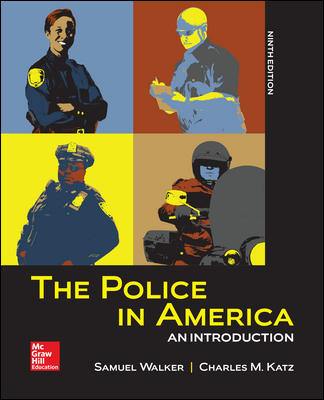
The Police in America An Introduction 9Th Edition By Samuel Walker - Test Bank

The Police in America An Introduction 9Th Edition By Samuel Walker - Test Bank   Instant Download - Complete Test Bank With Answers     Sample Questions Are Posted Below   Chapter 05 Police Officers I: Recruitment and Training for a Changing Society     Multiple Choice Questions A positive or negative belief that strongly …

$19.99

The Police in America An Introduction 9Th Edition By Samuel Walker – Test Bank


Instant Download – Complete Test Bank With Answers


Sample Questions Are Posted Below


Chapter 05

Police Officers I: Recruitment and Training for a Changing Society


Multiple Choice Questions

  1. A positive or negative belief that strongly influences the public image of the identity, beliefs, and actions of the police is called a(n)
    A.belief system.
    B. stereotype.
    C. value system.
    D. ethics layers.


Accessibility: Keyboard Navigation

  1. The protection provided by civil service rules and police unions that makes firing an officer difficult is called
    A.motivation.
    B. job barrier.
    C. job security.
    D. tenure.


Accessibility: Keyboard Navigation

  1. Recruiting women for positions in the police force is difficult because many people view policing as
    A.a dishonorable line of work.
    B. a poorly paying career.
    C. a traditionally male occupation.
    D. a low position in society.


Accessibility: Keyboard Navigation


  1. The legislation that prohibits employment discrimination on the basis of race, ethnicity, religion, nationality, or sex is known as
    A.Miranda v. Arizona.
    B. Equal Employment Opportunity.
    C. Labor Relations Act.
    D. Title VII of the 1964 Civil Rights Act.


Accessibility: Keyboard Navigation

  1. Job requirements that are “reasonably necessary” to the normal operation of that particular business are called
    A.bona fide occupational qualifications.
    B. pre-employment guidelines.
    C. labor occupational qualifications.
    D. job requirement qualifications.


Accessibility: Keyboard Navigation

  1. The _____ compares a police department’s workforce with the racial and ethnic composition of the community it serves.
    A.national decertification index
    B. labor community index
    C. equal employment opportunity index
    D. police-community representation bar


Accessibility: Keyboard Navigation

  1. In the context of employment, _____ is a concept that means an employer must take positive steps to remedy past discrimination.
    A.past practices correction
    B. affirmative action
    C. discrimination remedy
    D. employee employment justice


Accessibility: Keyboard Navigation


  1. To gain practical experience under the supervision of veteran police officers, a newly trained police recruit works with a
    A.veteran training officer (VTO).
    B. patrol training officer (PTO).
    C. first training officer (FTO).
    D. field training officer (FTO).


Accessibility: Keyboard Navigation

  1. The size and quality of the applicant pool in a police department depend on the department’s
    A.recruitment budget.
    B. reaction to the economy.
    C. ability to secure federal funding.
    D. recruitment effort.


Accessibility: Keyboard Navigation

  1. Surveys of recruits and new police officers consistently indicate they choose law enforcement as a career for two main reasons namely
    A.the nature of the work and the material benefits of the job.
    B. helping the community and assisting the residents.
    C. promoting their image and gaining the public’s respect.
    D. to obtain gainful employment and to reestablish financial credit.


Accessibility: Keyboard Navigation

  1. The appeal of jobs in a police department often depends on
    A.the state of the economy.
    B. the breadth and depth of background investigations.
    C. whether or not the department conducts drug testing.
    D. whether or not the department conducts polygraph examinations.


Accessibility: Keyboard Navigation


  1. Oral interviews of applicants are a good opportunity to assess
    A.the writing skills of the applicants.
    B. the mental health of the applicants.
    C. attitudes that are incompatible with good police work.
    D. None of the answers is correct.


Accessibility: Keyboard Navigation

  1. The most important part of the employment selection process is the
    A.fitness test.
    B. written test.
    C. oral interview.
    D. background investigation of applicants.


Accessibility: Keyboard Navigation

  1. In the context of policing, which of the following statements is true about in-service training?
    A.It is the least effective training tool in communicating new state legislations or court decisions to experienced police officers.
    B. It is designed to provide a refresher to experienced officers on basic issues such as the use-of-force policy in a police department.
    C. It is usually given to new recruits before they join their police departments.
    D. It is primarily used to weed out new recruits who underperform during their probationary period.


Accessibility: Keyboard Navigation

  1. Psychological testing of potential police trainees
    A.has an 87 percent success rate in predicting future success.
    B. has a low degree of success in predicting future success.
    C. has become so successful that it can predict the future highest rank a trainee will achieve in her or his career.
    D. often causes significant psychological stress to the test takers.


Accessibility: Keyboard Navigation


  1. Title VII of the 1964 Civil Rights Act makes it unlawful for an employer to make hiring decisions on the basis of
    A.a person’s previous employment.
    B. an individual’s race, color, religion, sex, or national origin.
    C. an individual’s educational activities while at an organization.
    D. a person’s sexual orientation.


Accessibility: Keyboard Navigation

  1. In the context of hiring police officers, residency requirements for police officers are primarily intended to
    A.allow police officers the freedom to reside where they already live.
    B. increase the number of beat officers available in a particular community.
    C. heighten officers’ familiarity with the community and their commitment to its well-being.
    D. maintain an equal number of police officers in the urban and the rural regions of a state.


Accessibility: Keyboard Navigation

  1. The most useful measure of employment practices is the extent to which a police department
    A.is able to pay and retain all of its police applicants through the first two years of employment.
    B. is able to hire qualified police applicants and reduce its liability to the city.
    C. reflects the composition of the community it serves.
    D. is able to allow its rejected applicants to appeal to the civil service commission.


Accessibility: Keyboard Navigation

  1. According to the textbook, the most controversial issue in police employment is
    A.use of force.
    B. drug testing.
    C. polygraph testing.
    D. affirmative action.


Accessibility: Keyboard Navigation


  1. The basic premise of affirmative action is that simply ending discrimination does not automatically correct for
    A.the legacy of past discrimination.
    B. the hiring irregularities that must be addressed by the EEOC.
    C. the BFOQs that must be enforced by an employer.
    D. the sexual discrimination that still occurs in the workplace.


Accessibility: Keyboard Navigation

  1. Opponents of affirmative action argue that it lowers personnel standards by forcing an employer to hire applicants
    A.with a distinct minority status.
    B. who have strong family ties to the police department.
    C. with lower qualifications.
    D. who have a higher IQ than other applicants.


Accessibility: Keyboard Navigation

  1. Jake, a new human resource manager, alters the hiring and recruitment process of his firm when he learns that the firm was regularly denying employment to qualified female candidates. He changes the recruitment policy to rectify the past discrimination of female applicants. The new recruitment process now provides equal employment opportunity for both men and women applicants. This is an example of
    A.affirmative action.
    B. job enrichment.
    C. onboarding.
    D. topgrading.


Accessibility: Keyboard Navigation


  1. Which of the following functions does the police academy experience serve?
    A.It provides basic training on various laws.
    B. It is the process for weeding out unqualified recruits.
    C. It socializes recruits into the world of policing.
    D. All of the answers are correct.


Accessibility: Keyboard Navigation

  1. To supplement classroom academy training, most departments operate practical field experience programs with senior officers. These are called FTO programs, which stands for
    A.forward training officer.
    B. field training officer.
    C. future trainee officer.
    D. field trainee officer.


Accessibility: Keyboard Navigation

  1. The purpose of the probationary period is to
    A.observe the relation of academy training to on-the-job training.
    B. observe performance and dismiss those whose performance is unsatisfactory.
    C. observe the interactions between new recruits and the police subculture.
    D. observe how police probationary officers assimilate into the community.


Accessibility: Keyboard Navigation

  1. Which of the following statements is true about the probationary period of police officers?
    A.Police officers can be dismissed without cause during their probationary period.
    B. An average of about 47 percent of all recruits are rejected during their probationary period in the United States.
    C. In the United States, police officers must complete their probationary period of six months to qualify for preservice training.
    D. The probationary period of police officers is primarily determined by the revenue earned by their police departments.


Accessibility: Keyboard Navigation


  1. The civil service system is
    A.used by the government to hire police officers and other government employees.
    B. used to train police recruits at the police academy.
    C. used in determining who gets to attend college classes in policing.
    D. used to determine who gets arrested and who does not.


Accessibility: Keyboard Navigation

  1. To become a police officer in the United States, most law enforcement agencies today require an applicant to
    A.have a doctorate in social sciences.
    B. be at least 6 feet tall.
    C. have served in the U.S. military for two years or more.
    D. be at least 21 years old.


Accessibility: Keyboard Navigation

  1. What percentage of police departments require a four-year college degree for appointment to the police department?
    A.1 percent
    B. 4.8 percent
    C. 24.8 percent
    D. 34.8 percent


Accessibility: Keyboard Navigation

  1. Requiring all applicants to have a four-year college degree is opposed by some people because
    A.it would cost too much.
    B. a college education is not necessary to be a street officer.
    C. it would reduce the number of minorities qualified to be on the force.
    D. it would deter women from applying for the position of police officer.


Accessibility: Keyboard Navigation


  1. Virtually every police department today requires applicants to have a _____ to be hired.
    A.four-year college degree
    B. two-year college degree
    C. some college education
    D. high school diploma


Accessibility: Keyboard Navigation

  1. What percentage of Americans ages 18 to 25 report ever having used marijuana?
    A.37 percent
    B. 40 percent
    C. 53 percent
    D. 60 percent


Accessibility: Keyboard Navigation

  1. What percentage of Los Angeles police officers live outside the city of Los Angeles?
    A.13 percent
    B. 23 percent
    C. 33 percent
    D. 83 percent


Accessibility: Keyboard Navigation

  1. Which of the following statements is true about preservice police academy training?
    A.It is typically given to police officers who outperform other officers in field training.
    B. It is most useful in helping experienced police officers refresh their knowledge about concepts they learned during their probationary period.
    C. It is usually given after recruits complete their probationary period.
    D. It helps police officers learn about the basic arrest and booking procedures in their department.


Accessibility: Keyboard Navigation


  1. Investigations of applicants that cover previous employment, possible criminal records, and behavior problems in school are called
    A.preliminary investigations.
    B. background investigations.
    C. work investigations.
    D. criminal investigations.


Accessibility: Keyboard Navigation

  1. The employment of racial and ethnic minority police officers has
    A.decreased in recent years.
    B. remained about the same in recent years.
    C. increased significantly in recent years.
    D. is no longer a problem since we have achieved equality.


Accessibility: Keyboard Navigation

  1. A field training officer is one who
    A.is receiving training at the police academy.
    B. is teaching at the police academy.
    C. is a new officer receiving training in the field.
    D. is a police officer who teaches new police officers in the field.


Accessibility: Keyboard Navigation

  1. Which of the following statements is true about affirmative action?
    A.It automatically involves the use of racial, ethnic, and gender quotas in hiring applicants.
    B. It predominantly results in the discrimination against people who are financially poor.
    C. It has to be ordered by the Supreme Court to be implemented.
    D. It involves developing a recruitment plan to correct any underutilization of minorities in organizations.


Accessibility: Keyboard Navigation


True / False Questions
 

  1. More females, African Americans, and Hispanics are being hired today than ever before.
    TRUE


Accessibility: Keyboard Navigation

  1. According to your text, many police officers are overweight.
    TRUE


Accessibility: Keyboard Navigation

  1. The majority of police departments now require a four-year college degree to be appointed.
    FALSE


Accessibility: Keyboard Navigation

  1. There is evidence that officers with higher education are more likely to become dissatisfied with their jobs.
    TRUE


Accessibility: Keyboard Navigation

  1. In the context of residency requirements for police officers, research shows that a police officer’s residence directly influences and affects his or her performance as an officer.
    FALSE


Accessibility: Keyboard Navigation


  1. “Split-second decision” in policing occurs when a threat appears suddenly and a police officer feels he or she has no choice about what to do.
    TRUE


Accessibility: Keyboard Navigation

  1. Most police departments have a height requirement for hiring new officers.
    FALSE


Accessibility: Keyboard Navigation

  1. Most officers cite the opportunity to exercise authority and power as a main reason for wanting to be a police officer.
    FALSE


Accessibility: Keyboard Navigation

  1. The employment of racial and ethnic minority police officers has decreased during the last 10 years.
    FALSE


Accessibility: Keyboard Navigation

  1. There is no conclusive evidence that officers with college degrees perform more effectively that those without degrees.
    TRUE


Accessibility: Keyboard Navigation


  1. An affirmative action plan can be voluntary on the part of an employer, with clear goals and timetables.
    TRUE


Accessibility: Keyboard Navigation

  1. Fringe benefits and job security are major attractions for police recruits.
    TRUE


Accessibility: Keyboard Navigation

  1. Although police officers fall under civil service rules and police union contracts, they do not enjoy a high degree of job security.
    FALSE


Accessibility: Keyboard Navigation

  1. Under Title VII of the 1964 Civil Rights Act, it is unlawful for an employer to engage in a variety of illegal employment practices with regard to hiring, firing, segregation, or discrimination on the basis of race, color, religion, sex, or national origin.
    TRUE


Accessibility: Keyboard Navigation


Essay Questions

  1. In the context of hiring police officers, what are the basic elements in the recruitment process?

Answer may vary


Accessibility: Keyboard Navigation


  1. What are the responsibilities of civil service agencies?

Answer may vary


Accessibility: Keyboard Navigation

  1. What is affirmative action, and how does it relate to reverse discrimination?

Answer may vary


Accessibility: Keyboard Navigation

  1. Explain the importance of in-service training.

Answer may vary


Accessibility: Keyboard Navigation

Additional information

Add Review

Your email address will not be published. Required fields are marked *