No products in the cart.

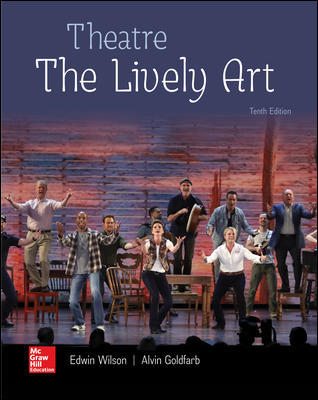
Theatre The Lively Art 10Th Edition By Edwin Wilson - Test Bank

Theatre The Lively Art 10Th Edition By Edwin Wilson - Test Bank   Instant Download - Complete Test Bank With Answers     Sample Questions Are Posted Below   Theatre: The Lively Art, 10e (Wilson) Chapter 5   Acting for the Stage   1) Which of the following is NOT one of the responsibilities of a …

$19.99

Theatre The Lively Art 10Th Edition By Edwin Wilson – Test Bank


Instant Download – Complete Test Bank With Answers


Sample Questions Are Posted Below


Theatre: The Lively Art, 10e (Wilson)

Chapter 5   Acting for the Stage


1) Which of the following is NOT one of the responsibilities of a performer in the theatre?

  1. A) to create and project the inner life of the character
  2. B) to move onstage with ease and authority
  3. C) to interact with other performers onstage
  4. D) to coordinate the elements and the vision of the production


Answer:  D

Bloom’s:  Level 1 Knowledge

LO:  Recall the three main challenges of acting

Accessibility:  Keyboard Navigation


2) Which of the following is NOT a performance technique developed by Stanislavski?

  1. A) through line
  2. B) biomechanics
  3. C) concentration and observation
  4. D) magic if


Answer:  B

Bloom’s:  Level 2 Comprehension

LO:  Recognize the Stanislavski System as the first system for teaching realistic acting

Accessibility:  Keyboard Navigation


3) Which of the following best characterizes acting in classical Asian theatres?

  1. A) stylization and symbolism
  2. B) emphasis on the internal
  3. C) simplicity and integration
  4. D) emphasis on emotional recall


Answer:  A

Bloom’s:  Level 1 Knowledge

LO:  Understand the importance of vocal and physical training for the actor

Accessibility:  Keyboard Navigation


4) In order to throw the voice into the audience so that it penetrates to the utmost reaches of the theatre, the actor must

  1. A) develop a strong through line.
  2. B) utilize the “magic if.”
  3. C) project.
  4. D) face forward at all times.


Answer:  C

Bloom’s:  Level 1 Knowledge

LO:  Understand the importance of vocal and physical training for the actor

Accessibility:  Keyboard Navigation

5) In response to the new realistic drama of the late nineteenth century, ________ devised a system to teach performers how to achieve the necessary believability.

  1. A) Henry Irving
  2. B) Henrik Ibsen
  3. C) Jacques Copeau
  4. D) Konstantin Stanislavski


Answer:  D

Bloom’s:  Level 1 Knowledge

LO:  Recognize the Stanislavski System as the first system for teaching realistic acting

Accessibility:  Keyboard Navigation


6) Ensemble acting emphasizes the

  1. A) vocal qualities of the each character.
  2. B) physical aspects of a performance.
  3. C) individual performances of each actor.
  4. D) artistic unity of a group performance.


Answer:  D

Bloom’s:  Level 1 Knowledge

LO:  Identify the phrase ‘ensemble playing’ as it pertains to believable acting

Accessibility:  Keyboard Navigation


7) In order for a performer to convincingly play a role, he or she must synthesize the inner and outer aspects of training through a process called

  1. A) amalgamation.
  2. B) union.
  3. C) integration.
  4. D) alliance.


Answer:  C

Bloom’s:  Level 1 Knowledge

LO:  Recognize the importance of synthesis and integration in actor training

Accessibility:  Keyboard Navigation


8) The program developed by Vsevolod Meyerhold that emphasizes physical exercises and circus-like control of the body is known as

  1. A) biomechanics.
  2. B) integration.
  3. C) viewpoints theory.
  4. D) pantomime.


Answer:  A

Bloom’s:  Level 1 Knowledge

LO:  Recognize the key figures in the development of systems for the physical training of actors

Accessibility:  Keyboard Navigation


9) “Centering” involves finding the place where all the lines of force in the body come together. It is located, roughly, in the

  1. A) middle of the torso.
  2. B) point between the eyes.
  3. C) palms of the hands and the balls of the feet.
  4. D) middle of the back.


Answer:  A

Bloom’s:  Level 1 Knowledge

LO:  Recognize the various skills and training needed for specialized theatrical performances

Accessibility:  Keyboard Navigation


10) Stanislavski’s early research into realistic acting techniques was conducted while he was directing many plays by

  1. A) Henrik Ibsen.
  2. B) William Shakespeare.
  3. C) Anton Chekhov.
  4. D) August Strindberg.


Answer:  C

Bloom’s:  Level 1 Knowledge

LO:  Recognize the Stanislavski System as the first system for teaching realistic acting

Accessibility:  Keyboard Navigation


11) Another term for a through line is

  1. A) psychophysical action.
  2. B) circle of attention.
  3. C) spine.
  4. D) magic if.


Answer:  C

Bloom’s:  Level 1 Knowledge

LO:  Understand the concept of the ‘through line of a role’

Accessibility:  Keyboard Navigation


12) Which of the following best characterizes Stanislavski’s later approach to actor training?

  1. A) development of emotions leading to action
  2. B) focus on emotional recall
  3. C) purposeful action as the most direct route to the emotions
  4. D) emphasis on physical exercises and body control


Answer:  C

Bloom’s:  Level 2 Comprehension

LO:  Clarify Stanislavski’s belief in the importance of focusing on action rather than emotion

Accessibility:  Keyboard Navigation


13) What were three questions Stanislavski associated with psychophysical actions?

  1. A) What? Why? When?
  2. B) Who? When? Why?
  3. C) Where? How? When?
  4. D) What? Why? How?


Answer:  D

Bloom’s:  Level 1 Knowledge

LO:  Clarify Stanislavski’s belief in the importance of focusing on action rather than emotion

Accessibility:  Keyboard Navigation


14) “Viewpoints” theory is an approach to acting that originated in the United States and combines dance and stage movement with concepts of

  1. A) psychological realism.
  2. B) sound and singing.
  3. C) time and space.
  4. D) color and light.


Answer:  C

Bloom’s:  Level 1 Knowledge

LO:  Recognize the key figures in the development of systems for the physical training of actors

Accessibility:  Keyboard Navigation


15) Techniques for developing personal charisma were developed by

  1. A) Konstantin Stanislavski.
  2. B) Anne Bogart.
  3. C) Robert Wilson.
  4. D) None of these answers is correct.


Answer:  D

Bloom’s:  Level 2 Comprehension

LO:  Recognize the various skills and training needed for specialized theatrical performances

Accessibility:  Keyboard Navigation


16) In which way is the approach of Lee Strasberg different from the approach of acting teachers like Stella Adler, Sanford Meisner, and Uta Hagen?

  1. A) It uses past emotion as a springboard into action.
  2. B) It believes in psychophysical action as the way to emotions.
  3. C) It emphasizes the inner aspects of acting.
  4. D) It focuses on the actor’s body and how to use it to shape character.


Answer:  C

Bloom’s:  Level 2 Comprehension

LO:  Distinguish between three modern types of actor training

Accessibility:  Keyboard Navigation


17) Which of the following acting teachers encouraged students to use the text as an instrument of action through exercises such as the “Content-less Scene”?

  1. A) Stella Adler
  2. B) Lee Strasberg
  3. C) Sanford Meisner
  4. D) Robert Cohen


Answer:  D

Bloom’s:  Level 1 Knowledge

LO:  Distinguish between three modern types of actor training

Accessibility:  Keyboard Navigation


18) Actors have reported that technology has helped them in all but which of the following ways:

  1. A) emailing headshots and resumes rather than having printed copies
  2. B) offering discounts on tickets and performances through websites
  3. C) auditioning via Skype or FaceTime when unable to be at a physical audition
  4. D) connecting with fans on Twitter and other social media sites


Answer:  B

Bloom’s:  Level 1 Knowledge

LO:  Recall how technology has changed the acting profession

Accessibility:  Keyboard Navigation


19) The style of puppet most recognizable to Western audiences and does not have strings or other items attached to the head and limbs for control is called

  1. A) Shadow puppet
  2. B) Marionette
  3. C) Hand puppet
  4. D) Rod puppet


Answer:  B

Bloom’s:  Level 1 Knowledge

LO:  Recognize the various skills and training needed for specialized theatrical performances

Accessibility:  Keyboard Navigation


Match the following Stanislavski acting techniques to the phrase that best describes them.


  1. A) psychophysical action
  2. B) super objective
  3. C) ensemble
  4. D) relaxation
  5. E) circle of attention
  6. F) given circumstances
  7. G) inner truth
  8. H) magic if
  9. I) importance of specifics


20) purposeful action undertaken to fulfill a character’s goals as the most direct route to the Bloom’s:  Level 1 Knowledge

LO:  Identify elements of Stanislavski’s acting training

Accessibility:  Keyboard Navigation


21) concentration on some object, person, or event while onstage

Bloom’s:  Level 1 Knowledge

LO:  Identify elements of Stanislavski’s acting training

Accessibility:  Keyboard Navigation


22) internal or subjective world of the characters

Bloom’s:  Level 1 Knowledge

LO:  Identify elements of Stanislavski’s acting training

Accessibility:  Keyboard Navigation


23) the elimination of unwanted tension

Bloom’s:  Level 1 Knowledge

LO:  Identify elements of Stanislavski’s acting training

Accessibility:  Keyboard Navigation


24) what the character wants above all else during the course of the play

Bloom’s:  Level 1 Knowledge

LO:  Identify elements of Stanislavski’s acting training

Accessibility:  Keyboard Navigation


25) the specifics of the situation in which a character exists

Bloom’s:  Level 1 Knowledge

LO:  Identify elements of Stanislavski’s acting training

Accessibility:  Keyboard Navigation

26) imagining how the actor would feel in a particular situation

Bloom’s:  Level 1 Knowledge

LO:  Identify elements of Stanislavski’s acting training

Accessibility:  Keyboard Navigation


27) expressing an emotion in terms of concrete activities

Bloom’s:  Level 1 Knowledge

LO:  Identify elements of Stanislavski’s acting training

Accessibility:  Keyboard Navigation


28) the playing together of all performers

Bloom’s:  Level 1 Knowledge

LO:  Identify elements of Stanislavski’s acting training

Accessibility:  Keyboard Navigation


Answers: 20) A 21) E 22) G 23) D 24) B 25) F 26) H 27) I 28) C


29) In order for an actor or actress to properly prepare a role, he or she should always begin with an outer aspect such as a walk, a posture, or a peculiar vocal delivery, and then develop the inner life of the character.


Answer:  FALSE

Bloom’s:  Level 2 Comprehension

LO:  Understand what it means to make acting believable

Accessibility:  Keyboard Navigation


30) The realistic portrayal of characters in a lifelike fashion has been characteristic of theatre throughout history.


Answer:  FALSE

Bloom’s:  Level 1 Knowledge

LO:  Explain why realistic acting came about at the end of the nineteenth century

Accessibility:  Keyboard Navigation

31) Performers must not mix acting methods; they should find a single method that works for them and then strictly adhere to that method’s approach.


Answer:  FALSE

Bloom’s:  Level 2 Comprehension

LO:  Recognize the importance of synthesis and integration in actor training

Accessibility:  Keyboard Navigation


32) Unlike in classical plays, adept physical movement is not required of the actor in a realistic play.


Answer:  FALSE

Bloom’s:  Level 1 Knowledge

LO:  Understand the importance of vocal and physical training for the actor

Accessibility:  Keyboard Navigation


33) While there have been changes and modifications over the years to Stanislavski’s approach to realistic acting, his theories continue to form the basis for most acting training.


Answer:  TRUE

Bloom’s:  Level 1 Knowledge

LO:  Recognize the influence of the Stanislavski system on other theatre artists

Accessibility:  Keyboard Navigation


34) Because it is important that the audience not be distracted while a character is speaking, Stanislavski believed that the other actors should, in essence, stop acting when they were not the main focus of the scene.


Answer:  FALSE

Bloom’s:  Level 1 Knowledge

LO:  Recognize that, according to the Stanislavski system, all actions on stage must have specific purposes

Accessibility:  Keyboard Navigation

Additional information

Add Review

Your email address will not be published. Required fields are marked *