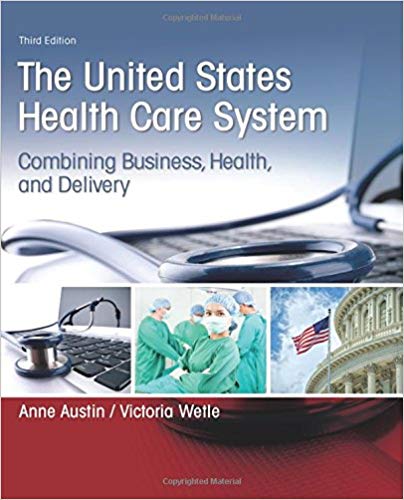
United States Health Care System Combining Business Health And Delivery3rd Ed by Anne Austin - Test Bank

United States Health Care System Combining Business Health And Delivery3rd Ed by Anne Austin - Test Bank   Instant Download - Complete Test Bank With Answers     Sample Questions Are Posted Below   The U.S. Health Care System, 3e (Austin) Chapter 5   Health Care Providers: Physicians and Nurses   1) Which type of medicine …

$19.99

United States Health Care System Combining Business Health And Delivery3rd Ed by Anne Austin – Test Bank


Instant Download – Complete Test Bank With Answers


Sample Questions Are Posted Below


The U.S. Health Care System, 3e (Austin)

Chapter 5   Health Care Providers: Physicians and Nurses


1) Which type of medicine is used with physicians who specialize in fighting disease, using proven, traditional treatment methods?

  1. A) Alternative medicine
  2. B) Osteopathic medicine
  3. C) Chiropractic medicine
  4. D) Allopathic medicine

Answer:  D


2) Physicians who specialize in understanding the musculoskeletal system and providing holistic care, practice

  1. A) alternative medicine
  2. B) allopathic medicine
  3. C) osteopathic medicine
  4. D) homeopathic medicine

Answer:  C


3) The main area(s) of care for a primary care physician is

  1. A) internal medicine
  2. B) general and family practice
  3. C) pediatrics
  4. D) all of the above

Answer:  D


4) According to the Bureau of Labor Statistics, Physicians 2014—15, approximately

  1. A) 35% of physicians are women
  2. B) 12% of physicians are African American
  3. C) 5% of physicians are Asian
  4. D) 10% of physicians are Hispanic

Answer:  A


5) Emergency medicine physicians specialize in the diagnosis and treatment of

  1. A) diseases of the lungs
  2. B) changes in organs, tissues, and cells
  3. C) acute illness or injury
  4. D) diseases of the urinary system

Answer:  C


6) Psychiatrists specialize in the diagnosis and treatment of

  1. A) diseases and disorders of the stomach and intestines
  2. B) diseases and disorders of the mind
  3. C) changes in organs, tissues, and cells
  4. D) diseases of the brain and nervous system

Answer:  B

7) Pathologists specialize in

  1. A) diagnosing disease by studying changes in organs, tissues, and cells
  2. B) diseases and disorders of the heart and blood vessels
  3. C) diseases and disorders of the skin
  4. D) pregnancy, childbirth, and diseases of female reproductive organs

Answer:  A


8) Which type of specialist administers medication to provide loss of feeling before surgical procedures?

  1. A) Anesthesiologist
  2. B) Ophthalmologist
  3. C) Radiologist
  4. D) Orthopedist

Answer:  A


9) Which type of surgery does an ophthalmic surgeon specialize in?

  1. A) Eye
  2. B) Brain
  3. C) Heart
  4. D) Skeletal

Answer:  A


10) According to the 2012 Medical Group Management Association’s Physician Compensation and Production Survey, the median net income for physicians per year in primary care is

  1. A) $159,478.00
  2. B) $198,765.00
  3. C) $220,942.00
  4. D) $332,843.00

Answer:  C


11) About ________ percent of medical school applicants are accepted.

  1. A) 25
  2. B) 50
  3. C) 75
  4. D) 90

Answer:  B


12) To practice medicine in most states, a physician must complete all of the following EXCEPT

  1. A) unpaid on-the-job training
  2. B) receive an undergraduate degree
  3. C) pass a licensing exam
  4. D) graduate from medical school

Answer:  A


13) What are the licensure requirements for physicians?

  1. A) Pass a medical licensing exam
  2. B) Complete at least 7 years of paid residency
  3. C) Obtain board certification
  4. D) All of the above

Answer:  A

14) Nurse Practice Acts

  1. A) contain the states’ requirements for practice
  2. B) specify which educational, clinical, and licensure requirements are necessary to practice in a state
  3. C) are the same in all 50 states
  4. D) are waived in long-term care

Answer:  A


15) Nursing involves ________ patients.

  1. A) treating
  2. B) educating
  3. C) diagnosing
  4. D) all of the above

Answer:  D


16) The typical nurse is a

  1. A) white male
  2. B) minority male
  3. C) minority female
  4. D) white female

Answer:  D


17) Which health professional is predominantly responsible for assisting patients with feeding and hygiene?

  1. A) CRNA
  2. B) RN
  3. C) CNA
  4. D) LPN

Answer:  C


18) What is the difference between an RN and an LPN?

  1. A) RNs, unlike LPNs, must pass a national licensure exam.
  2. B) RNs, unlike LPNs, are encouraged to complete the BSN.
  3. C) RNs, unlike LPNs, are involved in client teaching.
  4. D) RNs, unlike LPNs, are allowed to give injections.

Answer:  B


19) Which nursing professional specializes in anesthesia?

  1. A) NP
  2. B) CNS
  3. C) CNM
  4. D) CRNA

Answer:  D


20) Which nursing profession specializes in a field such as oncology, neonatal care, or mental health?

  1. A) NP
  2. B) RN
  3. C) CNM
  4. D) CNS

Answer:  D

21) Which are required at all levels of nursing?

  1. A) Classroom instruction
  2. B) Supervised clinical experience
  3. C) Hospital diploma
  4. D) Both A and B

Answer:  D


22) The average salary of an RN who works in the hospital setting is approximately

  1. A) $45,000
  2. B) $58,000
  3. C) $67,000
  4. D) $81,000

Answer:  C


23) Nurses in which setting focus on disease prevention through community education?

  1. A) Hospitals
  2. B) Public health agencies
  3. C) Long-term care facilities
  4. D) Medical offices

Answer:  B


24) In which setting does the RN generally hold a supervisory or administrative role?

  1. A) Hospital
  2. B) Public health office
  3. C) Medical office
  4. D) Long-term care facility

Answer:  D


25) According to the text, all of the following are issues for the medical profession EXCEPT

  1. A) quality of care
  2. B) access to care
  3. C) cost of care
  4. D) oversupply of physicians

Answer:  D


26) All of the following are serious concerns for health care professionals, EXCEPT

  1. A) cost
  2. B) burnout
  3. C) latex injuries
  4. D) LPN licensure

Answer:  D


27) Primary care physicians see patients for preventive care.

Answer:  TRUE


28) A hospitalist is a physician employed by a hospital, who focuses on providing care to hospitalized patients.

Answer:  TRUE


29) The nurse’s role may include working with other professionals and referring the patient elsewhere for services.

Answer:  TRUE

30) The USMLE is a two-step exam that replaced the three-part NBME and FLEX licensing exams.

Answer:  FALSE


31) Continuing medical education credits are required by states, and physicians who do not complete them could lose their medical licenses.

Answer:  TRUE


32) The average RN is 25 years old.

Answer:  FALSE


33) NPs can prescribe medications in all 50 states (including controlled substances in 49).

Answer:  TRUE


34) Physicians are able to diagnose and treat illnesses by obtaining a patient’s medical ________ and performing a ________ exam.

Answer:  history, physical


35) ________ are physicians who treat a variety of conditions, as opposed to physicians who specialize in a specific type of patient or body system.

Answer:           General or family practitioners


36) A state legislation that sets out the requirements for physician licensure in that state is called ________.

Answer:  Medical Practice Act


37) A physician’s post-formal education, paid training is called ________.

Answer:  residency


38) In addition to the traditional role of direct patient care, nurses’ roles have expanded to include ________ and health promotion.

Answer:  disease prevention


39) In order for a physician to retain their license, he or she must pay a renewal fee once per ________ and complete 75 hours of continuing education every ________ years.

Answer:  year, 3


40) Once a nurse has finished the educational program requirements, the next step is to take the ________.

Answer:           national registry exam (NCLEX).


41) Explain a physician’s primary role.

Answer:  Responses will vary, but should include: The role of physicians is to diagnose and treat the illnesses of their patients.


42) Briefly explain the difference between certification and licensure.

Answer:  Responses will vary, but should include that certification involves graduating and receiving a college degree or official document attesting to a status or level of achievement. Licensure involves passing a licensure exam and completing on-the-job training to receive a license in a particular field, practice, or profession, and generally requires continuing education to keep the license active.

43) Define “reciprocity agreement.”

Answer:  Responses will vary, but should include: An agreement between two states in which each accepts the professional licensing requirements of the other.


44) Identify and explain two issues facing the nursing profession.

Answer:  Responses will vary, and could include professionalism, health risks, burnout, and changes in the health care industry.

Additional information

Add Review

Your email address will not be published. Required fields are marked *