No products in the cart.

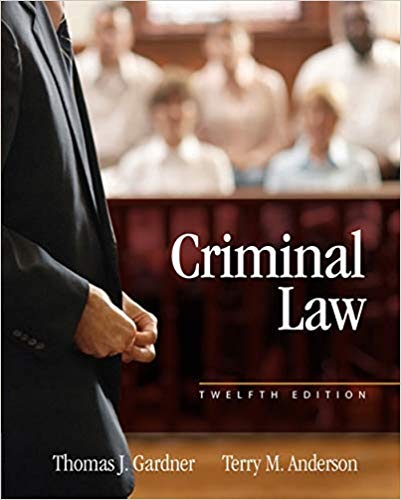
Criminal Law 12th Edition by Thomas J. Gardner - Test Bank

Criminal Law 12th Edition by Thomas J. Gardner - Test Bank   Instant Download - Complete Test Bank With Answers     Sample Questions Are Posted Below   True / False 1. The law regarding the use of deadly force in making an arrest is exactly the same from state to state. a. True b. …

$19.99

Criminal Law 12th Edition by Thomas J. Gardner – Test Bank


Instant Download – Complete Test Bank With Answers


Sample Questions Are Posted Below


True / False
1. The law regarding the use of deadly force in making an arrest is exactly the same from state to state.
a. True
b. False
ANSWER: False
REFERENCES: The Use of Force in Making an Arrest
LEARNING OBJECTIVES: CRLA.GAAN.15.06.04 – 06.04
KEYWORDS: Bloom’s: Remember
2. Not only police officers, but any person, may use reasonable force to defend another person against unlawful
force or interference.
a. True
b. False
ANSWER: True
REFERENCES: Self-Defense and the Defense of Others
LEARNING OBJECTIVES: CRLA.GAAN:15.06.01 – 06.01
KEYWORDS: Bloom’s: Remember
3. When acting in self-defense, all states impose a duty to retreat prior to the use of deadly and non-deadly force.
a. True
b. False
ANSWER: False
REFERENCES: Self-Defense and the Defense of Others
LEARNING OBJECTIVES: CRLA.GAAN:15.06.01 – 06.01
KEYWORDS: Bloom’s: Remember
4. Not having to retreat before using defensive force in one’s home is known as the “castle doctrine.”
a. True
b. False
ANSWER: True
REFERENCES: Self-Defense and the Defense of Others
LEARNING OBJECTIVES: CRLA.GAAN:15.06.01 – 06.01
KEYWORDS: Bloom’s: Remember
5. In states that have adopted “stand your ground” laws, severe limits have been placed on the use of deadly force
by the occupant of a dwelling.
a. True
b. False
ANSWER: False
REFERENCES: Self-Defense and the Defense of Others
LEARNING OBJECTIVES: CRLA.GAAN.15.06.03 – 06.03
KEYWORDS: Bloom’s: Remember
6. The Fourth Amendment is not violated by an arrest based on probable cause, even though the wrong person is
arrested.
a. True
b. False
ANSWER: True
REFERENCES: The Use of Force in Making an Arrest
LEARNING OBJECTIVES: CRLA.GAAN.15.06.05 – 06.05
KEYWORDS: Bloom’s: Remember
7. Only parents may use reasonable force in disciplining children.
a. True
b. False
ANSWER: False
REFERENCES: Disciplining Children
LEARNING OBJECTIVES: CRLA.GAAN.15.06.07 – 06.07
KEYWORDS: Bloom’s: Remember
8. Booby traps and spring guns may not lawfully be used to protect property.
a. True
b. False
ANSWER: True
REFERENCES: The Use of Force in the Defense of Property
LEARNING OBJECTIVES: CRLA.GAAN.15.06.03 – 06.03
KEYWORDS: Bloom’s: Remember
9. Deadly force may never be used by a police officer in an attempt to seize an individual.
a. True
b. False
ANSWER: False
REFERENCES: The Use of Force in Making an Arrest
LEARNING OBJECTIVES: CRLA.GAAN.15.06.06 – 06.06
KEYWORDS: Bloom’s: Remember
10. A citizen is never authorized to use deadly force against another citizen; only police may use deadly force against
another person.
a. True
b. False
ANSWER: False
REFERENCES: Self-Defense and the Defense of Others
LEARNING OBJECTIVES: CRLA.GAAN:15.06.01 – 06.01
KEYWORDS: Bloom’s: Remember
Multiple Choice
11. Key points in determining the lawfulness of force used in self-defense include all of the following except:
a. unlawfulness
b. necessity
c. reasonableness
d. whether the assailant is armed or not
ANSWER: d
REFERENCES: Self-Defense and the Defense of Others
LEARNING OBJECTIVES: CRLA.GAAN:15.06.01 – 06.01
KEYWORDS: Bloom’s: Remember
12. To be lawful, force used in self-defense or defense of another must be both reasonable and
a. sufficient
b. nondeadly
c. immediately necessary
d. preventable
ANSWER: c
REFERENCES: Self-Defense and the Defense of Others
LEARNING OBJECTIVES: CRLA.GAAN:15.06.01 – 06.01
KEYWORDS: Bloom’s: Remember
13. Should a 70-year-old, 100 pound woman begin to hit a 25-year-old, 200-pound man with an umbrella, the man
may
a. defend himself by taking the umbrella away from the woman
b. seize the umbrella and strike the woman with it
c. use any force, including deadly force
d. retreat, but cannot otherwise defend himself
ANSWER: a
REFERENCES: Self-Defense and the Defense of Others
LEARNING OBJECTIVES: CRLA.GAAN:15.06.01 – 06.01
KEYWORDS: Bloom’s: Apply
14. The amount of force used in self-defense or defense of another must, under the circumstances that exist, be
a. correct
b. reasonable
c. identical
d. less than the force being used by the aggressor
ANSWER: b
REFERENCES: Self-Defense and the Defense of Others
LEARNING OBJECTIVES: CRLA.GAAN:15.06.01 – 06.01
KEYWORDS: Bloom’s: Remember
15. The castle doctrine states that people who have been assaulted in their homes by a trespasser have no duty to
retreat or flee but may stand their ground and use such force as is necessary and
a. reasonable to defend themselves
b. required to defend themselves
c. sensible to defend themselves
d. fair to defend themselves
ANSWER: a
REFERENCES: Self-Defense and the Defense of Others
LEARNING OBJECTIVES: CRLA.GAAN:15.06.01 – 06.01
KEYWORDS: Bloom’s: Remember
16. The Florida “stand your ground” law creates a presumption that a homeowner has a reasonable fear of imminent
peril or death whenever another person unlawfully and
a. forcefully enters the dwelling
b. illegally enters the dwelling
c. willingly enters the dwelling
d. readily enters the dwelling
ANSWER: a
REFERENCES: Self-Defense and the Defense of Others
LEARNING OBJECTIVES: CRLA.GAAN.15.06.03 – 06.03
KEYWORDS: Bloom’s: Remember
17. Which of the following reasons does not help explain why use of deadly force is currently forbidden in the defense
of property?
a. today, few items of property are vital to survival
b. today, many items of personal property are insured against loss
c. today, law enforcement agencies are readily available to assist individuals confronted with theft
d. today, property is considered communally owned
ANSWER: d
REFERENCES: The Use of Force in the Defense of Property
LEARNING OBJECTIVES: CRLA.GAAN.15.06.03 – 06.03
KEYWORDS: Bloom’s: Remember
18. A person assaulted in their home by a trespasser has no duty to retreat and may use necessary force based upon
what doctrine?
a. trespasser
b. homeowner
c. aggressor
d. castle
ANSWER: d
REFERENCES: Self-Defense and the Defense of Others
LEARNING OBJECTIVES: CRLA.GAAN.15.06.02 – 06.02
KEYWORDS: Bloom’s: Remember
19. In states that have adopted “make my day” rules, the occupant of a dwelling
a. may not use deadly force against an intruder
b. may use necessary, but not deadly force against an intruder
c. may use deadly force against an intruder
d. must retreat rather than use force against an intruder
ANSWER: c
REFERENCES: Self-Defense and the Defense of Others
LEARNING OBJECTIVES: CRLA.GAAN.15.06.03 – 06.03
KEYWORDS: Bloom’s: Remember
20. To lawfully use deadly force in self-defense, what kind of fear of imminent death or great bodily harm must exist?
a. reasonable
b. subjective
c. actual
d. substantial
ANSWER: a
REFERENCES: Self-Defense and the Defense of Others
LEARNING OBJECTIVES: CRLA.GAAN:15.06.01 – 06.01
KEYWORDS: Bloom’s: Remember
21. If force in making arrests should be necessary because of resistance or an attempt to escape, the officer may use
only such force as is reasonably believed necessary to achieve all of the following except
a. detain the offender, make the arrest, and conduct lawful searches
b. overcome any resistance by the offender
c. prevent an escape and retake the person if an escape occurs
d. err on the side of too much force
ANSWER: d
REFERENCES: The Use of Force in Making an Arrest
LEARNING OBJECTIVES: CRLA.GAAN:15.06.04 – 06.04
KEYWORDS: Bloom’s: Remember
22. According to the U.S. Supreme Court, the Fourth Amendment applies to use of force by a police officer because
the Fourth Amendment provides an explicit textual source of constitutional protection against this sort of
a. physically intrusive governmental conduct
b. inappropriate governmental conduct
c. abusive governmental conduct
d. physically abusive governmental conduct
ANSWER: a
REFERENCES: The Use of Force in Making an Arrest
LEARNING OBJECTIVES: CRLA.GAAN.15.06.05 – 06.05
KEYWORDS: Bloom’s: Remember
23. Today, most states prohibit the use of what kind of force to protect property?
a. physical
b. imminent
c. reasonable
d. deadly
ANSWER: d
REFERENCES: The Use of Force in the Defense of Property
LEARNING OBJECTIVES: CRLA.GAAN.15.06.03 – 06.03
KEYWORDS: Bloom’s: Remember
24. In most, if not all states, the use of booby traps is
a. unlawful
b. lawful
c. lawful only if injury does not result in death
d. subject to civil penalties only
ANSWER: a
REFERENCES: The Use of Force in the Defense of Property
LEARNING OBJECTIVES: CRLA.GAAN.15.06.03 – 06.03
KEYWORDS: Bloom’s: Remember
25. When an uncooperative driver refuses to submit to a breath or urine test police have begun
a. taking forced blood samples from these uncooperative drivers
b. taking forced breath tests from these uncooperative drivers
c. taking forced urine samples from these uncooperative drivers
d. none of these answers is correct
ANSWER: a
REFERENCES: The Use of Force in Making an Arrest
LEARNING OBJECTIVES: CRLA.GAAN.15.06.04 – 06.04
KEYWORDS: Bloom’s: Remember
26. Whether excessive force was used by police in making an arrest will be analyzed under the Fourth Amendment
and what standard?
a. due process
b. equal protection
c. reasonableness
d. necessary
ANSWER: c
REFERENCES: The Use of Force in Making an Arrest
LEARNING OBJECTIVES: CRLA.GAAN.15.06.05 – 06.05
KEYWORDS: Bloom’s: Remember
27. State laws regarding the use of deadly force in making arrests must comply with the requirements established by
the U.S. Supreme Court in which case?
a. Miranda v. Arizona
b. Mapp v. Ohio
c. Ingraham v. Wright
d. Tennessee v. Garner
ANSWER: d
REFERENCES: The Use of Force in Making an Arrest
LEARNING OBJECTIVES: CRLA.GAAN.15.06.06 – 06.06
KEYWORDS: Bloom’s: Remember
28. Based on the Fourth Amendment, police officers may use deadly force when seizing a fleeing suspect
a. when the offense is a felony
b. when the offense is a felony and the suspect poses a threat to safety
c. regardless of the seriousness of the offense
d. if it appears the suspect will escape
ANSWER: b
REFERENCES: The Use of Force in Making an Arrest
LEARNING OBJECTIVES: CRLA.GAAN.15.06.05 – 06.05
KEYWORDS: Bloom’s: Remember
29. State laws and police regulations regarding the use of deadly force must conform to the requirements established
by the U.S. Supreme Court in
a. Tennessee v. Garner and Graham v. Connor
b. Tennessee v. Garner and Couture v. Com.
c. Tennessee v. Garner and State v. Escamilla
d. Tennessee v. Garner and People v. Miller
ANSWER: a
REFERENCES: The Use of Force in Making an Arrest
LEARNING OBJECTIVES: CRLA.GAAN.15.06.06 – 06.06
KEYWORDS: Bloom’s: Remember
30. What doctrine states that a person in his home is justified in using reasonable force, including deadly force, in
response to an assault in their home?
a. the castle doctrine
b. the queen doctrine
c. the king doctrine
d. the “make my day” doctrine
ANSWER: a
REFERENCES: Self-Defense and the Defense of Others
LEARNING OBJECTIVES: CRLA.GAAN.15.06.02 – 06.02
KEYWORDS: Bloom’s: Remember
31. “Stand your ground” laws change what doctrine in many states by adopting a presumption that a homeowner has
a fear of imminent peril whenever he is attacked in his home?
a. the castle doctrine
b. the “make my day” doctrine
c. the Brown doctrine
d. the Garner doctrine
ANSWER: a
REFERENCES: Self-Defense and the Defense of Others
LEARNING OBJECTIVES: CRLA.GAAN.15.06.03 – 06.03
KEYWORDS: Bloom’s: Remember
32. A police officer may use non-deadly force in all of the following situations except
a. detain a suspect
b. protect him/herself from harm
c. protect others from harm
d. when the suspect is fully cooperative
ANSWER: d
REFERENCES: The Use of Force in Making an Arrest
LEARNING OBJECTIVES: CRLA.GAAN.15.06.04 – 06.04
KEYWORDS: Bloom’s: Remember
33. Actions by police officers using force to arrest a suspect are “seizures” of the suspect, and thus under the Fourth
Amendment must be
a. reasonable
b. rational
c. non-deadly
d. safe
ANSWER: a
REFERENCES: The Use of Force in Making an Arrest
LEARNING OBJECTIVES: CRLA.GAAN.15.06.05 – 06.05
KEYWORDS: Bloom’s: Remember
34. When stopping a person for investigative purposes based upon “reasonable suspicion,” officers may use
a. no force, only verbal warnings
b. reasonable and necessary force given the circumstances
c. their hands, but no devices, to control the subject
d. deadly force
ANSWER: b
REFERENCES: The Use of Force in Making an Arrest
LEARNING OBJECTIVES: CRLA.GAAN.15.06.04 – 06.04
KEYWORDS: Bloom’s: Remember
35. State laws or regulations stating how and when police officers may use force must also comply with the
a. Fourth Amendment
b. Fifth Amendment
c. Sixth Amendment
d. Seventh Amendment
ANSWER: a
REFERENCES: The Use of Force in Making an Arrest
LEARNING OBJECTIVES: CRLA.GAAN.15.06.05 – 06.05
KEYWORDS: Bloom’s: Remember
36. The term “in loco parentis” refers to
a. transporting mental patients
b. people who take the place of parents
c. when parents are present
d. adoptive parents
ANSWER: b
REFERENCES: Disciplining Children
LEARNING OBJECTIVES: CRLA.GAAN.15.06.07 – 06.07
KEYWORDS: Bloom’s: Remember
37. In determining what constitutes a crime of child abuse, consideration will be given to
a. the age, size, and health of the child
b. the reason for the discipline
c. the gender of the child
d. the age, size, and health of the child, and the reason for the discipline
ANSWER: d
REFERENCES: Disciplining Children
LEARNING OBJECTIVES: CRLA.GAAN.15.06.07 – 06.07
KEYWORDS: Bloom’s: Remember
38. As long as it is reasonable, a child may be disciplined by all of the following except
a. parents
b. any person in loco parentis
c. public school teachers
d. another student
ANSWER: d
REFERENCES: Disciplining Children
LEARNING OBJECTIVES: CRLA.GAAN.15.06.07 – 06.07
KEYWORDS: Bloom’s: Remember
39. Who may not use deadly force when faced with the threat of death or serious bodily harm to the officer or
another?
a. a police officer
b. a probation officer
c. a person nearby
d. All may use deadly force
ANSWER: d
REFERENCES: Self-Defense and the Defense of Others
LEARNING OBJECTIVES: CRLA.GAAN:15.06.01 – 06.01
KEYWORDS: Bloom’s: Remember
40. Laws that encourage people to come to the aid of another are referred to as
a. Good Friend laws
b. Good Samaritan laws
c. Friendly Neighbor laws
d. Helping Hands laws
ANSWER: b
REFERENCES: Disciplining Children
LEARNING OBJECTIVES: CRLA.GAAN.15.06.07 – 06.07
KEYWORDS: Bloom’s: Remember
John “steroid arms” Buff picks a fight with James “no arms” Smalls. John begins to punch James in the face over
and over again for no reason at all. James tries to fight back and in doing so he knocks John down on the ground
where John hits his head a rock and dies. James is arrested and charged with the murder of John.
41. At trial James argues that John attacked him and that he was just defending himself. This is referred to as
a. self-Insane protection
b. protection against others
c. self-defense
d. defense-self
ANSWER: c
REFERENCES: Self-Defense and the Defense of Others
LEARNING OBJECTIVES: CRLA.GAAN:15.06.01 – 06.01
KEYWORDS: Bloom’s: Apply
42. During the above altercation, a passerby jumped in to help out James because he could easily see that John was
creating a ton of damage to his face with his punches. The assistance by the passerby is referred to as
a. self-defense
b. defense of another
c. another’s selfdefense model
d. model of defense action
ANSWER: b
REFERENCES: Self-Defense and the Defense of Others
LEARNING OBJECTIVES: CRLA.GAAN:15.06.01 – 06.01
KEYWORDS: Bloom’s: Apply
43. During the above altercation, there is a law that is present that encourages bystanders to help out those who are
being attacked or who are in danger, etc. This is called
a. Good bystander laws
b. Good passerby laws
c. Good Samaritan laws
d. Good innocent person laws
ANSWER: c
REFERENCES: Self-Defense and the Defense of Others
LEARNING OBJECTIVES: CRLA.GAAN:15.06.01 – 06.01
KEYWORDS: Bloom’s: Apply
44. John was killed in the above altercation. What type of force was actually used?
a. Reasonable
b. Justified
c. Deadly
d. Homicide
ANSWER: c
REFERENCES: Self-Defense and the Defense of Others
LEARNING OBJECTIVES: CRLA.GAAN:15.06.01 – 06.01
KEYWORDS: Bloom’s: Apply
Johnny “sneaky” Burgle sneaks into his neighbor’s house through a basement window and begins to conceal items
into this large bag. Johnny “sneaky” Burgle accidentally knocked over a vase, which made a loud noise when it
broke. This noise woke up the home owner. The home owner confronted Johnny and ordered him out of his house.
45. Because Johnny was burglarizing his home the home owner can use what type of force?
a. Deadly force
b. Deadly but not deadly force
c. Non-deadly force
d. No force at all.
ANSWER: c
REFERENCES: Self-Defense and the Defense of Others
LEARNING OBJECTIVES: CRLA.GAAN.15.06.02 – 06.02
KEYWORDS: Bloom’s: Apply
46. Johnny “sneaky” runs out of the house when he is confronted by the home owner and while he is running down the
street a police officer confronts him and orders him to stop. Johnny stops, shows no weapons or other items of
dangerous threats, but does not comply with the officer’s orders and is refusing to be arrested. The police officer
may use what type of force to execute this arrest?
a. Deadly force
b. Deadly but not deadly force
c. No force at all
d. Non-deadly force
ANSWER: d
REFERENCES: The Use of Force in Making an Arrest
LEARNING OBJECTIVES: CRLA.GAAN.15.06.04 – 06.04
KEYWORDS: Bloom’s: Apply
47. Johnny “sneaky” runs out of the house when confronted by the home owner. A police officer orders him to stop and
tells Johnny that he is under arrest. Johnny pulls out a knife and charges the officer in an attempt to kill him. The
police officer may use what type of force?
a. Deadly but not deadly force
b. Deadly force
c. No force at all
d. Non-deadly force
ANSWER: b
REFERENCES: The Use of Force in Making an Arrest
LEARNING OBJECTIVES: CRLA.GAAN.15.06.06 – 06.06
KEYWORDS: Bloom’s: Apply
Officer Jones stops a car for speeding (55 mph in a 25 mph school zone). The driver of this vehicle becomes very
argumentative and refuses to give the officer his driver’s license. The police officer tells the driver that if he doesn’t
provide his driver’s license then he will be placed under arrest. The driver refuses to comply with the police officer’s
orders and yells, “take me to jail then!!”
48. Officer Jones places this driver under arrest for no driver’s license. Officer Jones uses his Taser, Mace, and
handcuffs while arresting the driver who was cooperative and not resisting arrest. Officer Jones’ use of force was?
a. Reasonable
b. Deadly force
c. Unreasonable
d. Reasonable but deadly force
ANSWER: c
REFERENCES: The Use of Force in Making an Arrest
LEARNING OBJECTIVES: CRLA.GAAN.15.06.04 – 06.04
KEYWORDS: Bloom’s: Apply
49. Officer Jones places this driver under arrest. While doing so the driver pulls out a gun and tries to shoot the officer.
The officer uses his duty weapon and shoots and kills the driver. This use of force is
a. Unreasonable
b. Non-deadly force
c. Reasonable
d. Non-deadly but unreasonable
ANSWER: c
REFERENCES: Self-Defense and the Defense of Others
LEARNING OBJECTIVES: CRLA.GAAN.15.06.06 – 06.06
KEYWORDS: Bloom’s: Apply
50. Officer Jones places the driver under arrest and when he attempts to place handcuffs on the driver, the driver resists
arrest and begins to assault the officer by punching him. The officer uses his Taser to stop this assault and to get
him handcuffed. This force is
a. Unreasonable
b. Reasonable
c. Deadly force
d. Deadly force but reasonable
ANSWER: b
REFERENCES: The Use of Force in Making an Arrest
LEARNING OBJECTIVES: CRLA.GAAN.15.06.04 – 06.04
KEYWORDS: Bloom’s: Apply
51. Force that is likely to cause or is capable of causing death or serious bodily injury is called
a. deadly force
b. brute force
c. dangerous force
d. lethal force
ANSWER: a
REFERENCES: Self-Defense and the Defense of Others
LEARNING OBJECTIVES: CRLA.GAAN:15.06.01 – 06.01
KEYWORDS: Bloom’s: Remember
52. Which of the following is not eligible for stand your ground protection?
a. the aggressor
b. the victim
c. a person who aids the aggressor
d. All of these choices
ANSWER: a
REFERENCES: Self-Defense and the Defense of Others
LEARNING OBJECTIVES: CRLA.GAAN:15.06.01 – 06.01
KEYWORDS: Bloom’s: Remember
53. Which rule does not put a limit on the use of deadly force by the occupant?
a. the trespasser rule
b. homeowner rule
c. the “make my day” rule
d. the castle rule
ANSWER: c
REFERENCES: Self-Defense and the Defense of Others
LEARNING OBJECTIVES: CRLA.GAAN.15.06.02 – 06.02
KEYWORDS: Bloom’s: Remember
54. Evidence of past abuse offered by women charged with violence against their abusers to show its psychological
effects as part of their claims of self-defense is called
a. battered significant-other defense
b. abused spouse defense
c. the battered woman defense
d. the castle rule
ANSWER: c
REFERENCES: Self-Defense and the Defense of Others
LEARNING OBJECTIVES: CRLA.GAAN.15.06.02 – 06.02
KEYWORDS: Bloom’s: Remember
55. When can force not be used in the defense of other another person?
a. when force is not immediately necessary
b. the person using force is the aggressor
c. the other person’s actions are lawful
d. when force is used as a punishment
ANSWER: d
REFERENCES: Self-Defense and the Defense of Others
LEARNING OBJECTIVES: CRLA.GAAN.15.06.02 – 06.02
KEYWORDS: Bloom’s: Remember
56. Non-deadly force is permitted when
a. deadly force won’t work
b. robbing from a homeowner
c. evicting a trespasser
d. using public property, such as a park
ANSWER: c
REFERENCES: Self-Defense and the Defense of Others
LEARNING OBJECTIVES: CRLA.GAAN.15.06.03 – 06.03
KEYWORDS: Bloom’s: Remember
57. In most states, what must the owner of a dwelling do before using non-deadly force against someone who is
trespassing?
a. threaten the use of deadly force against the intruder
b. call 911
c. request the intruder leave the property
d. fire a warning shot from a gun
ANSWER: c
REFERENCES: Self-Defense and the Defense of Others
LEARNING OBJECTIVES: CRLA.GAAN.15.06.03 – 06.03
KEYWORDS: Bloom’s: Remember
58. The use of force is not permissible under which condition?
a. to prevent harm to others
b. to prevent harm to oneself
c. to resist an unlawful arrest
d. when fighting back against an assailant
ANSWER: c
REFERENCES: The Use of Force in Making an Arrest
LEARNING OBJECTIVES: CRLA.GAAN.15.06.05 – 06.05
KEYWORDS: Bloom’s: Remember
59. The use of a Taser by the police is considered to be
a. deadly force
b. lethal force
c. non-deadly force
d. brute force
ANSWER: c
REFERENCES: The Use of Force in Making an Arrest
LEARNING OBJECTIVES: CRLA.GAAN.15.06.05 – 06.05
KEYWORDS: Bloom’s: Remember
60. The use of a Taser by the police to prevent a suspect from jumping out the window, even if the use the Taser
causes the suspect’s death, is considered to be
a. deadly force
b. lethal force
c. non-deadly force
d. brute force
ANSWER: c
REFERENCES: The Use of Force in Making an Arrest
LEARNING OBJECTIVES: CRLA.GAAN.15.06.05 – 06.05
KEYWORDS: Bloom’s: Remember
Completion
61. The doctrine permitting people who have been assaulted in their homes by a trespasser to stand their ground and
use such force as is necessary and reasonable to defend themselves is called the “____“ doctrine.
ANSWER: castle
REFERENCES: Self-Defense and the Defense of Others
LEARNING OBJECTIVES: CRLA.GAAN.15.06.03 – 06.03
KEYWORDS: Bloom’s: Remember
62. Force may not be used legally in making an arrest unless the arrest is a ____, custodial arrest made in good faith.
ANSWER: lawful
REFERENCES: The Use of Force in Making an Arrest
LEARNING OBJECTIVES: CRLA.GAAN.15.06.04 – 06.04
KEYWORDS: Bloom’s: Remember
63. The law regarding the use of deadly force in making an arrest ____somewhat from state to state.
ANSWER: varies
REFERENCES: The Use of Force in Making an Arrest
LEARNING OBJECTIVES: CRLA.GAAN.15.06.06 – 06.06
KEYWORDS: Bloom’s: Remember
64. According to the _________ doctrine, a person does not have a duty to retreat before using defensive force in
their own home.
ANSWER: castle
REFERENCES: Self-Defense and the Defense of Others
LEARNING OBJECTIVES: CRLA.GAAN.15.06.02 – 06.02
KEYWORDS: Bloom’s: Remember
65. To lawfully use deadly force in self-defense, a reasonable fear of _________ death or great bodily harm must
exist.
ANSWER: imminent
REFERENCES: Self-Defense and the Defense of Others
LEARNING OBJECTIVES: CRLA.GAAN.15.06.01 – 06.01
KEYWORDS: Bloom’s: Remember
66. Deadly force may never be used to make the arrest of or to prevent the escape of a person who has committed a
____.
ANSWER: misdemeanor
REFERENCES: The Use of Force in Making an Arrest
LEARNING OBJECTIVES: CRLA.GAAN.15.06.05 – 06.05
KEYWORDS: Bloom’s: Remember
67. Under the old common law used on the American frontier, _______ force was often used to protect property.
ANSWER: deadly
REFERENCES: The Use of Force in the Defense of Property
LEARNING OBJECTIVES: CRLA.GAAN.15.06.03 – 06.03
KEYWORDS: Bloom’s: Remember
68. Using excessive force during an arrest would constitute an unreasonable seizure in violation of the _________
Amendment.
ANSWER: Fourth
REFERENCES: The Use of Force in Making an Arrest
LEARNING OBJECTIVES: CRLA.GAAN.15.06.05 – 06.05
KEYWORDS: Bloom’s: Remember
69. The killing of a fleeing suspect is a __________ under the Fourth Amendment, and is therefore constitutional only
if reasonable.
ANSWER: seizure
REFERENCES: The Use of Force in Making an Arrest
LEARNING OBJECTIVES: CRLA.GAAN.15.06.05 – 06.05
KEYWORDS: Bloom’s: Remember
70. In general, parents may use _____________ force to discipline their children.
ANSWER: reasonable
REFERENCES: Disciplining Children
LEARNING OBJECTIVES: CRLA.GAAN.15.06.07 – 06.07
KEYWORDS: Bloom’s: Remember
71. The amount of force used in self-defense must be ____ under the circumstances that exist.
ANSWER: reasonable
REFERENCES: Self-Defense and the Defense of Others
LEARNING OBJECTIVES: CRLA.GAAN.15.06.01 – 06.01
KEYWORDS: Bloom’s: Remember
72. In order for deadly force to be justified, the use of force must be immediately _____ to protect the person or
another from the unlawful use of force by the aggressor.
ANSWER: necessary
REFERENCES: Self-Defense and the Defense of Others
LEARNING OBJECTIVES: CRLA.GAAN.15.06.01 – 06.01
KEYWORDS: Bloom’s: Remember
73. The use of force is justified if the the other person’s behavior is _____.
ANSWER: unlawful
REFERENCES: Self-Defense and the Defense of Others
LEARNING OBJECTIVES: CRLA.GAAN.15.06.01 – 06.01
KEYWORDS: Bloom’s: Remember
74. Laws that encourage people to come to the aid of another are called ______ laws.
ANSWER: Good Samaritan
REFERENCES: Self-Defense and the Defense of Others
LEARNING OBJECTIVES: CRLA.GAAN.15.06.01 – 06.01
KEYWORDS: Bloom’s: Remember
75. The concept that any person taking the place of a parents has the duties and responsibilities of the parents is called
____.
ANSWER: in loco parentis
REFERENCES: Disciplining Children
LEARNING OBJECTIVES: CRLA.GAAN.15.06.07 – 06.07
KEYWORDS: Bloom’s: Remember
Essay
76. Identify the three key points for determining when force is justified. What factors might a court or jury take into
account in determining if force was justified?
ANSWER: N/A
REFERENCES: Self-Defense and the Defense of Others
LEARNING OBJECTIVES: CRLA.GAAN.15.06.01 – 06.01
KEYWORDS: Bloom’s: Understand
77. What is the “castle doctrine?” Describe the history of the “castle doctrine.”
ANSWER: N/A
REFERENCES: Self-Defense and the Defense of Others
LEARNING OBJECTIVES: CRLA.GAAN.15.06.02 – 06.02
KEYWORDS: Bloom’s: Understand
78. Explain how “stand your ground” laws effect the general rules for using force. What effect do these laws have on
the “castle” doctrine?
ANSWER: N/A
REFERENCES: The Use of Force in the Defense of Property
LEARNING OBJECTIVES: CRLA.GAAN.15.06.03 – 06.03
KEYWORDS: Bloom’s: Understand
79. Explain fully what is meant by the “castle doctrine.” What are “make my day” rules?
ANSWER: N/A
REFERENCES: Self-Defense and the Defense of Others
LEARNING OBJECTIVES: CRLA.GAAN.15.06.02 – 06.02
KEYWORDS: Bloom’s: Understand
80. Discuss the amount of force that may be used in the defense of property today. How do the current laws
regarding defense of property compare to the old common law used on the American frontier?
ANSWER: N/A
REFERENCES: The Use of Force in the Defense of Property
LEARNING OBJECTIVES: CRLA.GAAN.15.06.03 – 06.03
KEYWORDS: Bloom’s: Understand
81. Under what circumstances are police officers justified in using non-deadly force to make an arrest? Provide
examples.
ANSWER: N/A
REFERENCES: The Use of Force in Making an Arrest
LEARNING OBJECTIVES: CRLA.GAAN.15.06.04 – 06.04
KEYWORDS: Bloom’s: Understand
82. Discuss fully the facts and decision of the U.S. Supreme Court in the 1985 case of Tennessee v. Garner.
ANSWER: N/A
REFERENCES: The Use of Force in Making an Arrest
LEARNING OBJECTIVES: CRLA.GAAN.15.06.05 – 06.05
KEYWORDS: Bloom’s: Understand
83. Discuss the current state of the law with regard to forcing an uncooperative driver suspected of DUI to submit to
a blood test should the driver refuse to consent. What is the reasoning of the courts that have upheld such laws?
ANSWER: N/A
REFERENCES: The Use of Force in Making an Arrest
LEARNING OBJECTIVES: CRLA.GAAN.15.06.04 – 06.04
KEYWORDS: Bloom’s: Understand
84. Why does the Fourth amendment apply to the use of force by a police officer? How does the “reasonableness”
standard compare to a “substantive due process” approach?
ANSWER: N/A
REFERENCES: The Use of Force in Making an Arrest
LEARNING OBJECTIVES: CRLA.GAAN.15.06.05 – 06.05
KEYWORDS: Bloom’s: Understand
85. Under what circumstances can parents and school personnel use force to discipline children? How much force
can be used?
ANSWER: N/A
REFERENCES: Disciplining Children
LEARNING OBJECTIVES: CRLA.GAAN.15.06.07 – 06.07
KEYWORDS: Bloom’s: Understand


Additional information

Add Review

Your email address will not be published. Required fields are marked *