No products in the cart.

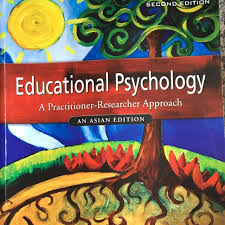
Educational Psychology A Practitioner-Researcher Approach (An Asian Edition) 2nd Edition by Tan Oon Seng - Test Bank

Educational Psychology A Practitioner-Researcher Approach (An Asian Edition) 2nd Edition by Tan Oon Seng - Test Bank   Instant Download - Complete Test Bank With Answers     Sample Questions Are Posted Below     Multiple choice questions Chapter 5-Exceptionalities: Addressing Students’ Unique Needs     Guildford’s Structure of Intellect suggests that intelligence ________________. is …

$19.99

Educational Psychology A Practitioner-Researcher Approach (An Asian Edition) 2nd Edition by Tan Oon Seng – Test Bank


Instant Download – Complete Test Bank With Answers


Sample Questions Are Posted Below


Multiple choice questions

Chapter 5-Exceptionalities: Addressing Students’ Unique Needs


  1. Guildford’s Structure of Intellect suggests that intelligence ________________.
    1. is a single trait dimension
    2. is a double trait dimension
    3. is a triple trait dimension
    4. is a multiple trait dimension

ANS: d


  1. Guilford (1967, 1988) proposed that intelligence depends on ______, _______, and ________.
    1. the contexts; process of planning; products of operations
    2. the contents; process of thinking; end results of operations
    3. the contexts; process of planning; end results of operations
    4. the contents; process of planning; end results of operations

ANS: b


  1. Gardner’s theory of multiple intelligences proposes ________ relatively independent types of intelligence.
    1. seven
    2. eight
    3. nine
    4. ten

ANS: b


  1. Which of the following is not the intelligence suggest by Gardner’s theory of multiple intelligences?
    1. Spatial intelligence
    2. Musical intelligence
    3. Naturalist intelligence
    4. Speech intelligence

ANS: d


  1. ___________ is the ability to understand the underlying principles of some kind of a causal system.
    1. Logical-mathematical intelligence
    2. Musical intelligence
    3. Naturalist intelligence
    4. Interpersonal intelligence

ANS: a


  1. The Triarchic Theory of Intelligence is proposed by ___________.
    1. Sternberg
    2. Gardner and Moran
    3. Guilford
    4. Wechsler

ANS: a


  1. Triarchic Theory of Intelligence consists of _______, _______, and ________ components.
    1. componential; contextual; experimental
    2. componential; experiential; contextual
    3. content; procedure; product
    4. content; process; product

ANS: b


  1. Which of the following intelligence tests consists of performance and visual subtests?
    1. Stanford-Binet test
    2. Wechsler test
    3. All of the above
    4. None of the above

ANS: d


  1. Mild retardation specifies an individual whose intelligence test score falls between _____ and _____.
    1. 50; 70
    2. 50; 71
    3. 55; 69
    4. 55; 75

ANS: c


  1. Severe retardation specifies an individual whose intelligence test score falls between _____ and _____.
    1. 20; 50
    2. 20; 45
    3. 25; 40
    4. 25; 45

ANS: c


  1. Definition of “mental retardation” provided by the American Association of Mental Retardation suggests that ________________.
    1. persons with mild mental retardation can improve to the point where they are no longer classified as retarded
    2. persons with mild mental retardation can improve but not to the point where they are no longer classified as retarded
    3. mental retardation cannot be improved with appropriate education
    4. mental retardation is a condition that is static and unchangeable

ANS: a


  1. Which of the following is not the cause of mental retardation?
    1. presence of an extra gene
    2. maternal infection with syphilis during pregnancy
    3. maternal drug use during pregnancy
    4. trauma at birth

ANS: a


  1. Which of the following is not the characteristic gifted students have?
    1. Tend to see themselves very positively
    2. Emotionally stable
    3. Focus on concrete concepts
    4. experience adjustment problems

ANS: c


  1. Medical condition characterized by attention problems and impulsivity is termed as __________.
    1. dyslexia
    2. autism
    3. attention deficit hyperactivity disorder
    4. None of the above is correct

ANS: d


  1. Which of the following statements is incorrect regarding hearing impairment?
    1. The term “hearing impairment” includes both deaf and hard-of-hearing persons.
    2. Adventitiously deaf refers to those who were born deaf.
    3. Oral approach is an approach for aiding the deaf which includes hearing aids.
    4. Manual approach is an approach in which finger spelling is used to aid the deaf.

ANS: b


  1. Which of the following is not a method to maximize learning effectiveness among the visually challenged?
    1. Braille
    2. Mobility training
    3. Technological aids
    4. None of the above

ANS: d


  1. Which of the following statements is incorrect?
    1. Sighted students use language that is more self-centered.
    2. Visually impaired students use language that is more self-centered.
    3. Some visually impaired students employ a map depicting the general relation of various points in the environment.
    4. Some visually impaired students tend to use a sequential route to navigate their environment.

ANS: a


  1. __________ is a lag in the ability to understand and express ideas, while ___________ refers to oral communication that involves abnormal use of the vocal apparatus.
    1. Speech disorder; language disorder
    2. Language disorder; speech disorder
    3. Hearing impairment; visual impairment
    4. Visual impairment; hearing impairment

ANS: b


  1. Conduct disorder is an instance of _________.
    1. multiple dimension
    2. internalizing dimension
    3. externalizing dimension
    4. none of the above is correct

ANS: c


  1. In teaching students with emotional/behavioral disorders, teachers _________________.
    1. can serve as an excellent early-intervention source
    2. recognize student behaviors that are normal
    3. teach students with school works
    4. indicate the need for special assistance

ANS: d


Essay Questions


  1. Describe the way to apply Gardner’s theory of multiple intelligences in the classroom.
  2. Compare the psychological and behavioral characteristics of students with visual impairment and sighted students.
  3. Elaborate the roles of teachers in teaching mental retarded and gifted students.
  4. Discuss the methods to maximize learning effectiveness among visually impaired students.

Additional information

Add Review

Your email address will not be published. Required fields are marked *