Subtotal: $720.00

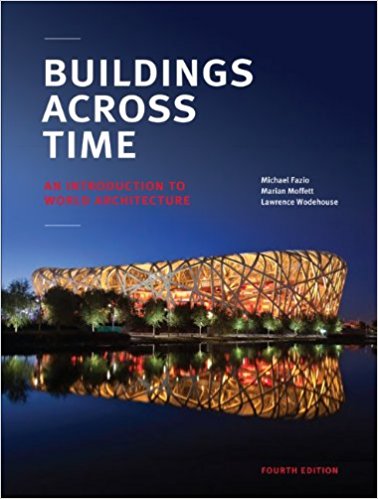
BUILDINGS ACROSS TIME 4Th Ed By MICHAEL FAZIO - TEST BANK

BUILDINGS ACROSS TIME 4Th Ed By MICHAEL FAZIO - TEST BANK   Instant Download - Complete Test Bank With Answers     Sample Questions Are Posted Below   Buildings Across Time Chapter 5   Multiple Choice   The principal roads in the Roman castra were the cardo and decumanus foro and saturnalia etrusco and romanus …

$19.99

BUILDINGS ACROSS TIME 4Th Ed By MICHAEL FAZIO – TEST BANK


Instant Download – Complete Test Bank With Answers


Sample Questions Are Posted Below


Buildings Across Time

Chapter 5


Multiple Choice


  1. The principal roads in the Roman castra were the
  2. cardo and decumanus
  3. foro and saturnalia
  4. etrusco and romanus
  5. caesaro and imperius
  6. none of these


answer: a


  1. An atrium is
  2. an inner court
  3. a type of mosaic floor
  4. a dining room
  5. the Roman equivalent of the Greek cella
  6. none of these


answer: a


  1. Vitruvius wrote
  2. a biography of Julius Caesar
  3. a history of ancient Rome
  4. the Ten Books of Architecture
  5. the Architecture of the Roman Republic
  6. none of these


answer: c


  1. The Sanctuary of Fortuna at Palestrina can be compared to
  2. Roman Imperial work
  3. Etruscan work
  4. Egyptian work
  5. Greek Hellenistic work
  6. all of these


answer: d


  1. All of the following are Roman masonry construction techniques except
  2. opus incertum
  3. opus reticulatum
  4. opus testaceum
  5. opus quadratum
  6. all are Roman masonry-construction techniques


answer: e


  1. Ancient Roman concrete was called
  2. portlana
  3. pozzolana
  4. cementia
  5. vesuviana
  6. none of these


answer: b


  1. The Temple of Diana in Nîmes is unusual in having an interior space
  2. barrel-vaulted
  3. lined with gold
  4. corbel-vaulted
  5. unfinished
  6. none of these


answer: a


  1. The equivalent of the ancient Greek agora and acropolis was the ancient Roman
  2. agrigentum
  3. pantheon
  4. campus martius
  5. forum
  6. none of these


answer: d


  1. The city of Pompeii included
  2. two fora
  3. theaters
  4. an amphitheater
  5. a palestra
  6. all of these


answer: e


  1. The plan of Timgad was originally
  2. laid out by the Greeks
  3. a checkerboard grid
  4. comprised of large, rectangular blocks like Pompeii
  5. a linear plan
  6. none of these


answer: b


  1. An amphitheater is
  2. a circular or oval theater
  3. a semicircular, open-air theater
  4. a large, square theater
  5. a theater with good acoustical properties
  6. b and d


answer: a


  1. The largest of the Roman fora was that of
  2. Augustus
  3. Nerva
  4. Trajan
  5. Nero
  6. none of these


answer: c


  1. Trajan’s Markets were
  2. built into a hillside
  3. replacements for markets displaced by Trajan’s forum
  4. organized around a semi-circle
  5. over five stories tall
  6. all of these are true


answer: e


  1. Trajan’s market hall is covered by a
  2. series of domes
  3. wood-truss roof
  4. barrel vault
  5. corbel vault
  6. none of these


answer: e


  1. The Pantheon is covered by a
  2. coffered dome
  3. coffered groin vault
  4. wood trusses with false coffering
  5. a series of coffered barrel vaults
  6. none of these


answer: a


  1. The Pantheon was constructed during the reign of the Emperor
  2. Nero
  3. Hadrian
  4. Augustus
  5. Caracalla
  6. none of these


answer: b


  1. An oculus is
  2. an eye-shaped window
  3. an opening atop a dome
  4. a type of masonry vault
  5. a space beneath a dome
  6. none of these


answer: b


  1. Roman baths included a
  2. frigidarium
  3. natatio
  4. caldarium
  5. tepidarium
  6. all of these


answer: e


  1. Seating at the Colosseum was raised atop
  2. masonry vaults
  3. solid masses of concrete
  4. sloping banks of earth
  5. solid masses of brick
  6. none of these


answer: a


  1. Roman basilicas were used
  2. for meetings of the Senate
  3. for displaying statues of gods
  4. as Imperial banqueting halls
  5. for commercial activity
  6. none of these


answer: e


  1. The Ancient Roman house included
  2. an atrium
  3. streetfront shops
  4. a peristyle
  5. a tablinum
  6. all of these


answer: e


  1. Wall paintings at the so-called Villa of the Mysteries at Pompeii relate to the
  2. history of Rome
  3. eruption of Mount Vesuvius
  4. mystery cult of Bacchus
  5. practice of Early Christianity
  6. none of these


answer: c


  1. Domitian’s Palace in Rome is located on the
  2. Esquiline Hill
  3. Palatine Hill
  4. Quirinale Hill
  5. Domitine Hill
  6. none of these


answer: b


  1. The planning of Hadrian’s Villa near Tivoli
  2. followed topographic lines
  3. employed axes and cross axes
  4. reflected experiences Hadrian had during his travels
  5. includes a Piazza d’Oro
  6. all of these are true


answer: e


  1. An insula was an Ancient Roman
  2. island palace
  3. reception room
  4. swimming pool
  5. apartment block
  6. none of these


answer: d


Discussion Questions


  1. Discuss Etruscan contributions to Roman architecture.
  2. Discuss the planning of the Roman Fora.
  3. Citing specific examples, discuss the Roman use of brick and concrete in building arches, vaults, and domes.
  4. Discuss Roman town planning and the place in it of various housing types.


Additional information

Add Review

Your email address will not be published. Required fields are marked *