Subtotal: $1,100.00

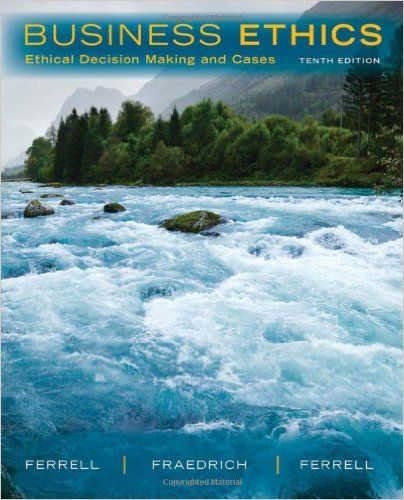
Business Ethics Ethical Decision Making & Cases 10th Edition by O. C. Ferrell - Test Bank

Business Ethics Ethical Decision Making & Cases 10th Edition by O. C. Ferrell - Test Bank   Instant Download - Complete Test Bank With Answers     Sample Questions Are Posted Below   Which of the following is the first step in the ethical decision making process? a. Being socialized into the firm's corporate culture …

$19.99

Business Ethics Ethical Decision Making & Cases 10th Edition by O. C. Ferrell – Test Bank


Instant Download – Complete Test Bank With Answers


Sample Questions Are Posted Below


  1. Which of the following is the first step in the ethical decision making process?
  2. a. Being socialized into the firm’s corporate culture
  3. Applying a personal moral philosophy in order to individualize the ethical decision making process
  4. c. Recognizing that an issue requires an individual or work group to make a choice that ultimately will be judged by stakeholders as right or wrong
  5. Soliciting the opinions of others in a work group or in the overall business in order to gain feedback e. Enforcing the firm’s ethical standards with rewards and punishment


ANSWER:                            c

POINTS:                              1

DIFFICULTY:                     Easy

REFERENCES:                    p. 128

LEARNING OBJECTIVES:  5.1 – Provide a comprehensive model for ethical decision making in business.

NATIONAL STANDARDS:   United States – BUSPROG: Ethics

STATE STANDARDS:          United States – NONE – DISC: Ethical Responsibilities – Ethical Responsibilities

KEYWORDS:                       Bloom’s: Knowledge


  1. Which of the following is not one of the six “spheres of influence” to which individuals are subject when confronted with an ethical issue?
  2. a. Educational attainment Workplace
  3. c. Family
  4. Legal system e. Community


ANSWER:                            a

POINTS:                              1

DIFFICULTY:                     Easy

REFERENCES:                    p. 130

LEARNING OBJECTIVES:  5.1 – Provide a comprehensive model for ethical decision making in business.

5.2 – Examine the intensity of ethical issues as an important element influencing the ethical decision-making process.

NATIONAL STANDARDS:   United States – BUSPROG: Ethics

STATE STANDARDS:          United States – NONE – DISC: Ethical Responsibilities – Ethical Responsibilities

KEYWORDS:                       Bloom’s: Knowledge


  1. The perceived relevance or importance of an ethical issue to the individual, work group, or organization is a. organizational culture.
  2. immediate job context. c. ethical issue intensity. d. leadership.
  3. e. locus of


ANSWER:                            c

POINTS:                              1

DIFFICULTY:                     Easy

REFERENCES:                    p. 129

LEARNING OBJECTIVES:  5.1 – Provide a comprehensive model for ethical decision making in business.

5.2 – Examine the intensity of ethical issues as an important element influencing the ethical decision-making process.

NATIONAL STANDARDS:   United States – BUSPROG: Ethics

STATE STANDARDS:          United States – NONE – DISC: Ethical Responsibilities – Ethical Responsibilities

KEYWORDS:                       Bloom’s: Knowledge


  1. Studies have found that more than a third of the unethical situations that lower and middle-level managers face come from _____.
  2. a. stakeholder expectations and b. pressures to satisfy customers.
  3. c. pressures from the government to perform at a high
  4. internal pressures and ambiguity surrounding internal organizational rules. e. investor expectations.


ANSWER:                            d

POINTS:                              1

DIFFICULTY:                     Moderate

REFERENCES:                    p. 130

LEARNING OBJECTIVES:  5.1 – Provide a comprehensive model for ethical decision making in business.

5.2 – Examine the intensity of ethical issues as an important element influencing the ethical decision-making process.

NATIONAL STANDARDS:   United States – BUSPROG: Ethics

STATE STANDARDS:          United States – NONE – DISC: Ethical Responsibilities – Ethical Responsibilities

KEYWORDS:                       Bloom’s: Knowledge


  1. According to the ethical decision-making framework, the absence of punishment provides a(n)

behavior. a. reason

  1. significant other c. individual factor d. opportunity
  2. e. ethical issue intensity

for unethical


ANSWER:                            d

POINTS:                              1

DIFFICULTY:                     Moderate

REFERENCES:                    p. 135

LEARNING OBJECTIVES:  5.1 – Provide a comprehensive model for ethical decision making in business.

5.5 – Explore the role of opportunity in ethical decision making in business.

NATIONAL STANDARDS:   United States – BUSPROG: Ethics

STATE STANDARDS:          United States – NONE – DISC: Ethical Responsibilities – Ethical Responsibilities

KEYWORDS:                       Bloom’s: Comprehension


  1.  have been found to decrease unethical practices and increase positive work behavior. a. High educational attainment levels
  2. High levels of community involvement c. Charismatic leaders
  3. Strong religious beliefs e. Good personal values


ANSWER:                            e

POINTS:                              1

DIFFICULTY:                     Easy

REFERENCES:                    p. 131

LEARNING OBJECTIVES:  5.1 – Provide a comprehensive model for ethical decision making in business.

5.3 – Introduce individual factors that may influence ethical decision making in business.

NATIONAL STANDARDS:   United States – BUSPROG: Ethics

STATE STANDARDS:          United States – NONE – DISC: Ethical Responsibilities – Ethical Responsibilities

KEYWORDS:                       Bloom’s: Knowledge


  1. involves subordinates simply following the directives of a superior without question. It demonstrates the influence that significant others can exert in the workplace.
  2. a. Obedience to authority Locus of control
  3. c. Opportunity
  4. Transactional leadership e. Immediate job context


ANSWER:                            a

POINTS:                              1

DIFFICULTY:                     Easy

REFERENCES:                    p. 134

LEARNING OBJECTIVES:  5.1 – Provide a comprehensive model for ethical decision making in business.

5.5 – Explore the role of opportunity in ethical decision making in business.

NATIONAL STANDARDS:   United States – BUSPROG: Ethics

STATE STANDARDS:          United States – NONE – DISC: Ethical Responsibilities – Ethical Responsibilities

KEYWORDS:                       Bloom’s: Comprehension


  1. Multiple elements work on individuals to affect their behavior. While an individual may intend to do the right thing,

         can alter this intent. a. cognitive dissonance

  1. familial expectations c. religious beliefs
  2. the desire for financial gain
  3. e. organizational or social forces


ANSWER:                            e

POINTS:                              1

DIFFICULTY:                     Moderate

REFERENCES:                    p. 131

LEARNING OBJECTIVES:  5.1 – Provide a comprehensive model for ethical decision making in business.

5.3 – Introduce individual factors that may influence ethical decision making in business.

NATIONAL STANDARDS:   United States – BUSPROG: Ethics

STATE STANDARDS:          United States – NONE – DISC: Ethical Responsibilities – Ethical Responsibilities

KEYWORDS:                       Bloom’s: Knowledge


  1. If management fails to identify and educate employees about ethical problem areas, ethical issues may not reach the critical
  2. a. awareness b. aptitude level.
  3. c. ethical
  4. organizational level. e. individual level.


ANSWER:                            a

POINTS:                              1

DIFFICULTY:                     Easy

REFERENCES:                    p. 130

LEARNING OBJECTIVES:  5.1 – Provide a comprehensive model for ethical decision making in business.

5.2 – Examine the intensity of ethical issues as an important element influencing the ethical decision-making process.

NATIONAL STANDARDS:   United States – BUSPROG: Ethics

STATE STANDARDS:          United States – NONE – DISC: Ethical Responsibilities – Ethical Responsibilities

KEYWORDS:                       Bloom’s: Knowledge


  1. 10. The

can be defined as a set of values, norms, and artifacts, including ways of solving problems shared by


members of an organization. a. corporate culture

  1. intentions of a corporate c. ethical issue awareness
  2. determination of a corporation e. individual factors


ANSWER:                            a

POINTS:                              1

DIFFICULTY:                     Easy

REFERENCES:                    p. 133

LEARNING OBJECTIVES:  5.1 – Provide a comprehensive model for ethical decision making in business.

5.4 – Introduce organizational factors that may influence ethical decision making in business.

NATIONAL STANDARDS:   United States – BUSPROG: Ethics

STATE STANDARDS:          United States – NONE – DISC: Ethical Responsibilities – Ethical Responsibilities

KEYWORDS:                       Bloom’s: Knowledge


  1. 11. Which of the following would not be considered a negative reinforcement of employee behavior?
  2. a. Demotions Firings
  3. c. Ignoring the behavior Reprimands
  4. e. Pay penalties


ANSWER:                            c

POINTS:                              1

DIFFICULTY:                     Easy

REFERENCES:                    p. 135

LEARNING OBJECTIVES:  5.1 – Provide a comprehensive model for ethical decision making in business.

5.5 – Explore the role of opportunity in ethical decision making in business.

NATIONAL STANDARDS:   United States – BUSPROG: Ethics

STATE STANDARDS:          United States – NONE – DISC: Ethical Responsibilities – Ethical Responsibilities

KEYWORDS:                       Bloom’s: Knowledge


  1. 12. Codes, rules, and compliance are essential in organizations. However, an organization built on to develop a high integrity corporate
  2. a. a charismatic leader
  3. the preferences of the CEO
  4. c. the grapevine
  5. formal relationships
  6. e. informal relationships

is more likely


ANSWER:                            e

POINTS:                              1

DIFFICULTY:                     Moderate

REFERENCES:                    p. 139

LEARNING OBJECTIVES:  5.1 – Provide a comprehensive model for ethical decision making in business.

5.5 – Explore the role of opportunity in ethical decision making in business.

NATIONAL STANDARDS:   United States – BUSPROG: Ethics

STATE STANDARDS:          United States – NONE – DISC: Ethical Responsibilities – Ethical Responsibilities

KEYWORDS:                       Bloom’s: Comprehension


  1. 13. Following the ethical directives of a superior relates to a. an internal locus of
  2. obedience to authority. c. moral intensity.
  3. gender.
  4. e. ethical issue


ANSWER:                            b

POINTS:                              1

DIFFICULTY:                     Easy

REFERENCES:                    p. 134

LEARNING OBJECTIVES:  5.1 – Provide a comprehensive model for ethical decision making in business.

5.4 – Introduce organizational factors that may influence ethical decision making in business.

NATIONAL STANDARDS:   United States – BUSPROG: Ethics

STATE STANDARDS:          United States – NONE – DISC: Ethical Responsibilities – Ethical Responsibilities

KEYWORDS:                       Bloom’s: Knowledge


  1. 14. Which of the following is not considered a significant other group in the workplace?
  2. a. Peers
  3. Managers c. Spouses
  4. Coworkers
  5. e. Subordinates


ANSWER:                            c

POINTS:                              1

DIFFICULTY:                     Easy

REFERENCES:                    p. 134

LEARNING OBJECTIVES:  5.1 – Provide a comprehensive model for ethical decision making in business.

5.4 – Introduce organizational factors that may influence ethical decision making in business.

NATIONAL STANDARDS:   United States – BUSPROG: Ethics

STATE STANDARDS:          United States – NONE – DISC: Ethical Responsibilities – Ethical Responsibilities

KEYWORDS:                       Bloom’s: Knowledge


  1. 15. Studies have shown that than any other
  2. a. significant others religion
  3. c. education
  4. chief executive officers e. ethical issues

within the organization have more impact on a worker’s decisions on a daily basis


ANSWER:                            a

POINTS:                              1

DIFFICULTY:                     Easy

REFERENCES:                    p. 134

LEARNING OBJECTIVES:  5.1 – Provide a comprehensive model for ethical decision making in business.

5.4 – Introduce organizational factors that may influence ethical decision making in business.

NATIONAL STANDARDS:   United States – BUSPROG: Ethics

STATE STANDARDS:          United States – NONE – DISC: Ethical Responsibilities – Ethical Responsibilities

KEYWORDS:                       Bloom’s: Knowledge


  1. 16. External and internal rewards relate to which part of the ethical decision-making framework?
  2. a. Individual factors Significant others
  3. c. Cognitive moral development Obedience to authority
  4. e. Opportunity


ANSWER:                            e

POINTS:                              1

DIFFICULTY:                     Moderate

REFERENCES:                    p. 134

LEARNING OBJECTIVES:  5.1 – Provide a comprehensive model for ethical decision making in business.

5.5 – Explore the role of opportunity in ethical decision making in business.

NATIONAL STANDARDS:   United States – BUSPROG: Ethics

STATE STANDARDS:          United States – NONE – DISC: Ethical Responsibilities – Ethical Responsibilities

KEYWORDS:                       Bloom’s: Knowledge


  1. 17. Which of the following is not an issue that helps in business ethics evaluations and decisions?
  2. a. Ethical issue intensity Individual factors
  3. c. Organizational factors Personal guilt
  4. e. Opportunity


ANSWER:                            d

POINTS:                              1

DIFFICULTY:                     Easy

REFERENCES:                    p. 144

LEARNING OBJECTIVES:  5.8 – Examine the importance of principles and core values to ethical decision making.

NATIONAL STANDARDS:   United States – BUSPROG: Ethics

STATE STANDARDS:          United States – NONE – DISC: Ethical Responsibilities – Ethical Responsibilities

KEYWORDS:                       Bloom’s: Knowledge


  1. 18.  is the first sign that an unethical decision has a. Guilt
  2. Reward
  3. c. Punishment
  4. Cognitive dissonance e. Happiness


ANSWER:                            a

POINTS:                              1

DIFFICULTY:                     Easy

REFERENCES:                    p. 137

LEARNING OBJECTIVES:  5.1 – Provide a comprehensive model for ethical decision making in business.

5.5 – Explore the role of opportunity in ethical decision making in business.

NATIONAL STANDARDS:   United States – BUSPROG: Ethics

STATE STANDARDS:          United States – NONE – DISC: Ethical Responsibilities – Ethical Responsibilities

KEYWORDS:                       Bloom’s: Knowledge


  1. 19. People who believe in , go with the flow because they feel the events in their lives are a. ethical decision making
  2. internal locus of control c. an ethical culture
  3. external locus of control e. significant others.


ANSWER:                            d

POINTS:                              1

DIFFICULTY:                     Easy

REFERENCES:                    p. 132

LEARNING OBJECTIVES:  5.1 – Provide a comprehensive model for ethical decision making in business.

5.3 – Introduce individual factors that may influence ethical decision making in business.

NATIONAL STANDARDS:   United States – BUSPROG: Ethics

STATE STANDARDS:          United States – NONE – DISC: Ethical Responsibilities – Ethical Responsibilities

KEYWORDS:                       Bloom’s: Comprehension


  1. 20. Which of the following is not an individual factor that affects business ethics?
  2. a. Nationality Age
  3. c. Religion
  4. Significant others e. Education


ANSWER:                            d

POINTS:                              1

REFERENCES:                    p. 131-132

LEARNING OBJECTIVES:  5.1 – Provide a comprehensive model for ethical decision making in business.

5.3 – Introduce individual factors that may influence ethical decision making in business.


21.

is an organizational factor that gives a company specific characteristics. Over time, stakeholders begin to see the company as like a living organism with a mind and will of its own.

  1. a. Oversight
  2. Significant others c. Corporate culture d. The ethical climate e. The legal climate


ANSWER:                            c

POINTS:                              1

DIFFICULTY:                     Easy

REFERENCES:                    p. 133

LEARNING OBJECTIVES:  5.1 – Provide a comprehensive model for ethical decision making in business.

5.4 – Introduce organizational factors that may influence ethical decision making in business.

NATIONAL STANDARDS:   United States – BUSPROG: Ethics

STATE STANDARDS:          United States – NONE – DISC: Ethical Responsibilities – Ethical Responsibilities

KEYWORDS:                       Bloom’s: Knowledge


  1. 22. An ethical corporate culture needs

along with

to establish an ethics program and monitor the complex


ethical decisions being made by employees . a. individual ethics; ethical issue intensity

  1. ethical issue intensity; ethics training
  2. c. organizational factors; individual factors employee evaluations; good intentions
  3. e. shared values; proper oversight


ANSWER:                            e

POINTS:                              1

DIFFICULTY:                     Moderate

REFERENCES:                    p. 144

LEARNING OBJECTIVES:  5.8 – Examine the importance of principles and core values to ethical decision making.

NATIONAL STANDARDS:   United States – BUSPROG: Ethics

STATE STANDARDS:          United States – NONE – DISC: Ethical Responsibilities – Ethical Responsibilities

KEYWORDS:                       Bloom’s: Knowledge


  1. 23. Those who have influence in a work group are referred to as significant others and include a. peers, managers, coworkers, and
  2. family members, peers, and coworkers. c. spouses and friends.
  3. employees in similar job situations. e. employees who hold the same job.


ANSWER:                            a

POINTS:                              1

DIFFICULTY:                     Easy

REFERENCES:                    p. 134

LEARNING OBJECTIVES:  5.1 – Provide a comprehensive model for ethical decision making in business.

5.4 – Introduce organizational factors that may influence ethical decision making in business.

NATIONAL STANDARDS:   United States – BUSPROG: Ethics

STATE STANDARDS:          United States – NONE – DISC: Ethical Responsibilities – Ethical Responsibilities

KEYWORDS:                       Bloom’s: Knowledge


  1. 24. Research concerning nationality and the ability to make ethical decisions a. shows no relationship between the
  2. is hard to interpret in a business context because of cultural differences.
  3. c. suggests that organizations should be very concerned about an employee’s d. suggests that corporations pay a lot of attention to such research.
  4. e. suggests that the influence of nationality on corporate culture is


ANSWER:                            b

POINTS:                              1

DIFFICULTY:                     Easy

REFERENCES:                    p. 132

LEARNING OBJECTIVES:  5.1 – Provide a comprehensive model for ethical decision making in business.

5.3 – Introduce individual factors that may influence ethical decision making in business.

NATIONAL STANDARDS:   United States – BUSPROG: Ethics

STATE STANDARDS:          United States – NONE – DISC: Ethical Responsibilities – Ethical Responsibilities

KEYWORDS:                       Bloom’s: Knowledge


  1. 25. The relationship between business ethics and age a. shows a negative
  2. is simple. Greater experience leads to better ethical decision making.
  3. c. is complex, although experience helps older employees make ethical
  4. suggests that employees with less experience have a greater ability to deal with complex industry-specific ethical issues.
  5. e. does not demonstrate a statistically significant


ANSWER:                            c

POINTS:                              1

DIFFICULTY:                     Easy

REFERENCES:                    p. 132

LEARNING OBJECTIVES:  5.1 – Provide a comprehensive model for ethical decision making in business.

5.3 – Introduce individual factors that may influence ethical decision making in business.

NATIONAL STANDARDS:   United States – BUSPROG: Ethics

STATE STANDARDS:          United States – NONE – DISC: Ethical Responsibilities – Ethical Responsibilities

KEYWORDS:                       Bloom’s: Knowledge


  1. 26. Employees that see themselves as going with the flow because that’s all they can do have a(n)
  2. a. external locus of b. moral intensity
  3. c. obedience to authority opportunity
  4. e. internal locus of


ANSWER:                            a

POINTS:                              1

DIFFICULTY:                     Easy

REFERENCES:                    p. 132

LEARNING OBJECTIVES:  5.1 – Provide a comprehensive model for ethical decision making in business.

5.3 – Introduce individual factors that may influence ethical decision making in business.

NATIONAL STANDARDS:   United States – BUSPROG: Ethics

STATE STANDARDS:          United States – NONE – DISC: Ethical Responsibilities – Ethical Responsibilities

KEYWORDS:                       Bloom’s: Knowledge


  1. 27. For people who begin the value shift that leads to unethical decisions, which of the following is not a usual justification to reduce and eliminate guilt?
  2. a. I need a paycheck and can’t afford to quit right b. Those around me are doing it so why shouldn’t I?
  3. c. If I don’t do this, I might not be able to get a good reference from my boss when I d. If I don’t do this, I might never be promoted.
  4. e. This is in keeping with my personal morals and the code of conduct, so it is


ANSWER:                            e

POINTS:                              1

DIFFICULTY:                     Easy

REFERENCES:                    p. 137

LEARNING OBJECTIVES:  5.1 – Provide a comprehensive model for ethical decision making in business.

5.5 – Explore the role of opportunity in ethical decision making in business.

NATIONAL STANDARDS:   United States – BUSPROG: Ethics

STATE STANDARDS:          United States – NONE – DISC: Ethical Responsibilities – Ethical Responsibilities

KEYWORDS:                       Bloom’s: Knowledge


  1. 28. is the ability to perceive whether a situation or decision has an ethical a. Ethical issue intensity
  2. Locus of control
  3. c. Ethical awareness Moral intensity
  4. e. Opportunity


ANSWER:                            c

POINTS:                              1

DIFFICULTY:                     Easy

REFERENCES:                    p. 129

LEARNING OBJECTIVES:  5.1 – Provide a comprehensive model for ethical decision making in business.

5.2 – Examine the intensity of ethical issues as an important element influencing the ethical decision-making process.

NATIONAL STANDARDS:   United States – BUSPROG: Ethics

STATE STANDARDS:          United States – NONE – DISC: Ethical Responsibilities – Ethical Responsibilities

KEYWORDS:                       Bloom’s: Knowledge


29.


others.

relates to individuals’ perceptions of social pressure and the harm they believe their decisions will have on


  1. a. Ethical awareness Moral intensity
  2. c. Individual factors
  3. Ethical issue intensity e. Social awareness


ANSWER:                            b

POINTS:                              1

DIFFICULTY:                     Easy

REFERENCES:                    p. 130

LEARNING OBJECTIVES:  5.1 – Provide a comprehensive model for ethical decision making in business.

5.2 – Examine the intensity of ethical issues as an important element influencing the ethical decision-making process.

NATIONAL STANDARDS:   United States – BUSPROG: Ethics

STATE STANDARDS:          United States – NONE – DISC: Ethical Responsibilities – Ethical Responsibilities

KEYWORDS:                       Bloom’s: Knowledge


  1. 30. The ethical decision making process in business includes all of the following except
  2. a. Individual factors Opportunity
  3. c. Ethical issue intensity
  4. Making ethical decisions e. Organizational factors


ANSWER:                            d

POINTS:                              1

DIFFICULTY:                     Easy

REFERENCES:                    p. 128

LEARNING OBJECTIVES:  5.1 – Provide a comprehensive model for ethical decision making in business.

NATIONAL STANDARDS:   United States – BUSPROG: Ethics

STATE STANDARDS:          United States – NONE – DISC: Ethical Responsibilities – Ethical Responsibilities

KEYWORDS:                       Bloom’s: Knowledge


31.

culture involves values and norms that prescribe a wide range of behavior for organizational members, while culture reflects the integrity of decisions made and is a function of many factors, including corporate policies,

top management’s leadership on ethical issues, the influence of coworkers, and the opportunity for unethical behavior.

  1. a. Ethical, corporate External, internal c. Corporate, ethical d. Positive, negative
  2. e. Compromising, collaborative


ANSWER:                              c

POINTS:                                1

DIFFICULTY:                       Moderate

REFERENCES:                     p. 134

LEARNING OBJECTIVES:  5.1 – Provide a comprehensive model for ethical decision making in business.

5.4 – Introduce organizational factors that may influence ethical decision making in business.

NATIONAL STANDARDS:   United States – BUSPROG: Ethics

STATE STANDARDS:          United States – NONE – DISC: Ethical Responsibilities – Ethical Responsibilities

KEYWORDS:                        Bloom’s: Knowledge


  1. 32. All of the following are true with regards to organizational factors except
  2. a. Employees approach ethical issues on the basis of what they learned from others in the b. An alignment between a person’s own values and the values of the organization help create positive

organizational outcomes.

  1. c. Congruence in personal and organizational values is related to commitment, satisfaction, motivation, ethics, work stress, and
  2. Ethical choices in organizations are most often made individually.
  3. e. Just as a family guides an individual, specific industries give behavioral cues to


ANSWER:                            d

POINTS:                              1

DIFFICULTY:                     Easy

REFERENCES:                    p. 133

LEARNING OBJECTIVES:  5.1 – Provide a comprehensive model for ethical decision making in business.

5.4 – Introduce organizational factors that may influence ethical decision making in business.

NATIONAL STANDARDS:   United States – BUSPROG: Ethics

STATE STANDARDS:          United States – NONE – DISC: Ethical Responsibilities – Ethical Responsibilities

KEYWORDS:                       Bloom’s: Knowledge


  1. 33. The includes the motivational “carrots and sticks” superiors use to influence employee a. Obedience to authority
  2. Immediate job context c. Locus of control
  3. Normative approach e. Descriptive approach


ANSWER:                            b

POINTS:                              1

DIFFICULTY:                     Easy

REFERENCES:                    p. 135

LEARNING OBJECTIVES:  5.1 – Provide a comprehensive model for ethical decision making in business.

5.5 – Explore the role of opportunity in ethical decision making in business.

NATIONAL STANDARDS:   United States – BUSPROG: Ethics

STATE STANDARDS:          United States – NONE – DISC: Ethical Responsibilities – Ethical Responsibilities

KEYWORDS:                       Bloom’s: Knowledge


  1. 34. All of the following are true with regards to opportunity and ethical decision making except
  2. a. Despite the existence of rules, misconduct can still occur without proper
  3. The opportunities that employees have for unethical behavior in an organization can be eliminated through formal codes, policies, and rules adequately enforced by management.
  4. c. Opportunity also comes from
  5. The opportunity for unethical behavior can be eliminated with aggressive enforcement of codes and rules. e. Opportunity results from conditions that either provide rewards or fail to erect barriers against unethical

behavior.


ANSWER:                            d

POINTS:                              1

DIFFICULTY:                     Moderate

REFERENCES:                    p. 136

LEARNING OBJECTIVES:  5.1 – Provide a comprehensive model for ethical decision making in business.

5.5 – Explore the role of opportunity in ethical decision making in business.

NATIONAL STANDARDS:   United States – BUSPROG: Ethics

STATE STANDARDS:          United States – NONE – DISC: Ethical Responsibilities – Ethical Responsibilities

KEYWORDS:                       Bloom’s: Knowledge


  1. 35. When we discuss issue.
  2. a. Normative Individual
  3. c. Descriptive
  4. Organizational e. Values-based

approaches, we are talking about how organizational decision makers should approach an


ANSWER:                            a

POINTS:                              1

DIFFICULTY:                     Easy

REFERENCES:                    p. 139

LEARNING OBJECTIVES:  5.6 – Understand normative considerations in ethical decision making.

NATIONAL STANDARDS:   United States – BUSPROG: Ethics

STATE STANDARDS:          United States – NONE – DISC: Ethical Responsibilities – Ethical Responsibilities

KEYWORDS:                       Bloom’s: Knowledge


  1. 36. By incorporating objectives into corporate core values, companies begin to view           as a. shareholder, stakeholders
  2. stakeholder, shareholders c. CEO, CEOs
  3. customer, customers
  4. e. stakeholder, stakeholders


ANSWER:                            a

POINTS:                              1

DIFFICULTY:                     Moderate

REFERENCES:                    p. 139

LEARNING OBJECTIVES:  5.6 – Understand normative considerations in ethical decision making.

NATIONAL STANDARDS:   United States – BUSPROG: Ethics

STATE STANDARDS:          United States – NONE – DISC: Ethical Responsibilities – Ethical Responsibilities

KEYWORDS:                       Bloom’s: Knowledge


  1. 37. Normative business ethics takes into account the
  2. a. Descriptive Political
  3. c. Social
  4. Economic e. Normative

realities outside the legal realm in the form of industry


ANSWER:                            b

POINTS:                              1

DIFFICULTY:                     Easy

REFERENCES:                    p. 140

LEARNING OBJECTIVES:  5.7 – Recognize the role of institutions in normative decision making.

NATIONAL STANDARDS:   United States – BUSPROG: Ethics

STATE STANDARDS:          United States – NONE – DISC: Ethical Responsibilities – Ethical Responsibilities

KEYWORDS:                       Bloom’s: Knowledge


  1. 38. institutions include religion, education, and individuals such as the family a. Social
  2. Conservative c. Economic
  3. Liberal e. Political


ANSWER:                            a

POINTS:                              1

DIFFICULTY:                     Easy

REFERENCES:                    p. 141

LEARNING OBJECTIVES:  5.7 – Recognize the role of institutions in normative decision making.

NATIONAL STANDARDS:   United States – BUSPROG: Ethics

STATE STANDARDS:          United States – NONE – DISC: Ethical Responsibilities – Ethical Responsibilities

KEYWORDS:                       Bloom’s: Knowledge


  1. 39. All of the following are true regarding institutions except
  2. a. Stakeholders closely align with
  3. The regulatory system aligns with political institutions.
  4. c. There is no clear link between institutional theory and the stakeholder orientation of d. Competition relates to economic institutions.
  5. e. Personal values and norms derive from social


ANSWER:                              c

POINTS:                                1

DIFFICULTY:                       Moderate

REFERENCES:                     p. 141

LEARNING OBJECTIVES:  5.7 – Recognize the role of institutions in normative decision making.

NATIONAL STANDARDS:   United States – BUSPROG: Ethics

STATE STANDARDS:          United States – NONE – DISC: Ethical Responsibilities – Ethical Responsibilities

KEYWORDS:                        Bloom’s: Comprehension


  1. 40. High levels of create a higher probability that firms cut corners because margins are usually a. Profit
  2. Return
  3. c. Cooperation Competition e. Loss


ANSWER:                              d

POINTS:                                1

DIFFICULTY:                       Easy

REFERENCES:                     p. 141

LEARNING OBJECTIVES:  5.7 – Recognize the role of institutions in normative decision making.

NATIONAL STANDARDS:   United States – BUSPROG: Ethics

STATE STANDARDS:          United States – NONE – DISC: Ethical Responsibilities – Ethical Responsibilities

KEYWORDS:                        Bloom’s: Knowledge


  1. 41. The thought experiment used by John Rawls that examined how individuals would formulate principles if they did not know what their future position in society would be is called
  2. a. Equality principle Utilitarian veil
  3. c. Liberty principle
  4. Universal principle e. Veil of ignorance


ANSWER:                            e

POINTS:                              1

DIFFICULTY:                     Moderate

REFERENCES:                    p. 142

LEARNING OBJECTIVES:  5.8 – Examine the importance of principles and core values to ethical decision making.

NATIONAL STANDARDS:   United States – BUSPROG: Ethics

STATE STANDARDS:          United States – NONE – DISC: Ethical Responsibilities – Ethical Responsibilities

KEYWORDS:                       Bloom’s: Comprehension


  1. 42. The

states that economic and social equalities should be arranged to provide the most benefit to the least-


advantaged members of society. a. Equality principle

  1. Difference principle
  2. c. Constitutional principle Liberty principle
  3. e. Justice principle


ANSWER:                            b

POINTS:                              1

DIFFICULTY:                     Easy

REFERENCES:                    p. 143

LEARNING OBJECTIVES:  5.8 – Examine the importance of principles and core values to ethical decision making.

NATIONAL STANDARDS:   United States – BUSPROG: Ethics

STATE STANDARDS:          United States – NONE – DISC: Ethical Responsibilities – Ethical Responsibilities

KEYWORDS:                       Bloom’s: Knowledge


  1. 43. Values have all the following characteristics except
  2. a. Provides guidance to organizations Subjective and related to choice
  3. c. Widely accepted
  4. Used to develop norms
  5. e. Differs across cultures and firms


ANSWER:                            c

POINTS:                              1

DIFFICULTY:                     Moderate

REFERENCES:                    p. 142

LEARNING OBJECTIVES:  5.8 – Examine the importance of principles and core values to ethical decision making.

NATIONAL STANDARDS:   United States – BUSPROG: Ethics

STATE STANDARDS:          United States – NONE – DISC: Ethical Responsibilities – Ethical Responsibilities

KEYWORDS:                       Bloom’s: Comprehension


  1. 44. Companies take basic and translate them into core           . a. Customs, values
  2. Values, principles c. Cultures, principles d. Cultures, customs e. Principles, values


ANSWER:                            a

POINTS:                              1

DIFFICULTY:                     Moderate

REFERENCES:                    p. 143

LEARNING OBJECTIVES:  5.8 – Examine the importance of principles and core values to ethical decision making.

NATIONAL STANDARDS:   United States – BUSPROG: Ethics

STATE STANDARDS:          United States – NONE – DISC: Ethical Responsibilities – Ethical Responsibilities

KEYWORDS:                       Bloom’s: Knowledge


  1. 45. Organizations that have ethics programs based on a

orientation are found to make a greater contribution than


those based simply on compliance, or obeying laws and regulations. a. Customer

  1. Political
  2. c. Principles Values
  3. e. Social


ANSWER:                            d

POINTS:                              1

DIFFICULTY:                     Easy

REFERENCES:                    p. 144

LEARNING OBJECTIVES:  5.8 – Examine the importance of principles and core values to ethical decision making.

NATIONAL STANDARDS:   United States – BUSPROG: Ethics

STATE STANDARDS:          United States – NONE – DISC: Ethical Responsibilities – Ethical Responsibilities

KEYWORDS:                       Bloom’s: Knowledge


Essay

  1. 46. The ethical decision-making framework includes the concepts of ethical issue intensity, individual factors, organizational factors, and opportunity. Discuss how these concepts influence the ethical decision-making


ANSWER:                            Pages 128-136

POINTS:                              1

DIFFICULTY:                     Moderate

REFERENCES:                    p. 128-136

LEARNING OBJECTIVES:  5.1 – Provide a comprehensive model for ethical decision making in business.

5.2 – Examine the intensity of ethical issues as an important element influencing the ethical decision-making process.

5.3 – Introduce individual factors that may influence ethical decision making in business.

5.4 – Introduce organizational factors that may influence ethical decision making in business.

5.5 – Explore the role of opportunity in ethical decision making in business.

NATIONAL STANDARDS:   United States – BUSPROG: Ethics

STATE STANDARDS:          United States – NONE – DISC: Ethical Responsibilities – Ethical Responsibilities

KEYWORDS:                       Bloom’s: Comprehension


  1. 47. Trace the ethical decision-making process. You may find it helpful to apply the model to a real business situation or to a hypothetical ethical issue you develop


ANSWER:                            Students may draw from the entire chapter to answer this question.

POINTS:                              1

DIFFICULTY:                     Moderate

REFERENCES:                    Chapter 5

LEARNING OBJECTIVES:  5.1 – Provide a comprehensive model for ethical decision making in business.

NATIONAL STANDARDS:   United States – BUSPROG: Ethics

STATE STANDARDS:          United States – NONE – DISC: Ethical Responsibilities – Ethical Responsibilities

KEYWORDS:                       Bloom’s: Application


  1. 48. Discuss how the three categories of institutions (political, economic, and social) are important in establishing a foundation for normative


ANSWER:                            pages 140-144

POINTS:                              1

DIFFICULTY:                     Easy

REFERENCES:                    pages 140-144

LEARNING OBJECTIVES:  5.7 – Recognize the role of institutions in normative decision making.

5.8 – Examine the importance of principles and core values to ethical decision making.

NATIONAL STANDARDS:   United States – BUSPROG: Ethics

STATE STANDARDS:          United States – NONE – DISC: Ethical Responsibilities – Ethical Responsibilities

KEYWORDS:                       Bloom’s: Knowledge


  1. 49. Describe and demonstrate some of the similarities and differences between principles and values. Why are principles and values important normative considerations in ethical decision making?


ANSWER:                            pages 142-144

POINTS:                              1

DIFFICULTY:                     Moderate

REFERENCES:                    pages 142-144

LEARNING OBJECTIVES:  5.8 – Examine the importance of principles and core values to ethical decision making.

NATIONAL STANDARDS:   United States – BUSPROG: Ethics

STATE STANDARDS:          United States – NONE – DISC: Ethical Responsibilities – Ethical Responsibilities

KEYWORDS:                       Bloom’s: Comprehension


  1. 50. Discuss, with examples, at least three ways that opportunity can affect the decision making


ANSWER:                            pages 134-137

POINTS:                              1

DIFFICULTY:                     Easy

REFERENCES:                    pages 134-137

LEARNING OBJECTIVES:  5.5 – Explore the role of opportunity in ethical decision making in business.

NATIONAL STANDARDS:   United States – BUSPROG: Ethics

STATE STANDARDS:          United States – NONE – DISC: Ethical Responsibilities – Ethical Responsibilities

KEYWORDS:                       Bloom’s: Application

Additional information

Add Review

Your email address will not be published. Required fields are marked *