Subtotal: $830.00

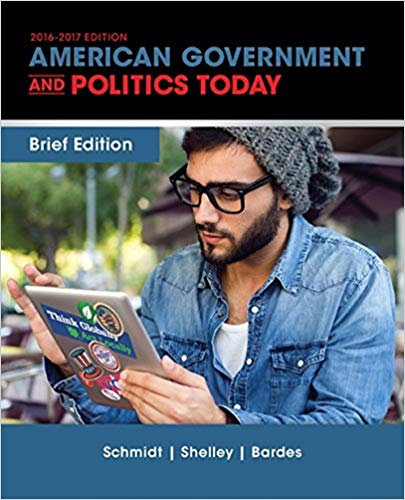
Cengage Advantage Books American Government and Politics Today Brief Edition 9th Edition by Steffen W. Schmidt - Test Bank

Cengage Advantage Books American Government and Politics Today Brief Edition 9th Edition by Steffen W. Schmidt - Test Bank   Instant Download - Complete Test Bank With Answers     Sample Questions Are Posted Below   1. All of the following are true EXCEPT that a. civil liberties and civil rights are the same thing. …

$19.99

Cengage Advantage Books American Government and Politics Today Brief Edition 9th Edition by Steffen W. Schmidt – Test Bank


Instant Download – Complete Test Bank With Answers


Sample Questions Are Posted Below


1. All of the following are true EXCEPT that
a. civil liberties and civil rights are the same thing.
b. civil rights refer to the rights of Americans to equal protection under the law.
c. civil liberties are limitations on the government—what government cannot do.
d. civil rights specify what government must do to ensure freedom from discrimination.
e. most minorities in this nation have suffered from discrimination.
ANSWER: a
POINTS: 1
REFERENCES: The African American Experience and the Civil Rights Movement
LEARNING OBJECTIVES: AGPT.SCHM.17.5.1 – LO5.1: Summarize the historical experience of African
Americans, state how the separate-but-equal doctrine was abolished, and describe the
consequences of the civil rights movement.
2. Which of the following did NOT happen after, or as a result of, the Civil Rights Cases of 1883?
a. Official state actions that violated people’s civil rights was considered illegal.
b. Private civil-rights violations by individual citizens were not illegal.
c. Whites largely approved of the decisions made by the Supreme Court.
d. African Americans earned equality with whites.
e. Other civil-rights laws passed by Congress went unenforced.
ANSWER: d
POINTS: 1
REFERENCES: The African American Experience and the Civil Rights Movement
LEARNING OBJECTIVES: AGPT.SCHM.17.5.1 – LO5.1: Summarize the historical experience of African
Americans, state how the separate-but-equal doctrine was abolished, and describe the
consequences of the civil rights movement.
3. According to the Thirteenth Amendment,
a. neither slavery nor involuntary servitude shall exist within the United States.
b. the states must alter their constitutions to end slavery by making the children of slaves free, while allowing
slavery for existing slaves.
c. all persons “will be treated as total equals from this date forward.”
d. slavery would continue for twenty years, at which time it would be ended.
e. the importation of slaves shall be immediately banned, but slave owners may keep their existing slaves.
ANSWER: a
POINTS: 1
REFERENCES: The African American Experience and the Civil Rights Movement
LEARNING OBJECTIVES: AGPT.SCHM.17.5.1 – LO5.1: Summarize the historical experience of African
Americans, state how the separate-but-equal doctrine was abolished, and describe the
consequences of the civil rights movement.Cengage Learning Testing, Powered by Cognero Page 1Name: Class: Date:
Chapter_5_Civil_Rights
4. The Fourteenth Amendment does all of the following EXCEPT
a. proclaims that all persons born in the United States are citizens of the United States.
b. provides that no state shall make any law that abridges the privileges or immunities of citizens of the United
States.
c. states that the right to vote shall not be denied or abridged on account of race.
d. dictates that no state shall deny any person of life, liberty, or property without due process of law.
e. provides that no state shall deny any person equal protection of the laws.
ANSWER: c
POINTS: 1
REFERENCES: The African American Experience and the Civil Rights Movement
LEARNING OBJECTIVES: AGPT.SCHM.17.5.1 – LO5.1: Summarize the historical experience of African
Americans, state how the separate-but-equal doctrine was abolished, and describe the
consequences of the civil rights movement.
5. Provisions of the Fifteenth Amendment
a. outlaw slavery.
b. provide equal protection under the law.
c. make it illegal to deny housing to citizens of any race.
d. state that the right to vote shall not be abridged on account of race.
e. say that the right to vote shall not be abridged on account of gender.
ANSWER: d
POINTS: 1
REFERENCES: The African American Experience and the Civil Rights Movement
LEARNING OBJECTIVES: AGPT.SCHM.17.5.1 – LO5.1: Summarize the historical experience of African
Americans, state how the separate-but-equal doctrine was abolished, and describe the
consequences of the civil rights movement.
6. Which of the following statements concerning the Civil Rights Act of 1866 is FALSE?
a. It implemented the extension of citizenship to anyone born in the United States.
b. It gave African Americans full equality before the law.
c. It authorized the President to enforce the law with the national armed forces.
d. It was quickly vetoed by President Andrew Johnson.
e. It was passed to attempt to enforce the Thirteenth, Fourteenth, and Fifteenth Amendments.
ANSWER: d
POINTS: 1
REFERENCES: The African American Experience and the Civil Rights Movement
LEARNING OBJECTIVES: AGPT.SCHM.17.5.1 – LO5.1: Summarize the historical experience of African
Americans, state how the separate-but-equal doctrine was abolished, and describe the
consequences of the civil rights movement.Cengage Learning Testing, Powered by Cognero Page 2Name: Class: Date:
Chapter_5_Civil_Rights
7. The Reconstruction statutes, or civil rights acts, ultimately
a. did little to secure equality for African Americans.
b. created lasting equality for African Americans.
c. made it more difficult for African Americans to achieve equality.
d. resulted in more political involvement for African Americans.
e. nullified the Thirteenth and Fourteenth Amendments.
ANSWER: a
POINTS: 1
REFERENCES: The African American Experience and the Civil Rights Movement
LEARNING OBJECTIVES: AGPT.SCHM.17.5.1 – LO5.1: Summarize the historical experience of African
Americans, state how the separate-but-equal doctrine was abolished, and describe the
consequences of the civil rights movement.
8. The Supreme Court’s ruling in the Civil Rights Cases of 1883 meant that
a. discriminatory official actions taken by the states were not illegal.
b. discriminatory acts of private citizens were not illegal.
c. interfering with a citizen’s right to vote was now a federal offense.
d. interfering with a citizen’s right to vote was still illegal, but could only be punished with a small fine.
e. it was only illegal to discriminate against minors.
ANSWER: b
POINTS: 1
REFERENCES: The African American Experience and the Civil Rights Movement
LEARNING OBJECTIVES: AGPT.SCHM.17.5.1 – LO5.1: Summarize the historical experience of African
Americans, state how the separate-but-equal doctrine was abolished, and describe the
consequences of the civil rights movement.
9. In Plessy v. Ferguson, the Court held that
a. African Americans are not U.S. citizens.
b. the Fourteenth Amendment enforced social equality.
c. schools are not allowed to segregate on the basis of race.
d. social segregation did not violate the Constitution.
e. Homer Plessy’s legal position was a valid one.
ANSWER: d
POINTS: 1
REFERENCES: The African American Experience and the Civil Rights Movement
LEARNING OBJECTIVES: AGPT.SCHM.17.5.1 – LO5.1: Summarize the historical experience of African
Americans, state how the separate-but-equal doctrine was abolished, and describe the
consequences of the civil rights movement.Cengage Learning Testing, Powered by Cognero Page 3Name: Class: Date:
Chapter_5_Civil_Rights
10. The doctrine that was born of the Plessy v. Ferguson case was known as
a. equal opportunity.
b. affirmative action.
c. separate-but-equal.
d. full equality under the law.
e. equal suffrage.
ANSWER: c
POINTS: 1
REFERENCES: The African American Experience and the Civil Rights Movement
LEARNING OBJECTIVES: AGPT.SCHM.17.5.1 – LO5.1: Summarize the historical experience of African
Americans, state how the separate-but-equal doctrine was abolished, and describe the
consequences of the civil rights movement.
11. U.S. laws that required separate drinking fountains, separate seats in theaters, and separate waiting rooms for the
two races were known as
a. personal liberty laws.
b. illegal laws.
c. anti-civil-rights laws.
d. civil rights laws.
e. “Jim Crow” laws.
ANSWER: e
POINTS: 1
REFERENCES: The African American Experience and the Civil Rights Movement
LEARNING OBJECTIVES: AGPT.SCHM.17.5.1 – LO5.1: Summarize the historical experience of African
Americans, state how the separate-but-equal doctrine was abolished, and describe the
consequences of the civil rights movement.
12. In the 1944 case of Smith v. Allwright, the United States Supreme Court ruled the ______ to be a violation of the
Fifteenth Amendment.
a. literacy test
b. poll tax
c. grandfather clause
d. white primary
e. black primary
ANSWER: d
POINTS: 1
REFERENCES: The African American Experience and the Civil Rights Movement
LEARNING OBJECTIVES: AGPT.SCHM.17.5.1 – LO5.1: Summarize the historical experience of African
Americans, state how the separate-but-equal doctrine was abolished, and describe the
consequences of the civil rights movement.Cengage Learning Testing, Powered by Cognero Page 4Name: Class: Date:
Chapter_5_Civil_Rights
13. The ______ kept blacks from voting in the Democratic Party’s primaries.
a. grandfather clause
b. white primary
c. separate-but-equal doctrine
d. literacy tests
e. poll tax
ANSWER: b
POINTS: 1
REFERENCES: The African American Experience and the Civil Rights Movement
LEARNING OBJECTIVES: AGPT.SCHM.17.5.1 – LO5.1: Summarize the historical experience of African
Americans, state how the separate-but-equal doctrine was abolished, and describe the
consequences of the civil rights movement.
14. The tests commonly administered as a precondition for voting were called
a. poll tests.
b. constitutional exams.
c. literacy tests.
d. primary tests.
e. registration tests.
ANSWER: c
POINTS: 1
REFERENCES: The African American Experience and the Civil Rights Movement
LEARNING OBJECTIVES: AGPT.SCHM.17.5.1 – LO5.1: Summarize the historical experience of African
Americans, state how the separate-but-equal doctrine was abolished, and describe the
consequences of the civil rights movement.
15. A poll tax was used to
a. prevent northern immigrants from moving to the South and voting in local elections.
b. determine who was intelligent enough to vote.
c. exclude poor African Americans, as well as poor whites, from voting.
d. force individuals to buy property in order to be eligible to vote.
e. raise funds for voter registration among the minority community.
ANSWER: c
POINTS: 1
REFERENCES: The African American Experience and the Civil Rights Movement
LEARNING OBJECTIVES: AGPT.SCHM.17.5.1 – LO5.1: Summarize the historical experience of African
Americans, state how the separate-but-equal doctrine was abolished, and describe the
consequences of the civil rights movement.Cengage Learning Testing, Powered by Cognero Page 5Name: Class: Date:
Chapter_5_Civil_Rights
16. An attempt to maintain white supremacy included
a. lynching.
b. the Civil Rights Act of 1866.
c. the Civil Rights Act of 1875.
d. the Civil Rights Cases of 1883.
e. the Enforcement Act of 1870.
ANSWER: a
POINTS: 1
REFERENCES: The African American Experience and the Civil Rights Movement
LEARNING OBJECTIVES: AGPT.SCHM.17.5.1 – LO5.1: Summarize the historical experience of African
Americans, state how the separate-but-equal doctrine was abolished, and describe the
consequences of the civil rights movement.
17. In Brown v. Board of Education of Topeka (1954), the U.S. Supreme Court
a. declared that minorities have no rights to equal treatment.
b. ruled that segregation of races in the public schools is unconstitutional.
c. prohibited the national government from taking action against local school boards.
d. allowed that segregation for educational purposes is constitutional.
e. declared that African Americans could be denied the right to a college education.
ANSWER: b
POINTS: 1
REFERENCES: The African American Experience and the Civil Rights Movement
LEARNING OBJECTIVES: AGPT.SCHM.17.5.1 – LO5.1: Summarize the historical experience of African
Americans, state how the separate-but-equal doctrine was abolished, and describe the
consequences of the civil rights movement.
18. All of the following are true regarding the aftermath of Brown v. Board of Education EXCEPT
a. the Supreme Court declared that integration was to take place “with all deliberate speed.”
b. there was resistance to integration in Little Rock, Arkansas, and other southern states.
c. the district courts were instructed to consider revising school districts in order to achieve desegregation.
d. combat troops were needed to integrate the University of Mississippi.
e. almost all schools achieved racial balance within a decade.
ANSWER: e
POINTS: 1
REFERENCES: The African American Experience and the Civil Rights Movement
LEARNING OBJECTIVES: AGPT.SCHM.17.5.1 – LO5.1: Summarize the historical experience of African
Americans, state how the separate-but-equal doctrine was abolished, and describe the
consequences of the civil rights movement.Cengage Learning Testing, Powered by Cognero Page 6Name: Class: Date:
Chapter_5_Civil_Rights
19. Which of the following best describes de facto segregation?
a. Segregation that occurs because of patterns of racial residence and similar social conditions
b. Segregation based on laws
c. Segregation that happens because of administrative decisions
d. Segregation based on physical characteristics
e. Partial segregation
ANSWER: a
POINTS: 1
REFERENCES: The African American Experience and the Civil Rights Movement
LEARNING OBJECTIVES: AGPT.SCHM.17.5.1 – LO5.1: Summarize the historical experience of African
Americans, state how the separate-but-equal doctrine was abolished, and describe the
consequences of the civil rights movement.
20. Which of the following best describes de jure segregation?
a. Segregation that occurs because of patterns of racial residence and similar social conditions
b. Segregation based on laws
c. Segregation that occurs because of laws or administrative decisions by public agencies
d. Segregation based on physical characteristics
e. Complete segregation
ANSWER: c
POINTS: 1
REFERENCES: The African American Experience and the Civil Rights Movement
LEARNING OBJECTIVES: AGPT.SCHM.17.5.1 – LO5.1: Summarize the historical experience of African
Americans, state how the separate-but-equal doctrine was abolished, and describe the
consequences of the civil rights movement.
21. In the context of civil rights, ______ is the transportation of public school students from areas where they live to
schools in other areas.
a. educational exchange
b. busing
c. de jure segregation
d. de facto segregation
e. redistricting
ANSWER: b
POINTS: 1
REFERENCES: The African American Experience and the Civil Rights Movement
LEARNING OBJECTIVES: AGPT.SCHM.17.5.1 – LO5.1: Summarize the historical experience of African
Americans, state how the separate-but-equal doctrine was abolished, and describe the
consequences of the civil rights movement.Cengage Learning Testing, Powered by Cognero Page 7Name: Class: Date:
Chapter_5_Civil_Rights
22. The Brown decision applied to
a. public and private schools.
b. public schools and public buses.
c. public schools and interstate railways.
d. public schools and government offices.
e. only public schools.
ANSWER: e
POINTS: 1
REFERENCES: The African American Experience and the Civil Rights Movement
LEARNING OBJECTIVES: AGPT.SCHM.17.5.1 – LO5.1: Summarize the historical experience of African
Americans, state how the separate-but-equal doctrine was abolished, and describe the
consequences of the civil rights movement.
23. In his leadership of the civil rights movement, Dr. Martin Luther King, Jr., advocated
a. nonviolent civil disobedience.
b. divide and conquer.
c. “equality for all, through strong force when necessary.”
d. economic equality through the undermining of capitalism.
e. equality “by any means necessary.”
ANSWER: a
POINTS: 1
REFERENCES: The African American Experience and the Civil Rights Movement
LEARNING OBJECTIVES: AGPT.SCHM.17.5.1 – LO5.1: Summarize the historical experience of African
Americans, state how the separate-but-equal doctrine was abolished, and describe the
consequences of the civil rights movement.
24. A nonviolent, public refusal to obey allegedly unjust laws is called
a. pacifism.
b. civil disobedience.
c. criminal disobedience.
d. defensible criminality.
e. taking the moral high ground.
ANSWER: b
POINTS: 1
REFERENCES: The African American Experience and the Civil Rights Movement
LEARNING OBJECTIVES: AGPT.SCHM.17.5.1 – LO5.1: Summarize the historical experience of African
Americans, state how the separate-but-equal doctrine was abolished, and describe the
consequences of the civil rights movement.Cengage Learning Testing, Powered by Cognero Page 8Name: Class: Date:
Chapter_5_Civil_Rights
25. The contrasting image of nonviolent African Americans and violent, hostile whites created
a. strong public support for the civil rights movement.
b. strong public resentment toward the civil rights movement.
c. public indifference toward the civil rights movement.
d. strong public support for the assassination of Dr. Martin Luther King, Jr.
e. strong public support for the rights of individuals to bear arms.
ANSWER: a
POINTS: 1
REFERENCES: The African American Experience and the Civil Rights Movement
LEARNING OBJECTIVES: AGPT.SCHM.17.5.1 – LO5.1: Summarize the historical experience of African
Americans, state how the separate-but-equal doctrine was abolished, and describe the
consequences of the civil rights movement.
26. ______ forbade discrimination on the basis of race, color, religion, gender, or national origin.
a. Plessy v. Ferguson
b. The Civil Rights Act of 1964
c. The Fourteenth Amendment
d. The Civil Rights Act of 1968
e. The Equal Opportunity Act
ANSWER: b
POINTS: 1
REFERENCES: The African American Experience and the Civil Rights Movement
LEARNING OBJECTIVES: AGPT.SCHM.17.5.1 – LO5.1: Summarize the historical experience of African
Americans, state how the separate-but-equal doctrine was abolished, and describe the
consequences of the civil rights movement.
27. One major provision of the Voting Rights Act of 1965 was that it
a. outlawed discriminatory voter-registration tests.
b. permitted state governments to pass laws that allowed considerable discrimination toward ethnic minorities.
c. created the Equal Employment Opportunity Commission.
d. expanded the power of the Civil Rights Commission.
e. included a constitutional amendment changing the voting age.
ANSWER: a
POINTS: 1
REFERENCES: The African American Experience and the Civil Rights Movement
LEARNING OBJECTIVES: AGPT.SCHM.17.5.1 – LO5.1: Summarize the historical experience of African
Americans, state how the separate-but-equal doctrine was abolished, and describe the
consequences of the civil rights movement.Cengage Learning Testing, Powered by Cognero Page 9Name: Class: Date:
Chapter_5_Civil_Rights
28. The legislation resulting from the Civil Rights Movement
a. only benefited African Americans.
b. has corrected economic disparities between whites and minority groups.
c. has eliminated poverty in most minority groups.
d. ultimately benefited almost all minority groups.
e. has had less of an impact on minority rights than anticipated.
ANSWER: d
POINTS: 1
REFERENCES: The African American Experience and the Civil Rights Movement
LEARNING OBJECTIVES: AGPT.SCHM.17.5.1 – LO5.1: Summarize the historical experience of African
Americans, state how the separate-but-equal doctrine was abolished, and describe the
consequences of the civil rights movement.
29. All of the following regarding women’s rights is false EXCEPT
a. women first started agitating for equal rights in 1970.
b. women’s rights are listed in the Constitution.
c. women have had to struggle for equality just like African Americans and other minorities.
d. the first political right that women fought for was for the right to make a decision about military service.
e. women started struggling first for anti-sexual-harassment laws.
ANSWER: c
POINTS: 1
REFERENCES: Women’s Struggle for Equal Rights
LEARNING OBJECTIVES: AGPT.SCHM.17.5.4 – LO5.4: Contrast the goals of the women’s suffrage movement with the
goals of modern feminism.
30. The Congressional Union for Woman Suffrage was founded by
a. Susan B. Anthony and Elizabeth Cady Stanton.
b. Betty Friedan.
c. Gloria Steinem.
d. Hillary Clinton.
e. Alice Paul.
ANSWER: e
POINTS: 1
REFERENCES: Women’s Struggle for Equal Rights
LEARNING OBJECTIVES: AGPT.SCHM.17.5.4 – LO5.4: Contrast the goals of the women’s suffrage movement
with the goals of modern feminism.Cengage Learning Testing, Powered by Cognero Page 10Name: Class: Date:
Chapter_5_Civil_Rights
31. Betty Friedan’s The Feminine Mystique
a. provided the credo for the National Federation of Business and Professional Women’s Clubs.
b. focused national attention on the unequal status of women in American life.
c. argued that women should not work outside the home.
d. advocated Marxism as a solution to women’s problems.
e. acknowledged that birth control should not be readily available because it would encourage women to engage
in marital infidelity and premarital sex.
ANSWER: b
POINTS: 1
REFERENCES: Women’s Struggle for Equal Rights
LEARNING OBJECTIVES: AGPT.SCHM.17.5.4 – LO5.4: Contrast the goals of the women’s suffrage movement
with the goals of modern feminism.
32. Many observers consider the ______ to be the beginning of the feminist movement.
a. founding of American Woman Suffrage Association
b. passage of the Civil Rights Act of 1968
c. passage of the Equal Rights Amendment (ERA)
d. founding of the Congressional Union
e. founding of the National Organization for Women (NOW)
ANSWER: e
POINTS: 1
REFERENCES: Women’s Struggle for Equal Rights
LEARNING OBJECTIVES: AGPT.SCHM.17.5.4 – LO5.4: Contrast the goals of the women’s suffrage movement
with the goals of modern feminism.
33. The Equal Rights Amendment was
a. ratified by the final state and became part of the Constitution on July 13, 1981.
b. not ratified by the necessary thirty-eight states.
c. vetoed by President Ronald Reagan.
d. not approved by the Senate.
e. first introduced in Congress in 1972.
ANSWER: b
POINTS: 1
REFERENCES: Women’s Struggle for Equal Rights
LEARNING OBJECTIVES: AGPT.SCHM.17.5.4 – LO5.4: Contrast the goals of the women’s suffrage movement
with the goals of modern feminism.Cengage Learning Testing, Powered by Cognero Page 11Name: Class: Date:
Chapter_5_Civil_Rights
34. A practice, policy, or procedure that denies equality of treatment to an individual or to a group because of gender
a. is sexual harassment.
b. is gender discrimination.
c. is feminism.
d. violates the Civil Rights Act of 1968.
e. is considered illegal if engaged in by a private corporation but acceptable if engaged in by the government.
ANSWER: b
POINTS: 1
REFERENCES: Women’s Struggle for Equal Rights
LEARNING OBJECTIVES: AGPT.SCHM.17.5.4 – LO5.4: Contrast the goals of the women’s suffrage movement
with the goals of modern feminism.
35. When President ______ appointed Sandra Day O’Connor to the United States Supreme Court, the appointment was
an historic first.
a. Richard Nixon
b. Jimmy Carter
c. Ronald Reagan
d. Bill Clinton
e. Barack Obama
ANSWER: c
POINTS: 1
REFERENCES: Women’s Struggle for Equal Rights
LEARNING OBJECTIVES: AGPT.SCHM.17.5.4 – LO5.4: Contrast the goals of the women’s suffrage movement
with the goals of modern feminism.
36. ______ occurs when an employee is subjected to sexual conduct or comments that interfere with the employee’s
job performance.
a. Gender discrimination
b. Wage discrimination
c. Hostile-environment harassment
d. Suffrage
e. Criminal sexual assault
ANSWER: c
POINTS: 1
REFERENCES: Women’s Struggle for Equal Rights
LEARNING OBJECTIVES: AGPT.SCHM.17.5.4 – LO5.4: Contrast the goals of the women’s suffrage movement
with the goals of modern feminism.Cengage Learning Testing, Powered by Cognero Page 12Name: Class: Date:
Chapter_5_Civil_Rights
37. Enacted in 1963, the ______ requires employers to provide equal pay for substantially equal work.
a. Gender Equality Act
b. Equal Pay Act
c. Civil Rights Act
d. Equal Pay for Women Policy
e. Equal Rights Amendment
ANSWER: b
POINTS: 1
REFERENCES: Women’s Struggle for Equal Rights
LEARNING OBJECTIVES: AGPT.SCHM.17.5.4 – LO5.4: Contrast the goals of the women’s suffrage movement
with the goals of modern feminism.
38. Today, most immigrants to the United States come from
a. Europe.
b. Latin America and Asia.
c. Canada.
d. Africa and the Middle East.
e. India and the Middle East.
ANSWER: b
POINTS: 1
REFERENCES: Experiences of Other Minority Groups
LEARNING OBJECTIVES: AGPT.SCHM.17.5.3 – LO5.3: Discuss the history and current status of Latinos and
American Indians.
39. The fertility rate is best defined as the average number of children
a. born to each family during a given year.
b. born during a specified census period.
c. women in a particular group will have during a given year.
d. women in a particular group will have over a lifetime.
e. born in relation to the average number of deaths in a given year.
ANSWER: d
POINTS: 1
REFERENCES: Experiences of Other Minority Groups
LEARNING OBJECTIVES: AGPT.SCHM.17.5.3 – LO5.3: Discuss the history and current status of Latinos and
American Indians.Cengage Learning Testing, Powered by Cognero Page 13Name: Class: Date:
Chapter_5_Civil_Rights
40. Immigrants who are not yet citizens possess
a. all the same civil rights as U.S. citizens.
b. all the civil rights granted to them by their home country, plus most of the rights granted to U.S. citizens.
c. fewer civil rights than any other identifiable group in the United States.
d. more civil rights than American Indians.
e. no civil rights.
ANSWER: c
POINTS: 1
REFERENCES: Experiences of Other Minority Groups
LEARNING OBJECTIVES: AGPT.SCHM.17.5.3 – LO5.3: Discuss the history and current status of Latinos and
American Indians.
41. The policy in admissions or hiring that gives special consideration to traditionally disadvantaged groups to overcome
the present effects of past discrimination is known as
a. affirmative action.
b. legislative mandate.
c. civil liberties.
d. civil rights.
e. the Lincoln dilemma.
ANSWER: a
POINTS: 1
REFERENCES: Civil Rights and the Courts
LEARNING OBJECTIVES: AGPT.SCHM.17.5.2 – LO5.2: Define the different levels of scrutiny used by the
Supreme Court in civil rights cases, and describe recent rulings on affirmative action.
42. Discrimination against individuals who are NOT members of a minority group is called
a. racial profiling.
b. reverse discrimination.
c. quota-busting.
d. anti-bias civil rights.
e. adverse minority preference.
ANSWER: b
POINTS: 1
REFERENCES: Civil Rights and the Courts
LEARNING OBJECTIVES: AGPT.SCHM.17.5.2 – LO5.2: Define the different levels of scrutiny used by the
Supreme Court in civil rights cases, and describe recent rulings on affirmative action.Cengage Learning Testing, Powered by Cognero Page 14Name: Class: Date:
Chapter_5_Civil_Rights
43. In the Regents of the University of California v. Bakke case, the Supreme Court held that
a. affirmative action programs were allowable in business schools but not in law schools.
b. race cannot be the only factor in an admissions decision.
c. affirmative action was ruled unconstitutional.
d. race cannot be considered as a factor in making admissions decisions.
e. quotas are legal.
ANSWER: b
POINTS: 1
REFERENCES: Civil Rights and the Courts
LEARNING OBJECTIVES: AGPT.SCHM.17.5.2 – LO5.2: Define the different levels of scrutiny used by the
Supreme Court in civil rights cases, and describe recent rulings on affirmative action.
44. The Supreme Court’s opinion in Adarand Constructors, Inc. v. Peña means that once an affirmative action
program has succeeded in achieving the purpose it was tailored to meet, the program
a. must be changed or dropped.
b. should continue unchanged.
c. should be extended to other minority groups.
d. should be phased out over 18 months.
e. must be subjected to unannounced audits.
ANSWER: a
POINTS: 1
REFERENCES: Civil Rights and the Courts
LEARNING OBJECTIVES: AGPT.SCHM.17.5.2 – LO5.2: Define the different levels of scrutiny used by the
Supreme Court in civil rights cases, and describe recent rulings on affirmative action.
45. In 2003, the United States Supreme Court considered two different admissions polices adopted at the University of
Michigan and
a. for the first time, ruled that affirmative action was unconstitutional.
b. ruled that “diversity” could not be a compelling government interest.
c. approved affirmative action plans that took race into consideration as part of a complete examination of the
applicant’s background.
d. approved a plan that automatically awarded a substantial number of points to applicants based on minority
status.
e. ruled that the time had come for all affirmative action programs to end, since government could do nothing
more to alleviate the effects of past discrimination.
ANSWER: c
POINTS: 1
REFERENCES: Civil Rights and the Courts
LEARNING OBJECTIVES: AGPT.SCHM.17.5.2 – LO5.2: Define the different levels of scrutiny used by the
Supreme Court in civil rights cases, and describe recent rulings on affirmative action.Cengage Learning Testing, Powered by Cognero Page 15Name: Class: Date:
Chapter_5_Civil_Rights
46. The modern movement for gay and lesbian rights began
a. when gay veterans of World War II organized in the 1950s.
b. with the growth of the Civil Rights Movement in the early 1960s.
c. in 1969, following the Stonewall Inn incident.
d. in 1986, with a campaign against sodomy laws.
e. in 1996, with the campaign for same-sex marriage.
ANSWER: c
POINTS: 1
REFERENCES: The Rights and Status of Gay Males and Lesbians
LEARNING OBJECTIVES: AGPT.SCHM.17.5.5 – LO5.5: Summarize the recent revolution in the rights enjoyed by
gay men and lesbians.
47. The phrase “don’t ask, don’t tell” refers to a policy toward gay men and lesbians
a. governing their employment by the CIA and the FBI.
b. allowing them to serve in the military so long as they did not declare that they were gay or commit
homosexual acts.
c. regulating when they are allowed to adopt.
d. allowing them to serve in Congress so long as they did not declare that they were gay or commit homosexual
acts.
e. adopted by the Hollywood movie industry.
ANSWER: b
POINTS: 1
REFERENCES: The Rights and Status of Gay Males and Lesbians
LEARNING OBJECTIVES: AGPT.SCHM.17.5.5 – LO5.5: Summarize the recent revolution in the rights enjoyed by
gay men and lesbians.
48. In the 2003 decision of Lawrence v. Texas, the United States Supreme Court
a. upheld a Texas law that made homosexual conduct a crime.
b. held that laws against sodomy violate the due process clause of the Fourteenth Amendment.
c. invalidated antidiscrimination laws that protect homosexuals.
d. upheld the Court’s previous decision in Bowers v. Hardwick.
e. indicated that states could declare homosexuality a crime.
ANSWER: b
POINTS: 1
REFERENCES: The Rights and Status of Gay Males and Lesbians
LEARNING OBJECTIVES: AGPT.SCHM.17.5.5 – LO5.5: Summarize the recent revolution in the rights enjoyed by
gay men and lesbians.Cengage Learning Testing, Powered by Cognero Page 16Name: Class: Date:
Chapter_5_Civil_Rights
49. Which of the following best describes President Obama’s original stand on gay men and lesbians in the military?
a. He promised to repeal the “don’t ask, don’t tell” policy.
b. He stood against gays and lesbians in the military.
c. He supported the Defense of Marriage Act.
d. He advocated not questioning gay and lesbian recruits about their sexual orientation.
ANSWER: a
POINTS: 1
REFERENCES: The Rights and Status of Gay Males and Lesbians
LEARNING OBJECTIVES: AGPT.SCHM.17.5.5 – LO5.5: Summarize the recent revolution in the rights enjoyed by
gay men and lesbians.
50. The Defense of Marriage Act of 1996
a. bans federal recognition of lesbian and gay couples.
b. requires states to recognize same-sex marriages performed in other states.
c. requires states to offer civil unions to same-sex couples.
d. bans states from performing same-sex marriages.
e. requires the federal government to recognize same-sex marriages performed in states where they are legal.
ANSWER: a
POINTS: 1
REFERENCES: The Rights and Status of Gay Males and Lesbians
LEARNING OBJECTIVES: AGPT.SCHM.17.5.5 – LO5.5: Summarize the recent revolution in the rights enjoyed by
gay men and lesbians.
51. What impact did the Thirteenth, Fourteenth, and Fifteenth Amendments have on the United States?
ANSWER: Students’ answers may vary.
POINTS: 1
REFERENCES: The African American Experience and the Civil Rights Movement
LEARNING OBJECTIVES: AGPT.SCHM.17.5.1 – LO5.1: Summarize the historical experience of African
Americans, state how the separate-but-equal doctrine was abolished, and describe the
consequences of the civil rights movement.
52. How was the promise of equality enshrined in the Thirteenth, Fourteenth, and Fifteenth Amendments consistently
denied to African Americans for over a century? Include examples in your answer.
ANSWER: Students’ answers may vary.
POINTS: 1
REFERENCES: The African American Experience and the Civil Rights Movement
LEARNING OBJECTIVES: AGPT.SCHM.17.5.1 – LO5.1: Summarize the historical experience of African
Americans, state how the separate-but-equal doctrine was abolished, and describe the
consequences of the civil rights movement.Cengage Learning Testing, Powered by Cognero Page 17Name: Class: Date:
Chapter_5_Civil_Rights
53. How did the Supreme Court’s decision in Brown v. Board of Education impact education? Did it create any new
problems? If so, what were they, and why?
ANSWER: Students’ answers may vary.
POINTS: 1
REFERENCES: The African American Experience and the Civil Rights Movement
LEARNING OBJECTIVES: AGPT.SCHM.17.5.1 – LO5.1: Summarize the historical experience of African
Americans, state how the separate-but-equal doctrine was abolished, and describe the
consequences of the civil rights movement.
54. Describe the importance of Dr. Martin Luther King, Jr.’s advocacy of nonviolent civil disobedience to protest racial
injustice.
ANSWER: Students’ answers may vary.
POINTS: 1
REFERENCES: The African American Experience and the Civil Rights Movement
LEARNING OBJECTIVES: AGPT.SCHM.17.5.1 – LO5.1: Summarize the historical experience of African
Americans, state how the separate-but-equal doctrine was abolished, and describe the
consequences of the civil rights movement.
55. Explain the goals of the Civil Rights Act of 1964, the Voting Rights Act of 1965, and the Civil Rights Act of 1968.
Have these goals been realized?
ANSWER: Students’ answers may vary.
POINTS: 1
REFERENCES: The African American Experience and the Civil Rights Movement
LEARNING OBJECTIVES: AGPT.SCHM.17.5.1 – LO5.1: Summarize the historical experience of African
Americans, state how the separate-but-equal doctrine was abolished, and describe the
consequences of the civil rights movement.
56. Compare and contrast the struggle for women’s rights with the struggle for civil rights.
ANSWER: Students’ answers may vary.
POINTS: 1
REFERENCES: Women’s Struggle for Equal Rights
LEARNING OBJECTIVES: AGPT.SCHM.17.5.4 – LO5.4: Contrast the goals of the women’s suffrage movement
with the goals of modern feminism.
57. In what ways have women been discriminated against in the workplace? What court rulings or legislation have tried
to address this discrimination?
ANSWER: Students’ answers may vary.
POINTS: 1
REFERENCES: Women’s Struggle for Equal Rights
LEARNING OBJECTIVES: AGPT.SCHM.17.5.4 – LO5.4: Contrast the goals of the women’s suffrage movement
with the goals of modern feminism.Cengage Learning Testing, Powered by Cognero Page 18Name: Class: Date:
Chapter_5_Civil_Rights
58. Is illegal immigration, and the government’s relative unwillingness to pass meaningful immigration reform, a sign that
most Americans do not consider illegal immigration to be a problem? Why (or why not?)
ANSWER: Students’ answers may vary.
POINTS: 1
REFERENCES: Experiences of Other Minority Groups
LEARNING OBJECTIVES: AGPT.SCHM.17.5.3 – LO5.3: Discuss the history and current status of Latinos and
American Indians.
59. Explain the basis of affirmative action and the manner in which it has been addressed by the Supreme Court.
ANSWER: Students’ answers may vary.
POINTS: 1
REFERENCES: Civil Rights and the Courts
LEARNING OBJECTIVES: AGPT.SCHM.17.5.2 – LO5.2: Define the different levels of scrutiny used by the
Supreme Court in civil rights cases, and describe recent rulings on affirmative action.
60. How have courts and legislative bodies at both the federal and state level attempted to address issues concerning the
rights and status of homosexuals?
ANSWER: Students’ answers may vary.
POINTS: 1
REFERENCES: The Rights and Status of Gay Males and Lesbians
LEARNING OBJECTIVES: AGPT.SCHM.17.5.5 – LO5.5: Summarize the recent revolution in the rights enjoyed by
gay men and lesbians.Cengage Learning Testing, Powered by Cognero Page 19Name: Class: Date:
Chapter_5_Civil_Rights


Additional information

Add Review

Your email address will not be published. Required fields are marked *