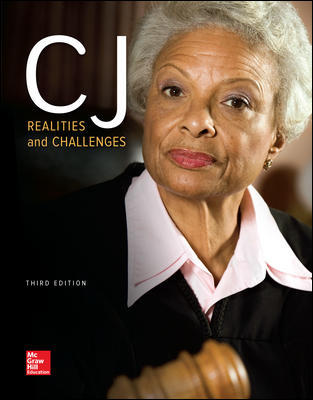
CJ Realities And Challenges By Ruth E. Masters - Test Bank

CJ Realities And Challenges By Ruth E. Masters - Test Bank   Instant Download - Complete Test Bank With Answers     Sample Questions Are Posted Below   CH-05: Test Bank_ansrsource Key     The first publicly funded city police departments in the United States were ________.   slave patrols created to keep slaves from …

$19.99

CJ Realities And Challenges By Ruth E. Masters – Test Bank


Instant Download – Complete Test Bank With Answers


Sample Questions Are Posted Below


CH-05: Test Bank_ansrsource Key


  1. The first publicly funded city police departments in the United States were ________.


  1. slave patrols created to keep slaves from rebelling or running away


  1. immigrant police departments who responded to what individuals in power wanted them to do


  1. police departments established to deal with illegal immigrants


  1. vigilantes who used to keep a watch over people during the night


Accessibility: Keyboard Navigation
Level: Basic
Topic: History of Policing in the United States
Type: Knowledge


  1. The peacekeeping system in which particular men were assigned the job of custodian and became responsible for patrolling the streets, lighting lanterns, serving as a lookout for fires, and generally keeping order is known as the ________.


  1. slave patrol system


  1. frankpledge system


  1. vigilantism system


  1. watch system


Accessibility: Keyboard Navigation
Level: Basic
Topic: History of Policing in the United States
Type: Knowledge


  1. The ________ system was the peacekeeping system in early England in which a group of 10 local families agreed to maintain the peace and make sure lawbreakers were taken into custody and brought to court.


  1. frankpledge system


  1. slave patrol system


  1. watch system


  1. vigilantism system


Accessibility: Keyboard Navigation
Level: Basic
Topic: History of Policing in the United States
Type: Knowledge


  1. ________ is officers’ maintenance of a visible presence in communities to serve as a deterrent to a variety of street-level crimes.


  1. The dark figure of crime


  1. Fragmentation


  1. The blue code of silence


  1. Preventive patrol


Accessibility: Keyboard Navigation
Level: Basic
Topic: History of Policing in the United States
Type: Knowledge


  1. During the political era of policing, police were NOT ________.


  1. allowed to control undesirable immigrants


  1. allowed to provide housing services for the homeless


  1. thought of primarily as law enforcers


  1. thought of as people who could maintain order


Accessibility: Keyboard Navigation
Level: Basic
Topic: History of Policing in the United States
Type: Knowledge


  1. During the political era of policing, street justice was practiced by officers. Which of the following would have been an example of street justice?


  1. Removing homeless people from the streets and placing them in a shelter


  1. Interviewing witnesses on the streets instead of taking them to the police department


  1. Slapping a suspect at the scene of the crime and letting him go after a stern warning


  1. Arresting a suspect and taking him to the nearby police station for questioning


Accessibility: Keyboard Navigation
Level: Moderate
Topic: History of Policing in the United States
Type: Analysis


  1. Which of the following lists the policing eras from the oldest to the most recent in the correct order?


  1. Community policing era, professional era, political era, and vigilantism


  1. English model, political era, vigilantism, and slave patrols


  1. Professional era, community policing era, English model, and political era


  1. Slave patrols, English model, political era, and professional era


Accessibility: Keyboard Navigation
Level: Basic
Topic: History of Policing in the United States
Type: Knowledge


  1. ________ is the use of volunteer, self-appointed committees organized to suppress crime and punish criminals.


  1. The blue code of silence


  1. Privatization


  1. The slave patrol system


  1. Vigilantism


Accessibility: Keyboard Navigation
Level: Basic
Topic: History of Policing in the United States
Type: Knowledge


  1. During the ________, local government leaders selected members of their party to be police officers as a reward for party loyalty. In this patronage system, it was whom the police knew, rather than what they knew, that was important.


  1. English model of policing


  1. era of community policing


  1. political era of policing


  1. professional era of policing

Accessibility: Keyboard Navigation
Level: Basic
Topic: History of Policing in the United States
Type: Knowledge


  1. Which of the following emphasizes crime prevention and the development of positive relationships between the police and the public?


  1. Community policing


  1. Frankpledge system


  1. Watch system


  1. Street justice


Accessibility: Keyboard Navigation
Level: Basic
Topic: History of Policing in the United States
Type: Knowledge


  1. John, William, and Abraham were residents who organized themselves to punish people who were deemed to be outlaws during the 1800s. Based on the scenario, John, William, and Abraham are called ________.


  1. privateers


  1. vigilantes


  1. slave patrol officers


  1. fragmenters


Accessibility: Keyboard Navigation
Level: Basic
Topic: History of Policing in the United States
Type: Application


  1. Bobby Smith was hired as the police chief of Florida during the early 1900s because he personally knew the governor of Florida. After he started working on his job, Bobby only enforced the laws that benefited the governor of Florida. Based on the information in the scenario, Bobby belongs to the ________.


  1. vigilantism era of policing


  1. English model of policing


  1. slave patrol era of policing


  1. political era of policing


Accessibility: Keyboard Navigation
Level: Basic
Topic: History of Policing in the United States
Type: Application


  1. Police driving around certain neighborhoods in the night to keep a watch is an example of ________.


  1. private fragmentation


  1. street justice


  1. offender profiling


  1. preventive patrols


Accessibility: Keyboard Navigation
Level: Moderate
Topic: History of Policing in the United States
Type: Application


  1. Officer Lewis and Officer Thomas both received very little training when they were hired as police officers. Also, they noticed that their colleagues used force excessively and their department practiced “street justice” and physically punished suspects on the spot. Officer Lewis and Officer Thomas were hired during the ________.


  1. vigilantism era


  1. professional policing era


  1. political policing era


  1. community policing era


Accessibility: Keyboard Navigation
Level: Moderate
Topic: History of Policing in the United States
Type: Application


  1. Amy became a police officer because she wanted to reduce corruption in policing. She was hired because of her academic credentials and was properly trained. Amy was hired during the ________.


  1. vigilantism era of policing


  1. political era of policing


  1. English model era of policing


  1. professional era of policing


Accessibility: Keyboard Navigation
Level: Moderate
Topic: History of Policing in the United States
Type: Application


  1. In the language of policing, nonsworn personnel are ________.


  1. sheriffs


  1. discretionary officers


  1. peace officers


  1. civilians


Accessibility: Keyboard Navigation
Level: Basic
Topic: Structure of the Law Enforcement System
Type: Knowledge


  1. Which of the following is true of the structure of the law enforcement system?


  1. Usually, arrested people remain in police custody before and after their initial appearance in court.


  1. Sheriffs’ offices outnumber police departments by four to one.


  1. Sheriffs’ offices typically police counties in rural areas and towns that have law enforcement services.


  1. Policing in the United States has always been highly localized.


Accessibility: Keyboard Navigation
Level: Moderate
Topic: Structure of Law Enforcement Systems
Type: Comprehension

  1. Which of the following is a feature of police departments in the United States?


  1. They generally provide permanent housing to arrested persons.


  1. They typically do not perform law enforcement duties.


  1. They operate mostly in rural areas.


  1. They outnumber sheriffs’ offices by four to one.

Accessibility: Keyboard Navigation
Level: Moderate
Topic: Structure of Law Enforcement Systems
Type: Comprehension


  1. Which of the following is a difference between sheriffs’ offices and police departments in the United States?


  1. Sheriffs’ offices do not provide court security to arrested persons, whereas police departments provide court security to arrested persons.


  1. Sheriffs’ offices tend to serve smaller areas with more people, whereas police departments serve larger areas with fewer people.


  1. Sheriffs’ offices typically function in rural areas, whereas police departments typically function in urban areas.


  1. Sheriffs’ offices provide custody to arrested persons till their intial appearance in court, whereas police departments provide police custody after the arrested persons appear in court.


Accessibility: Keyboard Navigation
Level: Moderate
Topic: Structure of Law Enforcement Systems
Type: Comprehension


  1. The ________ is the chief federal law enforcement department in the United States.


  1. Department of Justice


  1. Department of Homeland Security


  1. U.S. Secret Service


  1. Federal Bureau of Investigation


Accessibility: Keyboard Navigation
Level: Basic
Topic: Structure of Law Enforcement Systems
Type: Knowledge


  1. The nation’s oldest federal law enforcement agency is the:


  1. Drug Enforcement Administration.


  1. U.S. Secret Service.


  1. Federal Bureau of Investigation.


  1. U.S. Marshals Service.


Accessibility: Keyboard Navigation
Level: Basic
Topic: Structure of Law Enforcement Systems
Type: Knowledge


  1. David works as one of the support personnel in the FBI. Which of the following is a position within the FBI that David is NOT likely to hold?


  1. A special agent


  1. A scientist


  1. An information analyst


  1. A language specialist

Accessibility: Keyboard Navigation
Level: Moderate
Topic: Structure of the Law Enforcement System
Type: Comprehension


  1. Special Agent Santiago currently works for the oldest federal law enforcement agency in the United States. He apprehends federal fugitives and also transports federal prisoners. Based on the information in the scenario, Santiago works for the ________.


  1. U.S. Secret Service


  1. Federal Bureau of Investigation


  1. Drug Enforcement Administration


  1. U.S. Marshals Service

Accessibility: Keyboard Navigation
Level: Moderate
Topic: Structure of Law Enforcement Systems
Type: Application


  1. The U.S. Marshals Service is responsible for all of the following EXCEPT:


  1. protecting federal judges.


  1. regulating firearms and explosives.


  1. operating the Witness Security Program.


  1. apprehending federal fugitives.


Accessibility: Keyboard Navigation
Level: Moderate
Topic: Structure of Law Enforcement Systems
Type: Comprehension


  1. _____ are police department employees entrusted with arrest powers.


  1. Civilians


  1. Subpoenas


  1. Sworn personnel


  1. Nonpeace officers


Accessibility: Keyboard Navigation
Level: Moderate
Topic: Structure of Law Enforcement Systems
Type: Knowledge

  1. Sworn personnel are usually referred to as ________.


  1. peace officers


  1. fragmenters


  1. blue coders


  1. civilians

Accessibility: Keyboard Navigation
Level: Moderate
Topic: Structure of Law Enforcement Systems
Type: Comprehension

  1. All of the following are agencies within the Department of Homeland Security EXCEPT the:


  1. U.S. Customs and Border Protection.


  1. U.S. Coast Guard.


  1. U.S. Marshals Service.


  1. U.S. Secret Service.


Accessibility: Keyboard Navigation
Level: Basic
Topic: Structure of Law Enforcement Systems
Type: Knowledge


  1. Which of the following lists the federal agencies in the correct order from those with the most number of employees to those with the least number of employees?


  1. U.S. Capitol Police, U.S. Postal Inspection, U.S. Marshals, and U.S. Fish and Wildlife Service


  1. Federal Bureau of Prisons, U.S. Customs and Border Protection, U.S. Marshals Service, and Drug Enforcement Administration


  1. Drug Enforcement Administration, U.S. Secret Service, National Park Service, and Federal Bureau of Investigation


  1. U.S. Customs and Border Protection, Federal Bureau of Prisons, U.S. Capitol Police, and USDA Forest Service


Accessibility: Keyboard Navigation
Level: Difficult
Topic: Structure of Law Enforcement Systems
Type: Analysis


  1. U.S. Customs and Border Protection and U.S. Immigration are responsible for all of the following EXCEPT:


  1. combating human smuggling.


  1. combating importation of agricultural pests.


  1. providing security for federal judges.


  1. protecting the nation’s borders from terrorism.


Accessibility: Keyboard Navigation
Level: Moderate
Topic: Structure of Law Enforcement Systems
Type: Analysis


  1. ________ means there is a lack of coordination among law enforcement agencies.
  2. Fragmentation


  1. Corruption


  1. Privatization


  1. Discretion


Accessibility: Keyboard Navigation
Level: Basic
Topic: Structure of Law Enforcement Systems
Type: Knowledge

  1. Which of the following is NOT a result of fragmentation?
  2. Two agencies working on an investigation find the same clues, which result in a duplication of the effort.


  1. Two agencies involved in investigating a crime do not communicate.


  1. One agency is well coordinated. Everyone in this agency knows their responsibilities and performs them as expected without any overlap of service.


  1. A large police department that has multiple departments under it hinders sharing of information between the departments.


Accessibility: Keyboard Navigation
Level: Moderate
Topic: Structure of Law Enforcement Systems
Type: Analysis


  1. Sergeant Thomas is responsible for recruiting new police officers for his police department. His first step is:


  1. testing recruits.


  1. conducting background checks on applicants.


  1. attracting a sufficient number of applicants.


  1. selecting the most qualified individuals.


Accessibility: Keyboard Navigation
Level: Basic
Topic: Recruitment, Selection, and Training
Type: Comprehension


  1. Challenges in police officer recruiting include all of the following EXCEPT:


  1. better-paying jobs outside law enforcement.


  1. low attrition.


  1. negative publicity over use of force.


  1. negative publicity over alleged discrimination.


Accessibility: Keyboard Navigation
Level: Moderate
Topic: Recruitment, Selection, and Training
Type: Comprehension


  1. Which of the following statements is a FALSE statement about the background investigations of police applicants?


  1. Background investigations are often improperly conducted.


  1. Background checks have always been reliable indicators of which individuals will become good officers.


  1. Background investigators look for proof of good moral character.


  1. Background investigators can be subjective.


Accessibility: Keyboard Navigation
Level: Moderate
Topic: Recruitment, Selection, and Training
Type: Analysis


  1. Which of the following statements is true about the percentages of African Americans, Latinos, and women in the local law enforcement agencies as of 2007?


  1. There are more African Americans than Latinos.


  1. There are more Latinos than African Americans.


  1. There are more women than African Americans.


  1. There are more Latinos than women.


Accessibility: Keyboard Navigation
Level: Moderate
Topic: Recruitment, Selection, and Training
Type: Analysis


  1. Which jurisdiction was the first to pass an ordinance giving women the title and pay of “patrolman”?


  1. Chicago


  1. Miami


  1. Los Angeles


  1. New York

Accessibility: Keyboard Navigation
Level: Basic
Topic: Recruitment, Selection, and Training
Type: Knowledge


  1. Which of the following statements is FALSE about female police officers?


  1. Female police officers rely on lower levels of physical force.


  1. Female police officers have better communication skills than their male counterparts.


  1. Women are less proficient in defusing potentially violent confrontations than are men.


  1. Women police officers are less familiar with the boot camp approach to training than are male police officers.


Accessibility: Keyboard Navigation
Level: Moderate
Topic: Recruitment, Selection, and Training
Type: Analysis


  1. During the ________, Black males began to enter police departments at meaningful levels.


  1. 1990s


  1. 1900s


  1. 1860s


  1. 1970s


Accessibility: Keyboard Navigation
Level: Basic
Topic: Recruitment, Selection, and Training
Type: Knowledge


  1. Which Metropolitan Police Department created a Gay and Lesbian Liaison Unit in June 2000?


  1. The Abilene area District


  1. The District of Columbia


  1. The District of Oregon


  1. The Central Eastside District


Accessibility: Keyboard Navigation
Level: Moderate
Topic: Recruitment, Selection, and Training
Type: Knowledge


  1. Systematic basic training in police academies was one of the reforms instituted in the ________.


  1. nineteenth century


  1. eighteenth century


  1. twenty-first century


  1. twentieth century


Accessibility: Keyboard Navigation
Level: Moderate
Topic: Recruitment, Selection, and Training
Type: Knowledge


  1. Training requirements for local law enforcement agencies are usually determined by:


  1. the federal government.


  1. the city.


  1. international standards.


  1. the state.


Accessibility: Keyboard Navigation
Level: Moderate
Topic: Recruitment, Selection, and Training
Type: Comprehension


  1. Training curricula of a police academy include:


  1. community building.


  1. ethics and integrity.


  1. human diversity.


  1. all of these.


Accessibility: Keyboard Navigation
Level: Moderate
Topic: Recruitment, Selection, and Training
Type: Analysis


  1. Police view of themselves as a “band of brothers”—or “sisters”—against everyone else in society. This is known as ________.


  1. discourse


  1. community policing


  1. fragmentation


  1. siege mentality


Accessibility: Keyboard Navigation
Level: Basic
Topic: Recruitment, Selection, and Training
Type: Knowledge


  1. What is police occupational subculture?


  1. It is a set of norms and beliefs embraced by most officers in a given country.


  1. It is the ability of a police department to control the crime in a neighborhood.


  1. It is the norms and beliefs particular to an individual police department.


  1. It is the number of police departments that report to a sheriff’s office.


Accessibility: Keyboard Navigation
Level: Basic
Topic: Police Subculture
Type: Knowledge


  1. What is police organizational subculture?


  1. It is the ability of a police department to control the crime in a neighborhood.


  1. It is a set of norms and beliefs embraced by most officers in a given country.


  1. It is the norms and beliefs particular to an individual police department.


  1. It is the number of police departments that report to a sheriff’s office.


Accessibility: Keyboard Navigation
Level: Basic
Topic: Police Subculture
Type: Knowledge


  1. The ________ places loyalty to fellow officers above all other values.
  2. code red


  1. blue code of silence


  1. code of ethics


  1. leap of faith


Accessibility: Keyboard Navigation
Level: Moderate
Topic: Police Subculture
Type: Knowledge


  1. Officer Blanc has seen her partner mistreat suspects and falsify police reports. Officer Blanc is unlikely to report the misbehavior of her partner because of:


  1. simulation-based training.


  1. privatization.


  1. the blue code of silence.


  1. the frankpledge system.

Accessibility: Keyboard Navigation
Level: Moderate
Topic: Police Subculture
Type: Application


  1. ________ allows officers to act in a manner they judge most appropriate in a given situation.
  2. Fragmentation


  1. Discretion


  1. Privatization


  1. Corruption


Accessibility: Keyboard Navigation
Level: Basic
Topic: Police Discretion
Type: Knowledge


  1. Police discretion is necessary because:


  1. laws and policies are too strict and police need to be able to get around them.


  1. there are so few laws and police have the authority to enforce these laws the way they see fit.


  1. every incident must be dealt with in the same exact manner.


  1. law and policies are vague and can be interpreted in many ways.


Accessibility: Keyboard Navigation
Level: Moderate
Topic: Police Discretion
Type: Analysis


  1. Which of the following is true of police discretion?


  1. Officers’ discretionary decisions can never fulfill the spirit of the law if they do not follow the letter of the law.


  1. Police discretion can never lead to corruption.


  1. Professionals with discretionary power are immune from the temptation to abuse the authority that accompanies this power.


  1. It allows officers to decide where to focus their energies.


Accessibility: Keyboard Navigation
Level: Moderate
Topic: Police Discretion
Type: Comprehension


  1. Which of the following is a negative ramification of police discretion?


  1. Relieves the criminal justice system of the need to handle all cases


  1. None of these answers are accurate.


  1. Increased justice


  1. Increased discrimination

Accessibility: Keyboard Navigation
Level: Moderate
Topic: Police Discretion
Type: Comprehension


  1. Which of the following statements is NOT accurate about the arrest of suspects?


  1. Male suspects are more likely to be arrested than are females.


  1. Black suspects are more likely to be arrested than are White suspects.


  1. Juvenile suspects are more likely to be arrested than are adults.


  1. Sober suspects are more likely to be arrested than are intoxicated suspects.


Accessibility: Keyboard Navigation
Level: Moderate
Topic: Police Discretion
Type: Analysis


  1. Many studies by police departments have concluded that ________ drivers are disproportionately stopped by police.


  1. elderly


  1. Black


  1. White


  1. women


Accessibility: Keyboard Navigation
Level: Moderate
Topic: Police Discretion
Type: Application


  1. Which of the following is an example of racial profiling?
  2. Police set up a DUI checkpoint and stop every fifth vehicle, all of whom have Black drivers.


  1. All of these answers are correct.


  1. Police officers only stop people of color because of the perception that they are more likely to commit crime.


  1. Police officers detain and question a Hispanic male because he fits the description of a suspect who just robbed a bank.


Accessibility: Keyboard Navigation
Level: Moderate
Topic: Police Discretion
Type: Analysis


  1. The greatest influence on the decision to arrest is:


  1. the readiness of the prosecutor to prosecute.


  1. the workload of the police department.


  1. the victim’s preference for arrest.


  1. the severity of the crime.


Accessibility: Keyboard Navigation
Level: Basic
Topic: Police Discretion
Type: Knowledge


  1. Police arrest in only about ________ the cases in which evidence of a crime is present.


  1. one-tenth


  1. half


  1. three-fourth


  1. one-fourth


Accessibility: Keyboard Navigation
Level: Moderate
Topic: Police Discretion
Type: Knowledge


  1. There is nothing more harmful to a law enforcement agency than:


  1. profiling.


  1. siege mentality.


  1. officer misconduct.


  1. discretion.


Accessibility: Keyboard Navigation
Level: Moderate
Topic: Misconduct
Type: Analysis


  1. Police disregard for policies, rules, or laws in the performance of their duty is called ________.


  1. private secularization


  1. police integration


  1. abuse of authority


  1. privatization


Accessibility: Keyboard Navigation
Level: Moderate
Topic: Misuse of Authority
Type: Comprehension


  1. When a police officer fails to provide equal protection, he is violating the ________ Amendment.


  1. Fourteenth


  1. First


  1. Fifth


  1. Fourth


Accessibility: Keyboard Navigation
Level: Basic
Topic: Misconduct
Type: Knowledge


  1. ________ is generally defined as misconduct motivated by personal gain.


  1. Discretion


  1. Siege mentality


  1. Corruption


  1. The blue code of silence


Accessibility: Keyboard Navigation
Level: Moderate
Topic: Misuse of Authority
Type: Comprehension


  1. Detective Rivera worked as an undercover narcotics agent for many years. After several months of investigation, it was discovered that Detective Rivera was taking a lot of bribes from the individuals who smuggled narcotics. In this scenario, Rivera’s action for personal gain is an example of ________.


  1. corruption


  1. the blue code of silence


  1. brutality


  1. siege mentality

Accessibility: Keyboard Navigation
Level: Moderate
Topic: Misconduct
Type: Application


  1. Which of the following statements is FALSE about police corruption?


  1. Corruption has a lot to do with individual factors.


  1. Police occupational subculture explains why some officers are corrupt and others are not.


  1. Some corrupt individuals manage to slip through the selection screening process.


  1. Police occupational subculture helps explain why corruption exists.


Accessibility: Keyboard Navigation
Level: Moderate
Topic: Misconduct
Type: Application


  1. The opposite of misconduct is:


  1. solidarity.


  1. discretion.


  1. integrity.


  1. respect.


Accessibility: Keyboard Navigation
Level: Basic
Topic: Misconduct
Type: Comprehension


  1. In the context of policing, ________ refers to moral principles and professional standards that help officers resist the temptation to abuse their rights and privileges.


  1. integrity


  1. siege mentality


  1. discretion


  1. abuse of authority


Accessibility: Keyboard Navigation
Level: Basic
Topic: Misconduct
Type: Knowledge


  1. Only about ________ of agencies have early warning systems in the United States.


  1. one-third


  1. one-tenth


  1. one-eighth


  1. half


Accessibility: Keyboard Navigation
Level: Basic
Topic: Misconduct
Type: Knowledge


  1. ________ handle real and reported police misconduct.
  2. SWAT units


  1. Detectives


  1. Chiefs


  1. Internal affairs units

Accessibility: Keyboard Navigation
Level: Moderate
Topic: Misconduct
Type: Comprehension


  1. Which of the following is a key to a successful investigation of police misconduct?


  1. All of these.


  1. The intake process is color blind.


  1. There are many channels through which a complaint can be filed.


  1. People can register complaints with ease.


Accessibility: Keyboard Navigation
Level: Moderate
Topic: Misconduct
Type: Application


  1. A police department’s internal affairs unit consists of ________.


  1. citizen review board members


  1. sworn personnel from outside agencies


  1. members from a minor ethnical community


  1. sworn personnel from within the agency


Accessibility: Keyboard Navigation
Level: Basic
Topic: Misconduct
Type: Knowledge


  1. What is privatization?
  2. It is the process of a government financially bailing out a private company.


  1. It is the process of a private company acquiring another private company.


  1. It is the movement of individuals from one private company to the other.


  1. It is the transfer of government programs and functions to the private sector.


Accessibility: Keyboard Navigation
Level: Basic
Topic: Misconduct
Type: Knowledge


  1. Which of the following statements is true about the growth of private security in the United States?


  1. There are now more sworn police officers than private security officers.


  1. Sworn police officers equal the number of private security officers today.


  1. There are an estimated three times more private security officers than public law enforcement officers.


  1. Private security officers now handle all police investigations.


Accessibility: Keyboard Navigation
Level: Moderate
Topic: Private Security
Type: Analysis


CH-05: Test Bank_ansrsource Summary

Category# of Questions

Accessibility: Keyboard Navigation-70

Level: Basic-30

Level: Difficult-1

Level: Moderate-39

Topic: History of Policing in the United States-15

Topic: Misconduct-11

Topic: Misuse of Authority-2

Topic: Police Discretion-9

Topic: Police Subculture-4

Topic: Private Security-1

Topic: Recruitment, Selection, and Training-12

Topic: Structure of Law Enforcement Systems-14

Topic: Structure of the Law Enforcement System-2

Type: Analysis-13

Type: Application-11

Type: Comprehension-15

Type: Knowledge-31


Additional information

Add Review

Your email address will not be published. Required fields are marked *