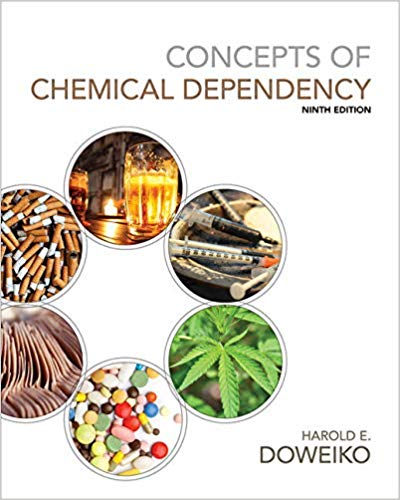
Concepts of Chemical Dependency 9th Edition by Harold E. Doweiko - Test Bank

Concepts of Chemical Dependency 9th Edition by Harold E. Doweiko - Test Bank   Instant Download - Complete Test Bank With Answers     Sample Questions Are Posted Below   1. Health care professionals generally accept that ________12-ounce cans of beer would need to be consumed daily for 2-3 weeks to produce a physical dependency. …

$19.99

Concepts of Chemical Dependency 9th Edition by Harold E. Doweiko – Test Bank


Instant Download – Complete Test Bank With Answers


Sample Questions Are Posted Below


1. Health care professionals generally accept that ________12-ounce cans of beer would need to be consumed daily
for 2-3 weeks to produce a physical dependency.
a. 5 to 7
b. 11 to 15
c. 17 to 20
d. 22 to 25
ANSWER: b
POINTS: 1
REFERENCES: A Working Definition of the Alcohol Use Disorders
2. Rita has grown aware of the fact that her alcohol use is contributing to problems with her health, her work, and her
marriage. She has attempted to cut back on her drinking because of this, but cannot seem to reduce her alcohol
intake. Rita most likely
a. is a social drinker.
b. has no problem with her drinking.
c. has some sort of alcohol use disorder (AUD).
d. has none of these.
ANSWER: c
POINTS: 1
REFERENCES: A Working Definition of the Alcohol Use Disorders
3. Around the globe, ______ million people die from alcohol-related illness or injuries each year.
a. 1.1
b. 1.75
c. 2.4
d. 4.7
ANSWER: c
POINTS: 1
REFERENCES: Scope of the Problem
4. People who are alcohol-dependent are thought to lose about ______ of potential life as a result of their drinking.
a. 6 months
b. 2 years
c. 7 years
d. 15 years
ANSWER: d
POINTS: 1
REFERENCES: Scope of the Problem
5. All chronic drinkers will need to continue increasing the amount of alcohol consumed in order to reach a given level
of intoxication throughout their lifetime.
a. True
b. False
ANSWER: False
POINTS: 1
REFERENCES: Alcohol Dependence, Tolerance, and “Craving”
6. Helga has developed avitaminosis from years of heavy drinking. This means
a. she is vitamin deficient.
b. her body has been absorbing too many vitamins at a toxic level.
c. she has an inflamed stomach.
d. she has a dangerously low glutathione level.
ANSWER: a
POINTS: 1
REFERENCES: Complications of Chronic Alcohol Use
7. WernickeKorsakoff’s disease is a potentially fatal
a. neurological disorder.
b. cardiovascular disorder.
c. gastrointestinal disorder.
d. side effect of cirrhosis of the liver.
ANSWER: a
POINTS: 1
REFERENCES: Complications of Chronic Alcohol Use
8. _________ are thought to be the most effective treatment for patients suffering from alcohol withdrawal seizures.
a. Opioid antagonists
b. Benzodiazapines
c. Anti-convulsants
d. Small amounts of alcohol
ANSWER: b
POINTS: 1
REFERENCES: The Alcohol Withdrawal Syndrome
9. According to your text, what percentage of the U.S. population will NOT consume alcohol at some point in their
lives?
a. 15 percent
b. 18 percent
c. 17 percent
d. 10 percent
ANSWER: d
POINTS: 1
REFERENCES: Scope of the Problem
10. Globally, alcohol is thought to cause
a. twice as many deaths as tobacco.
b. the same number of deaths as does tobacco.
c. 2.4 million deaths per year.
d. 3.8 million deaths per year.
ANSWER: c
POINTS: 1
REFERENCES: Scope of the Problem
11. According to your text, which continent has the highest percentage of persons who consume alcohol?
a. South America
b. Asia
c. Australia
d. Europe
ANSWER: d
POINTS: 1
REFERENCES: Scope of the Problem
12. Your text suggests that _______ of the U.S. population drank to the point of intoxication in the past year.
a. 6 percent
b. 60 percent
c. 35-40 percent
d. 90 percent
ANSWER: b
POINTS: 1
REFERENCES: Scope of the Problem
13. The typical “skid row” person with an alcohol use disorder represents ________ of the total number of persons with
such a disorder.
a. 40 percent
b. 11 percent
c. 5 percent
d. 3 percent
ANSWER: c
POINTS: 1
REFERENCES: Who Is the Typical Person with an Alcohol Use Disorder?
14. Between 80 and 90 percent of persons with an alcohol use disorder will have evidence of
a. development of intestinal problem.
b. a “fatty” liver.
c. development of hypotension.
d. development of diverticulitis.
ANSWER: b
POINTS: 1
REFERENCES: Complications of Chronic Alcohol Use
15. The total economic impact of the alcohol use disorders is thought to be
a. $234 billion per year in the United States.
b. $234 billion per year around the globe.
c. $234 billion per decade in the United States.
d. 13 percent of the total amount spent by the U.S. Department of Defense each year.
ANSWER: a
POINTS: 1
REFERENCES: Scope of the Problem
16. Of those individuals who develop liver steatosis, what percentage go on to develop alcohol-related hepatitis?
a. 50-60 percent
b. 45-50 percent
c. 5-20 percent
d. 35-40 percent
ANSWER: d
POINTS: 1
REFERENCES: Complications of Chronic Alcohol Use
17. According to your text ________ of adults in the U.S. have engaged in at least one episode of “binge” drinking in
the past 12 months.
a. 5 percent
b. 28 percent
c. 15 percent
d. 35 percent
ANSWER: c
POINTS: 1
REFERENCES: Who Is the Typical Person with an Alcohol Use Disorder?
18. The first time a person with an alcohol use disorder can typically be expected to experience bio/psycho/social
problems because of their drinking is in their
a. early to middle 30s.
b. late 50s to mid 60s.
c. early 40s.
d. late 20s to early 30s.
ANSWER: d
POINTS: 1
REFERENCES: Who Is the Typical Person with an Alcohol Use Disorder?
19. To put the prevalence of alcohol abuse into perspective, your text suggests that _____ episodes of binge drinking
take place each year in the United States.
a. 10 million
b. 100 million
c. 500 million
d. 1.5 billion
ANSWER: d
POINTS: 1
REFERENCES: Who Is the Typical Person with an Alcohol Use Disorder?
20. Under normal conditions, what would you expect from a person with a blood alcohol level of 0.15, according to your
text?
a. Stupor, lethargy bordering on loss of consciousness
b. Mild ataxia, a sense of euphoria or well being
c. Coma, possible respiratory arrest
d. Death
ANSWER: b
POINTS: 1
REFERENCES: Alcohol Dependence, Tolerance, and “Craving”
21. In the U.S., alcohol is thought to cause (or at least be a factor in) _____ deaths per year.
a. 150-175 thousand
b. 85-90 thousand
c. 35-50 thousand
d. approximately 2.5 million
ANSWER: b
POINTS: 1
REFERENCES: Complications of Chronic Alcohol Use
22. According to your text, the average heavy drinker can expect to lose _____ years of potential life to drinking-related
diseases or health problems.
a. 18-20
b. approximately 12
c. 14-15
d. up to 25
ANSWER: d
POINTS: 1
REFERENCES: Complications of Chronic Alcohol Use
23. According to your text, which of the following is NOT an anticipated consequence of the chronic use of alcohol?
a. Nutritional deficiencies
b. Diarrhea
c. Inflammation of the pancreas
d. Enhanced bone formation by osteoblasts in the body
ANSWER: d
POINTS: 1
REFERENCES: Complications of Chronic Alcohol Use
24. The chronic use of alcohol is the ___________ cause of liver disease in the U.S.
a. least likely
b. second most common
c. most common
d. third most common
ANSWER: c
POINTS: 1
REFERENCES: Complications of Chronic Alcohol Use
25. The formation of ___________ are thought to contribute to the destruction of liver tissue in chronic drinkers.
a. free radicals
b. neurotoxins
c. glutathione
d. c-reactive proteins
ANSWER: a
POINTS: 1
REFERENCES: Complications of Chronic Alcohol Use
26. Some persons with an AUD have been known to obtain up to _______ of their daily caloric requirement from their
drinking.
a. 50 percent
b. 35 percent
c. 15 percent
d. 40 percent
ANSWER: a
POINTS: 1
REFERENCES: Complications of Chronic Alcohol Use
27. Which of the following is NOT true for heavy, chronic, alcohol use?
a. It increases the drinker’s risk of death from pneumonia by 300700 percent.
b. It can contribute to glossitis.
c. It can contribute to the development of “noninsulin dependent” diabetes.
d. It helps block formation of stomach ulcers by destroying bacteria that were ingested.
ANSWER: d
POINTS: 1
REFERENCES: Complications of Chronic Alcohol Use
28. All of the following are true of chronic, heavy, alcohol use EXCEPT
a. it increases the individual’s risk of cardiovascular disease.
b. it enhances the cardioprotective effects first seen with moderate alcohol use.
c. it increases the drinker’s risk of death from a stroke.
d. alcohol is a cardiotoxic compound.
ANSWER: b
POINTS: 1
REFERENCES: Complications of Chronic Alcohol Use
29. Alcohol related “blackouts” are
a. not inevitable.
b. inevitable.
c. inevitable, but only if the person develops atrial fibrillation.
d. dependent on damage to the prefrontal regions of the amygdala.
ANSWER: a
POINTS: 1
REFERENCES: Complications of Chronic Alcohol Use
30. Alcohol tends to ________ Rapid Eye Movement (REM) sleep.
a. enhance
b. reduce
c. not alter
d. intensify
ANSWER: b
POINTS: 1
REFERENCES: Complications of Chronic Alcohol Use
31. Approximately _____ of alcohol-dependent persons will report having ________, according to your text.
a. 20-25 percent; problems making decisions in social settings
b. 30-40 percent; anxiety
c. 20-25 percent; anxiety
d. 10-30 percent; anxiety
ANSWER: d
POINTS: 1
REFERENCES: Complications of Chronic Alcohol Use
32. The heavy, chronic use of alcohol will
a. aid in weight loss in women only, although the reason for this is not known at present.
b. alter the normal pattern of bacterial growth in the mouth, increasing the drinker’s risk for pneumonia should
these bacteria be aspirated.
c. reduce the effects of sleep apnea as it causes the muscles of the trachea to become more relaxed and less
tense.
d. increase the effectiveness of the immune system through the manner in which glucose derived from alcohol
biotransformation becomes a source of energy for the white blood cells.
ANSWER: b
POINTS: 1
REFERENCES: Complications of Chronic Alcohol Use
33. Which of the following is NOT true of the alcohol withdrawal syndrome?
a. Brain damage during this stage is partly dependent on the duration and intensity of the individual’s alcohol use.
b. The alcohol withdrawal syndrome is potentially life threatening.
c. It reflects the sudden decrease in GABA activity, leaving NMDA to overstimulate the neurons in the brain.
d. Tremor is often one of the first manifestations of this condition.
ANSWER: a
POINTS: 1
REFERENCES: The Alcohol Withdrawal Syndrome
34. Which of the following is NOT normally seen in the alcohol withdrawal syndrome?
a. Seizures
b. Improved problem solving abilities
c. Tremor
d. Vomiting
ANSWER: b
POINTS: 1
REFERENCES: The Alcohol Withdrawal Syndrome
35. The symptoms of mild alcohol withdrawal usually peak in _______ hours and then gradually decline in intensity,
according to your text.
a. 72-96
b. 48-72
c. 24-48
d. 120
ANSWER: b
POINTS: 1
REFERENCES: The Alcohol Withdrawal Syndrome
36. Describe the “typical” person with an alcohol use disorder.
ANSWER: No answer provided.
POINTS: 1
REFERENCES: Who Is the Typical Person with an Alcohol Use Disorder?
37. What are the effects of chronic alcohol use on the liver?
ANSWER: No answer provided.
POINTS: 1
REFERENCES: Complications of Chronic Alcohol Use
38. Describe some of the symptoms associated with WernickeKorsakoff’s Disease.
ANSWER: No answer provided.
POINTS: 1
REFERENCES: Complications of Chronic Alcohol Use
39. Describe the potential symptoms experienced by patients undergoing alcohol withdrawal.
ANSWER: No answer provided.
POINTS: 1
REFERENCES: The Alcohol Withdrawal Syndrome
40. Describe the standard treatment for alcohol withdrawal syndrome.
ANSWER: No answer provided.
POINTS: 1
REFERENCES: The Alcohol Withdrawal Syndrome
41. Coffee consumption may decrease an individual’s risk of developing cirrhosis of the liver.
a. True
b. False
ANSWER: True
POINTS: 1
REFERENCES: Complications of Chronic Alcohol Use


Additional information

Add Review

Your email address will not be published. Required fields are marked *