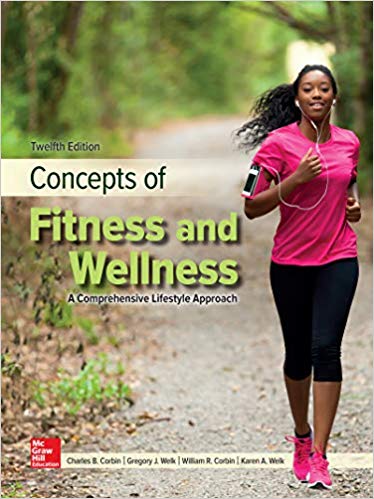
Concepts of Fitness And Wellness A Comprehensive Lifestyle Approach 12th Edition By Charles Corbin - Test Bank

Concepts of Fitness And Wellness A Comprehensive Lifestyle Approach 12th Edition By Charles Corbin - Test Bank   Instant Download - Complete Test Bank With Answers     Sample Questions Are Posted Below   Concepts of Fitness and Wellness, 12e (Corbin) Chapter 5   The Health Benefits of Physical Activity   1) Which of the following …

$19.99

Concepts of Fitness And Wellness A Comprehensive Lifestyle Approach 12th Edition By Charles Corbin – Test Bank


Instant Download – Complete Test Bank With Answers


Sample Questions Are Posted Below


Concepts of Fitness and Wellness, 12e (Corbin)

Chapter 5   The Health Benefits of Physical Activity


1) Which of the following is FALSE about physical activity?

  1. A) It increases risk for diabetes.
  2. B) It is prescribed as a treatment for depression.
  3. C) It has been shown to prevent cognitive decline during aging.
  4. D) It boosts the effectiveness of the immune system.


Answer:  A

Topic:  Physical Activity, Fitness, and Wellness

Learning Objective:  Explain the role of physical activity in promoting optimal wellness.

Bloom’s:  Remember

Accessibility:  Keyboard Navigation

Gradable:  automatic


2) Which of the following is TRUE about physical activity and aging?

  1. A) Activity reduces risk for dementia in the elderly.
  2. B) Activity prevent declines in cognitive function.
  3. C) Activity can increase healthspan.
  4. D) All of these answers are correct.


Answer:  D

Topic:  Physical Activity, Fitness, and Wellness

Learning Objective:  Explain the role of physical activity in preventing conditions associated with aging.

Bloom’s:  Remember

Accessibility:  Keyboard Navigation

Gradable:  automatic


3) What is meant by “compression of morbidity”?

  1. A) reducing the amount of exercise needed to reduce risk of CVD
  2. B) reducing the amount of time it takes to achieve benefits from activity
  3. C) shortening the total number of years that illnesses or disabilities occur
  4. D) shortening the total number of years of life


Answer:  C

Topic:  Physical Activity, Fitness, and Wellness

Learning Objective:  Explain the role of physical activity in promoting optimal wellness.

Bloom’s:  Remember

Accessibility:  Keyboard Navigation

Gradable:  automatic


4) Which of the following is considered a hypokinetic disease?

  1. A) HIV
  2. B) heart disease
  3. C) herpes
  4. D) hantavirus


Answer:  B

Topic:  Physical Activity and Hypokinetic Disease

Learning Objective:  Define the term hypokinetic and explain how physical activity can reduce risk of hypokinetic diseases and conditions.

Bloom’s:  Understand

Accessibility:  Keyboard Navigation

Gradable:  automatic


5) Hypokinetic diseases refer to those that are caused by

  1. A) inactivity.
  2. B) infections.
  3. C) high blood pressure.
  4. D) high cholesterol.


Answer:  A

Topic:  Physical Activity and Hypokinetic Disease

Learning Objective:  Define the term hypokinetic and explain how physical activity can reduce risk of hypokinetic diseases and conditions.

Bloom’s:  Remember

Accessibility:  Keyboard Navigation

Gradable:  automatic


6) The term “hypokinetic” literally refers to

  1. A) low blood sugar.
  2. B) low sugar.
  3. C) low body temperature.
  4. D) lack of movement.


Answer:  D

Topic:  Physical Activity and Hypokinetic Disease

Learning Objective:  Define the term hypokinetic and explain how physical activity can reduce risk of hypokinetic diseases and conditions.

Bloom’s:  Remember

Accessibility:  Keyboard Navigation

Gradable:  automatic


7) Which of the following statements about heart disease and cardiovascular disease is TRUE?

  1. A) Coronary heart disease is a type of cardiovascular disease.
  2. B) A person can have heart disease, yet not have cardiovascular disease.
  3. C) Heart disease is a precursor of cardiovascular disease.
  4. D) Heart disease and cardiovascular disease are independent of each other.


Answer:  A

Topic:  Physical Activity and Cardiovascular Health

Learning Objective:  Identify several cardiovascular diseases/conditions associated with physical inactivity and explain how physical activity can help reduce risk.

Bloom’s:  Remember

Accessibility:  Keyboard Navigation

Gradable:  automatic


8) Which of the following includes only primary risk factors for heart disease?

  1. A) obesity, smoking, and c-reactive protein (CRP)
  2. B) high blood pressure, high cholesterol, and stress
  3. C) physical inactivity, stress, and high cholesterol
  4. D) physical inactivity, high blood pressure, and smoking


Answer:  D

Topic:  Physical Activity and Cardiovascular Health

Learning Objective:  Identify several cardiovascular diseases/conditions associated with physical inactivity and explain how physical activity can help reduce risk.

Bloom’s:  Remember

Accessibility:  Keyboard Navigation

Gradable:  automatic


9) Which of the following is defined as the inability of the heart muscle to pump blood at a life-sustaining rate?

  1. A) coronary occlusion
  2. B) coronary thrombosis
  3. C) congestive heart failure
  4. D) infarction


Answer:  C

Topic:  Physical Activity and Cardiovascular Health

Learning Objective:  Identify several cardiovascular diseases/conditions associated with physical inactivity and explain how physical activity can help reduce risk.

Bloom’s:  Remember

Accessibility:  Keyboard Navigation

Gradable:  automatic


10) Which is NOT a primary risk factor for heart disease?

  1. A) smoking
  2. B) stress
  3. C) hypertension
  4. D) physical inactivity


Answer:  B

Topic:  Physical Activity and Cardiovascular Health

Learning Objective:  Identify several cardiovascular diseases/conditions associated with physical inactivity and explain how physical activity can help reduce risk.

Bloom’s:  Remember

Accessibility:  Keyboard Navigation

Gradable:  automatic


11) After participating in an exercise program, individuals should expect their resting heart rate to ________, reflecting a positive training adaptation.

  1. A) increase
  2. B) decrease
  3. C) stay the same
  4. D) vary each time taken


Answer:  B

Topic:  Physical Activity and Cardiovascular Health

Learning Objective:  Identify several cardiovascular diseases/conditions associated with physical inactivity and explain how physical activity can help reduce risk.

Bloom’s:  Remember

Accessibility:  Keyboard Navigation

Gradable:  automatic


12) Beneficial proteins in the bloodstream that pick up cholesterol for removal by the liver are called

  1. A) lipids.
  2. B) triglycerides.
  3. C) high-density lipoproteins.
  4. D) low-density lipoproteins.


Answer:  C

Topic:  Physical Activity and Cardiovascular Health

Learning Objective:  Identify several cardiovascular diseases/conditions associated with physical inactivity and explain how physical activity can help reduce risk.

Bloom’s:  Remember

Accessibility:  Keyboard Navigation

Gradable:  automatic


13) All fats and fatty substances in the bloodstream are referred to as

  1. A) fibrin.
  2. B) leukocytes.
  3. C) lipids.
  4. D) leptin.


Answer:  C

Topic:  Physical Activity and Cardiovascular Health

Learning Objective:  Identify several cardiovascular diseases/conditions associated with physical inactivity and explain how physical activity can help reduce risk.

Bloom’s:  Remember

Accessibility:  Keyboard Navigation

Gradable:  automatic


14) Auxiliary blood vessels that take over normal coronary blood circulation when blood flow is diminished are called

  1. A) collateral circulation.
  2. B) corollary circulation.
  3. C) athero circulation.
  4. D) coronary thrombosis.


Answer:  A

Topic:  Physical Activity and Cardiovascular Health

Learning Objective:  Identify several cardiovascular diseases/conditions associated with physical inactivity and explain how physical activity can help reduce risk.

Bloom’s:  Remember

Accessibility:  Keyboard Navigation

Gradable:  automatic


15) What is the name of the substance that forms a blood clot when combined with blood cells?

  1. A) lipids
  2. B) fibrin
  3. C) lipoprotein
  4. D) hemoglobin


Answer:  B

Topic:  Physical Activity and Cardiovascular Health

Learning Objective:  Identify several cardiovascular diseases/conditions associated with physical inactivity and explain how physical activity can help reduce risk.

Bloom’s:  Remember

Accessibility:  Keyboard Navigation

Gradable:  automatic


16) Laura has a total cholesterol value of 242 mg/dl. This value would place her in which category?

  1. A) optimal
  2. B) desirable
  3. C) borderline
  4. D) high risk


Answer:  D

Topic:  Physical Activity and Cardiovascular Health

Learning Objective:  Identify several cardiovascular diseases/conditions associated with physical inactivity and explain how physical activity can help reduce risk.

Bloom’s:  Understand

Accessibility:  Keyboard Navigation

Gradable:  automatic


17) Which of the following would represent an optimal or desirable blood lipid profile?

  1. A) LDL > 200 and HDL > 60
  2. B) total cholesterol < 240
  3. C) LDL < 100, HDL > 60
  4. D) LDL < 100, total cholesterol < 300


Answer:  C

Topic:  Physical Activity and Cardiovascular Health

Learning Objective:  Identify several cardiovascular diseases/conditions associated with physical inactivity and explain how physical activity can help reduce risk.

Bloom’s:  Understand

Accessibility:  Keyboard Navigation

Gradable:  automatic


18) A branch of the autonomic nervous system that prepares the body for activity by speeding up the heart rate is called the ________ system.

  1. A) hypertension
  2. B) parasympathetic nervous
  3. C) preparatory nervous
  4. D) sympathetic nervous


Answer:  D

Topic:  Physical Activity and Cardiovascular Health

Learning Objective:  Identify several cardiovascular diseases/conditions associated with physical inactivity and explain how physical activity can help reduce risk.

Bloom’s:  Remember

Accessibility:  Keyboard Navigation

Gradable:  automatic


19) The ________ system is a branch of the autonomic nervous system that slows the heart rate.

  1. A) auxiliary nervous
  2. B) collateral nervous
  3. C) parasympathetic nervous
  4. D) sympathetic nervous


Answer:  C

Topic:  Physical Activity and Cardiovascular Health

Learning Objective:  Identify several cardiovascular diseases/conditions associated with physical inactivity and explain how physical activity can help reduce risk.

Bloom’s:  Remember

Accessibility:  Keyboard Navigation

Gradable:  automatic


20) Which of the following is TRUE of hypertension?

  1. A) A systolic blood pressure of 120 is considered high risk.
  2. B) People with high blood pressure have a reduced risk of strokes.
  3. C) Those with hypertension usually present with many symptoms, including dizziness and fainting.
  4. D) Regular exercise helps reduce blood pressure for those with hypertension.


Answer:  D

Topic:  Physical Activity and Cardiovascular Health

Learning Objective:  Identify several cardiovascular diseases/conditions associated with physical inactivity and explain how physical activity can help reduce risk.

Bloom’s:  Understand

Accessibility:  Keyboard Navigation

Gradable:  automatic


21) Chest pain is also known as

  1. A) pectoralis major.
  2. B) coronary bypass.
  3. C) atherosclerosis.
  4. D) angina pectoris.


Answer:  D

Topic:  Physical Activity and Cardiovascular Health

Learning Objective:  Identify several cardiovascular diseases/conditions associated with physical inactivity and explain how physical activity can help reduce risk.

Bloom’s:  Remember

Accessibility:  Keyboard Navigation

Gradable:  automatic


22) Which of the following about systolic blood pressure is accurate?

  1. A) the top number of a blood pressure reading
  2. B) arterial pressure being exerted from a heart contraction
  3. C) considered “normal” if less than 120 mm Hg
  4. D) All of these answers are correct.


Answer:  D

Topic:  Physical Activity and Cardiovascular Health

Learning Objective:  Identify several cardiovascular diseases/conditions associated with physical inactivity and explain how physical activity can help reduce risk.

Bloom’s:  Remember

Accessibility:  Keyboard Navigation

Gradable:  automatic


23) Atherosclerosis contributes to which of the following diseases?

  1. A) diabetes
  2. B) cancer
  3. C) stroke
  4. D) All of these answers are correct.


Answer:  C

Topic:  Physical Activity and Cardiovascular Health

Learning Objective:  Identify several cardiovascular diseases/conditions associated with physical inactivity and explain how physical activity can help reduce risk.

Bloom’s:  Remember

Accessibility:  Keyboard Navigation

Gradable:  automatic


24) Which of the following are considered forms of cardiovascular heart disease?

  1. A) stroke
  2. B) hypertension
  3. C) peripheral vascular disease
  4. D) All of these answers are correct.


Answer:  D

Topic:  Physical Activity and Cardiovascular Health

Learning Objective:  Identify several cardiovascular diseases/conditions associated with physical inactivity and explain how physical activity can help reduce risk.

Bloom’s:  Remember

Accessibility:  Keyboard Navigation

Gradable:  automatic


25) Which of the following is TRUE about activity and atherosclerosis?

  1. A) Regular activity can help to reduce blood lipid levels.
  2. B) Regular activity reduces levels of HDL cholesterol.
  3. C) Regular activity increases fibrin levels in the blood.
  4. D) All of these answers are correct.


Answer:  A

Topic:  Physical Activity and Cardiovascular Health

Learning Objective:  Identify several cardiovascular diseases/conditions associated with physical inactivity and explain how physical activity can help reduce risk.

Bloom’s:  Remember

Accessibility:  Keyboard Navigation

Gradable:  automatic


26) Which of the following best explains how exercise reduces risk of a fatal heart attack?

  1. A) reduced elasticity of arteries
  2. B) increased atherosclerosis
  3. C) more fibrin
  4. D) increased collateral circulation


Answer:  D

Topic:  Physical Activity and Cardiovascular Health

Learning Objective:  Identify several cardiovascular diseases/conditions associated with physical inactivity and explain how physical activity can help reduce risk.

Bloom’s:  Understand

Accessibility:  Keyboard Navigation

Gradable:  automatic


27) Which compound has been shown to be associated with inflammation of the arteries?

  1. A) CRP
  2. B) elastin
  3. C) hemoglobin
  4. D) estrogen


Answer:  A

Topic:  Physical Activity and Cardiovascular Health

Learning Objective:  Identify several cardiovascular diseases/conditions associated with physical inactivity and explain how physical activity can help reduce risk.

Bloom’s:  Remember

Accessibility:  Keyboard Navigation

Gradable:  automatic


28) Physical activity is thought to reduce the risk of colon cancer by

  1. A) lowering hormone levels.
  2. B) speeding movement of food through the digestive system.
  3. C) lowering body fat levels.
  4. D) lowering blood pressure.


Answer:  B

Topic:  Physical Activity and Other Hypokinetic Conditions

Learning Objective:  Explain how physical activity can help reduce risk of other hypokinetic conditions.

Bloom’s:  Remember

Accessibility:  Keyboard Navigation

Gradable:  automatic


29) Which of the following is TRUE regarding physical activity and cancer?

  1. A) Physical activity has not been shown to impact cancer.
  2. B) Physical activity is known to create toxins that kill cancer cells.
  3. C) Physical activity has been shown to reduce risks of some cancers.
  4. D) Physical activity alters symptoms of cancer but not the disease itself.


Answer:  C

Topic:  Physical Activity and Other Hypokinetic Conditions

Learning Objective:  Explain how physical activity can help reduce risk of other hypokinetic conditions.

Bloom’s:  Understand

Accessibility:  Keyboard Navigation

Gradable:  automatic


30) Which of the following is TRUE regarding physical activity and diabetes?

  1. A) Physical activity is not recommended for Type I diabetics.
  2. B) Physical activity reduces diabetes risk by improving sensitivity to insulin.
  3. C) Type II diabetes cannot be influenced by physical activity.
  4. D) Diabetes is a genetic condition not influenced by lifestyle.


Answer:  B

Topic:  Physical Activity and Other Hypokinetic Conditions

Learning Objective:  Explain how physical activity can help reduce risk of other hypokinetic conditions.

Bloom’s:  Understand

Accessibility:  Keyboard Navigation

Gradable:  automatic


31) Which of the following is TRUE regarding activity and osteoporosis?

  1. A) Peak bone mass is achieved late in adulthood.
  2. B) Activity reduces an individual’s peak bone mass.
  3. C) Activity helps in maintaining bone density and decreasing risk for osteoporosis.
  4. D) Weight training is not effective for improving bone health.


Answer:  C

Topic:  Physical Activity and Other Hypokinetic Conditions

Learning Objective:  Explain how physical activity can help reduce risk of other hypokinetic conditions.

Bloom’s:  Remember

Accessibility:  Keyboard Navigation

Gradable:  automatic


32) What is a potential drawback of using estrogen/hormone replacement therapy (HRT) to reduce risk of osteoporosis in women?

  1. A) HRT is costly and requires frequent doctor’s visits.
  2. B) HRT doesn’t improve bone health in women.
  3. C) HRT may increase risk of cancer.
  4. D) HRT increases blood pressure and heart disease.


Answer:  C

Topic:  Physical Activity and Other Hypokinetic Conditions

Learning Objective:  Explain how physical activity can help reduce risk of other hypokinetic conditions.

Bloom’s:  Remember

Accessibility:  Keyboard Navigation

Gradable:  automatic


33) Which of the following is TRUE of asthma and arthritis?

  1. A) Both conditions are considered to be hyperkinetic in origin.
  2. B) Both conditions are determined primarily by hereditary.
  3. C) Physical activity is not possible for people with asthma and people with arthritis.
  4. D) Both conditions necessitate unique considerations regarding exercise.


Answer:  D

Topic:  Physical Activity and Other Hypokinetic Conditions

Learning Objective:  Explain how physical activity can help reduce risk of other hypokinetic conditions.

Bloom’s:  Remember

Accessibility:  Keyboard Navigation

Gradable:  automatic


34) How is metabolic syndrome typically diagnosed?

  1. A) increased fatigue
  2. B) presence of three or more clustered risk factors
  3. C) simple blood test
  4. D) persistent joint pain


Answer:  B

Topic:  Physical Activity and Other Hypokinetic Conditions

Learning Objective:  Describe metabolic syndrome and explain how physical activity can help reduce risk of this hypokinetic condition.

Bloom’s:  Remember

Accessibility:  Keyboard Navigation

Gradable:  automatic


35) Metabolic syndrome is most strongly associated with which condition?

  1. A) osteoporosis
  2. B) carcinoma
  3. C) hypoglycemia
  4. D) diabetes


Answer:  D

Topic:  Physical Activity and Other Hypokinetic Conditions

Learning Objective:  Describe metabolic syndrome and explain how physical activity can help reduce risk of this hypokinetic condition.

Bloom’s:  Remember

Accessibility:  Keyboard Navigation

Gradable:  automatic

Additional information

Add Review

Your email address will not be published. Required fields are marked *