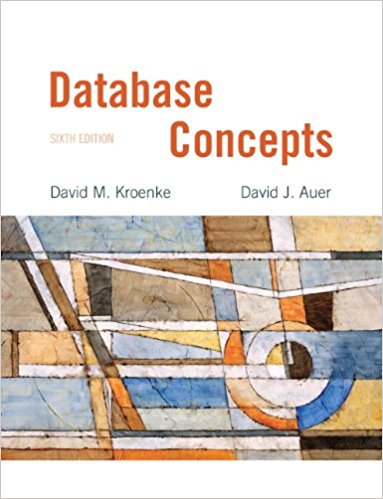
Database Concepts 6th Edition By kroenke - Test Bank

Database Concepts 6th Edition By kroenke - Test Bank   Instant Download - Complete Test Bank With Answers     Sample Questions Are Posted Below   Database Concepts, 6e (Kroenke/Auer) Appendix F  Systems Analysis and Design   1) Data is facts and numbers. Answer:  TRUE Diff: 2      Page Ref: F-4   2) One definition of …

$19.99

Database Concepts 6th Edition By kroenke – Test Bank


Instant Download – Complete Test Bank With Answers


Sample Questions Are Posted Below


Database Concepts, 6e (Kroenke/Auer)

Appendix F  Systems Analysis and Design


1) Data is facts and numbers.

Answer:  TRUE

Diff: 2      Page Ref: F-4


2) One definition of information is knowledge derived from data.

Answer:  TRUE

Diff: 2      Page Ref: F-4


3) An information system is a set of components that interact to achieve some purpose or goal.

Answer:  FALSE

Diff: 2      Page Ref: F-5


4) A computer-based information system has four components.

Answer:  FALSE

Diff: 2      Page Ref: F-5


5) Information systems must be both developed and used to help businesses reach their goals and objectives.

Answer:  TRUE

Diff: 1      Page Ref: F-5


6) Michael Porter includes manufacturing operations in his list of primary activities.

Answer:  TRUE

Diff: 2      Page Ref: F-6


7) A business process is a set of activities that transforms materials into products.

Answer:  FALSE

Diff: 2      Page Ref: F-6


8) Information systems are used to support business processes.

Answer:  TRUE

Diff: 2      Page Ref: F-8


9) Systems analysis and design is the process of creating and maintaining information systems.

Answer:  TRUE

Diff: 2      Page Ref: F-8


10) The classic systems analysis methodology is called the Analysis Development Life Cycle (ADLC).

Answer:  FALSE

Diff: 2      Page Ref: F-8


11) User interviews are conducted during the requirements analysis step.

Answer:  TRUE

Diff: 2      Page Ref: F-10

12) One deliverable from the requirements analysis step is a statement of requirements (SOR).

Answer:  FALSE

Diff: 2      Page Ref: F-11


13) Data models are created during the component design step.

Answer:  FALSE

Diff: 2      Page Ref: F-11


14) Database designs are created during the component design step.

Answer:  TRUE

Diff: 2      Page Ref: F-11


15) Databases are created in a DBMS during the implementation step.

Answer:  TRUE

Diff: 2      Page Ref: F-11-F-12


16) Data is composed of:

  1. A) facts.
  2. B) numbers.
  3. C) information.
  4. D) A and B
  5. E) A, B and C

Answer:  D

Diff: 1      Page Ref: F-4


17) Information can be defined as:

  1. A) data presented in a meaningful context.
  2. B) knowledge derived from data.
  3. C) data processed by summing, ordering, averaging, grouping, comparing or other similar operations.
  4. D) A and B
  5. E) A, B and C

Answer:  E

Diff: 2      Page Ref: F-4


18) Which of the following is component of a computer-based information system?

  1. A) Hardware
  2. B) Software
  3. C) Data
  4. D) Procedures
  5. E) All of the above

Answer:  E

Diff: 2      Page Ref: F-5

19) Which of the following is not included in Michael Porter’s list of primary or operational activities?

  1. A) Procurement
  2. B) Inbound logistics
  3. C) Manufacturing operations
  4. D) Outbound logistics
  5. E) All of above are considered primary or operational activities.

Answer:  A

Diff: 2      Page Ref: F-6


20) Which of the following is not included in Michael Porter’s list of support activities?

  1. A) Technology management
  2. B) Customer service
  3. C) Human resources management
  4. D) Firm infrastructure management
  5. E) All of above are considered support activities.

Answer:  A

Diff: 2      Page Ref: F-6


21) The classic systems analysis methodology is called the:

  1. A) Systems Development Life Cycle (SDLC).
  2. B) Analysis Development Life Cycle (ADLC).
  3. C) Component Development Life Cycle (CDLC).
  4. D) Information Development Life Cycle (IDLC).
  5. E) None of the above is correct.

Answer:  A

Diff: 2      Page Ref: F-8


22) User interviews are conducted during the ________ step of the SDLC.

  1. A) system definition
  2. B) requirements analysis
  3. C) component design
  4. D) implementation
  5. E) systems maintenance

Answer:  B

Diff: 2      Page Ref: F-11-F-12


23) A deliverable from the requirements analysis step is a(n):

  1. A) user requirements document (URD).
  2. B) user requirements statement (URS).
  3. C) statement of work (SOW).
  4. D) statement of requirements (SOR).
  5. E) A and B

Answer:  E

Diff: 2      Page Ref: F-11


24) Data models are created during the ________ step of the SDLC.

  1. A) system definition
  2. B) requirements analysis
  3. C) component design
  4. D) implementation
  5. E) systems maintenance

Answer:  B

Diff: 2      Page Ref: F-11-F-12


25) Database designs are created during the ________ step of the SDLC.

  1. A) system definition
  2. B) requirements analysis
  3. C) component design
  4. D) implementation
  5. E) systems maintenance

Answer:  C

Diff: 2      Page Ref: F-11-F-12


26) Databases are created in a DBMS during the ________ step of the SDLC.

  1. A) system definition
  2. B) requirements analysis
  3. C) component design
  4. D) implementation
  5. E) systems maintenance

Answer:  D

Diff: 2      Page Ref: F-11-F-12


27) ________ is facts and numbers.

Answer:  Data

Diff: 1      Page Ref: F-4


28) One definition of ________ is knowledge derived from data.

Answer:  information

Diff: 2      Page Ref: F-4


29) A(n) ________ is a set of components that interact to achieve some purpose or goal.

Answer:  system

Diff: 2      Page Ref: F-5


30) A computer-based information system has ________ components.

Answer:  five

Diff: 2      Page Ref: F-5


31) Information systems must be both ________ and ________ to help businesses reach their goals and objectives.

Answer:  developed; used

Diff: 1      Page Ref: F-5


32) Michael Porter includes inbound logistics in his list of ________ activities.

Answer:  primary or operational

Diff: 2      Page Ref: F-6

33) Michael Porter includes procurement in his list of ________ activities.

Answer:  support

Diff: 2      Page Ref: F-6


34) A business process is a set of activities that transforms ________ into ________.

Answer:  inputs; outputs

Diff: 2      Page Ref: F-6


35) Information systems are used to support ________.

Answer:  business processes

Diff: 3      Page Ref: F-8


36) Systems analysis and design is the process of ________ and ________ information systems.

Answer:  creating; maintaining

Diff: 2      Page Ref: F-8


37) The classic systems analysis methodology is called the ________.

Answer:  Systems Development Life Cycle (SDLC)

Diff: 2      Page Ref: F-8


38) User interviews are conducted during the ________ step.

Answer:  requirements analysis

Diff: 2      Page Ref: F-10


39) One deliverable from the requirements analysis step is a ________.

Answer:  user requirements document (URD) or statement of work (SOW)

Diff: 2      Page Ref: F-11


40) Data models are created during the ________ step.

Answer:  requirements analysis

Diff: 2      Page Ref: F-11


41) Database designs are created during the ________ step.

Answer:  component design

Diff: 2      Page Ref: F-11


42) Databases are created in a DBMS during the ________ step.

Answer:  implementation

Diff: 2      Page Ref: F-11-F-12


43) Define and discuss an information system.

Answer:  A system is a set of components that interact to achieve some purpose or goal, and an information system is a system that has the goal of producing information. An information system has five components: hardware, software, data, processing, and people.

Diff: 2      Page Ref: F-5

44) How does Michael Porter define primary or operational business activities?

Answer:  Michael Porter includes five business activities in his definition of primary or operational activities. These include:

  • Inbound logistics: receiving, storing and distributing product inputs.
  • Manufacturing operations: transforming inputs into the final product.
  • Outbound logistics: collecting, storing, and distributing the product to buyers.
  • Sales and marketing: convincing customers to buy the product and selling it to them.
  • Customer service: assisting the customers in their use of the product

Diff: 2      Page Ref: F-5-F-6


45) How does Michael Porter define support business activities?

Answer:  Michael Porter includes four business activities in his definition of support activities. These include:

  • Procurement: managing supplier relationships and buying the product inputs.
  • Technology management: product research and development and new procedures, methods and techniques.
  • Human resources management: managing employee resources.
  • Firm infrastructure management: general management of the firm, finance, accounting, legal services, and government affairs.

Diff: 2      Page Ref: F-5-F-6


46) What are the five steps or stages of the systems development life cycle (SDLC)?

Answer:  The five steps or stages of the SDLC are:

  • System definition.
  • Requirements analysis
  • Component design
  • Implementation
  • System maintenance

Diff: 1      Page Ref: F-5-F-6


47) What activities take place during the component design step of the systems development life cycle (SDLC)?

Answer:  During the component design step of the SDLC, we

  • Determine hardware specifications.
  • Determine program (software) specifications.
  • Create the database design.
  • Design business procedures.
  • Create job descriptions for business personnel.

Diff: 2      Page Ref: F-11

Additional information

Add Review

Your email address will not be published. Required fields are marked *