Subtotal: $560.00

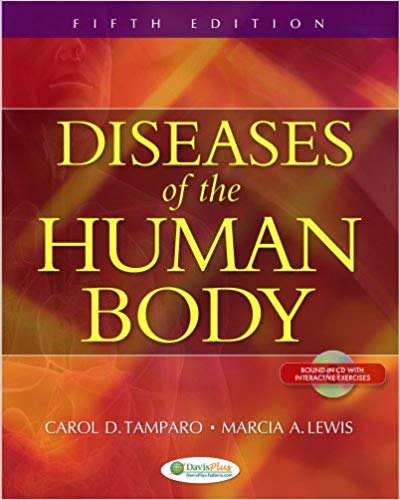
Diseases of the Human Body 5th Edition By Carol Tamparo - Test Bank

Diseases of the Human Body 5th Edition By Carol Tamparo - Test Bank   Instant Download - Complete Test Bank With Answers     Sample Questions Are Posted Below   Chapter 5: Cancer   Multiple Choice Identify the choice that best completes the statement or answers the question.   ____     1.   The main difference(s) between …

$19.99

Diseases of the Human Body 5th Edition By Carol Tamparo – Test Bank


Instant Download – Complete Test Bank With Answers


Sample Questions Are Posted Below


Chapter 5: Cancer


Multiple Choice

Identify the choice that best completes the statement or answers the question.


____     1.   The main difference(s) between a malignant and a benign tumor is/are that the benign tumor:

a. Is encapsulated and grows slowly.
b. Is sometimes anaplastic.
c. Has the ability to spread through blood and lymph.
d. Both A and B


____     2.   Which of the following stages of cancer are considered for treatment?

a. Distant
b. Localized
c. Regional
d. All of the above


____     3.   Cancer cells evolve through states of growth, including:

a. Hyperplasia.
b. Dysplasia.
c. Carcinoma in situ.
d. All of the above


____     4.   Complementary treatment for cancer:

a. Strives to strengthen the immune system.
b. Will include hormonal therapy.
c. Suggests the use of interferon.
d. Is the last resort for treatment.


____     5.   Radiation therapy for cancer:

a. Is received by less than half of all persons with cancer.
b. May be used alone or in combination with other treatments.
c. Has little or no side effects.
d. A and B only


____     6.   Common diagnostic procedures for cancer include:

a. Biopsy.
b. Papanicolaou test and mammography.
c. Tumor markers, such as CEA and PSA.
d. All of the above


____     7.   Grading and staging of cancers:

a. Was developed by the American Cancer Society.
b. Is determined by the microscopic appearance and extent to which the tumor has spread.
c. Likely uses four grades and the TNM system.
d. B and C only


____     8.   Palliative surgery:

a. Is performed to sustain cancer clients and alleviate pain.
b. Prevents the development of cancer.
c. Freezes the malignancy.
d. A and C only


____     9.   The term “neoplasm” is used interchangeably with:

a. Carcinogen.
b. Sarcoma.
c. Tumor.
d. Encapsulation.


____   10.   Cancers are graded by determining their degree of:

a. Differentiation.
b. Anaplasia.
c. Cytology.
d. Blasticity.


____   11.   One of the side effects of radiation is alopecia or:

a. Significant weight gain.
b. Significant weight loss.
c. Hair loss.
d. Red skin.


____   12.   A tumor that does not infiltrate surrounding tissue is:

a. Metastasized.
b. Anaplastic.
c. Encapsulated.
d. Exfoliative.


____   13.   A tumor that is in position, or localized, is:

a. Anaplastic.
b. In situ.
c. Sarcoma.
d. Benign.


____   14.   Removal of a small piece of living tissue for microscopic examination is:

a. Biopsy.
b. Cryosurgery.
c. Immunotherapy.
d. Radiation therapy.


____   15.   Solid tumors of epithelial tissue of external and internal body surfaces are:

a. Sarcomas.
b. Osteomas.
c. Leukemias.
d. Carcinomas.


____   16.   A neoplasm that arises from the body’s blood-forming tissues within the bone marrow is:

a. Leukemia.
b. Lymphoma.
c. Sarcoma.
d. None of the above


____   17.   Tumors that arise from supportive and connective tissue are:

a. In situ.
b. Carcinomas.
c. Sarcomas.
d. Leukemias.


____   18.   What kind(s) of cancer is/are linked to tobacco use?

a. Lung
b. Bone
c. Kidney
d. Both B and C


____   19.   The freezing of a malignancy with a liquid nitrogen probe is:

a. Particle-beam therapy.
b. Cryosurgery.
c. Radiation therapy.
d. Chemotherapy.


____   20.   Immunotherapy:

a. Stimulates the body’s own immune system.
b. Is most effective in cancer’s late stages.
c. May include interferon use.
d. A and C above


True/False

Indicate whether the statement is true or false.


____   21.   According to the ACS, childhood cancer is considered rare.


____   22.   When recovering from cancer, the 8-year survival rate is a widely used marker.


____   23.   Research indicates that all cancers arise due to complex alterations in DNA that result in unrestrained cellular proliferation.


____   24.   One type of surgery for cancer is known as en bloc, which is removal of the primary tumor, lymph nodes, adjacent involved structure, and surrounding tissues.


____   25.   Lymphomas can develop as the result of chronic infections or transplanted organs.


____   26.   Tumor markers are substances found in abnormal amounts in the blood, urine, or tissues of some individuals with cancer.


____   27.   Much of the benefit of exercise and physical activity may be lost if there is insufficient sleep and rest.


____   28.   EBV is linked directly to cervical cancers.


____   29.   Sarcomas are more common than carcinomas.


____   30.   The survival rate for individuals with chronic leukemias is about 4 years.


____   31.   A localized cancer is one in which the cancer cells have not yet spread from the site of the original tumor.


____   32.   A distant stage cancer is when the cancerous cells have disappeared.


____   33.   The most common side effects of chemotherapy are excessive hair growth, oliguria, and constipation.


____   34.   Increased benefits may be achieved if persons with cancer carefully consider both traditional and complementary treatment therapies.


____   35.   Complementary therapies can reduce many side effects or enhance the effectiveness of chemotherapy and radiation.


____   36.   Nanotechnology has the potential of becoming a new method of diagnosis and treatment of cancer.


____   37.   Breast and prostate cancers are among the top four most frequently diagnosed cancers.


____   38.   Early cancer screening is believed to have contributed to the recent decline in the number of cancer deaths.


____   39.   Bone marrow transplantation has been ineffective in clients with Hodgkin’s disease and multiple myeloma.


Matching


Match the terms with their definitions.

a. Stem cell transplant from an identical twin
b. Abnormal growth of cells
c. A form of lung cancer due to exposure to asbestos
d. Burning of cancer tissue with electrical current
e. Radioactive form of an element
f. Stem cell transplant from an unrelated person
g. Spread of cancerous cells through circulatory system
h. Benign tumor of bone
i. Excessive growth of cells
j. Unusual giant cell


____   40.   Allogeneic


____   41.   Chemotherapy


____   42.   Hyperplasia


____   43.   Mesothelioma


____   44.   Metastasize


____   45.   Osteoma


____   46.   Electrocautery


____   47.   Radioisotope


____   48.   Syngeneic


____   49.   Reed-Sternberg


Chapter 5: Cancer

Answer Section


MULTIPLE CHOICE


  1. ANS:  A                    PTS:   1


  1. ANS:  D                    PTS:   1


  1. ANS:  D                    PTS:   1


  1. ANS:  A                    PTS:   1


  1. ANS:  B                    PTS:   1


  1. ANS:  D                    PTS:   1


  1. ANS:  D                    PTS:   1


  1. ANS:  A                    PTS:   1


  1. ANS:  C                    PTS:   1


  1. ANS:  B                    PTS:   1


  1. ANS:  C                    PTS:   1


  1. ANS:  C                    PTS:   1


  1. ANS:  B                    PTS:   1


  1. ANS:  A                    PTS:   1


  1. ANS:  D                    PTS:   1


  1. ANS:  A                    PTS:   1


  1. ANS:  C                    PTS:   1


  1. ANS:  A                    PTS:   1


  1. ANS:  B                    PTS:   1


  1. ANS:  D                    PTS:   1


TRUE/FALSE


  1. ANS:  T                    PTS:   1


  1. ANS:  F                    PTS:   1


  1. ANS:  T                    PTS:   1


  1. ANS:  T                    PTS:   1


  1. ANS:  T                    PTS:   1


  1. ANS:  T                    PTS:   1


  1. ANS:  T                    PTS:   1


  1. ANS:  F                    PTS:   1


  1. ANS:  F                    PTS:   1


  1. ANS:  T                    PTS:   1


  1. ANS:  T                    PTS:   1


  1. ANS:  F                    PTS:   1


  1. ANS:  F                    PTS:   1


  1. ANS:  T                    PTS:   1


  1. ANS:  T                    PTS:   1


  1. ANS:  T                    PTS:   1


  1. ANS:  T                    PTS:   1


  1. ANS:  T                    PTS:   1


  1. ANS:  F                    PTS:   1


MATCHING


  1. ANS:  E                    PTS:   1


  1. ANS:  G                    PTS:   1


  1. ANS:  I                     PTS:   1


  1. ANS:  B                    PTS:   1


  1. ANS:  F                    PTS:   1


  1. ANS:  H                    PTS:   1


  1. ANS:  C                    PTS:   1


  1. ANS:  D                    PTS:   1


  1. ANS:  A                    PTS:   1


  1. ANS:  J                     PTS:   1

Additional information

Add Review

Your email address will not be published. Required fields are marked *