Subtotal: $955.00

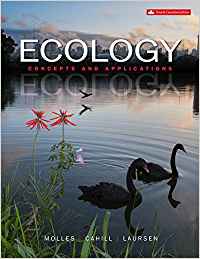
Ecology Concepts And Applications 4Th Canadian Edition by Manuel C Molles - Test Bank

Ecology Concepts And Applications 4Th Canadian Edition by Manuel C Molles - Test Bank   Instant Download - Complete Test Bank With Answers     Sample Questions Are Posted Below   Chapter 05 Temperature Relations     Multiple Choice Questions Metabolic heat (Hm) is the heat A.energy intake an organism must have for movement. B. released …

$19.99

Ecology Concepts And Applications 4Th Canadian Edition by Manuel C Molles – Test Bank


Instant Download – Complete Test Bank With Answers


Sample Questions Are Posted Below


Chapter 05

Temperature Relations


Multiple Choice Questions

  1. Metabolic heat (Hm) is the heat
    A.energy intake an organism must have for movement.
    B. released during cellular respiration.
    C. energy needed in order to undergo cellular respiration.
    D. energy loss due to evaporation.
    E. energy needed for growth


Blooms: Remember
Learning Objective: 05-04 Many organisms have evolved ways to compensate for variations in environmental temperature by regulating body temperature.
Topic: 05-13 Balancing Heat Gain Against Heat Loss

  1. It is a very hot day and you jump into a lake to cool off. What is the method of heat exchange between you and the water?
    A.conduction
    B. convection
    C. evaporation
    D. conduction and convection
    E. conduction and evaporation


Blooms: Apply
Learning Objective: 05-04 Many organisms have evolved ways to compensate for variations in environmental temperature by regulating body temperature.
Topic: 05-13 Balancing Heat Gain Against Heat Loss


  1. Getting up from your chair, you realize that the chair is warm. What is the method of heat exchange between you and the chair?
    A.conduction
    B. convection
    C. evaporation
    D. radiation
    E. sublimation


Blooms: Apply
Learning Objective: 05-04 Many organisms have evolved ways to compensate for variations in environmental temperature by regulating body temperature.
Topic: 05-13 Balancing Heat Gain Against Heat Loss

  1. What is the main reason that evaporative cooling is highly effective?
    A.Organisms sweat a great deal
    B. Water exchange leads to cooling via convection
    C. Water has a high capacity to absorb heat before it evaporates
    D. Water is a universal solvent and is therefore found in all organisms
    E. Sweating allows for heat loss by conduction and convection


Blooms: Understand
Learning Objective: 05-04 Many organisms have evolved ways to compensate for variations in environmental temperature by regulating body temperature.
Topic: 05-16 Temperature Regulation by Endothermic Animals

  1. Ectotherms:
    A.control their body temperature via external sources of energy
    B. control their body temperature via external and internal sources of energy
    C. are also known as reptiles
    D. are also known as homeotherms
    E. do not have a high survival rate


Blooms: Remember
Learning Objective: 05-04 Many organisms have evolved ways to compensate for variations in environmental temperature by regulating body temperature.
Topic: 05-12 Regulating Body Temperature


  1. Which of the following factors does NOT influence microclimate?
    A.burrows.
    B. vegetation.
    C. ground colour.
    D. topography.
    E. proximity to geothermal vents.


Blooms: Remember
Learning Objective: 05-01 Macroclimate interacts with the local landscape to produce microclimatic variation in temperature.
Topic: 05-01 Microclimates

  1. In the Northern Hemisphere, shaded slopes are ________, while in the Southern Hemisphere they are _____________.
    A.south-facing; north-facing
    B. north-facing; south-facing
    C. north-facing; west-facing
    D. east-facing; south-facing
    E. east-facing; west-facing


Blooms: Remember
Learning Objective: 05-01 Macroclimate interacts with the local landscape to produce microclimatic variation in temperature.
Topic: 05-02 Elevation and Aspect

  1. How are the studies performed on rainbow trout (Oncorhynchus mykiss) and the desert shrub (Atriplex lentiformis) similar?
    A.Both studies examine the effects of microclimates.
    B. Both studies support the concept that species operate within a narrow optimum temperature range.
    C. Both studies are coupled to enzymatic activity.
    D. Both studies examine the effects of microclimates and support the concept that species operate within a narrow optimum temperature range.
    E. Both studies support the concept that species operate within a narrow optimum temperature range and both studies are coupled to enzymatic activity.


Blooms: Analyze
Learning Objective: 05-03 Most species perform best in a fairly narrow range of temperatures.
Topic: 05-09 Temperature and Animal Performance
Topic: 05-10 Extreme Temperatures and Photosynthesis


  1. When an organism becomes acclimated to a new environmental situation; it will generally involve
    A.Short-term physiological changes.
    B. genetic changes.
    C. sociological changes.
    D. both physiological changes and genetic changes.
    E. both genetic changes and sociological changes.


Blooms: Remember
Learning Objective: 05-04 Many organisms have evolved ways to compensate for variations in environmental temperature by regulating body temperature.
Topic: 05-12 Regulating Body Temperature

  1. _____________ environments generally show less temperature variation than _________ environments.
    A.Benthic; riffle
    B. Terrestrial; marine
    C. Terrestrial; aquatic
    D. Aquatic; terrestrial
    E. Tundra; tropical


Blooms: Remember
Learning Objective: 05-01 Macroclimate interacts with the local landscape to produce microclimatic variation in temperature.
Topic: 05-05 Aquatic Temperatures

  1. The Law of Toleration suggests that:
    A.organisms will tolerate each other when in their optimal environments
    B. organisms can acclimate to build tolerance to extreme conditions
    C. species abundances will tend to be largest in areas with environmental conditions most similar to the performance optima for a species
    D. species abundances will tend to be largest in areas with environmental conditions at the extremes for performance for a species
    E. organisms will reproduce at the limits of their tolerance thresholds for environmental conditions


Blooms: Understand
Learning Objective: 05-03 Most species perform best in a fairly narrow range of temperatures.
Topic: 05-08 Temperature and Performance of Organisms


  1. The arctic and alpine cushion plants and the Camnula grasshopper both use __________________ to aid in thermoregulation.
    A.countercurrent heat exchange mechanisms
    B. dark pigmentation
    C. increased water retention
    D. torpor
    E. endothermic methods


Blooms: Understand
Learning Objective: 05-04 Many organisms have evolved ways to compensate for variations in environmental temperature by regulating body temperature.
Topic: 05-12 Regulating Body Temperature

  1. Which of the following characteristics do the processes of torpor and hibernation have in common?
    A.duration.
    B. increased body temperature.
    C. increased metabolic rate.
    D. decreased energy demand.
    E. increased energy demand


Blooms: Understand
Learning Objective: 05-05 Organisms exhibit a diversity of mechanisms to cope with extreme temperatures.
Topic: 05-18 Surviving Extreme Temperatures

  1. Mammalian and avian aquatic endotherms use all of the following mechanisms to thermoregulate, except:
    A.fat
    B. internal respiratory systems
    C. fur or feathers
    D. concurrent heat exchange
    E. countercurrent heat exchange


Blooms: Remember
Learning Objective: 05-04 Many organisms have evolved ways to compensate for variations in environmental temperature by regulating body temperature.
Topic: 05-16 Temperature Regulation by Endothermic Animals


  1. Most insects use external sources of heat to achieve their operative temperature range. Heinrich’s research on the sphinx moth (Manduca sexta) indicates that some insects can thermoregulate by using their flight muscles and
    A.using their blood as a coolant.
    B. decreasing their metabolic rate.
    C. possessing an internal respiratory system.
    D. using a countercurrent heat exchange mechanism.
    E. using a concurrent heat exchange mechanism.


Blooms: Remember
Learning Objective: 05-04 Many organisms have evolved ways to compensate for variations in environmental temperature by regulating body temperature.
Topic: 05-16 Temperature Regulation by Endothermic Animals

  1. Research suggests that the localized extinction of several species of land snails near Basel, Switzerland was due to:
    A.genetic mutation.
    B. toxic water source.
    C. climatic warming.
    D. exotic predator.
    E. loss of habitat.


Blooms: Remember
Learning Objective: 05-04 Many organisms have evolved ways to compensate for variations in environmental temperature by regulating body temperature.
Topic: 05-12 Regulating Body Temperature

  1. The Baurs’ hypothesis to explain why land snails had gone extinct was based on _______ and was further confirmed by _____________ on snail hatching at various temperatures.
    A.experimentation; experimentation
    B. experimentation; observation
    C. observation; experimentation
    D. survey work; experimentation
    E. mapping; observation


Blooms: Understand
Learning Objective: 05-04 Many organisms have evolved ways to compensate for variations in environmental temperature by regulating body temperature.
Topic: 05-12 Regulating Body Temperature


  1. Research indicates that the broad tailed hummingbird will enter into torpor
    A.if a minimum surrounding air temperature is met.
    B. during a summer drought.
    C. if their body fat drops below 15 percent.
    D. if darkness exceeds daylight hours.
    E. if insufficient nectar is obtained.


Blooms: Remember
Learning Objective: 05-05 Organisms exhibit a diversity of mechanisms to cope with extreme temperatures.
Topic: 05-21 Resistance

  1. A strategy used by the wood frog (Rana sylvatica) to avoid extreme temperatures is:
    A.torpor
    B. hibernation
    C. estivation
    D. freeze-tolerance
    E. endothermy


Blooms: Remember
Learning Objective: 05-05 Organisms exhibit a diversity of mechanisms to cope with extreme temperatures.
Topic: 05-21 Resistance

  1. You are a student working in the laboratory of a researcher who studies rainbow trout. A power outage over the weekend results in temperatures of over 25ºC in the large pools which house the fish. When you arrive Monday morning you notice the fish are swimming on their sides or swimming in spirals. Which of the following is not a conclusion you can draw?
    A.the fish are suffering thermal stress
    B. the fish are experiencing improper neuronal function
    C. the affinity of acetylcholinesterase for acetylcholine is reduced
    D. the temperature of the water is affecting fish enzyme shape and flexibility
    E. the excessive energy has been lost as feces


Blooms: Analyze
Learning Objective: 05-03 Most species perform best in a fairly narrow range of temperatures.
Topic: 05-09 Temperature and Animal Performance


  1. Steve MacDonald and colleagues showed that salmon populations are sensitive to:
    A.over-fishing during spawning runs
    B. high overwinter mortality
    C. reduced reproduction as an indirect effect of logging
    D. reduced reproduction as a result of habitat loss
    E. reduced survival as a result of elevated stream temperatures


Blooms: Understand
Learning Objective: 05-03 Most species perform best in a fairly narrow range of temperatures.
Topic: 05-09 Temperature and Animal Performance

  1. James Ehleringer showed that leaves of the genus Encelia had variation in pubescens along a gradient of:
    A.latitude
    B. altitude
    C. aspect
    D. distance from coast
    E. temperature but not moisture


Blooms: Remember
Learning Objective: 05-04 Many organisms have evolved ways to compensate for variations in environmental temperature by regulating body temperature.
Topic: 05-14 Temperature Regulation by Plants: Tundra and Desert Plants

  1. The thermal neutral zone of a homeothermic animal is
    A.the temperature range at which conductive heat gain and convective heat loss are equal.
    B. the temperature range at which psychrophilic and thermophilic enzymes are both operating.
    C. the temperature range at which the metabolizable energy intake equals metabolizable energy output.
    D. the temperature range over which the metabolic rate does not change.
    E. the temperature range over which the metabolic rate changes dramatically.


Blooms: Remember
Learning Objective: 05-04 Many organisms have evolved ways to compensate for variations in environmental temperature by regulating body temperature.
Topic: 05-16 Temperature Regulation by Endothermic Animals


  1. How does the skunk cabbage maintain the temperature of its inflorescence 15º to 35ºC above air ambient temperature?
    A.metabolizing starch at a very high rate
    B. orienting the inflorescence perpendicular to the sun’s rays
    C. maintaining a bowl shape which reflects and concentrates solar energy
    D. maintaining a cushion shape
    E. extending its inflorescence along the ground to maximize conductive heat gain


Blooms: Remember
Learning Objective: 05-04 Many organisms have evolved ways to compensate for variations in environmental temperature by regulating body temperature.
Topic: 05-16 Temperature Regulation by Endothermic Animals

  1. An annual plant adapts to cold temperatures by:
    A.thermo regulation
    B. small leaves
    C. growth form close to the ground
    D. dark colouration
    E. completing its life cycle in a single year


Blooms: Remember
Learning Objective: 05-05 Organisms exhibit a diversity of mechanisms to cope with extreme temperatures.
Topic: 05-19 Death

  1. Ectotherms often use __________ strategies to maintain an optimum operative temperature range.
    A.metabolic
    B. physiological
    C. behavioural
    D. evolutionary
    E. genetic


Blooms: Remember
Learning Objective: 05-04 Many organisms have evolved ways to compensate for variations in environmental temperature by regulating body temperature.
Topic: 05-15 Temperature Regulation by Ectothermic Animals: of Lizards and Grasshoppers


  1. Pearcy grew boreal forest moss and a desert shrub in different temperature conditions and observed:
    A.variation in survival at different temperatures
    B. a difference in temperature at which the maximum rate of photosynthesis occurred
    C. difference in the rate of dark reactions at varying temperatures
    D. variation in reproduction at different temperatures
    E. variation in growth rate at different temperatures


Blooms: Understand
Learning Objective: 05-03 Most species perform best in a fairly narrow range of temperatures.
Topic: 05-10 Extreme Temperatures and Photosynthesis

  1. Which of the following is true about the thermal neutral zone of mammals?
    A.It is the temperature range over which extensive change in metabolic rate occurs.
    B. Tropical mammals have wide zones whereas Arctic species have narrow zones.
    C. Both Tropical and Arctic mammals have narrow zones.
    D. Both Tropical and Arctic mammals have wide zones.
    E. Tropical mammals have narrow zones whereas Arctic species have wide zones.


Blooms: Remember
Learning Objective: 05-04 Many organisms have evolved ways to compensate for variations in environmental temperature by regulating body temperature.
Topic: 05-16 Temperature Regulation by Endothermic Animals

  1. Which of the following is not a means of heat exchange between organisms and the environment?
    A.Radiation.
    B. Evaporation.
    C. Convection.
    D. Transduction.
    E. Conduction.


Blooms: Remember
Learning Objective: 05-04 Many organisms have evolved ways to compensate for variations in environmental temperature by regulating body temperature.
Topic: 05-12 Regulating Body Temperature


  1. Which of the following is true about the amount of time that ectothermic butterflies will spend basking in sunlight as they move from low to high latitudes?
    A.more time is spent basking in low latitudes
    B. less time is spent basking at high latitudes
    C. more time is spent basking at intermediate latitudes
    D. more time is spent basking at high latitudes
    E. there is no difference in the amount of time spent basking in high and low latitudes


Blooms: Understand
Learning Objective: 05-05 Organisms exhibit a diversity of mechanisms to cope with extreme temperatures.
Topic: 05-12 Regulating Body Temperature

  1. Desert plants employ all of the following strategies to reduce heating, except:
    A.reduce conductive transfer
    B. increase their metabolic rate
    C. orient their leaves parallel to sunlight
    D. have open growth form
    E. have highly reflective leaf surfaces


Blooms: Remember
Learning Objective: 05-04 Many organisms have evolved ways to compensate for variations in environmental temperature by regulating body temperature.
Topic: 05-14 Temperature Regulation by Plants: Tundra and Desert Plants

  1. Which of the following is not an adaptive means by which organisms cope with extreme temperatures?
    A.Death
    B. Migration
    C. Inactivity
    D. Resistance
    E. Endemism


Blooms: Remember
Learning Objective: 05-05 Organisms exhibit a diversity of mechanisms to cope with extreme temperatures.
Topic: 05-18 Surviving Extreme Temperatures


  1. Which of the following statements best explains why oceans are more thermally stable than lakes?
    A.The quantity of water is larger and specific heat of water is low, therefore the amount of energy required for changing the temperature is low.
    B. The quantity of water is larger and specific heat of water is high, therefore the amount of energy required for changing the temperature is low.
    C. The quantity of water is larger and specific heat of water is high, therefore the amount of energy required for changing the temperature is high.
    D. The quantity of water is larger and light penetration is restricted to the surface layers, therefore the amount of energy reaching deep in the ocean is limited.
    E. The quantity of water is larger and light penetrates deep within the water column, therefore the amount of energy reaching deep in the ocean is high.


Blooms: Understand
Learning Objective: 05-01 Macroclimate interacts with the local landscape to produce microclimatic variation in temperature.
Topic: 05-05 Aquatic Temperatures

  1. Which of the following factors does not affect the albedo of natural landscapes?
    A.plant litter
    B. snow
    C. boulders
    D. salinity
    E. vegetation


Blooms: Remember
Learning Objective: 05-01 Macroclimate interacts with the local landscape to produce microclimatic variation in temperature.
Topic: 05-03 Vegetation and Ground Colour

  1. Which of the following adaptations will likely be selected for in Alpine plants over evolutionary time?
    A.White leaf hairs
    B. Cushion growth
    C. Silver pigmentation
    D. Open structure
    E. Leaves parallel to sunlight


Blooms: Understand
Learning Objective: 05-04 Many organisms have evolved ways to compensate for variations in environmental temperature by regulating body temperature.
Topic: 05-14 Temperature Regulation by Plants: Tundra and Desert Plants


  1. One day in early spring, you are taking a walk enjoying the sunshine and warmer weather. Although most of the ground is still covered in snow, you notice that crocuses are starting to bloom in bare patches of ground near the south-facing walls of the darker houses you pass. These crocuses are able to bloom earlier than most because
    A.the albedo in these bare patches is higher, melting the snow and creating warmer soil conditions.
    B. the sun shining on the dark south-facing walls of houses creates a warmer microclimate, causing the snow to melt.
    C. crocuses are thermogenic plants and melt the snow around them.
    D. the macroclimate in these areas allows snow to melt and the ground to warm up faster.
    E. squirrels are running low on winter food supplies and are digging up the snow looking for food.


Blooms: Apply
Learning Objective: 05-01 Macroclimate interacts with the local landscape to produce microclimatic variation in temperature.
Topic: 05-01 Microclimates

  1. An organism cannot be both
    A.Homeothermic and endothermic
    B. Poikilothermic and endothermic
    C. Poikilothermic and ectothermic
    D. Homeothermic and ectothermic
    E. Poikilothermic and homeothermic


Blooms: Remember
Learning Objective: 05-04 Many organisms have evolved ways to compensate for variations in environmental temperature by regulating body temperature.
Topic: 05-13 Balancing Heat Gain Against Heat Loss


  1. What is meant by an “evolutionary trade-off?”
    A.Organisms can thrive equally in all environments.
    B. Organisms can trade energy supplies with other organisms in order to increase their evolutionary fitness.
    C. Organisms can adapt to a wide range of environments as long as there are some fundamental similarities.
    D. In order to thrive in a specific environment, organisms must give up some of their fitness in other environments.
    E. Organisms trade ecological niches in order to make the best use of the adaptations they have.


Blooms: Understand
Learning Objective: 05-02 Adapting to one set of environmental conditions generally reduces fitness in other environments.
Topic: 05-06 Evolutionary Trade-Offs

  1. Diel vertical migration (DVM) allows zooplankton to exploit different parts of the water column at different times of the day. This occurs in response to
    A.light penetration into the water column
    B. temperature variations in the water column
    C. predation pressure
    D. nutrient availability
    E. tidal cycles


Blooms: Remember
Learning Objective: 05-01 Macroclimate interacts with the local landscape to produce microclimatic variation in temperature.
Topic: 05-05 Aquatic Temperatures


  1. A cross country runner begins training on a mountaintop with a high elevation and low oxygen levels. At first, she experiences difficulty breathing when she exerts herself. After a few weeks, however, she is able to run effortlessly at this elevation with no shortness of breath. This is an example of
    A.adaptation
    B. acclimation
    C. long-term physiological changes
    D. evolution
    E. tolerance


Blooms: Analyze
Blooms: Apply
Learning Objective: 05-03 Most species perform best in a fairly narrow range of temperatures.
Topic: 05-10 Extreme Temperatures and Photosynthesis

  1. You are sitting in a cold classroom during an ecology lecture and you begin to shiver. In response to the cold, you put on a sweater or coat. Shivering is a(n) ________ adaptation, while putting on a sweater is a(n) _______ adaptation.
    A.behavioural, physiological
    B. physiological, behavioural
    C. acclimation, behavioural
    D. behavioural, acclimation
    E. tolerance, behavioural


Blooms: Apply
Learning Objective: 05-04 Many organisms have evolved ways to compensate for variations in environmental temperature by regulating body temperature.
Topic: 05-13 Balancing Heat Gain Against Heat Loss

  1. Which strategy for surviving extreme temperature conditions is used by the monarch butterfly?
    A.Death
    B. Hibernation
    C. Migration
    D. Estivation
    E. Poikilothermy


Blooms: Remember
Learning Objective: 05-05 Organisms exhibit a diversity of mechanisms to cope with extreme temperatures.
Topic: 05-20 Migration


True / False Questions

  1. The thermal neutral zone of arctic mammals tends to be broader than for tropical mammals.
    TRUE


Blooms: Remember
Learning Objective: 05-04 Many organisms have evolved ways to compensate for variations in environmental temperature by regulating body temperature.
Topic: 05-16 Temperature Regulation by Endothermic Animals

  1. Macroclimate is largely influenced by global patterns of air and water circulation.
    TRUE


Blooms: Remember
Learning Objective: 05-01 Macroclimate interacts with the local landscape to produce microclimatic variation in temperature.
Topic: 05-01 Microclimates

  1. Dark coloured surfaces have a high albedo.
    FALSE


Blooms: Remember
Learning Objective: 05-01 Macroclimate interacts with the local landscape to produce microclimatic variation in temperature.
Topic: 05-03 Vegetation and Ground Colour

  1. Homeothermic organisms use a significant portion of their metabolic energy for endothermy.
    TRUE


Blooms: Remember
Learning Objective: 05-04 Many organisms have evolved ways to compensate for variations in environmental temperature by regulating body temperature.
Topic: 05-16 Temperature Regulation by Endothermic Animals


  1. Plants, unlike animals, cannot thermoregulate.
    FALSE


Blooms: Remember
Learning Objective: 05-04 Many organisms have evolved ways to compensate for variations in environmental temperature by regulating body temperature.
Topic: 05-17 Temperature Regulation by Thermogenic Plants

  1. Insects, unlike birds, cannot thermoregulate.
    FALSE


Blooms: Remember
Learning Objective: 05-04 Many organisms have evolved ways to compensate for variations in environmental temperature by regulating body temperature.
Topic: 05-12 Regulating Body Temperature

  1. Microbes living in hot springs have a moderate optimal temperature for population growth.
    FALSE


Blooms: Remember
Learning Objective: 05-05 Organisms exhibit a diversity of mechanisms to cope with extreme temperatures.
Topic: 05-18 Surviving Extreme Temperatures

  1. Hibernation is a survival mechanism that is best suited for intense heat and drought.
    FALSE


Blooms: Remember
Learning Objective: 05-05 Organisms exhibit a diversity of mechanisms to cope with extreme temperatures.
Topic: 05-21 Resistance

  1. The albedo of a landscape containing a large patch of vegetation on white sandy soil is lower than one with a fragmented forest on white sandy soil.
    TRUE


Blooms: Analyze
Learning Objective: 05-01 Macroclimate interacts with the local landscape to produce microclimatic variation in temperature.
Topic: 05-03 Vegetation and Ground Colour


  1. Boulders and burrows contribute to the microclimates of a habitat.
    TRUE


Blooms: Remember
Learning Objective: 05-01 Macroclimate interacts with the local landscape to produce microclimatic variation in temperature.
Topic: 05-04 Presence of Boulders and Burrows

  1. Levins’ principle of allocation states that as a population adapts to a particular set of environmental conditions, its fitness in other environments also increases.
    FALSE

As a population adapts to a specific environment, its fitness in other environments decreases.


Blooms: Remember
Learning Objective: 05-02 Adapting to one set of environmental conditions generally reduces fitness in other environments.
Topic: 05-07 The Principle of Allocation

  1. Thermophilic bacteria are cold-loving and will thrive at temperatures as low as 2 C.
    FALSE

Cold-loving bacteria are psychrophilic. Thermophilic bacteria are heat-loving.


Blooms: Remember
Learning Objective: 05-03 Most species perform best in a fairly narrow range of temperatures.
Topic: 05-11 Temperature and Microbial Activity

  1. Microbial populations such as E. coli bacteria are useful for testing evolutionary changes because they have short generation times.
    TRUE


Blooms: Understand
Learning Objective: 05-02 Adapting to one set of environmental conditions generally reduces fitness in other environments.
Topic: 05-07 The Principle of Allocation

Additional information

Add Review

Your email address will not be published. Required fields are marked *