Subtotal: $740.00

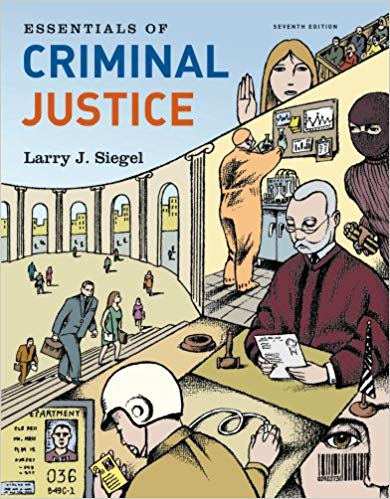
Essentials of Criminal Justice 7th International Edition by Larry J. Siegel - Test Bank

Essentials of Criminal Justice 7th International Edition by Larry J. Siegel - Test Bank   Instant Download - Complete Test Bank With Answers     Sample Questions Are Posted Below   Chapter 5—The Police: Role and Function   MULTIPLE CHOICE   Most police agencies are organized in what manner? a. Democratic b. Private business-like c. …

$19.99

Essentials of Criminal Justice 7th International Edition by Larry J. Siegel – Test Bank


Instant Download – Complete Test Bank With Answers


Sample Questions Are Posted Below


Chapter 5—The Police: Role and Function


MULTIPLE CHOICE


  1. Most police agencies are organized in what manner?
a. Democratic
b. Private business-like
c. Hierarchical
d. Egalitarian


ANS:  C                    PTS:   1                    REF:   p. 144             OBJ:   05-01


  1. How do most municipal police departments determine promotion eligibility?
a. Intelligence testing
b. Physical agility
c. Arrest performance
d. Time-in-rank


ANS:  D                    PTS:   1                    REF:   p. 145             OBJ:   05-01


  1. The time-in-rank system used in police departments often discourages the:
a. recruitment and hiring of college-educated officers.
b. recruitment and hiring of minority officers.
c. transfer of experienced officers to other departments.
d. use of a military-like organizational structure.


ANS:  C                    PTS:   1                    REF:   p. 145             OBJ:   05-01


  1. Who is the person with general administrative control over the police organization?
a. Captain
b. Chief
c. Lieutenant
d. Sergeant


ANS:  B                    PTS:   1                    REF:   p. 144             OBJ:   05-01


  1. UCR data suggests that the average police officer makes less than one felony arrest every ____ months.
a. 2
b. 4
c. 6
d. 8


ANS:  B                    PTS:   1                    REF:   p. 146             OBJ:   05-02


  1. Which of the following is not one of the major purposes of police patrol?
a. Deter crime through police presence
b. Aid individuals who cannot help themselves
c. Facilitate the movement of traffic and people
d. Issue arrest warrants


ANS:  D                    PTS:   1                    REF:   p. 146             OBJ:   05-03


  1. Each year, the greatest number of Americans has contact with patrol officers for with of the following reasons?
a. Investigation in the wake of a crime
b. Response to emergency calls
c. Non-emergency calls for assistance
d. Motor vehicle or traffic-related issues


ANS:  D                    PTS:   1                    REF:   p. 146             OBJ:   05-03


  1. While there are many goals of patrol, most police experts agree that the majority of police patrol efforts are devoted to:
a. crime fighting.
b. order maintenance.
c. responding to emergencies.
d. deterring crime.


ANS:  B                    PTS:   1                    REF:   p. 146             OBJ:   05-03


  1. What was the principle finding of the Kansas City study?
a. It is significant what type of patrol model you implement.
b. There is little evidence that police patrol deters crime.
c. Patrol techniques can have a significant impact on citizens’ attitudes.
d. Patrol techniques can significantly impact citizens’ satisfaction with police.


ANS:  B                    PTS:   1                    REF:   p. 147             OBJ:   05-03


  1. ____ policing is a department policy that emphasizes stopping crimes before they occur rather than reacting to crimes that have already occurred.
a. Community
b. Proactive
c. Deterrent
d. Reactive


ANS:  B                    PTS:   1                    REF:   p. 148             OBJ:   05-04


  1. Based on research like the Kansas City study, what is the prevailing wisdom on preventive patrols?
a. The number of patrol cars on the street and their visibility to citizens has little impact on the crime rate.
b. More patrol cars on the street can deter specific types of crime, such as motor vehicle theft and vandalism.
c. Fewer patrol cars on the street results in higher crime rates.
d. Patrol cars should be assigned to a reactive response mode only.


ANS:  A                    PTS:   1                    REF:   p. 148             OBJ:   05-04


  1. Aggressive patrol in New York City during the 1990s has been credited with a reduction in:
a. prostitution
b. violent crime
c. drug dealing
d. property crime


ANS:  B                    PTS:   1                    REF:   p. 149             OBJ:   05-04


  1. The Kansas City Gun Experiment is an example of:
a. problem-oriented policing.
b. community policing.
c. reactive patrolling.
d. a police crackdown targeting a specific type of crime problem.


ANS:  D                    PTS:   1                    REF:   p. 149             OBJ:   05-04


  1. Which of the following is a method of improving patrol?
a. Aggressive patrol
b. Targeting specific crimes
c. Making more arrests
d. All of these


ANS:  D                    PTS:   1                    REF:   p. 148-149      OBJ:   05-04


  1. What was a result of the Kansas City Gun Experiment?
a. There was a measurable effect on gun crimes in the target area during the experiment.
b. Assaults on police officers increased in the target area.
c. Gun crimes in the target area marginally increased.
d. Gun crimes were displaced to contiguous beats.


ANS:  A                    PTS:   1                    REF:   p. 149             OBJ:   05-04


  1. Which of the following statements is true?
a. Criminal investigation is a key element of police work.
b. Detectives are often handicapped by limited time, money, and resources.
c. Modern criminal investigators are usually knowledgeable about legal rules of evidence and procedure.
d. All of these statements are true


ANS:  D                    PTS:   1                    REF:   p. 151             OBJ:   05-05


  1. The vice squad specializes in:
a. violent crime
b. property crime
c. crimes of public morals
d. sex crime


ANS:  C                    PTS:   1                    REF:   p. 153             OBJ:   05-05


  1. What is the term used to describe organized groups of detectives who deceive criminals into openly committing illegal acts or conspiring to engage in criminal activity?
a. Detective bureau
b. Sting operations
c. Community policing
d. Proactive patrol


ANS:  B                    PTS:   1                    REF:   p. 153             OBJ:   05-05


  1. Research by the Police Executive Research Forum (PERF) shows that police have a ____ percent chance of making an arrest in a “crime in progress” call for service?
a. 13
b. 33
c. 53
d. 73


ANS:  B                    PTS:   1                    REF:   p. 155             OBJ:   05-05


  1. Which of the following is a commonly cited source of ineffective investigation?
a. Length of investigation
b. Poor sources of information
c. Poor follow-up on initial calls for service
d. All of the above


ANS:  D                    PTS:   1                    REF:   p. 155             OBJ:   05-05


  1. Community policing is often exemplified by which of the following models?
a. Broken windows
b. Shattered promises
c. Urban decay
d. Urban blight


ANS:  A                    PTS:   1                    REF:   p. 149-150      OBJ:   05-07


  1. Which of the following is not a fundamental assumption of the broken windows model?
a. Neighborhood disorder creates fear.
b. Neighborhoods can give out crime-promoting signals.
c. Police require citizen cooperation.
d. Reactive patrol is necessary.


ANS:  D                    PTS:   1                    REF:   p. 149-150      OBJ:   05-04


  1. Which of the following is not a focus of community policing?
a. Order maintenance
b. Emergency service
c. Crime fighting
d. Problem solving


ANS:  C                    PTS:   1                    REF:   p. 160             OBJ:   05-07


  1. Community oriented policing links police effectiveness to:
a. productive interaction with the community being served.
b. interrelationships between cooperative police agencies.
c. efficient utilization of existing personnel.
d. optimized usage of advanced technology.


ANS:  A                    PTS:   1                    REF:   p. 160             OBJ:   05-07


  1. Which of the following police operations best exemplifies community oriented policing?
a. A sting operation where officers pose as fences of stolen property
b. Creation of a well armed SWAT team trained in hostage negotiation
c. Computerized data terminals installed on the dash of all patrol cars
d. The hiring of bilingual officers to patrol ethnic neighborhoods


ANS:  D                    PTS:   1                    REF:   p. 160             OBJ:   05-07


  1. What have evaluations of foot patrol programs in New Jersey and Michigan demonstrated?
a. The crime rate went down in foot patrol beats.
b. The crime rate went up in foot patrol beats.
c. Officer job satisfaction increased.
d. Citizen attitudes toward the police improved.


ANS:  D                    PTS:   1                    REF:   p. 164             OBJ:   05-03


  1. The concept of hot spots of crime is most closely associated with which model of policing?
a. Community-oriented policing (COP)
b. Neighborhood oriented policing (NOP)
c. Problem-oriented policing (POP)
d. Police-community relations (PCR)


ANS:  C                    PTS:   1                    REF:   p. 165             OBJ:   05-08


  1. What is Operation Ceasefire?
a. A problem-oriented policing program in Boston to get guns off the street
b. A community-oriented policing program in Chicago aimed at auto theft
c. A crime mapping program in Dallas designed to plot gun crimes
d. A civilian review board initiative in New York


ANS:  C                    PTS:   1                    REF:   p. 165             OBJ:   05-10


  1. What is the name of the police support unit that is responsible for investigating allegations of police misconduct?
a. Internal Affairs
b. Personnel Services
c. Civilian Review Boards
d. Field-training Offices


ANS:  A                    PTS:   1                    REF:   p. 166             OBJ:   05-10


  1. Which of the following is not one of the administrative problems of community policing?
a. Defining community
b. Re-orienting police values
c. Revising training
d. Reducing police corruption


ANS:  D                    PTS:   1                    REF:   p. 164             OBJ:   05-07


TRUE/FALSE


  1. College degrees may have little direct impact on promotion potentials for police officers.


ANS:  T                    PTS:   1                    REF:   p. 145             OBJ:   05-01


  1. The average police officer can expect to make between 10 and 15 arrests per month for serious crimes.


ANS:  F                    PTS:   1                    REF:   p. 146             OBJ:   05-02


  1. The detective bureau is considered the backbone of policing.


ANS:  F                    PTS:   1                    REF:   p. 146             OBJ:   05-05


  1. Creating a feeling of security is one of the major purposes of police patrol.


ANS:  T                    PTS:   1                    REF:   p. 146             OBJ:   05-03


  1. Proactive policing is a cornerstone of community policing.


ANS:  T                    PTS:   1                    REF:   p. 148             OBJ:   05-04


  1. Vice squads target violent crime.


ANS:  F                    PTS:   1                    REF:   p. 152             OBJ:   05-05


  1. Evaluations of foot patrol indicate that it lowers crime rates.


ANS:  F                    PTS:   1                    REF:   p. 162             OBJ:   05-04


  1. Length of investigation is associated with success of investigation operations.


ANS:  T                    PTS:   1                    REF:   p. 155             OBJ:   05-05


  1. According to the “broken windows” concept, police need citizen cooperation.


ANS:  T                    PTS:   1                    REF:   p. 149-150      OBJ:   05-04


  1. Critics believe that community policing works best in high crime areas.


ANS:  F                    PTS:   1                    REF:   p. 160             OBJ:   05-07


COMPLETION


  1. Most promotions in policing have ____________________ requirements.


ANS:  time-in-rank


PTS:   1                    REF:   p. 145            OBJ:   05-01


  1. Designated police patrol areas are called ____________________.


ANS:  beats


PTS:   1                    REF:   p. 162            OBJ:   05-03


  1. ____________________ is another term for the order maintenance function of police.


ANS:  Peacekeeping


PTS:   1                    REF:   p. 146            OBJ:   05-03


  1. One aggressive patrol program, known as the ____________________, was directed at restricting the carrying of guns in high-risk places at high-risk times.


ANS:  Kansas City Gun Experiment


PTS:   1                    REF:   p. 149            OBJ:   05-03


  1. ____________________ is an aggressive law enforcement style that emphasizes attacking crimes head-on in advance rather than waiting for calls for service.


ANS:  Proactive policing


PTS:   1                    REF:   p. 148            OBJ:   05-03


  1. ____________________ are groups of police officers who enforce morality-based laws such as prostitution.


ANS:  Vice squads


PTS:   1                    REF:   p. 152            OBJ:   05-05


  1. A(n) ____________________ is an operation designed to encourage and observe criminal behavior so the officers can make an arrest.


ANS:  sting


PTS:   1                    REF:   p. 152            OBJ:   05-05


  1. The trend of changing the police role to problem solver is referred to as ____________________ policing.


ANS:  community|problem-oriented


PTS:   1                    REF:   p. 165            OBJ:   05-08


  1. Police and detective investigations have improved dramatically due to advances in ____________________.


ANS:  forensic science


PTS:   1                    REF:   p. 158            OBJ:   05-10


  1. ____________________ policing strategies require police agencies to identify particular long-term community issues and to develop strategies to eliminate these issues.


ANS:  Problem-oriented


PTS:   1                    REF:   p. 165            OBJ:   05-08


ESSAY


  1. Is the time-in-rank system of police promotion an antiquated practice? What are its advantages and disadvantages?


ANS:

Answer not provided.


PTS:   1                    REF:   p. 144-145     OBJ:   05-01


  1. How does the Hollywood version of policing differ from reality? Can you think of some movies and television programs which most accurately portray the police?


ANS:

Answer not provided.


PTS:   1                    REF:   p. 145-146     OBJ:   05-02


  1. Explain the major purposes of patrol and how patrols can be improved.


ANS:

Answer not provided.


PTS:   1                    REF:   p. 146-149     OBJ:   05-03


  1. Elaborate on three reasons why investigations are often ineffective. What can be done to improve investigations?


ANS:

Answer not provided.


PTS:   1                    REF:   p. 150-152     OBJ:   05-05


  1. For many years, preventive patrol has been considered one of the greatest deterrents to criminal behavior. Discuss what the research from the Kansas City study tells us about the relationship between prevention patrol and crime deterrence.


ANS:

Answer not provided.


PTS:   1                    REF:   p. 147-148     OBJ:   05-04


  1. Explain the three key points to Wilson and Kelling’s broken windows model. Elaborate on how the move to community policing reflects the move from a purely crime-control model to one that encompasses elements of rehabilitation and restorative justice.


ANS:

Answer not provided.


PTS:   1                    REF:   p. 149-150     OBJ:   05-04


  1. Discuss the concept of community policing. How effective have these programs been in reducing crime and improving community-law enforcement relations?


ANS:

Answer not provided.


PTS:   1                    REF:   p. 160-163     OBJ:   05-07


  1. Compare and contrast problem-oriented policing and community policing.


ANS:

Answer not provided.


PTS:   1                    REF:   p. 160-166     OBJ:   05-07 | 05-08


  1. Discuss the major problems of community policing strategies.


ANS:

Answer not provided.


PTS:   1                    REF:   p. 163-164     OBJ:   05-07


  1. Define forensics and discuss what forensic experts can contribute to police agencies and investigations.


ANS:

Answer not provided.


PTS:   1                    REF:   p. 156-160     OBJ:   05-10

Additional information

Add Review

Your email address will not be published. Required fields are marked *