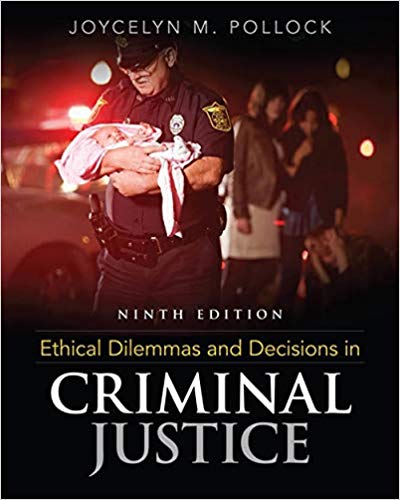
Ethical Dilemmas and Decisions in Criminal Justice 9th Edition by Joycelyn M. Pollock - Test Bank

Ethical Dilemmas and Decisions in Criminal Justice 9th Edition by Joycelyn M. Pollock - Test Bank   Instant Download - Complete Test Bank With Answers     Sample Questions Are Posted Below   1. The crime control approach is consistent with the following except: a. Criminals are the enemy. b. Police officers are like soldiers …

$19.99

Ethical Dilemmas and Decisions in Criminal Justice 9th Edition by Joycelyn M. Pollock – Test Bank


Instant Download – Complete Test Bank With Answers


Sample Questions Are Posted Below


1. The crime control approach is consistent with the following except:
a. Criminals are the enemy.
b. Police officers are like soldiers in a war.
c. Police officers serve all the people.
d. Efficiency is a top priority.

ANSWER: c
REFERENCES: Crime Fighter or Public Servant?
LEARNING OBJECTIVES: ETHI.POLL.17.05.01 – Describe the two different missions of law enforcement in a democracy.
KEYWORDS: Bloom’s: Understand

2. The crime control and due process models were developed by:
a. Carl Klockars.
b. Herbert Packer.
c. Lawrence Sherman.
d. John Crank.

ANSWER: b
REFERENCES: Crime Fighter or Public Servant?
LEARNING OBJECTIVES: ETHI.POLL.17.05.01 – Describe the two different missions of law enforcement in a democracy.
KEYWORDS: Bloom’s: Remember

3. According to Packer, which of the following is one of the principles under which the crime control model operates?
a. Efficiency is rejected if it involves shortcuts.
b. Protection of process is as important as protection of innocents.
c. A conveyor belt is the model for the system.
d. The coercive power of the state is always subject to abuse.

ANSWER: c
REFERENCES: Crime Fighter or Public Servant?
LEARNING OBJECTIVES: ETHI.POLL.17.05.01 – Describe the two different missions of law enforcement in a democracy.
KEYWORDS: Bloom’s: Remember

4. According to Packer, which of the following is one of the principles under which the due process model operates?
a. Protection of the process is as important as protection of citizens.
b. Efficiency in casework is a top priority.
c. There is a presumption of guilt.
d. Emphasis is on speed and finality.

ANSWER: a
REFERENCES: Crime Fighter or Public Servant?
LEARNING OBJECTIVES: ETHI.POLL.17.05.01 – Describe the two different missions of law enforcement in a democracy.
KEYWORDS: Bloom’s: Understand

5. The public servant model of policing includes all the following except which?
a. Criminals are not a distinct group.
b. Police have a limited ability to control crime.
c. Protection of the process of justice is as important as crime control.
d. Police should focus on processing cases through the system as efficiently as possible.

ANSWER: d
REFERENCES: Crime Fighter or Public Servant?
LEARNING OBJECTIVES: ETHI.POLL.17.05.01 – Describe the two different missions of law enforcement in a democracy.
KEYWORDS: Bloom’s: Understand

6. A shift in police focus away from serving political bosses and toward serving the law was a characteristic of the:
a. professional era.
b. community policing era.
c. political era.
d. legalistic era.

ANSWER: a
REFERENCES: Crime Fighter or Public Servant?
LEARNING OBJECTIVES: ETHI.POLL.17.05.01 – Describe the two different missions of law enforcement in a democracy.
KEYWORDS: Bloom’s: Remember

7. A model of law enforcement that addresses underlying problems rather than simply enforcing the law is referred to as:
a. crime control policing.
b. reactive policing.
c. traditional policing.
d. community policing.

ANSWER: d
REFERENCES: Crime Fighter or Public Servant?
LEARNING OBJECTIVES: ETHI.POLL.17.05.01 – Describe the two different missions of law enforcement in a democracy.
KEYWORDS: Bloom’s: Remember

8. The concepts of community policing, problem-oriented policing, and accountability mechanisms are components of which model of policing?
a. preventive policing
b. reactive policing
c. traditional policing
d. intelligence-led policing

ANSWER: a
REFERENCES: Crime Fighter or Public Servant?
LEARNING OBJECTIVES: ETHI.POLL.17.05.01 – Describe the two different missions of law enforcement in a democracy.
KEYWORDS: Bloom’s: Remember

9. The policing strategy that utilizes data analysis to drive decision-making in order to prevent crime is known as:
a. professional policing.
b. traditional policing.
c. community policing.
d. intelligence-led policing.

ANSWER: d
REFERENCES: Crime Fighter or Public Servant?
LEARNING OBJECTIVES: ETHI.POLL.17.05.01 – Describe the two different missions of law enforcement in a democracy.
KEYWORDS: Bloom’s: Remember

10. In relation to community policing and ethics, all of the following is true except:
a. community policing ethical issues arise from the closer relationships formed with community members.
b. community policing models often foster more corruption than traditional law enforcement models.
c. community policing reduces cynicism and burnout among police officers, which may reduce corruption.
d. community policing may increase the potential for gratuities.

ANSWER: b
REFERENCES: Crime Fighter or Public Servant?
LEARNING OBJECTIVES: ETHI.POLL.17.05.02 – Explain the types of control that police have at their disposal.
KEYWORDS: Bloom’s: Understand

11. Authority is defined as:
a. the right inherent in a role to use any means to overcome resistance.
b. the use of signs and symbols to induce compliance.
c. the use of words and arguments to induce compliance.
d. the unquestionable entitlement to be obeyed that comes from fulfilling a specific role.

ANSWER: d
REFERENCES: Power and Discretion
LEARNING OBJECTIVES: ETHI.POLL.17.05.02 – Explain the types of control that police have at their disposal.
KEYWORDS: Bloom’s: Remember

12. is the right of people in certain roles to use any means to overcome resistance.
a. Power
b. Duty
c. Authority
d. Persuasion

ANSWER: a
REFERENCES: Power and Discretion
LEARNING OBJECTIVES: ETHI.POLL.17.05.02 – Explain the types of control that police have at their disposal.
KEYWORDS: Bloom’s: Remember

13. Persuasion is defined as:
a. the right to inherent in a role to use any means to overcome resistance.
b. the use of signs, symbols, words, and arguments to induce compliance.
c. the use of force and coercion to get one’s way.
d. the unquestionable entitlement to be obeyed that comes from fulfilling a specific role.

ANSWER: b
REFERENCES: Power and Discretion
LEARNING OBJECTIVES: ETHI.POLL.17.05.02 – Explain the types of control that police have at their disposal.
KEYWORDS: Bloom’s: Remember

14. Force is defined as:
a. the right to inherent in a role to use any means to overcome resistance.
b. the use of signs, symbols, words, and arguments to induce compliance.
c. the use of physical coercion to overcome the will of the individual.
d. the unquestionable entitlement to be obeyed that comes from fulfilling a specific role.

ANSWER: c
REFERENCES: Power and Discretion
LEARNING OBJECTIVES: ETHI.POLL.17.05.02 – Explain the types of control that police have at their disposal.
KEYWORDS: Bloom’s: Remember

15. According to Klockars, what are the four elements of police power?
a. power, persuasion, threat, and force
b. power, persuasion, force, and authority
c. authority, threat, force, and persuasion
d. force, coercion, persuasion, authority

ANSWER: b
REFERENCES: Power and Discretion
LEARNING OBJECTIVES: ETHI.POLL.17.05.02 – Explain the types of control that police have at their disposal.
KEYWORDS: Bloom’s: Remember

16. is different from the other three means of control in that it is physical.
a. Force
b. Authority
c. Argument
d. Persuasion

ANSWER: a
REFERENCES: Power and Discretion
LEARNING OBJECTIVES: ETHI.POLL.17.05.02 – Explain the types of control that police have at their disposal.
KEYWORDS: Bloom’s: Understand

17. Wilson’s descriptions of the various types of police include all of the following except which?
a. legalistic
b. service
c. watchman
d. caretaker

ANSWER: b
REFERENCES: Power and Discretion
LEARNING OBJECTIVES: ETHI.POLL.17.05.02 – Explain the types of control that police have at their disposal.
KEYWORDS: Bloom’s: Remember

18. Muir’s typology of police styles includes which of the following:
a. the professional
b. the avoider
c. the enforcer
d. the watchman

ANSWER: d
REFERENCES: Power and Discretion
LEARNING OBJECTIVES: ETHI.POLL.17.05.02 – Explain the types of control that police have at their disposal.
KEYWORDS: Bloom’s: Remember

19. In Muir’s typology of police styles, the professional:
a. used coercion exclusively.
b. avoided situations where they might be challenged.
c. balanced coercion with compassion.
d. had citizens solve problems and made deals to keep the peace.

ANSWER: c
REFERENCES: Power and Discretion
LEARNING OBJECTIVES: ETHI.POLL.17.05.02 – Explain the types of control that police have at their disposal.
KEYWORDS: Bloom’s: Understand

20. In Brown’s typology of police styles, the old-style crime fighters:
a. are concerned only with action that might be considered crime control.
b. avoided situations where they might be challenged.
c. balanced coercion with compassion.
d. had citizens solve problems and made deals to keep the peace.

ANSWER: a
REFERENCES: Power and Discretion
LEARNING OBJECTIVES: ETHI.POLL.17.05.02 – Explain the types of control that police have at their disposal.
KEYWORDS: Bloom’s: Understand

21. In Muir’s typology of police styles, the reciprocator:
a. used coercion exclusively.
b. avoided situations where they might be challenged.
c. balanced coercion with compassion.
d. had citizens solve problems and made deals to keep the peace.

ANSWER: d
REFERENCES: Power and Discretion
LEARNING OBJECTIVES: ETHI.POLL.17.05.02 – Explain the types of control that police have at their disposal.
KEYWORDS: Bloom’s: Understand

22. In Brown’s typology of police styles, which type of officer emphasizes public order and peace officer tasks?
a. the professional-style officer
b. the service-style officer
c. the clean-beat officer
d. the old-style crime fighter

ANSWER: b
REFERENCES: Power and Discretion
LEARNING OBJECTIVES: ETHI.POLL.17.05.02 – Explain the types of control that police have at their disposal.
KEYWORDS: Bloom’s: Understand

23. Cohen and Feldberg include all of the following as ethical standards derived from the social contract except:
a. safety and security.
b. efficiency.
c. fair access.
d. teamwork.

ANSWER: b
REFERENCES: Power and Discretion
LEARNING OBJECTIVES: ETHI.POLL.17.05.02 – Explain the types of control that police have at their disposal. ETHI.POLL.17.05.03 – Provide the justification for police power and the basic ethical standards that derive from this justification.
KEYWORDS: Bloom’s: Remember

24. Cohen and Feldberg proposed five ethical standards that can be derived from the social contract between society and the individuals. Which of the following is not one of these standards?
a. teamwork
b. objectivity
c. equality
d. fair access

ANSWER: c
REFERENCES: Power and Discretion
LEARNING OBJECTIVES: ETHI.POLL.17.05.02 – Explain the types of control that police have at their disposal. ETHI.POLL.17.05.03 – Provide the justification for police power and the basic ethical standards that derive from this justification.
KEYWORDS: Bloom’s: Remember

25. The four major themes of formal ethical codes for law enforcement include all except:
a. fairness.
b. personal conduct.
c. service.
d. education.

ANSWER: d
REFERENCES: Formal Ethics for Police Officers
LEARNING OBJECTIVES: ETHI.POLL.17.05.03 – Provide the justification for police power and the basic ethical standards that derive from this justification.
KEYWORDS: Bloom’s: Remember

26. The Law Enforcement Code of Ethics and the Oath of Honor were developed by:
a. the U.S. Department of Justice.
b. the Police Benevolent Association.
c. the National Sheriffs’ Association.
d. the International Association of Chiefs of Police.

ANSWER: d
REFERENCES: Formal Ethics for Police Officers
LEARNING OBJECTIVES: ETHI.POLL.17.05.04 – Identify the differences between the formal ethics of law enforcement and the values of the police subculture.
KEYWORDS: Bloom’s: Remember

27. The “blue curtain of secrecy” refers to:
a. the law that prevents the release of some victim information from police reports.
b. the practice of police officers to remain silent when fellow officers commit unethical actions .
c. the practice of voting in secret during elections of police union leaders.
d. the news media’s reluctance to report on certain police issues.

ANSWER: b
REFERENCES: The Police Subculture
LEARNING OBJECTIVES: ETHI.POLL.17.05.04 – Identify the differences between the formal ethics of law enforcement and the values of the police subculture.
KEYWORDS: Bloom’s: Understand

28. Souryal argued that there are different kinds of loyalty to superiors or to fellow officers, including all of the following except:
a. integrated loyalty.
b. personal loyalty.
c. institutional loyalty.
d. fragmented loyalty.

ANSWER: d
REFERENCES: The Police Subculture
LEARNING OBJECTIVES: ETHI.POLL.17.05.04 – Identify the differences between the formal ethics of law enforcement and the values of the police subculture.
KEYWORDS: Bloom’s: Remember

29. Which of the following statements about police subculture is false?
a. Increasing diversity of police recruits has eliminated the social homogeneity of the workforce
b. Civil litigation has increased the risk of covering for another officer
c. Decreasing crime rates have reduced the need for a “code of silence”
d. Police unions have contributed to the weakening of the police subculture

ANSWER: c
REFERENCES: The Police Subculture
LEARNING OBJECTIVES: ETHI.POLL.17.05.05 – Describe recent research findings on the police subculture.
KEYWORDS: Bloom’s: Understand

30. Scheingold points to each of the following as a contributing factor to the development of the police subculture except:
a. police work in a uniquely stressful work environment.
b. police typically form a homogenous social group.
c. police perceive themselves as receiving unfair treatment from the media.
d. police officers participate in a basically closed social system.

ANSWER: c
REFERENCES: The Police Subculture
LEARNING OBJECTIVES: ETHI.POLL.17.05.05 – Describe recent research findings on the police subculture.
KEYWORDS: Bloom’s: Understand

A new police chief is sworn in. The city has been plagued with street crime and a poor relationship with the community. He has pledged to reduce crime and improve public satisfaction.
31. Assume the new chief sets up a D.A.R.E. program with the local schools, orders 25 percent of his patrol officers to switch to foot patrol, and sets up a citizens’ advisory board. These actions would be consistent with:
a. a “zero tolerance” policy.
b. an intelligence-based strategy.
c. predictive policing.
d. community policing.

ANSWER: d
REFERENCES: Crime Fighter or Public Servant?
PREFACE NAME: Case 5.1
LEARNING OBJECTIVES: ETHI.POLL.17.05.01 – Describe the two different missions of law enforcement in a democracy.
KEYWORDS: Bloom’s: Apply

32. If the chief invests in new technologies such as GIS mapping software and data analysis tools, in order to better deploy police resources, this would be known as:
a. a “zero tolerance” policy.
b. an intelligence-based strategy.
c. predictive policing.
d. community policing.

ANSWER: c
REFERENCES: Crime Fighter or Public Servant?
PREFACE NAME: Case 5.1
LEARNING OBJECTIVES: ETHI.POLL.17.05.01 – Describe the two different missions of law enforcement in a democracy.
KEYWORDS: Bloom’s: Apply

33. If the chief wants to pursue an intelligence-led policing strategy, he would:
a. require his officers to obtain bachelor’s degrees.
b. improve relations with the local media.
c. increase surveillance of known criminal organizations.
d. research successful police methods from other cities.

ANSWER: c
REFERENCES: Crime Fighter or Public Servant?
PREFACE NAME: Case 5.1
LEARNING OBJECTIVES: ETHI.POLL.17.05.01 – Describe the two different missions of law enforcement in a democracy.
KEYWORDS: Bloom’s: Apply

34. The concept of “divine right” refers to:
a. the idea that people are indistinguishable from the office they hold.
b. the belief among some officers that they deserve free things from businesses they patrol, such as coffee.
c. the expectation that the highest-ranking officer will be promoted as the next police chief.
d. the right of every suspect to be treated as innocent until proven guilty.

ANSWER: a
REFERENCES: The Police Subculture
PREFACE NAME: Case 5.1
LEARNING OBJECTIVES: ETHI.POLL.17.05.04 – Identify the differences between the formal ethics of law enforcement and the values of the police subculture.
KEYWORDS: Bloom’s: Remember

Roland is a police officer in pursuit of a fleeing rape suspect. The chase is on foot, and Roland is a much faster runner than his partner. He catches the suspect out of sight of his partner. When his partner, Ted, arrives on the scene, he observes Roland striking the suspect, despite the fact that the suspect is already in handcuffs.
35. Ted chooses not to report his partner. He arrived at this decision by deciding that the greater good is served by preserving the rapist’s conviction, rather than risk losing it due to an excessive force complaint. Ted does believe that Roland acted improperly, but decides that the community is better off if the rapist is incarcerated than if a complaint is pursued against an otherwise excellent officer. Ted’s decision is consistent with:
a. utilitarianism.
b. ethical formalism.
c. ethics of care.
d. zero tolerance.

ANSWER: a
REFERENCES: Crime Fighter or Public Servant?
The Police Subculture
PREFACE NAME: Case 5.2
LEARNING OBJECTIVES: ETHI.POLL.17.05.04 – Identify the differences between the formal ethics of law enforcement and the values of the police subculture.
KEYWORDS: Bloom’s: Apply

36. The suspect does file a complaint with Internal Affairs, and Ted is questioned about the incident. Ted tells the investigator that he observed nothing out of the ordinary: When he arrived at the scene the suspect was in custody and Roland was reading him his rights. This is an example of:
a. the blue curtain of secrecy.
b. discretion.
c. persuasion.
d. “dilemma of duty.”

ANSWER: a
REFERENCES: The Police Subculture
PREFACE NAME: Case 5.2
LEARNING OBJECTIVES: ETHI.POLL.17.05.04 – Identify the differences between the formal ethics of law enforcement and the values of the police subculture.
KEYWORDS: Bloom’s: Apply

37. When the case comes to trial, Ted maintains his story on the witness stand. This is known informally as:
a. a blue screen.
b. discretion under oath.
c. “dilemma of duty.”
d. “testilying.”

ANSWER: d
REFERENCES: The Police Subculture
PREFACE NAME: Case 5.2
LEARNING OBJECTIVES: ETHI.POLL.17.05.04 – Identify the differences between the formal ethics of law enforcement and the values of the police subculture.
KEYWORDS: Bloom’s: Apply

38. Ted understands that committing perjury in this case is wrong, and technically qualifies as corruption. What type of corruption is this?
a. “noble­cause” corruption
b. gratuitous corruption
c. legalistic corruption
d. “blue curtain” corruption

ANSWER: a
REFERENCES: The Police Subculture
PREFACE NAME: Case 5.2
LEARNING OBJECTIVES: ETHI.POLL.17.05.04 – Identify the differences between the formal ethics of law enforcement and the values of the police subculture.
KEYWORDS: Bloom’s: Apply

Our new police chief has determined that the strong police subculture and code of silence are detrimental to the department.
39. If the chief institutes a policy to help officers with stress, anger, or substance abuse, rather than seek to terminate or punish them, this policy would be consistent with:
a. blue curtain of secrecy.
b. ethics of care.
c. noble cause.
d. managerial discretion.

ANSWER: b
REFERENCES: The Police Subculture
PREFACE NAME: Case 5.3
LEARNING OBJECTIVES: ETHI.POLL.17.05.04 – Identify the differences between the formal ethics of law enforcement and the values of the police subculture.
KEYWORDS: Bloom’s: Apply

40. According to the text, all of the following methods would help the new chief weaken the existing subculture except:
a. working with the police union to address officer issues
b. emphasizing formal ethics training in the police academy
c. increasing diversity in the force through new hires
d. using less severe punishments for officer misconduct

ANSWER: b
REFERENCES: The Police Subculture
PREFACE NAME: Case 5.3
LEARNING OBJECTIVES: ETHI.POLL.17.05.05 – Describe recent research findings on the police subculture.
KEYWORDS: Bloom’s: Apply

41. The crime control paradigm of policing is most consistent with ethical formalism.
a. True
b. False

ANSWER: False
REFERENCES: Crime Fighter or Public Servant?
LEARNING OBJECTIVES: ETHI.POLL.17.05.01 – Describe the two different missions of law enforcement in a democracy.
KEYWORDS: Bloom’s: Understand

42. One of the key principles of Packer’s crime control model is that repression of criminal behavior is more important than procedural justice.
a. True
b. False

ANSWER: True
REFERENCES: Crime Fighter or Public Servant?
LEARNING OBJECTIVES: ETHI.POLL.17.05.01 – Describe the two different missions of law enforcement in a democracy.
KEYWORDS: Bloom’s: Understand

43. A perception of the police officer as public servant implies a much more restrictive view of the use of force and police power.
a. True
b. False

ANSWER: True
REFERENCES: Crime Fighter or Public Servant?
LEARNING OBJECTIVES: ETHI.POLL.17.05.01 – Describe the two different missions of law enforcement in a democracy.
KEYWORDS: Bloom’s: Understand

44. In the early days of American policing, the police performed social services such as housing indigents and running soup kitchens.
a. True
b. False

ANSWER: True
REFERENCES: Crime Fighter or Public Servant?
LEARNING OBJECTIVES: ETHI.POLL.17.05.01 – Describe the two different missions of law enforcement in a democracy.
KEYWORDS: Bloom’s: Remember

45. According to the text, fewer than 10 percent of SWAT team deployments are in response to hostage, barricade, or active shooter situations.
a. True
b. False

ANSWER: True
REFERENCES: Crime Fighter or Public Servant?
LEARNING OBJECTIVES: ETHI.POLL.17.05.02 – Explain the types of control that police have at their disposal.
KEYWORDS: Bloom’s: Remember

46. Studies cited in the text show that police choose not to make an arrest in a large number of cases where an arrest would be legally justified.
a. True
b. False

ANSWER: True
REFERENCES: Power and Discretion
LEARNING OBJECTIVES: ETHI.POLL.17.05.02 – Explain the types of control that police have at their disposal.
KEYWORDS: Bloom’s: Remember

47. Muir’s police types included the professional, the reciprocating officer, the enforcer, and the clean-beat officer.
a. True
b. False

ANSWER: False
REFERENCES: Power and Discretion
LEARNING OBJECTIVES: ETHI.POLL.17.05.02 – Explain the types of control that police have at their disposal.
KEYWORDS: Bloom’s: Remember

48. Brown and Muir both included the “peacemaker” officer in their typologies.
a. True
b. False

ANSWER: False
REFERENCES: Power and Discretion
LEARNING OBJECTIVES: ETHI.POLL.17.05.02 – Explain the types of control that police have at their disposal.
KEYWORDS: Bloom’s: Remember

49. Cohen and Feldberg believe that the justification for police power comes from natural law.
a. True
b. False

ANSWER: False
REFERENCES: Power and Discretion
LEARNING OBJECTIVES: ETHI.POLL.17.05.03 – Provide the justification for police power and the basic ethical standards that derive from this justification.
KEYWORDS: Bloom’s: Understand

50. The Law Enforcement Code of Ethics is focused more directly on the public servant role, as opposed to the crime fighter role.
a. True
b. False

ANSWER: True
REFERENCES: Formal Ethics for Police Officers
LEARNING OBJECTIVES: ETHI.POLL.17.05.03 – Provide the justification for police power and the basic ethical standards that derive from this justification.
KEYWORDS: Bloom’s: Remember

51. The four themes found in formal codes of ethics for law enforcement are fairness, service, importance of law, and continuing education.
a. True
b. False

ANSWER: False
REFERENCES: Formal Ethics for Police Officers
LEARNING OBJECTIVES: ETHI.POLL.17.05.03 – Provide the justification for police power and the basic ethical standards that derive from this justification.
KEYWORDS: Bloom’s: Remember

52. Loyalty to groups or persons is logical and based on fact, not emotion.
a. True
b. False

ANSWER: False
REFERENCES: The Police Subculture
LEARNING OBJECTIVES: ETHI.POLL.17.05.04 – Identify the differences between the formal ethics of law enforcement and the values of the police subculture.
KEYWORDS: Bloom’s: Remember

53. “Testilying” is the practice of lying to a suspect in order to elicit information or a confession.
a. True
b. False

ANSWER: False
REFERENCES: The Police Subculture
LEARNING OBJECTIVES: ETHI.POLL.17.05.04 – Identify the differences between the formal ethics of law enforcement and the values of the police subculture.
KEYWORDS: Bloom’s: Remember

54. According to Scheingold, the values of police subculture are like dominant American values, only they are more extreme.
a. True
b. False

ANSWER: True
REFERENCES: The Police Subculture
LEARNING OBJECTIVES: ETHI.POLL.17.05.04 – Identify the differences between the formal ethics of law enforcement and the values of the police subculture.
ETHI.POLL.17.05.05 – Describe recent research findings on the police subculture.
KEYWORDS: Bloom’s: Remember

55. Reuss-Ianni found that the informal subculture of police enforced the notion that managers were not to be trusted.
a. True
b. False

ANSWER: True
REFERENCES: The Police Subculture
LEARNING OBJECTIVES: ETHI.POLL.17.05.04 – Identify the differences between the formal ethics of law enforcement and the values of the police subculture.
ETHI.POLL.17.05.05 – Describe recent research findings on the police subculture.
KEYWORDS: Bloom’s: Remember

56. A program where officers and members of the public form partnerships to address problems and prevent crime is called a(n) ________________________ program.
ANSWER: community policing
REFERENCES: Power and Discretion
LEARNING OBJECTIVES: ETHI.POLL.17.05.01 – Describe the two different missions of law enforcement in a democracy.
KEYWORDS: Bloom’s: Remember

57. Packer’s model of policing suggests that police focus on efficiently processing cases against offenders who are presumed to be guilty.
ANSWER: crime control
REFERENCES: Crime Fighter or Public Servant?
LEARNING OBJECTIVES: ETHI.POLL.17.05.01 – Describe the two different missions of law enforcement in a democracy.
KEYWORDS: Bloom’s: Remember

58. Because a crime control model serves the greater good by protecting citizens, the idea that just about any practices are allowed in the pursuit of law enforcement is consistent with a(n) view of ethics.
ANSWER: utilitarian
REFERENCES: Crime Fighter or Public Servant?
LEARNING OBJECTIVES: ETHI.POLL.17.05.01 – Describe the two different missions of law enforcement in a democracy.
KEYWORDS: Bloom’s: Understand

59. were divisions within some police departments that spied on organizations thought to be promoting socialism.
ANSWER: Red squads
REFERENCES: Crime Fighter or Public Servant?
LEARNING OBJECTIVES: ETHI.POLL.17.05.01 – Describe the two different missions of law enforcement in a democracy.
KEYWORDS: Bloom’s: Remember

60. One argument against allowing officers to accept is the perception that they may lead to special treatment.
ANSWER: gratuities
REFERENCES: Formal Ethics for Police Officers
LEARNING OBJECTIVES: ETHI.POLL.17.05.01 – Describe the two different missions of law enforcement in a democracy.
KEYWORDS: Bloom’s: Understand

61. Kraska and Balko have documented an observation that American police have become increasingly
______________ over the last 30 years.
ANSWER: militarized
REFERENCES: Crime Fighter or Public Servant?
LEARNING OBJECTIVES: ETHI.POLL.17.05.01 – Describe the two different missions of law enforcement in a democracy.
ETHI.POLL.17.05.02 – Explain the types of control that police have at their disposal.
KEYWORDS: Bloom’s: Remember

62. An unquestionable entitlement to be obeyed that comes from fulfilling a specific role is called .
ANSWER: authority
REFERENCES: Power and Discretion
LEARNING OBJECTIVES: ETHI.POLL.17.05.02 – Explain the types of control that police have at their disposal.
KEYWORDS: Bloom’s: Remember

63. The term ______________ means to have the power to make a decision between two or more choices.
ANSWER: discretion
REFERENCES: Power and Discretion
LEARNING OBJECTIVES: ETHI.POLL.17.05.02 – Explain the types of control that police have at their disposal.
KEYWORDS: Bloom’s: Remember

64. The responsibilities that are attached to a specific role are called .
ANSWER: duties
REFERENCES: Power and Discretion
LEARNING OBJECTIVES: ETHI.POLL.17.05.02 – Explain the types of control that police have at their disposal.
KEYWORDS: Bloom’s: Remember

65. The term used to describe the use of physical power to overcome the will of another individual is .
ANSWER: force
REFERENCES: Power and Discretion
LEARNING OBJECTIVES: ETHI.POLL.17.05.02 – Explain the types of control that police have at their disposal.
KEYWORDS: Bloom’s: Remember

66. The use of signs, symbols, words, and arguments to induce compliance is called .
ANSWER: persuasion
REFERENCES: Power and Discretion
LEARNING OBJECTIVES: ETHI.POLL.17.05.02 – Explain the types of control that police have at their disposal.
KEYWORDS: Bloom’s: Understand

67. is the right, inherent in one’s role, to use any means to overcome resistance.
ANSWER: Power
REFERENCES: Power and Discretion
LEARNING OBJECTIVES: ETHI.POLL.17.05.02 – Explain the types of control that police have at their disposal.
KEYWORDS: Bloom’s: Remember

68. According to the author, is a perception that everyone is weak or corrupt.
ANSWER: cynicism
REFERENCES: The Police Subculture
LEARNING OBJECTIVES: ETHI.POLL.17.05.04 – Identify the differences between the formal ethics of law enforcement and the values of the police subculture.
KEYWORDS: Bloom’s: Remember

69. An element of the police subculture is that some officers see themselves as victims, due to low pay and
that seem to favor offenders.
ANSWER: procedural rules
REFERENCES: The Police Subculture
LEARNING OBJECTIVES: ETHI.POLL.17.05.04 – Identify the differences between the formal ethics of law enforcement and the values of the police subculture.
KEYWORDS: Bloom’s: Understand

70. Improper police behavior in the pursuit of fighting crime, such as falsifying information to obtain a warrant, is known as corruption.
ANSWER: noble-cause
REFERENCES: The Police Subculture
LEARNING OBJECTIVES: ETHI.POLL.17.05.04 – Identify the differences between the formal ethics of law enforcement and the values of the police subculture.
KEYWORDS: Bloom’s: Remember

71. Explain the public servant role and the crime fighter role and why the two may be inconsistent.
ANSWER: Answers will vary
REFERENCES: Crime Fighter or Public Servant?
LEARNING OBJECTIVES: ETHI.POLL.17.05.01 – Describe the two different missions of law enforcement in a democracy.
KEYWORDS: Bloom’s: Understand

72. Compare and contrast the due process model and crime control model and discuss which model is more appropriate today.
ANSWER: Answers will vary
REFERENCES: Crime Fighter or Public Servant?
LEARNING OBJECTIVES: ETHI.POLL.17.05.01 – Describe the two different missions of law enforcement in a democracy.
KEYWORDS: Bloom’s: Apply

73. Discuss the impacts of community policing on ethical behavior among police officers. Why might community policing
act as an “insulator” against unethical behavior?
ANSWER: Answers will vary
REFERENCES: Power and Discretion
LEARNING OBJECTIVES: ETHI.POLL.17.05.01 – Describe the two different missions of law enforcement in a democracy.
KEYWORDS: Bloom’s: Understand

74. Discuss the impact that the terror attacks of 9/11 had on police procedures and strategy.
ANSWER: Answers will vary
REFERENCES: Crime Fighter or Public Servant?
LEARNING OBJECTIVES: ETHI.POLL.17.05.01 – Describe the two different missions of law enforcement in a democracy.
ETHI.POLL.17.05.02 – Explain the types of control that police have at their disposal.
KEYWORDS: Bloom’s: Apply

75. Describe and discuss Klockars’ four elements of police control.
ANSWER: Answers will vary
REFERENCES: Power and Discretion
LEARNING OBJECTIVES: ETHI.POLL.17.05.02 – Explain the types of control that police have at their disposal.
KEYWORDS: Bloom’s: Understand

76. Describe Wilson and Brown’s typologies of police and explain how each might perceive the role of discretion.
ANSWER: Answers will vary
REFERENCES: Power and Discretion
LEARNING OBJECTIVES: ETHI.POLL.17.05.02 – Explain the types of control that police have at their disposal.
KEYWORDS: Bloom’s: Understand

77. Explain how the social contract is the source of police power and explain the elements or characteristics of policing that logically flow from such power.
ANSWER: Answers will vary
REFERENCES: Power and Discretion
LEARNING OBJECTIVES: ETHI.POLL.17.05.03 – Provide the justification for police power and the basic ethical standards that derive from this justification.
KEYWORDS: Bloom’s: Understand

78. Describe the elements of the formal code of ethics and contrast them with the values of the police subculture.
ANSWER: Answers will vary
REFERENCES: Formal Ethics for Police Officers
LEARNING OBJECTIVES: ETHI.POLL.17.05.04 – Identify the differences between the formal ethics of law enforcement and the values of the police subculture.
KEYWORDS: Bloom’s: Understand

79. Describe Sherman’s police “values,” and provide an example of each.
ANSWER: Answers will vary
REFERENCES: The Police Subculture
LEARNING OBJECTIVES: ETHI.POLL.17.05.04 – Identify the differences between the formal ethics of law enforcement and the values of the police subculture.
KEYWORDS: Bloom’s: Apply

80. Describe the steps you would take as Chief to reduce the negative effects of the police subculture in your department.
ANSWER: Answers will vary
REFERENCES: The Police Subculture
LEARNING OBJECTIVES: ETHI.POLL.17.05.05 – Describe recent research findings on the police subculture.
KEYWORDS: Bloom’s: Apply


Additional information

Add Review

Your email address will not be published. Required fields are marked *