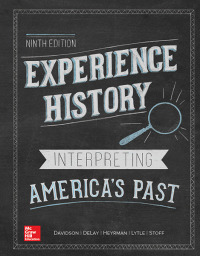
Experience History Interpreting America's Past 9Th Edition By James West Davidson- Test Bank

Experience History Interpreting America's Past 9Th Edition By James West Davidson- Test Bank   Instant Download - Complete Test Bank With Answers     Sample Questions Are Posted Below   Experience History, 9e (Davidson) Chapter 5   The Mosaic of Eighteenth-Century America 1689—1768   1) ________ was the Spanish Empire's last major colonial project in North …

$19.99

Experience History Interpreting America’s Past 9Th Edition By James West Davidson- Test Bank


Instant Download – Complete Test Bank With Answers


Sample Questions Are Posted Below


Experience History, 9e (Davidson)

Chapter 5   The Mosaic of Eighteenth-Century America 1689—1768


1) ________ was the Spanish Empire’s last major colonial project in North America.

  1. A) New Mexico
  2. B) California
  3. C) The Texas mission project
  4. D) The Pueblos


Answer:  B

Topic:  Crisis and Transformation in New Spain

Learning Objective:  Explain the causes of crisis and transformation in northern New Spain in the late seventeenth and early eighteenth centuries.

Bloom’s:  Remember

Accessibility:  Keyboard Navigation


2) Which of the following does NOT describe the rights of married Spanish women?

  1. A) They could buy and sell land and represent themselves in court.
  2. B) They retained control over their own property.
  3. C) They were entitled to at least 25 percent of the marital property upon a husband’s death.
  4. D) They were entitled to their dowries upon a husband’s death.


Answer:  C

Topic:  Crisis and Transformation in New Spain

Learning Objective:  Explain the causes of crisis and transformation in northern New Spain in the late seventeenth and early eighteenth centuries.

Bloom’s:  Understand

Accessibility:  Keyboard Navigation


3) What challenge did the Spanish face in settling California?

  1. A) the long, dangerous journey there
  2. B) military skirmishes with the Russians over land rights
  3. C) tensions with the French over a joint claim
  4. D) the need to pass through the English colonies to get there


Answer:  A

Topic:  Crisis and Transformation in New Spain

Learning Objective:  Explain the causes of crisis and transformation in northern New Spain in the late seventeenth and early eighteenth centuries.

Bloom’s:  Understand

Accessibility:  Keyboard Navigation


4) Which of the following was a result of Spanish colonization of California?

  1. A) Native American villages there thrived due to improved nutrition
  2. B) the rapid growth of the Spanish population led to the Native Americans being pushed off their land
  3. C) Native American land was transformed by overgrazing and invasive plant species
  4. D) Native Americans from the interior moved closer to the missions to gain food and work


Answer:  C

Topic:  Crisis and Transformation in New Spain

Learning Objective:  Explain the causes of crisis and transformation in northern New Spain in the late seventeenth and early eighteenth centuries.

Bloom’s:  Understand

Accessibility:  Keyboard Navigation


5) Which of the following BEST characterizes the French relationship with native people in eighteenth-century New France?

  1. A) conflict
  2. B) domination
  3. C) subordination
  4. D) compromise


Answer:  D

Topic:  Crisis and Transformation in New Spain

Learning Objective:  Explain the causes of crisis and transformation in northern New Spain in the late seventeenth and early eighteenth centuries.

Bloom’s:  Understand

Accessibility:  Keyboard Navigation


6) Why were the French less likely than the British to use military force when dealing with the native people of North America?

  1. A) The French population was relatively low.
  2. B) French soldiers were much less effective fighters than their British counterparts.
  3. C) As Catholics, they naturally were more benevolent when dealing with the native people.
  4. D) They had superior diplomatic skills.


Answer:  A

Topic:  Eighteenth-Century New France

Learning Objective:  Identify and discuss the key features of exploration and colonization in eighteenth-century New France.

Bloom’s:  Understand

Accessibility:  Keyboard Navigation


7) Why did French authorities stop importing slaves into Louisiana in the first half of the eighteenth century?

  1. A) because they were profoundly against the institution of slavery
  2. B) because the costly Natchez-slave rebellion had persuaded them to stop importing slaves
  3. C) because French Louisiana did not produce crops that required slave labor
  4. D) because they switched to using enslaved native people for their labor


Answer:  B

Topic:  Eighteenth-Century New France

Learning Objective:  Identify and discuss the key features of exploration and colonization in eighteenth-century New France.

Bloom’s:  Understand

Accessibility:  Keyboard Navigation


8) The three largest groups of non-English immigrants coming to the American colonies in the 1700s were

  1. A) Africans, Scots-Irish, and Germans.
  2. B) Africans, Germans, and Dutch.
  3. C) Scots-Irish, Dutch, and Africans.
  4. D) Scots-Irish, Germans, and Dutch.


Answer:  A

Topic:  Forces of Division in British North America

Learning Objective:  Analyze the important forces of division in late eighteenth-century British North America.

Bloom’s:  Remember

Accessibility:  Keyboard Navigation


9) Which of the following is NOT one of the reasons the American population grew dramatically in the 1700s?

  1. A) high birth rate
  2. B) importation of slaves
  3. C) absorption of French and Spanish colonials as the British Empire expanded
  4. D) large numbers of non-English immigrants


Answer:  C

Topic:  Forces of Division in British North America

Learning Objective:  Analyze the important forces of division in late eighteenth-century British North America.

Bloom’s:  Understand

Accessibility:  Keyboard Navigation


10) By the beginning of the eighteenth century, land scarcity pushed both native-born and newly arrived families to look westward. Descendants of old Yankee families established themselves ________, while European immigrants found more luck ________.

  1. A) in frontier New England; south of New York
  2. B) in the Hudson River valley; along the Great Wagon Road
  3. C) along the Great Wagon Road; south of New York
  4. D) south of New York; in frontier New England


Answer:  A

Topic:  Forces of Division in British North America

Learning Objective:  Analyze the important forces of division in late eighteenth-century British North America.

Bloom’s:  Remember

Accessibility:  Keyboard Navigation


11) Where in the South did most black Americans live and work?

  1. A) inland plantations
  2. B) along the seaboard
  3. C) in the backcountry
  4. D) the piedmont


Answer:  B

Topic:  Slave Societies in the Eighteenth-Century South

Learning Objective:  Compare and discuss slave societies across the eighteenth-century South.

Bloom’s:  Remember

Accessibility:  Keyboard Navigation


12) In what time frame was the greatest number of African slaves imported into the Chesapeake and Carolina regions?

  1. A) the first half of the seventeenth century
  2. B) the second half of the seventeenth century
  3. C) the first half of the eighteenth century
  4. D) the second half of the eighteenth century


Answer:  C

Topic:  Slave Societies in the Eighteenth-Century South

Learning Objective:  Compare and discuss slave societies across the eighteenth-century South.

Bloom’s:  Remember

Accessibility:  Keyboard Navigation


13) The society of the eighteenth-century backcountry was characterized by all of the following EXCEPT

  1. A) hard work.
  2. B) self-sufficiency.
  3. C) isolation.
  4. D) class conflict.


Answer:  D

Topic:  Forces of Division in British North America

Learning Objective:  Analyze the important forces of division in late eighteenth-century British North America.

Bloom’s:  Understand

Accessibility:  Keyboard Navigation


14) What was the primary reason so many families migrated into the backcountry?

  1. A) to escape governmental authority
  2. B) to worship in freedom
  3. C) to find a healthier environment
  4. D) to obtain cheap land


Answer:  D

Topic:  Forces of Division in British North America

Learning Objective:  Analyze the important forces of division in late eighteenth-century British North America.

Bloom’s:  Understand

Accessibility:  Keyboard Navigation


15) Which group dominated the political and economic life of the seaport towns?

  1. A) descendants of the original founding families
  2. B) the numerous middle-class artisans
  3. C) merchants
  4. D) aristocratic crown officials


Answer:  C

Topic:  Forces of Division in British North America

Learning Objective:  Analyze the important forces of division in late eighteenth-century British North America.

Bloom’s:  Remember

Accessibility:  Keyboard Navigation


16) The colonial seaports were not only the centers for overseas trade; they were also the places where

  1. A) enterprising merchants worked to organize and control the commerce of the surrounding region.
  2. B) religious revivals had their greatest effect.
  3. C) British imperial authority remained visible and strong.
  4. D) slavery was first outlawed.


Answer:  A

Topic:  Forces of Division in British North America

Learning Objective:  Analyze the important forces of division in late eighteenth-century British North America.

Bloom’s:  Understand

Accessibility:  Keyboard Navigation


17) In the mid-1700s, slaves in the seaport cities

  1. A) often gained their freedom.
  2. B) were practically nonexistent.
  3. C) were likely to be recent arrivals from Africa.
  4. D) frequently fought for their freedom.


Answer:  C

Topic:  Forces of Division in British North America

Learning Objective:  Analyze the important forces of division in late eighteenth-century British North America.

Bloom’s:  Understand

Accessibility:  Keyboard Navigation


18) In the mid-1700s, slaves on southern plantations

  1. A) were about as likely to have been born in America as in Africa.
  2. B) found little opportunity to create an African American culture.
  3. C) had mostly all gained their freedom.
  4. D) were more likely to be recent arrivals from Africa.


Answer:  A

Topic:  Slave Societies in the Eighteenth-Century South

Learning Objective:  Compare and discuss slave societies across the eighteenth-century South.

Bloom’s:  Remember

Accessibility:  Keyboard Navigation


19) Unlike slaves on Carolina plantations, those in the Chesapeake

  1. A) had less contact with whites.
  2. B) enjoyed greater autonomy because of the “task system.”
  3. C) lived on smaller plantations with fewer slaves.
  4. D) were mostly African-born.


Answer:  C

Topic:  Slave Societies in the Eighteenth-Century South

Learning Objective:  Compare and discuss slave societies across the eighteenth-century South.

Bloom’s:  Remember

Accessibility:  Keyboard Navigation


20) Which of the following statements is true about slave communities on southern plantations?

  1. A) With few slaves imported directly from Africa, African folkways soon disappeared.
  2. B) Slave marriages were legally recognized.
  3. C) Resistance to slavery led to a drop in the slave trade.
  4. D) Slaves maintained a family life despite the possibility that a family member could be sold.


Answer:  D

Topic:  Slave Societies in the Eighteenth-Century South

Learning Objective:  Compare and discuss slave societies across the eighteenth-century South.

Bloom’s:  Understand

Accessibility:  Keyboard Navigation


21) Which of the following was most likely true of Americans who were influenced by the Enlightenment?

  1. A) They had faith that society could be improved through human slavery.
  2. B) They were from the educated upper class.
  3. C) They held to a religion that believed human beings could find salvation in the Catholic Church.
  4. D) They understood knowledge as valuable for its own sake, independent of any practical usefulness.


Answer:  B

Topic:  Enlightenment and Awakening in America

Learning Objective:  Explain and compare the impact of the Enlightenment and the First Great Awakening on colonial American society and culture.

Bloom’s:  Understand

Accessibility:  Keyboard Navigation


22) The doctrine known as “rational Christianity” stressed which of the following beliefs?

  1. A) predestination
  2. B) conversion
  3. C) the benevolence of God
  4. D) the reasons for innate human sinfulness


Answer:  C

Topic:  Enlightenment and Awakening in America

Learning Objective:  Explain and compare the impact of the Enlightenment and the First Great Awakening on colonial American society and culture.

Bloom’s:  Remember

Accessibility:  Keyboard Navigation


23) Regarding the effects of the Great Awakening, all of the following are correctly stated, EXCEPT that

  1. A) Americans became more sharply polarized along religious lines.
  2. B) many westerners embraced evangelical Protestantism and swelled the denominations of the Baptists and the Presbyterians.
  3. C) many urban easterners embraced evangelical Protestantism and thus swelled such denominations as Quakers and Anglicans.
  4. D) it caused many northern churches to bicker and splinter.


Answer:  C

Topic:  Enlightenment and Awakening in America

Learning Objective:  Explain and compare the impact of the Enlightenment and the First Great Awakening on colonial American society and culture.

Bloom’s:  Understand

Accessibility:  Keyboard Navigation


24) The Great Awakening can best be described by which of the following statements?

  1. A) It was a multifaceted, intellectual movement, based primarily on new discoveries in science.
  2. B) It was a secular, humanitarian movement, which sought to improve the quality of life for the poor.
  3. C) It was a rationalist religious movement, which had its greatest impact among the well-educated in eastern seaboard cities.
  4. D) It was an emotional revivalist movement that appealed to a diverse cross-section of Americans.


Answer:  D

Topic:  Enlightenment and Awakening in America

Learning Objective:  Explain and compare the impact of the Enlightenment and the First Great Awakening on colonial American society and culture.

Bloom’s:  Understand

Accessibility:  Keyboard Navigation


25) One of the important distinctions between eighteenth-century English and American social structures was that

  1. A) while England had a large lower class, there were no poor people in America.
  2. B) while England had a large lower class, their more industrialized economy created more opportunities for upward mobility than did agrarian America.
  3. C) while England’s aristocrats claimed titles and legal privileges by hereditary right, only a few American elites inherited titles and political power.
  4. D) while less than one-third of England’s inhabitants belonged to the “middling sort,” three-quarters of white Americans could be described as “middle class.”


Answer:  D

Topic:  Anglo-American Worlds of the Eighteenth Century

Learning Objective:  Outline and understand key features of the Anglo-American worlds of the eighteenth century.

Bloom’s:  Understand

Accessibility:  Keyboard Navigation


26) The theory of the “balanced constitution” refers to

  1. A) separating government powers into executive, legislative, and judicial functions.
  2. B) giving every order of society some voice in the workings of government.
  3. C) the use of “influence” or patronage by the executive officials to win support for its policies among legislators.
  4. D) restricting the franchise to adult males owning a certain amount of property.


Answer:  B

Topic:  Anglo-American Worlds of the Eighteenth Century

Learning Objective:  Outline and understand key features of the Anglo-American worlds of the eighteenth century.

Bloom’s:  Understand

Accessibility:  Keyboard Navigation


27) Nowhere did the French seem more menacing than in ________, one of the most important blank spots on Spanish maps.


Answer:  Texas

Topic:  Crisis and Transformation in New Spain

Learning Objective:  Explain the causes of crisis and transformation in northern New Spain in the late seventeenth and early eighteenth centuries.

Bloom’s:  Remember

Accessibility:  Keyboard Navigation


28) The Native American people that integrated European horses into their lives and became formidable equestrian warriors were known by their enemies as the ________.


Answer:  Comanche

Topic:  Crisis and Transformation in New Spain

Learning Objective:  Explain the causes of crisis and transformation in northern New Spain in the late seventeenth and early eighteenth centuries.

Bloom’s:  Remember

Accessibility:  Keyboard Navigation


29) Despite grand colonial claims, most eighteenth-century French Americans lived along the ________ River.


Answer:  St. Lawrence

Topic:  Eighteenth-Century New France

Learning Objective:  Identify and discuss the key features of exploration and colonization in eighteenth-century New France.

Bloom’s:  Remember

Accessibility:  Keyboard Navigation


30) The Great ________ is the term used to describe the period of intense religious piety among Americans, beginning in the 1730s, that fueled the expansion of Protestant churches.


Answer:  Awakening

Topic:  Enlightenment and Awakening in America

Learning Objective:  Explain and compare the impact of the Enlightenment and the First Great Awakening on colonial American society and culture.

Bloom’s:  Remember

Accessibility:  Keyboard Navigation


31) The ________ was an intellectual movement in both Europe and America that celebrated the power of human reason.


Answer:  Enlightenment

Topic:  Enlightenment and Awakening in America

Learning Objective:  Explain and compare the impact of the Enlightenment and the First Great Awakening on colonial American society and culture.

Bloom’s:  Remember

Accessibility:  Keyboard Navigation


32) The “boy preacher” from England who stirred revival fires up and down the colonial seaboard was George ________.


Answer:  Whitefield

Topic:  Enlightenment and Awakening in America

Learning Objective:  Explain and compare the impact of the Enlightenment and the First Great Awakening on colonial American society and culture.

Bloom’s:  Remember

Accessibility:  Keyboard Navigation


33) The English Parliament’s unofficial policy of benign ________ allowed economic growth and political autonomy in the American colonies.


Answer:  neglect

Topic:  Anglo-American Worlds of the Eighteenth Century

Learning Objective:  Outline and understand key features of the Anglo-American worlds of the eighteenth century.

Bloom’s:  Remember

Accessibility:  Keyboard Navigation


34) What “forces of division” were operating in the British colonies during the first half of the eighteenth century? Discuss with specific reference to at least two of the following areas: immigration, the backcountry, boundary disputes, and seaport towns.


Answer:  Answers will vary.

Topic:  Forces of Division in British North America

Learning Objective:  Analyze the important forces of division in late eighteenth-century British North America.

Bloom’s:  Understand

Accessibility:  Keyboard Navigation


35) Compare and contrast the character of backcountry settlements with that of older rural communities in eighteenth-century America.


Answer:  Answers will vary.

Topic:  Forces of Division in British North America

Learning Objective:  Analyze the important forces of division in late eighteenth-century British North America.

Bloom’s:  Analyze

Accessibility:  Keyboard Navigation


36) Compare and contrast the lives of eighteenth-century American women in established rural communities, on the frontier, and in major seaports.


Answer:  Answers will vary.

Topic:  Forces of Division in British North America

Learning Objective:  Analyze the important forces of division in late eighteenth-century British North America.

Bloom’s:  Analyze

Accessibility:  Keyboard Navigation


37) Discuss male and female black slaves’ experiences in South Carolina, the Chesapeake, and major seaports.


Answer:  Answers will vary.

Topic:  Slave Societies in the Eighteenth-Century South

Learning Objective:  Compare and discuss slave societies across the eighteenth-century South.

Bloom’s:  Analyze

Accessibility:  Keyboard Navigation


38) Compare and contrast the economy, social structure, and politics of England and America in the eighteenth century.


Answer:  Answers will vary.

Topic:  Anglo-American Worlds of the Eighteenth Century

Learning Objective:  Outline and understand key features of the Anglo-American worlds of the eighteenth century.

Bloom’s:  Analyze

Accessibility:  Keyboard Navigation


39) Describe the basic outlook of the intellectual movement known as the Enlightenment.


Answer:  Answers will vary.

Topic:  Enlightenment and Awakening in America

Learning Objective:  Explain and compare the impact of the Enlightenment and the First Great Awakening on colonial American society and culture.

Bloom’s:  Understand

Accessibility:  Keyboard Navigation


40) Contrast the legal rights and privileges of women living in New Spain with those living in British North America during the eighteenth century. Who had it better?


Answer:  Answers will vary.

Topic:  Anglo-American Worlds of the Eighteenth Century

Learning Objective:  Outline and understand key features of the Anglo-American worlds of the eighteenth century.

Bloom’s:  Understand

Accessibility:  Keyboard Navigation


41) Comment on the following statement: “That America evolved in ways distinct from that of England was a direct result of British colonial policy.”


Answer:  Answers will vary.

Topic:  Anglo-American Worlds of the Eighteenth Century

Learning Objective:  Outline and understand key features of the Anglo-American worlds of the eighteenth century.

Bloom’s:  Understand

Accessibility:  Keyboard Navigation


42) In what ways were major American seaports of the eighteenth century similar to cities today? In what ways were they different? How has urban life changed in the last 300 years?


Answer:  Answers will vary.

Topic:  Forces of Division in British North America

Learning Objective:  Analyze the important forces of division in late eighteenth-century British North America.

Bloom’s:  Understand

Accessibility:  Keyboard Navigation


43) Consider the following: “To any person in bondage, the condition of slavery must be fundamentally unacceptable, no matter how benevolent a slave’s master. Yet the realities of power forced enslaved people every day to confront these inequalities.” Discuss the ways in which enslaved African Americans dealt with their situation.


Answer:  Answers will vary.

Topic:  Slave Societies in the Eighteenth-Century South

Learning Objective:  Compare and discuss slave societies across the eighteenth-century South.

Bloom’s:  Understand

Accessibility:  Keyboard Navigation


44) Why was the Great Awakening disruptive socially as well as religiously? Explain the causes of disruption in both cases.


Answer:  Answers will vary.

Topic:  Enlightenment and Awakening in America

Learning Objective:  Explain and compare the impact of the Enlightenment and the First Great Awakening on colonial American society and culture.

Bloom’s:  Understand

Accessibility:  Keyboard Navigation


45) What caused the population of North America to increase dramatically during the eighteenth century?


Answer:  Answers will vary.

Topic:  Forces of Division in British North America

Learning Objective:  Analyze the important forces of division in late eighteenth-century British North America.

Bloom’s:  Understand

Accessibility:  Keyboard Navigation


46) Colonial religious practices underwent several changes during the Great Awakening. Explain how different groups adjusted to these changes. What was the aftermath of the Great Awakening?


Answer:  Answers will vary.

Topic:  Enlightenment and Awakening in America

Learning Objective:  Explain and compare the impact of the Enlightenment and the First Great Awakening on colonial American society and culture.

Bloom’s:  Understand

Accessibility:  Keyboard Navigation

Additional information

Add Review

Your email address will not be published. Required fields are marked *