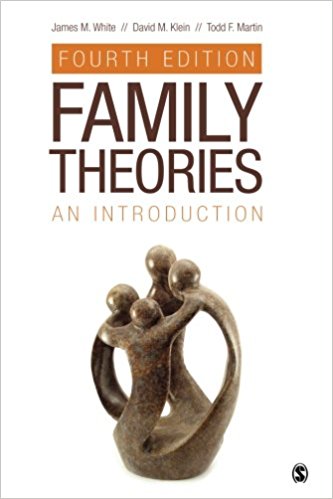
Family Theories An Introduction 4th Edition by James M. White , David M - Test Bank

Family Theories An Introduction 4th Edition by James M. White , David M - Test Bank   Instant Download - Complete Test Bank With Answers     Sample Questions Are Posted Below   Ch. 5 Test Questions   The three theories have several things in common, but they do not all focus on the family’s …

$19.99

Family Theories An Introduction 4th Edition by James M. White , David M – Test Bank


Instant Download – Complete Test Bank With Answers


Sample Questions Are Posted Below


Ch. 5 Test Questions


  1. The three theories have several things in common, but they do not all focus on
  2. the family’s effects on the ontogenetic development of individuals.

*b. a specific number of stages that families go through over their time together.

  1. macro social influences combining with individual agency to adapt and accommodate change.
  2. time and its role in individual and group change.


  1. The life course development framework incorporates each of the following theories except
  2. individual life span theory.
  3. family development theory.
  4. life course theory.

*d. family life span theory.


  1. Event history analysis makes important contributions regarding the ____ of event-based data.

*a. analysis

  1. prediction
  2. interpretation
  3. generation


  1. The basic assumptions of family life course development theory include that
  2. developmental processes in families occur only in certain situations.

*b. it is important to incorporate multiple levels of analyses.

  1. time is best understood as being unidimensional.
  2. people act out of their own self-interest.


  1. According to a basic assumption of family life course development, each of the following is said to inevitably change, except
  2. the structure of the family.
  3. individual family members.

*c. the relevance of family interaction.

  1. interaction between family members.


  1. Time is typically measured by the _____ of some recurring event.
  2. propinquity
  3. proximity

*c. periodicity

  1. popularity


  1. Which of the following is the clearest example of social process time?
  2. James remembers what he did on the day he turned 12 years old
  3. At midnight the couple will kiss for the first time
  4. A family purposely waits until Martin Luther King Day to visit Washington DC

*d. Sandy is expected to get her driver’s license before she moves away from home


  1. Which of the following is true regarding how the concept of development has been treated among life course developmental theorists?

*a. Most avoid arguing that there is a specific way that development occurs for families.

  1. Ontogenetic development has been embraced as a description of family development.
  2. Four distinct versions of what it means to develop have emerged.
  3. Individual development is primarily explained through the lens of sociological development.


  1. The expectation that a child not talk back to a parent most clearly fits the definition of
  2. position.

*b. norm.

  1. role.
  2. status.


  1. To be a person’s cousin most clearly fits the definition of

*a. position.

  1. norm.
  2. role.
  3. status.


  1. The collective behavioral expectations of being a father most clearly fits the definition of
  2. position.
  3. norm.

*c. role.

  1. status.


  1. In contrast to descriptive norms, proscriptive norms
  2. are tied to events that have already occurred in families.
  3. depict what typically occurs in one’s life.
  4. reflect who currently tends to form relationships in a certain sequence.

*d. have an underlying moral tone to them.


  1. When a couple undergoes separation for a time to prepare for a divorce, this is best characterized as a/an
  2. event.

*b. stage.

  1. developmental task.
  2. pathway.


  1. When a family moves to a different neighborhood, this is best characterized as a/an

*a. event.

  1. stage.
  2. developmental task.
  3. pathway.


  1. When a family achieves happiness by successfully navigating a phase of life, this is best characterized as a/an
  2. event.
  3. stage.

*c. developmental task.

  1. pathway.


  1. When the time periods between transitions add up, this is best characterized as a/an
  2. event.
  3. stage.

*c. developmental task.

  1. pathway.


  1. For most people in the United States, an arranged marriage in which the couple does not meet and get to know each other until after the wedding would be considered what type of transition?
  2. on time
  3. off time
  4. organized

*d. disorganized


  1. Which of the following is least likely to indicate the presence of or being on the verge of social change?

*a. leptokurtic distribution

  1. deviation
  2. platykurtic distribution
  3. lack of consensus


  1. Which of the following is the clearest example of a cohort effect?
  2. Teenagers challenge authority more often than school aged children and adults

*b. Adults who were in college during the Vietnam War have been particularly active in politics

  1. Everyone who was alive when Neil Armstrong walked on the moon were forever changed
  2. Children who have the internet at home get better grades than children who don’t


  1. Research indicates that when it comes to the sequence of events,
  2. people tend to eliminate events to avoid being out of sequence.
  3. the number of years between events is of prime importance to most people.

*c. society regulates sequences more that it does the timing of events.

  1. individuals define the norms of what that sequence should be.


  1. The phenomenon in which socially deviant behavior transforms into socially “normal” behavior is called
  2. societal liberalization.

*b. normative succession.

  1. macro-paving.
  2. divergence normalization.


  1. According to a key proposition, when the internal rules of a family deviate from institutional family norms, that family

*a. is more likely to have problems.

  1. has protection from societal norms.
  2. will only differ from other families if the rules are jointly created by family members.
  3. has a clear advantage in terms of developing open-mindedness.


  1. Considering the propositions discussed in the chapter,
  2. the amount of time spent in a stage has no bearing on a future transition.
  3. non-family institutional norms have minimal influence on family institutional norms.
  4. the longer a family remains in a certain stage, the more likely it will remain there.

*d. social norms outside the family shape roles inside the family.


  1. Compared to the structural approach to development, the interactional approach emphasizes
  2. more quantitative assessments of relating to one another.
  3. commonly shared social timing and sequencing norms.

*c. norms and roles shaped within families themselves.

  1. changes on the institutional level of family and society.


  1. Event history analysis was a breakthrough in interpreting and predicting family life.
  2. True

*b. False


  1. The three main theories in this framework have a singular theme of group change and development over time.

*a. True

  1. False


  1. Unlike other family theories, the life course development framework focuses exclusively on the families as specific groups of people.
  2. True

*b. False


  1. Understanding time as flowing in only one direction facilitates the conceptualization of social process time.

*a. True

  1. False


  1. Events are of particular importance because of the calendar date on which they occur.
  2. True

*b. False


30/ A newspaper editorial that tries to persuade parents of how bad it is to let children live with them past the age of 18 illustrates the pushing of a proscriptive norm.

*a. True

  1. False


  1. The “family career” is a concept that was developed in hopes to replace the term “life cycle.”

*a. True

  1. False


  1. By definition, a transition occurs because an individual chooses that an event to takes place.
  2. True

*b. False


  1. Regardless of size, a cohort can only have a limited general impact on a society.
  2. True

*b. False


  1. Early criticisms of developmental theory have led to less emphasis on ontogenetics and more on social norms as causes for family development by contemporary life course developmental theorists.

*a. True

  1. False


  1. Explain why “time” from the perspective of families may lack periodicity.
  2. Answer should include that time subjectively passes at different rates depending on how much one enjoys the time, that we tend to talk about past events and family experiences as markers of time instead of exact timelines.


  1. Explain the distinct ways that development has become to be understood.
  2. Answer should include that ontological development for individuals has been established with the child development discipline, and that a sociological explanation of development also emerged that focuses on age and stage-graded social norms; furthermore, a proscribed way of development for all families has been shied away from.


  1. Explain how events, stages, and transitions work together to create a pathway.
  2. Answer should include that events occur that trigger the beginning and end of a stage, the time between the events is the stage, families transition into new stages because of certain events, and the cumulative set and order of stages makes up one’s pathway or life course.


  1. Explain why a deviation from a family developmental norm can become the new family norm.
  2. Answer should include how people adapt their family stages to accommodate other social changes, so social changes can gradually create more divergence from the norm until that divergence becomes more normative than the traditional norm.

Additional information

Add Review

Your email address will not be published. Required fields are marked *