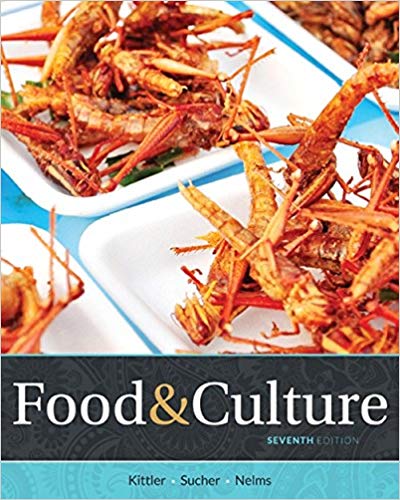
Food and Culture, 7th Edition by Pamela Goyan Kittler - Test Bank

Food and Culture, 7th Edition by Pamela Goyan Kittler - Test Bank   Instant Download - Complete Test Bank With Answers     Sample Questions Are Posted Below   True / False 1. By the late 19th century, forced migrations and diminishing land resources resulted in most Native Americans living on federal reservations. a. True …

$19.99

Food and Culture, 7th Edition by Pamela Goyan Kittler – Test Bank


Instant Download – Complete Test Bank With Answers


Sample Questions Are Posted Below


True / False

1. By the late 19th century, forced migrations and diminishing land resources resulted in most Native Americans living on federal reservations.
a. True
b. False
ANSWER: True
REFERENCES: Cultural Perspective — History of Native Americans
KEYWORDS: Bloom’s: Understand

2. Some Cherokee believe that illness may be caused by witchcraft.
a. True
b. False
ANSWER: False
REFERENCES: Cultural Perspective — Worldview
KEYWORDS: Bloom’s: Understand

3. Traditional foods make up less than 25 percent of the daily diet among the Hopi.
a. True
b. False
ANSWER: True
REFERENCES: Contemporary Food Habits — Adaptation of Food Habits
KEYWORDS: Bloom’s: Understand

4. The Pacific northwestern tribes were known for their agriculture.
a. True
b. False
ANSWER: False
REFERENCES: Traditional Food Habits — Ingredients and Common Foods
KEYWORDS: Bloom’s: Understand

5. Pemmican is a type of jerky cake made with bison fat and berries.
a. True
b. False
ANSWER: True
REFERENCES: Traditional Food Habits — Ingredients and Common Foods
KEYWORDS: Bloom’s: Understand

6. Apples, lentils, and peaches are among the more successful foods introduced to the Native Americans by the Europeans.
a. True
b. False
ANSWER: True
REFERENCES: Traditional Food Habits — Ingredients and Common Foods
KEYWORDS: Bloom’s: Understand

7. Whale muktuk can be preserved by rolling it in herbs (with no salt) and fermenting it in a pit for several months to make a treat known as kopalchen.
a. True
b. False
ANSWER: True
REFERENCES: Traditional Food Habits — Ingredients and Common Foods
KEYWORDS: Bloom’s: Understand

8. There is little variation across Native American tribes throughout North America in terms of traditional meal patterns.
a. True
b. False
ANSWER: False
REFERENCES: Traditional Food Habits — Meal Composition and Cycle
KEYWORDS: Bloom’s: Understand

9. The average Native American life expectancy is approximately 4.2 years greater when compared to the U.S. population.
a. True
b. False
ANSWER: False
REFERENCES: Contemporary Food Habits — Nutritional Status
KEYWORDS: Bloom’s: Understand

10. Postnatal mortality rates are nearly 60 percent higher for American Indians and Alaska Natives compared to the total population.
a. True
b. False
ANSWER: True
REFERENCES: Contemporary Food Habits — Nutritional Status
KEYWORDS: Bloom’s: Understand

Multiple Choice

11. The primary social unit of Native Americans is:
a. the entire tribe.
b. the nuclear family.
c. the extended family.
d. all Native Americans.
e. the reservation.
ANSWER: c
REFERENCES: Cultural Perspective — Worldview
KEYWORDS: Bloom’s: Understand

12. In the area that is today the United States, there are estimated to be about _____ different distinct Native American nations.
a. 250
b. 300
c. 35
d. 400
e. 4500
ANSWER: d
REFERENCES: Introduction
KEYWORDS: Bloom’s: Understand

13. Traditional indigenous Native American foods include:
a. fry bread.
b. peaches.
c. apples.
d. wild rice.
e. lentils.
ANSWER: d
REFERENCES: Traditional Food Habits — Ingredients and Common Foods
KEYWORDS: Bloom’s: Understand

14. Among the Native American nations of the Northeast, who was traditionally served first at a meal?
a. men
b. women
c. children
d. elders
e. guests
ANSWER: a
REFERENCES: Traditional Food Habits — Meal Composition and Cycle
KEYWORDS: Bloom’s: Understand

15. What is the harmful substance contained in acorns that must be leached out before consumption?
a. salicylic acid
b. tannic acid
c. toxic acid
d. hydrochloric acid
e. ascorbic acid
ANSWER: b
REFERENCES: Traditional Food Habits — Ingredients and Common Foods
KEYWORDS: Bloom’s: Understand

16. What was the staple food source of the Plains Indians?
a. bison
b. horses
c. acorns
d. corn
e. salmon
ANSWER: a
REFERENCES: Traditional Food Habits — Ingredients and Common Foods
KEYWORDS: Bloom’s: Understand

17. When does research indicate that the ancestors of Native Americans crossed over the Bering Strait from Asia?
a. 2,000-5,000 years ago
b. 20,000-50,000 years ago
c. 2,500-5,000 years ago
d. 200,000-500,000 years ago
e. 100,000-200,000 years ago
ANSWER: b
REFERENCES: Cultural Perspective — History of Native Americans
KEYWORDS: Bloom’s: Understand

18. Which Native American nation had abundant food sources, even through the cold winter, because of the heavy woodlands, freshwater lakes, and coastal access where they lived?
a. Cheyenne
b. Iroquois
c. Dakota
d. Hopi
e. Pueblo
ANSWER: b
REFERENCES: Traditional Food Habits — Ingredients and Common Foods
KEYWORDS: Bloom’s: Understand

19. Regular seasonal migration of salmon created a constant and reliable protein source for which of the following groups?
a. Pueblo
b. Iroquois
c. Zuni
d. Kwakiutl
e. Navajo
ANSWER: d
REFERENCES: Traditional Food Habits — Ingredients and Common Foods
KEYWORDS: Bloom’s: Understand

20. What group of Native Americans often ate foods raw because there was a general lack of firewood over much of the area in which they lived?
a. Northeastern
b. Southern
c. Plains
d. Alaska Native
e. Northwest Coast
ANSWER: d
REFERENCES: Traditional Food Habits — Ingredients and Common Foods
KEYWORDS: Bloom’s: Understand

21. According to the U.S. Census figures from 2009, what percentage of the population in the United States is of Native American heritage?
a. 1%
b. 16%
c. 2%
d. 10%
e. 6%
ANSWER: c
REFERENCES: Introduction
KEYWORDS: Bloom’s: Understand

22. Of the following, which is one of the three major centers of Native American culture observed in the 17th century?
a. Five Civilized Tribes
b. Hopi
c. Artic
d. Sioux
e. Chippewa
ANSWER: a
REFERENCES: Cultural Perspective — History of Native Americans
KEYWORDS: Bloom’s: Understand

23. Of the states, which has the highest number of resident American Indians?
a. New Mexico
b. Oklahoma
c. Arizona
d. California
e. Illinois
ANSWER: d
REFERENCES: Cultural Perspective — History of Native Americans
KEYWORDS: Bloom’s: Understand

24. Who is in charge of administration of the federal reservations?
a. Bureau of Indian Affairs
b. The Native American Society
c. The Government of Indian Affairs
d. Indian Health Service
e. Federal Bureau of Indians
ANSWER: a
REFERENCES: Cultural Perspective — History of Native Americans
KEYWORDS: Bloom’s: Understand

25. What was the typical traditional meal pattern of Native Americans in the Southwest and the Pacific Northwest?
a. 2 meals per day
b. 3 meals per day
c. 3 meals plus frequent snacks
d. many small meals
e. 1 meal per day
ANSWER: a
REFERENCES: Traditional Food Habits — Meal Composition and Cycle
KEYWORDS: Bloom’s: Understand

26. What term best describes the Native American approach to life?
a. wellness
b. nirvana
c. harmony
d. conservative
e. karma
ANSWER: c
REFERENCES: Cultural Perspective — Worldview
KEYWORDS: Bloom’s: Understand

27. Traditional Native American religions vary, yet they share one characteristic:
a. Religion permeates all aspects of life.
b. Religion is a separate set of beliefs practiced at certain times.
c. Religion is unimportant to Native Americans.
d. Religion is remarkably similar to Christianity.
e. Religion connects all the tribes.
ANSWER: a
REFERENCES: Cultural Perspective — Worldview
KEYWORDS: Bloom’s: Understand

28. Many Native American nations are matrilineal, which means what?
a. Lineage is inherited from the father.
b. Lineage is inherited from the mother.
c. Women are the tribal chiefs.
d. Women are the tribal healers.
e. Tribal chiefs are elected by women.
ANSWER: b
REFERENCES: Cultural Perspective — Worldview
KEYWORDS: Bloom’s: Understand

29. Because the Navajo health system classifies illness by _______ rather than by symptom, clients may have difficulty understanding the necessity for a physical exam or medical history.
a. treatment
b. method of treatment
c. reaction
d. cause
e. length of sickness
ANSWER: d
REFERENCES: Contemporary Food Habits — Nutritional Status
KEYWORDS: Bloom’s: Understand

30. In what Native American region would blue cornmeal bread be commonly eaten?
a. Plains
b. Southwest
c. Pacific Northwest
d. New England
e. Artic
ANSWER: b
REFERENCES: Traditional Food Habits — Ingredients and Common Foods
KEYWORDS: Bloom’s: Understand

31. The only staple foods common to many, though not all, Native American nations were:
a. beans, corn, and rice.
b. corn, squash, and apples.
c. beans, corn, and squash.
d. fish, beans, and corn.
e. meat, potatoes, and green vegetables.
ANSWER: c
REFERENCES: Traditional Food Habits — Ingredients and Common Foods
KEYWORDS: Bloom’s: Understand

32. In Native American culture, health reflects a person’s relationship to nature, broadly defined as the:
a. universe.
b. individual’s mental state.
c. family, the community, and the environment.
d. reservation.
e. spiritual world.
ANSWER: c
REFERENCES: Cultural Perspective — Worldview
KEYWORDS: Bloom’s: Understand

33. The chicken dish known as Brunswick stew is an adaptation of a Native American recipe for what animal?
a. salmon
b. turtle
c. turkey
d. squirrel
e. possum
ANSWER: d
REFERENCES: Traditional Food Habits — Ingredients and Common Foods
KEYWORDS: Bloom’s: Understand

34. What is the main ingredient in the Cherokee kanuche soup?
a. cream
b. corn
c. hickory nuts
d. gooseberries
e. acorns
ANSWER: c
REFERENCES: Traditional Food Habits — Ingredients and Common Foods
KEYWORDS: Bloom’s: Understand

35. What percentage of the diet was dependent on wild rice for the Ojibwa of the Plains?
a. 12%
b. 25%
c. 10%
d. 50%
e. 2%
ANSWER: b
REFERENCES: Traditional Food Habits — Ingredients and Common Foods
KEYWORDS: Bloom’s: Understand

36. Hopi Indians from what region were known for using 20 different varieties of corn?
a. Southwest
b. South
c. Northeast
d. Plains
e. Northwest
ANSWER: a
REFERENCES: Traditional Food Habits — Ingredients and Common Foods
KEYWORDS: Bloom’s: Understand

37. What is flat, griddle-fried cornmeal bread called?
a. pozole
b. chukuviki
c. tortillas
d. pemmican
e. fry bread
ANSWER: c
REFERENCES: Traditional Food Habits — Ingredients and Common Foods
KEYWORDS: Bloom’s: Understand

38. What is the name for thick pudding made from bison suet and berries?
a. wojapi
b. pemmican
c. chukuviki
d. piki
e. bannock
ANSWER: a
REFERENCES: Traditional Food Habits — Ingredients and Common Foods
KEYWORDS: Bloom’s: Understand

39. What was the second most important crop, after corn, for Native Americans in the southwestern region?
a. wheat
b. potatoes
c. hominy
d. beans
e. soy
ANSWER: d
REFERENCES: Traditional Food Habits — Ingredients and Common Foods
KEYWORDS: Bloom’s: Understand

40. A lacy, flat, blue cornmeal bread that Hopi women baked was called a
a. tortilla.
b. piki.
c. piñon.
d. kopalchen.
e. bannock.
ANSWER: b
REFERENCES: Traditional Food Habits — Ingredients and Common Foods
KEYWORDS: Bloom’s: Understand

41. Chunks of meat with fat and skin attached made from whale or walrus are called
a. lichen.
b. akutok.
c. muktuk.
d. salal.
e. chukuviki.
ANSWER: c
REFERENCES: Traditional Food Habits — Ingredients and Common Foods
KEYWORDS: Bloom’s: Understand

42. How many varieties of indigenous fruits and vegetables were consumed by the Native Americans of the Northwest Coast?
a. more than 1500
b. more than 100
c. more than 500
d. more than 1000
e. more than 300
ANSWER: b
REFERENCES: Traditional Food Habits — Ingredients and Common Foods
KEYWORDS: Bloom’s: Understand

43. “Digger Indians” were called such because they were known to
a. dig graves for their ancestors.
b. dig irrigation systems.
c. dig roots for food.
d. dig for minerals.
e. dig for pay from white men.
ANSWER: c
REFERENCES: Traditional Food Habits — Ingredients and Common Foods
KEYWORDS: Bloom’s: Understand

44. What is a horno?
a. an adobe oven
b. a meat stew indigenous to the plains
c. cornmeal bread
d. a tool for digging
e. a hearty snack
ANSWER: a
REFERENCES: Traditional Food Habits — Meal Composition and Cycle
KEYWORDS: Bloom’s: Understand

45. What food is of significance in many healing ceremonies?
a. blackberry
b. corn
c. cactus
d. bison
e. sassafras
ANSWER: b
REFERENCES: Traditional Food Habits — Therapeutic Uses of Food
KEYWORDS: Bloom’s: Understand

46. Which of the following is an Indian food thought of as “traditional” but made from ingredients introduced by the Europeans?
a. fry bread
b. hominy
c. cactus stew
d. bean bread
e. pemmican
ANSWER: a
REFERENCES: Contemporary Food Habits — Adaptation of Food Habits
KEYWORDS: Bloom’s: Understand

47. Legend has that it that an Indian named _____ saved the Pilgrims by teaching them to grow corn.
a. Tanto
b. Pocahontas
c. Squanto
d. Sequoyah
e. Sacagawea
ANSWER: c
REFERENCES: Traditional Food Habits — Ingredients and Common Foods
KEYWORDS: Bloom’s: Understand

48. Though definitions of overweight and obesity vary in some research, the trends are consistent. Group-specific studies report that what percentage of Indians residing in Oklahoma were overweight or obese?
a. 83%
b. 50%
c. 27%
d. 61%
e. 17%
ANSWER: d
REFERENCES: Contemporary Food Habits — Nutritional Status
KEYWORDS: Bloom’s: Understand

49. How does the incidence of type 2 diabetes among Native Americans (especially those in the Plains and Southwest) compare to that of the general population?
a. 1-2 times as great
b. 2-4 times as great
c. 2-4 times lower
d. 1-2 times lower
e. about the same
ANSWER: b
REFERENCES: Contemporary Food Habits — Nutritional Status
KEYWORDS: Bloom’s: Understand

50. When counseling Native Americans, which of the following is good advice?
a. Talk to clients instead of with clients.
b. Religious questions are preferred.
c. Use only verbal communication.
d. Recognize the diversity within Native American groups and understand the local culture.
e. Remain confident of biomedical superiority.
ANSWER: d
REFERENCES: Contemporary Food Habits — Nutritional Status
KEYWORDS: Bloom’s: Understand

51. Native Americans of the southern region used _____ to thicken soups and stews, brew tea, and prepare a seasoning called filé powder.
a. sassafras
b. hickory nuts
c. spicebush
d. sumac berries
e. yerba mate
ANSWER: a
REFERENCES: Traditional Food Habits — Ingredients and Common Foods
KEYWORDS: Bloom’s: Understand

52. The beans of what tree were a staple in some desert regions?
a. maple
b. elm
c. mesquite
d. juniper ash
e. cactus
ANSWER: c
REFERENCES: Traditional Food Habits — Ingredients and Common Foods
KEYWORDS: Bloom’s: Understand

53. What are the pads of the prickly pear cactus called?
a. tunas
b. nopales
c. piñon
d. pulp
e. pozole
ANSWER: b
REFERENCES: Traditional Food Habits — Ingredients and Common Foods
KEYWORDS: Bloom’s: Understand

54. What plant product did the Ojibwas boil to prevent miscarriages?
a. strawberries
b. sumac
c. cabbage
d. blackberry roots
e. astragalus
ANSWER: d
REFERENCES: Traditional Food Habits — Therapeutic Uses of Food
KEYWORDS: Bloom’s: Understand

55. As thanks for a plentiful summer harvest, southern Native American nations celebrated what festival?
a. Peyote Festival
b. Green Corn Festival
c. Festival of the Sun
d. Festival of the Corn
e. Harvest Festival
ANSWER: b
REFERENCES: Traditional Food Habits — Meal Composition and Cycle
KEYWORDS: Bloom’s: Understand

Matching

Match the five regional variations in Native American fare with the meals listed below.
a. Northeastern
b. Southern
c. Plains
d. Southwestern
e. Northwest Coast/Alaskan Native
REFERENCES: Traditional Food Habits — Ingredients and Common Foods
KEYWORDS: Bloom’s: Understand

56. Brunswick stew, corn pone, huckleberry honey cake
ANSWER: b

57. Salmon, elk stew with acorn dumplings, fiddlehead ferns, whipped raspberry (soup)
ANSWER: e

58. Pemmican, bison stew, Jerusalem artichokes, wojapi
ANSWER: c

59. Duck with wild rice, bannocks, Indian pudding
ANSWER: a

60. Green chile stew, blue corn bread, and piñon seeds
ANSWER: d

Essay

61. Describe the therapeutic use of corn by Native Americans.
ANSWER: Corn is significant in some healing ceremonies. Cornmeal may be sprinkled around the bed of a patient to protect him or her against further illness. Corn pollen may be used to ease heart palpitations, and fine cornmeal is rubbed on children’s rashes. Navajo women drink blue cornmeal gruel to promote the production of milk after childbirth, and Pueblo women use a mixture of water and corn ear smut (Ustilago maydis, a kind of fungus) to relieve diarrhea and to cure irregular menstruation. A similar drink was given to Zuni women to speed childbirth and to prevent postpartum hemorrhaging. Corn silk tea was used as a diuretic and was prescribed for bladder infections.
REFERENCES: Traditional Food Habits — Therapeutic Uses of Food
KEYWORDS: Bloom’s: Understand

62. Describe how the climate and geography of the middle of the continent resulted in the specific food ways of the Plains Indians.
ANSWER: The Native Americans who lived in the area that is now the American Midwest were mostly nomadic hunters, following the great herds of bison across the flat plains for sustenance. The land was rugged and generally unsuitable for agriculture. Those nations that settled along the fertile Mississippi and Missouri River valleys, however, developed farm-based societies supported by crops of beans, corn, and squash.
REFERENCES: Traditional Food Habits — Ingredients and Common Foods
KEYWORDS: Bloom’s: Understand

63. Why do Some Native Americans reject the concept that poor nutrition, bodily malfunctions, or an infection by a virus or bacteria can cause sickness?
ANSWER: Some Native Americans reject the concept that poor nutrition, bodily malfunctions, or an infection by a virus or bacteria can cause sickness. An evil external source is often identified instead. Some Dakota, for instance, blame type 2 diabetes on disease-transmitting foods provided by whites with the intention of eliminating all Native Americans. An outbreak of serious respiratory infections due to the Hanta virus was explained by Navajo healers as being due to rejection of traditional ways and adoption of convenience foods. Some Native Americans attribute alcoholism to soul loss and the cultural changes due to domination by white society.
REFERENCES: Cultural Perspective — Worldview
KEYWORDS: Bloom’s: Understand

64. Briefly discuss why sharing food is an important aspect in most Native American societies today.
ANSWER: Sharing food is an important aspect of most Native American societies today. Food is usually offered to guests, and in some tribes it is considered rude for a guest to refuse food. It is also impolite to eat in front of others without sharing. Any extra food is often given to members of the extended family. In some nations of the Southwest, meals are prepared and eaten communally. Each woman makes a large amount of one dish and shares it with the other families, who in turn share what they have prepared. Many Native Americans find the idea of selling food inconceivable; it is suggested that this is one reason there are few restaurants featuring Native American specialties.
REFERENCES: Traditional Food Habits — Role of Food in Native American Culture and Etiquette
KEYWORDS: Bloom’s: Understand

65. Name and describe the three transitional adaptations of members of the Ojibwa tribe that have been identified and associated with increasingly acculturated lifestyles. Is it assumed that these transitions may be typical of other native groups?
ANSWER: Three transitional adaptations of members of the Ojibwa (also called Chippewa) tribe, identified by three different lifestyles, may serve as a model for the adaptations made by members of other Native American groups. The first stage of adaptation is traditional; during this stage parents and grandparents speak the Ojibwa language at home, practice the Midewiwin religion, and participate in Native American cultural activities such as feasts and pow-wows. The second stage is more acculturated. English is the primary language, although some Ojibwa also is spoken. Catholicism is the preferred religion, and the family is involved in activities of the majority society. In the third Ojibwa lifestyle—the pan-traditional stage—the family speaks either English or Ojibwa exclusively; practices a religion that is a combination of Native American and Christian beliefs, such as the Native American Church; and is actively involved in activities of both traditional Native American and white societies.
REFERENCES: Contemporary Food Habits
KEYWORDS: Bloom’s: Understand

Additional information

Add Review

Your email address will not be published. Required fields are marked *