Subtotal: $699.99

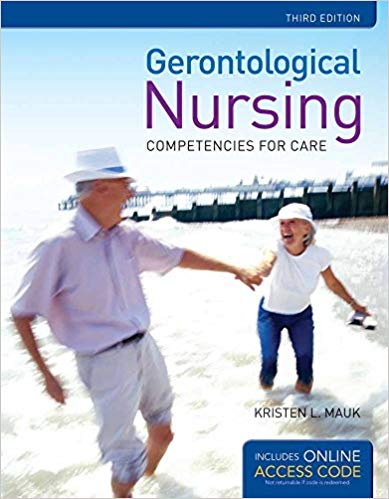
Gerontological Nursing Competencies For Care 3e By Kristen L Mauk - Test Bank

Gerontological Nursing Competencies For Care 3e By Kristen L Mauk - Test Bank   Instant Download - Complete Test Bank With Answers     Sample Questions Are Posted Below   Chapter 6 Review of the aging of physiological systems   1) Which of the following signs would you consider an abnormal finding for a 75 …

$19.99

Gerontological Nursing Competencies For Care 3e By Kristen L Mauk – Test Bank


Instant Download – Complete Test Bank With Answers


Sample Questions Are Posted Below


Chapter 6 Review of the aging of physiological systems


1) Which of the following signs would you consider an abnormal finding for a 75 year old female?


  1. blood pressure of 110/78
  2. Hct (hematocrit) of .41
  3. resting pulse of 80
  4. urinary incontinence


2)  A significant result of changes in the respiratory system with advanced age is:


  1. lower carbon dioxide levels in the bloodstream
  2. less useful oxygen available with each breath
  3. more efficient gas exchange at the alveolar level
  4. the ability to hold one’s breath longer


3)  One of the most significant changes in the reproductive system for older females that

are sexually active is:


  1. decreased vaginal lubrication
  2. atrophy of uterus
  3. decreased libido
  4. lack of male partners


4)  You are helping care for your 89 year old grandmother who is sick with “the flu”.

Her temperature is 101.2. What other information would be most useful to better

assess your grandmother’s condition?


  1. what her temperature was yesterday
  2. how long she has felt sick
  3. what her usual temperature is
  4. how much she ate today


5)  Changes in which of the following body systems are generally most noticeable to the

naked eye?


  1. respiratory
  2. integumentary
  3. gastrointestional
  4. neurological


6)  Which of the following would be an abnormal finding in assessment of an 80 year

old male?


  1. decreased cardiac output
  2. decreased stage IV sleep
  3. loss of hearing of low frequency tones
  4. age spots on the hands and face


7)  Which of the following changes in the skeletal system is least characteristic of normal aging?

  1. decreased range of motion
  2. loss of height up to 10 cm
  3. chronic inflammation of joints
  4. loss of some muscle mass


8)  All of the following are intrinsic changes in the integumentary system except:

  1. increased skin temperature
  2. sagging and wrinkling
  3. age spots
  4. increased risk of bruising


9)  Which of the following is true about normal aging changes in the GI system?

  1. absorption of nutrients does not change with age
  2. absorption of certain vitamins does change with age
  3. small intestine transit rate is relatively unchanged with age
  4. all of the above


10)  Which of the following aging changes is most significant to renal efficiency?

  1. loss of up to half of functioning nephrons
  2. decreased cardiac output
  3. nocturia
  4. a and b


11)  The aging eye shows all of the following changes except:

  1. better ability to focus on near objects
  2. decreased lens accommodation
  3. decreased peripheral vision
  4. presbyopia


12)  A 72 year old female with the following assessment factors is admitted to the acute care for elderly (ACE) unit. Which of the following requires the most immediate treatment?

  1. BP = 140/ 90 mm Hg
  2. Hgb (hemoglobin) = 7 g/dl
  3. hypogeusia
  4. presbycusis


13) Mrs. Jones is a 50 year old female who complains of hot flashes, moodiness, and skipping menstrual periods. She tells you that the physician suggests she is going through menopause, and asks, “aren’t I too young for menopause?” What is your best response?

  1. Yes, you are too young. Your symptoms must be something else.
  2. The average age for menopause is 51, but many women experience these symptoms earlier.
  3. I think you should get a second opinion in case it is something serious.
  4. No. You are not too young for menopause, but the average age is 56.


14)  Immunosenescence refers to:

  1. acquired immunity
  2. innate immunity
  3. aging of the immune cells
  4. better replication of the cells that fight infection


15) Which of the following is a reason why older females may develop vaginitis?

  1. lower estrogen levels
  2. atrophy of the vaginal canal
  3. decreased lubrication of the vagina
  4. d. all of the above

Additional information

Add Review

Your email address will not be published. Required fields are marked *