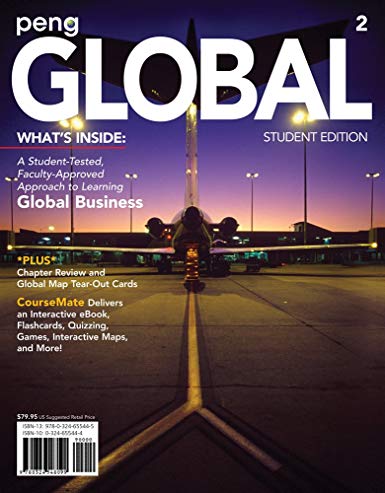
GLOBAL 2nd Edition by Mike Peng - Test Bank

GLOBAL 2nd Edition by Mike Peng - Test Bank   Instant Download - Complete Test Bank With Answers     Sample Questions Are Posted Below   Chapter 5—Trading Internationally   TRUE/FALSE   The theory of mercantilism viewed international trade as a win-win game.   ANS:  F                    PTS:   1                    DIF:    Easy               REF:   p. 64 OBJ:   5.2                 …

$19.99

GLOBAL 2nd Edition by Mike Peng – Test Bank


Instant Download – Complete Test Bank With Answers


Sample Questions Are Posted Below


Chapter 5—Trading Internationally


TRUE/FALSE


  1. The theory of mercantilism viewed international trade as a win-win game.


ANS:  F                    PTS:   1                    DIF:    Easy               REF:   p. 64

OBJ:   5.2                 NAT:  AACSB: Tier 1 Analytic | Tier 2 Environmental Influences


  1. Mercantilism, absolute advantage, and comparative advantage are examples of modern theories.


ANS:  F                    PTS:   1                    DIF:    Easy               REF:   p. 64

OBJ:   5.2                 NAT:  AACSB: Tier 1 Communication | Tier 2 Strategy


  1. Mercantilism is the direct intellectual ancestor of modern-day protectionism.


ANS:  T                    PTS:   1                    DIF:    Easy               REF:   p. 64

OBJ:   5.2                 NAT:  AACSB: Tier 1 Analytic | Tier 2 Strategy


  1. Based on the mercantilism theory, the wealth of all trading nations and the world increases.


ANS:  F                    PTS:   1                    DIF:    Moderate        REF:   p. 64

OBJ:   5.2                 NAT:  AACSB: Tier 1 Analytic | Tier 2 Environmental Influences


  1. The theory of absolute advantage was advocated by French statesman Jean Baptist Colbert.


ANS:  F                    PTS:   1                    DIF:    Easy               REF:   p. 64

OBJ:   5.2                 NAT:  AACSB: Tier 1 Reflective Thinking | Tier 2 Environmental Influences


  1. Adam Smith proposed the theory of comparative advantage.


ANS:  F                    PTS:   1                    DIF:    Moderate        REF:   p. 66

OBJ:   5.2                 NAT:  AACSB: Tier 1 Communication | Tier 2 Strategy


  1. According to absolute advantage theory, by specializing and trading, each nation produces more and consumes more.


ANS:  T                    PTS:   1                    DIF:    Moderate        REF:   pp. 64-65

OBJ:   5.2                 NAT:  AACSB: Tier 1 Reflective Thinking | Tier 2 Environmental Influences


  1. The theory of absolute advantage espouses that the economic advantage one nation enjoys is superior to another nation.


ANS:  T                    PTS:   1                    DIF:    Easy               REF:   pp. 64-65

OBJ:   5.2                 NAT:  AACSB: Tier 1 Reflective Thinking | Tier 2 Environmental Influences


  1. The theory of comparative advantage states that even if a country does not have absolute advantage in production, the country can still profitably specialize if the country is relatively more efficient.


ANS:  T                    PTS:   1                    DIF:    Moderate        REF:   p. 66

OBJ:   5.2                 NAT:  AACSB: Tier 1 Analytic | Tier 2 Environmental Influences


  1. Absolute and comparative advantages come from economic differences.


ANS:  F                    PTS:   1                    DIF:    Moderate        REF:   p. 67

OBJ:   5.2                 NAT:  AACSB: Tier 1 Analytic | Tier 2 Strategy


  1. Factor endowment theory is a proposition that nations will develop comparative advantage based on their locally abundant factors.


ANS:  T                    PTS:   1                    DIF:    Moderate        REF:   p. 67

OBJ:   5.2                 NAT:  AACSB: Tier 1 Analytic | Tier 2 Strategy


  1. Product life cycle theory was developed by American economist Raymond Vernon in 1966.


ANS:  T                    PTS:   1                    DIF:    Moderate        REF:   p. 68

OBJ:   5.2                 NAT:  AACSB: Tier 1 Analytic | Tier 2 Strategy


  1. Strategic trade is the first theory to incorporate dynamic changes in patterns of trade.


ANS:  F                    PTS:   1                    DIF:    Difficult         REF:   p. 68

OBJ:   5.2                 NAT:  AACSB: Tier 1 Reflective Thinking | Tier 2 Strategy


  1. National competitive advantage of industries is the most recent, most complex, and most realistic among various theories.


ANS:  T                    PTS:   1                    DIF:    Moderate        REF:   p. 70

OBJ:   5.2                 NAT:  AACSB: Tier 1 Analytic | Tier 2 Strategy


  1. Factor endowments; domestic demand; firm strategy, structure, and rivalry; and related and supporting industries are aspects of strategic trade theory.


ANS:  F                    PTS:   1                    DIF:    Moderate        REF:   p. 70

OBJ:   5.2                 NAT:  AACSB: Tier 1 Analytic | Tier 2 Strategy


  1. Non-tariff barriers include subsidies, import quotas, export restraints, local content requirements, administrative policies, and antidumping duties.


ANS:  T                    PTS:   1                    DIF:    Moderate        REF:   p. 73

OBJ:   5.3                 NAT:  AACSB: Tier 1 Analytic | Tier 2 Operations Management


  1. Administrative policy is a superficial policy to show that exporting countries voluntarily agree to restrict their exports.


ANS:  F                    PTS:   1                    DIF:    Moderate        REF:   p. 74

OBJ:   5.3                 NAT:  AACSB: Tier 1 Communication | Tier 2 Strategy


  1. Bureaucratic rules that make it harder to import foreign goods are defined as administrative policies.


ANS:  T                    PTS:   1                    DIF:    Moderate        REF:   p. 74

OBJ:   5.3                 NAT:  AACSB: Tier 1 Communication | Tier 2 Strategy


  1. Foreign policy objectives are often sought through trade intervention.


ANS:  T                    PTS:   1                    DIF:    Moderate        REF:   p. 74

OBJ:   5.3                 NAT:  AACSB: Tier 1 Analytic | Tier 2 Strategy


  1. Political arguments against free trade state it does not advance a nation’s political, social, and environmental agendas, regardless of possible economic gains.


ANS:  F                    PTS:   1                    DIF:    Easy               REF:   p. 74 | p. 76

OBJ:   5.3                 NAT:  AACSB: Tier 1 Analytic | Tier 2 Environmental Influences


  1. The United States runs the world’s largest trade deficit.


ANS:  T                    PTS:   1                    DIF:    Moderate        REF:   p. 75

OBJ:   Debate           NAT:  AACSB: Tier 1 Analytic | Tier 2 Environmental Influences


  1. Indian innovation can reduce the price of US software exports and curtail the wage of the US IT worker.


ANS:  T                    PTS:   1                    DIF:    Moderate        REF:   p. 76

OBJ:   Debate           NAT:  AACSB: Tier 1 Analytic | Tier 2 Environmental Influences


  1. Managers should monitor and nurture current comparative advantages of certain locations and take advantage of new locations.


ANS:  T                    PTS:   1                    DIF:    Easy               REF:   p. 76

OBJ:   5.4                 NAT:  AACSB: Tier 1 Reflective Thinking | Tier 2 Strategy


  1. Managers need not be politically active to appreciate the gains from trade.


ANS:  F                    PTS:   1                    DIF:    Easy               REF:   p. 77

OBJ:   5.4                 NAT:  AACSB: Tier 1 Reflective Thinking | Tier 2 Environmental Influences


MULTIPLE CHOICE


  1. The aggregation of importing and exporting by both sides leads to a:
a. Balance of trade
b. Trade surplus or deficit
c. Different nation’s trade
d. Both a balance of trade and a trade surplus or deficit


ANS:  D                    PTS:   1                    DIF:    Moderate        REF:   pp. 62-63

OBJ:   5.1                 NAT:  AACSB: Tier 1 Analytic | Tier 2 Strategy


  1. Although American movies dominate the world market,  ____ limit the market share of American movies to protect their domestic movies.
a. Canada c. South Korea
b. France d. All of these answers


ANS:  D                    PTS:   1                    DIF:    Moderate        REF:   p. 63

OBJ:   5.1                 NAT:  AACSB: Tier 1 Diversity | Tier 2 Environmental Influences


  1. Widely practiced during the 1600s and 1700s, ____ viewed international trade as a zero-sum game.
a. protectionism c. classical trade theories
b. the theory of mercantilism d. free trade


ANS:  B                    PTS:   1                    DIF:    Moderate        REF:   p. 64

OBJ:   5.2                 NAT:  AACSB: Tier 1 Analytic | Tier 2 Strategy


  1. The idea that governments should actively protect domestic industries from imports and vigorously promote exports represents:
a. Theory of absolute advantage c. Protectionism
b. Theory of mercantilism d. Modern trade theories


ANS:  C                    PTS:   1                    DIF:    Moderate        REF:   p. 64

OBJ:   5.2                 NAT:  AACSB: Tier 1 Reflective Thinking | Tier 2 Strategy


  1. The theory of absolute advantage is:
a. The idea that free market forces should determine how much to trade with little government intervention.
b. The economic advantage one nation enjoys that is absolutely superior to other nations.
c. The idea that governments should actively protect domestic industries from imports and vigorously promote exports.
d. The belief that held that the wealth of the world was fixed and that a nation that exported more and imported less would enjoy the net inflows of gold and silver and thus become richer.


ANS:  B                    PTS:   1                    DIF:    Difficult         REF:   pp. 64-65

OBJ:   5.2                 NAT:  AACSB: Tier 1 Reflective Thinking | Tier 2 Strategy


  1. The relative advantage in one economic activity that one nation enjoys in comparison with other nations is known as:
a. Theory of comparative advantage
b. Theory of absolute advantage
c. Free-trade advantage
d. Theory of nations advantage


ANS:  A                    PTS:   1                    DIF:    Moderate        REF:   p. 66

OBJ:   5.2                 NAT:  AACSB: Tier 1 Analytic | Tier 2 Strategy


  1. The factor endowment theory is identified as:
a. Theory that suggests that strategic intervention by governments in certain industries can enhance their odds for international success.
b. Economic theory that accounts for changes in the patterns of trade over time.
c. Proposition that nations will develop comparative advantage based on their locally abundant factors.
d. Theory that the competitive advantage of certain industries in different nations depends on four aspects that form a “diamond.”


ANS:  C                    PTS:   1                    DIF:    Difficult         REF:   p. 67

OBJ:   5.2                 NAT:  AACSB: Tier 1 Reflective Thinking | Tier 2 Strategy


  1. American economist Raymond Vernon divided the world into:
a. Innovative nations c. Developing nations
b. Developed nations d. All of these answers


ANS:  D                    PTS:   1                    DIF:    Easy               REF:   p. 68

OBJ:   5.2                 NAT:  AACSB: Tier 1 Communication | Tier 2 Strategy


  1. An economic theory that accounts for changes in the patterns of trade over time is known as:
a. Strategic trade theory
b. First-mover advantage theory
c. Product life cycle theory
d. Strategic trade policy


ANS:  C                    PTS:   1                    DIF:    Moderate        REF:   pp. 68-69

OBJ:   5.2                 NAT:  AACSB: Tier 1 Analytic | Tier 2 Strategy


  1. Factor endowments, which refer to the natural and human resource repertoires, were noted by:
a. Michael Porter c. Adam Smith
b. Heckscher-Ohlin d. Raymond Vernon


ANS:  B                    PTS:   1                    DIF:    Difficult         REF:   p. 67

OBJ:   5.2                 NAT:  AACSB: Tier 1 Communication | Tier 2 Strategy


  1. A policy to assist strategic advantage is known as:
a. Strategic trade policy c. Heckscher-Ohlin policy
b. “Diamond” policy d. Free trade policy


ANS:  A                    PTS:   1                    DIF:    Easy               REF:   p. 69

OBJ:   5.2                 NAT:  AACSB: Tier 1 Communication | Tier 2 Strategy


  1. The national competitive advantage of industries depends on:
a. Country factor endowments and firm strategy, structure, and rivalry
b. Domestic demand conditions
c. Related and supporting industries
d. All of these answers


ANS:  D                    PTS:   1                    DIF:    Moderate        REF:   p. 70

OBJ:   5.2                 NAT:  AACSB: Tier 1 Analytic | Tier 2 Strategy


  1. The birth of modern economics and the forerunner of the free trade movement are strengths and influences of:
a. Absolute advantage c. National competitive advantage
b. Comparative advantage d. Mercantilism


ANS:  A                    PTS:   1                    DIF:    Difficult         REF:   p. 64

OBJ:   5.2                 NAT:  AACSB: Tier 1 Reflective Thinking | Tier 2 Strategy


  1. Which of the following is a classical theory?
a. Product life cycle c. Strategic trade
b. National competitive advantage d. Absolute advantage


ANS:  D                    PTS:   1                    DIF:    Moderate        REF:   p. 71

OBJ:   5.2                 NAT:  AACSB: Tier 1 Analytic | Tier 2 Strategy


  1. Which of the following is the first theory to incorporate dynamic changes in patterns of trade?
a. Strategic trade c. Product life cycle
b. Mercantilism d. Absolute advantage


ANS:  C                    PTS:   1                    DIF:    Difficult         REF:   p. 71

OBJ:   5.2                 NAT:  AACSB: Tier 1 Analytic | Tier 2 Strategy


  1. Which of the following is a comparative advantage strength?
a. It defeats mercantilism, at least intellectually.
b. It provides direct policy advice.
c. It explains patterns of trade based on factor endowments.
d. It positively incorporates the role of governments in trade.


ANS:  C                    PTS:   1                    DIF:    Difficult         REF:   p. 67

OBJ:   5.2                 NAT:  AACSB: Tier 1 Reflective Thinking | Tier 2 Strategy


  1. As a major tariff barrier, a(n) ____ is a tax imposed on imports.
a. Import tariff c. Deadweight costs
b. Export tariff d. NTBs


ANS:  A                    PTS:   1                    DIF:    Easy               REF:   p. 72

OBJ:   5.3                 NAT:  AACSB: Tier 1 Communication | Tier 2 Operations Management


  1. NTBs include:
a. Subsidies, import quotas
b. Export restraints, local content requirements
c. Administrative policies, antidumping duties
d. All of these answers


ANS:  D                    PTS:   1                    DIF:    Moderate        REF:   p. 73

OBJ:   5.3                 NAT:  AACSB: Tier 1 Communication | Tier 2 Group Dynamics


  1. A policy developed to show that exporting countries voluntarily agree to restrict their exports is known as:
a. Voluntary export restraints c. Administrative policy
b. Local content requirements d. Antidumping duties


ANS:  A                    PTS:   1                    DIF:    Easy               REF:   p. 73

OBJ:   5.3                 NAT:  AACSB: Tier 1 Analytic | Tier 2 Operations Management


  1. ____ are restrictions on the quantity of goods brought into a country.
a. Export restraints c. Local content requirements
b. Import quotas d. Antidumping duties


ANS:  B                    PTS:   1                    DIF:    Moderate        REF:   p. 73

OBJ:   5.3                 NAT:  AACSB: Tier 1 Communication | Tier 2 Strategy


  1. Political arguments against free trade include:
a. National security and consumer perception
b. Foreign policy and environmental and social responsibility
c. Foreign policy and national security
d. National security, consumer perception, foreign policy, and environmental and social responsibility


ANS:  D                    PTS:   1                    DIF:    Moderate        REF:   p. 74 | p. 76

OBJ:   5.3                 NAT:  AACSB: Tier 1 Reflective Thinking | Tier 2 Strategy


  1. What determines the success and failure of a firm’s exports around the globe?
a. Discovering and leveraging the comparative advantage of world-class locations.
b. Monitoring and nurturing the current comparative advantage of certain locations combined with taking advantage of new locations.
c. Being politically active to demonstrate, safeguard, and advance the gains from international trade.
d. All of these answers.


ANS:  D                    PTS:   1                    DIF:    Difficult         REF:   pp. 76-77

OBJ:   5.4                 NAT:  AACSB: Tier 1 Analytic | Tier 2 Strategy


ESSAY


  1. Compare and contrast absolute advantage and comparative advantage trade theories.


ANS:

The economic advantage one nation enjoys that is absolutely superior to other nations summarizes the theory of absolute advantage. According to this theory, nations should specialize in economic activities in which they have an absolute advantage and trade with others. By specializing and trading, each nation produces more and consumes more. Therefore, the wealth of trading nations and the world overall increases. Its strengths are in being the birth of modern economics, serving as the forerunner of the free trade movement, and defeating mercantilism, at least intellectually.


The weakness of the theory is that when one nation is inferior to another, the theory is unable to provide any advice, and when there are many nations, it may be difficult to find an absolute advantage. To compensate, the theory of relative advantage claims that there may be an economic activity in which a nation has a relative advantage in comparison with other nations. This theory’s strengths are that it offers more realistic guidance to nations interested in trade but having no absolute advantage and explains patterns of trade based on factor endowments.


PTS:   1                    DIF:    Moderate       REF:   pp. 64-67 | p. 71

OBJ:   5.2                 NAT:  AACSB: Tier 1 Analytic | Tier 2 Strategy


  1. Discuss the characteristics of the modern theories of international trade.


ANS:

Product life cycle theory is an economic theory that accounts for changes in the patterns of trade over time. Comparative advantage first resides in the lead innovation nation, which exports to other nations. Production migrates to other advanced nations and then to developing nations in different product life cycle stages. This theory is the first theory to incorporate dynamic changes in patterns of trade. Its weakness is that the United States may not always be the lead innovation nation.


Strategic trade theory suggests that strategic intervention by governments in certain industries can enhance their odds for international success. Strategic intervention by governments may help domestic firms reap first-mover advantages in certain industries. First-mover firms, aided by governments, may have better odds at winning internationally. Strategic trade theory provides direct policy advice, is more realistic, and incorporates the role of governments in trade.


The theory of national competitive advantage of industries is that the competitive advantage of certain industries in different nations depends on four aspects that form a “diamond.” The four aspects are: 1) factor endowments, 2) domestic demand, 3) firm strategy, structure, and rivalry, and 4) related and supporting industries. This theory is the most recent, most complex, and most realistic among various theories. The weakness is that the theory has not been comprehensively tested, and that overseas demand may stimulate the competitiveness of certain industries.


PTS:   1                    DIF:    Difficult         REF:   pp. 67-71        OBJ:   5.2

NAT:  AACSB: Tier 1 Communication | Tier 2 Strategy


  1. Discuss the national competitive advantage of industries.


ANS:

This theory focuses on why certain industries within a nation are competitive internationally. Porter argues that the competitive advantage of certain industries in different nations depends on four aspects that form a “diamond.”


First, he starts with factor endowments, which refer to the natural and human resource repertoires noted by Heckscher-Ohlin theory. Second, tough domestic demand propels firms to scale new heights. Third, domestic firm strategy, structure, and rivalry in one industry play a huge role in its international success or failure. Finally, related and supporting industries provide the foundation upon which key industries can excel. It is the most recent, complex, and most realistic among various theories. As a multilevel theory, it directly connects research on firms, industries, and nations.


The weaknesses of the theory are that it has not been comprehensively tested and that overseas demand may stimulate the competitiveness of certain industries.


PTS:   1                    DIF:    Moderate       REF:   pp. 70-71        OBJ:   5.2

NAT:  AACSB: Tier 1 Communication | Tier 2 Strategy


  1. Identify the strengths and influences of the classical theories of international trade.


ANS:

Mercantilism is a forerunner of modern-day protectionism, the idea that governments should actively protect domestic industries from imports and vigorously promote exports. Absolute advantage is identified as the birth of modern economics, a forerunner of the free trade movement, which defeats mercantilism, at least intellectually. Comparative advantage gives guidance that is more realistic to nations interested in trade but having no absolute advantage. This theory explains patterns of trade based on factor endowments.


PTS:   1                    DIF:    Easy               REF:   p. 71               OBJ:   5.2

NAT:  AACSB: Tier 1 Communication | Tier 2 Strategy


  1. Define three non-tariff barriers and explain their implications.


ANS:

Non-tariff barriers include subsidies, import quotas, export restraints, local content requirements, administrative policies, and antidumping duties. Subsidies are government payments to domestic firms to produce competitive advantage. Import quotes are restrictions on the quantity of goods brought into a country. Import quotas are worse than tariffs because with tariffs, foreign goods can still be imported if tariffs are paid. Voluntary export restraints were developed to show that on the surface, exporting countries voluntarily agree to restrict their exports. Local content requirements require a certain proportion of the value of the goods made in one country to originate from that country. Administrative policies refer to bureaucratic rules that make it harder to import foreign goods. Antidumping duties are costs levied on imports that have been “dumped” (selling below costs to “unfairly” drive domestic firms out of business). Trade barriers reduce or eliminate international trade.


PTS:   1                    DIF:    Moderate       REF:   pp. 73-74        OBJ:   5.3

NAT:  AACSB: Tier 1 Communication | Tier 2 Strategy


  1. Discuss the political arguments against free trade.


ANS:

Political arguments include national security, consumer protection, foreign policy, and environmental and social responsibility. National security is often invoked to protect defense-related industries. Many nations fear that if they rely on arms imports, their national security may be compromised if there are political or diplomatic disagreements between them and the arms-producing nation.


Consumer protection has frequently been used as an argument for nations to erect trade barriers. Foreign policy objectives are often sought through trade intervention. Trade embargoes are politically motivated trade sanctions against foreign countries to signal displeasure. Environmental and social responsibility can be used as political arguments to initiate trade intervention against certain countries.


PTS:   1                    DIF:    Moderate       REF:   pp. 74-76        OBJ:   5.3

NAT:  AACSB: Tier 1 Analytic | Tier 2 Strategy


  1. What determines the success and failure of a firm’s exports around the globe?


ANS:

The success of a firm’s exports around the globe is determined by discovering and leveraging comparative advantages of world-class locations. Managers need to constantly monitor and nurture the current comparative advantage of certain locations and take advantage of new locations. The manager who fails to realize the departure of comparative advantage from certain locations is likely to fall behind. Managers need to be politically active to demonstrate, safeguard, and advance the gains from international trade. They often fail to realize that free trade is not free; it requires constant efforts and sacrifices to demonstrate and advance the gains from such trade.


PTS:   1                    DIF:    Moderate       REF:   pp. 76-77        OBJ:   5.4

NAT:  AACSB: Tier 1 Reflective Thinking | Tier 2 Strategy

Additional information

Add Review

Your email address will not be published. Required fields are marked *