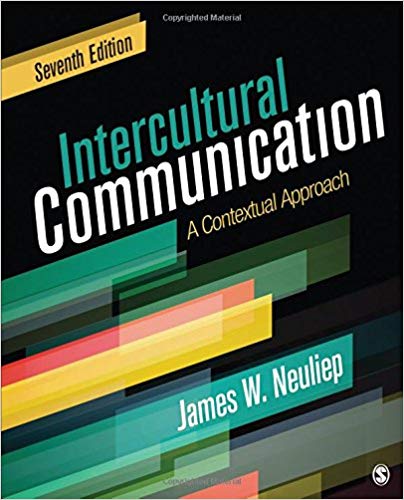
Intercultural Communication A Contextual Approach 7th Edition by James W. Neuliep - Test Bank

Intercultural Communication A Contextual Approach 7th Edition by James W. Neuliep - Test Bank   Instant Download - Complete Test Bank With Answers     Sample Questions Are Posted Below   Test Bank Chapter 5: The Perceptual Context   Multiple Choice   Perception is defined as ______. the long-term cognitive processing of information the short-term …

$19.99

Intercultural Communication A Contextual Approach 7th Edition by James W. Neuliep – Test Bank


Instant Download – Complete Test Bank With Answers


Sample Questions Are Posted Below


Test Bank

Chapter 5: The Perceptual Context


Multiple Choice


  1. Perception is defined as ______.
  2. the long-term cognitive processing of information
  3. the short-term cognitive processing of information
  4. the mental interpretation of external stimuli via sensation
  5. the cognitive interpretation of selective attention

Ans: C

Answer Location: A Model of Human Information Processing

Learning Objective: 5-1: Discuss cross-cultural differences in perception.

Cognitive Domain: Knowledge

Difficulty Level: Easy


  1. Perceptual filters alter and change how humans interpret information, physiologically, sociologically, and ______.
  2. genetically
  3. descriptively
  4. prescriptively
  5. psychologically

Ans: D

Answer Location: A Model of Human Information Processing

Learning Objective: 5-1: Discuss cross-cultural differences in perception.

Cognitive Domain: Knowledge

Difficulty Level: Easy


  1. One reason for cross-cultural differences in perception is due to ______.
  2. conditions in the physical environment
  3. short-term memory loss
  4. long-term memory loss
  5. interference

Ans: A

Answer Location: Cross-Cultural Differences in Sensation and Perception

Learning Objective: 5-1: Discuss cross-cultural differences in perception.

Cognitive Domain: Knowledge

Difficulty Level: Easy


  1. Information in long-term memory is usually lost because of ______.
  2. sensory receptor errors
  3. olfactic stimulation
  4. iconic stimulation
  5. interference

Ans: D

Answer Location: Cross-Cultural Differences in Sensation and Perception

Learning Objective: 5-1: Discuss cross-cultural differences in perception.

Cognitive Domain: Knowledge

Difficulty Level: Easy


  1. Episodic long-term memory refers to ______.
  2. the preservation of auditory stimulation
  3. the preservation of information pertaining to the unique experiences of the individual
  4. the preservation of a person’s general conceptual world
  5. the preservation of iconic stimulation

Ans: B

Answer Location: Cross-Cultural Differences in Sensation and Perception

Learning Objective: 5-1: Discuss cross-cultural differences in perception.

Cognitive Domain: Knowledge

Difficulty Level: Easy


  1. Semantic long-term memory refers to ______.
  2. the preservation of auditory stimulation
  3. the type of information pertaining to the unique experiences of the individual
  4. the preservation of a person’s general conceptual world
  5. the preservation of iconic stimulation

Ans: C

Answer Location: Cross-Cultural Differences in Sensation and Perception

Learning Objective: 5-1: Discuss cross-cultural differences in perception.

Cognitive Domain: Knowledge

Difficulty Level: Easy


  1. Persons in cultures with little formal education tend to remember information based on its ______.
  2. uniqueness
  3. novelty
  4. organization of unrelated items
  5. functionality

Ans: D

Answer Location: Cross-Cultural Differences in Memory and Retrieval

Learning Objective: 5-1: Discuss cross-cultural differences in perception.

Cognitive Domain: Comprehension

Difficulty Level: Medium


  1. Classifying, sorting, or arranging information into identifiable compartments that share certain features or characteristics is called ______.
  2. iconic perception
  3. sensory reproduction
  4. sensory replication
  5. categorization

Ans: D

Answer Location: Categorization and Mental Economy

Learning Objective: 5-1: Discuss cross-cultural differences in perception.

Cognitive Domain: Knowledge

Difficulty Level: Easy


  1. Some psychologists believe that stereotyping is an automatic information-processing strategy, meaning that ______.
  2. stereotyping is an unintentional and/or instinctive activation of thoughts that have been learned through repeated stimulation
  3. stereotyping is intentional and requires the conscious attention of the information processor
  4. stereotyping is a subset of categorization with an added attitudinal component
  5. most people are innately prejudiced against people different from themselves

Ans: A

Answer Location: Stereotypes

Learning Objective: 5-2: Define and discuss racial and ethnic stereotypes across cultures.

Cognitive Domain: Comprehension

Difficulty Level: Medium


  1. The tendency for people to see members of an out-group as less diverse and more stereotypic than the members of that in-group see themselves is called ______.
  2. the illusory correlation principle
  3. the out-group homogeneity effect
  4. the illusory homogeneity effect
  5. the out-group correlation effect

Ans: B

Answer Location: Why Stereotype?

Learning Objective: 5-2: Define and discuss racial and ethnic stereotypes across cultures.

Cognitive Domain: Knowledge

Difficulty Level: Easy


  1. The perception that one’s in-group is the center of everything whereby all other groups are scaled and rated with reference to the in-group is called ______.
  2. categorization
  3. stereotyping
  4. ethnocentrism
  5. authoritarianism

Ans: C

Answer Location: Ethnocentrism

Learning Objective: 5-3: Define and discuss the nature of ethnocentrism and racism.

Cognitive Domain: Knowledge

Difficulty Level: Easy


  1. Ethnocentrism is a belief in ______.
  2. the moral or intellectual superiority of men over women
  3. the degree to which one sees his or her culture as superior
  4. the universality of racism
  5. the moral or intellectual superiority of one race over another

Ans: B

Answer Location: A Contemporary Conceptualization of Ethnocentrism

Learning Objective: 5-3: Define and discuss the nature of ethnocentrism and racism.

Cognitive Domain: Comprehension

Difficulty Level: Medium


True/False


  1. Persons in Western cultures tend to classify objects into discrete categories based on their similarity while persons in Eastern cultures tend to classify objects into categories based on their relationships.

Ans: T

Answer Location: The Geography of Thought

Learning Objective: 5-1: Discuss cross-cultural differences in perception.

Cognitive Domain: Knowledge

Difficulty Level: Easy


  1. The first stage of information processing is the input stage, where raw information is taken in through the senses.

Ans: T

Answer Location: A Model of Human Information Processing

Learning Objective: 5-1: Discuss cross-cultural differences in perception.

Cognitive Domain: Knowledge

Difficulty Level: Easy


  1. Although the amount of information stored in short-term memory is quite limited, it can be stored permanently.

Ans: F

Answer Location: Cross-Cultural Differences in Sensation and Perception

Learning Objective: 5-1: Discuss cross-cultural differences in perception.

Cognitive Domain: Comprehension

Difficulty Level: Medium


  1. The essential difference between short- and long-term memory is the type of information that is stored.

Ans: F

Answer Location: Cross-Cultural Differences in Sensation and Perception

Learning Objective: 5-1: Discuss cross-cultural differences in perception.

Cognitive Domain: Knowledge

Difficulty Level: Easy


  1. Negative arousal, or anxiety, is also thought to interfere with the retrieval of information from long-term memory.

Ans: T

Answer Location: Cross-Cultural Differences in Sensation and Perception

Learning Objective: 5-1: Discuss cross-cultural differences in perception.

Cognitive Domain: Knowledge

Difficulty Level: Easy


  1. Most cognitive psychologists argue that all people, regardless of culture, engage in categorization and that it is a necessary part of everyday life.

Ans: T

Answer Location: Categorization and Mental Economy

Learning Objective: 5-1: Discuss cross-cultural differences in perception.

Cognitive Domain: Knowledge

Difficulty Level: Easy


  1. According to the Stereotype Content Model, an individual’s stereotypes about others are based on the two judgments of warmth and competence.

Ans: T

Answer Location: Stereotype Content Model

Learning Objective: 5-2: Define and discuss racial and ethnic stereotypes across cultures.

Cognitive Domain: Knowledge

Difficulty Level: Easy


  1. The illusory correlation principle refers to the tendency for people to see members of an out-group as less diverse and more stereotypic than the members of that group see themselves.

Ans: F

Answer Location: Why Stereotype?

Learning Objective: 5-2: Define and discuss racial and ethnic stereotypes across cultures.

Cognitive Domain: Knowledge

Difficulty Level: Easy


  1. Ethnocentrism serves a valuable function when one’s central group is under actual attack or threat of attack because it forms the basis for patriotism and the willingness to sacrifice for one’s central group.

Ans: T

Answer Location: A Contemporary Conceptualization of Ethnocentrism

Learning Objective: 5-3: Define and discuss the nature of ethnocentrism and racism.

Cognitive Domain: Knowledge

Difficulty Level: Easy


  1. Ethnocentrism refers to a belief that one racial group is superior to others and that other racial groups are necessarily inferior.

Ans: F

Answer Location: Ethnocentrism and Racism

Learning Objective: 5-3: Define and discuss the nature of ethnocentrism and racism.

Cognitive Domain: Comprehension

Difficulty Level: Medium


Essay/Short Answer


  1. Describe the three stages of human information processing.

Ans: During the input stage, information is taken in via the senses, attended to, and then interpreted.  This is the stage where raw information is taken in through the senses and interpreted by the brain. Once information has passed through the perceptual filters, it is processed into memory.  Memory involves maintaining information over time. Cognitive psychologists recognize two kinds of memory–short-term and long-term memory.  Once information has been stored, it is relatively useless unless it can be retrieved. Information that has been stored for a lifetime can be recalled in an instant.  Other times, however, recently stored information seems very difficult to recall.

Answer Location: A Model of Human Information Processing

Learning Objective: 5-1: Discuss cross-cultural differences in perception.

Cognitive Domain: Knowledge

Difficulty Level: Medium


  1. Describe the difference between categorization and stereotyping.

Ans: Categorization is classifying, sorting, or arranging information into identifiable compartments that share certain features or characteristics.

Considered a subset of categorization, stereotyping involves members of one group attributing characteristics to members of another group.

Answer Location: Categorization and Mental Economy / Stereotyping

Learning Objective: 5-2: Define and discuss racial and ethnic stereotypes across cultures.

Cognitive Domain: Knowledge

Difficulty Level: Medium


  1. Use George Gerbner’s Cultivation Theory to provide an example of a stereotype influenced by media.

Ans: Answers will vary.

Answer Location: Media Influence on Stereotypes

Learning Objective: 5-2: Define and discuss racial and ethnic stereotypes across cultures.

Cognitive Domain: Application

Difficulty Level: Hard


  1. Categorize the following emotions and behaviors based on the Stereotype Content Model: sympathy, pride, resentment, envy.

Ans: Answers will vary should include high and low levels of warmth and competence.

Answer Location: Stereotype Content Model

Learning Objective: 5-2: Define and discuss racial and ethnic stereotypes across cultures.

Cognitive Domain: Analysis

Difficulty Level: Medium


  1. Define ethnocentrism and discuss its causes and effects.

Ans:  Ethnocentricity is a natural condition. Most peoples of the world do not like foreigners and openly display feelings of hostility and fear toward them.  At the core of ethnocentrism is the tendency for any people to put their own group in a position of centrality and worthwhile creating and reinforcing negative attitudes and behaviors toward out-groups.  As newborns, humans are entirely, and naturally, egocentric. As we become socialized, we observe that our families coexist with other families, and that this culmination of people constitutes some form of neighborhood, clan, tribe, community, city, society, and finally culture. By the time we realize that we are a part of some much larger whole, we are officially enculturated and ethnocentric.

 Ethnocentrism is negatively and significantly correlated with perceptions of social attraction, competence, character, and hiring recommendation.

Answer Location: Ethnocentrism

Learning Objective: 5-3: Define and discuss the nature of ethnocentrism and racism.

Cognitive Domain: Knowledge

Difficulty Level: Medium


Additional information

Add Review

Your email address will not be published. Required fields are marked *