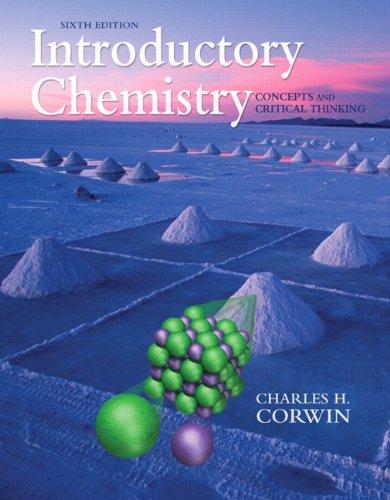
Introductory Chemistry Concepts and Critical Thinking 6th Edition by Charles H. Corwin - Test Bank

Introductory Chemistry Concepts and Critical Thinking 6th Edition by Charles H. Corwin - Test Bank   Instant Download - Complete Test Bank With Answers     Sample Questions Are Posted Below       MULTIPLE CHOICE.  Choose the one alternative that best completes the statement or answers the question.   1)   What is the …

$19.99

Introductory Chemistry Concepts and Critical Thinking 6th Edition by Charles H. Corwin – Test Bank


Instant Download – Complete Test Bank With Answers


Sample Questions Are Posted Below


MULTIPLE CHOICE.  Choose the one alternative that best completes the statement or answers the question.


1)


What is the term that describes a compound that has lost water of hydration?


1)


_______


  1. A)


deliquescent


  1. B)


hygroscopic


  1. C)


anhydrous


  1. D)


efflorescent


  1. E)


none of the above


2)


What is the term for the temperature at which the vapor pressure of a liquid is equal to the atmospheric pressure?


2)


_______


  1. A)


vapor point


  1. B)


boiling point


  1. C)


critical point


  1. D)


absolute zero


  1. E)


none of the above


3)


What is the term for the angle formed by two atoms bonded to the central atom in a molecule?


3)


_______


  1. A)


molecular angle


  1. B)


central angle


  1. C)


atomic angle


  1. D)


bond angle


  1. E)


none of the above


4)


What is the term for a substance in the solid state that contains particles that repeat in a regular geometric pattern?


4)


_______


  1. A)


regular solid


  1. B)


crystalline solid


  1. C)


geometric solid


  1. D)


noncrystalline solid


  1. E)


none of the above


5)


What is the term for water purified by an ion exchange method?


5)


_______


  1. A)


deionized water


  1. B)


distilled water


  1. C)


soft water


  1. D)


hard water


  1. E)


none of the above


6)


What is the term for an attraction between two molecules with permanent dipoles?


6)


_______


  1. A)


dispersion force


  1. B)


hydrogen bond


  1. C)


dipole force


  1. D)


intermolecular bond


  1. E)


none of the above


7)


What is the term for an attraction between two molecules with temporary dipoles?


7)


_______


  1. A)


dipole force


  1. B)


hydrogen bond


  1. C)


dispersion force


  1. D)


intermolecular bond


  1. E)


none of the above


8)


What is the term for water purified by boiling and collecting the condensed vapor?


8)


_______


  1. A)


soft water


  1. B)


hard water


  1. C)


deionized water


  1. D)


distilled water


  1. E)


none of the above


9)


What is the term for the chemical reaction produced from passing electrical current through an aqueous solution?


9)


_______


  1. A)


distillation


  1. B)


electrolysis


  1. C)


deionization


  1. D)


decomposition


  1. E)


none of the above


10)


What is the term for water containing a variety of different cations and anions?


10)


______


  1. A)


hard water


  1. B)


deionized water


  1. C)


soft water


  1. D)


distilled water


  1. E)


none of the above


11)


What is the term for the heat required to convert a solid to a liquid at its melting point?


11)


______


  1. A)


specific heat


  1. B)


heat of crystallization


  1. C)


heat of fusion


  1. D)


heat of vaporization


  1. E)


none of the above


12)


What is the term for the heat required to convert a liquid to a gas at its boiling point?


12)


______


  1. A)


heat of crystallization


  1. B)


specific heat


  1. C)


heat of fusion


  1. D)


heat of vaporization


  1. E)


none of the above


13)


What is the term for a compound that contains a specific number of water molecules attached to a formula unit in a crystalline compound?


13)


______


  1. A)


deliquescent


  1. B)


hydrate


  1. C)


anhydrous


  1. D)


efflorescent


  1. E)


none of the above


14)


What is the term for the attraction between an H atom bonded to O or N, and a nonbonding electron pair on an electronegative atom in another molecule?


14)


______


  1. A)


dispersion force


  1. B)


intermolecular bond


  1. C)


dipole force


  1. D)


hydrogen bond


  1. E)


none of the above


15)


What is the term for a crystalline solid composed of ions that repeat in a regular pattern?


15)


______


  1. A)


molecular solid


  1. B)


regular solid


  1. C)


ionic solid


  1. D)


metallic solid


  1. E)


none of the above


16)


What is the term for a compound that reacts with water to produce a basic solution?


16)


______


  1. A)


metal oxide


  1. B)


anhydrous


  1. C)


nonmetal oxide


  1. D)


hydrate


  1. E)


none of the above


17)


What is the term for a crystalline solid composed of metal atoms that repeat in a regular pattern?


17)


______


  1. A)


regular solid


  1. B)


ionic solid


  1. C)


metallic solid


  1. D)


molecular solid


  1. E)


none of the above


18)


What is the term for a crystalline solid composed of molecules that repeat in a regular pattern?


18)


______


  1. A)


molecular solid


  1. B)


ionic solid


  1. C)


metallic solid


  1. D)


regular solid


  1. E)


none of the above


19)


What is the term for the overall direction of partial negative charge in a molecule having two or more dipoles?


19)


______


  1. A)


electron dipole


  1. B)


net dipole


  1. C)


directional dipole


  1. D)


charge dipole


  1. E)


none of the above


20)


What is the term for a compound that reacts with water to produce an acidic solution?


20)


______


  1. A)


hydrate


  1. B)


metal oxide


  1. C)


nonmetal oxide


  1. D)


anhydrous


  1. E)


none of the above


21)


What is the term for water containing sodium ions and a variety of anions?


21)


______


  1. A)


soft water


  1. B)


hard water


  1. C)


distilled water


  1. D)


deionized water


  1. E)


none of the above


22)


What is the term for the resistance of a liquid to spread and its tendency to form spherical droplets?


22)


______


  1. A)


viscosity


  1. B)


dispersion forces


  1. C)


surface tension


  1. D)


dipole attraction


  1. E)


none of the above


23)


What is the term for the pressure exerted by vapor molecules above a liquid in a closed container when the rates of evaporation and condensation are equal?


23)


______


  1. A)


atmospheric pressure


  1. B)


gas pressure


  1. C)


vapor pressure


  1. D)


partial pressure


  1. E)


none of the above


24)


What is the term for the resistance of a liquid to flow?


24)


______


  1. A)


dipole attraction


  1. B)


surface tension


  1. C)


viscosity


  1. D)


dispersion forces


  1. E)


none of the above


25)


What is the term for water molecules bound to a formula unit in a hydrate?


25)


______


  1. A)


water of hydration


  1. B)


efflorescent water


  1. C)


anhydrous water


  1. D)


deliquescent water


  1. E)


none of the above


26)


Which of the following is an observed property of liquids?


26)


______


  1. A)


Liquids have a variable shape and fixed volume.


  1. B)


Liquids are more dense than gases.


  1. C)


Liquids do not compress or expand significantly.


  1. D)


Liquids flow readily.


  1. E)


all of the above


27)


Which of the following is an observed property of liquids?


27)


______


  1. A)


Liquids are less dense than gases.


  1. B)


Liquids that are soluble mix homogeneously.


  1. C)


Liquids have a fixed shape and variable volume.


  1. D)


Liquids compress and expand significantly.


  1. E)


none of the above


28)


Which of the following is an observed property of liquids?


28)


______


  1. A)


Liquids compress or expand significantly.


  1. B)


Liquids that are insoluble mix homogeneously.


  1. C)


Liquids have a fixed shape and variable volume.


  1. D)


Liquids are less dense than gases.


  1. E)


none of the above


29)


Predict the physical state of ammonia at -50 °C (Mp = -77 °C, Bp = -33 °C) and normal atmospheric pressure.


29)


______


  1. A)


gas


  1. B)


solid and liquid


  1. C)


solid


  1. D)


liquid


  1. E)


liquid and gas


30)


Predict the physical state of ammonia at -95 °C (Mp = -77 °C, Bp = -33 °C) and normal atmospheric pressure.


30)


______


  1. A)


liquid


  1. B)


gas


  1. C)


solid and liquid


  1. D)


solid


  1. E)


liquid and gas


31)


Predict the physical state of ammonia at -15 °C (Mp = -77 °C, Bp = -33 °C) and normal atmospheric pressure.


31)


______


  1. A)


liquid


  1. B)


solid


  1. C)


gas


  1. D)


solid and liquid


  1. E)


liquid and gas


32)


Predict the physical state of argon at -187 °C (Mp = -189 °C, Bp = -186 °C) and normal atmospheric pressure.


32)


______


  1. A)


solid and liquid


  1. B)


solid


  1. C)


liquid


  1. D)


gas


  1. E)


liquid and gas


33)


Predict the physical state of argon at -197 °C (Mp = -189 °C, Bp = -186 °C) and normal atmospheric pressure.


33)


______


  1. A)


liquid


  1. B)


gas


  1. C)


solid


  1. D)


solid and liquid


  1. E)


liquid and gas


34)


Predict the physical state of argon at -100 °C (Mp = -189 °C, Bp = -186 °C) and normal atmospheric pressure.


34)


______


  1. A)


solid


  1. B)


liquid


  1. C)


gas


  1. D)


solid and liquid


  1. E)


liquid and gas


35)


What is the strongest intermolecular force in a liquid containing molecules with nonpolar bonds?


35)


______


  1. A)


dispersion forces


  1. B)


hydrogen bonds


  1. C)


covalent bonds


  1. D)


dipole forces


  1. E)


none of the above


36)


What is the strongest intermolecular force in a liquid containing molecules with H-O bonds?


36)


______


  1. A)


dipole forces


  1. B)


covalent bonds


  1. C)


dispersion forces


  1. D)


hydrogen bonds


  1. E)


none of the above


37)


What is the strongest intermolecular force in a liquid containing molecules with H-N bonds?


37)


______


  1. A)


hydrogen bonds


  1. B)


dipole forces


  1. C)


covalent bonds


  1. D)


dispersion forces


  1. E)


none of the above


38)


Which of the following is true of the intermolecular attractions in liquids?


38)


______


  1. A)


Nonpolar molecules are attracted by temporary dipole forces.


  1. B)


Polar molecules are attracted by permanent dipole forces.


  1. C)


Polar molecules are attracted by temporary dipole forces.


  1. D)


all of the above


  1. E)


none of the above


39)


Which of the following is true of the intermolecular attractions in liquids?


39)


______


  1. A)


Nonpolar molecules are attracted by dipole forces.


  1. B)


Nonpolar molecules are attracted by hydrogen bonds.


  1. C)


Nonpolar molecules are attracted by dispersion forces.


  1. D)


all of the above


  1. E)


none of the above


40)


Which of the following is true of the intermolecular attractions in liquids?


40)


______


  1. A)


All polar molecules are attracted by dispersion forces.


  1. B)


Some polar molecules are attracted by hydrogen bonds.


  1. C)


All polar molecules are attracted by dipole forces.


  1. D)


all of the above


  1. E)


none of the above


41)


If the molecules in a liquid have a strong attraction for each other, which of the following properties has a relatively high value?


41)


______


  1. A)


viscosity


  1. B)


surface tension


  1. C)


boiling point


  1. D)


all of the above


  1. E)


none of the above


42)


If the molecules in a liquid have a strong attraction for each other, which of the following properties has a relatively low value?


42)


______


  1. A)


vapor pressure


  1. B)


boiling point


  1. C)


surface tension


  1. D)


viscosity


  1. E)


all of the above


43)


If the molecules in a liquid have a weak attraction for each other, which of the following properties has a relatively high value?


43)


______


  1. A)


surface tension


  1. B)


boiling point


  1. C)


viscosity


  1. D)


vapor pressure


  1. E)


all of the above


44)


Consider the following liquids with similar molar masses. Predict which has the strongest intermolecular attraction based only on vapor pressure data.


44)


______


  1. A)


ethyl methyl ether (vapor pressure @ 20 °C = 1260 mm Hg)


  1. B)


acetic acid (vapor pressure @ 20 °C = 14 mm Hg)


  1. C)


butane (vapor pressure @ 20 °C = 1550 mm Hg)


  1. D)


ethyl chloride (vapor pressure @ 20 °C = 1050 mm Hg)


  1. E)


isopropyl alcohol (vapor pressure @ 20 °C = 35 mm Hg)


45)


Consider the following liquids with similar molar masses. Predict which has the weakest intermolecular attraction based only on vapor pressure data.


45)


______


  1. A)


isopropyl alcohol (vapor pressure @ 20 °C = 35 mm Hg)


  1. B)


acetic acid (vapor pressure @ 20 °C = 14 mm Hg)


  1. C)


ethyl methyl ether (vapor pressure @ 20 °C = 1260 mm Hg)


  1. D)


ethyl chloride (vapor pressure @ 20 °C = 1050 mm Hg)


  1. E)


butane (vapor pressure @ 20 °C = 1550 mm Hg)


46)


Consider the following liquids with similar molar masses. Predict which has the weakest intermolecular attraction based only on vapor pressure data.


46)


______


  1. A)


propionic acid (vapor pressure @ 20 °C = 5 mm Hg)


  1. B)


pentane (vapor pressure @ 20 °C = 430 mm Hg)


  1. C)


butyl alcohol (vapor pressure @ 20 °C = 6 mm Hg)


  1. D)


propyl chloride (vapor pressure @ 20 °C = 300 mm Hg)


  1. E)


ethyl ether (vapor pressure @ 20 °C = 450 mm Hg)


47)


Consider the following liquids with similar molar masses. Predict which has the strongest intermolecular attraction based only on boiling point data.


47)


______


  1. A)


butane (Bp @ 760 mm Hg = -0.5 °C)


  1. B)


acetic acid (Bp @ 760 mm Hg = 118 °C)


  1. C)


ethyl methyl ether (Bp @ 760 mm Hg = 11 °C)


  1. D)


ethyl chloride (Bp @ 760 mm Hg = 12 °C)


  1. E)


propyl alcohol (Bp @ 760 mm Hg = 97 °C)


48)


Consider the following liquids with similar molar masses. Predict which has the weakest intermolecular attraction based only on boiling point data.


48)


______


  1. A)


propyl alcohol (Bp @ 760 mm Hg = 97 °C)


  1. B)


ethyl chloride (Bp @ 760 mm Hg = 12 °C)


  1. C)


acetic acid (Bp @ 760 mm Hg = 118 °C)


  1. D)


butane (Bp @ 760 mm Hg = -0.5 °C)


  1. E)


ethyl methyl ether (Bp @ 760 mm Hg = 11 °C)


49)


Consider the following liquids with similar molar masses. Predict which has the strongest intermolecular attraction based only on boiling point data.


49)


______


  1. A)


pentane (Bp @ 760 mm Hg = 36 °C)


  1. B)


propyl chloride (Bp @ 760 mm Hg = 47 °C)


  1. C)


propionic acid (Bp @ 760 mm Hg = 141 °C)


  1. D)


butyl alcohol (Bp @ 760 mm Hg = 117 °C)


  1. E)


ethyl ether (Bp @ 760 mm Hg = 35 °C)


50)


Consider the following liquids with similar molar masses. Predict which liquid has the highest boiling point based only on vapor pressure data.


50)


______


  1. A)


butyl alcohol (vapor pressure @ 20 °C = 6 mm Hg)


  1. B)


propyl chloride (vapor pressure @ 20 °C = 300 mm Hg)


  1. C)


methyl acetate (vapor pressure @ 20 °C = 205 mm Hg)


  1. D)


pentane (vapor pressure @ 20 °C = 430 mm Hg)


  1. E)


ethyl ether (vapor pressure @ 20 °C = 450 mm Hg)


51)


Consider the following liquids with similar molar masses. Predict which liquid has the lowest boiling point based only on vapor pressure data.


51)


______


  1. A)


pentane (vapor pressure @ 20 °C = 430 mm Hg)


  1. B)


butyl alcohol (vapor pressure @ 20 °C = 6 mm Hg)


  1. C)


ethyl ether (vapor pressure @ 20 °C = 450 mm Hg)


  1. D)


propyl chloride (vapor pressure @ 20 °C = 300 mm Hg)


  1. E)


methyl acetate (vapor pressure @ 20 °C = 205 mm Hg)


52)


Consider the following liquids with similar molar masses. Predict which liquid has the highest boiling point based only on vapor pressure data.


52)


______


  1. A)


acetic acid (vapor pressure @ 20 °C = 14 mm Hg)


  1. B)


butane (vapor pressure @ 20 °C = 1550 mm Hg)


  1. C)


isopropyl alcohol (vapor pressure @ 20 °C = 35 mm Hg)


  1. D)


ethyl chloride (vapor pressure @ 20 °C = 1050 mm Hg)


  1. E)


ethyl methyl ether (vapor pressure @ 20 °C = 1260 mm Hg)


53)


Consider the following liquids with similar molar masses. Predict which liquid has the lowest boiling point based only on vapor pressure data.


53)


______


  1. A)


butane (vapor pressure @ 20 °C = 1550 mm Hg)


  1. B)


acetic acid (vapor pressure @ 20 °C = 14 mm Hg)


  1. C)


ethyl methyl ether (vapor pressure @ 20 °C = 1260 mm Hg)


  1. D)


ethyl chloride (vapor pressure @ 20 °C = 1050 mm Hg)


  1. E)


isopropyl alcohol (vapor pressure @ 20 °C = 35 mm Hg)


54)


Consider the following liquids with similar molar masses. Predict which liquid has the strongest intermolecular attraction based on viscosity data.


54)


______


  1. A)


ethyl formate (viscosity @ 20 °C = 0.40 centipoise)


  1. B)


butyl alcohol (viscosity @ 20 °C = 2.95 centipoise)


  1. C)


ethyl ether (viscosity @ 20 °C = 0.23 centipoise)


  1. D)


propyl chloride (viscosity @ 20 °C = 0.35 centipoise)


  1. E)


propionic acid (viscosity @ 20 °C = 1.10 centipoise)


55)


Consider the following liquids with similar molar masses. Predict which liquid has the weakest intermolecular attraction based on viscosity data.


55)


______


  1. A)


butyl alcohol (viscosity @ 20 °C = 2.95 centipoise)


  1. B)


propionic acid (viscosity @ 20 °C = 1.10 centipoise)


  1. C)


ethyl ether (viscosity @ 20 °C = 0.23 centipoise)


  1. D)


propyl chloride (viscosity @ 20 °C = 0.35 centipoise)


  1. E)


ethyl formate (viscosity @ 20 °C = 0.40 centipoise)


56)


Consider the following liquids with similar molar masses. Predict which liquid has the strongest intermolecular attraction based on surface tension data.


56)


______


  1. A)


ethyl ether (surface tension @ 20 °C = 17 dynes/cm)


  1. B)


propionic acid (surface tension @ 20 °C = 27 dynes/cm)


  1. C)


ethyl formate (surface tension @ 20 °C = 24 dynes/cm)


  1. D)


butyl alcohol (surface tension @ 20 °C = 25 dynes/cm)


  1. E)


propyl chloride (surface tension @ 20 °C = 18 dynes/cm)


57)


Consider the following liquids with similar molar masses. Predict which liquid has the weakest intermolecular attraction based on surface tension data.


57)


______


  1. A)


ethyl formate (surface tension @ 20 °C = 24 dynes/cm)


  1. B)


ethyl ether (surface tension @ 20 °C = 17 dynes/cm)


  1. C)


propionic acid (surface tension @ 20 °C = 27 dynes/cm)


  1. D)


butyl alcohol (surface tension @ 20 °C = 25 dynes/cm)


  1. E)


propyl chloride (surface tension @ 20 °C = 18 dynes/cm)


58)


The vapor pressure of mercury is 1 mm Hg at 126 °C; 10 mm Hg at 184 °C; 400 mm Hg at 323 °C; 100 mm Hg at 262 °C; 760 mm Hg at 357 °C. What is the normal boiling point of mercury?


58)


______


  1. A)


126 °C


  1. B)


323 °C


  1. C)


262 °C


  1. D)


184 °C


  1. E)


357 °C


59)


The vapor pressure of methanol is 1 mm Hg at -44 °C; 10 mm Hg at -16 °C; 100 mm Hg at 21 °C; 760 mm Hg at 65 °C; 1520 mm Hg at 84 °C. What is the normal boiling point of methanol?


59)


______


  1. A)


-16 °C


  1. B)


65 °C


  1. C)


-44 °C


  1. D)


21 °C


  1. E)


84 °C


60)


The vapor pressure of ethanol is 360 mm Hg at 60 °C; 600 mm Hg at 72 °C; 760 mm Hg at 78 °C; 810 mm Hg at 80 °C; 1190 mm Hg at 90 °C. What is the normal boiling point of ethanol?


60)


______


  1. A)


72 °C


  1. B)


90 °C


  1. C)


78 °C


  1. D)


80 °C


  1. E)


60 °C


61)


The vapor pressure of acetone is 1 torr at -59 °C; 100 torr at 8 °C; 400 torr at 40 °C; 760 torr at 56 °C; 1520 torr at 79 °C. What is the normal boiling point of acetone?


61)


______


  1. A)


-59 °C


  1. B)


40 °C


  1. C)


8 °C


  1. D)


79 °C


  1. E)


56 °C


62)


The vapor pressure of ethyl ether is 7.87 in. Hg at 2 °C; 11.8 in. Hg at 12 °C; 27.5 in. Hg at 32 °C; 29.9 in. Hg at 35 °C; 39.3 in. Hg at 42 °C. What is the normal boiling point of ethyl ether?


62)


______


  1. A)


2 °C


  1. B)


32 °C


  1. C)


35 °C


  1. D)


12 °C


  1. E)


42 °C


63)


The vapor pressure of chloroform is 0.001 atm at -58 °C; 0.132 atm at 10 °C; 0.526 atm at 43 °C; 1.00 atm at 61 °C; 2.00 atm at 84 °C. What is the normal boiling point of chloroform?


63)


______


  1. A)


43 °C


  1. B)


10 °C


  1. C)


-58 °C


  1. D)


61 °C


  1. E)


84 °C


64)


The vapor pressure of a chlorofluorocarbon (CFC) is 0.193 psi at -98 °C; 1.91 psi at -70 °C; 14.7 psi at

-30 °C; 29.4 psi at -12 °C; 73.5 psi at 16 °C. What is the normal boiling point of the CFC?


64)


______


  1. A)


-69 °C


  1. B)


16 °C


  1. C)


-30 °C


  1. D)


-98 °C


  1. E)


-12 °C


65)


Which of the following is an observed property of solids?


65)


______


  1. A)


Solids do not compress or expand significantly.


  1. B)


Solids have a fixed shape and fixed volume.


  1. C)


Solids are usually more dense than liquids.


  1. D)


Solids can be crystalline or noncrystalline.


  1. E)


all of the above


66)


Which of the following is an observed property of solids?


66)


______


  1. A)


Solids have a variable shape and fixed volume.


  1. B)


Solids compress and expand significantly.


  1. C)


Solids are usually less dense than liquids.


  1. D)


Solids can have noncrystalline structures.


  1. E)


none of the above


67)


Which of the following is an observed property of solids?


67)


______


  1. A)


Solids compress and expand significantly.


  1. B)


Solids always have crystalline structures.


  1. C)


Solids are usually less dense than liquids.


  1. D)


Solids have a rigid shape and variable volume.


  1. E)


none of the above


68)


Predict the physical state of krypton at -155 °C (Mp = -157 °C, Bp = -152 °C) and normal atmospheric pressure.


68)


______


  1. A)


gas


  1. B)


liquid and gas


  1. C)


solid and liquid


  1. D)


solid


  1. E)


liquid


69)


Predict the physical state of krypton at -175 °C (Mp = -157 °C, Bp = -152 °C) and normal atmospheric pressure.


69)


______


  1. A)


liquid and gas


  1. B)


liquid


  1. C)


solid


  1. D)


solid and liquid


  1. E)


gas


70)


Predict the physical state of krypton at -150 °C (Mp = -157 °C, Bp = -152 °C) and normal atmospheric pressure.


70)


______


  1. A)


liquid


  1. B)


liquid and gas


  1. C)


gas


  1. D)


solid


  1. E)


solid and liquid


71)


Which of the following are types of crystalline solids?


71)


______


  1. A)


ionic


  1. B)


metallic


  1. C)


molecular


  1. D)


all of the above


  1. E)


none of the above


72)


Which of the following types of crystalline solids have ions arranged in regular geometric patterns?


72)


______


  1. A)


ionic


  1. B)


metallic


  1. C)


molecular


  1. D)


all of the above


  1. E)


none of the above


73)


Which of the following types of crystalline solids have molecules arranged in regular geometric patterns?


73)


______


  1. A)


ionic


  1. B)


metallic


  1. C)


molecular


  1. D)


all of the above


  1. E)


none of the above


74)


Which of the following types of crystalline solids have metal atoms arranged in regular geometric patterns?


74)


______


  1. A)


ionic


  1. B)


metallic


  1. C)


molecular


  1. D)


all of the above


  1. E)


none of the above


75)


Which of the following is an example of an ionic crystalline solid?


75)


______


  1. A)


silver chloride, AgCl


  1. B)


iron pyrite, FeS2


  1. C)


calcite, CaCO3


  1. D)


fluorite, CaF2


  1. E)


all of the above


76)


Which of the following is an example of an ionic crystalline solid?


76)


______


  1. A)


sucrose, C12H22O11


  1. B)


phosphorus, P4


  1. C)


halite, NaCl


  1. D)


urea, CO(NH2)2


  1. E)


none of the above


77)


Which of the following is an example of a molecular crystalline solid?


77)


______


  1. A)


ice, H2O


  1. B)


DDT, C14H9Cl5


  1. C)


sulfur, S8


  1. D)


vitamin D, C27H44O


  1. E)


all of the above


78)


Which of the following is an example of a molecular crystalline solid?


78)


______


  1. A)


iron pyrite, FeS2


  1. B)


Dry Ice, CO2


  1. C)


fluorite, CaF2


  1. D)


marble, CaCO3


  1. E)


none of the above


79)


Which of the following is an example of a metallic crystalline solid?


79)


______


  1. A)


titanium, Ti


  1. B)


potassium, K


  1. C)


vanadium, V


  1. D)


all of the above


  1. E)


none of the above


80)


Which of the following is an example of a metallic crystalline solid?


80)


______


  1. A)


diamond, C


  1. B)


charcoal, C


  1. C)


graphite, C


  1. D)


all of the above


  1. E)


none of the above


81)


Calculate the number of calories required to raise 10.0 g of water from 25.0 °C to 75.0 °C. The specific heat of water is 1.00 cal/(g × °C).


81)


______


  1. A)


10.0 cal


  1. B)


50.0 cal


  1. C)


7.50 × 10² cal


  1. D)


5.00 × 10² cal


  1. E)


2.50 × 10² cal


82)


Calculate the number of calories released when 25.0 g of water cools from 95.0 °C to 20.0 °C. The specific heat of water is 1.00 cal/(g × °C).


82)


______


  1. A)


25.0 cal


  1. B)


1.88 × 10³ cal


  1. C)


2.38 × 10³ cal


  1. D)


5.00 × 10² cal


  1. E)


75.0 cal


83)


Calculate the heat absorbed when 10.0 g of ice at 0 °C melts to water at the same temperature. The specific heat of water is 1.00 cal/(g × °C); the heat of fusion is 80.0 cal/g; and the heat of vaporization is 540.0 cal/g.


83)


______


  1. A)


54.0 cal


  1. B)


8.00 × 10² cal


  1. C)


8.0 cal


  1. D)


10.0 cal


  1. E)


5.40 × 10³ cal


84)


Calculate the heat released when 25.0 g of water at 0 °C crystallizes to ice at the same temperature. The specific heat of water is 1.00 cal/(g × °C); the heat of fusion is 80.0 cal/g; and the heat of vaporization is 540.0 cal/g.


84)


______


  1. A)


25.0 cal


  1. B)


2.00 × 10³ cal


  1. C)


21.6 cal


  1. D)


3.20 cal


  1. E)


1.35 × 10⁴ cal


85)


Calculate the heat required to convert 10.0 g of water at 100 °C to steam at 100 °C. The specific heat of water is 1.00 cal/(g × °C); the heat of fusion is 80.0 cal/g; and the heat of vaporization is 540.0 cal/g.


85)


______


  1. A)


5.40 × 10³ cal


  1. B)


8.00 × 10² cal


  1. C)


54.0 cal


  1. D)


8.0 cal


  1. E)


10.0 cal


86)


Calculate the heat released when 25.0 g of steam at 100 °C condenses to a liquid at 100 °C. The specific heat of water is 1.00 cal/(g × °C); the heat of fusion is 80.0 cal/g; and the heat of vaporization is 540.0 cal/g.


86)


______


  1. A)


3.20 cal


  1. B)


2.00 × 10³ cal


  1. C)


1.35 × 10⁴ cal


  1. D)


25.0 cal


  1. E)


21.6 cal


87)


Calculate the heat required to convert 10.0 g of water at 25.0 °C to steam at 100.0 °C. The specific heat of water is 1.00 cal/(g × °C); the heat of fusion is 80.0 cal/g; and the heat of vaporization is 540.0 cal/g.


87)


______


  1. A)


1.05 × 10³ cal


  1. B)


8.00 × 10² cal


  1. C)


6.15 × 10³ cal


  1. D)


1.55 × 10³ cal


  1. E)


7.50 × 10² cal


88)


Calculate the heat released when 10.0 g of water at 25.0 °C cools to ice at 0.0 °C. The specific heat of water is 1.00 cal/(g × °C); the heat of fusion is 80.0 cal/g; and the heat of vaporization is 540.0 cal/g.


88)


______


  1. A)


5.15 × 10³ cal


  1. B)


1.05 × 10³ cal


  1. C)


2.50 × 10² cal


  1. D)


5.65 × 10³ cal


  1. E)


5.40 × 10³ cal


89)


Calculate the heat required to convert 10.0 g of ice at 0.0 °C to steam at 100.0 °C. The specific heat of water is 1.00 cal/(g × °C); the heat of fusion is 80.0 cal/g; and the heat of vaporization is 540.0 cal/g.


89)


______


  1. A)


7.20 × 10³ cal


  1. B)


1.80 × 10³ cal


  1. C)


6.40 × 10³ cal


  1. D)


5.40 × 10³ cal


  1. E)


6.20 × 10³ cal


90)


Calculate the heat released when 25.0 g of steam at 100.0 °C cools to ice at 0.0 °C. The specific heat of water is 1.00 cal/(g × °C); the heat of fusion is 80.0 cal/g; and the heat of vaporization is 540.0 cal/g.


90)


______


  1. A)


1.80 × 10⁴ cal


  1. B)


1.35 × 10⁴ cal


  1. C)


1.55 × 10⁴ cal


  1. D)


1.60 × 10⁴ cal


  1. E)


4.50 × 10³ cal


91)


How many pairs of bonding electrons are in a water molecule?


91)


______


  1. A)


0


  1. B)


1


  1. C)


2


  1. D)


3


  1. E)


4


92)


How many pairs of nonbonding electrons are in a water molecule?


92)


______


  1. A)


0


  1. B)


1


  1. C)


2


  1. D)


3


  1. E)


4


93)


What is the experimentally observed bond angle in a water molecule?


93)


______


  1. A)


120°


  1. B)


104.5°


  1. C)


109.5°


  1. D)


180°


  1. E)


90°


94)


What is the type of bond between H-O in a water molecule?


94)


______


  1. A)


nonpolar covalent bond


  1. B)


polar covalent bond


  1. C)


hydrogen bond


  1. D)


coordinate covalent bond


  1. E)


none of the above


95)


Which of the following illustrates the bond polarity between H-O in water?


95)


______


  1. A)


(δ+) HO (δ+)


  1. B)


(δ) HO (δ)


  1. C)


(δ-) HO (δ+)


  1. D)


(δ-) HO (δ-)


  1. E)


(δ+) HO (δ-)


96)


How many dipoles are in a water molecule?


96)


______


  1. A)


0


  1. B)


1


  1. C)


2


  1. D)


3


  1. E)


4


97)


How many net dipoles are in a water molecule?


97)


______


  1. A)


0


  1. B)


1


  1. C)


2


  1. D)


3


  1. E)


none of the above


98)


Which of the following is an intermolecular bond between water molecules?


98)


______


  1. A)


hydrogen bond


  1. B)


polar covalent bond


  1. C)


nonpolar covalent bond


  1. D)


coordinate covalent bond


  1. E)


all of the above


99)


Which of the following properties of water is much higher than predicted?


99)


______


  1. A)


heat of fusion


  1. B)


melting point


  1. C)


boiling point


  1. D)


heat of vaporization


  1. E)


all of the above


100)


Which of the following explains why ice floats on water?


100)


_____


  1. A)


Ice has a greater specific heat than water.


  1. B)


Ice has a greater molar mass than water.


  1. C)


Ice has a greater density than water.


  1. D)


Ice has a greater volume than an equal mass of water.


  1. E)


Ice has a greater heat of fusion than water.


101)


Which of the following explains why a needle can float on water?


101)


_____


  1. A)


The surface tension of the water supports the needle.


  1. B)


The vapor pressure of the water supports the needle.


  1. C)


The viscosity of the water supports the needle.


  1. D)


The molar mass of the water is greater than the needle.


  1. E)


The density of the water is greater than the needle.


102)


Which of the following accounts for the unusually high melting point of ice?


102)


_____


  1. A)


the molar mass of ice


  1. B)


the specific heat of ice


  1. C)


the density of ice


  1. D)


the crystalline structure of ice


  1. E)


the hydrogen bonds in ice


103)


Which of the following accounts for the unusually high boiling point of water?


103)


_____


  1. A)


the density of water


  1. B)


the hydrogen bonds in water


  1. C)


the surface tension in water


  1. D)


the molar mass of water


  1. E)


the specific heat of water


104)


Which of the following accounts for the unusually high heat of fusion for ice?


104)


_____


  1. A)


the crystalline structure of ice


  1. B)


the molar mass of ice


  1. C)


the specific heat of ice


  1. D)


the density of ice


  1. E)


the hydrogen bonds in ice


105)


Which of the following accounts for the unusually high heat of vaporization for water?


105)


_____


  1. A)


the density of water


  1. B)


the specific heat of water


  1. C)


the hydrogen bonds in water


  1. D)


the molar mass of water


  1. E)


the surface tension in water


106)


What are the products from the electrolysis of water?


106)


_____


  1. A)


hydrogen and ozone


  1. B)


hydrogen and oxygen


  1. C)


hydrogen and hydrogen peroxide


  1. D)


hydrogen peroxide and oxygen


  1. E)


none of the above


107)


What are the products from the reaction of water and an active metal?


107)


_____


  1. A)


a metal oxide and oxygen gas


  1. B)


a metal hydroxide and oxygen gas


  1. C)


a metal oxide and hydrogen gas


  1. D)


a metal hydroxide and hydrogen gas


  1. E)


none of the above


108)


What is(are) the product(s) from the reaction of water and a metal oxide?


108)


_____


  1. A)


a metal hydroxide and hydrogen peroxide


  1. B)


a metal hydroxide


  1. C)


a metal hydroxide and oxygen gas


  1. D)


a metal hydroxide and hydrogen gas


  1. E)


none of the above


109)


What is the product from the reaction of water and a nonmetal oxide?


109)


_____


  1. A)


a nonmetal hydroxide and hydrogen gas


  1. B)


an acid


  1. C)


a base


  1. D)


a nonmetal hydroxide and oxygen gas


  1. E)


none of the above


110)


Complete the following chemical equation and indicate the products.


H2O(l)


110)


_____


  1. A)


H2O2 + O3


  1. B)


H2O2 + O2


  1. C)


H2 + O2


  1. D)


H2 + O3


  1. E)


H + O


111)


Complete the following chemical equation and indicate the products.


K(s) + H2O(l)          →


111)


_____


  1. A)


KOH + H2


  1. B)


K2O + H2


  1. C)


KOH + H2O2


  1. D)


KOH + O2


  1. E)


K2O + H2O2


112)


Complete the following chemical equation and indicate the products.


Sr(s) + H2O(l)          →


112)


_____


  1. A)


Sr(OH)2 + H2O2


  1. B)


Sr(OH)2 + O2


  1. C)


SrO + H2O2


  1. D)


Sr(OH)2 + H2


  1. E)


SrO + H2


113)


Complete the following chemical equation and indicate the product(s).


Li2O(s) + H2O(l)          →


113)


_____


  1. A)


LiOH + O3


  1. B)


LiOH + H2


  1. C)


LiOH + O2


  1. D)


LiOH


  1. E)


LiOH + H2O2


114)


Complete the following chemical equation and indicate the product(s).


MgO(s) + H2O(l)          →


114)


_____


  1. A)


Mg(OH)2 + H2O2


  1. B)


Mg(OH)2 + H2


  1. C)


Mg(OH)2 + O2


  1. D)


Mg(OH)2 + O3


  1. E)


Mg(OH)2


115)


Complete the following chemical equation and indicate the product(s).


ZnO(s) + H2O(l)          →


115)


_____


  1. A)


Zn(OH)2 + H2O2


  1. B)


Zn(OH)2 + O2


  1. C)


Zn(OH)2 + O3


  1. D)


Zn(OH)2


  1. E)


Zn(OH)2 + H2


116)


Complete the following chemical equation and indicate the product(s).


CO2(g) + H2O(l)          →


116)


_____


  1. A)


CH3OH


  1. B)


CO + H2O2


  1. C)


CO + H2 + O2


  1. D)


HC2H3O2


  1. E)


H2CO3


117)


Complete the following chemical equation and indicate the product(s).


SO2(g) + H2O(l)          →


117)


_____


  1. A)


H2SO3


  1. B)


H2SO4


  1. C)


H2S + H2O2


  1. D)


SO3 + H2


  1. E)


SO3 + H2O2


118)


Complete the following chemical equation and indicate the product(s).


SO3(g) + H2O(l)          →


118)


_____


  1. A)


H2SO3


  1. B)


SO3 + H2


  1. C)


H2SO4


  1. D)


SO2 + H2O2


  1. E)


H2S + H2O2


119)


What is the product from the reaction of hydrogen and oxygen gases?


119)


_____


  1. A)


water


  1. B)


hydrogen peroxide


  1. C)


an acid


  1. D)


a hydrate


  1. E)


a base


120)


What are the products from the complete combustion of a hydrocarbon?


120)


_____


  1. A)


carbon monoxide and water


  1. B)


carbon dioxide and water


  1. C)


carbon dioxide and hydrogen


  1. D)


carbon and water


  1. E)


carbon monoxide and hydrogen


121)


What are the products from a neutralization reaction?


121)


_____


  1. A)


salt and hydrogen


  1. B)


salt and water


  1. C)


metal oxide and water


  1. D)


nonmetal oxide and hydrogen


  1. E)


none of the above


122)


What are the products from the decomposition of a hydrate?


122)


_____


  1. A)


anhydrous compound and hydrogen


  1. B)


anhydrous compound and oxygen


  1. C)


anhydrous compound and water


  1. D)


metal hydroxide and water


  1. E)


metal hydroxide and hydrogen


123)


Complete the following chemical reaction and indicate the product(s).


H2(g) + O2(g)


123)


_____


  1. A)


H + O


  1. B)


H2 + O3


  1. C)


H2O


  1. D)


H2 + O2


  1. E)


H2O2


124)


Complete the following chemical reaction and indicate the products.


CH4(g) + O2(g)


124)


_____


  1. A)


C + H2O


  1. B)


CO2 + H2O


  1. C)


CO2 + H2


  1. D)


CO + H2O


  1. E)


CO + H2


125)


Complete the following chemical reaction and indicate the products.


C2H4(g) + O2(g)


125)


_____


  1. A)


CO2 + H2O


  1. B)


C + H2O


  1. C)


CO + H2


  1. D)


CO2 + H2


  1. E)


CO + H2O


126)


Complete the following chemical reaction and indicate the products.


C2H5OH(g) + O2(g)


126)


_____


  1. A)


CO2 + H2


  1. B)


CO2 + H2O


  1. C)


CO + H2


  1. D)


C + H2O


  1. E)


CO + H2O


127)


Complete the following chemical reaction and indicate the products.


HNO3(aq) + Ca(OH)2(aq)          →


127)


_____


  1. A)


Ca(NO2)2 and H2


  1. B)


Ca(NO2)2 and H2O


  1. C)


Ca(NO3)2 and H2


  1. D)


Ca(NO3)2 and H2O


  1. E)


Ca(NO3)2 and O2


128)


Complete the following chemical reaction and indicate the products.


HC2H3O2(aq) + KOH(aq)          →


128)


_____


  1. A)


KC2H3O2 and O2


  1. B)


KC2H3O2 and H2O


  1. C)


KHCO3 and H2O


  1. D)


KC2H3O2 and H2


  1. E)


KHCO3 and H2


129)


Complete the following chemical reaction and indicate the products.


HCl(aq) + NH4OH(aq)          →


129)


_____


  1. A)


NH4Cl and H2O2


  1. B)


NH3, Cl2, and H2O


  1. C)


NH3, HCl, and H2O


  1. D)


NH4Cl and H2O


  1. E)


NH4Cl and O2


130)


Complete the following chemical reaction and indicate the products.


CoSO4 ∙ H2O(s)


130)


_____


  1. A)


CoSO3 and H2


  1. B)


CoSO4 and H2O


  1. C)


CoSO4, H2, and O2


  1. D)


CoSO4 and H2


  1. E)


CoSO3 and H2O


131)


Complete the following chemical reaction and indicate the products.


Na3PO4 ∙ 10H2O(s)


131)


_____


  1. A)


Na3PO4 and O2


  1. B)


Na3PO4 and H2O


  1. C)


Na3PO4, H2, and O2


  1. D)


Na3PO3 and H2O


  1. E)


Na3PO3 and H2


132)


Complete the following chemical reaction and indicate the products.


Ni(NO3)2 ∙ 6H2O(s)


132)


_____


  1. A)


Ni(NO3)2, H2, and O2


  1. B)


Ni(NO3)2 and H2O


  1. C)


Ni(NO3)2 and H2


  1. D)


Ni(NO2)2 and H2O


  1. E)


Ni(NO2)2 and H2


133)


What is the systematic name for MnSO4 ∙ H2O?


133)


_____


  1. A)


manganese(II) sulfate dihydrate


  1. B)


manganese sulfate monohydrate


  1. C)


manganese(II) sulfite monohydrate


  1. D)


manganese(II) sulfate monohydrate


  1. E)


manganese sulfate dihydrate


134)


What is the systematic name for CuSO4 ∙ 5H2O?


134)


_____


  1. A)


copper(II) sulfate dihydrate


  1. B)


copper sulfate dihydrate


  1. C)


copper(II) sulfate pentahydrate


  1. D)


copper sulfate pentahydrate


  1. E)


copper(II) sulfite pentahydrate


135)


What is the systematic name for CoCl3 ∙ 6H2O?


135)


_____


  1. A)


cobaltic chloride trihydrate


  1. B)


cobaltous chloride trihydrate


  1. C)


cobalt chloride hexahydrate


  1. D)


cobaltous chloride hexahydrate


  1. E)


cobaltic chloride hexahydrate


136)


What is the chemical formula for sodium chromate tetrahydrate?


136)


_____


  1. A)


Na2CrO4 ∙ 3H2O


  1. B)


Na2CrO4 ∙ 4H2O


  1. C)


Na2Cr2O7 ∙ 3H2O


  1. D)


Na2CrO4 ∙ 2H2O


  1. E)


Na2Cr2O7 ∙ 4H2O


137)


What is the chemical formula for strontium nitrate hexahydrate?


137)


_____


  1. A)


Sr(NO2)2 ∙ H2O


  1. B)


Sr(NO2)2 ∙ 6H2O


  1. C)


Sr(NO3)2 ∙ H2O


  1. D)


Sr(NO3)2 ∙ 7H2O


  1. E)


Sr(NO3)2 ∙ 6H2O


138)


What is the chemical formula for sodium carbonate decahydrate?


138)


_____


  1. A)


NaC2H3O2 ∙ 10H2O


  1. B)


Na2CO3 ∙ 10H2O


  1. C)


NaHCO3 ∙ H2O


  1. D)


NaHCO3 ∙ 10H2O


  1. E)


Na2CO3 ∙ 4H2O


139)


What is the percentage of water in NiCl2 ∙ 2H2O?


139)


_____


  1. A)


12.2%


  1. B)


21.8%


  1. C)


13.8%


  1. D)


10.8%


  1. E)


27.7%


140)


What is the percentage of water in CoCl2 ∙ 6H2O?


140)


_____


  1. A)


12.2%


  1. B)


13.9%


  1. C)


45.4%


  1. D)


7.57%


  1. E)


83.1%


141)


What is the percentage of water in gypsum, CaSO4 ∙ 2H2O?


141)


_____


  1. A)


10.4%


  1. B)


26.4%


  1. C)


13.2%


  1. D)


20.9%


  1. E)


23.3%


142)


What is the percentage of water in borax, Na2B4O7 ∙ 10H2O?


142)


_____


  1. A)


89.5%


  1. B)


8.95%


  1. C)


47.2%


  1. D)


82.1%


  1. E)


4.72%


143)


What is the percentage of water in Ni(NO3)2 ∙ 2H2O?


143)


_____


  1. A)


8.23%


  1. B)


8.97%


  1. C)


16.5%


  1. D)


19.7%


  1. E)


9.85%


144)


An unknown hydrate of zinc sulfate, ZnSO4 ∙ XH2O, is heated to give 43.8% water. What is the water of crystallization (X) for the hydrate?


144)


_____


  1. A)


1


  1. B)


6


  1. C)


4


  1. D)


10


  1. E)


7


145)


An unknown hydrate of ferrous sulfate, FeSO4 ∙ XH2O, is heated to give 45.3% water. What is the water of crystallization (X) for the hydrate?


145)


_____


  1. A)


4


  1. B)


1


  1. C)


10


  1. D)


7


  1. E)


6


146)


An unknown hydrate of sodium dichromate, Na2Cr2O7 ∙ XH2O, is heated to give 12.1% water. What is the water of crystallization (X) for the hydrate?


146)


_____


  1. A)


3


  1. B)


4


  1. C)


1


  1. D)


2


  1. E)


12


147)


An unknown hydrate of cobalt(II) cyanide, Co(CN)2 ∙ XH2O, is heated to give 32.7% water. What is the water of crystallization (X) for the hydrate?


147)


_____


  1. A)


3


  1. B)


10


  1. C)


6


  1. D)


2


  1. E)


4


148)


An unknown hydrate of calcium nitrate, Ca(NO3)2 ∙ XH2O, is heated to give 30.5% water. What is the water of crystallization (X) for the hydrate?


148)


_____


  1. A)


6


  1. B)


4


  1. C)


10


  1. D)


2


  1. E)


3


149)


An unknown hydrate of chromium(III) acetate, Cr(C2H3O2)3 ∙ XH2O, is heated to give 7.29% water. What is the water of crystallization (X) for the hydrate?


149)


_____


  1. A)


1


  1. B)


4


  1. C)


6


  1. D)


12


  1. E)


8


150)


Which physical state is described by the following analogy? A beaker of marbles is covered with honey. When shaken, the marbles move about slowly and randomly as they overcome their stickiness.


150)


_____


  1. A)


solid


  1. B)


liquid


  1. C)


gas


  1. D)


all of the above


  1. E)


none of the above


151)


Which physical state is described by the following analogy? A beehive is surrounded by flying honey bees. When approached with a lit torch, the honey bees move about much faster.


151)


_____


  1. A)


solid


  1. B)


liquid


  1. C)


gas


  1. D)


all of the above


  1. E)


none of the above


152)


Predict the physical state of water at 100 °C (Bp = 100 °C) and 1.1 atm pressure.


152)


_____


  1. A)


solid


  1. B)


liquid


  1. C)


gas


  1. D)


all of the above


  1. E)


none of the above


153)


Predict the physical state of nitrogen at 77 K (Bp = 77 K) and 1.1 atm pressure.


153)


_____


  1. A)


solid


  1. B)


liquid


  1. C)


gas


  1. D)


all of the above


  1. E)


none of the above


154)


Predict the physical state of helium at 4 K (Bp = 4 K) and 1.1 atm pressure.


154)


_____


  1. A)


solid


  1. B)


liquid


  1. C)


gas


  1. D)


all of the above


  1. E)


none of the above


155)


Which of the following describes a molecular liquid conceptually?


155)


_____


  1. A)


Molecules are in contact with each other.


  1. B)


Molecules are attracted to each other.


  1. C)


Molecules at the surface may evaporate.


  1. D)


Molecules move about randomly.


  1. E)


all of the above


156)


Which of the following describes a molecular solid conceptually?


156)


_____


  1. A)


Molecules form regular or random patterns.


  1. B)


Molecules are attracted to each other.


  1. C)


Molecules are in contact with each other.


  1. D)


Molecules are in fixed positions.


  1. E)


all of the above


157)


Which of the following is true of a hydrogen bond in liquids?


157)


_____


  1. A)


It is the result of dipole attraction.


  1. B)


Its bond energy is less than a covalent bond.


  1. C)


Its bond length is longer than a covalent bond.


  1. D)


It exists between hydrogen and an electronegative atom.


  1. E)


all of the above


158)


Based only on intermolecular attraction, predict which of the following liquids has the highest vapor pressure.


158)


_____


  1. A)


CH3-CO-OH


  1. B)


CH3-CH2-O-CH3


  1. C)


CH3-CH2-S-CH3


  1. D)


CH3-CH2-CH2-Cl


  1. E)


CH3-CH2-CH2-CH2-CH3


159)


Based only on intermolecular attraction, predict which of the following liquids has the highest boiling point.


159)


_____


  1. A)


CH3-CO-OH


  1. B)


CH3-CH2-O-CH3


  1. C)


CH3-CH2-S-CH3


  1. D)


CH3-CH2-CH2-Cl


  1. E)


CH3-CH2-CH2-CH2-CH3


160)


Based only on intermolecular attraction, predict which of the following liquids has the highest viscosity.


160)


_____


  1. A)


CH3-CO-OH


  1. B)


CH3-CH2-O-CH3


  1. C)


CH3-CH2-S-CH3


  1. D)


CH3-CH2-CH2-Cl


  1. E)


CH3-CH2-CH2-CH2-CH3


161)


Based only on intermolecular attraction, predict which of the following liquids has the highest surface tension.


161)


_____


  1. A)


CH3-CO-OH


  1. B)


CH3-CH2-O-CH3


  1. C)


CH3-CH2-S-CH3


  1. D)


CH3-CH2-CH2-Cl


  1. E)


CH3-CH2-CH2-CH2-CH3


162)


Which of the following types of crystalline solids is hard and brittle, has a high melting point, and conducts electricity only when melted?


162)


_____


  1. A)


molecular


  1. B)


metallic


  1. C)


ionic


  1. D)


all of the above


  1. E)


none of the above


163)


Which of the following types of crystalline solids has a low melting point, is generally insoluble in water, and is a nonconductor of electricity?


163)


_____


  1. A)


molecular


  1. B)


metallic


  1. C)


ionic


  1. D)


all of the above


  1. E)


none of the above


164)


Which of the following types of crystalline solids is malleable, ductile, and a conductor of electricity?


164)


_____


  1. A)


molecular


  1. B)


ionic


  1. C)


metallic


  1. D)


all of the above


  1. E)


none of the above


165)


Calculate the heat necessary to convert 10.0 g of solid benzene at its melting point to vapor at its boiling point. The specific heat of liquid benzene is 0.580 cal/(g × °C), the heat of fusion for benzene is 31.0 cal/g, and the heat of vaporization is 94.0 cal/g. The melting point of benzene is 5.5 °C and the boiling point is 80.1 °C.


165)


_____


  1. A)


1293 cal


  1. B)


1250 cal


  1. C)


430 cal


  1. D)


1683 cal


  1. E)


740 cal


166)


A hydrate of sodium acetate is heated to give 39.7% water. What is the chemical formula for the hydrate?


166)


_____


  1. A)


Na2CO3 ∙ H2O


  1. B)


Na2CO3 ∙ 3H2O


  1. C)


Na2C2O4 ∙ 2H2O


  1. D)


NaC2H3O2 ∙ H2O


  1. E)


NaC2H3O2 ∙ 3H2O


167)


Plaster of Paris is a hydrate of calcium sulfate. If the hydrate is 6.20% water, what is the chemical formula for Plaster of Paris?


167)


_____


  1. A)


CaSO4 ∙ 1/2H2O


  1. B)


CaSO4 ∙ 1H2O


  1. C)


CaSO4 ∙ 3H2O


  1. D)


CaSO4 ∙ 2H2O


  1. E)


CaSO4 ∙ 15H2O


168)


Which of the following cations is found in hard water?


168)


_____


  1. A)


Mg2+


  1. B)


Ca2+


  1. C)


Na+


  1. D)


Fe3+


  1. E)


all of the above


169)


Which of the following anions is found in hard water?


169)


_____


  1. A)


CO32-


  1. B)


SO42-


  1. C)


PO43-


  1. D)


Cl-


  1. E)


all of the above


170)


Which of the following cations is found in soft water?


170)


_____


  1. A)


Na+


  1. B)


Fe3+


  1. C)


Ca2+


  1. D)


Mg2+


  1. E)


all of the above


171)


Which of the following anions is found in soft water?


171)


_____


  1. A)


SO42-


  1. B)


PO43-


  1. C)


CO32-


  1. D)


Cl-


  1. E)


all of the above


172)


Which of the following cations is found in deionized water?


172)


_____


  1. A)


Na+


  1. B)


Ca2+


  1. C)


Mg2+


  1. D)


Fe3+


  1. E)


none of the above


173)


Which of the following anions is found in deionized water?


173)


_____


  1. A)


SO42-


  1. B)


Cl-


  1. C)


CO32-


  1. D)


PO43-


  1. E)


none of the above


174)


What is the approximate percentage of all Americans who drink bottled water?


174)


_____


  1. A)


100%


  1. B)


75%


  1. C)


50%


  1. D)


5%


  1. E)


1%


175)


What is the difference between bottled water and tap water?


175)


_____


  1. A)


Bottled water is distilled water.


  1. B)


Bottled water originates from natural springs.


  1. C)


Bottled water has minerals added.


  1. D)


Bottled water is deionized water.


  1. E)


Bottled water varies with its source.


176)


What is found in tap water that is not found in bottled water?


176)


_____


  1. A)


Tap water contains carbonation.


  1. B)


Tap water contains air.


  1. C)


Tap water contains fluoride.


  1. D)


Tap water contains chlorine.


  1. E)


Tap water contains minerals.


177)


Which of the following is responsible for bubbles in sparkling mineral water?


177)


_____


  1. A)


chlorine


  1. B)


carbon dioxide


  1. C)


oxygen


  1. D)


air


  1. E)


none of the above


178)


Which of the following is true of bottled water?


178)


_____


  1. A)


Bottled water is superior in terms health benefits.


  1. B)


Bottled water is superior in terms of purity.


  1. C)


Bottled water has lower levels of bacteria.


  1. D)


Bottled water is more strictly regulated by the EPA.


  1. E)


none of the above


1)


C


2)


B


3)


D


4)


B


5)


A


6)


C


7)


C


8)


D


9)


B


10)


A


11)


C


12)


D


13)


B


14)


D


15)


C


16)


A


17)


C


18)


A


19)


B


20)


C


21)


A


22)


C


23)


C


24)


C


25)


A


26)


E


27)


B


28)


E


29)


D


30)


D


31)


C


32)


C


33)


C


34)


C


35)


A


36)


D


37)


A


38)


D


39)


C


40)


D


41)


D


42)


A


43)


D


44)


B


45)


E


46)


E


47)


B


48)


D


49)


C


50)


A


51)


C


52)


A


53)


A


54)


B


55)


C


56)


B


57)


B


58)


E


59)


B


60)


C


61)


E


62)


C


63)


D


64)


C


65)


E


66)


D


67)


E


68)


E


69)


C


70)


C


71)


D


72)


A


73)


C


74)


B


75)


E


76)


C


77)


E


78)


B


79)


D


80)


E


81)


D


82)


B


83)


B


84)


B


85)


A


86)


C


87)


C


88)


B


89)


A


90)


A


91)


C


92)


C


93)


B


94)


B


95)


E


96)


C


97)


B


98)


A


99)


E


100)


D


101)


A


102)


E


103)


B


104)


E


105)


C


106)


B


107)


D


108)


B


109)


B


110)


C


111)


A


112)


D


113)


D


114)


E


115)


D


116)


E


117)


A


118)


C


119)


A


120)


B


121)


B


122)


C


123)


C


124)


B


125)


A


126)


B


127)


D


128)


B


129)


D


130)


B


131)


B


132)


B


133)


D


134)


C


135)


E


136)


B


137)


E


138)


B


139)


B


140)


C


141)


D


142)


C


143)


C


144)


E


145)


D


146)


D


147)


A


148)


B


149)


A


150)


B


151)


C


152)


B


153)


B


154)


B


155)


E


156)


E


157)


E


158)


E


159)


A


160)


A


161)


A


162)


C


163)


A


164)


C


165)


D


166)


E


167)


A


168)


E


169)


E


170)


A


171)


E


172)


E


173)


E


174)


C


175)


E


176)


D


177)


B


178)


E

Additional information

Add Review

Your email address will not be published. Required fields are marked *