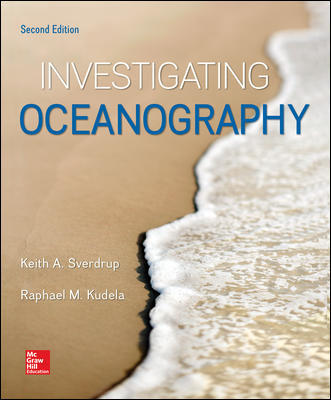
Investigating Oceanography 2nd Edition By Keith Sverdrup - Test Bank

Investigating Oceanography 2nd Edition By Keith Sverdrup - Test Bank   Instant Download - Complete Test Bank With Answers     Sample Questions Are Posted Below   Chapter 05 Test Bank Key   The relative molar abundance of carbon, nitrogen, and phosphorus in marine phytoplankton can be expressed in a relationship called the ________ ratio. …

$19.99

Investigating Oceanography 2nd Edition By Keith Sverdrup – Test Bank


Instant Download – Complete Test Bank With Answers


Sample Questions Are Posted Below


Chapter 05 Test Bank Key


  1. The relative molar abundance of carbon, nitrogen, and phosphorus in marine phytoplankton can be expressed in a relationship called the ________ ratio.


redfield

Blooms: 1. Remember

Chapter: 05 The Chemistry of Seawater

Gradable: automatic

Learning Outcome: Describe the relative abundance of nutrients important for phytoplankton growth.

Section: 05.04 Nutrients and Organics

Topic: Nutrients and Organics


  1. The salinity of a water sample can be determined by multiplying its ________ by 1.80655.


chlorinity

Blooms: 1. Remember

Chapter: 05 The Chemistry of Seawater

Gradable: automatic

Learning Outcome: Describe how salinity can be easily estimated.

Section: 05.01 Salts

Topic: Salts


  1. An ion with a positive charge is called a ________.


cation

Blooms: 1. Remember

Chapter: 05 The Chemistry of Seawater

Gradable: automatic

Learning Outcome: Describe the properties of ions.

Section: 05.01 Salts

Topic: Salts


  1. An ion with a negative charge is called an ________.


anion

Blooms: 1. Remember

Chapter: 05 The Chemistry of Seawater

Gradable: automatic

Learning Outcome: Describe the properties of ions.

Section: 05.01 Salts

Topic: Salts


  1. Identify the four seawater constituents that are present in the highest concentration.


X magnesium
__ bromide
X sodium
X chloride
__ calcium
__ potasium
X sulfate


Blooms: 1. Remember

Chapter: 05 The Chemistry of Seawater

Gradable: automatic

Learning Outcome: Review the major constituent ions in seawater in order of their concentration.

Section: 05.01 Salts

Topic: Salts


  1. The polar nature of water molecules aids in water’s solvent abilities.


TRUE

Accessibility: Keyboard Navigation

Blooms: 1. Remember

Chapter: 05 The Chemistry of Seawater

Gradable: automatic

Learning Outcome: Explain why water is an effective solvent.

Section: 05.01 Salts

Topic: Salts


  1. The dissolving ability of water is related to


  1. attraction between the water molecule’s positive and negative charges and charges on other atoms.
  2. its ability to form hydrogen bonds with other molecules.
  3. its ability to transmit energy from water molecule to water molecule.
  4. attraction between the water molecule’s positive and negative charges and charges on other atoms and its ability to form hydrogen bonds with other molecules.
  5. attraction between the water molecule’s positive and negative charges and charges on other atoms, its ability to form hydrogen bonds with other molecules, and its ability to transmit energy from water molecule to water molecule.

Accessibility: Keyboard Navigation

Blooms: 1. Remember

Chapter: 05 The Chemistry of Seawater

Gradable: automatic

Learning Outcome: Explain why water is an effective solvent.

Section: 05.01 Salts

Topic: Salts


  1. Salinity of seawater is approximately equal to the total dissolved salts in seawater expressed as grams of salt per kilogram of seawater.


TRUE

Accessibility: Keyboard Navigation

Blooms: 1. Remember

Chapter: 05 The Chemistry of Seawater

Gradable: automatic

Learning Outcome: Describe how you express the salinity of seawater.

Section: 05.01 Salts

Topic: Salts


  1. The chemical constituents of sea salt that are not utilized or altered by biological processes are called nonconservative.


FALSE

Accessibility: Keyboard Navigation

Blooms: 1. Remember

Chapter: 05 The Chemistry of Seawater

Gradable: automatic

Learning Outcome: Describe the difference between conservative and nonconservative constituents of seawater.

Section: 05.01 Salts

Topic: Salts


  1. Nutrients and dissolved gases in seawater are considered conservative substances.


FALSE

Accessibility: Keyboard Navigation

Blooms: 1. Remember

Chapter: 05 The Chemistry of Seawater

Gradable: automatic

Learning Outcome: Describe the difference between conservative and nonconservative constituents of seawater.

Section: 05.02 Gases

Section: 05.04 Nutrients and Organics

Topic: Gases

Topic: Nutrients and Organics


  1. Seawater percolating through the fractured crust along ridge systems acts to both remove salts from and add salts to seawater.


TRUE

Accessibility: Keyboard Navigation

Blooms: 1. Remember

Chapter: 05 The Chemistry of Seawater

Gradable: automatic

Learning Outcome: Review the sources of major constituent ions in seawater in order of their concentration.

Section: 05.01 Salts

Topic: Salts


  1. Formation of evaporites acts to add salts to seawater.


FALSE

Accessibility: Keyboard Navigation

Blooms: 1. Remember

Chapter: 05 The Chemistry of Seawater

Gradable: automatic

Learning Outcome: Review the sources of major constituent ions in seawater in order of their concentration.

Section: 05.01 Salts

Topic: Salts


  1. The rule of constancy of composition of sea salts for open-ocean water specifies that regardless of the salinity, the major ions always appear in the same ratio to each other. 


TRUE

Accessibility: Keyboard Navigation

Blooms: 1. Remember

Chapter: 05 The Chemistry of Seawater

Gradable: automatic

Learning Outcome: Describe how variable salinity impacts the relative abundance of the major constituent ions.

Section: 05.01 Salts

Topic: Salts


  1. When the salinity of a seawater sample changes, the ratio of the major salt ions does not change.


TRUE

Accessibility: Keyboard Navigation

Blooms: 1. Remember

Chapter: 05 The Chemistry of Seawater

Gradable: automatic

Learning Outcome: Describe how variable salinity impacts the relative abundance of the major constituent ions.

Section: 05.01 Salts

Topic: Salts


  1. Instruments used to measure the electrical conductivity of seawater can produce continuous readings of salinity with depth or continuous readings of salinity with time at a fixed depth.


TRUE

Accessibility: Keyboard Navigation

Blooms: 1. Remember

Chapter: 05 The Chemistry of Seawater

Gradable: automatic

Learning Outcome: Describe one way of measuring ocean salinity with depth.

Section: 05.01 Salts

Topic: Salts


  1. Cold seawater holds less oxygen than warm seawater at the same pressure and salinity.


FALSE

Accessibility: Keyboard Navigation

Blooms: 1. Remember

Chapter: 05 The Chemistry of Seawater

Gradable: automatic

Learning Outcome: Diagram the distribution of oxygen and carbon dioxide with depth.

Section: 05.02 Gases

Topic: Gases


  1. Anoxic water contains too much oxygen.


FALSE

Accessibility: Keyboard Navigation

Blooms: 1. Remember

Chapter: 05 The Chemistry of Seawater

Gradable: automatic

Learning Outcome: Diagram the distribution of oxygen and carbon dioxide with depth.

Section: 05.02 Gases

Topic: Gases


  1. More oxygen is found in surface waters at lower latitudes than in surface waters at polar latitudes.


FALSE

Accessibility: Keyboard Navigation

Blooms: 1. Remember

Chapter: 05 The Chemistry of Seawater

Gradable: automatic

Learning Outcome: Diagram the distribution of oxygen and carbon dioxide with depth.

Section: 05.02 Gases

Topic: Gases


  1. Carbon dioxide concentrations in seawater increase with depth.


TRUE

Accessibility: Keyboard Navigation

Blooms: 1. Remember

Chapter: 05 The Chemistry of Seawater

Gradable: automatic

Learning Outcome: Diagram the distribution of oxygen and carbon dioxide with depth.

Section: 05.02 Gases

Topic: Gases


  1. In the process called osmosis, water naturally travels through a semipermeable membrane from the side of low salt concentration to the side of high salt concentration.


TRUE

Accessibility: Keyboard Navigation

Blooms: 1. Remember

Chapter: 05 The Chemistry of Seawater

Gradable: automatic

Learning Outcome: Compare and contrast two different methods of desalination.

Section: 05.05 Practical Considerations: Salt and Water

Topic: Practical Considerations: Salt and Water


  1. The process of reverse osmosis uses pressure to separate fresh water from salt water through a semipermeable membrane.


TRUE

Accessibility: Keyboard Navigation

Blooms: 1. Remember

Chapter: 05 The Chemistry of Seawater

Gradable: automatic

Learning Outcome: Compare and contrast two different methods of desalination.

Section: 05.05 Practical Considerations: Salt and Water

Topic: Practical Considerations: Salt and Water


  1. The oceans are a major contributor of oxygen to the earth’s atmosphere.


TRUE

Accessibility: Keyboard Navigation

Blooms: 1. Remember

Chapter: 05 The Chemistry of Seawater

Gradable: automatic

Learning Outcome: Describe the exchange of oxygen between the ocean and the atmosphere.

Section: 05.02 Gases

Topic: Gases


  1. When salt-forming ions are placed in water they combine with each other and form solids.


FALSE

Accessibility: Keyboard Navigation

Blooms: 1. Remember

Chapter: 05 The Chemistry of Seawater

Gradable: automatic

Learning Outcome: Describe the effect of the polar nature of the water molecule on ions in solution.

Section: 05.01 Salts

Topic: Salts


  1. Acid rain falling on seawater has little effect on the pH of the oceans.


TRUE

Accessibility: Keyboard Navigation

Blooms: 1. Remember

Chapter: 05 The Chemistry of Seawater

Gradable: automatic

Learning Outcome: Describe the pH scale and explain the role of carbon dioxide in buffering seawater pH.

Section: 05.03 Carbon Dioxide and the Ocean

Topic: Carbon Dioxide and the Ocean


  1. An ion with a negative charge is a cation.


FALSE

Accessibility: Keyboard Navigation

Blooms: 1. Remember

Chapter: 05 The Chemistry of Seawater

Gradable: automatic

Learning Outcome: Describe the properties of ions.

Section: 05.01 Salts

Topic: Salts


  1. The saturation value of oxygen in seawater increases as the temperature increases.


FALSE

Accessibility: Keyboard Navigation

Blooms: 1. Remember

Chapter: 05 The Chemistry of Seawater

Gradable: automatic

Learning Outcome: Diagram the distribution of oxygen and carbon dioxide with depth.

Section: 05.02 Gases

Topic: Gases


  1. Surface values of dissolved oxygen may exceed 100% saturation.


TRUE

Accessibility: Keyboard Navigation

Blooms: 1. Remember

Chapter: 05 The Chemistry of Seawater

Gradable: automatic

Learning Outcome: Diagram the distribution of oxygen and carbon dioxide with depth.

Section: 05.02 Gases

Topic: Gases


  1. An ion with a positive charge is known as a cation.


TRUE

Accessibility: Keyboard Navigation

Blooms: 1. Remember

Chapter: 05 The Chemistry of Seawater

Gradable: automatic

Learning Outcome: Describe the properties of ions.

Section: 05.01 Salts

Topic: Salts


  1. Surface salinities at high latitudes tend to be greater in summer than winter.


FALSE

Accessibility: Keyboard Navigation

Blooms: 1. Remember

Chapter: 05 The Chemistry of Seawater

Gradable: automatic

Learning Outcome: Sketch the pattern of high and low sea surface salinity on a map of the world’s oceans.

Section: 05.01 Salts

Topic: Salts


  1. The proportions of the major salts in seawater are constantly changing.


FALSE

Accessibility: Keyboard Navigation

Blooms: 1. Remember

Chapter: 05 The Chemistry of Seawater

Gradable: automatic

Learning Outcome: Discuss the relative abundance of major constituent ions in seawater.

Section: 05.01 Salts

Topic: Salts


  1. The percentage of oxygen dissolved in seawater is greater in surface waters than in the deep ocean.


TRUE

Accessibility: Keyboard Navigation

Blooms: 1. Remember

Chapter: 05 The Chemistry of Seawater

Gradable: automatic

Learning Outcome: Diagram the distribution of oxygen and carbon dioxide with depth.

Section: 05.02 Gases

Topic: Gases


  1. If the salinity of ocean water is 36‰, there are ______g of salt left from evaporating 2kg of seawater.


  1. 9
  2. 18
  3. 36
  4. 54
  5. 72

Accessibility: Keyboard Navigation

Blooms: 1. Remember

Chapter: 05 The Chemistry of Seawater

Gradable: automatic

Learning Outcome: Review the sources of major constituent ions in seawater in order of their concentration.

Section: 05.01 Salts

Topic: Salts


  1. The average salinity of the oceans is about ______ parts per thousand (‰).


  1. 30
  2. 35
  3. 37
  4. 40
  5. 45

Accessibility: Keyboard Navigation

Blooms: 1. Remember

Chapter: 05 The Chemistry of Seawater

Gradable: automatic

Learning Outcome: Review the sources of major constituent ions in seawater in order of their concentration.

Section: 05.01 Salts

Topic: Salts


  1. Sources of the oceans’ salts are believed to include


  1. Earth’s crust.
  2. Earth’s early atmosphere.
  3. volcanic eruptions.
  4. Earth’s crust and Earth’s early atmosphere.
  5. Earth’s crust, Earth’s early atmosphere, and volcanic eruptions.

Accessibility: Keyboard Navigation

Blooms: 1. Remember

Chapter: 05 The Chemistry of Seawater

Gradable: automatic

Learning Outcome: Review the sources of major constituent ions in seawater in order of their concentration.

Section: 05.01 Salts

Topic: Salts


  1. Ions are removed from seawater most effectively by


  1. evaporation.
  2. freezing.
  3. adsorption.
  4. bacterial action.
  5. None of these are correct; one method is not more effective than another.

Accessibility: Keyboard Navigation

Blooms: 1. Remember

Chapter: 05 The Chemistry of Seawater

Gradable: automatic

Learning Outcome: Review the sources of major constituent ions in seawater in order of their concentration.

Section: 05.01 Salts

Topic: Salts


  1. If a chemical is not very abundant in the ocean but has a high rate of delivery to the ocean from land sources, it will have a __________ residence time in the ocean and will ________ become part of the seafloor sediments.


  1. long; quickly
  2. long; slowly
  3. short; quickly
  4. short; slowly
  5. variable; variably

Accessibility: Keyboard Navigation

Blooms: 1. Remember

Chapter: 05 The Chemistry of Seawater

Gradable: automatic

Learning Outcome: Calculate the residence time of an ion given its concentration and rate of supply.

Section: 05.01 Salts

Topic: Salts


  1. Which situations cause an ion to have a long residence time in the oceans?


  1. A high rate of ion addition
  2. A rapid rate of reaction with other substances
  3. Small total amount of ion present
  4. A high rate of ion addition and a rapid rate of reaction with other substances acting together
  5. None of these are correct.

Accessibility: Keyboard Navigation

Blooms: 1. Remember

Chapter: 05 The Chemistry of Seawater

Gradable: automatic

Learning Outcome: Calculate the residence time of an ion given its concentration and rate of supply.

Section: 05.01 Salts

Topic: Salts


  1. The major ionic constituents of sea salt are normally found to


  1. have a constant ratio of each constituent to each other.
  2. behave as conservative materials.
  3. have the same ratio to each other even when diluted by rainwater.
  4. All of these are correct.
  5. None of these are correct.

Accessibility: Keyboard Navigation

Blooms: 1. Remember

Chapter: 05 The Chemistry of Seawater

Gradable: automatic

Learning Outcome: Review the sources of major constituent ions in seawater in order of their concentration.

Section: 05.01 Salts

Topic: Salts


  1. Dittmar analyzed approximately seventy seawater samples collected around the world during the Challenger Expedition. He concluded that


  1. seawater had the same salinity worldwide.
  2. salt content changes due to processes that add or subtract salt.
  3. the major ions were always present in the same ratios.
  4. dissolved gases are always present in the same ratios.
  5. the major ions were always present in the same ratios and dissolved gases are always present in the same ratios.

Accessibility: Keyboard Navigation

Blooms: 1. Remember

Chapter: 05 The Chemistry of Seawater

Gradable: automatic

Learning Outcome: Review the sources of major constituent ions in seawater in order of their concentration.

Section: 05.01 Salts

Topic: Salts


  1. Salinity may be measured by checking the water’s


  1. viscosity.
  2. temperature.
  3. conductivity.
  4. pressure.
  5. surface tension.

Accessibility: Keyboard Navigation

Blooms: 1. Remember

Chapter: 05 The Chemistry of Seawater

Gradable: automatic

Learning Outcome: Review the sources of major constituent ions in seawater in order of their concentration.

Section: 05.01 Salts

Topic: Salts


  1. Electrical conductivity readings at a known temperature measure


  1. salinity.
  2. temperature.
  3. pressure.
  4. viscosity.
  5. density.

Accessibility: Keyboard Navigation

Blooms: 1. Remember

Chapter: 05 The Chemistry of Seawater

Gradable: automatic

Learning Outcome: Review the sources of major constituent ions in seawater in order of their concentration.

Section: 05.01 Salts

Topic: Salts


  1. Sources of oxygen in the open sea include


  1. the atmosphere.
  2. photosynthesis.
  3. respiration and decay.
  4. the atmosphere and photosynthesis.
  5. photosynthesis and respiration and decay.

Accessibility: Keyboard Navigation

Blooms: 1. Remember

Chapter: 05 The Chemistry of Seawater

Gradable: automatic

Learning Outcome: Diagram the distribution of oxygen and carbon dioxide with depth.

Section: 05.02 Gases

Topic: Gases


  1. The depth at which the rate of photosynthesis balances the rate of plant respiration is known as the


  1. saturation value depth.
  2. compensation depth.
  3. gas equilibrium depth.
  4. photosynthesis cutoff depth.
  5. None of these are correct.

Accessibility: Keyboard Navigation

Blooms: 1. Remember

Chapter: 05 The Chemistry of Seawater

Gradable: automatic

Learning Outcome: Diagram the distribution of oxygen and carbon dioxide with depth.

Section: 05.02 Gases

Topic: Gases


  1. Carbon dioxide in seawater keeps the water’s pH


  1. slightly alkaline.
  2. strongly alkaline.
  3. slightly acid.
  4. strongly acid.
  5. neutral.

Accessibility: Keyboard Navigation

Blooms: 1. Remember

Chapter: 05 The Chemistry of Seawater

Gradable: automatic

Learning Outcome: Describe the pH scale and explain the role of carbon dioxide in buffering seawater pH.

Section: 05.03 Carbon Dioxide and the Ocean

Topic: Carbon Dioxide and the Ocean


  1. The pH of seawater is regulated by


  1. carbon dioxide.
  2. oxygen.
  3. temperature.
  4. pressure.

Accessibility: Keyboard Navigation

Blooms: 1. Remember

Chapter: 05 The Chemistry of Seawater

Gradable: automatic

Learning Outcome: Describe the pH scale and explain the role of carbon dioxide in buffering seawater pH.

Section: 05.03 Carbon Dioxide and the Ocean

Topic: Carbon Dioxide and the Ocean


  1. Which of these processes results in the transfer of the carbon from carbon dioxide to the deep sea?


  1. Photosynthesis
  2. Respiration
  3. Decay
  4. Photosynthesis and decay
  5. Photosynthesis, respiration, and decay

Accessibility: Keyboard Navigation

Blooms: 1. Remember

Chapter: 05 The Chemistry of Seawater

Gradable: automatic

Learning Outcome: Diagram the distribution of oxygen and carbon dioxide with depth.

Section: 05.02 Gases

Topic: Gases


  1. Which of the following chemicals is commercially extracted from seawater?


  1. Sulfur
  2. Gold
  3. Manganese
  4. Bromine
  5. Phosphate

Accessibility: Keyboard Navigation

Blooms: 1. Remember

Chapter: 05 The Chemistry of Seawater

Gradable: automatic

Learning Outcome: Review the sources of major constituent ions in seawater in order of their concentration.

Section: 05.05 Practical Considerations: Salt and Water

Topic: Practical Considerations: Salt and Water


  1. A device used to separate fresh water from salt water using heat is called a(n)


  1. osmometer.
  2. dialysis machine.
  3. still.
  4. ion exchange column.
  5. salt fountain.

Accessibility: Keyboard Navigation

Blooms: 1. Remember

Chapter: 05 The Chemistry of Seawater

Gradable: automatic

Learning Outcome: Compare and contrast two different methods of desalination.

Section: 05.05 Practical Considerations: Salt and Water

Topic: Practical Considerations: Salt and Water


  1. Electrodialysis produces ________ from low-salinity seawater.


  1. bromine and magnesium
  2. energy
  3. fresh water
  4. oxygen and carbon dioxide
  5. table salt (sodium chloride)

Accessibility: Keyboard Navigation

Blooms: 1. Remember

Chapter: 05 The Chemistry of Seawater

Gradable: automatic

Learning Outcome: Compare and contrast two different methods of desalination.

Section: 05.05 Practical Considerations: Salt and Water

Topic: Practical Considerations: Salt and Water


  1. The concentration of carbon dioxide in surface water is low, whereas the concentration of oxygen is high because of the


  1. difference in solubility of the gases.
  2. exchange of gases between the atmosphere and the ocean.
  3. photosynthesis process.
  4. respiration of plants and animals.
  5. conversion of carbon dioxide to bicarbonate.

Accessibility: Keyboard Navigation

Blooms: 1. Remember

Chapter: 05 The Chemistry of Seawater

Gradable: automatic

Learning Outcome: Diagram the distribution of oxygen and carbon dioxide with depth.

Section: 05.02 Gases

Topic: Gases


  1. The total change in concentration of carbon dioxide with depth is small because


  1. carbon dioxide combines with water to form carbonic acid and bicarbonate.
  2. decay occurs at all depths.
  3. photosynthesis occurs only at the surface.
  4. carbon dioxide is added directly from the atmosphere.
  5. carbon dioxide reacts with oxygen.

Accessibility: Keyboard Navigation

Blooms: 1. Remember

Chapter: 05 The Chemistry of Seawater

Gradable: automatic

Learning Outcome: Describe the pH scale and explain the role of carbon dioxide in buffering seawater pH.

Section: 05.03 Carbon Dioxide and the Ocean

Topic: Carbon Dioxide and the Ocean


  1. Trace elements in seawater are


  1. toxic to marine life forms.
  2. necessary for many marine life forms.
  3. found in concentrations suitable for commercial use.
  4. significant components of the total salt content of seawater.
  5. in higher concentrations at lower salinities.

Accessibility: Keyboard Navigation

Blooms: 1. Remember

Chapter: 05 The Chemistry of Seawater

Gradable: automatic

Learning Outcome: Review the sources of major constituent ions in seawater in order of their concentration.

Section: 05.01 Salts

Topic: Salts


  1. The residence time of an ion in the oceans may be determined by


  1. multiplying the input rate by the output rate.
  2. multiplying the total amount of the ion by either input or output rate.
  3. dividing the total amount of the ion by either input or output rate.
  4. dividing ionic concentration by input or output rate.
  5. multiplying ionic concentration by total amount of the ion.

Accessibility: Keyboard Navigation

Blooms: 1. Remember

Chapter: 05 The Chemistry of Seawater

Gradable: automatic

Learning Outcome: Calculate the residence time of an ion given its concentration and rate of supply.

Section: 05.01 Salts

Topic: Salts


  1. Which ion has the shortest residence time in the oceans?


  1. Chloride
  2. Sodium
  3. Potassium
  4. Sulfate
  5. Iron

Accessibility: Keyboard Navigation

Blooms: 1. Remember

Chapter: 05 The Chemistry of Seawater

Gradable: automatic

Learning Outcome: Calculate the residence time of an ion given its concentration and rate of supply.

Section: 05.01 Salts

Topic: Salts


  1. Seawater taken from an area with a large, growing plant population has a


A. low CO2 and high nutrient content.


B. low O2 and low nutrient content.


C. high O2 and low nutrient content.


D. high O2 and high CO2 content.


E. None of these are correct.


Accessibility: Keyboard Navigation

Blooms: 1. Remember

Chapter: 05 The Chemistry of Seawater

Gradable: automatic

Learning Outcome: Identify the three ions considered important marine nutrients.

Section: 05.04 Nutrients and Organics

Topic: Nutrients and Organics


  1. Nutrients are non-conservative constituents of seawater because they


  1. maintain constant ratios to each other.
  2. do not maintain constant ratios to each other.
  3. are recycled into plants and animals.
  4. maintain constant ratios to each other and are recycled into plants and animals.
  5. do not maintain constant ratios to each other and are recycled into plants and animals.

Accessibility: Keyboard Navigation

Blooms: 1. Remember

Chapter: 05 The Chemistry of Seawater

Gradable: automatic

Learning Outcome: Identify the three ions considered important marine nutrients.

Section: 05.04 Nutrients and Organics

Topic: Nutrients and Organics


  1. The rate at which the oceans absorb carbon dioxide is controlled by


  1. temperature, salinity and pressure.
  2. pH.
  3. mixing and circulation processes.
  4. temperature, salinity and pressure, pH, and mixing and circulation processes.

Accessibility: Keyboard Navigation

Blooms: 1. Remember

Chapter: 05 The Chemistry of Seawater

Gradable: automatic

Learning Outcome: Diagram the distribution of oxygen and carbon dioxide with depth.

Section: 05.02 Gases

Topic: Gases


  1. Which desalination process requires the least energy?


  1. Reverse osmosis
  2. Distillation
  3. Ion exchange
  4. Freezing
  5. Electrodialysis

Accessibility: Keyboard Navigation

Blooms: 1. Remember

Chapter: 05 The Chemistry of Seawater

Gradable: automatic

Learning Outcome: Compare and contrast two different methods of desalination.

Section: 05.05 Practical Considerations: Salt and Water

Topic: Practical Considerations: Salt and Water


  1. Which latitudinal area tends to have the highest average surface salinity?


  1. Polar areas (80o to 90o)
  2. Equatorial areas (0o-10o)
  3. Tropics (25o-30o)
  4. Midlatitudes (60o)
  5. None of these are correct.

Accessibility: Keyboard Navigation

Blooms: 1. Remember

Chapter: 05 The Chemistry of Seawater

Gradable: automatic

Learning Outcome: Sketch the pattern of high and low sea surface salinity on a map of the world’s oceans.

Section: 05.01 Salts

Topic: Salts


  1. Which of the following ions has the highest concentration in seawater?


  1. Na+
  2. Cl
  3. Mg2+
  4. K+
  5. Ca2+

Accessibility: Keyboard Navigation

Blooms: 1. Remember

Chapter: 05 The Chemistry of Seawater

Gradable: automatic

Learning Outcome: Review the sources of major constituent ions in seawater in order of their concentration.

Section: 05.01 Salts

Topic: Salts


  1. Which gas has the highest concentration throughout the entire ocean?


  1. Oxygen
  2. Carbon dioxide
  3. Nitrogen
  4. Argon
  5. Concentrations vary with time

Accessibility: Keyboard Navigation

Blooms: 1. Remember

Chapter: 05 The Chemistry of Seawater

Gradable: automatic

Learning Outcome: Diagram the distribution of oxygen and carbon dioxide with depth.

Section: 05.02 Gases

Topic: Gases


  1. Sea surface salinity is a function of _________ and __________.


precipitation; evaporation

Blooms: 1. Remember

Chapter: 05 The Chemistry of Seawater

Gradable: automatic

Learning Outcome: Explain how sea surface salinity is modified by evaporation, precipitation, and runoff from the continents.

Section: 05.01 Salts

Topic: Salts


  1. The process of adherence of ions and molecules onto a particle’s surface is called _______.


adsorption

Blooms: 1. Remember

Chapter: 05 The Chemistry of Seawater

Gradable: automatic

Learning Outcome: Review the sources of major constituent ions in seawater in order of their concentration.

Section: 05.01 Salts

Topic: Salts


  1. Check each of the following constitutents of seawater that are conservative constituents.


Blooms: 1. Remember

Chapter: 05 The Chemistry of Seawater

Gradable: automatic

Learning Outcome: Review the sources of major constituent ions in seawater in order of their concentration.

Section: 05.01 Salts

Topic: Salts


  1. The residence time of iron and sodium in the oceans is approximately the same.


FALSE

Accessibility: Keyboard Navigation

Blooms: 1. Remember

Chapter: 05 The Chemistry of Seawater

Gradable: automatic

Learning Outcome: Calculate the residence time of an ion given its concentration and rate of supply.

Section: 05.01 Salts

Topic: Salts


  1. Profiles of the concentration of oxygen and carbon dioxide in seawater from the surface to a depth of about 800 m are mirror images of each other.


TRUE

Accessibility: Keyboard Navigation

Blooms: 1. Remember

Chapter: 05 The Chemistry of Seawater

Gradable: automatic

Learning Outcome: Diagram the distribution of oxygen and carbon dioxide with depth.

Section: 05.02 Gases

Topic: Gases


  1. The depth at which the rate of photosynthesis balances the rate of respiration is called the _______ depth.


compensation

Blooms: 1. Remember

Chapter: 05 The Chemistry of Seawater

Gradable: automatic

Learning Outcome: Diagram the distribution of oxygen and carbon dioxide with depth.

Section: 05.02 Gases

Topic: Gases


  1. The ratio of chlorine to sodium in seawater is about 1.8.


TRUE

Accessibility: Keyboard Navigation

Blooms: 1. Remember

Chapter: 05 The Chemistry of Seawater

Gradable: automatic

Learning Outcome: Review the sources of major constituent ions in seawater in order of their concentration.

Section: 05.01 Salts

Topic: Salts


  1. In order to change the pH of water by one integer number (from 7 to 8 or from 8 to 7 for instance) you would have to change the concentration of the hydrogen ion by a factor of


  1. 1000.
  2. 500.
  3. 100.
  4. 50.
  5. 10.

Accessibility: Keyboard Navigation

Blooms: 1. Remember

Chapter: 05 The Chemistry of Seawater

Gradable: automatic

Learning Outcome: Describe the pH scale and explain the role of carbon dioxide in buffering seawater pH.

Section: 05.03 Carbon Dioxide and the Ocean

Topic: Carbon Dioxide and the Ocean


  1. Carbon dioxide is added to seawater by


  1. photosynthesis.
  2. respiration.
  3. decomposition.
  4. transfer from the atmosphere.
  5. respiration, decomposition and transfer from the atmosphere.

Accessibility: Keyboard Navigation

Blooms: 1. Remember

Chapter: 05 The Chemistry of Seawater

Gradable: automatic

Learning Outcome: Diagram the distribution of oxygen and carbon dioxide with depth.

Section: 05.02 Gases

Topic: Gases


Chapter 05 Test Bank Summary


Category # of Questions
Accessibility: Keyboard Navigation 61
Blooms: 1. Remember 70
Chapter: 05 The Chemistry of Seawater 70
Gradable: automatic 70
Learning Outcome: Calculate the residence time of an ion given its concentration and rate of supply. 5
Learning Outcome: Compare and contrast two different methods of desalination. 5
Learning Outcome: Describe how salinity can be easily estimated. 1
Learning Outcome: Describe how variable salinity impacts the relative abundance of the major constituent ions. 2
Learning Outcome: Describe how you express the salinity of seawater. 1
Learning Outcome: Describe one way of measuring ocean salinity with depth. 1
Learning Outcome: Describe the difference between conservative and nonconservative constituents of seawater. 2
Learning Outcome: Describe the effect of the polar nature of the water molecule on ions in solution. 1
Learning Outcome: Describe the exchange of oxygen between the ocean and the atmosphere. 1
Learning Outcome: Describe the pH scale and explain the role of carbon dioxide in buffering seawater pH. 5
Learning Outcome: Describe the properties of ions. 4
Learning Outcome: Describe the relative abundance of nutrients important for phytoplankton growth. 1
Learning Outcome: Diagram the distribution of oxygen and carbon dioxide with depth. 16
Learning Outcome: Discuss the relative abundance of major constituent ions in seawater. 1
Learning Outcome: Explain how sea surface salinity is modified by evaporation, precipitation, and runoff from the continents. 1
Learning Outcome: Explain why water is an effective solvent. 2
Learning Outcome: Identify the three ions considered important marine nutrients. 2
Learning Outcome: Review the major constituent ions in seawater in order of their concentration. 1
Learning Outcome: Review the sources of major constituent ions in seawater in order of their concentration. 16
Learning Outcome: Sketch the pattern of high and low sea surface salinity on a map of the world’s oceans. 2
Section: 05.01 Salts 38
Section: 05.02 Gases 18
Section: 05.03 Carbon Dioxide and the Ocean 5
Section: 05.04 Nutrients and Organics 4
Section: 05.05 Practical Considerations: Salt and Water 6
Topic: Carbon Dioxide and the Ocean 5
Topic: Gases 18
Topic: Nutrients and Organics 4
Topic: Practical Considerations: Salt and Water 6
Topic: Salts 38


Additional information

Add Review

Your email address will not be published. Required fields are marked *