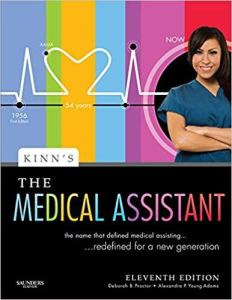
Kinns The Medical Assistant An Applied Learning Approach 11th Edition by Deborah - Test Bank

Kinns The Medical Assistant An Applied Learning Approach 11th Edition by Deborah - Test Bank   Instant Download - Complete Test Bank With Answers     Sample Questions Are Posted Below   Young: Kinn's The Medical Assistant, 11th Edition   Chapter 05: Interpersonal Skills and Human Behavior   Test Bank   TRUE/FALSE   The perception …

$19.99

Kinns The Medical Assistant An Applied Learning Approach 11th Edition by Deborah – Test Bank


Instant Download – Complete Test Bank With Answers


Sample Questions Are Posted Below


Young: Kinn’s The Medical Assistant, 11th Edition


Chapter 05: Interpersonal Skills and Human Behavior


Test Bank


TRUE/FALSE


  1. The perception of the receiver in communication is not important.


ANS:   F

The perceptions of both the sender and the receiver are important during interpersonal communication.


PTS:    1

REF:    Cog: IV. 5. Recognize the elements of oral communication using a sender-receiver process


  1. Paraphrasing is listening to what the sender is communicating, analyzing the words, and then restating them to confirm that the receiver has understood the message as the sender intended it.


ANS:   T

Paraphrasing is defined as expressing an idea in different wording in an effort to enhance communication and clarify meaning.


PTS:    1

REF:    Cog: IV. 4. Recognize techniques for overcoming communication barriers


  1. Physical avoidance is a defense mechanism through which a person avoids a place or a person because of the painful memories evoked.


ANS:   T

Physical avoidance means that a person avoids a person or place because of the memories that are invoked.


PTS:    1

REF:    Cog: IV. 16. Differentiate between adaptive and non-adaptive coping mechanisms


  1. The struggle that results from incompatible or opposing needs, drives, wishes, or external or internal demands is called malediction.


ANS:   F

Malediction is to speak evil of or curse.


PTS:    1

REF:    Cog: IV. 16. Differentiate between adaptive and non-adaptive coping mechanisms


  1. It is acceptable to tell a patient, “I know how you feel.”


ANS:   F

The medical assistant should never use the phrase “I know how you feel.”


PTS:    1                      REF:    Cog: IV. 3. Recognize communication barriers


  1. Choosing which relationships to enter into greatly increases the chance that they will be healthy relationships.


ANS:   T

When one chooses relationships carefully, they are more likely to be healthy ones.


PTS:    1

REF:    Cog: IV. 16. Differentiate between adaptive and non-adaptive coping mechanisms


  1. To feel well and accomplish goals in life, one must develop positive attitudes and positive responses to the pressures of everyday life.


ANS:   T

Positive attitudes and positive responses to the pressures of life promote health and well-being and allow the individual to accomplish goals.


PTS:    1

REF:    Cog: IV. 16. Differentiate between adaptive and non-adaptive coping mechanisms


  1. Patients are usually right at home in their comfort zones on the first visit to the physician’s office.


ANS:   F

Patients are often far outside their comfort zones in the physician’s office.


PTS:    1

REF:    Cog: IV. 16. Differentiate between adaptive and non-adaptive coping mechanisms


  1. Avoiders love the opportunity for a good fight.


ANS:   F

Avoiders shy away from any type of confrontation.


PTS:    1

REF:    Cog: IV. 16. Differentiate between adaptive and non-adaptive coping mechanisms


  1. Medical assistants should offer an explanation for their boundaries to co-workers.


ANS:   F

Adults should respect the preferences of others; therefore, no explanation is needed for boundaries.


PTS:    1

REF:    Cog: IV. 13. Identify the role of self boundaries in the health care environment


  1. Setting boundaries at work helps to prevent misunderstandings and awkward situations.


ANS:   T

Boundaries help prevent misunderstandings and promote an amiable work environment.


PTS:    1

REF:    Cog: IV. 13. Identify the role of self boundaries in the health care environment


  1. A patient’s stress level may be elevated just by being in the physician’s office.


ANS:   T

Even a checkup appointment can cause a degree of stress for the patient.


PTS:    1

REF:    Cog: IV. 16. Differentiate between adaptive and non-adaptive coping mechanisms


  1. A good supervisor listens to other opinions in a conflict.


ANS:   T

In any conflict, individuals should be able to express their opinions.


PTS:    1                      REF:    Cog: IV. 1. Identify styles and types of verbal communication


  1. Self-boundaries are more important at home than in the workplace.


ANS:   F

Self-boundaries are necessary in every aspect of an individual’s life.


PTS:    1

REF:    Cog: IV. 13. Identify the role of self boundaries in the health care environment


  1. Some stereotypes are unavoidable.


ANS:   F

Stereotyping is never a positive thing and should always be avoided, especially in the medical office.


PTS:    1

REF:    Cog: IV. 7. Identify resources and adaptations that are required based on individual needs, i.e., culture and environment, developmental life stage, language and physical threats to communication


  1. Patients from other countries and cultures may need extra time to understand what is being said to them.


ANS:   T

Patients from other countries may simply need the medical assistant to slow down when talking so that they can absorb what is being said.


PTS:    1

REF:    Cog: IV. 7. Identify resources and adaptations that are required based on individual needs, i.e., culture and environment, developmental life stage, language and physical threats to communication


  1. The question, “Are you safe at home,” is too personal and should not be asked when dealing with patients.


ANS:   F

Personal questions are often necessary when diagnosing and treating a patient.


PTS:    1

REF:    Cog: IV. 7. Identify resources and adaptations that are required based on individual needs, i.e., culture and environment, developmental life stage, language and physical threats to communication


  1. Calming patients’ fears and concerns is not a part of the medical assistant’s job description.


ANS:   F

The medical assistant should make every attempt to calm patients’ fears and concerns.


PTS:    1

REF:    Cog: IV. 7. Identify resources and adaptations that are required based on individual needs, i.e., culture and environment, developmental life stage, language and physical threats to communication


  1. It is acceptable to let some time pass before dealing with conflict.


ANS:   F                      PTS:    1


MULTIPLE CHOICE


  1. Which is not likely to be one of the factors that influence the first impression we make on others?
a. What we say
b. What we do
c. What we think
d. How we look


ANS:   C

Because most people cannot know what we think, this is not a factor that influences first impressions.


PTS:    1

REF:    Affect: IV. 6. Demonstrate awareness of how an individual’s personal appearance affects anticipated responses


  1. Which of the following is not the role of the medical assistant in communicating with patients?
a. Advising
b. Listening
c. Observing
d. Responding


ANS:   A

Medical assistants do not assume the role of advisor with patients; this is left to the physician.


PTS:    1                      REF:    Cog: IV. 1. Identify styles and types of verbal communication


  1. Which of the following is not one of the stages of grief?
a. Bargaining
b. Depression
c. Dealing
d. Acceptance


ANS:   C

The five stages of grief are denial, bargaining, anger, depression, and acceptance.


PTS:    1

REF:    Cog: IV. 16. Differentiate between adaptive and non-adaptive coping mechanisms


  1. What is the first step in avoiding prejudice when dealing with individuals?
a. Do not judge people by their appearance or lifestyle.
b. Do not react negatively toward others.
c. Treat all people with equal respect.
d. Honestly examine and evaluate your own personal prejudices.


ANS:   D

Personal prejudices must be recognized before one can change them; therefore, the medical assistant must examine his or her own prejudices honestly and evaluate areas that need improvement.


PTS:    1

REF:    Cog: IV. 7. Identify resources and adaptations that are required based on individual needs, i.e., culture and environment, developmental life stage, language and physical threats to communication


  1. The principal reason for requesting feedback when communicating with patients is to determine whether they:
a. have a vision problem
b. are cooperative
c. understand what is being said
d. are mentally alert


ANS:   C

Feedback helps the medical assistant make sure the patient understood what was said.


PTS:    1

REF:    Cog: IV. 5. Recognize the elements of oral communication using a sender-receiver process


  1. Which aspect of our communication is most likely to convey our true feelings and beliefs?
a. Nonverbal communication
b. Verbal communication
c. The way we verbalize a phrase or word
d. Spoken words only


ANS:   A

Nonverbal communication is almost always more accurate than verbal communication and usually communicates our true feelings and beliefs.


PTS:    1                      REF:    Cog: IV. 2. Identify nonverbal communication


  1. What is meant by the “litigious nature of today’s society”?
a. Crowding has caused people to need more personal space.
b. Patients are more likely to bring lawsuits than in the past.
c. A growing diversity of cultures is represented in the United States.
d. Fewer people have access to medical care.


ANS:   B

Patients are much more likely to bring lawsuits against their doctors in this day and age than in any previous time period, making us a medically litigious society.


PTS:    1

REF:    Affect: IX. 3. Recognize the importance of local, state and federal legislation and regulations in the practice setting


  1. The principal message you will give an American patient if you avoid eye contact while communicating is that you:
a. are angry
b. are in a hurry
c. do not understand what the patient is saying
d. are not telling the truth


ANS:   D

Americans often assume that a person who will not make eye contact is lying.


PTS:    1                      REF:    Cog: IV. 2. Identify nonverbal communication


  1. Which statement is false with regard to the interpretation of gestures and body language that you may encounter among the patients in a medical setting?
a. They are less significant than verbal communication.
b. They vary widely in meaning.
c. Knowledge of them will influence patient relations.
d. They may require special accommodations.


ANS:   A

Nonverbal communication is more significant than verbal communication.


PTS:    1                      REF:    Cog: IV. 2. Identify nonverbal communication


  1. The defense mechanism in which unwanted desires or impulses are excluded from the consciousness and left to operate in the unconscious is called:
a. rationalization
b. repression
c. regression
d. displacement


ANS:   B

Repression is a defense mechanism in which unwanted desires or impulses are excluded from the consciousness and left to operate in the unconscious.


PTS:    1

REF:    Cog: IV. 16. Differentiate between adaptive and non-adaptive coping mechanisms


  1. Something that is difficult to understand or perceive is:
a. internal noise
b. perception
c. subtle
d. volatile


ANS:   C

Definitions of subtle include something that is difficult to understand or perceive; or, having or marked by keen insight and ability to penetrate deeply and thoroughly.


PTS:    1


  1. Verbal expressions or body language, such as a nod of understanding, are called:
a. internal noise
b. external noise
c. channels
d. feedback


ANS:   D

Feedback can be verbal expressions or body language, such as a simple nod of understanding.


PTS:    1

REF:    Cog: IV. 5. Recognize the elements of oral communication using a sender-receiver process


  1. Even when two people are speaking at the same time, various channels of communication are used, such as:
a. words
b. body language
c. facial expressions
d. all of the above


ANS:   D

Words, body language, and facial expressions are all part of two-way communication.


PTS:    1

REF:    Cog: IV. 4. Recognize techniques for overcoming communication barriers


  1. A lack of feeling, emotion, interest, or concern is a defense mechanism called:
a. apathy
b. compensation
c. projection
d. denial


ANS:   A

Apathy is defined as a lack of feeling, emotion, interest, or concern.


PTS:    1

REF:    Cog: IV. 16. Differentiate between adaptive and non-adaptive coping mechanisms


  1. The psychological defense mechanism in which confrontation with a personal problem or with reality is avoided by denying the existence of the problem or reality is called:
a. physical avoidance
b. denial
c. regression
d. compensation


ANS:   B

Denial is a psychological defense mechanism in which confrontation with a personal problem or with reality is avoided by denying the existence of the problem or reality.


PTS:    1

REF:    Cog: IV. 16. Differentiate between adaptive and non-adaptive coping mechanisms


  1. Sounds or factors outside the brain that interfere with the communication process are called:
a. internal noise
b. feedback
c. external noise
d. channels


ANS:   C

External noise is a literal noise that can interfere with the communication process.


PTS:    1

REF:    Cog: IV. 5. Recognize the elements of oral communication using a sender-receiver process


  1. That which advances beyond the usual or proper limits is called:
a. paraphrasing
b. malediction
c. litigious
d. encroachment


ANS:   D

Encroachment is defined as that which advances beyond the usual or proper limits.


PTS:    1


  1. When patients cry, the medical assistant should never:
a. ask what is wrong
b. let patients leave without reasonable assurance they are safe
c. tell the physician
d. call the police


ANS:   B

The medical assistant should always make sure the patient is reasonably safe and able to get home.


PTS:    1

REF:    Affect: IV. 5. Demonstrate sensitivity appropriate to the message being delivered


  1. If a patient hesitates when speaking, he or she might:
a. be lying
b. have more to say
c. feel fear
d. all of the above


ANS:   D

Hesitation when speaking may mean that the patient is being dishonest, may have more to say, or may be experiencing feelings of fear.


PTS:    1                      REF:    Cog: IV. 2. Identify nonverbal communication


  1. When a patient verbally attacks someone without addressing the original complaint, the individual is using which defense mechanism?
a. Regression
b. Projection
c. Verbal aggression
d. Sarcasm


ANS:   C

Verbal aggression involves verbally attacking a person without addressing the original complaint or disregarding it.


PTS:    1

REF:    Cog: IV. 16. Differentiate between adaptive and non-adaptive coping mechanisms


  1. Personal space ranges from:
a. 1 1/2 to 4 feet
b. 0 to 1 1/2 feet
c. 12 to 25 feet
d. 4 to 12 feet


ANS:   A

Personal space ranges from 1 1/2 feet to 4 feet; intimate space includes physical touching to about 1 1/2 feet.


PTS:    1

REF:    Affect: IV. 4. Demonstrate awareness of the territorial boundaries of the person with whom communicating


  1. Which of the following patients is probably in shock?
a. The patient who explodes over every little situation
b. The patient who bargains with God to live a longer life
c. The patient who remains calm and speaks clearly during conflict
d. The patient who cannot think or move


ANS:   D

A patient in shock often cannot think or move, or the person may sit and talk calmly, a sign that the patient may be experiencing denial.


PTS:    1

REF:    Cog: IV. 16. Differentiate between adaptive and non-adaptive coping mechanisms


  1. The needs we have as humans, at the most basic level, include:
a. esteem and recognition
b. love
c. safety
d. food and shelter


ANS:   D

According to Maslow, our human needs at the most basic level include oxygen, food, water, excretion, shelter, and sexual expression.


PTS:    1

REF:    Cog: IV. 7. Identify resources and adaptations that are required based on individual needs, i.e., culture and environment, developmental life stage, language and physical threats to communication


  1. The stage in Maslow’s hierarchy of needs in which we maximize our potential is:
a. self-actualization
b. esteem and recognition
c. love and belonging
d. safety and security


ANS:   A

The self-actualization stage in Maslow’s hierarchy of needs is the stage in which a person maximizes his or her potential, attempts to be at his or her best, and lives life to the fullest.


PTS:    1

REF:    Cog: IV. 7. Identify resources and adaptations that are required based on individual needs, i.e., culture and environment, developmental life stage, language and physical threats to communication


  1. Pleasers are people who are most likely looking for:
a. achievement
b. acceptance
c. approval
d. actualization


ANS:   C

Pleasers often are looking for approval.


PTS:    1

REF:    Cog: IV. 16. Differentiate between adaptive and non-adaptive coping mechanisms


  1. We are able to control two things in life—our attitude and our:
a. income
b. nonverbal communication
c. tardiness
d. actions


ANS:   D

The two things we can control in life are our attitude and our actions.


PTS:    1

REF:    Cog: IV. 16. Differentiate between adaptive and non-adaptive coping mechanisms


  1. Procrastination is often a symptom of the fear of:
a. failure
b. promotion
c. comfort zones
d. self-improvement


ANS:   A

Procrastination is a symptom of the fear of failure.


PTS:    1

REF:    Cog: IV. 16. Differentiate between adaptive and non-adaptive coping mechanisms


  1. A person who approaches sensitive subjects in an attempt to get even or hurt another person is a:
a. withholder
b. joker
c. beltliner
d. trapper


ANS:   C

Beltliners attempt to hurt another person or get even by approaching sensitive subjects that should be off limits.


PTS:    1

REF:    Cog: IV. 16. Differentiate between adaptive and non-adaptive coping mechanisms


  1. A person who refuses to face a conflict either by giving in or by pretending nothing is wrong is a(n):
a. kitchen sink fighter
b. gunnysacker
c. avoider
d. pseudoaccommodator


ANS:   D

The pseudoaccommodator refuses to face up to a conflict, either by giving in or by pretending nothing is wrong.


PTS:    1

REF:    Cog: IV. 16. Differentiate between adaptive and non-adaptive coping mechanisms


  1. A person who will not allow relationships to change from the way they once were is a:
a. Benedict Arnold
b. subject changer
c. mind reader
d. contract tyrannizer


ANS:   D

The contract tyrannizer does not allow relationships to change from what they once were.


PTS:    1

REF:    Cog: IV. 16. Differentiate between adaptive and non-adaptive coping mechanisms


  1. A person who attacks other parts of a partner’s life, instead of expressing the feelings about the object of dissatisfaction, is a:
a. distracter
b. blamer
c. guiltmaker
d. trivial tyrannizer


ANS:   A

Distracters attack other parts of their partner’s life rather than coming out and expressing their feelings about the object of their dissatisfaction.


PTS:    1

REF:    Cog: IV. 16. Differentiate between adaptive and non-adaptive coping mechanisms


  1. A standard mental picture that is held in common by members of a group and that represents an oversimplified opinion, prejudiced attitude, or uncritical judgment is called:
a. language
b. perception
c. a stereotype
d. a multicultural issue


ANS:   C

A stereotype is defined as a standardized mental picture that is held in common by members of a group and that represents an oversimplified opinion, prejudiced attitude, or uncritical judgment.


PTS:    1

REF:    Cog: IV. 16. Differentiate between adaptive and non-adaptive coping mechanisms


  1. If the patient asks the medical assistant what he or she would do in a similar medical situation, the medical assistant should:
a. advise the patient as to the best course of action
b. suggest that the patient seek counseling
c. refuse to discuss the issue at all
d. refer the patient to the physician for advice


ANS:   D

The medical assistant should never advise a patient, but rather should always refer the person to the physician.


PTS:    1

REF:    Cog: IX. 1. Discuss legal scope of practice for medical assistants


  1. At which time or in which instance is it not appropriate to touch the patient?
a. When the patient has just discovered he or she is HIV positive
b. When the patient is crying
c. When the patient has lost a close family member
d. When the patient expresses romantic interest in the medical assistant


ANS:   D

The medical assistant should never touch the patient in any manner that would lead to a romantic interest or encounter.


PTS:    1

REF:    Affect: X. 1. Apply ethical behaviors, including honesty/integrity in performance of medical assisting practices


  1. A person’s public space is:
a. touching to 1 1/2 feet
b. 1 1/2 to 4 feet
c. 4 to 12 feet
d. 12 to 25 feet


ANS:   D

The public space in which a person usually feels comfortable is 12 to 25 feet.


PTS:    1

REF:    Affect: IV. 4. Demonstrate awareness of the territorial boundaries of the person with whom communicating


  1. The first impulse usually felt when we experience conflict is:
a. to hit someone
b. the fight or flight response
c. to argue
d. to plot revenge


ANS:   B

The most typical first response to conflict is the fight or flight response.


PTS:    1

REF:    Cog: IV. 16. Differentiate between adaptive and non-adaptive coping mechanisms


  1. Which of the following are ways that conflict can be resolved?
a. Avoid judgment or assigning blame.
b. Do not listen to other opinions.
c. Allow some time to pass before attempting resolution.
d. Realize that some people’s opinions are wrong.


ANS:   A

Conflict cannot be resolved unless both parties are willing to set aside judgment and stop assigning blame.


PTS:    1

REF:    Cog: IV. 16. Differentiate between adaptive and non-adaptive coping mechanisms


  1. Rhonda has not spoken to a co-worker for almost a month because of a dispute about their working hours. What factor will make resolving the conflict more difficult?
a. It is between co-workers.
b. So much time has already passed.
c. The co-worker does not seem to want resolution.
d. A supervisor will have to help resolve the situation.


ANS:   B

Conflict should be dealt with as it happens, instead of allowing time to pass, which makes resolution more difficult.


PTS:    1

REF:    Cog: IV. 16. Differentiate between adaptive and non-adaptive coping mechanisms


  1. Joanie refuses to discuss a situation with a co-worker with whom she has a conflict. Instead, she pretends to be busy when that co-worker is present. Which passive-aggressive type is Joanie?
a. Pseudoaccommodator
b. Guiltmaker
c. Avoider
d. Subject changer


ANS:   C

Avoiders refuse to fight and pretend to be asleep or busy when chances for resolution arise.


PTS:    1

REF:    Cog: IV. 16. Differentiate between adaptive and non-adaptive coping mechanisms


  1. Cecelia is angry with her supervisor over a disciplinary write-up. During her counseling session, Cecelia complains that the supervisor never gets to work on time. What passive-aggressive type is Cecelia?
a. Subject changer
b. Distracter
c. Mind reader
d. Trapper


ANS:   B

Distracters attack other parts of a person’s life to avoid dealing with their own issues.


PTS:    1

REF:    Cog: IV. 16. Differentiate between adaptive and non-adaptive coping mechanisms


  1. Anne complains that her supervisor is having obvious problems at home, which makes her very difficult to deal with, although Anne does not know the supervisor well outside the workplace. Anne says that her recent write-ups are a result of the supervisor being in a bad mood. What passive-aggressive type is Anne?
a. Mind reader
b. Trapper
c. Avoider
d. Guiltmaker


ANS:   A

Instead of taking personal responsibility, mind readers perform a character analysis of the other person and blame the individual for the situation at hand.


PTS:    1

REF:    Cog: IV. 16. Differentiate between adaptive and non-adaptive coping mechanisms


  1. Alicia has become more and more upset about her work situation but has not approached her supervisor about any of the issues. Finally, she snaps at an extern over a trivial issue and goes to lunch without explaining her attitude to anyone. Which passive-aggressive type is Alicia?
a. Gunnysacker
b. Trivial tyrannize
c. Avoider
d. Mind reader


ANS:   A

Gunnysackers do not respond immediately when angry, but when the “sack” begins to bulge, they blow up over a small issue.


PTS:    1

REF:    Cog: IV. 16. Differentiate between adaptive and non-adaptive coping mechanisms


  1. Jessica resents Becki for receiving a promotion, so she constantly moves the items on the front desk around, which she knows bothers Becki. What passive-aggressive type is Jessica?
a. Avoider
b. Gunnysacker
c. Joker
d. Trivial tyrannize


ANS:   D

Instead of sharing their resentments, trivial tyrannizers do things they know will bother the other person.


PTS:    1

REF:    Cog: IV. 16. Differentiate between adaptive and non-adaptive coping mechanisms


  1. Suzie was called into the supervisor’s office and spent about an hour speaking to the office manager. When she left, she went into the break room and encountered Ron. Ron made a comment about her lengthy “reprimand” as a joke. Suzie then said, “At least I’m not a fat slob,” and walked out. What passive-aggressive type is Suzie?
a. Beltliner
b. Joker
c. Mind reader
d. Trapper


ANS:   A

In an attempt to get even or hurt someone, beltliners throw up a physical characteristic or past behavior to try to hurt the other person.


PTS:    1

REF:    Cog: IV. 16. Differentiate between adaptive and non-adaptive coping mechanisms


  1. Barry holds resentment toward his supervisor because he was promised a raise after 1 year when he was hired. At the end of that year, the supervisor told him that he would not get a raise, because his work performance did not warrant an increase. When at lunch or on break with other employees, Barry constantly complains that he never got his promised raise. What passive-aggressive type is Barry?
a. Trapper
b. Contract tyrannizer
c. Kitchen sink fighter
d. Joker


ANS:   B

Contract tyrannizers do not let past agreements change, regardless of the circumstances involved.


PTS:    1

REF:    Cog: IV. 16. Differentiate between adaptive and non-adaptive coping mechanisms


  1. Lana constantly finds fault with the extern at her clinic. According to Lana, the extern does nothing right. An opening has come up at the clinic, and the extern seems likely to be hired for the position. Everyone likes the extern except Lana. Several days before the externship ends, Lana blames the extern for not locking the door to the drug room. What passive-aggressive type might Lana be?
a. Mind reader
b. Trapper
c. Blamer
d. Contract tyrannizer


ANS:   C

Blamers are more interested in finding fault than resolving conflicts.


PTS:    1

REF:    Cog: IV. 16. Differentiate between adaptive and non-adaptive coping mechanisms


  1. When Terri has a conflict with a co-worker, she throws up every issue that has ever been a problem between the two of them. What passive-aggressive type might Terri be?
a. Blamer
b. Kitchen sink fighter
c. Mind reader
d. Avoider


ANS:   B

Kitchen sink fighters bring up things that are totally off the subject; any imperfection is fair game in a conflict.


PTS:    1

REF:    Cog: IV. 16. Differentiate between adaptive and non-adaptive coping mechanisms


  1. Carrie knows that Jerri had a drug problem when she was in high school, but Jerri went through rehab and has not had issues for more than 20 years. Because she was never arrested or charged, she did not have to disclose the situation in her pre-employment interview. Carrie wants a position for which Jerri also is applying, so Carrie reveals Jerri’s past to the supervisor. What passive-aggressive type is Jerri?
a. Avoider
b. Kitchen sink fighter
c. Blamer
d. Benedict Arnold


ANS:   D

Benedict Arnold passive-aggressive types are backstabbers who will advance their own agenda over their co-workers’ interests.


PTS:    1

REF:    Cog: IV. 16. Differentiate between adaptive and non-adaptive coping mechanisms


  1. Georgia has acted very cool toward Ben for about a week. Ben asked if there was a problem between them, but Georgia replied that nothing was wrong. What passive-aggressive type is Georgia?
a. Blamer
b. Pseudoaccommodator
c. Avoider
d. Mind reader


ANS:   B

Psuedoaccomodators refuse to face up to a conflict by pretending nothing is wrong.


PTS:    1

REF:    Cog: IV. 16. Differentiate between adaptive and non-adaptive coping mechanisms


COMPLETION


  1. The __________ formed in the early moments of meeting someone remain in our thoughts long after the first words are spoken.


ANS:

opinions

Opinions remain in our thoughts as first impressions long after we meet a new person.


PTS:    1


  1. To utter articulate sounds or be distinct in speech is to __________.


ANS:

enunciate

To enunciate means to utter articulate sounds or to be very distinct in speech.


PTS:    1                      REF:    Cog: IV. 1. Identify styles and types of verbal communication


  1. __________ noise includes the person’s own thoughts, prejudices, and opinions.


ANS:

Internal

Internal noise includes the sender’s or receiver’s own thoughts or prejudices and opinions.


PTS:    1

REF:    Cog: IV. 5. Recognize the elements of oral communication using a sender-receiver process


  1. Nonconsensual touching may be considered __________.


ANS:

battery

In today’s litigious atmosphere, any nonconsensual touching may be considered battery, so touch should be used with great discretion.


PTS:    1

REF:    Cog: IX. 9. Provide an example of tort law as it would apply to a medical assistant


  1. Any biologic factor that precludes the communicator from sending or receiving accurate messages, such as not feeling well or being overly tired, is called __________ noise.


ANS:

physiologic

Physiologic noise includes any biologic factor that prevents the communicator from sending or receiving accurate messages, such as not feeling well or being overly tired.


PTS:    1

REF:    Cog: IV. 5. Recognize the elements of oral communication using a sender-receiver process


  1. Active listening is the skill of __________ and clarifying what the speaker has said.


ANS:

paraphrasing

Paraphrasing means expressing an idea in different wording in an effort to enhance communication and clarify meaning.


PTS:    1                      REF:    Cog: IV. 1. Identify styles and types of verbal communication


  1. Most people use __________ when they feel pressured or attacked in some way.


ANS:

defense mechanisms

Defense mechanisms help people deal with pressure or being attacked in some way.


PTS:    1

REF:    Cog: IV. 16. Differentiate between adaptive and non-adaptive coping mechanisms


  1. __________ is a lack of feeling, emotion, interest, or concern.


ANS:

Apathy

Apathy is defined as a lack of feeling, emotion, interest, or concern.


PTS:    1

REF:    Cog: IV. 16. Differentiate between adaptive and non-adaptive coping mechanisms


  1. It is always helpful to have a(n) __________ staff member to communicate with patients who speak another language.


ANS:

bilingual

Bilingual staff members can assist with communication problems in the physician’s office.


PTS:    1

REF:    Cog: IV. 7. Identify resources and adaptations that are required based on individual needs, i.e., culture and environment, developmental life stage, language and physical threats to communication


  1. A person who almost brings what is bothering him or her to the surface but never quite express it is a(n) __________.


ANS:

crisis tickler

A crisis tickler is a person who almost brings what is bothering him or her to the surface but never quite comes out and expresses it.


PTS:    1

REF:    Cog: IV. 16. Differentiate between adaptive and non-adaptive coping mechanisms


  1. The first stage of grief is __________.


ANS:

denial

The first stage of grief is denial.


PTS:    1

REF:    Cog: IV. 7. Identify resources and adaptations that are required based on individual needs, i.e., culture and environment, developmental life stage, language and physical threats to communication


  1. The third stage of grief is __________.


ANS:

anger

The third stage of grief is anger.


PTS:    1

REF:    Cog: IV. 7. Identify resources and adaptations that are required based on individual needs, i.e., culture and environment, developmental life stage, language and physical threats to communication


  1. The second stage of grief is __________.


ANS:

bargaining

The second stage of grief is bargaining.


PTS:    1

REF:    Cog: IV. 7. Identify resources and adaptations that are required based on individual needs, i.e., culture and environment, developmental life stage, language and physical threats to communication


  1. The last stage of grief is __________.


ANS:

acceptance

The last stage of grief is acceptance.


PTS:    1

REF:    Cog: IV. 7. Identify resources and adaptations that are required based on individual needs, i.e., culture and environment, developmental life stage, language and physical threats to communication


  1. The fourth stage of grief is __________.


ANS:

depression

The fourth stage of grief is depression.


PTS:    1

REF:    Cog: IV. 7. Identify resources and adaptations that are required based on individual needs, i.e., culture and environment, developmental life stage, language and physical threats to communication


  1. Forceful behavior that is intended to dominate at times is __________ behavior.


ANS:

aggressive

Aggressive means forceful or intended to dominate.


PTS:    1

REF:    Cog: IV. 16. Differentiate between adaptive and non-adaptive coping mechanisms


  1. When a message is __________, it is converted into intelligible form.


ANS:

decoded

Converting a message into an into intelligible form, or a recognizable and interpretable form, is called decoding.


PTS:    1

REF:    Cog: IV. 5. Recognize the elements of oral communication using a sender-receiver process


  1. Being in agreement or harmony or conforming to the circumstances or requirements of a situation is said to be __________.


ANS:

congruent

Congruent means to be in agreement or conforming to circumstances.


PTS:    1


  1. Ricki felt an overwhelming __________ when a close relative died.


ANS:

grief

A reaction to an unfortunate outcome or deep distress caused by bereavement, loss, or perceived loss is called grief.


PTS:    1

REF:    Cog: IV. 16. Differentiate between adaptive and non-adaptive coping mechanisms


  1. Jill’s co-worker often uses __________ in her conversations, which annoys Jill.


ANS:

sarcasm

Sarcasm is a sharp and often satirical response or ironic utterance designed to cut or inflict pain.


PTS:    1

REF:    Cog: IV. 16. Differentiate between adaptive and non-adaptive coping mechanisms


  1. Julia entered counseling to learn to deal with the __________ in her work and personal life.


ANS:

stressors

Stressors are stimuli that cause stress.


PTS:    1

REF:    Cog: IV. 16. Differentiate between adaptive and non-adaptive coping mechanisms


  1. Paula knows that although her hospital often treats celebrity patients, she cannot speak to the __________ and must refer requests to administration.


ANS:

media

The media refers to agencies of mass communication; because of privacy concerns, the medical assistant should always refer media requests to the physician, office manager, or other administrators.


PTS:    1

REF:    Cog: IX. 2. Explore issue of confidentiality as it applies to the medical assistant


  1. __________ influences the spatial separation that individuals maintain.


ANS:

Proxemics

The study of the nature, degree, and effect of the spatial separation individuals naturally maintain is known as proxemics.


PTS:    1

REF:    Affect: IV. 4. Demonstrate awareness of the territorial boundaries of the person with whom communicating


  1. When a person attributes an event or occurrence to causes outside himself or herself, the person is practicing __________.


ANS:

externalization

Blaming an event or occurrence on causes outside oneself is called externalization.


PTS:    1

REF:    Cog: IV. 16. Differentiate between adaptive and non-adaptive coping mechanisms


  1. Obtaining __________ from patients helps medical assistants understand and better interpret patients’ medical problems, so that they can be accurately conveyed to the physician.


ANS:

feedback

Feedback is the transmission of evaluative or corrective information to the original or controlling source about an action, event, or process.


PTS:    1                      REF:    Cog: IV. 1. Identify styles and types of verbal communication


  1. Jonathan often makes __________ remarks that offend his co-workers.


ANS:

caustic

Caustic remarks are marked by sarcasm.


PTS:    1

REF:    Cog: IV. 16. Differentiate between adaptive and non-adaptive coping mechanisms


  1. __________ communications are usually more accurate.


ANS:

Nonverbal

Nonverbal communications are almost always more accurate than verbal communication and tend to convey true feelings and beliefs.


PTS:    1                      REF:    Cog: IV. 2. Identify nonverbal communication


  1. __________ is unfair treatment of a person because of race, gender, religious affiliation, or for any other reason.


ANS:

Discrimination

Some discrimination is subtle, but any hint of it has no place in a physician’ office.


PTS:    1

REF:    Cog: IX. 13. Discuss all levels of governmental legislation and regulations as they apply to medical assisting practice, including FDA and DEA regulations

Additional information

Add Review

Your email address will not be published. Required fields are marked *