Subtotal: $920.00

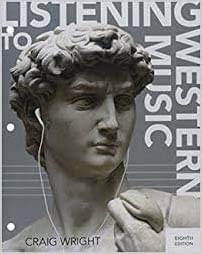
Listening to Western Music 8th Edition by Craig Wright - Test Bank

Listening to Western Music 8th Edition by Craig Wright - Test Bank   Instant Download - Complete Test Bank With Answers     Sample Questions Are Posted Below   Multiple Choice   1. In which three countries was the Renaissance particularly influential?​   a. ​Italy, France, and England   b. ​England, Spain, and Greece   c. …

$19.99

Listening to Western Music 8th Edition by Craig Wright – Test Bank


Instant Download – Complete Test Bank With Answers


Sample Questions Are Posted Below


Multiple Choice


1. In which three countries was the Renaissance particularly influential?​

  a. ​Italy, France, and England
  b. ​England, Spain, and Greece
  c. ​Germany, Italy, and Russia
  d. ​Sweden, Germany, and Switzerland
  e. ​Spain, Italy, and Greece


ANSWER:   a


2. The literal meaning of the term “Renaissance” is “rebirth.”​

  a. ​true
  b. ​false


ANSWER:   a


3. Identify the culture that provided the primary inspiration for writers, artists, and architects during the Renaissance.​

  a. ​ancient Israel as recounted in the Bible
  b. ​ancient Egypt
  c. ​the Babylonian empire
  d. ​ancient Greece and Rome
  e. ​Islam and the Ottoman empire


ANSWER:   d


4. What does “humanism” mean?​

  a. ​the literary curriculum of three academic disciplines taught in Renaissance schools and universities
  b. ​the belief that people have the capacity to shape their world as well as  create good and beautiful things
  c. ​the philosophy that people are faceless objects in a great cosmic dance
  d. ​a society of amateur musicians dedicated to the performance of music, nowadays music of the Middle Ages, Renaissance, and Baroque eras
  e. ​a movement in music wherein composers sought to emphasize indigenous qualities in their music by incorporating folk songs, native scales, dance rhythms, and local instrumental sounds


ANSWER:   b


5. This temperamental and egotistical composer, described by one Renaissance writer as the musical equivalent of Michelangelo, was so talented that he could demand twice the salary of his gifted peers.​

  a. ​Palestrina
  b. ​Perotinus
  c. ​Machaut
  d. ​Josquin
  e. ​Purcell


ANSWER:   d


6. Select the response that best defines the term “motet.”​

  a. ​early polyphony of the WesternChurch from the ninth through the thirteenth centuries
  b. ​a slow, elegant triple meter dance with a strong accent on the second beat
  c. ​a polyphonic composition for choir setting a religious, devotional, or solemn text, often sung a cappella
  d. ​one of the five sung portions of the Mass for which the texts are invariable
  e. ​all of the above


ANSWER:   c


7. Which composition is an example of a Renaissance motet?​

  a. ​Josquin’sAve Maria
  b. ​Machaut’s Kyrie
  c. ​Weelkes’ As Vesta Was from Latmos Hill Descending
  d. ​Palestrina’sKyrie
  e. ​Hildegard of Bingen’sO ruborsanguinis


ANSWER:   a


8. Which term designates a composition sung by a choir without instrumental accompaniment?​

  a. ​counterpoint
  b. ​falsetto
  c. ​castrato
  d. ​discant
  e. ​a cappella


ANSWER:   e


9. The process by which one or more musical voices, or parts, enter and duplicate exactly for a period of time the music presented by the previous voice is known as:​

  a. ​word painting
  b. ​counterpoint
  c. ​imitation
  d. ​sequence
  e. ​falsetto


ANSWER:   c


10. Identify the composer and title of the listening example.​

  a. ​Hildegard of Bingen, O ruborsanguinis
  b. ​Josquin, Ave Maria
  c. ​Palestrina, MissaPapaeMarcelli
  d. ​Machaut, Messe de Nostre Dame
  e. ​Anonymous, Agincourt Carol


ANSWER:   b
OTHER:   Josquin, Ave Maria, DL 16; 0:00-0:45


11. Which statement best describes the listening example?​

  a. ​a cappella homophonic texture
  b. ​free rhythm without meter
  c. ​dissonance heightens the meaning of the text
  d. ​imitative counterpoint between a cappella voices
  e. ​all of the above


ANSWER:   d
OTHER:   Josquin, Ave Maria, DL 16; 0:00-0:45


12. Which statement best describes the listening example?​

  a. ​a cappella homophonic texture
  b. ​imitative counterpoint between a cappella voices
  c. ​dissonance heightens the meaning of the text
  d. ​free rhythm without meter
  e. ​imitative counterpoint doubled by string instruments


ANSWER:   a
OTHER:   Josquin, Ave Maria, DL 16; 3:58-end


13. __________ spent nearly his entire career working at major churches in Rome.  His serene musical style came to epitomize the restrained spirit of the Counter-Reformation.​

  a. ​Palestrina
  b. ​Machaut
  c. ​Weelkes
  d. ​Josquin
  e. ​Perotinus


ANSWER:   a


14. The Counter-Reformation was a reactionary movement in the Roman Catholic church that sought to stem the tide of the Protestant Reformation by cleansing the church of abuses and establishing a more conservative, pious environment.​

  a. ​true
  b. ​false


ANSWER:   a


15. The Council of Trent, influenced by the music of __________, decided to retain polyphony in music composed for the Mass.​

  a. ​Josquin
  b. ​Machaut
  c. ​Monteverdi
  d. ​Palestrina
  e. ​Hildegard of Bingen


ANSWER:   d


16. When adult male singers use their head voice to produce a high, soprano-like sound, the result is called:​

  a. ​Sprechstimme
  b. ​bel canto
  c. ​falsetto
  d. ​divertimento
  e. ​invertible counterpoint


ANSWER:   c


17. What is a castrato?​

  a. ​a woodwind instrument that developed during the early Renaissance that sounds like a hybrid of a clarinet and trumpet
  b. ​a popular term for the violin
  c. ​a high, soprano-like voice produced by adult male singers when they sing in head voice and not in full chest voice
  d. ​a celebrated female opera singer; a prima donna
  e. ​a boy or adult singer who had been castrated to keep his voice in the soprano register


ANSWER:   e


18. The composers Josquin and Palestrina both spent a portion of their careers working in the Sistine Chapel of the pope.​

  a. ​true
  b. ​false


ANSWER:   a


19. Identify the composer and title of the listening example.​

  a. ​Perotinus, Videruntomnes
  b. ​Josquin, Ave Maria
  c. ​Beatriz, Countess of Dia, A chanter m’er
  d. ​Machaut, Messe de Nostre Dame
  e. ​Palestrina, MissaPapaeMarcelli


ANSWER:   e
OTHER:   Palestrina, Kyrie eleison, MissaPapaeMarcelliDL 17; 0:00-0:48


20. Which phrase best describes the texture of the example?​

  a. ​imitative counterpoint
  b. ​homophonic
  c. ​canonic
  d. ​monophonic
  e. ​instruments double the vocal lines


ANSWER:   a
OTHER:   Palestrina, Kyrie eleison, MissaPapaeMarcelliDL 17; 0:00-0:48


21. Which Renaissance wind instrument was the predecessor of the modern oboe?​

  a. ​lute
  b. ​shawm
  c. ​vielle
  d. ​harpsichord
  e. ​viola da gamba


ANSWER:   b


22. Identify the incorrect statement regarding the madrigal.​

  a. ​it emerged in Italy about the year 1530
  b. ​sung by large a cappella choirs
  c. ​sung in some vernacular (non-Latin) language
  d. ​emphasizes the meaning of the poetry at any given moment
  e. ​men and women could perform this music together


ANSWER:   b


23. When music artfully depicts, or even mimics, the text, the result is called:​

  a. ​a madrigal
  b. ​imitation
  c. ​falsetto
  d. ​word painting
  e. ​canonic


ANSWER:   d


24. Which composer wrote a madrigal in honor of Queen Elizabeth?​

  a. ​Weelkes
  b. ​Machaut
  c. ​Josquin
  d. ​Hildegard of Bingen
  e. ​Handel


ANSWER:   a


25. Which phrase best describes the contrasting textures heard during the listening excerpt?​

  a. ​the free counterpoint of the beginning gives way to imitative counterpoint
  b. ​monophonic at the opening, polyphonic at the end
  c. ​homophonic texture changes to polyphony
  d. ​imitative counterpoint at the beginning turns to homophonic texture
  e. ​homophonic texture changes to monophony


ANSWER:   c
OTHER:   Weelkes, As Vesta Was from Latmos Hill DescendingDL 19; 1:58-2:41


26. Identify the incorrect statement about Renaissance musical style.​

  a. ​melody mainly consists of stepwise motion within a moderately narrow range
  b. ​the triad, a consonant chord, becomes the basic building block of harmony
  c. ​exciting, driving, energized rhythms propel music forward with vigor
  d. ​the predominant sound remains that of unaccompanied vocal music, whether for soloists or for choir
  e. ​polyphony for four or five vocal lines is the dominant texture, though occasional passages of chordal homophony are inserted for variety


ANSWER:   c


27. Which genre of composition was not used during the Renaissance?​

  a. ​polyphonic Mass
  b. ​sacred motet
  c. ​instrumental dance
  d. ​madrigal
  e. ​concerto grosso


ANSWER:   e


Subjective Short Answer


28. ​What was the primary idea about music developed by the philosophers and musicians of ancient Greece and Rome that Renaissance composers found particularly influential?

ANSWER:   ​that music had enormous expressive power


29. What technological invention appeared around 1460 that had a revolutionary impact on the transmission of information?​

ANSWER:   Gutenberg’s printing press​


30. Why did composers of sacred music turn increasingly to the motet as their preferred genre of composition?​

ANSWER:   the texts were more vivid and descriptive, offering more opportunity for expressive music​


Essay


31. Compare the relationship between music and text of Achantarm’er and As Vesta was from Latmos Hill descending.  Explain the manner in which one composition allows the text and music to exist on independent levels and how the otherhas the music more fully underscore the meaning of the text.

ANSWER:   Answer may vary


32. Discuss how Palestrina’s setting of the “Kyrie” in his MissaPapaeMarcelli fulfilled the guidelines for sacred polyphony issued by the Council of Trent.​

ANSWER:   Answer may vary


33. Describe how Josquin’s motet Ave Mariaexemplifies the style of Renaissance music using appropriate ideas from the Checklist of Musical Style: Renaissance at the end of the chapter.  Discuss at least three traits from the topics of melody, harmony, rhythm, color, texture, and form.

ANSWER:   Answer may vary


34. ​Discuss gender regulations regarding musical ensembles during the Renaissance.  In what ways did musicians of the period compensate for the lack of female voices?

ANSWER:   Answer may vary


35. Renaissance composers sought to infuse their vocal compositions with the spirit and meaning of the text.  Describe the manner in which Weelkes’ AsVesta Was from Latmos Descending suggest the general mood of the text as well as specific words or phrases.

ANSWER:   Answer may vary


36. Compare the “Kyrie” sections of Machaut’s Messe des Nostre Dame and Palestrina’s MissaPapaeMarcelli.  Consider meter, texture, and harmony.

ANSWER:   ​Machaut: triple meter; dense texture, free counterpoint, slower moving lower voices; open chords and points of crunching dissonance.  Palestrina: duple meter; more open texture, especially at beginnings of each section, imitative polyphony; tradic harmony, dissonance carefully resolved.


Additional information

Add Review

Your email address will not be published. Required fields are marked *