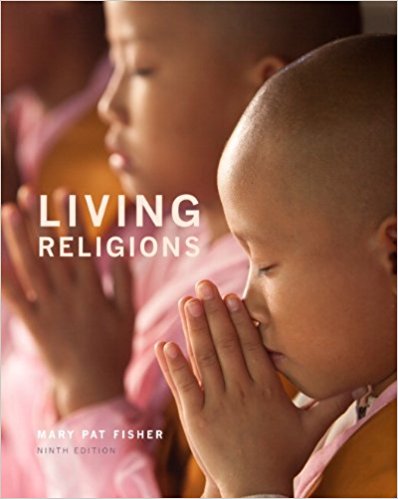
Living Religions 9th Edition By Fisher - Test Bank

Living Religions 9th Edition By Fisher - Test Bank   Instant Download - Complete Test Bank With Answers     Sample Questions Are Posted Below   Chapter 5: Buddhism   In this test bank for Living Religions, Ninth Edition, there is a new system for identifying the difficulty of the questions. Questions are now tagged …

$19.99

Living Religions 9th Edition By Fisher – Test Bank


Instant Download – Complete Test Bank With Answers


Sample Questions Are Posted Below


Chapter 5: Buddhism


In this test bank for Living Religions, Ninth Edition, there is a new system for identifying the difficulty of the questions. Questions are now tagged according to the four levels of learning that help organize the text. Think of these four levels as moving from lower-level to higher-level cognitive reasoning. The four levels are:


REMEMBER: a question involving recall of key terms or factual material

UNDERSTAND: a question testing comprehension of more complex ideas

APPLY: a question applying anthropological knowledge to some new situation

ANALYZE: a question requiring identifying elements of an argument and their interrelationship


Types of Questions


Easy to Difficult Level of Difficulty


  Multiple Choice Fill in the Blank/Short Answer True/False Essay Total Questions
Remember 1 10 5   16
Understand 7   6   13
Apply     1 2 3
Analyze       1 1
  8 10 12 3 33


Fill in the Blank/ Short Answer


  1. The term “Buddha” means __________.

(REMEMBER; answer: awakened one; page 138)


  1. Siddhartha’s practice that rejected both self-indulgence and self-denial is called the __________.

(REMEMBER; answer: Middle Way; page 140)


  1. The Buddhist term for liberation is __________.

(REMEMBER; answer: nirvana; page 143)


  1. The Buddhist term for suffering or dissatisfaction is __________.

(REMEMBER; answer: dukkha; page 144)


  1. A __________ is one who is dedicated to liberating others from suffering.

(REMEMBER; answer: bodhisattva; page 148)


  1. The two main branches of Buddhism are called __________ and __________.

(REMEMBER; Theravada and Mahayana; page 151)


  1. __________ are reliquary mounds reaching toward the sky that may contain a relic or an image of the Buddha.

(REMEMBER; answer: Stupas; page 155)


  1. The Mahayana term for emptiness or voidness is __________.

(REMEMBER; answer: sunyata; page 160)


  1. The aim of Zen practice is enlightenment, often experienced as the flash of insight known as __________.

(REMEMBER; answer: satori; page 165)


  1. The form of Buddhism that offers faithful prayers to Amida Buddha is known as __________.

(REMEMBER; answer: Pure Land Buddhism; page 166)


Multiple Choice


  1. The founder of Buddhism was a contemporary of __________.
  2. Jesus
  3. Zoroaster
  4. Mahavira
  5. Muhammad

(UNDERSTAND; answer: c; page 137)


  1. The monastic order that developed from the Buddha’s early disciples is called the __________.
  2. Temple
  3. Gautama
  4. Sangha
  5. Mara

(REMEMBER; answer: c; page 141)


  1. Buddhists who follow the Theravada tradition study a large collection of ancient scriptures called the __________.
  2. Great Vehicle
  3. The Way of the Elders
  4. Rig Veda
  5. Pali Canon

(UNDERSTAND; answer: d; page 151)


  1. Which is not part of the Triple Gem?
  2. Buddha
  3. Dharma
  4. Sangha
  5. Tipitaka

(UNDERSTAND; answer: d; page 151)


  1. Chan Buddhism focuses predominantly on
  2. social service
  3. oxherding
  4. meditation
  5. pilgrimages

(UNDERSTAND; answer: c; page 162)


  1. The Japanese teacher Nichiren believed that the essence of Buddhism could be found in the __________.
  2. Lotus Sutra
  3. Koan
  4. Zazen
  5. Lama

(UNDERSTAND; answer: a; page 166)


  1. The Vajrayana practice of meditating upon oneself in the form of a Buddha or bodhisattva in order to embody enlightened qualities is called __________.
  2. The Diamond Vehicle
  3. Compassion Training
  4. Tantric Yoga
  5. Deity Yoga

(UNDERSTAND; answer: d; page 170)


  1. A monk or a nun who renounces worldliness for the sake of following the path of liberation is called a __________.
  2. Guru
  3. Dharma
  4. Anitya
  5. Bhikshu

(UNDERSTAND; answer: d; page 185)


True/False


  1. Siddhartha was born in the mountains of Japan.

(REMEMBER; answer: false; page 138)


  1. According to legend, Siddhartha was tempted by Mara, the personification of evil, to keep his insights to himself.

(REMEMBER; answer: true; page 140)


  1. Like many noteworthy religious figures, the Buddha lived only into his early thirties.

(REMEMBER; answer: false; page 141)


  1. Buddhists maintain that there is one great creator God to whom all prayers should be directed.

(UNDERSTAND; answer: false; page 143)


  1. The Buddhist teaching of anatman is the doctrine that there is no separate, permanent, or immortal self.

(UNDERSTAND; answer: true; page 144)


  1. Buddhism and Hinduism espouse the same understanding of the effects of karma on the human soul.

(APPLY; answer: false; page 146)


  1. Buddhist meditation involves a wide variety of techniques for cultivating the mind.

(REMEMBER; answer: true; page 153)


  1. Because the Buddha is not considered a God, Buddhists tend to have few devotional practices.

(UNDERSTAND; answer: false; page 154)


  1. Vesak is the most important Buddhist festival.

(REMEMBER; answer: true; page 173)


  1. The role of women in Buddhism has been steadily increasing since the 1980s.

(UNDERSTAND; answer: true; page 180)


  1. Due to their emphasis on meditation, Buddhists tend to be socially disengaged.

(UNDERSTAND; answer: false; page 180)


  1. The Buddha’s emphasis on compassion prevails even among contemporary Buddhists.

(UNDERSTAND; answer: true; page 181)


Essay


  1. Describe the four parts of the Four Noble Truths and the eight elements of the eightfold path. How do you see these teachings constructively helping a person to achieve liberation from suffering in life?  Give a concrete example (such as how these teachings might help someone deal with job loss or a serious illness).


(APPLY; answer: students should competently and accurately describe the teachings here referenced, and they should also demonstrate creative application of this thought by giving an example: pages 144-146)


  1. Driven by the principles of non-violence and compassion, contemporary Buddhist thinkers must deal with questions of medical ethics (for example, abortion, suicide, organ transplants, euthanasia). However, these issues could seem to compound one’s sense of attachment to life and, therefore, to increase one’s experience of suffering.  Does constructive action in the world, such as medical interventions, contradict the Buddhist’s ultimate understanding of impermanence?  Why or why not?


(APPLY; answer: students should develop a constructive argument that demonstrates both a competent understanding of Buddhist teaching as well as a sensitive appreciation for Buddhist social action; in this case, in the field of medicine; page 180)


  1. Describe Buddhism in the West today. How did it come here and is it spreading?  What is its relationship to other religions?  In your opinion, can people who are culturally disposed to Western attitudes fully appreciate and participate in the Buddhist lifestyle of renunciation and discipline?


(ANALYZE; answer: students should describe the spread of Buddhism in the West and offer an analysis of the cultural differences they see between traditional Buddhist and traditional Western values; page 117)

Chapter 5 BUDDHISM


Chapter Overview


Buddhism was born in the fifth-­century BCE in the foothills of the Himalayas. It spread from India throughout Asia, developing a variety of schools and different practices. It has more recently become popular in the West.

The goals of the chapter are to:

  1. sketch a biography of Siddhartha, founder of Buddhism
  2. lay out the foundational tenets of Dharma, especially the Four Noble Truths, and the Eightfold Path
  3. illustrate key philosophical concepts such as karma, reincarnation, and nirvana
  4. illustrate lay and monastic practices within Buddhism
  5. explain distinctions between important expressions of Buddhism namely, Theravada and Mahayana, with examples of significant schools within Mahayana


Given its origins in India and subsequent spread throughout Asia, Buddhism presents a challenge with respect to vocabulary from different Asian languages. Both Pali and Sanskrit were used in Indian Buddhism.


The life and legend of the Buddha


Scholarly debate continues about the exact dates of the Buddha’s life; he most likely lived for about eighty years during the fifth century BCE. Historically, verifiable details of his life are sparse; more important for an understanding of Buddhism are the many ways followers have recalled his life in various sacred biographies. Buddha refers to the Awakened One. These sacred biographies of the Buddha describe the life of child named Siddhartha Gautama, born to Maya (his mother) and a wealthy landowner, who was a chief of the Shakya clan in northern India in the foothills along the Himalayas. Maya dreamed that a white elephant entered her womb, and Siddhartha was thus conceived without human intercourse.. At the time of Siddhartha’s birth, priests foretold that this child would become either a great king or a person who would renounce earthly life in order to share his enlightenment with the rest of the world.


Special note to teacher


The sacred biographies of the Buddha provide a useful basis for comparison with other sacred biographies, such as the biblical accounts of the lives of Moses and Jesus. It is also useful to remind students that Buddhism develops within the context of Hinduism, building upon and challenging some of its ideas.


Siddhartha was purportedly raised in the lap of luxury.  Siddhartha’s father, who was the equivalent of a king or a feudal lord, tried his best to protect his son from the troubles of the world and to make a good life for him in their palace. All of this was to encourage his son to aspire to kingship. Stories tell of Siddhartha’s life of leisure in a palace with female musicians and a harem of dancers. He married and had a son. But Siddhartha was curious about the outside world, and he left his home to take a chariot ride. The gods arranged for Siddhartha to witness the Four Sights: a bent aged man, a sick person, a corpse, and finally a monk devoted to the eternal rather than transient pleasure. This exposure to the inescapable reality of aging, sickness, death, and the possibility of a different kind of life, profoundly influenced the young man.

Finally, at the age of 29, Siddhartha became so disillusioned with his life of luxury that he left his home to wander as an ascetic. Various traditions report the story of Siddhartha’s travels. He studied with Hindu yogis, and tried pushing his body to the limits of asceticism, fasting until he came close to death. But Siddhartha found that these extreme lifestyles did not provide answers to his questions about the nature of human existence. Having lived both in extreme luxury and in extreme asceticism, the Buddha would eventually advocate the Middle Way of neither self-­indulgence nor self­-denial.

After six years of intense practice, Siddhartha accepted a regular meal again, and on the evening of a full moon sat under a tree at Bodh Gaya vowing to remain there until enlightenment came upon him. While sitting meditating, he experienced four states of contemplation, and then had three key realizations: one, that he could recall all his past lives; two, that he could see the entire cycle of death and rebirth, and three, the cause of suffering and the means of ending it.

After this enlightenment, Siddhartha was tempted by the evil personified in the form of Mara to keep these insights to himself, and Siddhartha himself feared that nobody else could possibly understand what he now knew. After this awakening, Siddhartha became the Buddha, the one who woke up. He is also known as Shakyamuni Buddha, or “sage of the Shakya clan.”

The Buddha spent the next forty-five years traveling and teaching throughout India. His teaching or Dharma (Pali dhamma) included the Four Noble Truths, The Noble Eightfold Path, the Three Marks of Existence, and other guidelines for achieving liberation from suffering. He gave his teaching to people of all sects and social classes. Some followers became bhikshus (monks; the Pali form of this word is bhikkhu). Later, women were allowed to pursue a life of renunciation as well (becoming bhikshunis; Pali bhikkhunis), although the Buddha was somewhat reluctant to allow this and agreed only with the provision that nuns follow eight special rules. The order of the Buddha’s disciples, known as the Sangha, made no distinctions on the basis of caste.

At the age of eighty, the Buddha accepted an offering of food—either a poisonous mushroom or spoiled pork; a matter of some linguistic debate—and became ill. Knowing that he would soon die, he told his followers to be responsible for their own spiritual development. The Buddha’s followers cremated his body, and the relics were distributed among seven clans, who built memorial domes, or stupas over them. Stupas became important pilgrimage sites.


The Dharma


Special note to teacher


It may be helpful to remind students of how the term dharma is used in Hinduism, and note that it takes on a different shade of meaning in Buddhism, referring to the “law” or “teachings” of the Buddha.


Buddhism is often referred to as a non­theistic religion. Many forms of Buddhism emphasize that they do not worship the Buddha as a divine figure, but rather revere him as a teacher who left a path for others to follow, or a raft that carried practitioners to the farther shore of nirvana (Pali nibbana), or liberation.


The Four Noble Truths


In his very first sermon at Sarnath, the Buddha set forth the Four Noble Truths, the foundation for all his later teachings:


  1. Life inevitably involves suffering, dissatisfaction, and distress.
  2. Suffering is caused by craving, rooted in ignorance.
  3. Suffering will cease when craving ceases
  4. There is a way to realize this state: the Noble Eightfold Path.


The term translated here as “suffering” is dukkha. Students should be alerted to the fact that the Buddhist understanding of suffering goes beyond the connotations of the English term. Suffering is not simply being miserable, but a function of the impermanence of everything in life. Thus even the greatest happiness is temporary; even when one’s life is going well, there are nagging fears that something or someone cannot last. The concept of dukkha extends to the Buddhist understanding of self as well; while Hindu tradition of the time sought knowledge of the eternal soul or atman, the Buddha, through his own meditative practice, found no such entity, and instead taught that there is no permanent self. Rather, the self is a changing bundle of fleeting feelings, sense impressions, ideas, and evanescent physical matter.

The Second Noble Truth asserts that suffering arises from desires, because we seek satisfaction and permanence in our lives, even though, according to the Buddha, no permanent satisfaction is possible. The origin of suffering is craving and clinging in ignorance to things that people mistake as permanent but that are in truth impermanent.  The Buddha taught that instead, people should recognize three marks of existence: dukkha, anitya (impermanence; Pali anicca), and anatman (no immortal self; an easy way to help students remember this term and what it means is to remind them that the correct pronunciation is “un – atman,” i.e. no atman as taught in the Hindu Upanishads).

The Third Noble Truth that suffering ceases when desire ceases, is straightforward enough, though difficult to imagine (ask students to imagine what it would be like to a live without acting on the basis of desire). Finally, the Fourth Noble Truth leads into yet another list, the Noble Eightfold Path, which incorporates morality, concentration, and wisdom as the means to extinguishing (the literal meaning of nirvana) desire and suffering.


The Noble Eightfold Path to liberation


Buddhism, while rejecting the Hindu concept of atman, does retain the concept of a cycle of death and rebirth governed by karma. Escape from this cycle may be sought through following the steps on the Noble Eightfold Path:


  1. Right Understanding: realize and understand the Four Noble Truths
  2. Right Thought or Motives: uncover any unwholesome roots in one’s thinking, eliminate self-centeredness
  3. Right Speech: abstain from lying, gossiping, speaking harshly, divisive speech
  4. Right Action: observe the Five Precepts, namely to avoid destroying life, stealing, sexual misconduct, lying, and intoxicants
  5. Right Livelihood: make a living without violating the Five Precepts
  6. Right Effort: eliminate impurities of the mind and cultivate wholesome actions
  7. Right Mindfulness: be aware in every moment, discipline the mind
  8. Right Meditation: quiet the mind through mental discipline


The wheel of birth and death


The concept of a cycle of birth and death in Buddhism necessarily differs from the Hindu concept because Buddhism teaches that there is no eternal soul to be reborn. Students often find it challenging to imagine how rebirth occurs if there is nothing other than accumulated karma to be reborn. In Buddhism, the impressions of our virtuous and non-virtuous actions shape our experience moment by moment.  When we die, this process continues, passing on the flame to a new life in a realm of existence that reflects our past karma.

The three root afflictions of attachment, aversion, and delusion drive the wheel of birth and death. Cultivating the opposites of these evils helps one move towards escape.  It is said that the Buddha could see all his own past lives. Buddhist tradition remembers that he subsequently used the stories about his previous lives to teach moral lessons known as the Jataka Tales.

Buddhist cosmology describes multiple planes of existence, including realms of hells, hungry ghosts, animals, humans, and gods. Buddhism acknowledges the existence of various gods, but understands them to be subject to the same imperfections and impermanence as humans.


Nirvana


Nirvana is a central term in Buddhism, but difficult to define. The Buddha himself did not say much about it; later Buddhists proposed varying explanations. It has been defined as the extinction of aging and dying, as escape from suffering. Nirvana may be attained while one is still alive, and at death such a person is not reborn. Therein lies some of the difficulty in defining the term, for if all that remains after one dies is karma, what is left to experience nirvana for the person who no longer has any karma? The Buddha apparently chose not to try to describe this state any further, explaining that to do so would not lead people towards nirvana. The arhant (Pali arhat) is the “worthy one” who has found nirvana in this life; at death the arhant enters the ultimate state of nirvana.


Special note to teacher


It may help students to note that nirvana means “extinguishing” and thus is connected to the previously mentioned image of rebirth as being like one flame lighting another.


Branches of Buddhism


Buddhism spread throughout India, aided by leaders such as King Ashoka, but essentially died out there by the twelfth century. However, Buddhism in a variety of forms spread throughout Asia. There is a major division between Theravada (“way of the elders”; south) and Mahayana (“great vehicle”; north) Buddhism. Theravada is prevalent in the southeast Asian countries of Sri Lanka [which geographically is in South Asia], Myanmar (formerly Burma), Thailand, Cambodia, and Laos. Mahayana is dominant in China, Korea, Mongolia, Vietnam, Japan, Nepal, and Tibet. Both groups are in general agreement about the basic concepts of the Four Noble Truths, karma, samsara, and nirvana.


Theravada: the path of mindfulness


Theravada seeks to maintain what it considers the original teachings of Buddhism. At the popular level, devotional practices dominate. Theravada’s central text is the Pali Canon, also known as the Tipitaka or “three baskets” (so named because manuscripts were stored in baskets) of rules of monastic discipline, Dharma teachings, and scholastic treatises. Buddhist tradition recalls that Buddhist elders compiled the Pali Canon after the Buddha’s death. Its various portions were initially transmitted orally until the sutras (Pali suttas) were written down in the first century BCE.

Theravada Buddhism highlights the Triple Gem or Three Refuges of the Buddha, dharma, and the sangha. Indeed one becomes a Buddhist by reciting a formula stating that one takes refuge in each part of the Triple Gem.   The Theravada monastic order traces itself back to the time of Buddha himself; Theravadin monks live very simple lives. They depend upon the support of laypeople, who, in turn look to them for teaching and guidance. In Theravada Buddhism, it is common for young men to become monks temporarily; there is no stigma attached to leaving the monastic order. Fisher notes that while an order of nuns did exist in the Buddha’s lifetime, it did not survive. Some Buddhist texts reveal misogynist attitudes. In 1998, however, 135 nuns were ordained at Bodh Gaya.

Theravada transmits various meditation techniques known under the general headings of samatha (calm) and vipassana or “insight.”


Devotional practices


In addition to the contemplative and philosophical traditions, many lay Buddhists and also many monastic practitioners of Theravada Buddhism of Southeast Asia turn to the Buddha himself in their devotional practices.  Many lay rituals seek to derive benefit from the power of the Buddha present in his image, his relics, and the chanting of his teachings or the sutras. Buddha images are specially consecrated. Buddhist temples are important community centers not only for generating and distributing the power of the Buddha, but also community identity and integration. It is also important to note that Buddhism has typically combined with indigenous spiritual practices.

While some scholarship on Buddhism (both in the West and Asia) has portrayed popular devotional practices as antithetical to the spirit of Buddhism, much current research suggests that these practices have long been part of mainstream Buddhism.


Mahayana: the path of compassion and wisdom


Mahayana (a general category with many branches) reflects innovation in Buddhist thought and practice, including a focus on the liberation of all beings, whether monastic or laypeople, and a vast array of Buddhas and bodhisattvas. Wisdom and compassion, as well as the skillful means needed to cultivate awakening, are key virtues in Mahayana.

Mahayana scriptures emphasize that all beings have the capability to achieve Buddhahood, and encourage people to embark on the path to becoming a bodhisattva (being dedicated to attaining enlightenment; note that this is also the term used for the Buddha himself in his previous lives). Aspiring bodhisattvas take a series of vows to mark their commitment to save others from suffering. East Asia’s most popular bodhisattva is known as Guanyin in China, Kannon in Japan, and most commonly portrayed as a female who gives and protects children.

Theravada Buddhism regards the Buddha as a historical figure who no longer exists, but who left his dharma as a guide. In contrast, Mahayana teaches that the Buddha is a universal principle in the Three Bodies of Buddha: the enlightened formless wisdom body, the celestial bliss body which communicates the dharma to bodhisattvas, and the emanation of the body whereby a Buddha manifests in countless forms to help liberate suffering beings.

One of the most fascinating and challenging philosophical concepts in Mahayana thought is sunyata (“voidness” or “emptiness”). Building on the basic Buddhist idea that all things are dependent upon something else (whether physical objects or concepts), having no independent origin, and no eternal reality, Mahayana thinkers argued that the world of death and rebirth is empty of inherent existence. Even the Four Noble Truths are empty; nirvana, too is empty insofar as it is a thought construct, though it is not dependent on conditions.  Teachings on emptiness do not mean we do nothing, but that we do not become attached to results.  Instead, the focus of emptiness is on compassion, skillful means, and the wish to benefit all living beings.


Chan and Zen: The great way of enlightenment


Buddhism reached China via central Asia and then spread to Korea, Japan, and Vietnam. Chan Buddhism, based on the sanskrit word for meditation, “dhyana,” focuses on reaching enlightenment through sitting medication.  It is the most popular form of Buddhism in China.  When Chan Buddhism was transmitted to Japan, it became known there as Zen Buddhism. (The term “Zen” is the Japanese rendering of the Chinese word “Ch’an.”)

Zen Buddhism asserts that it cuts through the welter of complex Buddhist philosophical schools to recover the original experience of direct enlightenment that the Buddha himself had, transmitted from mind to mind. According to Zen, all have Buddha-­nature within them. Zen advocates rigorous seated meditation known as zazen. Some schools of Zen seek a sudden burst of insight known as kensho; others argue that insight occurs gradually. Some Zen practitioners use koans, seemingly paradoxical riddles that challenge our typical thought patterns. Zen tradition terms enlightenment as satori. Zen meditation may be a part of various arts such as calligraphy and painting.


Pure Land: Devotion to Amitabha Buddha


One of the most popular forms of Buddhism throughout East Asia, Pure Land Buddhism, calls upon the salvific power of the Buddha of boundless light, known as Amida Buddha in Japan (Sanskrit Amitabha). Followers focus on prayers to Amida, assured that repeating his name will win them rebirth in the Pure Land. Discussion of Pure Land Buddhism provides the basis for reflection on how much religions may change over time.


Jodo Shinshu: the True Pure Land


Jodo Shinshu is a Buddhist school of thought developed in the nineteenth century by the Japanese monk Shinran.  This form of Buddhism does not renounce marriage and does not require people to separate themselves from society.  It also does not mix its beliefs with Japanese Shinto religion.  It is the most popular form of Buddhism practiced in Japan today.


Nichiren: Salvation through the Lotus Sutra


The thirteenth century Japanese teacher Nichiren believed that the highest form of Buddhism was found in the Lotus Sutra. Nichiren and his followers chanted in praise of the Lotus Sutra. Nichiren’s teachings have spawned several different sects, including Soka Gakkai.


Vajrayana: the indestructible path


Of the many branches of Mahayana Buddhism, perhaps the most elaborate is Vajrayana.  It developed in India, was transmitted to Tibet, and has historically been practiced in Nepal, Bhutan, Sikkim, and Mongolia.  Currently, it is practiced throughout the Tibetan diaspora and increasingly in North American and Europe.

Tibetan Buddhism still bears the influence of Tibet’s indigenous shamanic religion called Bön, e.g. in its emphasis on practices for the dying. Vajrayana practitioners are guided in tantric practice by lamas, some of whom are recognized as incarnate bodhisattvas. Vajrayana practice (also known as Tantrayana) includes deity yoga, meditating on various deities who embody qualities that the practitioner wishes to cultivate. Tibetan Buddhism has suffered since the Chinese persecutions beginning in the 1950s. Various forms of Tibetan Buddhism have become popular in the West.

Tibetan Buddhist practice at all levels may include the use of thangkas and mandalas (visual aids to concentration portraying various Buddhas and bodhisattvas in diagrams representing the entire cosmos), and mantras, which may be inscribed on prayer flags, or inserted within prayer wheels.


Festivals


Buddhist festivals vary throughout Asia, but when Buddhist laypeople celebrate a festival they typically visit their local temple or monastery in the morning, make offerings of food to monks, renew their commitment to the Five Precepts, and listen to Dharma talks. They may engage in practices to gain merit, such as making donations to the poor and circumambulating a stupa.

Vesak is the most important Buddhist festival. According to Theravada Buddhists, it marks the anniversary day of the Buddha’s birth, enlightenment, and death. Mahayana Buddhists consider it to be the day of his enlightenment. Vajrayana Buddhists celebrate four distinct days commemorating the Buddha’s conception, birth, enlightenment, and death. In general, Vesak is celebrated with visits to temples, offerings to images of the Buddha, and in some instances, release of imprisoned birds and animals.

The monsoon season in India marked the rains retreat period for monks and nuns when travel was difficult. In some Buddhist countries during this time young men temporarily ordain as monks as a rite of passage into adulthood. At the end of the rains retreat, laypeople offer new robes and other supplies to monks and nuns.

Some Buddhists celebrate Magha Puja Day to commemorate the Buddha’s teaching to 1,250 arhants after he had given his first sermon at Sarnath.

Local and national Buddhist celebrations may involve honoring Buddha relics, such as the Festival of the Tooth in Sri Lanka.


Buddhism in the West


Wherever Asian Buddhists traveled, they brought Buddhism with them.  Chinese immigrants in California brought Buddhism during the gold rush.  Japanese immigrants also brought their beliefs to the west coast.  Japanese immigrants also founded Buddhist Churches of America.

Various forms of Buddhism have made their way to West, aided in part by the exodus of thousands of Tibetans, the efforts of Zen teachers, and the establishment of Theravada vipassana meditation centers. Some Western Buddhists find meditation a welcome antidote to the materialism of Western life. Challenges have arisen, however, in translating the various forms of Asian Buddhism into a Western cultural context. Some Westerners want instant access to training typically offered only to the most advanced practitioners. It is difficult to replicate the monastic traditions of Buddhism in a Western setting, and a sort of cafeteria­-style approach to spirituality sends some would­-be Buddhists from one teacher to another. Many Western Buddhists (along with an increasing number of Asian Buddhists) are seeking increased roles for women within Buddhism. North American and European countries have since become vibrant centers of Buddhism.  It is often embraced by the West because it holds out peace in the midst of a chaotic, materialistic life.

For Asian immigrants, maintaining Buddhist practices is not only a spiritual pursuit, but also a means of maintaining cultural and ethnic traditions, and passing them on to their children raised in the West. The international Buddhist community have also joined hands to enhance the role of women, culminating in a biannual conference left by Sakyadhita, or “Daughters of the Buddha.”


Socially engaged Buddhism


Throughout the Buddhist world, people have developed means of making Buddhist values relevant to social problems such as environmental degradation, war, and social discrimination. Buddhist ideals have also inspired political leaders such as Myanmar’s Daw Aung San Suu Kyi, who seeks democracy for her country. Also noteworthy is the Indian untouchable activist B.R. Ambedkar (1891­-1956), who led mass conversions to Buddhism as a means of combating caste discrimination.


Key Terms


Anatman (Pali: anatta) Karma Stupa
Anitya (Pali: anicca) Kensho Sunyata
Arhant (Pali: arhat) Koan Theravada
Bhikshu (Pali: bhikkhu) Lama Triple Gem
Bhikshuni (Pali: bhikkuni) Mahayana Vajrayana
Bodhisattva Nirvana Vipassana
Deity yoga Pali Canon Zazen
Dharma (Pali: Dhamma) Samsara Zen
Dukkha Sangha  


Review questions


  1. Tell the story of the Buddha’s enlightenment. Examine the Four Nobel Truths, the Noble Eightfold Path, and the Middle Way.
  2. Describe the major similarities and differences among Theravada, Mahayana, and Vajrayana traditions. Describe their geographical development and name and quote a main text from each tradition.
  3. Explain some of the main trends in Buddhism today, addressing the application of Buddhist principles to social issues, women’s roles, and the practice of meditation.


Discussion questions


  1. What are the major similarities and differences between Hinduism (chapter three) and Buddhism?
  2. What are the Buddhist understandings of time and reality? How do these differ from theistic understandings?
  3. Discuss the role of meditation and devotion within different forms of Buddhism in Western societies.
  4. What factors do you think may account for the growing popularity of Buddhism in Western societies?
  5. Discuss how advocates of socially engaged Buddhism have addressed the common perception that Buddhism advocates withdrawing from society rather than engaging with it.


Class Activities/Assignments


  1. Use the Internet to determine if there are any Buddhist centers in your area. If so, what form of Buddhism do they practice? If possible, visit.
  2. Ask students to think about the role that desire plays in their everyday actions and long-­term life goals. Then, ask them to imagine what it would be like to live a life in which one did not make decisions and act on the basis of desires.
  3. Spend 10 minutes in class trying a simple meditation exercise. Ask students to sit quietly and simply try to identify everything that goes on in their minds. Then, ask them whether they found they had control over their thoughts, and what it would take to be able to control the mind.


Recommended Films


Buddhism: Footprint of the Buddha,” BBC, 1978. 52 minutes. Part of “The Long Search” series. Somewhat dated in appearance, but a classic presentation of some of the basics of Buddhism.

Buddhism: Making of a Monk,” Films for the Humanities and Sciences [distributor], 1996. 15 minutes. Brief introduction to rituals of monastic initiation.

Choice for a Chinese Woman: Enlightenment in a Buddhist Convent,” Films for the Humanities and Sciences, 1993. 35 minutes. Documentary about a young Chinese woman who runs away from home to become a Buddhist nun.

Walking with the Buddha,” Films for the Humanities and Sciences, 1996. 29 minutes. Useful for depiction of Theravada Buddhist practices in Thailand; presented from perspective of Maryknoll missionaries.


Additional Class Discussion/Essay Questions


  1. Briefly outline the key events in Siddhartha’s life before he became known as the Buddha. What experiences in his early life helped him to formulate the idea of a “Middle Way?”
  2. Explain the concept of dukkha and its role in Buddhist teaching.
  3. Compare and contrast some of the basic ideas of Theravada and Mahayana Buddhism.
  4. What are some of the typical devotional practices of lay Buddhism?
  5. List the steps on the Noble Eightfold Path and note briefly what each step involves.

Additional information

Add Review

Your email address will not be published. Required fields are marked *