Subtotal: $640.00

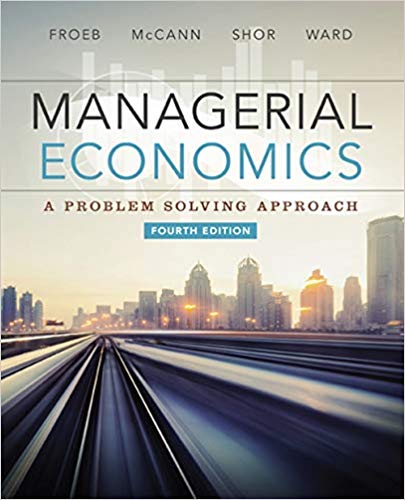
Managerial Economics 4th Edition Luke M. Froeb - Test Bank

Managerial Economics 4th Edition Luke M. Froeb - Test Bank   Instant Download - Complete Test Bank With Answers     Sample Questions Are Posted Below   1. ​The higher the interest rates   a. ​the more value individuals place on future dollars   b. ​the more value individuals place on current dollars   c. ​individuals …

$19.99

Managerial Economics 4th Edition Luke M. Froeb – Test Bank


Instant Download – Complete Test Bank With Answers


Sample Questions Are Posted Below


1. ​The higher the interest rates

  a. ​the more value individuals place on future dollars
  b. ​the more value individuals place on current dollars
  c. ​individuals do not place any importance on either current or future dollars
  d. ​does not affect the investment strategy


ANSWER:   b
TOPICS:   Section 5.1 COMPOUNDING AND DISCOUNTING


2. ​A publisher is deciding whether or not to invest in a new printer. The printer would cost $500, and it would increase cash flows by $600 for the next two years. What is the present value of the cash flows from the investment?

  a. ​$1100
  b. ​$541
  c. ​$600
  d. ​$1041


ANSWER:   a
TOPICS:   Section 5.1 COMPOUNDING AND DISCOUNTING


3. ​A publisher is deciding whether or not to invest in a new printer. The printer would cost $900, and would increase the cash flows in year 1 by $500 and in year 3 by $800. Cash flows do not change in year 2. If the interest rate is 12%, what is the present value of the cash flows from the investment?

  a. ​$155.59
  b. ​$1015.85
  c. ​$1076.56
  d. ​$346.78


ANSWER:   b
TOPICS:   Section 5.1 COMPOUNDING AND DISCOUNTING


4. ​The lower the interest rates

  a. ​the more value individuals place on future dollars
  b. ​the less value individuals place on future dollars
  c. ​less investments will take place
  d. ​does not affect the investment strategy


ANSWER:   a
TOPICS:   Section 5.1 COMPOUNDING AND DISCOUNTING


5. ​If the annual interest rate is 0%, the net present value of receiving $550 in the next year is

  a. ​$550
  b. ​$551
  c. ​$549
  d. ​$500


ANSWER:   a
TOPICS:   Section 5.1 COMPOUNDING AND DISCOUNTING


6. ​If the annual interest rate is 10%, the net present value of receiving $550 in the next year is:

  a. ​$550
  b. ​$551
  c. ​$549
  d. ​$500


ANSWER:   a
TOPICS:   Section 5.1 COMPOUNDING AND DISCOUNTING


7. ​If the interest rate is 11%, $1500 received at the end of 12 years is worth how much today?

  a. ​1500*(1+0.11)^12
  b. ​1500/(1 +0 .11)^12
  c. ​1500/(1 + 11)^12
  d. ​1500


ANSWER:   b
TOPICS:   Section 5.1 COMPOUNDING AND DISCOUNTING


8. ​A cloth manufacturing firm is deciding whether or not to invest in new machinery. The machinery costs $45,000 and is expected to increase cash flows in the first year by $25,000 and in the second year by $30,000. The firm’s current fixed costs are $9,000 and current marginal costs are $15. The firm currently charges $18 per unit. If the interest rate is 5% then the present value of the cash flows is

  a. ​$6,020.41
  b. ​$51,020.41
  c. ​-$7,380.95
  d. ​$10,000


ANSWER:   b
TOPICS:   Section 5.1 COMPOUNDING AND DISCOUNTING


9. ​Lucy invested $10,000 at the rate of 12%. According to the rule of 72, it would take ______ years for her money to double

  a. ​4
  b. ​5
  c. ​6
  d. ​7


ANSWER:   c
TOPICS:   Section 5.1 COMPOUNDING AND DISCOUNTING


10. ​If GDP is expected to increase at a steady rate of 3% per year, how many years would it take for living standards to double?

  a. ​10
  b. ​20
  c. ​24
  d. ​30


ANSWER:   c
TOPICS:   Section 5.1 COMPOUNDING AND DISCOUNTING


11. ​The government is looking to double the living standards of its population in 18 years, what rate of GDP growth would it need to achieve that?

  a. ​1%
  b. ​2%
  c. ​3%
  d. ​4%


ANSWER:   d
TOPICS:   Section 5.1 COMPOUNDING AND DISCOUNTING


12. ​Ricky is thinking about borrowing $10,000 from Fred. He promises Fred cash flows of $5000 for the next three years. If Fred’s cost of capital is 10%, what is the present value of the stream of cash flows?

  a. ​$9873.45
  b. ​$12,434.26
  c. ​$11,342.76
  d. ​$8677.69


ANSWER:   b
TOPICS:   Section 5.1 COMPOUNDING AND DISCOUNTING


13. ​According to the Net Present Value (NPV) rule, managers choose to invest if

  a. ​The NPV of the project is less than zero
  b. ​The NPV of the project is greater than zero
  c. ​The NPV of the project is equal to zero
  d. ​The NPV of the project is equal to the cost of capital


ANSWER:   b
TOPICS:   Section 5.2 HOW TO DETERMINE WHETHER INVESTMENTS ARE PROFITABLE


14. ​A publisher is deciding whether or not to invest in a new printer. The printer would cost $500, and it would increase cash flows by $600 for the next two years. If the cost of capital is 10% then the net present value of the investment is

  a. ​$1041.32
  b. ​$541.32
  c. ​$1090.91
  d. ​$590.91


ANSWER:   b
TOPICS:   Section 5.2 HOW TO DETERMINE WHETHER INVESTMENTS ARE PROFITABLE


15. ​If the cost of capital increased to 25%, would the firm invest in the printer?

  a. ​Yes because the NPV>0
  b. ​Yes because the NPV=0
  c. ​Need information on the marginal benefits and costs
  d. ​No because the NPV<0


ANSWER:   a
TOPICS:   Section 5.2 HOW TO DETERMINE WHETHER INVESTMENTS ARE PROFITABLE


Use the following setup for the next four questions.

A publisher is deciding whether or not to invest in a new printer. The printer would cost $900, and would increase the cash flows in year 1 by $500 and in year 3 by $800. Cash flows do not change in year 2. If the interest rate is 12%


16. ​What is the net present value of the investment?

  a. ​$115.85
  b. ​$1055.59
  c. ​$1076.56
  d. ​$346.78


ANSWER:   a
TOPICS:   Section 5.2 HOW TO DETERMINE WHETHER INVESTMENTS ARE PROFITABLE


17. ​Is the investment in the new printer feasible?

  a. ​Yes since NPV>0
  b. ​No since NPV<0
  c. ​Yes since the present value of the cash flows is greater than zero
  d. ​No since the present value of the cash flows is lesser than zero


ANSWER:   a
TOPICS:   Section 5.2 HOW TO DETERMINE WHETHER INVESTMENTS ARE PROFITABLE


18. ​If the interest rate rises to 25% would the investment still take place?

  a. ​Yes since NPV>0
  b. ​No since NPV<0
  c. ​Yes since the present value of the cash flows is greater than zero
  d. ​No since the present value of the cash flows is lesser than zero


ANSWER:   b
TOPICS:   Section 5.2 HOW TO DETERMINE WHETHER INVESTMENTS ARE PROFITABLE


19. ​If the interest rate is 25%, but cash flows change such that the investment renders a cash flow of $500 in year 1 and $800 in year 2 instead of year 3, would the investment take place?

  a. ​Yes since NPV>0
  b. ​No since NPV<0
  c. ​Yes since the present value of the cash flows is greater than zero
  d. ​No since the present value of the cash flows is lesser than zero


ANSWER:   b
TOPICS:   Section 5.2 HOW TO DETERMINE WHETHER INVESTMENTS ARE PROFITABLE


Use the following setup for the next two questions.

A manufacturing firm is deciding whether or not to invest in a new printer that needs an initial investment of $150,000. The investment would increase cash flows in the first year by $80,000 and in the second year by $75,000.


20. ​If the interest rate is 10% then the net present value of the investment is

  a. ​$5,000
  b. ​- $9,091
  c. ​-$15,290
  d. ​-$21,901


ANSWER:   c
TOPICS:   Section 5.2 HOW TO DETERMINE WHETHER INVESTMENTS ARE PROFITABLE


21. ​If the cost of the capital is 9%, is the investment feasible?

  a. ​Yes because the NPV>0
  b. ​Yes because the NPV=0
  c. ​No because the NPV<0
  d. ​Need information on the marginal benefits and costs


ANSWER:   c
TOPICS:   Section 5.2 HOW TO DETERMINE WHETHER INVESTMENTS ARE PROFITABLE


Use the following setup for questions 23-24

A cloth manufacturing firm is deciding whether or not to invest in new machinery. The machinery costs $45,000 and is expected to increase cash flows in the first year by $25,000 and in the second year by $30,000. The firm’s current fixed costs are $9,000 and current marginal cost are $15. The firm currently charges $18 per unit.


22. ​If the cost of capital is 5% then the net present value of the investment is

  a. ​$6,020.41
  b. ​$7,380.95
  c. ​-$7,380.95
  d. ​$10,000


ANSWER:   a
TOPICS:   Section 5.2 HOW TO DETERMINE WHETHER INVESTMENTS ARE PROFITABLE


23. ​If the interest is 5%, should the firm undertake the investment?

  a. ​Yes, since NPV=0
  b. ​Yes, since NPV<0
  c. ​Yes, since NPV>0
  d. ​No, since NPV=0


ANSWER:   c
TOPICS:   Section 5.2 HOW TO DETERMINE WHETHER INVESTMENTS ARE PROFITABLE


24. ​Ricky is thinking about borrowing $10,000 from Fred. He promises Fred cash flows of $5000 for the next three years. If Fred’s cost of capital is 10%, what is the Net Present Value of the investment for Fred?

  a. ​-$126.55
  b. ​$1,342.76
  c. ​$2,434.26
  d. ​-$1,322.31


ANSWER:   c
TOPICS:   Section 5.2 HOW TO DETERMINE WHETHER INVESTMENTS ARE PROFITABLE


25. ​Projects with a positive NPV create

  a. ​economic profits since they earn a return higher than the company’s cost of capital
  b. ​economic profits since they earn a return lower than the company’s cost of capital
  c. ​accounting profits only since they earn a return higher than the company’s cost of capital
  d. ​accounting profits only since they earn a return lower than the company’s cost of capital


ANSWER:   a
TOPICS:   Section 5.2 HOW TO DETERMINE WHETHER INVESTMENTS ARE PROFITABLE


Use the following setup for questions 29-30

A firm’s fixed costs are $10 million. It sets the price at $1800 per unit and has marginal costs of $1,000.


26. ​What’s the firm’s contribution margin per unit?

  a. ​$12
  b. ​$10
  c. ​$8
  d. ​$4


ANSWER:   d
TOPICS:   Section 5.3 BREAKEVEN ANALYSIS


27. ​The break-even quantity is

  a. ​1250
  b. ​625
  c. ​416.67
  d. ​500


ANSWER:   a
TOPICS:   Section 5.3 BREAKEVEN ANALYSIS


Use the following setup for questions 29-30

A firm’s fixed costs are $10 million. It sets the price at $1800 per unit and has marginal costs of $1,000.


28. ​What is the firm’s contribution margin?

  a. ​$1800
  b. ​$800
  c. ​$1000
  d. ​$300


ANSWER:   b
TOPICS:   Section 5.3 BREAKEVEN ANALYSIS


29. ​The break-even quantity is

  a. ​10000
  b. ​5,555
  c. ​12,500
  d. ​5,000


ANSWER:   c
TOPICS:   Section 5.3 BREAKEVEN ANALYSIS


30. ​The break-even quantity is

  a. ​Fixed Costs/Price
  b. ​Fixed Costs/Marginal Cost
  c. ​Fixed Costs/(Price – Marginal Costs)
  d. ​Contribution Margin/Fixed Costs


ANSWER:   c
TOPICS:   Section 5.3 BREAKEVEN ANALYSIS


31. ​Contribution margin is

  a. ​the contribution of each unit sold towards covering the fixed costs
  b. ​the contribution of each unit sold towards covering the variable costs
  c. ​the contribution of each unit sold towards covering the average variable costs
  d. ​All of the above


ANSWER:   a
TOPICS:   Section 5.3 BREAKEVEN ANALYSIS


32. ​A business produces 5,000 units per month. It spends $12,000 on raw materials. It pays wages of $20,000. Other costs include $50,000 for rent, paid by the month. In order to break even the selling price per unit will have to be:

  a. ​$25.20
  b. ​$16.4
  c. ​$20.30
  d. ​$28


ANSWER:   b
TOPICS:   Section 5.3 BREAKEVEN ANALYSIS


33. ​A business produces 4,000 units per month which it sells at $20/unit. Costs include: $10,000 on raw materials, $15,000 in wages for operators and $10,000 in wages to sales people. If the business is just breaking even, what are its fixed costs:

  a. ​$35,000
  b. ​$40,000
  c. ​$45,000
  d. ​$50,000


ANSWER:   c
TOPICS:   Section 5.3 BREAKEVEN ANALYSIS


34. ​Break-even quantity is a point where

  a. ​the level of profit is maximized
  b. ​the level of cost is minimized
  c. ​Only variable costs are covered
  d. ​There are zero profits


ANSWER:   d
TOPICS:   Section 5.3 BREAKEVEN ANALYSIS


35. ​If a firm sells more than the break-even quantity,

  a. ​It will make a profit
  b. ​It will only cover the variable costs
  c. ​It will make a loss
  d. ​A firm is unable to sell above the break-even quantity


ANSWER:   a
TOPICS:   Section 5.3 BREAKEVEN ANALYSIS


36. ​Which of the following variables are needed to determine the break-even quantity?

  a. ​Marginal costs
  b. ​Fixed Costs
  c. ​Selling Price
  d. ​All of the above


ANSWER:   d
TOPICS:   Section 5.3 BREAKEVEN ANALYSIS


37. ​Which of the following defines a sunk cost?

  a. ​Cost of the next best alternative
  b. ​Cost of producing an additional unit
  c. ​An asset with no scrap value
  d. ​Total cost of producing a product


ANSWER:   c
TOPICS:   Section 5.3 BREAKEVEN ANALYSIS


38. ​Which of the following will increase the break-even quantity?

  a. ​A decrease in overall fixed costs
  b. ​A decrease in the marginal costs
  c. ​A decrease in the price level
  d. ​An increase in price level


ANSWER:   c
TOPICS:   Section 5.3 BREAKEVEN ANALYSIS


39. ​Which of the following will increase the price needed to break even?

  a. ​A decrease in overall fixed costs
  b. ​A decrease in the marginal costs
  c. ​An increase in fixed costs
  d. ​An increase in the level of production


ANSWER:   c
TOPICS:   Section 5.3 BREAKEVEN ANALYSIS


40. ​Which of the following will decrease the break-even quantity?

  a. ​Falling fixed costs
  b. ​Increasing marginal costs
  c. ​An increase in the price
  d. ​Both A&C


ANSWER:   d
TOPICS:   Section 5.3 BREAKEVEN ANALYSIS


41. ​Which of the following will decrease the price needed to break even?

  a. ​A decrease in overall fixed but avoidable costs
  b. ​A decrease in the marginal costs
  c. ​An increase in sunk costs
  d. ​Both A&B


ANSWER:   d
TOPICS:   Section 5.3 BREAKEVEN ANALYSIS


Use the following setup for questions 44-45

A cloth manufacturing firm is deciding whether or not to invest in new machinery. The machinery costs $45,000 and is expected to increase cash flows in the first year by $25,000 and in the second year by $30,000. The firm’s current fixed costs are $9,000 and current marginal cost are $15. The firm currently charges $18 per unit.


42. ​What’s the firm’s current contribution margin?

  a. ​$15
  b. ​$18
  c. ​$3
  d. ​$4


ANSWER:   c
TOPICS:   Section 5.3 BREAKEVEN ANALYSIS


43. ​The current break-even quantity is

  a. ​3000
  b. ​600
  c. ​500
  d. ​300


ANSWER:   a
TOPICS:   Section 5.3 BREAKEVEN ANALYSIS


44. ​A pottery craftsman is debating attending the crafters fair. It costs $50 to set up the booth and $20 in transportation to get his pottery to the fair. He nets $5 for each of his pieces, number of pots he must sell to make going to the fair worth the cost?

  a. ​10
  b. ​12
  c. ​14
  d. ​16


ANSWER:   c
TOPICS:   Section 5.3 BREAKEVEN ANALYSIS


45. ​A catering company is producing at a point where its marginal costs are $25 and its fixed costs are $5000. At the current price of $10 it is producing 50 meals. If the demand goes up, such that they can now charge $20 per meal, how much should the firm now produce?

  a. ​60 meals
  b. ​70 meals
  c. ​80 meals
  d. ​None, they should shut down


ANSWER:   d
TOPICS:   Section 5.3 BREAKEVEN ANALYSIS


Use the following setup for the next seven questions.

A firm is deciding between two different sewing machines. Technology A has fixed costs of $500 and marginal costs of $50 whereas Technology B has fixed costs of $250 and marginal costs of $100.


46. ​At what quantity is the firm indifferent between the two technologies?

  a. ​10
  b. ​2
  c. ​5
  d. ​8


ANSWER:   c
TOPICS:   Section 5.4 CHOOSING THE RIGHT MANAFACTURING TECHNOLOGY


47. ​What is the cost of production at the number of units where the company is indifferent between the two technologies?

  a. ​$750
  b. ​$850
  c. ​$950
  d. ​$1050


ANSWER:   a
TOPICS:   Section 5.4 CHOOSING THE RIGHT MANAFACTURING TECHNOLOGY


48. ​If the price is $20 per unit, what is the break even amount of units for technology A?

  a. ​50
  b. ​60
  c. ​70
  d. ​None-They would have to shut down


ANSWER:   d
TOPICS:   Section 5.4 CHOOSING THE RIGHT MANAFACTURING TECHNOLOGY


Use the following setup for the next seven questions.

A firm is deciding between two different sewing machines. Technology A has fixed costs of $500 and marginal costs of $50 whereas Technology B has fixed costs of $250 and marginal costs of $100.


49. ​If the price is $60 per unit, what is the break even amount of units for technology B?

  a. ​50
  b. ​60
  c. ​70
  d. ​None-They would have to shut down


ANSWER:   d
TOPICS:   Section 5.4 CHOOSING THE RIGHT MANAFACTURING TECHNOLOGY


50. ​If the price is $60 per unit, what is the break even amount of units for technology A?

  a. ​50
  b. ​100
  c. ​150
  d. ​None-They would have to shut down


ANSWER:   a
TOPICS:   Section 5.4 CHOOSING THE RIGHT MANAFACTURING TECHNOLOGY


51. ​If the price is $110 per unit, what is the break even amount of units for technology B?

  a. ​20
  b. ​25
  c. ​30
  d. ​None-They would have to shut down


ANSWER:   b
TOPICS:   Section 5.4 CHOOSING THE RIGHT MANAFACTURING TECHNOLOGY


52. ​If the company plans to produce 9 units, which technology should the firm choose?

  a. ​Technology A
  b. ​Technology B
  c. ​Either technology because they are equally cost efficient
  d. ​Need more information


ANSWER:   a
TOPICS:   Section 5.4 CHOOSING THE RIGHT MANAFACTURING TECHNOLOGY


Use the following setup for the next three questions.

Pastry Paradise is looking to expand. It decides to take over Sweet Tooth, a competitive firm. The two firms have similar technology but different costs. Pastry Paradise has $1500 fixed costs and $1 marginal cost per unit produced. Sweet Tooth has $500 fixed costs but $5 marginal cost per unit produced.


53. ​If Pastry Paradise takes over Sweet Tooth, at what level of production would it be indifferent between which technology is used.

  a. ​500
  b. ​750
  c. ​250
  d. ​125


ANSWER:   c
TOPICS:   Section 5.4 CHOOSING THE RIGHT MANAFACTURING TECHNOLOGY


54. ​What is the total cost, at the level of production where Pastry Paradise is indifferent between which technology is used?

  a. ​$1750
  b. ​$1000
  c. ​$1500
  d. ​$2000


ANSWER:   a
TOPICS:   Section 5.4 CHOOSING THE RIGHT MANAFACTURING TECHNOLOGY


55. ​If the company plans to produce 5000 units of output, is using the competitor’s technology a good idea?

  a. ​Yes
  b. ​No
  c. ​It does not matter, at 5000 units you are indifferent between the two technologies
  d. ​None of the above


ANSWER:   b
TOPICS:   Section 5.4 CHOOSING THE RIGHT MANAFACTURING TECHNOLOGY


56. ​A firm’s sunk costs are $100,000 and its marginal costs are $250 per unit. It produces 500,000 units and prices it at $400 per unit., How low can price go before the firm decides to shut down?

  a. ​$150
  b. ​$250
  c. ​$250.20
  d. ​$400


ANSWER:   b
TOPICS:   Section 5.5 SHUTDOWN DECISIONS AND BREAKEVEN PRICES


57. ​In the short-run, a firm’s decision to shut-down should not take into consideration

  a. ​Avoidable costs
  b. ​Variable costs
  c. ​Fixed costs
  d. ​Marginal costs


ANSWER:   c
TOPICS:   Section 5.5 SHUTDOWN DECISIONS AND BREAKEVEN PRICES


58. ​A firm sells 1000 units per week. It charges $70 per unit, the average variable costs are $25, and the average costs are $65. In the short run, the firm should

  a. ​Shut-down as the firm is making a loss of $15,000 per week
  b. ​Shut-down as price is lower than average cost
  c. ​Continue operating as the firm is covering all the variable costs and some of the fixed costs
  d. ​Shut-down because it is cost effective to pay off the remaining fixed costs


ANSWER:   c
TOPICS:   Section 5.5 SHUTDOWN DECISIONS AND BREAKEVEN PRICES


59. ​A firm sells 1000 units per week. It charges $70 per unit, the average variable costs are $25, and the average costs are $65. In the long run, the firm should

  a. ​Shut down since price is greater than average cost
  b. ​Continue operating price is higher than average cost, its making a profit
  c. ​Continue operating as the firm is covering all the variable costs and some of the fixed costs
  d. ​Shut-down because it is cost effective to pay off the remaining fixed costs


ANSWER:   b
TOPICS:   Section 5.5 SHUTDOWN DECISIONS AND BREAKEVEN PRICES


60. ​A firm sells 1000 units per week. It charges $70 per unit, the average variable costs are $25, and the average costs are $65. At what price would the firm consider shutting down in the short run?

  a. ​$10
  b. ​$25
  c. ​$65
  d. ​$70


ANSWER:   b
TOPICS:   Section 5.5 SHUTDOWN DECISIONS AND BREAKEVEN PRICES


61. ​A firm sells 1000 units per week. It charges $70 per unit, the average variable costs are $25, and the average costs are $65. At what price would the firm consider shutting down in the long run?

  a. ​$10
  b. ​$25
  c. ​$65
  d. ​$70


ANSWER:   c
TOPICS:   Section 5.5 SHUTDOWN DECISIONS AND BREAKEVEN PRICES


62. ​A firm sells 1000 units per week. It charges $15 per unit, the average variable costs are $10, and the average costs are $25. In the short run, the firm should

  a. ​Shut-down as the firm is making a loss of $10,000 per week
  b. ​Shut-down as price is lower than average cost
  c. ​Continue operating as the firm is covering all the variable costs and some of the fixed costs
  d. ​Shut-down because it is cost effective to pay off the remaining fixed costs


ANSWER:   c
TOPICS:   Section 5.5 SHUTDOWN DECISIONS AND BREAKEVEN PRICES


63. ​A firm sells 1000 units per week. It charges $15 per unit, the average variable costs are $10, and the average costs are $25. In the long run, the firm should

  a. ​Shut-down as the firm is making a loss of $10,000 per week
  b. ​Shut-down as price is lower than average cost
  c. ​Continue operating as the firm is covering all the variable costs and some of the fixed costs
  d. ​Shut-down because it is cost effective to pay off the remaining fixed costs


ANSWER:   b
TOPICS:   Section 5.5 SHUTDOWN DECISIONS AND BREAKEVEN PRICES


64. ​A firm sells 1000 units per week. It charges $15 per unit, the average variable costs are $10, and the average costs are $25. At what price does the firm consider shutting-down in the short run?

  a. ​$25
  b. ​$0
  c. ​$15
  d. ​$10


ANSWER:   d
TOPICS:   Section 5.5 SHUTDOWN DECISIONS AND BREAKEVEN PRICES


65. ​A firm sells 1000 units per week. It charges $15 per unit, the average variable costs are $10, and the average costs are $25. At what price does the firm consider shutting-down in the long run?

  a. ​$25
  b. ​$0
  c. ​$15
  d. ​$10


ANSWER:   a
TOPICS:   Section 5.5 SHUTDOWN DECISIONS AND BREAKEVEN PRICES


66. ​A firm sells 300,000 units per week. It charges $ 35 per unit, the average variable costs are $40, and the average costs are $55. In the short run, the firm should

  a. ​Shut-down as the firm is making a loss of $15 million per week
  b. ​Shut-down as the firm cannot cover the variable costs
  c. ​Shut down because the price is lower than average cost
  d. ​None of the above


ANSWER:   b
TOPICS:   Section 5.5 SHUTDOWN DECISIONS AND BREAKEVEN PRICES


67. ​A firm sells 300,000 units per week. It charges $ 35 per unit, the average variable costs are $40, and the average costs are $55. In the long run, the firm should

  a. ​Shut-down as the firm is making a loss of $15 million per week
  b. ​Shut-down as the firm cannot cover the variable costs
  c. ​Shut down because the price is lower than average cost
  d. ​None of the above


ANSWER:   c
TOPICS:   Section 5.5 SHUTDOWN DECISIONS AND BREAKEVEN PRICES


68. ​A firm sells 300,000 units per week. It charges $ 35 per unit, the average variable costs are $40, and the average costs are $55. At what price does the firm consider shutting-down in the short run?

  a. ​$45
  b. ​$40
  c. ​$95
  d. ​$55


ANSWER:   b
TOPICS:   Section 5.5 SHUTDOWN DECISIONS AND BREAKEVEN PRICES


69. ​A firm sells 300,000 units per week. It charges $ 35 per unit, the average variable costs are $40, and the average costs are $55. At what price does the firm consider shutting-down in the long run?

  a. ​$45
  b. ​$40
  c. ​$95
  d. ​$55


ANSWER:   d
TOPICS:   Section 5.5 SHUTDOWN DECISIONS AND BREAKEVEN PRICES


70. ​A firm will shut down in the short-run if

  a. ​P>AVC
  b. ​P<AVC
  c. ​Profits<0
  d. ​P<ATC


ANSWER:   b
TOPICS:   Section 5.5 SHUTDOWN DECISIONS AND BREAKEVEN PRICES


71. ​A firm will shut down in the long-run if

  a. ​P>AVC
  b. ​P<ATC
  c. ​P=ATC
  d. ​P>ATC


ANSWER:   b
TOPICS:   Section 5.5 SHUTDOWN DECISIONS AND BREAKEVEN PRICES


72. ​A firm sets its price at $10.00 per unit. It has an average variable cost of $8.00 and an average fixed cost of $4.00 per unit. In the short run, this firm is

  a. ​incurring a loss of $2.00 per unit and should shut down.
  b. ​unable to cover all of its fixed cost and hence should shut down.
  c. ​incurring a profit.
  d. ​incurring a loss per unit of $2.00, but since it can still cover its variable costs, should continue to operate


ANSWER:   d
TOPICS:   Section 5.5 SHUTDOWN DECISIONS AND BREAKEVEN PRICES


73. ​A firm sets its price at $10.00 per unit. It has an average variable cost of $8.00 and an average fixed cost of $4.00 per unit. In the long run, this firm is

  a. ​earning zero profits and hence should shut down.
  b. ​unable to cover all of its fixed cost and hence should shut down.
  c. ​incurring a profit.
  d. ​incurring a loss per unit of $2.00, but since it can still cover its variable costs, should continue to operate.


ANSWER:   b
TOPICS:   Section 5.5 SHUTDOWN DECISIONS AND BREAKEVEN PRICES


74. ​In order to continue operating, in the long-run a firm must

  a. ​Charge a price equal to its AVC
  b. ​Charge a price equal to its AFC
  c. ​Charge a price equal to its AC
  d. ​None of the above


ANSWER:   c
TOPICS:   Section 5.5 SHUTDOWN DECISIONS AND BREAKEVEN PRICES


75. ​A firm’s fixed but avoidable costs are $100,000 and its variable costs are $250 per unit. It produces 50,000 units and prices it at $400 per unit. In the long-run, how low can price go before the firm decides to shut down?

  a. ​$150
  b. ​$252
  c. ​$250.20
  d. ​$400


ANSWER:   b
TOPICS:   Section 5.5 SHUTDOWN DECISIONS AND BREAKEVEN PRICES


76. ​A shoe manufacturer is producing at a point where its marginal costs are $5 and its fixed costs are $5000. At the current price of $10 it is producing 500 pairs. If the demand goes down, such that they can now only charge $8 per pair, should they continue production in the short run?

  a. ​No because price has fallen
  b. ​Yes because price is still higher than marginal costs
  c. ​No because price is lower than average cost
  d. ​Yes because price is higher than marginal costs


ANSWER:   b
TOPICS:   Section 5.5 SHUTDOWN DECISIONS AND BREAKEVEN PRICES


77. ​Hold-up problems usually occur when

  a. ​One of the parties makes a heavy investment in equipment specific to its trading partner
  b. ​One of the firms decides to invest heavily in general purpose equipment
  c. ​Costs are avoidable
  d. ​Costs are incurred


ANSWER:   a
TOPICS:   Section 5.6 SUNK COSTS AND POST-INVESTMENT HOLD-UP


78. ​What are some of the solutions for a hold-up problem?

  a. ​Mergers
  b. ​Contracts
  c. ​Exchange of ‘hostages’
  d. ​All the above


ANSWER:   d
TOPICS:   Section 5.7 ANTICIPATE HOLD-UP


79. ​If a firm anticipates that it is at a risk of being held up, it is more likely to

  a. ​forgo the transaction completely
  b. ​merge with its trading partner
  c. ​exchange “hostages”
  d. ​All the above


ANSWER:   d
TOPICS:   Section 5.7 ANTICIPATE HOLD-UP


80. ​Firms that anticipate hold-up, choose organizational or contractual forms

  a. ​that give both parties the incentive to make relationship-specific investments
  b. ​that give both parties the incentive to exploit each other’s positions
  c. ​that gives both parties an incentive to trade, even after the relationship-specific investments have been made
  d. ​Both A&C


ANSWER:   d
TOPICS:   Section 5.7 ANTICIPATE HOLD-UP


81. ​Project Delay

Prescott Labs is considering developing a defibrillator product. You know that will require extensive testing and possible modification before it can be launched. Still, you know that even if it is launched two years from now, the present value of sales over the expected 10 year product lifecycle will cover these costs. But now the boys down at the lab tell you that it may not launch for three years. How does this affect your assessment of going ahead with funding the product?

ANSWER:   The delay probably implies additional costs. Even if the delay does not affect development costs, it does push the benefits further into the future. The present value of the benefits falls as each year’s income gets discounted more. Both of these effects will tend to reduce the net present value of the project, making it less likely to be profitable.​


82. ​Discontinuing a Generic Drug

Prescott Pharmaceuticals makes a number of generic versions of drugs. When Cymbalta (Duloxetine) lost its patent, Prescott invested $500,000 to obtain FDA approval and $100,000 to certify one of its production lines for its production. Production of the drug will cost $2,000,000. Marginal costs for the tablet are $0.10 and they sell for $0.40 per tablet. But many firms have entered and now make Duloxetine causing sales to fall off. Prescott anticipates that it could use this production line for other drugs losing patent protection shortly. If forecasted sales are 5 million tablets, what is the breakeven price? Should Prescott discontinue selling this product?

ANSWER:   The marginal cost of $0.10 can be avoided if the product were discontinued. The $500,000 spent to obtain FDA approval and the $100,000 spent to certify the production line are both sunk costs. But the $2 million spent on the production line itself can be avoided if it were used on a new product. So the average avoidable costs are $0.10 + $2 million / 5 million = $0.50 per tablet. This breakeven price exceeds the price of $0.40 so the product should be discontinued.​


83. Discontinuing a Missile Program

Merowak Missiles has developed its Democratizer Offensive Weapon System (DOWS) for the US military. After sinking $1 billion into R&D and design, it spent $0.5 billion building the tools and production facility that are unique to DOWS production. It houses these in standard factory floor space that costs $1 million. Each missile has a marginal cost of $2,000. The Pentagon is thinking of discontinuing the program because the missiles are too expensive. If Merowak were to get an order for 50,000 missiles, what would its breakeven price be?

ANSWER:   The marginal cost of $10,000,000 ($2,000 * 50,000) can be avoided if the product were discontinued. The $1 billion R&D and design costs and $0.5 billion for specialized tools and facility are sunk. The $1 million for the factory floor space can be avoided because it can be repurposed for any manufacturing. So the average avoidable costs are $2,000 + $1 million / 50,000 = $2,020 per missile.


84. ​Funding a Missile Program

Merowak Missiles is proposing to develop its next generation Democratizer Offensive Weapon System II (DOWS II) for the US military. It expects to have to sink $1 billion into R&D and design, spend $0.5 billion building the tools and production facility that are unique to DOWS II production. It houses these in standard factory floor space that costs $1 million. Each missile has a marginal cost of $2,000. The Pentagon is considering ordering 1 million of these missiles. What is the average cost per missile that Merowak could bid for the contract?

ANSWER:   Fixed costs are the $1 billion R&D and design costs, $0.5 billion for specialized tools and facility are not yet sunk and, therefore, relevant to the decision. The $100,000 for the factory floor space can be avoided because it can be repurposed for any manufacturing. So the average avoidable costs are $2,000 + $1.501 billion / 1 million = $17,001 per missile.​


85. Bidding on a Missile Program

Merowak Missiles is proposing to develop its next generation Democratizer Offensive Weapon System II (DOWS II) for the US military. It expects to have to sink $1 billion into R&D and design, spend $0.5 billion building the tools and production facility that are unique to DOWS II production. It houses these in standard factory floor space that costs $1 million. Each missile has a marginal cost of $2,000. The Pentagon is considering ordering 1 million of these missiles. Merowak fears that the Pentagon will ask for a lower price after only half the missiles are produced. How could it keep itself from being victim of holdup?

ANSWER:   Bidding on a price per missile with such high relationship-specific fixed costs leaves Merowak vulnerable to holdup because these costs would be sunk at the time production commences. The common strategy is to separate the contract for the relationship-specific asset from the use of the asset. In this case, Merowak can seek three contracts: 1) an R&D contract for $1 billion to develop the missile, 2) a construction contract to produce the unique tools, and 3) a production contract per missile. That way Merowak does not have to include the average fixed costs of the first two into the price of each missile. Of course, this leaves the Pentagon vulnerable to holdup because it could squander the first $1 billion and not develop the missile.​


Additional information

Add Review

Your email address will not be published. Required fields are marked *