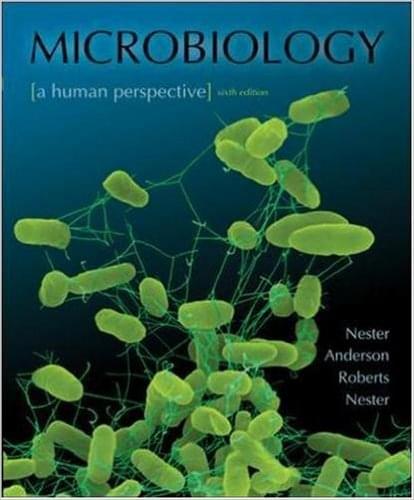
Microbiology A Human Perspective 6th Edition by Eugene Nester - Test Bank

Microbiology A Human Perspective 6th Edition by Eugene Nester - Test Bank   Instant Download - Complete Test Bank With Answers     Sample Questions Are Posted Below   Chapter 05 Control of Microbial Growth     Multiple Choice Questions Lister developed his ideas on asepsis after studying the work of A.Koch. B. Pasteur. C. Jenner. D. Fleming. …

$19.99

Microbiology A Human Perspective 6th Edition by Eugene Nester – Test Bank


Instant Download – Complete Test Bank With Answers


Sample Questions Are Posted Below


Chapter 05

Control of Microbial Growth


Multiple Choice Questions

  1. Lister developed his ideas on asepsis after studying the work of
    A.Koch.
    B. Pasteur.
    C. Jenner.
    D. Fleming.


  1. One of the first chemicals used by Lister to prevent surgical sepsis was
    A.alcohol.
    B. iodine.
    C. carbolic acid.
    D. mercury.


  1. The process of killing or removing all the microorganisms in or on a material is termed
    A.sterilization.
    B. disinfection.
    C. sanitation.
    D. antisepsis.


  1. A sterile item is free of
    A.microbes.
    B. endospores.
    C. viruses.
    D. prions.
    E. microbes, endospores AND viruses.


  1. A suffix used to describe a killing action would be
    A.-static.
    B. -cidal.
    C. -cillin.
    D. -tion.


  1. Pasteurization
    A.is the use of heat to sterilize food products.
    B. is the use of heat to reduce pathogenic/spoilage bacteria to a safe level.
    C. is a process which uses intense cold to kill microorganisms on foods.
    D. is a process which uses short bursts of radiation to kill microorganisms on foods.


  1. Plain soap is very effective in controlling spread of microorganisms because it is
    A.bacteriostatic.
    B. very effective at the mechanical removal of microorganisms.
    C. virucidal.
    D. bactericidal.


  1. Nosocomial infections
    A.are acquired at various social events.
    B. are acquired while in the hospital.
    C. occur because of a susceptible population and presence of disease causing organisms.
    D. are acquired at sporting events.
    E. are acquired while in the hospital AND occur because of a susceptible population and presence of disease causing organisms.


  1. To reduce or eliminate disease/spoilage causing organisms, food is often subjected to
    A.heat.
    B. chemical additives.
    C. radiation.
    D. cold.
    E. All of the choices are correct.


  1. Which of the following organisms are resistant to destruction by typical control methods?
    A.endospores of Bacillus and Clostridium
    B. Pseudomonas
    C. naked viruses
    D. Mycobacterium spp.
    E. All of the choices are correct.


  1. A common environmental organism that may even grow in certain chemical disinfectants is
    A.Escherichia coli.
    B. Streptococcus pneumoniae.
    C. Pseudomonas aeruginosa.
    D. enveloped virus.


  1. Upon treatment with heat or chemicals, bacteria will
    A.all die immediately.
    B. die at a constant proportion.
    C. die at an exponential rate.
    D. die at a geometric rate.


  1. In a one D process, how many D values would it take to reduce a population of 1010 cells to one survivor?
    A.2
    B. 4
    C. 5
    D. 10


  1. If a process kills 90% of the organisms per minute, how many minutes would it take to kill all organisms when starting with 100,000 organisms?
    A.1 minute
    B. 2 minutes
    C. 3 minutes
    D. 6 minutes


  1. Microbial death rates may be affected by
    A.pH.
    B. temperature.
    C. the presence of organics.
    D. All of the choices are correct.


  1. In order to speed up the sterilization process, which of the following would be useful?
    A.drying the material
    B. washing/mechanical removal of bacteria/organic matter
    C. addition of organics
    D. nothing
    E. washing/mechanical removal of bacteria/organic matter AND addition of organics


  1. Moist heat kills microorganisms by
    A.irreversible coagulation of proteins.
    B. destruction of carbohydrates in the cell wall.
    C. denaturation of nucleic acids.
    D. dissolving the capsule.


  1. Boiling is not reliable for sterilization because
    A.heat sensitive instruments may be destroyed.
    B. heat resistant endospores are unaffected.
    C. water boils at a higher temperature at lower altitudes.
    D. viruses are more sensitive to heat than bacteria.


  1. Typical conditions used for sterilization are
    A.100°C for 10 minutes.
    B. 121°C at 15 psi for 15 minutes.
    C. 80°C for 15 minutes.
    D. 72°C for 15 seconds.


  1. Which are essentially equivalent treatments?
    A.dry 200°C heat for 1.5 hours; wet 121°C heat for 15 minutes
    B. dry 160°C heat for 1.0 hours; wet 200°C heat for 30 minutes
    C. dry 121°C heat for 1.5 hours; wet 200°C heat for 15 minutes
    D. dry 100°C heat for 2.0 hours; wet 100°C heat for 30 minutes


  1. Which of the following is not a sterilization method?
    A.hot air oven
    B. autoclave
    C. pasteurization
    D. filtration


  1. Which of the following methods sterilize the materials?
    A.Pasteurization
    B. High-temperature-short-time pasteurization (HTST)
    C. Ultrahigh-temperature (UHT) method
    D. None of these are sterilization methods


  1. The autoclave treatment may be monitored by
    A.heat-sensitive tape.
    B. heat-resistant endospores of Geobacillus stearothermophilus.
    C. pressure indicators alone.
    D. waiting for contaminants to appear on freshly poured media.
    E. heat sensitive tape AND heat-resistant endospores of Bacillus stearothermophilus.


  1. Commercial canning processes
    A.are geared to destroy Clostridium botulinum spores.
    B. kill all endospores.
    C. are especially needed on low acid foods.
    D. are 12D processes.
    E. are geared to destroy Clostridium botulinum spores, are especially needed on low acid foods, AND are 12D processes.


  1. Oxidation of proteins is achieved most readily
    A.by moist heat.
    B. by moist heat under pressure.
    C. in a hot air oven.
    D. in the presence of organics.


  1. A common application of dry heat in the laboratory is to
    A.prepare specimens for study.
    B. sterilize media.
    C. sterilize plastics.
    D. sterilize the inoculating loop.


  1. Liquid media containing heat-sensitive components would best be sterilized by
    A.Ultraviolet (UV) light at 500 nm
    B. freezing.
    C. lyophilization.
    D. membrane filtration.


  1. Generally, membrane filters are not used to remove
    A.bacteria from liquids.
    B. microorganisms from gases.
    C. spoilage agents from alcoholic beverages.
    D. enzymes.


  1. Gamma rays cause biological damage in living systems by
    A.producing reactive molecules such as superoxide and hydroxyl free radicals.
    B. causing tiny gravity sinks and black holes to be formed in the substance.
    C. introducing toxins.
    D. making the substance radioactive.


  1. Gamma irradiation
    A.has not been approved for use on food.
    B. can be used to either sterilize or pasteurize, depending on the dose of radiation.
    C. leaves some radioactive particles in the treated substance.
    D. usually kills by disrupting cell membranes.


  1. Which would be most effective against Pseudomonas?
    A.alcohol
    B. radiation
    C. quaternary ammonium compounds
    D. iodophors


  1. Ultraviolet radiation at the bactericidal wavelength destroy bacteria by
    A.destroying endospores.
    B. damaging nucleic acid.
    C. preventing spore formation.
    D. denaturing proteins.


  1. Microwaves do not kill organisms directly but kill by
    A.the heat they generate in a product.
    B. generating free radicals.
    C. generating toxins.
    D. creating thymine dimers.


  1. Chemical germicides
    A.may react irreversibly with proteins/enzymes.
    B. may react with cytoplasmic membranes or viral envelopes.
    C. may be disinfecting or even sterilizing.
    D. are sensitive to dilution factor, time of contact, and temperature of use.
    E. All of the choices are true.


  1. Alcohols are not reliably effective at destroying
    A.vegetative bacteria.
    B. enveloped viruses.
    C. naked viruses.
    D. endospores.
    E. naked viruses AND endospores.


  1. Glutaraldehyde
    A.is, if given enough time, able to destroy all forms of microbial life.
    B. is very good for use on heat-sensitive medical items.
    C. attacks lipids.
    D. does not affect naked viruses.
    E. is, if given enough time, able to destroy all forms of microbial life AND is very good for use on heat-sensitive medical items.


  1. Chlorhexidine
    A.is a member of the biguanides.
    B. is extensively used in antiseptics.
    C. is ineffective against vegetative bacteria.
    D. is limited in use due to its high toxicity.
    E. is a member of the biguanides AND is extensively used in antiseptics.


  1. Ethylene oxide is gas that
    A.is very useful for sterilizing heat or moisture sensitive items.
    B. is potentially carcinogenic.
    C. is used as a 37% aqueous solution.
    D. is effective against all microorganisms except endospores and viruses.
    E. is very useful for sterilizing heat or moisture sensitive items AND is potentially carcinogenic.


  1. Chlorine
    A.readily reacts with organics to produce potentially carcinogenic trihalomethanes.
    B. is an effective, inexpensive, disinfectant able to destroy all types of microorganisms.
    C. is unaffected by the presence of organic material.
    D. is ineffective when diluted.
    E. readily reacts with organics to produce potentially carcinogenic trihalomethanes AND is an effective, inexpensive, disinfectant able to destroy all types of microorganisms.


  1. Which is true of iodine?
    A.It does not readily kill endospores.
    B. It may be used as an antiseptic or as a disinfectant.
    C. It is important to use it at the recommended dilution.
    D. It is usually found as tinctures or iodophors.
    E. All of the choices are true.


  1. Which of the following is true of hydrogen peroxide?
    A.It is a sterilant for inanimate objects and is quickly inactivated on living tissue.
    B. It leaves a toxic residue.
    C. It is broken down by catalase into water and oxygen.
    D. It is even more effective when used in combination with peracetic acid.
    E. It is a sterilant for inanimate objects and is quickly inactivated on living tissue; it is broken down by catalase into water and oxygen AND it is even more effective when used in combination with peracetic acid.


  1. Phenolics
    A.denature proteins and destroy cytoplasmic membranes.
    B. remain effective in the presence of detergents or organic material.
    C. such as triclosan, have been used widely in various lotions and soaps.
    D. reliably inactivate all groups of viruses.
    E. denature proteins and destroy cytoplasmic membranes, remain effective in the presence of detergents or organic material, AND phenolics such as triclosan, have been used widely in various lotions and soaps.


  1. Hexachlorophene has been particularly effective against
    A.Staphylococcus aureus.
    B. Micrococcus aureus.
    C. Escherichia coli.
    D. Enterobacter aerogenes.


  1. Quaternary ammonium compounds are
    A.cationic detergents which help wash surfaces.
    B. attracted to the negative charge on the microbial cell surface.
    C. used as a 37% aqueous solution.
    D. very effective against Pseudomonas.
    E. cationic detergents which help wash surfaces AND attracted to the negative charge on the microbial cell surface.


  1. The most important function of nitrites in processed foods is to
    A.prevent browning.
    B. inhibit the germination of Clostridium botulinum endospores.
    C. prevent carcinogen formation.
    D. make the food more acidic.


  1. Which of the following is (are) considered when selecting a germicidal chemical?
    A.toxicity
    B. cost
    C. compatibility with the material being treated
    D. environmental impact
    E. All of the choices are correct.


  1. Silver sulfadiazine, a combination of silver and a sulfa drug, is used to
    A.disinfect water for drinking.
    B. prevent infection of surgical wounds.
    C. prevent infection of second- and third-degree burns.
    D. counteract lead poisoning.
    E. treat bites from werewolves.


  1. Compounds of tin, mercury, arsenic, and copper are no longer used to prevent microbial growth in cooling water primarily because
    A.antibiotics are cheaper.
    B. other chemicals were shown to be much more effective.
    C. microbes developed resistance to these metals.
    D. their use contributes to serious pollution of natural waters.
    E. All of the choices are correct.


Matching Questions

  1. Which of the following best matches the description:
1. use of heat to eliminate pathogens/spoilage organisms      disinfection   4
2. removal of all life      antiseptic   3
3. for use on skin      sanitization   5
4. elimination of most pathogens on a material      pasteurization   1
5. reduction of microorganisms to meet health standards      sterilization   2


True / False Questions

  1. Prions and viroids are easily destroyed by common sterilization procedures.
    FALSE


  1. The endospores of Pseudomonas make that organism very difficult to kill.
    FALSE


  1. Upon heat treatment, bacteria die at a constant proportion.
    TRUE


  1. The more bacteria ones starts with, the longer it will take to kill them all.
    TRUE


  1. Heat treatment is an effective method for sterilization or disinfection of all materials.
    FALSE


  1. Boiling is very effective at removing most common waterborne pathogens.
    TRUE


  1. Pasteurization results in the sterilization of food products.
    FALSE


  1. Dry heat takes a much shorter time to sterilize material than wet heat.
    FALSE


  1. 100% ethanol is twice as effective as 60% ethanol at controlling bacteria.
    FALSE


  1. Generally, heavy metals, except silver, have been proven to be too toxic for use on human tissue and are no longer used medically.
    TRUE


  1. Hydrogen peroxide may be used as a sterilant on living tissue.
    FALSE


  1. Cold and freezing are very effective in killing bacteria.
    FALSE


  1. Organic acids, such as benzoic acid, are often added to foods to prevent microbial growth.
    TRUE


Essay Questions

  1. Sugar and salt have been used to preserve food. Explain how they work for this purpose.

70-90% of the makeup of a cell is water. The water plays a key role in the functioning of a cell either as reactant, product, or solvent. The addition of sugar or salt results in the removal of water from the cell, via osmosis, and the interruption of cellular reactions that are dependent on water with the subsequent inhibition of growth or possible killing of the cell.


  1. Describe some potential problems with the overuse of antimicrobials.

The overuse of antimicrobials could be problematic due to:
a. The elimination of the normal flora on our bodies. One of the nonspecific defense systems of our bodies is the presence of a “normal” population of bacteria. The presence of these bacteria makes it hard for pathogens to establish themselves. However, with the indiscriminate use of antibacterial soaps, etc., the normal flora is stripped away. This then allows for other bacteria to take advantage of this opportunity and establish themselves and cause disease.
b. The development of antimicrobial resistant bacteria. Bacteria constantly mutate and the improper use of antimicrobials, antibiotics in particular, would provide conditions for the survival of the mutants that are antimicrobial resistant.


Additional information

Add Review

Your email address will not be published. Required fields are marked *