Subtotal: $780.00

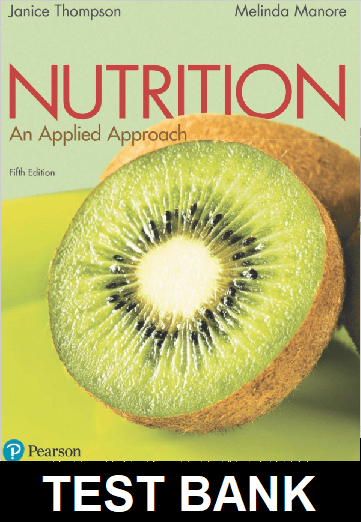
Nutrition An Applied Approach 5th Edition Thompson - Test Bank

Nutrition An Applied Approach 5th Edition Thompson - Test Bank   Instant Download - Complete Test Bank With Answers     Sample Questions Are Posted Below   Nutrition: An Applied Approach, 5e (Thompson/Manore) Chapter 5  Fats: Essential Energy-Supplying Nutrients   Multiple Choice Questions   1) Which of the following describes lipids? A) organic substances that …

$19.99

Nutrition An Applied Approach 5th Edition Thompson – Test Bank


Instant Download – Complete Test Bank With Answers


Sample Questions Are Posted Below


Nutrition: An Applied Approach, 5e (Thompson/Manore)

Chapter 5  Fats: Essential Energy-Supplying Nutrients


Multiple Choice Questions


1) Which of the following describes lipids?

  1. A) organic substances that are insoluble in water
  2. B) inorganic substances that are insoluble in water
  3. C) organic substances that are insoluble in fat
  4. D) inorganic substances that are insoluble in fat

Answer:  A

Diff: 1

Skill:  Remembering/Understanding

Learning Outcome:  5.1

Chapter/Section:  5.1


2) Which of the following are NOT major classes of dietary lipids?

  1. A) glycogens
  2. B) triglycerides
  3. C) sterols
  4. D) phospholipids

Answer:  A

Diff: 2

Skill:  Remembering/Understanding

Learning Outcome:  5.1

Chapter/Section:  5.1


3) What is the primary form of fat in the diet?

  1. A) sterols
  2. B) triglycerides
  3. C) phospholipids
  4. D) glycerols

Answer:  B

Diff: 2

Skill:  Remembering/Understanding

Learning Outcome:  5.1

Chapter/Section:  5.1


4) A triglyceride is composed of

  1. A) three fatty acids and one glycerol.
  2. B) three glycerols and one fatty acid.
  3. C) three atoms of carbon and one glycerol.
  4. D) three glycerols and one atom of carbon.

Answer:  A

Diff: 1

Skill:  Remembering/Understanding

Learning Outcome:  5.1

Chapter/Section:  5.1

5) Medium-chain fatty acids are how many carbon atoms in length?

  1. A) 2
  2. B) 4
  3. C) at least 6
  4. D) at least 14

Answer:  C

Diff: 1

Skill:  Remembering/Understanding

Learning Outcome:  5.2

Chapter/Section:  5.2


6) A fatty acid that contains a chain of ten carbons and one double carbon bond is a

  1. A) saturated, medium-chain fatty acid.
  2. B) saturated, long-chain fatty acid.
  3. C) monounsaturated, medium-chain fatty acid.
  4. D) monounsaturated, long-chain fatty acid.

Answer:  C

Diff: 3

Skill:  Applying/Analyzing

Learning Outcome:  5.2

Chapter/Section:  5.2


7) Which of the following fatty acids is generally solid at room temperature?

  1. A) short-chain
  2. B) monounsaturated
  3. C) polyunsaturated
  4. D) saturated

Answer:  D

Diff: 2

Skill:  Remembering/Understanding

Learning Outcome:  5.2

Chapter/Section:  5.2


8) Which of the following foods are the BEST sources of monounsaturated fatty acids?

  1. A) coconut and palm oils
  2. B) olive oil and cashew nuts
  3. C) chicken and whole milk
  4. D) butter and beef

Answer:  B

Diff: 2

Skill:  Remembering/Understanding

Learning Outcome:  5.2

Chapter/Section:  5.2

9) Which of the following foods are HIGHEST in saturated fatty acids?

  1. A) tuna and walnuts
  2. B) salmon and canola oils
  3. C) peanut oil and peppers
  4. D) butter and palm kernel oil

Answer:  D

Diff: 2

Skill:  Remembering/Understanding

Learning Outcome:  5.2

Chapter/Section:  5.2


10) Which of the following is the BEST source of polyunsaturated fatty acids?

  1. A) corn oil
  2. B) coconut oil
  3. C) beef fat
  4. D) butter

Answer:  A

Diff: 2

Skill:  Remembering/Understanding

Learning Outcome:  5.2

Chapter/Section:  5.2


11) Saturated fats are

  1. A) not found in foods derived from plants.
  2. B) found primarily in foods derived from plants.
  3. C) found in salmon and eggs.
  4. D) liquid at room temperature

Answer:  C

Diff: 2

Skill:  Remembering/Understanding

Learning Outcome:  5.2

Chapter/Section:  5.2


12) The process of straightening an unsaturated fatty acid to create a more solid fat that resists rancidity is called

  1. A) emulsification.
  2. B) pressurization.
  3. C) hydrogenation.
  4. D) deamination.

Answer:  C

Diff: 1

Skill:  Remembering/Understanding

Learning Outcome:  5.2

Chapter/Section:  5.2

13) Which of the following statements is TRUE about trans fatty acids?

  1. A) They are made by the body in large quantities.
  2. B) They are found only in processed foods.
  3. C) They are less harmful to health than saturated fatty acids.
  4. D) Foods with a Nutrition Facts panel claiming “zero” trans fats per serving may actually contain trans

Answer:  D

Diff: 4

Skill:  Applying/Analyzing

Learning Outcome:  5.2

Chapter/Section:  5.2


14) Which of the following ingredients on the label of a box of cookies would alert you to the presence of trans fatty acids?

  1. A) partially hydrogenated vegetable oil
  2. B) high-fructose corn syrup
  3. C) all natural liquid corn oil
  4. D) vitamin E

Answer:  A

Diff: 3

Skill:  Applying/Analyzing

Learning Outcome:  5.2

Chapter/Section:  5.2


15) Which of the following is a rich source of linoleic acid?

  1. A) a baked potato
  2. B) flaxseeds
  3. C) peanut oil
  4. D) salmon

Answer:  C

Diff: 2

Skill:  Remembering/Understanding

Learning Outcome:  5.2

Chapter/Section:  5.2


16) Which of the following is TRUE about essential fatty acids?

  1. A) The body produces essential fatty acids.
  2. B) We need to obtain essential fatty acids from food.
  3. C) No vegetables contain essential fatty acids.
  4. D) Consumption of essential fatty acids reduces the production of eicosanoids, which can promote cardiovascular disease.

Answer:  B

Diff: 2

Skill:  Remembering/Understanding

Learning Outcome:  5.2

Chapter/Section:  5.2

17) Why are phospholipids NOT classified as essential nutrients?

  1. A) Our bodies manufacture phospholipids.
  2. B) Phospholipids are not naturally found in the healthy body.
  3. C) The GI flora produce phospholipids.
  4. D) Phospholipids serve no useful function in the human body.

Answer:  A

Diff: 2

Skill:  Remembering/Understanding

Learning Outcome:  5.1

Chapter/Section:  5.1


18) Which of the following statements is FALSE about sterols?

  1. A) Sterols are found in both plant and animal foods.
  2. B) Cholesterol is the most common sterol found in the human diet.
  3. C) The human body produces sterols.
  4. D) Sterols contain a glycerol backbone and one fatty acid.

Answer:  D

Diff: 2

Skill:  Remembering/Understanding

Learning Outcome:  5.1

Chapter/Section:  5.1


19) A key component(s) of the cell membrane is/are

  1. A) lecithin.
  2. B) progesterone.
  3. C) phospholipids.
  4. D) triglycerides.

Answer:  C

Diff: 2

Skill:  Remembering/Understanding

Learning Outcome:  5.1

Chapter/Section:  5.1


20) Sex hormones and adrenal hormones are derived from which class of lipid?

  1. A) fatty acids
  2. B) triglycerides
  3. C) phospholipids
  4. D) sterols

Answer:  D

Diff: 2

Skill:  Remembering/Understanding

Learning Outcome:  5.1

Chapter/Section:  5.1

21) Which of the following food items would contain the highest amount of saturated fat?

  1. A) a cup of raw baby spinach
  2. B) a tablespoon of canola oil
  3. C) a cup of skim milk
  4. D) a tablespoon of melted butter

Answer:  D

Diff: 3

Skill:  Applying/Analyzing

Learning Outcome:  5.5

Chapter/Section:  5.5


22) Which of the following is NOT a function of fat in the human body?

  1. A) Fat assists in the transport of fat-soluble vitamins.
  2. B) Fat maintains the integrity of cell membranes.
  3. C) Fat provides insulation to help retain body heat.
  4. D) Consumption of fat helps stimulate our appetite.

Answer:  D

Diff: 2

Skill:  Remembering/Understanding

Learning Outcome:  5.3

Chapter/Section:  5.3


23) Which of the following organs does NOT assist in the digestion of lipids?

  1. A) liver
  2. B) esophagus
  3. C) gallbladder
  4. D) tongue

Answer:  B

Diff: 1

Skill:  Remembering/Understanding

Learning Outcome:  5.4

Chapter/Section:  5.4


24) The vast majority of fat digestion and absorption occurs in the

  1. A) stomach.
  2. B) liver.
  3. C) small intestine.
  4. D) large intestine.

Answer:  C

Diff: 2

Skill:  Remembering/Understanding

Learning Outcome:  5.4

Chapter/Section:  5.4

25) To facilitate the digestion of dietary fats, the gallbladder stores and releases a substance known as

  1. A) lipase.
  2. B) bile.
  3. C) hydrochloric acid.
  4. D) bicarbonate.

Answer:  B

Diff: 1

Skill:  Remembering/Understanding

Learning Outcome:  5.4

Chapter/Section:  5.4


26) In the process of emulsification of triglycerides

  1. A) fatty acid chains are removed from the glycerol backbone.
  2. B) micelles transport fatty acids across the enterocytes.
  3. C) bile salts separate large fat droplets into smaller droplets.
  4. D) pancreatic lipase denatures fatty acid chains.

Answer:  C

Diff: 2

Skill:  Remembering/Understanding

Learning Outcome:  5.4

Chapter/Section:  5.4


27) Where in the body are the majority of triglycerides stored for future energy needs?

  1. A) lipoproteins
  2. B) muscle tissue
  3. C) liver
  4. D) adipose tissue

Answer:  D

Diff: 1

Skill:  Remembering/Understanding

Learning Outcome:  5.4

Chapter/Section:  5.4


28) Which lipoprotein is produced in the enterocytes and transports dietary fat into the lymphatic system?

  1. A) chylomicron
  2. B) sterol
  3. C) low-density lipoprotein (LDL)
  4. D) phospholipid

Answer:  A

Diff: 1

Skill:  Remembering/Understanding

Learning Outcome:  5.4

Chapter/Section:  5.4

29) Fat leaves the chylomicron and moves into adipose cells when the chylomicron comes into contact with

  1. A) pancreatic lipase.
  2. B) lipoprotein lipase.
  3. C) lingual lipase.
  4. D) bile.

Answer:  B

Diff: 2

Skill:  Remembering/Understanding

Learning Outcome:  5.4

Chapter/Section:  5.4


30) How many Calories does 25 grams of fat provide?

  1. A) 100
  2. B) 175
  3. C) 225
  4. D) 250

Answer:  C

Diff: 3

Skill:  Applying/Analyzing

Learning Outcome:  5.3

Chapter/Section:  5.3


31) During exercise, which of the following triggers the breakdown of stored fat?

  1. A) lipoprotein lipase
  2. B) adrenaline
  3. C) insulin
  4. D) estrogen

Answer:  B

Diff: 1

Skill:  Remembering/Understanding

Learning Outcome:  5.3

Chapter/Section:  5.3


32) Which of the following is an essential fatty acid?

  1. A) cholesterol
  2. B) linoleic acid
  3. C) butyric acid
  4. D) hydrochloric acid

Answer:  B

Diff: 1

Skill:  Remembering/Understanding

Learning Outcome:  5.3

Chapter/Section:  5.3

33) Eicosapentaenoic acid (EPA) and docosahexaenoic acid (DHA) can be derived in limited quantities from

  1. A) glycerol.
  2. B) linoleic acid.
  3. C) alpha-linolenic acid.
  4. D) cholesterol.

Answer:  C

Diff: 2

Skill:  Remembering/Understanding

Learning Outcome:  5.2

Chapter/Section:  5.2


34) The Acceptable Macronutrient Distribution Range (AMDR) for fat is what percentage of total energy intake?

  1. A) no more than 15%
  2. B) no more than 25%
  3. C) no more than 35%
  4. D) no more than 45%

Answer:  C

Diff: 1

Skill:  Remembering/Understanding

Learning Outcome:  5.5

Chapter/Section:  5.5


35) Which of the following foods contains hidden fats?

  1. A) olive oil
  2. B) zucchini
  3. C) chocolate cake
  4. D) butter

Answer:  C

Diff: 3

Skill:  Applying/Analyzing

Learning Outcome:  5.5

Chapter/Section:  5.5


36) Which of the following species of fish would likely contain the highest levels of contaminants?

  1. A) swordfish
  2. B) salmon
  3. C) flounder
  4. D) mahi-mahi

Answer:  A

Diff: 2

Skill:  Remembering/Understanding

Learning Outcome:  5.5

Chapter/Section:  5.5

37) Which of the following statements is FALSE regarding the process of hydrogenation?

  1. A) Hydrogenation creates trans fatty acids.
  2. B) During hydrogenation, pressurized hydrogen is added to an unsaturated fatty acid chain.
  3. C) Hydrogenation gives the fatty acid chain more kinks.
  4. D) Hydrogenation can produce a partially hydrogenated oil (PHO).

Answer:  C

Diff: 2

Skill:  Understanding

Learning Outcome:  5.2

Chapter/Section:  5.2


38) Which of the following is a fat replacer?

  1. A) phosphate
  2. B) saccharin
  3. C) olestra
  4. D) trans fat

Answer:  C

Diff: 2

Skill:  Remembering/Understanding

Learning Outcome:  5.5

Chapter/Section:  5.5


39) Research has found that replacing your saturated fat intake with added sugars increases your risk for

  1. A) unintended weight loss.
  2. B) insomnia.
  3. C) cardiovascular disease.
  4. D) type 1 diabetes.

Answer:  C

Diff: 1

Skill:  Remembering/Understanding

Learning Outcome:  5.5

Chapter/Section:  5.5


40) The major form of fat in both food and the body is

  1. A) phospholipids.
  2. B) triglycerides.
  3. C) glycerols.
  4. D) sterols.

Answer:  B

Diff: 1

Skill:  Remembering/Understanding

Learning Outcome:  5.1

Chapter/Section:  5.1

41) Partially hydrogenated oils (PHOs) are

  1. A) generally recognized as safe.
  2. B) present in small amounts in meats and dairy products.
  3. C) essential fatty acids.
  4. D) not allowed in foods produced in the U.S. after 2018.

Answer:  D

Diff: 2

Skill:  Remembering/Understanding

Learning Outcome:  5.2

Chapter/Section:  5.2


42) Which of the following are excellent sources of unsaturated fats?

  1. A) nuts and nut butters
  2. B) full-fat dairy products
  3. C) citrus fruits
  4. D) beans and rice

Answer:  A

Diff: 3

Skill:  Applying/Analyzing

Learning Outcome:  5.5

Chapter/Section:  5.5


43) How much trans fat is recommended in the diet?

  1. A) as little as possible
  2. B) 3% of total energy intake
  3. C) 5% of total energy intake
  4. D) less than 10% of total energy intake

Answer:  A

Diff: 2

Skill:  Remembering/Understanding

Learning Outcome:  5.5

Chapter/Section:  5.5


44) The front of a box of chocolate cookies claims that they are “low-fat.” If Gabriel eats one serving (two cookies), he will likely consume about

  1. A) 0.5 grams or less of fat.
  2. B) 3 grams or less of fat.
  3. C) at least 25% less fat than he would have if he had eaten a serving of regular chocolate cookies.
  4. D) at least 50% less fat than he would have if he had eaten a serving of regular chocolate cookies.

Answer:  B

Diff: 3

Skill:  Applying/Analyzing

Learning Outcome:  5.5

Chapter/Section:  5.5

45) In people who are regularly physically active, extra fat consumed in the diet is stored first in

  1. A) adipose cells.
  2. B) the liver.
  3. C) muscle tissue.
  4. D) lymphatic tissue.

Answer:  C

Diff: 2

Skill:  Remembering/Understanding

Learning Outcome:  5.4

Chapter/Section:  5.4


46) What is the daily recommended intake of saturated fat?

  1. A) as little as possible
  2. B) less than 5% of total energy intake
  3. C) less than 10% of total energy intake
  4. D) between 20 and 35% of total energy intake

Answer:  C

Diff: 2

Skill:  Remembering/Understanding

Learning Outcome:  5.5

Chapter/Section:  5.5


47) The most common sterol in our diet is

  1. A) olestra.
  2. B) cholesterol.
  3. C) phytosterol.
  4. D) stanol.

Answer:  B

Diff: 1

Skill:  Remembering/Understanding

Learning Outcome:  5.1

Chapter/Section:  5.1


48) Which of the following populations should entirely avoid eating shark, swordfish, and other fish with high levels of mercury?

  1. A) adolescents
  2. B) pregnant and breastfeeding women
  3. C) people over age 65
  4. D) everyone

Answer:  B

Diff: 4

Skill:  Applying/Analyzing

Learning Outcome:  5.5

Chapter/Section:  5.5

49) Fatty acids released from fat stores travel in the blood attached to the protein

  1. A) fibrin.
  2. B) hemoglobin.
  3. C) albumin.
  4. D) globulin.

Answer:  C

Diff: 2

Skill:  Remembering/Understanding

Learning Outcome:  5.3

Chapter/Section:  5.3


50) How many double bonds does a saturated fatty acid contain between carbons in the chain?

  1. A) none
  2. B) one
  3. C) two
  4. D) more than two

Answer:  A

Diff: 2

Skill:  Remembering/Understanding

Learning Outcome:  5.2

Chapter/Section:  5.2


51) The spherical compounds made up of bile and phospholipids that transport dietary fat into the enterocytes are

  1. A) chylomicrons.
  2. B) lipases.
  3. C) lipoproteins.
  4. D) micelles.

Answer:  D

Diff: 2

Skill:  Remembering/Understanding

Learning Outcome:  5.4

Chapter/Section:  5.4


52) Which type of fatty acid has hydrogen atoms located on the same side of the double bond?

  1. A) trans
  2. B) cis
  3. C) saturated
  4. D) glycerol

Answer:  B

Diff: 1

Skill:  Remembering/Understanding

Learning Outcome:  5.2

Chapter/Section:  5.2

53) Your risk for cardiovascular disease is increased if you consume a diet high in

  1. A) linoleic acid.
  2. B) EPA and DHA.
  3. C) trans fatty acids.
  4. D) essential fatty acids.

Answer:  C

Diff: 2

Skill:  Remembering/Understanding

Learning Outcome:  5.5

Chapter/Section:  5.5


54) Nuts are a good source of

  1. A) healthful unsaturated fats.
  2. B) unnecessary Calories.
  3. C) vegetable oils.
  4. D) sodium.

Answer:  A

Diff: 3

Skill:  Applying/Analyzing

Learning Outcome:  5.5

Chapter/Section:  5.5


55) The 2015 Dietary Guidelines Advisory Committee found that saturated fat intake is significantly higher among Americans who

  1. A) regularly consume foods with fat replacers.
  2. B) consume a vegetarian diet.
  3. C) frequently eat fast food.
  4. D) smoke.

Answer:  C

Diff: 2

Skill:  Remembering/Understanding

Learning Outcome:  5.5

Chapter/Section:  5.5


56) Yesterday Nadia consumed 250 grams of carbohydrate, 75 grams of protein, and 60 grams of fat. What percentage of Calories of her day’s intake came from fat?

  1. A) 13%
  2. B) 15%
  3. C) 29%
  4. D) 35%

Answer:  C

Diff: 3

Skill:  Applying/Analyzing

Learning Outcome:  5.5

Chapter/Section:  5.5

57) Which of the following is a rich source of monounsaturated fatty acids, making it a good choice for cooking and baking?

  1. A) walnut oil
  2. B) coconut oil
  3. C) canola oil
  4. D) butter

Answer:  C

Diff: 3

Skill:  Applying/Analyzing

Learning Outcome:  5.5

Chapter/Section:  5.5


58) Raymond is trying to decrease his intake of saturated fat. Which of the following items would you recommend he add to his coffee?

  1. A) light cream
  2. B) half-and-half
  3. C) whole milk
  4. D) low-fat milk

Answer:  D

Diff: 3

Skill:  Applying/Analyzing

Learning Outcome:  5.5

Chapter/Section:  5.5


59) What role do polyunsaturated fatty acids play in the brain and spinal cord?

  1. A) They regulate calcium levels within normal ranges.
  2. B) They help transmit information between cells.
  3. C) They act as carriers, enabling active transport of nutrients into cells.
  4. D) They block the production of vessel-clogging cholesterol.

Answer:  B

Diff: 2

Skill:  Remembering/Understanding

Learning Outcome:  5.3

Chapter/Section:  5.3


60) Which of the following statements about cholesterol is TRUE?

  1. A) Foods that are high in cholesterol tend to be low in saturated fat.
  2. B) The Institute of Medicine recommends keeping your cholesterol intake to an absolute minimum.
  3. C) Your body’s production and recycling of cholesterol are not influenced by the amount of cholesterol you consume in your diet.
  4. D) There appears to be no direct link between dietary cholesterol and cardiovascular disease.

Answer:  D

Diff: 6

Skill:  Evaluating/Creating

Learning Outcome:  5.5

Chapter/Section:  5.5

61) A new group of fat replacers has been developed using which of the following?

  1. A) monounsaturated fats
  2. B) starches
  3. C) proteins
  4. D) soluble fibers

Answer:  C

Diff: 2

Skill:  Remembering/Understanding

Learning Outcome:  5.5

Chapter/Section:  5.5


62) Federal nutritional recommendations advise that you eat fish

  1. A) daily.
  2. B) weekly.
  3. C) twice weekly.
  4. D) twice monthly.

Answer:  C

Diff: 2

Skill:  Remembering/Understanding

Learning Outcome:  5.5

Chapter/Section:  5.5


63) The majority of saturated fat in the American diet comes from

  1. A) pizza, tacos, burgers, and sandwiches containing meat and/or cheese.
  2. B) muffins, pastries, cookies, brownies, and other baked goods.
  3. C) potato chips, corn chips, popcorn, and other snack foods.
  4. D) vegetables that are fried, breaded, or drenched in sauces.

Answer:  A

Diff: 3

Skill:  Applying

Learning Outcome:  5.5

Chapter/Section:  5.5


64) Body fat stores are

  1. A) not necessary for health and functioning.
  2. B) especially harmful in the abdominal region.
  3. C) the body’s secondary source of stored energy, after liver glycogen.
  4. D) important for promoting glucose uptake by cells.

Answer:  B

Diff: 4

Skill:  Applying/Analyzing

Learning Outcome:  5.3

Chapter/Section:  5.3

65) While you are sleeping, approximately how much of the energy your cells use is derived from fats?

  1. A) nearly 100%
  2. B) 70-90%
  3. C) 30-70%
  4. D) 10-30%

Answer:  C

Diff: 3

Skill:  Applying/Analyzing

Learning Outcome:  5.3

Chapter/Section:  5.3


True/False Questions


1) Lipids can be either solid or liquid at room temperature.

Answer:  TRUE

Diff: 2

Skill:  Remembering/Understanding

Learning Outcome:  5.1

Chapter/Section:  5.1


2) Only plants can synthesize cholesterol.

Answer:  FALSE

Diff: 2

Skill:  Remembering/Understanding

Learning Outcome:  5.1

Chapter/Section:  5.1


3) Body fat is metabolically inactive.

Answer:  FALSE

Diff: 4

Skill:  Applying/Analyzing

Learning Outcome:  5.1

Chapter/Section:  5.1


4) In general, animal-based fats are high in saturated fats.

Answer:  TRUE

Diff: 2

Skill:  Remembering/Understanding

Learning Outcome:  5.2

Chapter/Section:  5.2


5) Plant fats provide 80-90% of their energy from saturated fats.

Answer:  FALSE

Diff: 2

Skill:  Remembering/Understanding

Learning Outcome:  5.2

Chapter/Section:  5.2

6) A stick margarine made from partially hydrogenated corn oil will almost certainly have more trans fatty acids than butter.

Answer:  TRUE

Diff: 4

Skill:  Applying/Analyzing

Learning Outcome:  5.5

Chapter/Section:  5.5


7) Fasting for 8 hours before a blood lipids test will allow enough time for your body to clear chylomicrons from your bloodstream.

Answer:  TRUE

Diff: 4

Skill:  Applying/Analyzing

Learning Outcome:  5.4

Chapter/Section:  5.4


8) Olive oil, canola oil, and cashew nuts are rich in monounsaturated fatty acids.

Answer:  TRUE

Diff: 2

Skill:  Remembering/Understanding

Learning Outcome:  5.2

Chapter/Section:  5.2


9) Saturated fatty acids can occur in either a cis or trans shape.

Answer:  FALSE

Diff: 2

Skill:  Remembering/Understanding

Learning Outcome:  5.2

Chapter/Section:  5.2


10) People attempting to lose weight will be most successful if they limit their consumption of fat to less than 15% of kilocalories.

Answer:  FALSE

Diff: 6

Skill:  Evaluating/Creating

Learning Outcome:  5.5

Chapter/Section:  5.5


11) Even if the Nutrition Facts panel states 0 g trans fats, the product could still have 1/2 g of trans fat per serving.

Answer:  TRUE

Diff: 2

Skill:  Remembering/Understanding

Learning Outcome:  5.2

Chapter/Section:  5.2


12) Americans consume adequate amounts of linoleic acid but not enough ALA, EPA, or DHA.

Answer:  TRUE

Diff: 2

Skill:  Remembering/Understanding

Learning Outcome:  5.5

Chapter/Section:  5.5

13) By the year 2019, most processed foods will probably contain only small amounts of trans fatty acids.

Answer:  FALSE

Diff: 4

Skill:  Applying/Analyzing

Learning Outcome:  5.2

Chapter/Section:  5.2


14) If the label on a package of refrigerator rolls indicates that the product contains partially hydrogenated oils, it will almost assuredly contain trans fats.

Answer:  TRUE

Diff: 3

Skill:  Applying/Analyzing

Learning Outcome:  5.2

Chapter/Section:  5.2


15) Pregnant women are advised to entirely avoid consuming fish.

Answer:  FALSE

Diff: 6

Skill:  Evaluating/Creating

Learning Outcome:  5.5

Chapter/Section:  5.5


16) Saturated fats are typically liquid at room temperature.

Answer:  FALSE

Diff: 2

Skill:  Remembering/Understanding

Learning Outcome:  5.2

Chapter/Section:  5.2


17) Invisible or “hidden” fats are ones that are translucent at room temperature.

Answer:  FALSE

Diff: 1

Skill:  Remembering/Understanding

Learning Outcome:  5.5

Chapter/Section:  5.5


18) Studies show that the use of fat replacers reduces the risk of obesity.

Answer:  FALSE

Diff: 6

Skill:  Evaluating/Creating

Learning Outcome:  5.5

Chapter/Section:  5.5


19) Fat is digested more easily than carbohydrate or protein.

Answer:  FALSE

Diff: 4

Skill:  Applying/Analyzing

Learning Outcome:  5.4

Chapter/Section:  5.4

20) The human body cannot make cholesterol; thus, it is an essential nutrient we must consume in our diet.

Answer:  FALSE

Diff: 2

Skill:  Remembering/Understanding

Learning Outcome:  5.1

Chapter/Section:  5.1


21) The three types of food lipids classified according to chemical structure are triglycerides, phospholipids, and glycerols.

Answer:  FALSE

Diff: 2

Skill:  Remembering/Understanding

Learning Outcome:  5.1

Chapter/Section:  5.1


22) The term “monounsaturated” describes a fatty acid containing one double bond between two carbon atoms along the chain.

Answer:  TRUE

Diff: 1

Skill:  Remembering/Understanding

Learning Outcome:  5.2

Chapter/Section:  5.2


23) Lipids with a glycerol backbone and two fatty acids with a phosphate group are known as sterols.

Answer:  FALSE

Diff: 1

Skill:  Remembering/Understanding

Learning Outcome:  5.1

Chapter/Section:  5.1


24) Lipids that contain multiple carbon-ring structures are known as phospholipids.

Answer:  FALSE

Diff: 1

Skill:  Remembering/Understanding

Learning Outcome:  5.1

Chapter/Section:  5.1


25) Cashews are high in saturated fats.

Answer:  FALSE

Diff: 2

Skill:  Remembering/Understanding

Learning Outcome:  5.2

Chapter/Section:  5.2


26) Several recent research studies have indicated people who eat an ounce or two of nuts each day in addition to their usual diet did NOT gain as much weight as would be expected from their increased energy intake.

Answer:  TRUE

Diff: 2

Skill:  Remembering/Understanding

Learning Outcome:  5.5

Chapter/Section:  5.5

27) Short-chain fatty acids can be absorbed directly into the bloodstream.

Answer:  TRUE

Diff: 2

Skill:  Remembering/Understanding

Learning Outcome:  5.4

Chapter/Section:  5.4


28) Lower-fat foods are by definition also lower in Calories.

Answer:  FALSE

Diff: 2

Skill:  Remembering/Understanding

Learning Outcome:  5.5

Chapter/Section:  5.5


29) Consumption of nuts may help block the body’s absorption of dietary cholesterol.

Answer:  TRUE

Diff: 5

Skill:  Evaluating/Creating

Learning Outcome:  5.1

Chapter/Section:  5.1


30) Taking a vitamin D supplement between meals with a glass of water is more sensible than taking a vitamin D supplement with a meal containing about 30% total fat.

Answer:  FALSE

Diff: 5

Skill:  Evaluating/Creating

Learning Outcome:  5.3

Chapter/Section:  5.3


Essay Questions


1) Explain the relationship between lipids and fats. Are sterols fats? Why or why not?

Answer:  Answers will vary.

Diff: 4

Skill:  Applying/Analyzing

Learning Outcome:  5.1

Chapter/Section:  5.1


2) What is hydrogenation? Why do food manufacturers utilize this process, and what are the potential health impacts of hydrogenation?

Answer:  Answers will vary.

Diff: 6

Skill:  Evaluating/Creating

Learning Outcome:  5.2

Chapter/Section:  5.2


3) Describe the role that fats play in the structure of a cell and its primary functions.

Answer:  Answers will vary.

Diff: 2

Skill:  Remembering/Understanding

Learning Outcome:  5.3

Chapter/Section:  5.3


4) After the fat in a slice of cheese pizza is released from the stomach into the small intestine, how is it digested, absorbed, and transported into the bloodstream? Identify the steps involved.

Answer:  Answers will vary.

Diff: 4

Skill:  Applying/Analyzing

Learning Outcome:  5.4

Chapter/Section:  5.4


5) Discuss the impact of environmental contaminants on the current recommendations for safe fish consumption. How does this relate to the advice to consume abundant sources of omega-3 fatty acids, especially EPA and DHA?

Answer:  Answers will vary.

Diff: 6

Skill:  Evaluating/Creating

Learning Outcome:  5.5

Chapter/Section:  5.5


6) Describe some specific steps you could take to select foods with a more healthful fat profile when you are grocery shopping and when you are eating at a restaurant.

Answer:  Answers will vary.

Diff: 3

Skill:  Applying/Analyzing

Learning Outcome:  5.5

Chapter/Section:  5.5


7) Explain the current scientific understanding of the influence of a diet high in saturated fats on the development of cardiovascular disease.

Answer:  Answers will vary.

Diff: 6

Skill:  Evaluating/Creating

Learning Outcome:  5.5

Chapter/Section:  5.5

Additional information

Add Review

Your email address will not be published. Required fields are marked *