Subtotal: $1,080.00

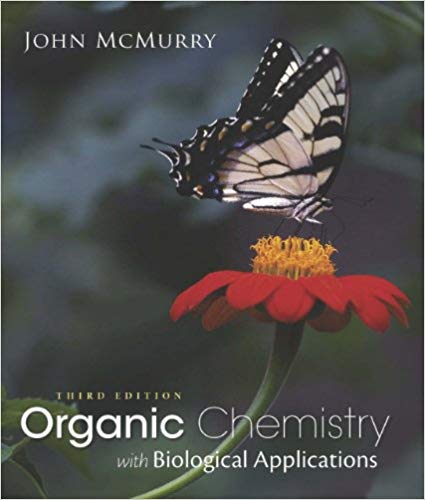
Organic Chemistry with Biological Applications 3rd Edition by John E. McMurry - Test Bank

Organic Chemistry with Biological Applications 3rd Edition by John E. McMurry - Test Bank   Instant Download - Complete Test Bank With Answers     Sample Questions Are Posted Below   1. Which of the following physical properties can be used to identify a compound? a. R b. S c. α d. [α]D ANSWER: d …

$19.99

Organic Chemistry with Biological Applications 3rd Edition by John E. McMurry – Test Bank


Instant Download – Complete Test Bank With Answers


Sample Questions Are Posted Below


1. Which of the following physical properties can be used to identify a compound?
a. R
b. S
c. α
d. [α]D
ANSWER: d
POINTS: 1

2. Which of the following has a plane of symmetry?
a. boot
b. laboratory beaker
c. hammer
d. both b and c
e. none of these
ANSWER: d
POINTS: 1

3. If (+)-sucrose has a specific rotation of +66.47, what is the specific rotation of (−)-sucrose?
a. +66.47
b. −66.47
c. +33.43
d. −33.43
e. Must be determined with a polarimeter.
ANSWER: b
POINTS: 1

4. (−)-cholesterol
a. does not have a chiral center.
b. is dextrorotatory.
c. rotates the plane of polarized light counterclockwise.
d. does not rotate polarized light.
ANSWER: c
POINTS: 1

5. The biological importance of enantiomers arises from?
a. Biological reactions involve receptor molecules.
b. Biological receptors are chiral.
c. Biological receptors require a specific enantiomer for reaction.
d. Each enantiomer has different biological properties.
e. all of these
ANSWER: e
POINTS: 1

6. 2.10 g of an unknown compound was dissolved in 15.00 mL of ethanol. The sample was placed in a 10.0 cm cell in a polarimeter and the angle of rotation was determined to be −18.48°. What is the specific rotation of this unknown and specify if the compound is levorotatory or dextrorotatory?
ANSWER: −132 and levorotatory
POINTS: 1

Instructions: Place asterisks at all the chirality centers in each molecule below.

7. Place asterisks:

codeine
ANSWER:
POINTS: 1

8. Place asterisks:

ephedrine
ANSWER:
POINTS: 1

9. Place asterisks:

cephalexin
ANSWER:
POINTS: 1

10. Rank the following substituent groups from highest to lowest priority according to the sequencing rules.

CO2CH3 CO2H OH Cl
ANSWER: Cl > OH > CO2CH3 > CO2H
POINTS: 1

11. The numbers on the carbon center of the following molecule represent atomic numbers.


The molecule is in
a. the R configuration.
b. the S configuration.
c. The carbon is not a chiral center in this molecule.
d. The exact configuration cannot be determined without knowing additional atomic numbers.
ANSWER: b
POINTS: 1

12. The following atoms are commonly encountered in organic molecules. For which is it not possible to isolate enantiomers due to rapid inversion?
a. trivalent phosphorus
b. trivalent nitrogen
c. divalent sulfur
d. trivalent sulfur
e. both b and c
ANSWER: b
POINTS: 1

Instructions: In the molecules below, assign R, S configurations to the chirality center indicated with an arrow.

norepinephrine alanine

13. Refer to instructions. The configuration of this carbon atom is _____.
ANSWER: R
POINTS: 1

14. Refer to instructions. The configuration of this carbon atom is _____.
ANSWER: S
POINTS: 1

Instructions: Consider the structure of streptimidone below to answer the following question(s).

streptimidone

15. Refer to instructions. Assign R or S configuration to each chirality center indicated in streptimidone.
ANSWER:
POINTS: 1

16. Refer to instructions. Does streptimidone have a meso stereoisomer? Explain.
ANSWER: No. Meso compounds are compounds that contain chirality centers but possess a plane of symmetry. Because the substituents on each chiral carbon are different in streptimidone, it is impossible for any stereoisomer to have a plane of symmetry.
POINTS: 1

Instructions: Identify the indicated hydrogens in the following molecules as pro-R or pro-S.

17. Identify:

succinate
ANSWER:
succinate

POINTS: 1

18. Identify:

phenylpyruvate
ANSWER:
phenylpyruvate

POINTS: 1

19. Which of the following is the definition of a pair of enantiomers?
a. A pair of structures that are superimposable mirror images of one another
b. A pair of stereoisomers that are non-superimposable mirror images of one another
c. A pair of stereoisomers that are not mirror images of one another
d. A pair of stereoisomers that have equal specific rotations
ANSWER: b
POINTS: 1

20. Which of the following is the definition of a pair of diastereomers?
a. A pair of structures that are superimposable mirror images of one another
b. A pair of stereoisomers that are non-superimposable mirror images of one another
c. A pair of stereoisomers that are not mirror images of one another
d. A pair of stereoisomers that have equal specific rotations
ANSWER: c
POINTS: 1

21. Which of the following correctly describes a molecule that is achiral?
a. Non-superimposability of the molecule on its mirror image
b. Superimposability of the molecule on its mirror image
c. Contains a carbon atom with four different substituents
d. Does not have a plane of symmetry
e. Both b and d
ANSWER: b
POINTS: 1

22. Which of the following is the definition of a meso compound?
a. A molecule with chirality centers which is chiral
b. A molecule with chirality centers which is not chiral
c. A diastereomer with no chirality centers
d. A chiral compound with more than one chirality center
ANSWER: b
POINTS: 1

23. Which of the following statements is true regarding pairs of enantiomers?
a. They have identical melting points
b. They have identical boiling points.
c. They rotate plane-polarized light in opposite directions
d. They produce different products in reactions with chiral reagents
e. all of these
ANSWER: e
POINTS: 1

24. Which of the following compounds is (are) achiral?

A
B
C

a. only A
b. only A and B
c. only B and C
d. A, B, and C
ANSWER: c
POINTS: 1

25. Which of the following have the S configuration?

A
B
C

a. only A
b. only B
c. only A and B
d. A, B, and C
ANSWER: c
POINTS: 1

26. Which of the following have the R configuration?

A
B
C

a. only A
b. only B
c. only A and B
d. A, B, and C
ANSWER: d
POINTS: 1

27. Which of the following structures represent the same stereoisomer?

A
B
C

a. only A and B
b. only A and C
c. only B and C
d. A, B, and C
ANSWER: c
POINTS: 1

28. How many stereoisomers of 2,3-dimethylbutane exist?

a. 1
b. 2
c. 3
d. 4
ANSWER: a
POINTS: 1

29. How many stereoisomers of 3-chloro-2-methylbutane exist?

a. 1
b. 2
c. 3
d. 4
ANSWER: b
POINTS: 1

30. How many stereoisomers of 3-bromo-2-butanol exist?

a. 1
b. 2
c. 3
d. 4
ANSWER: d
POINTS: 1

31. Which of the following structures contain a plane of symmetry?

A
B
C

a. A
b. B
c. C
d. All three contain a plane of symmetry
ANSWER: c
POINTS: 1

32. What is the relationship between the following pair of structures?

a. They are enantiomers
b. They are diastereomers
c. The are constitutional isomers
d. They are identical
ANSWER: b
POINTS: 1

33. What is the relationship between the following pair of structures?

a. They are enantiomers
b. They are diastereomers
c. The are constitutional isomers
d. They are identical
ANSWER: a
POINTS: 1

34. Which of the following structures is (are) chiral?
a.
b.
c.
d.
ANSWER: a, c
POINTS: 1

Instructions: Match each definition to a term from the list below.
a. racemates
b. chirality center
c. chirality
d. diastereomers
e. enantiomers
f. meso compounds
g. optically active
h. prochirality center
i. optically inactive
j. achiral
k. chirality center or meso compounds
l. enantiomers or optically active
m. optically active or optically inactive

35. Describes organic molecules which rotate plane-polarized light.
ANSWER: l
POINTS: 1

36. Are designated either (±) or d,l.
ANSWER: a
POINTS: 1

37. Are stereoisomers that are not mirror images.
ANSWER: d
POINTS: 1

38. Is an atom in a molecule that is bonded to four different atoms or groups of atoms.
ANSWER: b
POINTS: 1

39. Are molecules which contain both chirality centers and a plane of symmetry.
ANSWER: f
POINTS: 1

40. Describes an sp3-hybridized atom that can become a chirality center by changing one of its attached groups.
ANSWER: h
POINTS: 1

Instructions: Label each pair of molecules below as:
a. enantiomers
b. diastereomers
c. identical

41.
ANSWER: a
POINTS: 1

42.
ANSWER: c
POINTS: 1

43.
ANSWER: b
POINTS: 1

44.
ANSWER: b
POINTS: 1

45.
ANSWER: c
POINTS: 1

Additional information

Add Review

Your email address will not be published. Required fields are marked *