Subtotal: $900.00

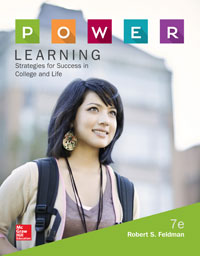
P.O.W.E.R. Learning Strategies for Success in College and Life 7th Edition By Robert Feldmen - Test Bank

P.O.W.E.R. Learning Strategies for Success in College and Life 7th Edition By Robert Feldmen - Test Bank   Instant Download - Complete Test Bank With Answers     Sample Questions Are Posted Below   Chapter 05 Taking Tests   Multiple Choice Questions 1. Which of the following properly lists the terms in order from least …

$19.99

P.O.W.E.R. Learning Strategies for Success in College and Life 7th Edition By Robert Feldmen – Test Bank


Instant Download – Complete Test Bank With Answers


Sample Questions Are Posted Below


Chapter 05

Taking Tests


Multiple Choice Questions

1. Which of the following properly lists the terms in order from least to most substantial?

A. exams, quizzes, tests


B. quizzes, exams, tests


C. tests, quizzes, exams


D. quizzes, tests, exams


2. What type of question tends to focus on the big picture?

A. multiple choice


B. essay


C. matching


D. true/false


3. What type of question requires you to recall specific detailed information?

A. multiple choice


B. essay


C. short answer


D. true/false


4. What type of question gives you a number of possible answers to select from?

A. multiple choice


B. essay


C. matching


D. true/false


5. When you’re studying, you can’t afford to overlook anything. You read and review important facts and even use index cards. It’s test day. You look over your test and the information is presented in two lists, arranged in columns. What type of test are you taking?

A. multiple choice


B. essay


C. true/false


D. matching


6. Of the options below, which type of questions typically ask for brief responses that require you to recall key pieces of information?

A. multiple choice


B. matching


C. true/false


D. short answer


7. Tests including short-answer and fill-in questions can be very difficult for some students because

A. there can be multiple correct answers.


B. they require recognition of information rather than recall.


C. unlike multiple choice and matching tests, the answers are not right on the page.


D. they require the student to compare and contrast the information.


8. An effective way to manage test anxiety is to

A. write important facts on index cards.


B. prepare thoroughly.


C. do most of your studying the night before the test.


D. know what you are preparing for.


9. Test anxiety is a

A. permanent condition characterized by a sense of calmness when taking a test.


B. temporary condition characterized by a sense of calmness when taking a test.


C. permanent condition characterized by fears and concerns about taking a test.


D. temporary condition characterized by fears and concerns about taking a test.


10. Learn relaxation techniques to

A. decrease your test score.


B. increase your test score.


C. reduce test anxiety.


D. increase test anxiety.


11. The more you prepare for your test, the less

A. sleep you’ll get.


B. test anxiety you’ll experience.


C. you’ll be able to eat healthy.


D. mental preparation will occur.


12. A small, informal group of students whose purpose is to help members work together and prepare for a test is referred to as a

A. motivation team.


B. study group.


C. structure squad.


D. test club.


13. Advantages of study groups include all of the following except

A. they help members organize and structure the material.


B. they work well for all students, regardless of learning style.


C. they help motivate members to do their best.


D. they decrease students’ chances of overlooking important material.


14. Juan is part of a study group that

A. meets the night before a test.


B. sits together the day of the test.


C. helps members organize and structure the material to approach it logically.


D. helps even out intelligence differences between students.


15. All of the following are useful strategies for dealing with math anxiety except

A. practicing math problems under pressure, using a timer.


B. reviewing math fundamentals before moving on to more advanced topics.


C. avoiding negative self-talk.


D. keeping in mind that math is harder for women than for men.


16. Hurried, last-minute studying is referred to as

A. tutoring.


B. fast-paced studying.


C. cramming.


D. grouping.


17. Although there may be times when you can’t study properly, in the long run it can also be said that

A. cramming reduces test anxiety.


B. cramming often ends up taking more time for worse results.


C. the need to cram never happens to good students.


D. cramming aids long-term retention of material.


18. An educated guessing strategy can be most effective when answering what type of question?

A. matching


B. multiple choice


C. essay


D. true/false


19. Eliminating obviously false multiple-choice answers and selecting the most likely answer from the remaining choices is

A. practical answering.


B. answer removal.


C. educated guessing.


D. random guessing.


20. Using the educated guessing strategy, which of the following would you automatically eliminate?

A. Study groups benefit everyone as a test-preparation strategy.


B. A thoughtful approach to each essay question is frequently beneficial to the overall test score since essay questions are commonly weighted more than other types of questions.


C. Students who are able to reduce their text anxiety generally do better on tests.


D. A test-taking strategy that many students find helpful is to answer the questions you feel certain about first.


21. If an essay question asks you to critique a statement or a concept, your answer will

A. use evidence and arguments to convince the reader of a particular point.


B. show how things fit together and provide analogies.


C. track how events have evolved in a timeline.


D. judge and analyze, explaining what is wrong and right about a concept.


22. If an essay question asks you to evaluate a concept, your answer will

A. use evidence and arguments to convince the reader of a particular point.


B. provide the pros and cons, and an opinion and justification.


C. track how events have evolved in a timeline.


D. judge and analyze, explaining what is wrong and right about a concept.


23. If an essay question asks you to compare and contrast a concept, your answer will

A. describe and explain similarities and differences.


B. provide the pros and cons, and an opinion and justification.


C. track how events have evolved in a timeline.


D. judge and analyze, explaining what is wrong and right about a concept.


24. If an essay question asks you to outline a concept, your answer will

A. describe and explain similarities and differences.


B. provide the pros and cons, and an opinion and justification.


C. track how events have evolved in a timeline.


D. provide an overarching framework or explanation.


25. If an essay question asks you to trace a concept, your answer will

A. describe and explain similarities and differences.


B. track or sketch how events evolved.


C. track how events have evolved in a timeline.


D. provide an overarching framework or explanation.


26. When writing an answer to an essay question, it is important to

A. identify key words in the question so that all parts of the question are answered in the essay.


B. be verbose and have long sentences.


C. compare but not contrast two sets of data.


D. include your personal opinion even when it isn’t asked for in the question.


27. Academic honesty means

A. always telling the professor when someone is cheating.


B. never having to say you’re sorry.


C. only turning in your own work.


D. staying out of trouble to avoid being placed on academic probation.


Check All That Apply Questions

28. Which of the following statements about test anxiety are true? Click all that apply.

____  It is a debilitating condition.
____  It is characterized by fears and concerns about test-taking.
____  It is a condition that almost everyone experiences to some degree.
____  It is more of a problem for some people than for others.
____  It usually requires taking calming drugs before the test.


29. As you look at the test in front of you, you notice that you’re required to recall key pieces of information; however, you aren’t required to compare different types of information. Which two types of questions are on the exam? Click all that apply.

____  fill in the blank
____  essay
____  matching
____  short answer
____  true/false


30. What techniques can you follow to reduce any test anxiety you may experience? Click all that apply.

____  Focus on exciting and intense events.
____  Eat right and get enough sleep.
____  Prepare thoroughly.
____  Breathe rapidly.
____  Visualize success.


31. What does a test measure? Click all that apply.

____  your worth as an individual
____  the length and effectiveness of your studying
____  your test-taking skills
____  your aptitude for being a college student
____  your understanding of the kind of test and what it will cover


32. There are a number of ways you can prepare for a test. Click all that apply.

____  Make flash cards.
____  Form a study group.
____  Guess what materials will be covered.
____  Manage test anxiety.
____  Drink coffee to stay awake and study longer.


33. You have been ill all week and unable to study for your test in literature tomorrow. Since you have only one evening to study, what are your best strategies? Click all that apply.

____  Stay up as late as necessary to review all the material.
____  Review the main focus of your notes and reading material.
____  Study only for an hour and then get plenty of rest.
____  Prepare a one-page summary sheet with hard-to-remember information.
____  Skim the literature that will be on the test to refresh your memory, but don’t try to reread each piece.


34. Students who feel organized on test day may demonstrate these behaviors. Click all that apply.

____  They may feel panic.
____  They may check the time so as to pace themselves during the test.
____  They may come prepared with pencil, pens, and paper.
____  They may wear a “lucky shirt” or other charm.
____  They may avoid asking for clarification on questions they don’t understand.


35. Prior to starting a test, students should do which of the following? Click all that apply.

____  Focus all attention on the paper in front of them.
____  Listen carefully to the instructor’s comments about the test.
____  Check out the point weighting of each section.
____  Begin answering questions while the instructor is still giving directions.
____  Do an initial read-through of the test to assure that there are no missing or illegible pages.


36. When getting organized for a test, you should do which of the following? Click all that apply.

____  Visit an anxiety counselor.
____  Bring a watch.
____  Listen carefully to the instructions.
____  Bring at least two pens.
____  Assume that the instructor will provide the supplies needed to take the test.


37. When dealing with math anxiety, what special techniques can you follow to ease yourself? Click all that apply.

____  Avoid negative self-talk.
____  Review math fundamentals prior to moving on to more advanced topics.
____  Remember that there is only one way to solve a math problem.
____  Practice math problems under pressure, using a timer.
____  Focus on the fact that you have a “math gene” and are naturally good at math.


38. You receive your test back and learn that you have received a C letter grade. What should you do? Click all that apply.

____  Talk to your instructor and ask for help.
____  Recognize that this is not a subject you can do well in.
____  Look at your mistakes and try to figure out what went wrong.
____  Forget about it and move on to your next task.
____  Rethink your study strategies and make adjustments for future tests.


True / False Questions

39. A well-constructed test determines your fundamental abilities and potential.

True    False


40. To do well on multiple-choice, true/false, and matching tests, you need to guess well and understand general ideas.

True    False


41. The easiest questions on the test should be answered first.

True    False


42. Math tests do not appear to provoke any more anxiety than tests for other subjects.

True    False


43. Before answering the questions on a test, you should read the instructions and skim through the entire test.

True    False


44. The first step in educated guessing is to eliminate any obviously false answers.

True    False


45. It is important to depend on your first response to a test question and avoid changing your answer.

True    False


46. It is best to wait until after you do badly on a test to visit your campus learning or tutorial center.

True    False


Short Answer Questions

47. List three strategies you can use to answer essay questions.


48. You are taking an honors course that you and your classmates find quite challenging. Four of you decide to form a study group in order to prepare for a midterm exam. Briefly describe how you would set up and use the study group to improve your chances in the upcoming test. What are some of the benefits of a study group?


49. Explain in your own words what the term “academic honesty” means and why it is important.


50. Please list four examples of behavior that violate academic honesty.


51. What are the possible consequences of academic dishonesty?


52. In the “Prepare” section of Chapter 5, the text discusses a number of ways that you can prepare for tests. Please discuss, in your own words and with examples, three of the recommended strategies.


Chapter 05 Taking Tests Answer Key

Multiple Choice Questions

1. Which of the following properly lists the terms in order from least to most substantial?

A. exams, quizzes, tests


B. quizzes, exams, tests


C. tests, quizzes, exams


D. quizzes, tests, exams

A single quiz usually does not count very much; a test is more extensive and more heavily weighted than a quiz; an exam is the most substantial kind of assessment.


Accessibility: Keyboard Navigation
Blooms: Remember
Difficulty: 1 Easy
Learning Objective: 05-01 Identify the kinds of tests you will encounter in college.
Topic: Getting Ready for Test-Taking


2. What type of question tends to focus on the big picture?

A. multiple choice


B. essay


C. matching


D. true/false

Essay questions tend to focus on general concepts and the ways in which various pieces of information fit together.


Accessibility: Keyboard Navigation
Blooms: Remember
Difficulty: 1 Easy
Learning Objective: 05-01 Identify the kinds of tests you will encounter in college.
Topic: Getting Ready for Test-Taking


3. What type of question requires you to recall specific detailed information?

A. multiple choice


B. essay


C. short answer


D. true/false

Short-answer and fill-in-the blank questions require you to recall key pieces of information.


Accessibility: Keyboard Navigation
Blooms: Remember
Difficulty: 1 Easy
Learning Objective: 05-01 Identify the kinds of tests you will encounter in college.
Topic: Getting Ready for Test-Taking


4. What type of question gives you a number of possible answers to select from?

A. multiple choice


B. essay


C. matching


D. true/false

With multiple-choice questions, almost anything is fair game, so you can’t afford to overlook anything when you study.


Accessibility: Keyboard Navigation
Blooms: Remember
Difficulty: 1 Easy
Learning Objective: 05-01 Identify the kinds of tests you will encounter in college.
Topic: Getting Ready for Test-Taking


5. When you’re studying, you can’t afford to overlook anything. You read and review important facts and even use index cards. It’s test day. You look over your test and the information is presented in two lists, arranged in columns. What type of test are you taking?

A. multiple choice


B. essay


C. true/false


D. matching

In a matching text, you’re typically asked to pair up items that go together; for example, a key word and its definition.


Accessibility: Keyboard Navigation
Blooms: Remember
Difficulty: 1 Easy
Learning Objective: 05-01 Identify the kinds of tests you will encounter in college.
Topic: Getting Ready for Test-Taking


6. Of the options below, which type of questions typically ask for brief responses that require you to recall key pieces of information?

A. multiple choice


B. matching


C. true/false


D. short answer

Short-answer questions typically don’t demand that you integrate or compare different types of information, so the focus of your study should be on the recall of specific, detailed information.


Accessibility: Keyboard Navigation
Blooms: Remember
Difficulty: 1 Easy
Learning Objective: 05-01 Identify the kinds of tests you will encounter in college.
Topic: Getting Ready for Test-Taking


7. Tests including short-answer and fill-in questions can be very difficult for some students because

A. there can be multiple correct answers.


B. they require recognition of information rather than recall.


C. unlike multiple choice and matching tests, the answers are not right on the page.


D. they require the student to compare and contrast the information.

Short-answer and fill-in questions require you to recall key pieces of information rather than simply recognizing it from among the choices you are given.


Accessibility: Keyboard Navigation
Blooms: Remember
Difficulty: 1 Easy
Learning Objective: 05-01 Identify the kinds of tests you will encounter in college.
Topic: Getting Ready for Test-Taking


8. An effective way to manage test anxiety is to

A. write important facts on index cards.


B. prepare thoroughly.


C. do most of your studying the night before the test.


D. know what you are preparing for.

Good preparation can give you a sense of control and mastery, which should prevent test anxiety.


Accessibility: Keyboard Navigation
Blooms: Remember
Difficulty: 1 Easy
Learning Objective: 05-01 Identify the kinds of tests you will encounter in college.
Topic: Test Anxiety


9. Test anxiety is a

A. permanent condition characterized by a sense of calmness when taking a test.


B. temporary condition characterized by a sense of calmness when taking a test.


C. permanent condition characterized by fears and concerns about taking a test.


D. temporary condition characterized by fears and concerns about taking a test.

Test anxiety is temporary. Get good sleep and thoroughly prepare for the test and you can reduce the amount of anxiety you may experience.


Accessibility: Keyboard Navigation
Blooms: Remember
Difficulty: 1 Easy
Learning Objective: 05-01 Identify the kinds of tests you will encounter in college.
Topic: Test Anxiety


10. Learn relaxation techniques to

A. decrease your test score.


B. increase your test score.


C. reduce test anxiety.


D. increase test anxiety.

Relaxation techniques such as breathing evenly, gently inhaling and exhaling, and focusing on something peaceful are great ways to reduce your test anxiety.


Accessibility: Keyboard Navigation
Blooms: Remember
Difficulty: 1 Easy
Learning Objective: 05-01 Identify the kinds of tests you will encounter in college.
Topic: Test Anxiety


11. The more you prepare for your test, the less

A. sleep you’ll get.


B. test anxiety you’ll experience.


C. you’ll be able to eat healthy.


D. mental preparation will occur.

Good preparation gives you a sense of control and mastery. It will prevent test anxiety from overwhelming you.


Accessibility: Keyboard Navigation
Blooms: Remember
Difficulty: 1 Easy
Learning Objective: 05-01 Identify the kinds of tests you will encounter in college.
Topic: Test Anxiety


12. A small, informal group of students whose purpose is to help members work together and prepare for a test is referred to as a

A. motivation team.


B. study group.


C. structure squad.


D. test club.

A study group is a great way for students to prepare for upcoming tests and even help each other with homework.


Accessibility: Keyboard Navigation
Blooms: Remember
Difficulty: 1 Easy
Learning Objective: 05-02 Explain the best ways to prepare for and take various kinds of tests.
Topic: Studying for the Test


13. Advantages of study groups include all of the following except

A. they help members organize and structure the material.


B. they work well for all students, regardless of learning style.


C. they help motivate members to do their best.


D. they decrease students’ chances of overlooking important material.

Study groups may not work well for students with learning styles that favor working independently.


Accessibility: Keyboard Navigation
Blooms: Remember
Difficulty: 1 Easy
Learning Objective: 05-02 Explain the best ways to prepare for and take various kinds of tests.
Topic: Studying for the Test


14. Juan is part of a study group that

A. meets the night before a test.


B. sits together the day of the test.


C. helps members organize and structure the material to approach it logically.


D. helps even out intelligence differences between students.

Study groups can help members organize and structure the material so that they can approach their studying in a systematic and logical way.


Accessibility: Keyboard Navigation
Blooms: Remember
Difficulty: 1 Easy
Learning Objective: 05-02 Explain the best ways to prepare for and take various kinds of tests.
Topic: Studying for the Test


15. All of the following are useful strategies for dealing with math anxiety except

A. practicing math problems under pressure, using a timer.


B. reviewing math fundamentals before moving on to more advanced topics.


C. avoiding negative self-talk.


D. keeping in mind that math is harder for women than for men.

It’s a false stereotype that women are not as good at math as men.


Accessibility: Keyboard Navigation
Blooms: Remember
Difficulty: 1 Easy
Learning Objective: 05-02 Explain the best ways to prepare for and take various kinds of tests.
Topic: Studying for the Test


16. Hurried, last-minute studying is referred to as

A. tutoring.


B. fast-paced studying.


C. cramming.


D. grouping.

Cramming is not the way to study. When you’re in a time crunch, choose what you really need to study. You won’t be able to learn everything, but if you focus on the main points you’ll do much better.


Accessibility: Keyboard Navigation
Blooms: Remember
Difficulty: 1 Easy
Learning Objective: 05-02 Explain the best ways to prepare for and take various kinds of tests.
Topic: Studying for the Test


17. Although there may be times when you can’t study properly, in the long run it can also be said that

A. cramming reduces test anxiety.


B. cramming often ends up taking more time for worse results.


C. the need to cram never happens to good students.


D. cramming aids long-term retention of material.

Information gained during cramming is stored in short-term memory and you’ll forget it as quickly as you “learned” it. To do well on a midterm or final exam, you’ll need to be able to recall information that you’ve mentally rehearsed over a longer period of time to move it to long-term memory. In the end, cramming often ends up taking more time for worse results than does studying with appropriate techniques.


Accessibility: Keyboard Navigation
Blooms: Remember
Difficulty: 1 Easy
Learning Objective: 05-02 Explain the best ways to prepare for and take various kinds of tests.
Topic: Studying for the Test


18. An educated guessing strategy can be most effective when answering what type of question?

A. matching


B. multiple choice


C. essay


D. true/false

Educated guessing, which differs from random guessing, can be used when you are not sure of the answer on multiple-choice questions.


Accessibility: Keyboard Navigation
Blooms: Remember
Difficulty: 1 Easy
Learning Objective: 05-03 Analyze the best strategies for answering specific kinds of test questions.
Topic: Taking the Test


19. Eliminating obviously false multiple-choice answers and selecting the most likely answer from the remaining choices is

A. practical answering.


B. answer removal.


C. educated guessing.


D. random guessing.

Eliminating obviously false answers is the first step in educated guessing.


Accessibility: Keyboard Navigation
Blooms: Remember
Difficulty: 1 Easy
Learning Objective: 05-03 Analyze the best strategies for answering specific kinds of test questions.
Topic: Taking the Test


20. Using the educated guessing strategy, which of the following would you automatically eliminate?

A. Study groups benefit everyone as a test-preparation strategy.


B. A thoughtful approach to each essay question is frequently beneficial to the overall test score since essay questions are commonly weighted more than other types of questions.


C. Students who are able to reduce their text anxiety generally do better on tests.


D. A test-taking strategy that many students find helpful is to answer the questions you feel certain about first.

Look for qualifying adjectives that may make the answer incorrect. For example, choices that include absolutes like “every,” “always,” “only,” “all,” or “everyone” are rarely correct.


Accessibility: Keyboard Navigation
Blooms: Remember
Difficulty: 1 Easy
Learning Objective: 05-03 Analyze the best strategies for answering specific kinds of test questions.
Topic: Taking the Test


21. If an essay question asks you to critique a statement or a concept, your answer will

A. use evidence and arguments to convince the reader of a particular point.


B. show how things fit together and provide analogies.


C. track how events have evolved in a timeline.


D. judge and analyze, explaining what is wrong and right about a concept.

Critiquing requires that you judge and analyze a concept. When answering essay exams, it is imperative that you pay particular attention to the action words.


Accessibility: Keyboard Navigation
Blooms: Remember
Difficulty: 1 Easy
Learning Objective: 05-03 Analyze the best strategies for answering specific kinds of test questions.
Topic: Taking the Test


22. If an essay question asks you to evaluate a concept, your answer will

A. use evidence and arguments to convince the reader of a particular point.


B. provide the pros and cons, and an opinion and justification.


C. track how events have evolved in a timeline.


D. judge and analyze, explaining what is wrong and right about a concept.

Evaluating requires that you provide the pros and cons of something, as well as provide your own opinion and a justification as to why you feel the way you do.


Accessibility: Keyboard Navigation
Blooms: Remember
Difficulty: 1 Easy
Learning Objective: 05-03 Analyze the best strategies for answering specific kinds of test questions.
Topic: Taking the Test


23. If an essay question asks you to compare and contrast a concept, your answer will

A. describe and explain similarities and differences.


B. provide the pros and cons, and an opinion and justification.


C. track how events have evolved in a timeline.


D. judge and analyze, explaining what is wrong and right about a concept.

Comparing and contrasting requires that you describe and explain the similarities and differences of a particular concept.


Accessibility: Keyboard Navigation
Blooms: Remember
Difficulty: 1 Easy
Learning Objective: 05-03 Analyze the best strategies for answering specific kinds of test questions.
Topic: Taking the Test


24. If an essay question asks you to outline a concept, your answer will

A. describe and explain similarities and differences.


B. provide the pros and cons, and an opinion and justification.


C. track how events have evolved in a timeline.


D. provide an overarching framework or explanation.

Outlining requires you to provide an overarching framework or explanation, usually in the narrative form, of a concept, idea, event, or phenomenon.


Accessibility: Keyboard Navigation
Blooms: Remember
Difficulty: 1 Easy
Learning Objective: 05-03 Analyze the best strategies for answering specific kinds of test questions.
Topic: Taking the Test


25. If an essay question asks you to trace a concept, your answer will

A. describe and explain similarities and differences.


B. track or sketch how events evolved.


C. track how events have evolved in a timeline.


D. provide an overarching framework or explanation.

Tracing requires you to track or sketch out how events or circumstances have evolved, including the history or timeline of the event/circumstance.


Accessibility: Keyboard Navigation
Blooms: Remember
Difficulty: 1 Easy
Learning Objective: 05-03 Analyze the best strategies for answering specific kinds of test questions.
Topic: Taking the Test


26. When writing an answer to an essay question, it is important to

A. identify key words in the question so that all parts of the question are answered in the essay.


B. be verbose and have long sentences.


C. compare but not contrast two sets of data.


D. include your personal opinion even when it isn’t asked for in the question.

Responses to essay questions are relatively unstructured. To assure that you answer the question that is being asked, begin by reading the question carefully. Note the key words in the question and whether the answer will require multiple parts. To keep your thoughts organized, sketch a brief outline in the margin of your paper.


Accessibility: Keyboard Navigation
Blooms: Remember
Difficulty: 1 Easy
Learning Objective: 05-03 Analyze the best strategies for answering specific kinds of test questions.
Topic: Taking the Test


27. Academic honesty means

A. always telling the professor when someone is cheating.


B. never having to say you’re sorry.


C. only turning in your own work.


D. staying out of trouble to avoid being placed on academic probation.

Academic honesty is completing and turning in only your own work under your own name.


Accessibility: Keyboard Navigation
Blooms: Remember
Difficulty: 1 Easy
Learning Objective: 05-03 Analyze the best strategies for answering specific kinds of test questions.
Topic: Taking the Test


Check All That Apply Questions

28. Which of the following statements about test anxiety are true? Click all that apply.

__ It is a debilitating condition.
X It is characterized by fears and concerns about test-taking.
X It is a condition that almost everyone experiences to some degree.
X It is more of a problem for some people than for others.
__ It usually requires taking calming drugs before the test.

Test anxiety is a common, temporary state of fear or concern brought on by test-taking. It affects some people worse than others.


Blooms: Remember
Difficulty: 1 Easy
Learning Objective: 05-01 Identify the kinds of tests you will encounter in college.
Topic: Test Anxiety


29. As you look at the test in front of you, you notice that you’re required to recall key pieces of information; however, you aren’t required to compare different types of information. Which two types of questions are on the exam? Click all that apply.

X fill in the blank
__ essay
__ matching
X short answer
__ true/false

Short-answer questions require brief responses and fill-in-the-blank questions require you to add one or more missing words to one or more sentences.


Blooms: Remember
Difficulty: 1 Easy
Learning Objective: 05-01 Identify the kinds of tests you will encounter in college.
Topic: Studying for the Test


30. What techniques can you follow to reduce any test anxiety you may experience? Click all that apply.

__ Focus on exciting and intense events.
X Eat right and get enough sleep.
X Prepare thoroughly.
__ Breathe rapidly.
X Visualize success.

There are several techniques you can follow. Breathing slowly and focusing on calming events are two ways to help manage your test anxiety.


Blooms: Remember
Difficulty: 1 Easy
Learning Objective: 05-01 Identify the kinds of tests you will encounter in college.
Topic: Test Anxiety


31. What does a test measure? Click all that apply.

__ your worth as an individual
X the length and effectiveness of your studying
X your test-taking skills
__ your aptitude for being a college student
X your understanding of the kind of test and what it will cover

How you do on a test depends on a number of considerations: the kind of test it is, the subject matter involved, your understanding of test-taking strategies, and above all, how well you prepared for it.


Blooms: Remember
Difficulty: 1 Easy
Learning Objective: 05-01 Identify the kinds of tests you will encounter in college.
Topic: Getting Ready for Test-Taking


32. There are a number of ways you can prepare for a test. Click all that apply.

X Make flash cards.
X Form a study group.
__ Guess what materials will be covered.
X Manage test anxiety.
__ Drink coffee to stay awake and study longer.

Additionally, you can ask what kinds of questions will be asked, how the test will be graded, and you could even visit the tutoring center.


Blooms: Remember
Difficulty: 1 Easy
Learning Objective: 05-01 Identify the kinds of tests you will encounter in college.
Topic: Getting Ready for Test-Taking


33. You have been ill all week and unable to study for your test in literature tomorrow. Since you have only one evening to study, what are your best strategies? Click all that apply.

__ Stay up as late as necessary to review all the material.
X Review the main focus of your notes and reading material.
__ Study only for an hour and then get plenty of rest.
X Prepare a one-page summary sheet with hard-to-remember information.
X Skim the literature that will be on the test to refresh your memory, but don’t try to reread each piece.

Since you can’t learn everything in one night, reviewing the main focus of your notes and readings will allow you to maximize your study time. Furthermore, writing down the material in a one-page summary will help you remember it.


Blooms: Remember
Difficulty: 1 Easy
Learning Objective: 05-02 Explain the best ways to prepare for and take various kinds of tests.
Topic: Studying for the Test


34. Students who feel organized on test day may demonstrate these behaviors. Click all that apply.

X They may feel panic.
X They may check the time so as to pace themselves during the test.
X They may come prepared with pencil, pens, and paper.
__ They may wear a “lucky shirt” or other charm.
__ They may avoid asking for clarification on questions they don’t understand.

Organize your plan of attack once you are seated for the test. Bring the right tools to the test. Use a watch or the classroom clock to help pace yourself during the test. Also, you may allow yourself a small feeling of panic to help yourself recover from your fear of the test.


Blooms: Remember
Difficulty: 1 Easy
Learning Objective: 05-02 Explain the best ways to prepare for and take various kinds of tests.
Topic: Studying for the Test


35. Prior to starting a test, students should do which of the following? Click all that apply.

__ Focus all attention on the paper in front of them.
X Listen carefully to the instructor’s comments about the test.
X Check out the point weighting of each section.
__ Begin answering questions while the instructor is still giving directions.
X Do an initial read-through of the test to assure that there are no missing or illegible pages.

Several strategies can be used to tackle a test. Some strategies are to listen carefully to the instructor’s comments about the test, check the point weighting of each section, and do an initial read-through.


Blooms: Remember
Difficulty: 1 Easy
Learning Objective: 05-03 Analyze the best strategies for answering specific kinds of test questions.
Topic: Taking the Test


36. When getting organized for a test, you should do which of the following? Click all that apply.

__ Visit an anxiety counselor.
X Bring a watch.
X Listen carefully to the instructions.
X Bring at least two pens.
__ Assume that the instructor will provide the supplies needed to take the test.

Getting organized is an important element in test-taking and should include bringing proper materials, listening closely to the instructions, and “planning to panic” (which helps to alleviate and address test anxiety).


Blooms: Remember
Difficulty: 1 Easy
Learning Objective: 05-02 Explain the best ways to prepare for and take various kinds of tests.
Topic: Studying for the Test


37. When dealing with math anxiety, what special techniques can you follow to ease yourself? Click all that apply.

X Avoid negative self-talk.
X Review math fundamentals prior to moving on to more advanced topics.
__ Remember that there is only one way to solve a math problem.
X Practice math problems under pressure, using a timer.
__ Focus on the fact that you have a “math gene” and are naturally good at math.

There is often more than one way to solve a math problem. Also, there is no such thing as a “math gene.” The greatest component of success is the effort you put into it.


Blooms: Remember
Difficulty: 1 Easy
Learning Objective: 05-03 Analyze the best strategies for answering specific kinds of test questions.
Topic: Taking the Test


38. You receive your test back and learn that you have received a C letter grade. What should you do? Click all that apply.

X Talk to your instructor and ask for help.
__ Recognize that this is not a subject you can do well in.
X Look at your mistakes and try to figure out what went wrong.
__ Forget about it and move on to your next task.
X Rethink your study strategies and make adjustments for future tests.

Rethinking is an important step in the test-taking process. Analyzing and reflecting on what went wrong and getting help from your instructor will help you with future exams and will help you better learn the material.


Blooms: Remember
Difficulty: 1 Easy
Learning Objective: 05-03 Analyze the best strategies for answering specific kinds of test questions.
Topic: Taking the Test


True / False Questions

39. A well-constructed test determines your fundamental abilities and potential.

FALSE

A well-constructed test simply identifies what you know and what you still need to learn. It is not an indication of your worth, abilities, or potential.


Accessibility: Keyboard Navigation
Blooms: Remember
Difficulty: 1 Easy
Learning Objective: 05-01 Identify the kinds of tests you will encounter in college.
Topic: Getting Ready for Test-Taking


40. To do well on multiple-choice, true/false, and matching tests, you need to guess well and understand general ideas.

FALSE

To do well on these tests, you must put your memory into high gear and master a great many facts.


Accessibility: Keyboard Navigation
Blooms: Remember
Difficulty: 1 Easy
Learning Objective: 05-02 Explain the best ways to prepare for and take various kinds of tests.
Topic: Studying for the Test


41. The easiest questions on the test should be answered first.

TRUE

Answering the easy questions first leaves more time for the difficult questions, builds confidence, and ensures that you get points for answers that you know.


Accessibility: Keyboard Navigation
Blooms: Remember
Difficulty: 1 Easy
Learning Objective: 05-02 Explain the best ways to prepare for and take various kinds of tests.
Topic: Studying for the Test


42. Math tests do not appear to provoke any more anxiety than tests for other subjects.

FALSE

Math seems to cause a great deal of anxiety either because of the absolute right or wrong answers or because of negative self-concepts relative to mathematical understanding.


Accessibility: Keyboard Navigation
Blooms: Remember
Difficulty: 1 Easy
Learning Objective: 05-02 Explain the best ways to prepare for and take various kinds of tests.
Topic: Studying for the Test


43. Before answering the questions on a test, you should read the instructions and skim through the entire test.

TRUE

By skimming through the entire exam first, you will be able to determine the weight of each question, verify that you have every page of the test, and gain intra-test knowledge.


Accessibility: Keyboard Navigation
Blooms: Remember
Difficulty: 1 Easy
Learning Objective: 05-02 Explain the best ways to prepare for and take various kinds of tests.
Topic: Studying for the Test


44. The first step in educated guessing is to eliminate any obviously false answers.

TRUE

Eliminating obviously false answers helps narrow your margin of error.


Accessibility: Keyboard Navigation
Blooms: Remember
Difficulty: 1 Easy
Learning Objective: 05-03 Analyze the best strategies for answering specific kinds of test questions.
Topic: Taking the Test


45. It is important to depend on your first response to a test question and avoid changing your answer.

FALSE

It is important to check over the test for obvious errors. You may have learned an answer from another question on the exam.


Accessibility: Keyboard Navigation
Blooms: Remember
Difficulty: 1 Easy
Learning Objective: 05-03 Analyze the best strategies for answering specific kinds of test questions.
Topic: Taking the Test


46. It is best to wait until after you do badly on a test to visit your campus learning or tutorial center.

FALSE

Tutoring can help “B” students become “A” students. It may even be a good idea to visit the tutoring center prior to your first test.


Accessibility: Keyboard Navigation
Blooms: Remember
Difficulty: 1 Easy
Learning Objective: 05-02 Explain the best ways to prepare for and take various kinds of tests.
Topic: Studying for the Test


Short Answer Questions

47. List three strategies you can use to answer essay questions.

For essay exams, tips include carefully rereading class notes, thinking of possible exam questions, and talking through the answers aloud.


Blooms: Remember
Difficulty: 1 Easy
Learning Objective: 05-01 Identify the kinds of tests you will encounter in college.
Topic: Getting Ready for Test-Taking


48. You are taking an honors course that you and your classmates find quite challenging. Four of you decide to form a study group in order to prepare for a midterm exam. Briefly describe how you would set up and use the study group to improve your chances in the upcoming test. What are some of the benefits of a study group?

Study groups: (1) help members organize and structure the material, (2) allow members to share different perspectives, (3) make it more likely that students will not overlook information, (4) force members to rethink the course material, and (5) motivate members to do their best.


Blooms: Understand
Difficulty: 2 Medium
Learning Objective: 05-02 Explain the best ways to prepare for and take various kinds of tests.
Topic: Studying for the Test


49. Explain in your own words what the term “academic honesty” means and why it is important.

Answers to this question will vary.


Blooms: Understand
Difficulty: 2 Medium
Learning Objective: 05-03 Analyze the best strategies for answering specific kinds of test questions.
Topic: Taking the Test


50. Please list four examples of behavior that violate academic honesty.

Examples could include plagiarism, using a calculator when not allowed, discussing the answers to a question, taking an exam for another person, stealing an exam, lying to an instructor, ripping out pages of a library book, using your textbook during a closed-book exam, etc.


Blooms: Remember
Difficulty: 1 Easy
Learning Objective: 05-03 Analyze the best strategies for answering specific kinds of test questions.
Topic: Taking the Test


51. What are the possible consequences of academic dishonesty?

Consequences are specific to individual institutions, but could range from failing the exam or assignment to expulsion.


Blooms: Remember
Difficulty: 1 Easy
Learning Objective: 05-03 Analyze the best strategies for answering specific kinds of test questions.
Topic: Taking the Test


52. In the “Prepare” section of Chapter 5, the text discusses a number of ways that you can prepare for tests. Please discuss, in your own words and with examples, three of the recommended strategies.

Answers could include knowing what to prepare for (material to be covered, how many questions, how much time it will take, kinds of questions that will be asked, how it will be graded, etc.), matching test preparation to the type of questions asked, making flash cards, testing oneself, managing test anxiety, forming studying groups, and visiting the campus learning or tutoring center.


Blooms: Understand
Difficulty: 2 Medium
Learning Objective: 05-01 Identify the kinds of tests you will encounter in college.
Topic: Getting Ready for Test-Taking


Additional information

Add Review

Your email address will not be published. Required fields are marked *