Subtotal: $944.63

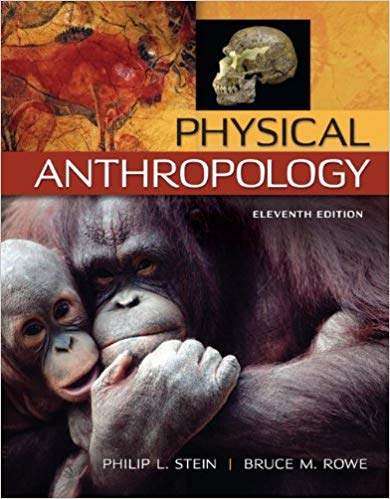
Physical Anthropology 12th Edition by Philip Stein - Test Bank

Physical Anthropology 12th Edition by Philip Stein - Test Bank   Instant Download - Complete Test Bank With Answers     Sample Questions Are Posted Below   Chapter 05 Natural Selection and the Origin of Species     Multiple Choice Questions Microevolution refers to: A.any change in the frequency of alleles in the gene pool …

$19.99

Physical Anthropology 12th Edition by Philip Stein – Test Bank


Instant Download – Complete Test Bank With Answers


Sample Questions Are Posted Below


Chapter 05

Natural Selection and the Origin of Species


Multiple Choice Questions

  1. Microevolution refers to:
    A.any change in the frequency of alleles in the gene pool of a population
    B. only changes that occur because of natural selection
    C. only changes due to mutations
    D. the evolution of new species


Accessibility: Keyboard Navigation

  1. The deliberate breeding of domesticated plants or animals is called:
    A.natural selection
    B. artificial selection
    C. breeding selection
    D. sexual selection


Accessibility: Keyboard Navigation

  1. The presence of several distinct forms within a population—such as A, B, O, and AB blood types—is termed:
    A.pleiotropy
    B. polytypy
    C. polymorphism
    D. none of these


Accessibility: Keyboard Navigation


  1. The specific place where a particular animal lives is that animal’s:
    A.habitat
    B. environment
    C. ecological niche
    D. none of these


Accessibility: Keyboard Navigation

  1. The living elements that surround an organism, such as plant life, are the:
    A.physical environment
    B. biological environment
    C. cultural environment
    D. microenvironment


Accessibility: Keyboard Navigation

  1. The specific term used for the elements of the environment that are products of human behavior is the:
    A.ecological niche
    B. physical environment
    C. cultural environment
    D. habitat


Accessibility: Keyboard Navigation

  1. Each species occupies a(n) _______ that is defined in terms of space and how that space is used by the organism.
    A.ecological niche
    B. habitat
    C. microenvironment
    D. microhabitat


Accessibility: Keyboard Navigation


  1. The term ecological niche refers to:
    A.everything external to the organism
    B. the microhabitat
    C. the way the microenvironment is exploited by the organism
    D. the microhabitat and the way the microenvironment is exploited by the organism


Accessibility: Keyboard Navigation

  1. Any factor that brings about differential fertility is called a:
    A.selective agent
    B. selective pressure
    C. mutation agent
    D. mutation rate


Accessibility: Keyboard Navigation

  1. An example of a selective agent in humans would be:
    A.smallpox
    B. an earthquake
    C. a flood
    D. all of these


Accessibility: Keyboard Navigation

  1. A selective agent places __________ on certain individuals in the population.
    A.selective advantage
    B. selective pressure
    C. differential pressure
    D. differential advantage


Accessibility: Keyboard Navigation


  1. Selective agents act on the ______ of members of the population.
    A.genotype
    B. phenotype


Accessibility: Keyboard Navigation

  1. Fitness is:
    A.a measure of how well a particular individual or group is adapted to the requirements imposed by the environment
    B. the degree of physical strength an organism has in relationship to other organisms of its species
    C. a measure of the degree of good health an organism or group of organisms displays
    D. the degree of physical strength an organism has in relationship to other organisms of its species and a measure of the degree of good health an organism or group of organisms displays


Accessibility: Keyboard Navigation

  1. Fitness refers to:
    A.characteristics a society values, such as education
    B. health and strength of an organism
    C. resistance to disease
    D. how well an individual or population is adapted to the requirements imposed by the environment


Accessibility: Keyboard Navigation

  1. Fitness:
    A.varies with the situation
    B. always remains constant even with changing environments
    C. of a heterozygous individual is never greater than that of a homozygous individual
    D. is always the greatest for a homozygous individual


Accessibility: Keyboard Navigation


  1. Fitness could best be measured by how:
    A.strong an individual is
    B. healthy an individual is
    C. many offspring an individual has
    D. many dominant alleles an individual has


Accessibility: Keyboard Navigation

  1. Mosquitoes have been controlled in most parts of the world by the spraying of DDT. But after years of repeated sprayings, the number of mosquitoes has been increasing in spite of the continued use of DDT because:
    A.each new generation of mosquitoes grew up with DDT as a part of the environment and gradually developed immunity
    B. mosquitoes exposed to nonlethal concentrations of DDT learned to avoid food and other matters sprayed with DDT
    C. DDT-resistant mosquitoes survived to breed, as did their offspring, until more and more of each year’s mosquitoes were resistant
    D. none of these


Accessibility: Keyboard Navigation

  1. Darwin’s finches are found in:
    A.the Hawaiian Islands
    B. the Galápagos Islands
    C. the Trobriand Islands
    D. New Guinea


Accessibility: Keyboard Navigation


  1. Peter and Rosemary Grant observed natural selection taking place on the island of Daphne Major located:
    A.in the Channel Islands off the coast of California
    B. off the east coast of South Africa
    C. in the Andaman Islands off the west coast of Thailand
    D. in the Galápagos Islands off the west coast of South America


Accessibility: Keyboard Navigation

  1. Studies of Darwin’s finches were done by:
    A.Peter and Rosemary Grant
    B. Louis and Mary Leakey
    C. Robert and Rebecca Fitzroy
    D. Richard and Meave Leakey


Accessibility: Keyboard Navigation

  1. During a drought on Daphne Major, the larger and harder seeds were available to eat, so:
    A.birds with smaller beaks had an advantage
    B. birds with larger beaks had an advantage
    C. no birds died since there was still some food available
    D. birds of every size died in equal numbers


Accessibility: Keyboard Navigation

  1. When the Grants measured the beaks of the birds on Daphne Major after the drought, they found:
    A.a large number of the birds had died as a result of the drought
    B. the survivors of the drought had a larger average beak size
    C. beak size is inherited, so the next generation had a larger average beak size
    D. all of these


Accessibility: Keyboard Navigation


  1. As a result of a drought, the average size of a bird’s beaks on Daphne Major increased. This is an example of:
    A.directional selection
    B. disruptive selection
    C. stabilizing selection
    D. averaging selection


Accessibility: Keyboard Navigation

  1. Human infants that are lighter or heavier in weight have a lower chance of survival than
    those of average weight. This is an example of:
    A.directional selection
    B. disruptive selection
    C. stabilizing selection
    D. averaging selection


Accessibility: Keyboard Navigation

  1. When natural selection favors the two extremes and individuals near the mean have lower fertility rates, this is termed:
    A.directional selection
    B. disruptive selection
    C. stabilizing selection
    D. averaging selection


Accessibility: Keyboard Navigation

  1. Which of the following statements is incorrect about the ABO blood type system?
    A.There are three major alleles for the system.
    B. There appears to be selective significance between the ABO system and certain types of diseases.
    C. Blood type O is the most frequent blood type in all human populations.
    D. One or more of the four ABO blood types could be absent from a specific population.


Accessibility: Keyboard Navigation


  1. Sickle-cell anemia is caused by the presence of _____ within the red blood cells.
    A.hemoglobin S (HbS)
    B. hemoglobin A2 (HbA2)
    C. hemoglobin A (HbA)
    D. fetal hemoglobin (HbF)


Accessibility: Keyboard Navigation

  1. A person who develops the disease sickle-cell anemia:
    A.is homozygous for HbA
    B. is homozygous for HbS
    C. is heterozygous


Accessibility: Keyboard Navigation

  1. A person with sickle-cell traits is:
    A.is homozygous for HbA
    B. is homozygous for HbS
    C. is heterozygous


Accessibility: Keyboard Navigation

  1. Relatively high frequencies of hemoglobin S are found in:
    A.Central Africa
    B. Southern Europe
    C. Middle East
    D. all of these


Accessibility: Keyboard Navigation


  1. Hemoglobin S conveys a selective advantage to:
    A.tuberculosis
    B. malaria
    C. smallpox
    D. yaws


Accessibility: Keyboard Navigation

  1. The increase in the incidences of malaria in Africa historically was most directly related to the development of:
    A.fishing
    B. herding
    C. agriculture
    D. industrialism


Accessibility: Keyboard Navigation

  1. Which of the following statements is logically correct? People in Africa were dying of malaria:
    A.so the sickle-cell allele came into being
    B. so mutation occurred that would protect them
    C. but an allele existed, which provided some protection against malaria to those who have the allele


Accessibility: Keyboard Navigation

  1. Malaria is caused by:
    A.the genetic coding for an abnormal hemoglobin
    B. a virus carried by rats
    C. humid weather conditions
    D. parasites of the blood transmitted by mosquitoes


Accessibility: Keyboard Navigation


  1. A situation in which a heterozygous individual is the best fit results in a situation referred to as:
    A.allele maintenance
    B. balanced heterozygosity
    C. balanced polymorphism
    D. heterozygote maintenance


Accessibility: Keyboard Navigation

  1. Characteristics that increase the success of a male competing for females will increase over time through:
    A.natural selection
    B. gender selection
    C. sexual selection
    D. competition selection


Accessibility: Keyboard Navigation

  1. A female’s reproductive success is most limited by ____________; a male’s reproductive success is most limited by ____________.
    A.access to males; access to females
    B. access to resources; access to females
    C. access to males; access to resources
    D. access to resources; access to resources


Accessibility: Keyboard Navigation

  1. Selection for traits that make males more attractive to females is termed:
    A.intersexual selection
    B. intrasexual selection
    C. countersexual selection
    D. infrasexual selection


Accessibility: Keyboard Navigation


  1. Selection for traits that make males more able to compete directly for females is termed:
    A.intersexual selection
    B. intrasexual selection
    C. countersexual selection
    D. infrasexual selection


Accessibility: Keyboard Navigation

  1. An example of intersexual selection would be:
    A.females preferring males with large, safe territories
    B. a peacock with a brightly colored tail
    C. males being significantly larger than females
    D. females preferring males with large, safe territories and a peacock with a brightly colored tail


Accessibility: Keyboard Navigation

  1. Sexual dimorphism is a result of:
    A.intersexual selection
    B. intrasexual selection
    C. countersexual selection
    D. infrasexual selection


Accessibility: Keyboard Navigation

  1. The large and colorful tail of a peacock is the result of:
    A.intersexual selection
    B. intrasexual selection
    C. countersexual selection
    D. infrasexual selection


Accessibility: Keyboard Navigation


  1. Which of the following is not true of human mate choice?
    A.Males value appearance more than females.
    B. Females value educational background and favorable social status more than males.
    C. Males prefer younger women.
    D. Culture has no influence on traits that males and females prefer.


Accessibility: Keyboard Navigation

  1. David Buss’s study of human mate choice led him to conclude:
    A.males prefer women who can reproduce successfully
    B. females prefer men who can provide resources
    C. many mate preferences are found cross-culturally
    D. all of these


Accessibility: Keyboard Navigation

  1. Evolutionary biologists define altruism as behavior that:
    A.decreases the reproductive success of an individual but benefits the reproductive success of another individual
    B. benefits the reproductive success of another individual without having any effect on the fitness of the individual doing the altruism
    C. increases the reproductive success of an individual but decreases the reproductive success of another individual
    D. benefits the reproductive success of both the individual doing the altruism and the other individual involved


Accessibility: Keyboard Navigation

  1. An individual who acts to increase the fitness of a close relative is demonstrating:
    A.reciprocal altruism
    B. kin favoring
    C. kin selection
    D. sexual selection


Accessibility: Keyboard Navigation


  1. Based on the theory of kin selection, you should perform the most altruism toward your:
    A.aunt
    B. grandfather
    C. sibling
    D. cousin


Accessibility: Keyboard Navigation

  1. The coefficient of relatedness between a parent and offspring is:
    A.1
    B. ½
    C. ¼
    D. ⅛


Accessibility: Keyboard Navigation

  1. The coefficient of relatedness between siblings is:
    A.1
    B. ½
    C. ¼
    D. ⅛


Accessibility: Keyboard Navigation

  1. Inclusive fitness refers to:
    A.one’s personal fitness plus the fitness that all of one’s relatives contribute to the individual
    B. one’s fitness plus that individual’s influence on the fitness of all relatives
    C. one’s fitness plus the fitness of one’s mate
    D. the additive fitness that an individual possesses for all environmental situations that the individual is exposed to


Accessibility: Keyboard Navigation


  1. Because inclusive fitness refers to altruistic acts that benefit relatives, it is sometimes called:
    A.altruistic selection
    B. genetic determinism
    C. relative selection
    D. kin selection


Accessibility: Keyboard Navigation

  1. The measure of how likely two individuals are to share the same allele is called:
    A.the coefficient of relatedness
    B. homozygosity
    C. allele transference
    D. kin selection


Accessibility: Keyboard Navigation

  1. Macroevolution refers to:
    A.large-scale evolutionary changes such as speciation
    B. small-scale evolutionary changes based on natural selection
    C. the relationship between humans and very large animals
    D. how the evolution of one species affects the evolution of another species


Accessibility: Keyboard Navigation

  1. The smallest possible population, the local population, is the:
    A.cline
    B. deme
    C. race
    D. species


Accessibility: Keyboard Navigation


  1. A deme is:
    A.a group of animals who mate most frequently with each other as opposed to other groups
    B. the largest possible population
    C. an infertile hybrid
    D. microhabitat


Accessibility: Keyboard Navigation

  1. A distribution of frequencies that shows a systematic gradation over space is a:
    A.graded distribution
    B. clinal distribution
    C. macro distribution
    D. micro distribution


Accessibility: Keyboard Navigation

  1. Speciation is usually initiated by:
    A.mutation
    B. nonrandom mating
    C. allelic recombination
    D. geographical isolation


Accessibility: Keyboard Navigation

  1. A necessity for speciation is some type of:
    A.climatic change
    B. spatial isolation
    C. cataclysmic event
    D. all of these


Accessibility: Keyboard Navigation


  1. Reproductive isolating mechanisms:
    A.are initiated by geographic isolation
    B. occur within a deme
    C. occur before geographic isolation
    D. are initiated by geographic isolation and occur within a deme


Accessibility: Keyboard Navigation

  1. Spatial isolation:
    A.cuts off gene flow between groups
    B. allows reproductive isolating mechanisms to develop
    C. allows for the genetic reconstitution of the separated populations
    D. all of these


Accessibility: Keyboard Navigation

  1. Reproductive isolation that results from incompatibility in mating behavior is termed:
    A.ecological isolation
    B. sexual isolation
    C. seasonal isolation
    D. mechanical isolation


Accessibility: Keyboard Navigation

  1. Which of the following is a postmating mechanism of reproductive isolation?
    A.hybrid sterility
    B. zygotic mortality
    C. hybrid inviability
    D. all of these


Accessibility: Keyboard Navigation


  1. Which of the following are factors in speciation?
    A.genetic drift
    B. natural selection
    C. mutation
    D. all of these


Accessibility: Keyboard Navigation

  1. Species that occupy mutually exclusive geographical areas are called:
    A.allopatric species
    B. ecological species
    C. sympatric species
    D. hybrid species


Accessibility: Keyboard Navigation

  1. Different species living in the same area but prevented from successfully reproducing are called:
    A.allopatric species
    B. ecological species
    C. sympatric species
    D. hybrid species


Accessibility: Keyboard Navigation

  1. The mule is an example of:
    A.hybrid sterility
    B. hybrid inviability
    C. gametic mortality
    D. sexual isolation


Accessibility: Keyboard Navigation


  1. In evolutionary terms, the term “competition” means that populations:
    A.show aggressive behavior toward one another
    B. share the same territory
    C. occupy the same or parts of the same niche
    D. all of these


Accessibility: Keyboard Navigation

  1. Preadaptation:
    A.refers to the potential to adapt to a new niche
    B. refers to the need to adapt to a new niche
    C. would more often characterize an ecologically specialized species as opposed to a generalized one
    D. is not important to species that remain within one locality


Accessibility: Keyboard Navigation

  1. Generalization:
    A.allows for a greater tolerance of environmental change
    B. characterizes humans as a whole
    C. characterizes the koala
    D. allows for a greater tolerance of environmental change and characterizes humans as a whole
    E. allows for a greater tolerance of environmental change and characterizes the koala


Accessibility: Keyboard Navigation

  1. A species that can survive in a variety of ecological niches is known as a(n):
    A.specialized species
    B. ecological species
    C. generalized species
    D. niche species


Accessibility: Keyboard Navigation


  1. A specialized species:
    A.is closely fitted to a specific niche
    B. cannot tolerate much change in its niche
    C. exhibits little variation
    D. all of these


Accessibility: Keyboard Navigation

  1. Specialization could lead to all of the following except:
    A.greater ability to adapt to a greater variety of ecological niches
    B. evolutionary dead ends
    C. speciation
    D. greater ability to adapt to a greater variety of ecological niches and speciation


Accessibility: Keyboard Navigation

  1. The phyletic gradualism model sees evolution as:
    A.basically static
    B. a slow process with gradual transformation of one population into another
    C. fairly rapid evolutionary change resulting in a multitude of species


Accessibility: Keyboard Navigation

  1. The phyletic gradualism model of evolution assumes that the rate of evolutionary change is characterized by:
    A.abrupt changes followed by periods of no change at all
    B. slow but constant change
    C. rapid but constant change
    D. alternating patterns of rapid and slow periods of change


Accessibility: Keyboard Navigation


  1. The punctuated equilibrium model might explain evolution on the ____________ level better than does the phyletic gradualism model.
    A.molecular
    B. genotypic
    C. phenotypic
    D. molecular and phenotypic


Accessibility: Keyboard Navigation

  1. The model of evolution characterized by an uneven tempo of change is known as:
    A.phyletic gradualism
    B. punctuated equilibrium
    C. disequilibrium
    D. asymmetrical speciation


Accessibility: Keyboard Navigation

  1. A gene that regulates or blocks the activities of another gene is called a:
    A.regulatory gene
    B. adjunct gene
    C. related gene
    D. helper gene


Accessibility: Keyboard Navigation

  1. Chimpanzees and humans are very similar genetically and much less similar phenotypically. This is likely due to:
    A.many differences in structural genes
    B. a few changes in regulatory genes
    C. a few changes in structural genes
    D. none of these


Accessibility: Keyboard Navigation


  1. In order for an organism to move into a new ecological niche:
    A.there has to be physical access to the new niche
    B. the individuals entering the new niche must be preadapted to some degree
    C. the new niche must be unoccupied or the entering organisms must be able to compete successfully with existing populations
    D. all of these


Accessibility: Keyboard Navigation

  1. The evolution of a single population into a number of different species is called:
    A.phyletic expansion
    B. punctuated equilibrium
    C. adaptive radiation
    D. natural diversion


Accessibility: Keyboard Navigation

  1. The red colobus monkey is an African arboreal monkey that eats leaves and spends most of its time in the upper story of the forest. This is specifically a description of the colobus monkey’s:
    A.environment
    B. habitat
    C. microhabitat
    D. ecological niche


Accessibility: Keyboard Navigation
Gradable: automatic

  1. Fitness is a measure of:
    A.how well adapted an individual is to the requirements imposed by a specific ecological niche
    B. the overall health and well-being of a population of animals in a specific habitat
    C. how adaptable an animal might be to a new ecological niche
    D. how well two different species are able to share the same habitat


Accessibility: Keyboard Navigation
Gradable: automatic


  1. If individuals with small and large body sizes are selected against, shifting the population in the direction of average body size, this is an example of:
    A.directional selection
    B. stabilizing selection
    C. disruptive selection
    D. sexual selection


Accessibility: Keyboard Navigation
Gradable: automatic

  1. If people with a particular phenotype brought about by a dominant allele had only half the children, on average, than people without the trait, we would say these people had a ________ of 0.5.
    A.biased fitness
    B. relative fitness
    C. phenotype disadvantage
    D. genotype disadvantage


Accessibility: Keyboard Navigation
Gradable: automatic

  1. In areas where malaria is prevalent, it is best to be heterozygous for the sickle-cell allele. This results in a situation referred to as:
    A.heterozygous polymorphism
    B. balanced phenotypism
    C. balanced polymorphism
    D. a multiple allele series


Accessibility: Keyboard Navigation
Gradable: automatic


  1. An altruistic act, while being detrimental to the individual himself or herself, may raise that individual’s:
    A.inclusive fitness
    B. reproductive potential
    C. kin-based fitness
    D. gene-based fitness


Accessibility: Keyboard Navigation
Gradable: automatic

  1. Closely related species that live in the same region may be isolated because:
    A.there are slight differences in the niches that they occupy
    B. their breeding seasons are not at the same time
    C. any hybrid individual may be inviable or sterile
    D. all of these


Accessibility: Keyboard Navigation
Gradable: automatic

  1. A species that can survive in a variety of ecological niches is referred to as a:
    A.comprehensive species
    B. generalized species
    C. global species
    D. ranging species


Accessibility: Keyboard Navigation
Gradable: automatic

  1. In the Galápagos Islands, a single mainland species of finch evolved into 13 new species upon reaching the islands. This is an example of:
    A.ancestral diversion
    B. phyletic gradualism
    C. adaptive radiation
    D. additive speciation


Accessibility: Keyboard Navigation
Gradable: automatic


True / False Questions

  1. Microevolution refers to any change in the frequency of alleles in the gene pool of a population.
    TRUE


Accessibility: Keyboard Navigation
Gradable: automatic

  1. Out of a population of 1,340,997 people, an earthquake kills 3,120 people only because those people happened to be in buildings that were destroyed by the earthquake. This illustrates that the earthquake was a selective agent.
    FALSE


Accessibility: Keyboard Navigation
Gradable: automatic

  1. People in Africa were dying of malaria, so the sickle-cell allele came into being.
    FALSE


Accessibility: Keyboard Navigation
Gradable: automatic

  1. A female’s reproductive success is most limited by access to males.
    FALSE


Accessibility: Keyboard Navigation
Gradable: automatic

  1. Sexual dimorphism is a result of intrasexual selection.
    TRUE


Accessibility: Keyboard Navigation
Gradable: automatic


  1. Inclusive fitness refers to one’s fitness plus that individual’s influence on the fitness of all relatives.
    TRUE


Accessibility: Keyboard Navigation
Gradable: automatic

  1. The smallest possible population, the local population, is the species.
    FALSE


Accessibility: Keyboard Navigation
Gradable: automatic

  1. Speciation is usually initiated by geographic isolation.
    TRUE


Accessibility: Keyboard Navigation
Gradable: automatic

  1. Species that occupy mutually exclusive geographical areas are called sympatric species.
    FALSE


Accessibility: Keyboard Navigation
Gradable: automatic


Matching Questions

  1. Match each term with its definition:
1. ecological niche      specific place where an animal lives   3
2. environment      things external to an organism   2
3. habitat      includes exploitation   1


Accessibility: Keyboard Navigation


  1. Match each reproductive isolating mechanism to its definition or example:
1. zygotic mortality      sperm immobilized and destroyed   3
2. hybrid sterility      development ceases after fertilization   1
3. gametic mortality      gives rise to a fertile offspring that does not leave any offspring in turn   4
4. hybrid inviability      mule   2


Accessibility: Keyboard Navigation

  1. Match each type of selection with its definition:
1. directional selection      selection favoring a particular direction   1
2. disruptive selection      selection against both extremes   3
3. stabilizing selection      both extremes are favored   2


Accessibility: Keyboard Navigation

  1. Match each type of selection with its definition:
1. intersexual selection      selection for traits that make males more attractive to females   1
2. intrasexual selection      selection for traits that make males better able to compete with one another for access to females   2
3. kin selection      selection for traits that help individuals of both sexes to survive and reproduce   4
4. natural selection      increasing inclusive fitness by altruistic behavior toward those likely to share one’s genes   3


Accessibility: Keyboard Navigation


  1. Match each term with its definition:
1. allopatric species      species occupying mutually exclusive geographical areas   1
2. subspecies      different species living in the same area but prevented from successfully reproducing   4
3. deme      interfertile groups within a species that display significant differentiation among themselves   2
4. sympatric species      the smallest reproductive population   3


Accessibility: Keyboard Navigation


Essay Questions

  1. What is a one-word synonym for environment? The text talks about three types of environment. What are these three types of environments and what characterizes each?

Answers will vary.


Accessibility: Keyboard Navigation

  1. What is the difference between the concept of environment and the concept of habitat? How does the concept of an ecological niche differ from the two concepts mentioned above?

Answers will vary.


Accessibility: Keyboard Navigation

  1. How does natural selection act upon a population to change gene frequencies?

Answers will vary.


Accessibility: Keyboard Navigation


  1. Why is the expression “survival of the fit” more descriptive than the expression “survival of the fittest”?

Answers will vary.


Accessibility: Keyboard Navigation

  1. Give some examples of how natural selection has operated on human populations.

Answers will vary.


Accessibility: Keyboard Navigation

  1. Outline the differences between the phyletic gradualism and the punctuated equilibrium models of evolution.

Answers will vary.


Accessibility: Keyboard Navigation

  1. Create a hypothetical population and describe the steps that could occur to segment that population into two or more species.

Answers will vary.


Accessibility: Keyboard Navigation


  1. Two keys to the understanding of the process of evolutionary change are reproductive success and reproductive isolation. Write a paragraph explaining microevolutionary change using these two concepts.

Answers will vary.


Accessibility: Keyboard Navigation

  1. What is meant by the term “preadaptation”? How does the concept relate to the statement “Necessity is not the mother of (biological) invention”?

Answers will vary.


Accessibility: Keyboard Navigation

  1. Explain the differences between natural selection, sexual selection, and kin selection.

Answers will vary.


Accessibility: Keyboard Navigation

  1. Define the three different types of selection, including how they differ from one another.

Answers will vary.


Accessibility: Keyboard Navigation
Gradable: manual


  1. Mosquitoes have been controlled in most parts of the world by the spraying of DDT. But after years of repeated sprayings, the number of mosquitoes has been increasing in spite of the continued use of DDT. Explain why this is the case.

Answers will vary.


Accessibility: Keyboard Navigation
Gradable: manual

  1. Explain the alternative models of phyletic gradualism and punctuated equilibrium.

Answers will vary.


Accessibility: Keyboard Navigation
Gradable: manual

  1. The main factor that initiates speciation is geographic isolation. Discuss this factor and what might occur after the geographic isolation of segments of species that could ultimately lead to speciation.

Answers will vary.


Accessibility: Keyboard Navigation
Gradable: manual

  1. What does it mean when we say a species is either more generalized or more specialized than another species? Explain these concepts in detail.

Answers will vary.


Accessibility: Keyboard Navigation
Gradable: manual

Additional information

Add Review

Your email address will not be published. Required fields are marked *