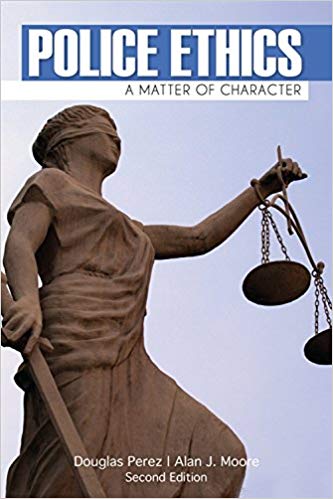
Police Ethics 2nd Edition by Douglas W. Perez - Test Bank

Police Ethics 2nd Edition by Douglas W. Perez - Test Bank   Instant Download - Complete Test Bank With Answers     Sample Questions Are Posted Below   Chapter 5-What Is Character? Police Ethics: A Matter of Character, 2nd Edition   TRUE/FALSE   Character is not an essential element in professionalism.   ANS:  F                    PTS:   …

$19.99

Police Ethics 2nd Edition by Douglas W. Perez – Test Bank


Instant Download – Complete Test Bank With Answers


Sample Questions Are Posted Below


Chapter 5-What Is Character?

Police Ethics: A Matter of Character, 2nd Edition


TRUE/FALSE


  1. Character is not an essential element in professionalism.


ANS:  F                    PTS:   1                    REF:   pg. 83


  1. Character traits are often called “virtues.”


ANS:  T                    PTS:   1                    REF:   pg. 83


  1. Character traits can include a sense of humor, intelligence, energy level, shyness, or optimism.


ANS:  F                    PTS:   1                    REF:   pg. 83


  1. Words remain stable in a way that concepts do not.


ANS:  T                    PTS:   1                    REF:   pg. 84


  1. The concept of right is static, and does not vary according to changes in circumstances.


ANS:  F                    PTS:   1                    REF:   pg. 84


  1. Our character is entirely inherited, not learned.


ANS:  F                    PTS:   1                    REF:   pg. 85


  1. Personality consists of our “inner” makeup and character is our “outermost” indicators.


ANS:  F                    PTS:   1                    REF:   pg. 88


  1. When we ask if people have good character, we are asking if they possess the moral strength to do the right thing.


ANS:  T                    PTS:   1                    REF:   pg. 88


  1. The dominating, central fact about the intelligence of human life is that it is so open to possibility.


ANS:  T                    PTS:   1                    REF:   pg. 89


  1. The two impacts of possibilities on our lives are fate and choice.


ANS:  T                    PTS:   1                    REF:   pg. 89


MULTIPLE CHOICE


  1. Character traits are often called
a. virtual c. verbose
b. virtues d. verbal


ANS:  B                    PTS:   1                    REF:   pg. 83


  1. Which of the following is not a character trait?
a. integrity c. intelligence
b. courage d. honesty


ANS:  C                    PTS:   1                    REF:   pg. 83


  1. Which of the following is not a personality trait?
a. courage c. sense of humor
b. shyness d. optimism


ANS:  A                    PTS:   1                    REF:   pg. 83


  1. Character, our basic moral disposition, originates
a. once we become adults c. in childhood
b. in our professional lives d. after death


ANS:  C                    PTS:   1                    REF:   pg. 85


  1. Formation of our character is:
a. dynamic c. status
b. malleable d. subject to adjustment


ANS:  A                    PTS:   1                    REF:   pg. 86


  1. Aristotle’s school of thought is called
a. Ethical Formalism
b. Utilitarianism
c. the Ethics of Heroes
d. the Ethics of Virtue


ANS:  D                    PTS:   1                    REF:   pg. 86


  1. In Aristotle’s view
a. people should always behave the same, no matter the circumstances
b. ethics are above change
c. individuals of good character might behave in different ways at different times
d. good character is evidenced solely and exclusively through action


ANS:  C                    PTS:   1                    REF:   pg. 86


  1. According to Aristotle
a. you must accomplish good deeds to be a good person
b. the virtuous officer would focus on long-term implications
c. no one needs an ethical hero, you should do it all on your own
d. we should focus on absolute rules of conduct


ANS:  B                    PTS:   1                    REF:   pg. 86


  1. Under the ethics of virtue
a. a police officer should focus on equality of treatment, and only equality of treatment
b. short-term interests are critical
c. what is just can be different from what is equal
d. long-term implications should be ignored


ANS:  C                    PTS:   1                    REF:   pg. 86


  1. Aristotle defined virtue as the
a. Golden Rule
b. Universal Rule
c. Golden Mean
d. Mean Rule


ANS:  C                    PTS:   1                    REF:   pg. 87


  1. Circumstances in life
a. should trigger a natural range of response
b. should never dictate one’s response
c. are irrelevant to one’s response
d. should dictate the one and only correct response


ANS:  A                    PTS:   1                    REF:   pg. 87


  1. Personality
a. consists of the innermost indicators of an individual’s makeup
b. is an absolute indicator of the inner person
c. is another word for character
d. consists of the outermost indicators of an individual’s makeup


ANS:  D                    PTS:   1                    REF:   pg. 88


  1. Integrity is
a. a whole number
b. unimportant in police work
c. that characteristic of wholeness, unity, and completeness
d. the source of grits


ANS:  C                    PTS:   1                    REF:   pg. 88


  1. Humans adapt
a. through phototropism
b. through reaction
c. through redaction
d. through reflection


ANS:  D                    PTS:   1                    REF:   pg. 89


  1. A person’s imagination
a. can limit their range of options
b. is unrelated to their options
c. is unaffected by outside factors
d. is unaffected by their personal experiences


ANS:  A                    PTS:   1                    REF:   pg. 89


  1. Two constantly converging possibilities are
a. fate and probability
b. imagination and reality
c. fate and choice
d. what is and what will be


ANS:  C                    PTS:   1                    REF:   pg. 89


  1. When examining our own personal histories, our recollections are always colored
a. with fear
b. with clouded judgment
c. with Crayola crayons
d. with a sense of unrealized possibilities, by the things that might have been


ANS:  D                    PTS:   1                    REF:   pg. 90


  1. Justice is
a. a moral concept
b. a legal concept
c. a Nicomachean concept
d. unrelated to satisfactory relationships


ANS:  A                    PTS:   1                    REF:   pg. 91


  1. Justice is all of the following except
a. the requirement for fairness
b. always the same, regardless of the individuals or the circumstances
c. a moral concept
d. essential to the possibility of satisfactory relationships and to the possibility of the development of community between people


ANS:  B                    PTS:   1                    REF:   pg. 92


  1. The nature of one’s original community builds in a
a. false sense of security
b. demand for some form of justice or fair treatment
c. demand for some form of injustice or unfair treatment
d. language barrier


ANS:  B                    PTS:   1                    REF:   pg. 92


  1. Dealing with people justly and fairly is
a. necessary to keep a balance of different ideas of what is good and supporting ways of deciding indifferences
b. necessary to keep a balance of different ideas of what is good and supporting ways of deciding differences
c. necessary to keep an imbalance of different ideas of what is good and supporting ways of deciding differences
d. necessary to keep an imbalance of different ideas of what is good and supporting ways of deciding indifferences


ANS:  B                    PTS:   1                    REF:   pg. 92


  1. Procedural justice encompasses
a. the rules of the game c. unfair playing conditions
b. society’s specific rules of conduct d. society’s individual rules of conduct


ANS:  A                    PTS:   1                    REF:   pg. 92


  1. There are two types of justice
a. instant and delayed
b. equal and unfair
c. substantive and procedural
d. substandard and procedural


ANS:  C                    PTS:   1                    REF:   pg. 93


  1. When police officers decide to ignore deviance and leave people alone
a. their decision is reviewed by their supervisors
b. they are applying ethical formalism
c. they are applying absolutism
d. their actions are not reviewed by others


ANS:  D                    PTS:   1                    REF:   pg. 96


  1. The law must
a. have a conscience that keeps its operations consistent with American ideals of justice
b. be a living entity that is not stagnant but that responds to the heartbeat of life on the street, to people’s hopes and dreams
c. be tempered with a feeling for life’s circumstances that allows human empathy to modify its application
d. all of the above


ANS:  D                    PTS:   1                    REF:   pg. 97


ESSAY


  1. In Aristotle’s terms, who are your exemplars? Who in the contemporary world are your role models? Discuss where and how we get our heroes today.


ANS:

Teachers, public servants, etc.


PTS:   1                    REF:   pg. 87|Table 5.1 on pg. 87


  1. A rather critical differentiation is made between “equality of treatment” and “justice.” Create your own examples of how justice might not be served by equal treatment. How might injustice be created by treating people in exactly equal ways?


ANS:

Aged, young, or infirm might require more services than an equal allocation would provide.


PTS:   1                    REF:   pg. 86


  1. Police officers often think that they are constantly under scrutiny and being watched. But this is a myth. Discuss why police officers are taught to believe this myth—why it might be a good thing that many believe it and why it might be a bad thing. How does this discussion plug into our analysis of the importance of individual police officer character?


ANS:

The suggestion of oversight by administrators and the criminal justice system can be helpful or distracting to officers.


PTS:   1                    REF:   pg. 96


  1. The Declaration of Independence states that we have the right to “life, liberty, and the pursuit of happiness.” This idea of “happiness” is analogous to that of “the good,” which we have been discussing here. We each define it for ourselves. What do you define as “the good” in your life? What are your long-terms goals? What would you like your life to look like in the future?


ANS:

This exercise is meant to engage the reader in thinking about what we mean by “the good.”


PTS:   1                    REF:   pg. 88|pg. 92


  1. Consider Aristotle’s list of “the virtues.” Do you agree with his conceptualization? Would you add anything to this list? For example, he does not specifically discuss integrity, which many people have always believed is an additional, absolutely critical element of good character. To have integrity is to live one’s life in agreement with one’s philosophy. To be hypocritical is to lack integrity. Or what about kindness? Isn’t kindness toward others another critical element of good character?

Construct an essay that discusses what you might add to this ancient list. (Instructors: Have your class share and discuss their conceptualizations of this Aristotelian concept of “the virtues” and of what other ideas your students might wish to add to it.)


ANS:

Add possible virtues to Aristotle’s list.


PTS:   1                    REF:   Table 5.1 on pg. 87

Additional information

Add Review

Your email address will not be published. Required fields are marked *