Subtotal: $620.00

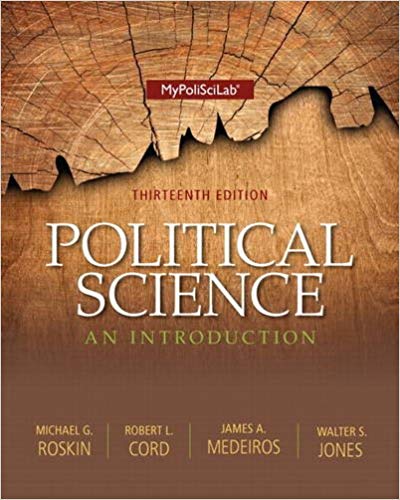
Political Science An Introduction 13th Edition By Michael G. Roskin - Test Bank

Political Science An Introduction 13th Edition By Michael G. Roskin - Test Bank   Instant Download - Complete Test Bank With Answers     Sample Questions Are Posted Below   Chapter 5-      Constitutions and Rights   MULTIPLE CHOICE QUESTIONS   Muslims in the United States, who make up a relatively small percentage of the …

$19.99

Political Science An Introduction 13th Edition By Michael G. Roskin – Test Bank


Instant Download – Complete Test Bank With Answers


Sample Questions Are Posted Below


Chapter 5-      Constitutions and Rights


MULTIPLE CHOICE QUESTIONS


  1. Muslims in the United States, who make up a relatively small percentage of the population, would be classified as __________.


  1. minorities
  2. majorities
  3. conservatives
  4. liberals


Answer: A

Learning Objective: Introduction

Page Ref: 69

Topic/A-head: Introduction

Skill Level: Apply What You Know


  1. A written document outlining the structure of a political system is a __________.


  1. statute
  2. constitution
  3. state duma
  4. basic law


Answer: B

Learning Objective: 5.1

Page Ref: 70

Topic/A-head: Constitutions

Skill Level: Remember the Facts


  1. The Constitution of the United States is __________.


  1. relatively new
  2. relatively long
  3. relatively short
  4. absent of ambiguity


Answer: C

Learning Objective: 5.1

Page Ref: 70

Topic/A-head: Constitutions

Skill Level: Remember the Facts


  1. Japan’s Constitution was drafted by the United States in __________.


  1. 1940
  2. 1946
  3. 1956
  4. 1960


Answer: B

Learning Objective: 5.1

Page Ref: 70

Topic/A-head: Constitutions

Skill Level: Remember the Facts


  1. Which statement best depicts how Japan’s constitution varies from the Unites States’?


  1. Japan’s constitution is shorter.
  2. Japan’s constitution is more detailed but provides fewer rights to the people.
  3. Japan’s constitution is more detailed and provides more rights to the people.
  4. Japan’s constitution is older.


Answer: C

Learning Objective: 5.1

Page Ref: 70

Topic/A-head: Constitutions

Skill Level: Understand the Concepts


  1. Which of the following might be said about the Brazilian Constitution?


  1. It conferred too few rights to protect the people.
  2. It conferred too many rights for the government to guarantee.
  3. It is outdated.
  4. It is too new to evaluate.


Answer: B

Learning Objective: 5.1

Page Ref: 70

Topic/A-head: Constitutions

Skill Level: Understand the Concepts


  1. Which statement best describes Britain in terms of providing codified rights to the people?


  1. Britain has had codified rights dating back to the 10th
  2. Britain has had codified rights dating back to the 15th
  3. Britain has had codified rights dating back to the 1940s.
  4. Britain has had codified rights since 2000.


Answer: D

Learning Objective: 5.1

Page Ref: 70

Topic/A-head: Constitutions

Skill Level: Understand the Concepts


  1. Based on your text, which provision might be in Germany’s constitution?


  1. Guaranteed support for private schools
  2. Limitations on government involvement in economic matters
  3. Limitations on government involvement in social matters
  4. Provisions that provide support for the unemployed


Answer: D

Learning Objective: 5.1

Page Ref: 70

Topic/A-head: Constitutions

Skill Level: Apply What You Know


  1. Which of the following, if true, would make implementing a constitution more difficult?


  1. A democratic system of government
  2. A multi-party system of government
  3. A dictatorial system of government
  4. A laissez-faire system of government


Answer: C

Learning Objective: 5.1

Page Ref: 70

Topic/A-head: Constitutions

Skill Level: Analyze It


  1. Which of the following might you infer from a constitution that is relatively long and detailed?


  1. The constitution is probably relatively new.
  2. The constitution is probably relatively old.
  3. The constitution is probably relatively vague.
  4. The constitution is probably relatively restrictive on rights.


Answer: A

Learning Objective: 5.1

Page Ref: 70

Topic/A-head: Constitutions

Skill Level: Analyze It


  1. The ability of courts to decide if laws are constitutional is referred to as __________.


  1. judicial review
  2. judicial activism
  3. judicial restraint
  4. basic law


Answer: A

Learning Objective: 5.2

Page Ref: 72

Topic/A-head: The Highest Law of the Land

Skill Level: Remember the Facts


  1. The concept of Basic Law originated in which country?


  1. Britain
  2. France
  3. Germany
  4. United States


Answer: C

Learning Objective: 5.2

Page Ref: 72

Topic/A-head: The Highest Law of the Land

Skill Level: Remember the Facts


  1. The State Duma is the legislature in what country?


  1. Ireland
  2. Sweden
  3. Russia
  4. Germany


Answer: C

Learning Objective: 5.2

Page Ref: 74

Topic/A-head: The Highest Law of the Land

Skill Level: Remember the Facts


  1. A constituent assembly is __________.


  1. a legislature convened to draft a new constitution
  2. a term for the legislative branch in most countries
  3. a judicial body
  4. a meeting of potential voters


Answer: A

Learning Objective: 5.2

Page Ref: 75

Topic/A-head: The Highest Law of the Land

Skill Level: Remember the Facts


  1. The Magna Carta did which of the following?


  1. Granted democracy to the citizens
  2. Limited the King’s power
  3. Extended the King’s power
  4. Eliminated the monarchy


Answer: B

Learning Objective: 5.2

Page Ref: 74

Topic/A-head: The Highest Law of the Land

Skill Level: Understand the Concepts


  1. Japan and the United States have which of the following in common when it comes to amending their respective constitutions?


  1. Neither country has ever done it.
  2. Both countries do it frequently.
  3. It is difficult to do in both countries.
  4. The people of both countries must vote on constitutional amendments.


Answer: C

Learning Objective: 5.2

Page Ref: 71

Topic/A-head: The Highest Law of the Land

Skill Level: Understand the Concepts


  1. The facts that the President of the United States is Commander in Chief of the Military and that the judicial branch interprets laws are indicative of __________.


  1. basic Laws
  2. judicial activism
  3. judicial restraint
  4. separation of powers


Answer: D

Learning Objective: 5.2

Page Ref: 74

Topic/A-head: The Highest Law of the Land

Skill Level: Understand the Concepts


  1. Judicial activism refers to __________.


  1. liberal judges
  2. conservative judges
  3. judicial restraint by judges
  4. willingness to override legislatures


Answer: D

Learning Objective: 5.2

Page Ref: 72

Topic/A-head: The Highest Law of the Land

Skill Level: Understand the Concepts


  1. Yugoslavia demonstrates what potential problem when it comes to constitutions?


  1. The danger of providing too many rights
  2. The danger of providing too few rights
  3. The danger of constitutional experimentation
  4. The danger of failing to update their constitution


Answer: C

Learning Objective: 5.2

Page Ref: 71

Topic/A-head: The Highest Law of the Land

Skill Level: Apply What You Know


  1. Which of the following is a potential problem with judicial review?


  1. Conservative or liberal judges may rule based on their beliefs.
  2. Constitutions are always clear.
  3. Lawmakers make laws that comply with constitutions.
  4. Judicial review is spelled out in all constitutions.


Answer: A

Learning Objective: 5.2

Page Ref: 72

Topic/A-head: The Highest Law of the Land

Skill Level: Apply What You Know


  1. What does the lawgiver, Hammurabi, contribute to our current discussion of constitutions?


  1. Statutes are meant to adjust to the times.
  2. Laws are not necessary because of people’s good will.
  3. Constitutions should be easy to revise.
  4. Codified laws are necessary, as is a clear supreme law of the land.


Answer: D

Learning Objective: 5.2

Page Ref: 72

Topic/A-head: The Highest Law of the Land

Skill Level: Apply What You Know


  1. What can we conclude from the phrase “ensure domestic tranquility” in the U.S. Constitution?


  1. Little, because the Preamble is vague and has questionable legal force
  2. That the government must provide a peaceful society
  3. That the government must provide for the general welfare
  4. A great deal because of the clarity of the language


Answer: A

Learning Objective: 5.2

Page Ref: 74

Topic/A-head: The Highest Law of the Land

Skill Level: Analyze It


  1. The Internment of Japanese Americans during World War II demonstrates which of the following?


  1. The dangers of communism
  2. The dangers of the red scare
  3. That even democracies can do away with civil liberties during war time
  4. That even ordinary people can be a threat to society


Answer: C

Learning Objective: 5.2

Page Ref: 73

Topic/A-head: The Highest Law of the Land

Skill Level: Analyze It


  1. Which of the following, if true, best explains why Constitutions are difficult to amend?


  1. Lawmakers may change their views relatively quickly.
  2. Constitutions often include a great deal of detail.
  3. Constitutions are often vague.
  4. Constitutions are often very long.


Answer: A

Learning Objective: 5.2

Page Ref: 71

Topic/A-head: The Highest Law of the Land

Skill Level: Analyze It


  1. The Universal Declaration on Human Rights includes the rights to __________.


  1. a job
  2. a car
  3. assembly
  4. declare war


Answer: C

Learning Objective: 5.3

Page Ref: 75

Topic/A-head: Can Constitutions Ensure Rights?

Skill Level: Remember the Facts


  1. Proposition 227 in California dealt with which one of the following issues?


  1. Immigration
  2. Same-sex marriage
  3. Taxes
  4. Bilingual education


Answer: D

Learning Objective: 5.3

Page Ref: 75

Topic/A-head: Can Constitutions Ensure Rights?

Skill Level: Remember the Facts


  1. The issue of what role government should take in preserving cultural uniqueness is the basis for __________.


  1. immigration
  2. multiculturalism
  3. cultural pluralism
  4. ethnicism


Answer: B

Learning Objective: 5.3

Page Ref: 76

Topic/A-head: Can Constitutions Ensure Rights?

Skill Level: Remember the Facts


  1. In reaction to Nazi and Japanese actions during World War II, the UN General Assembly did which of the following?


  1. Revoked Germany and Japan’s charters
  2. Adopted the Universal Declaration on Human Rights
  3. Sent the UN armies into Germany and Japan
  4. Authorized a relocation program for refugees


Answer: B

Learning Objective: 5.3

Page Ref: 75

Topic/A-head: Can Constitutions Ensure Rights?

Skill Level: Understand the Concepts


  1. Which can be said of minority groups?


  1. They exist in most countries
  2. They generally have greater protections of civil liberties than majorities
  3. Few countries have significant minority populations
  4. Most minority groups live in the Northern hemisphere


Answer: A

Learning Objective: 5.3

Page Ref: 75

Topic/A-head: Can Constitutions Ensure Rights?

Skill Level: Understand the Concepts


  1. Algerians in France and Pakistanis in Great Britain have what in common?


  1. They have both been placed in internment camps.
  2. They generally have greater protections of civil liberties than majorities.
  3. They are pressured to conform with their dominant cultures.
  4. They speak the same native languages.


Answer: C

Learning Objective: 5.3

Page Ref: 75

Topic/A-head: Can Constitutions Ensure Rights?

Skill Level: Understand the Concepts


  1. How many votes are needed to overcome the filibuster in the U.S. Senate?


  1. 50
  2. 60
  3. 67
  4. 75


Answer: B

Learning Objective: 5.4

Page Ref: 76

Topic/A-head: The Adaptability of the U.S. Constitution

Skill Level: Remember the Facts


  1. The District of Columbia v. Heller case dealt with which one of the following issues?


  1. Immigration
  2. Bilingual education
  3. Taxes
  4. Gun rights


Answer: D

Learning Objective: 5.4

Page Ref: 77

Topic/A-head: The Adaptability of the U.S. Constitution

Skill Level: Remember the Facts


  1. The District of Columbia v. Heller case dealt with which one of the following U.S. Constitutional Amendments?


  1. First
  2. Second
  3. Fifth
  4. Tenth


Answer: B

Learning Objective: 5.4

Page Ref: 77

Topic/A-head: The Adaptability of the U.S. Constitution

Skill Level: Remember the Facts


  1. Some people view the right of having a job as a(n) __________ right.


  1. natural
  2. human
  3. economic
  4. civil


Answer: C

Learning Objective: 5.4

Page Ref: 76

Topic/A-head: The Adaptability of the U.S. Constitution

Skill Level: Understand the Concepts


  1. The right to vote is usually viewed as a(n) __________ right.


  1. human
  2. civil
  3. economic
  4. natural


Answer: B

Learning Objective: 5.4

Page Ref: 76

Topic/A-head: The Adaptability of the U.S. Constitution

Skill Level: Understand the Concepts


  1. Examples of __________ rights include life and liberty.


  1. constructed
  2. civil
  3. economic
  4. natural


Answer: D

Learning Objective: 5.4

Page Ref: 76

Topic/A-head: The Adaptability of the U.S. Constitution

Skill Level: Understand the Concepts


  1. Which of the following might Jeremy Bentham have agreed with?


  1. Rights are natural in origin.
  2. Higher level rights should be protected.
  3. Rights are a social construction.
  4. Economic rights are natural rights.


Answer: C

Learning Objective: 5.4

Page Ref: 76

Topic/A-head: The Adaptability of the U.S. Constitution

Skill Level: Apply What You Know


  1. Which is an example of a socially constructed concept?


  1. Something that is God’s will according to early thinkers.
  2. The right to life shall not be deprived without good cause.
  3. The right to liberty shall not be deprived without good cause.
  4. The right to unemployment insurance is guaranteed by some governments.


Answer: D

Learning Objective: 5.4

Page Ref: 76

Topic/A-head: The Adaptability of the U.S. Constitution

Skill Level: Apply What You Know


  1. Which ordering places rights from most basic to highest?


  1. Natural, economic, civil
  2. Natural, civil, economic
  3. Economic, civil, natural
  4. Civil, economic, natural


Answer: B

Learning Objective: 5.4

Page Ref: 76

Topic/A-head: The Adaptability of the U.S. Constitution

Skill Level: Analyze It


  1. The “red scare” involved fear of __________.
  2. the Supreme Court
  3. judicial activism
  4. Socialism
  5. Communism


Answer: D

Learning Objective: 5.5

Page Ref: 78

Topic/A-head: Freedom of Expression in the United States

Skill Level: Remember the Facts


  1. Which U.S. Constitutional Amendment protects free speech rights?


  1. First
  2. Second
  3. Third
  4. Fourth


Answer: A

Learning Objective: 5.5

Page Ref: 78

Topic/A-head: Freedom of Expression in the United States

Skill Level: Remember the Facts


  1. __________ rights protect detainees from guilt without a trial.


  1. Economic
  2. Habeas corpus
  3. Sedition
  4. Imprisonment


Answer: B

Learning Objective: 5.5

Page Ref: 78

Topic/A-head: Freedom of Expression in the United States

Skill Level: Understand the Concepts


  1. The Clear and Present danger doctrine deals with what issue?


  1. Sedition
  2. Gun rights
  3. Communism
  4. Economic rights


Answer: A

Learning Objective: 5.5

Page Ref: 79

Topic/A-head: Freedom of Expression in the United States

Skill Level: Understand the Concepts


  1. How do American free speech rights compare to European nations?


  1. In America, free speech rights are more extensive than in Europe.
  2. In America, free speech rights are less extensive than in Europe.
  3. In America, free speech rights are about the same than in Europe.
  4. In America, free speech is prohibited unless it presents a “Clear and Present Danger.”


Answer: A

Learning Objective: 5.5

Page Ref: 77-78

Topic/A-head: Freedom of Expression in the United States

Skill Level: Apply What You Know


  1. Which of the following is generally the case for restrictions of free speech in America?


  1. Speech has never been restricted in America.
  2. Speech rights are usually restricted in America.
  3. Speech rights are more restricted during war times or when the nation is under threat.
  4. Speech rights are less restricted during war times or when the nation is under threat.


Answer: C

Learning Objective: 5.5

Page Ref: 77-79

Topic/A-head: Freedom of Expression in the United States

Skill Level: Apply What You Know


  1. The Pentagon Papers case would generally be seen as __________.


  1. a victory for those concerned with sedition against the government
  2. a victory for those concerned about the threat of communism
  3. a victory for those concerned with abuses by President Nixon’s opponents
  4. a victory for those concerned with rights of the press


Answer: D

Learning Objective: 5.5

Page Ref: 78

Topic/A-head: Freedom of Expression in the United States

Skill Level: Apply What You Know


  1. Gitlow v. New York and Scales v. the United States have which of the following in common?


  1. These cases demonstrated the limits of government in dealing with terrorism.
  2. These cases demonstrated the limits of governments in dealing with sedition.
  3. These cases demonstrated that civil liberties and rights are curtailed when the government is under threat.
  4. These cases established unrestricted freedom of speech rights for citizens.


Answer: C

Learning Objective: 5.5

Page Ref: 77-78

Topic/A-head: Freedom of Expression in the United States

Skill Level: Analyze It


  1. Which of the following, if true, best supports arguments in favor of comparing campaign contributions to speech rights?


  1. Corporations and Super-PACs express themselves through contributions.
  2. Corporations and Super PACs have extensive influence through their campaign contributions.
  3. Corporations and Super-PACs do not represent the will of the people.
  4. Corporations and Super-PACs can contribute more than other interests.


Answer: A

Learning Objective: 5.5

Page Ref: 78

Topic/A-head: Freedom of Expression in the United States

Skill Level: Analyze It


  1. Which scenario would most likely result in restrictions of free speech?


  1. Joining the American Communist Party
  2. Criticizing the president when the nation goes to war
  3. Attempting to discourage people from enlisting in the military during a draft
  4. Expressing unpopular opinions in the newspaper


Answer: A

Learning Objective: 5.5

Page Ref: 78

Topic/A-head: Freedom of Expression in the United States

Skill Level: Analyze It


  1. Which conclusion comports with the current rights of prisoners held captive as part of the United States’ war on terrorism?


  1. Suspected terrorists do not have any constitutional protections.
  2. Suspected terrorists have all constitutional protections of ordinary citizens.
  3. Suspected terrorists have some access to the court system, but there is still a lack of clarity on the matter.
  4. Suspected terrorists must be deported within 60 days of their detention.


Answer: C

Learning Objective: 5.5

Page Ref: 80-81

Topic/A-head: Freedom of Expression in the United States

Skill Level: Analyze It


TRUE/FALSE QUESTIONS


  1. A 40-hour work week is specified in the Brazilian Constitution.


Answer: TRUE

Learning Objective: 5.1

Page Ref: 70

Topic/A-head: Constitution

Skill Level: Understand the Concepts


  1. Britain was the first nation to guarantee individual rights and freedoms in its Constitution.


Answer: FALSE

Learning Objective: 5.1

Page Ref: 70

Topic/A-head: Constitution

Skill Level: Understand the Concepts


  1. During World War II, the United States government deprived Japanese Americans of due process rights and interned them.


Answer: TRUE

Learning Objective: 5.2

Page Ref: 73

Topic/A-head: The Highest Law in the Land

Skill Level: Understand the Concepts


  1. In the United States, the separation of powers gives Congress lawmaking authority, while the presidency administers the law.


Answer: TRUE

Learning Objective: 5.2

Page Ref: 74

Topic/A-head: The Highest Law in the Land

Skill Level: Apply What You Know


  1. Proposition 227 ended bilingual education in California in 1998.


Answer: TRUE

Learning Objective: 5.3

Page Ref: 76

Topic/A-head: Can Constitutions Ensure Rights?

Skill Level: Remember the Facts


  1. Your book demonstrates that civil rights and liberties, even today, are still violated by both the developing world and western democracies.


Answer: TRUE

Learning Objective: 5.3

Page Ref: 75-76

Topic/A-head: Can Constitutions Ensure Rights?

Skill Level: Apply What You Know


  1. In District of Columbia v. Heller (2008), the Supreme Court ruled that the District of Columbia’s gun restrictions did not violate the Second Amendment of the Constitution.


Answer: FALSE

Learning Objective: 5.4

Page Ref: 77

Topic/A-head: The Adaptability of the U.S. Constitution

Skill Level: Remember the Facts


  1. The term “constructed” refers to something that is recent and artificial, often wrongly assumed to be old and hallowed.


Answer: TRUE

Learning Objective: 5.4

Page Ref: 76-77

Topic/A-head: The Adaptability of the U.S. Constitution

Skill Level: Remember the Facts


  1. Sedition is heavy criticism of the government or officials aimed at producing discontent or rebellion.


Answer: TRUE

Learning Objective: 5.5

Page Ref: 78

Topic/A-head: Freedom of Expression in the United States

Skill Level: Remember the Facts


  1. The Pentagon Papers dealt with freedom of religion.


Answer: FALSE

Learning Objective: 5.5

Page Ref: 78

Topic/A-head: Freedom of Expression in the United States

Skill Level: Understand the Concepts


FILL-IN-THE-BLANK QUESTIONS


  1. A(n) __________ is a written document outlining the structure of a political system.


Answer: constitution

Learning Objective: 5.1

Page Ref: 70

Topic/A-head: Constitutions

Skill Level: Remember the Facts


  1. __________ is the unwillingness of judges to overturn statutes passed by the legislature.


Answer: Judicial restraint

Learning Objective: 5.2

Page Ref: 72

Topic/A-head: The Highest Law of the Land

Skill Level: Remember the Facts


  1. If a legislature passes a law that violates the Constitution, a judge might practice __________ and strike the law down.


Answer: judicial activism

Learning Objective: 5.2

Page Ref: 72

Topic/A-head: The Highest Law of the Land

Skill Level: Apply What You Know


  1. People in the American South may prefer a limited role of government in the economy, while those in the Northeast may favor greater government involvement. These two areas have very different __________.


Answer: political cultures

Learning Objective: 5.2

Page Ref: 72

Topic/A-head: The Highest Law of the Land

Skill Level: Apply What You Know


  1. The fact that in the United State there are a variety of ethnic groups and some speak languages other than English deals with the issue of __________.


Answer: multiculturalism

Learning Objective: 5.3

Page Ref: 76

Topic/A-head: Can Constitutions Ensure Rights?

Skill Level: Understand the Concepts


  1. Voting is typically viewed as a __________ right.


Answer: civil

Learning Objective: 5.4

Page Ref: 77

Topic/A-head: The Adaptability of the U.S. Constitution

Skill Level: Remember the Facts


  1. To the Founders of the United States, life and liberty are examples of __________, which should be automatically granted.


Answer: natural rights

Learning Objective: 5.4

Page Ref: 76

Topic/A-head: The Adaptability of the U.S. Constitution

Skill Level: Understand the Concepts


  1. The Constitution’s militia clause is found in the __________.


Answer: Second Amendment

Learning Objective: 5.4

Page Ref: 77

Topic/A-head: The Adaptability of the U.S. Constitution

Skill Level: Understand the Concepts


  1. Exaggerated fear of Communist subversion was known as a __________.


Answer: red scare

Learning Objective: 5.5

Page Ref: 72

Topic/A-head: Freedom of Expression in the United States

Skill Level: Remember the Facts


  1. The Bush Administration denied “unlawful enemy combatants” __________ rights prior to the 2004 Supreme Court decision dealing with the matter.


Answer: habeas corpus

Learning Objective: 5.5

Page Ref: 80

Topic/A-head: Freedom of Expression in the United States

Skill Level: Understand the Concepts


SHORT ANSWER QUESTIONS


  1. Distinguish between constitutions and statutes.


Learning Objective: 5.1

Page Ref: 70-71

Topic/A-head: Constitutions

Skill Level: Understand the Concepts


  1. What are the dangers of changing Constitutions frequently? Give an example where this has been a problem.


Learning Objective: 5.2

Page Ref: 71

Topic/A-head: The Highest Law of the Land

Skill Level: Apply What You Know


  1. Explain the debate over multiculturalism.


Learning Objective: 5.3

Page Ref: 75-76

Topic/A-head: Can Constitutions Ensure Rights?

Skill Level: Apply What You Know


  1. How can a “red scare” limit speech?


Learning Objective: 5.4

Page Ref: 78

Topic/A-head: Freedom of Expression in the United States

Skill Level: Analyze It


  1. Evaluate the controversy over whether or not terrorists have rights in the United States.


Learning Objective: 5.5

Page Ref: 80-81

Topic/A-head: Freedom of Expression in the United States

Skill Level: Analyze It


ESSAY QUESTIONS


  1. Explain the purposes of constitutions. Why are they necessary?


Answer: The ideal response will:

  1. Discuss how a Constitution is a written document outlining the structures of a political system. It includes the rules and customs, written or unwritten by which a government is run.
  2. Discuss how many constitutions specify individual rights and freedoms. They specify limits of government and balance minority and majority interests. Some are short, while others are long and much more detailed. These may provide a variety of rights including legal and political freedoms, as well as social and economic safeguards.
  3. Discuss how Constitutions allow nations to functions. They also protect the citizens by establishing limits to the state and protections of the people.


Learning Objective: 5.1

Page Ref: 70-71

Topic/A-head: Constitutions

Skill Level: Understand the Concepts


  1. How are powers separated in the United States? How might this separation change over time?


Answer: The ideal response will:

  1. Discuss how the U.S. Constitution is a blueprint that lays out the power and responsibilities of the Congress, presidency, and judiciary in Articles I, II, and III respectively. The Constitution divides power and responsibilities and limits the power of the other branches.
  2. Discuss some of the powers that each branch has. The president, for example, is Commander in Chief of the armed services. The Congress can collect taxes. The Judiciary interprets the laws.
  3. Discuss the way power is checked. For example, some power is shared. The president can enter into treaties with the advice and consent of the Senate. The Supreme Court can determine whether laws passed by Congress or actions taken by the president are Constitutional.


Learning Objective: 5.2

Page Ref: 74

Topic/A-head: The Highest Law of the Land

Skill Level: Apply What You Know


  1. Where do rights come from? Evaluate the arguments for whether or not they are artificial.


Answer: The ideal response will:

  1. Discuss the debate over whether natural rights are the basis for human rights. Classic thinkers, including many of the U.S. founders, argued that life and liberty were natural.
  2. Discuss civil rights, which are newer and of a higher level. They include things like speech, press, and assembly.
  3. Discuss economic rights, which are newer and include things like the right to an education or health care.
  4. Discuss whether rights are natural or artificial. That is, the answer should evaluate the claims of the founders that rights are something we are all entitled to or whether they are merely social constructions. The answer should address Bentham’s argument that something only becomes a right when it is codified into law. To Bentham, rights are social constructions.


Learning Objective: 5.4

Page Ref: 76

Topic/A-head: The Adaptability of the U.S. Constitution

Skill Level: Analyze It


  1. Evaluate the Constitutional claims on the issue of gun rights in the United States.


Answer: The ideal response will:

  1. Discuss how in 1939, the Supreme Court in the United States v. Miller argued against the transportation of sawed-off shotguns.
  2. Discuss the 2008 Supreme Court case, District of Columbia v. Heller, where the court argued that the right to bear arms is an individual right. Thus, the District of Columbia’s strict gun law violated the Second Amendment to the Constitution.
  3. Discuss that the issue hinges on interpretation of the “well-regulated militia” clause in the Second Amendment. To some, this means that restrictions on fire arms should only apply to well-regulated militias. To others, this grants a wide-ranging right to bear arms because it applies to ordinary citizens.
  4. Discuss what the term “arms” means. To some, this should only apply to the type of arms that the founders had access to. To others, arms might refer to any type of firearm.


Learning Objective: 5.4

Page Ref: 77

Topic/A-head: The Adaptability of the U.S. Constitution

Skill Level: Analyze It


  1. Trace the right of free speech as it relates to sedition in the United States. How has interpretation of the Constitution changed over time?


Answer: The ideal response will:

  1. Discuss sedition, which is the heavy criticism of government or officials aimed at producing discontent or rebellion.
  2. Discuss how Congress and presidents have sought to limit what people can say against the government. For example, the Sedition Act of 1798 and one passed during the Civil War were designed to limit criticism of the government.
  3. Discuss more recent examples of the government limiting speech. During World War I, the Espionage Act produced the “clear and present danger” doctrine designed to limit those who sought to limit the war effort with their speech.
  4. Discuss how in the 1940s and 1950s, sedition acts were directed against communism. The Smith Act was ultimately upheld by the Supreme Court in 1951. It wasn’t until Yates v. the United States that the Court reversed the conviction of communist leaders. The McCarthy era McCarran Act, placed sweeping restriction on communists working for government and established a Subversive Activities Control Board to enforce legislation. The government did much less to restrict speech when it came to criticism of the Vietnam War.


Learning Objective: 5.5

Page Ref: 79-80

Topic/A-head: Freedom of Expression in the United States

Skill Level: Apply What You Know


Additional information

Add Review

Your email address will not be published. Required fields are marked *