Subtotal: $620.00

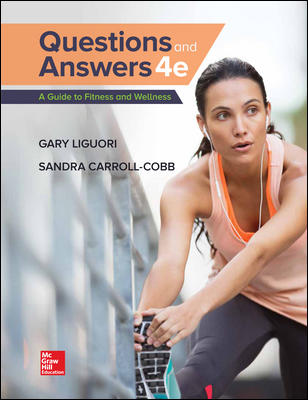
Questions And Answers A Guide to Fitness 4Th Edition By Gary Liguori - Test Bank

Questions And Answers A Guide to Fitness 4Th Edition By Gary Liguori - Test Bank   Instant Download - Complete Test Bank With Answers     Sample Questions Are Posted Below   Chapter 05 Muscle Fitness     Multiple Choice Questions Where would you NOT find smooth muscle? A. respiratory airways B.heart C. stomach D. intestine Answer: B …

$19.99

Questions And Answers A Guide to Fitness 4Th Edition By Gary Liguori – Test Bank


Instant Download – Complete Test Bank With Answers


Sample Questions Are Posted Below


Chapter 05

Muscle Fitness


Multiple Choice Questions

  1. Where would you NOT find smooth muscle?
    A. respiratory airways
    B.heart
    C. stomach
    D. intestine

Answer: B

Page: 141

Section: Factors Affecting Muscle Fitness

Topic: Muscle Types

Learning Objective: Discuss muscular physiology and function.

Bloom’s: Remember

  1. Which of the following is a voluntary muscle?
    A. smooth
    B. cardiac
    C.skeletal
    D. heart

Answer: C

Page: 141

Section: Factors Affecting Muscle Fitness

Topic: Muscle Types

Learning Objective: Discuss muscular physiology and function.

Bloom’s: Remember

  1. Which of the following muscles is found in the walls of organs?
    A. skeletal
    B.smooth
    C. voluntary
    D. cardiac

Answer: B

Page: 141

Section: Factors Affecting Muscle Fitness

Topic: Muscle Types

Learning Objective: Discuss muscular physiology and function.

Bloom’s: Remember


  1. Typical changes that occur when initiating a muscle-training program include
    A. increased body fat.
    B.increased muscle mass.
    C. gaining inches in most areas.
    D. drastic changes in clothing size.

Answer: B

Page: 146

Section: Benefits of Muscle Fitness

Topic: Muscle Fitness Benefits

Topic: Body Composition

Learning Objective: Identify the benefits of muscular fitness.

Bloom’s: Remember

  1. Muscle fitness can
    A. prevent cancer.
    B.improve mobility.
    C. prevent infectious diseases.
    D. improve your diet.

Answer: B

Page: 147

Section: Benefits of Muscle Fitness

Topic: Muscle Fitness Benefits

Learning Objective: Identify the benefits of muscular fitness.

Bloom’s: Remember

  1. Which of the following are major health problems facing adults in the United States today that can be helped by muscle fitness?
    A.back pain and osteoarthritis
    B. bursitis and tendonitis
    C. ankle sprains and leg sprains
    D. cancer and hepatitis

Answer: A

Page: 147

Section: Benefits of Muscle Fitness

Topic: Muscle Fitness Benefits

Learning Objective: Identify the benefits of muscular fitness.

Bloom’s: Remember


  1. Exercise can enhance positive psychological states, which can result in
    A. less favorable thoughts.
    B. more negative than positive emotions.
    C.more energy.
    D. less vigor.

Answer: C

Page: 148

Section: Benefits of Muscle Fitness

Topic: Muscle Fitness Benefits

Learning Objective: Identify the benefits of muscular fitness.

Bloom’s: Remember

  1. Possible explanations for the mood-enhancing effects of physical exercise include which of the following?
    A. distraction, release of endorphins, decreased core temperature
    B. increased muscle tension, release of endorphins, decreased core temperature
    C.distraction, release of endorphins, changes in brain chemistry
    D. focus on stress, release of endorphins, decreased core temperature

Answer: C

Page: 148

Section: Benefits of Muscle Fitness

Topic: Muscle Fitness Benefits

Learning Objective: Identify the benefits of muscular fitness.

Bloom’s: Remember

  1. Muscle fitness can be defined as the ability
    A. to exert optimal force rapidly.
    B.of muscles to perform routine tasks without undue fatigue.
    C. to generate maximal force against resistance.
    D. to sustain an effort for a prolonged period.

Answer: B

Page: 140

Section: Factors Affecting Muscle Fitness

Topic: Muscle Fitness

Learning Objective: Discuss muscular physiology and function.

Bloom’s: Remember


  1. Muscle endurance can be defined as the ability
    A. to exert optimal force rapidly.
    B. of muscles to perform routine tasks without undue fatigue.
    C. to generate maximal force against resistance.
    D.to sustain an effort for a prolonged period.

Answer: D

Page: 140

Section: Factors Affecting Muscle Fitness

Topic: Muscular Endurance

Learning Objective: Discuss muscular physiology and function.

Bloom’s: Remember

  1. Muscle strength can be defined as the ability
    A. to exert optimal force rapidly.
    B. of muscles to perform routine tasks without undue fatigue.
    C.to generate maximal force against resistance.
    D. to sustain an effort for a prolonged period.

Answer: C

Page: 140

Section: Factors Affecting Muscle Fitness

Topic: Muscular Strength

Learning Objective: Discuss muscular physiology and function.

Bloom’s: Remember

  1. Muscle power can be defined as the ability
    A.to exert optimal force rapidly.
    B. of muscles to perform routine tasks without undue fatigue.
    C. to generate maximal force against resistance.
    D. to sustain an effort for a prolonged period.

Answer: A

Page: 140

Section: Factors Affecting Muscle Fitness

Topic: Muscular Power

Learning Objective: Discuss muscular physiology and function.

Bloom’s: Remember


  1. To find exercise equipment that suits your training needs, you should take into account all of the following factors EXCEPT
    A.material.
    B. expense.
    C. access.
    D. personal preference.

Answer: A

Page: 150

Section: Putting Together a Muscle-Fitness Program

Topic: Exercise Equipment

Learning Objective: Explain how to create a muscular fitness plan.

Bloom’s: Remember

  1. Which of the following is an example of a body-weight exercise?
    A.sit-ups
    B. biceps curls
    C. lifting barbells
    D. using a machine

Answer: A

Page: 151

Section: Putting Together a Muscle-Fitness Program

Topic: Fitness Program

Topic: Muscular Training

Learning Objective: Explain how to create a muscular fitness plan.

Bloom’s: Understand

  1. Free weights are best described as
    A. a type of body-weight exercise.
    B.devices that can be moved readily in any direction.
    C. objects that are tethered to a floor, wall, or heavy base.
    D. a labile surface.

Answer: B

Page: 150

Section: Putting Together a Muscle-Fitness Program

Topic: Fitness Program

Topic: Muscular Training

Topic: Exercise Equipment

Learning Objective: Explain how to create a muscular fitness plan.

Bloom’s: Remember


  1. What is static training?
    A. the exertion of a constant force and speed
    B. the use of a partner or piece of equipment
    C.resistance against a stationary force
    D. exertion of muscle force throughout the length of the contraction

Answer: C

Page: 152

Section: Putting Together a Muscle-Fitness Program

Topic: Muscular Training

Topic: Fitness Program

Topic: Strength Training Exercise Types

Learning Objective: Explain how to create a muscular fitness plan.

Bloom’s: Remember

  1. Dynamic training requires
    A. exertion of a constant force and speed.
    B. a partner or piece of equipment.
    C. muscle contraction without any change in length of the muscle.
    D.exertion of muscle force that occurs throughout the length of the contraction.

Answer: D

Page: 152

Section: Putting Together a Muscle-Fitness Program

Topic: Muscular Training

Topic: Fitness Program

Learning Objective: Explain how to create a muscular fitness plan.

Bloom’s: Remember

  1. Isokinetic training requires
    A.exertion of a constant force and speed.
    B. a partner or piece of standard equipment.
    C. muscle contraction without any change in length of the muscle.
    D. exertion of muscle force that occurs throughout the length of the contraction.

Answer: A

Page: 152

Section: Putting Together a Muscle-Fitness Program

Topic: Muscular Training

Topic: Fitness Program

Learning Objective: Explain how to create a muscular fitness plan.

Bloom’s: Remember


  1. Dynamic training is also called
    A. isometric training.
    B. range of motion.
    C. force.
    D.isotonic training.

Answer: D

Page: 152

Section: Putting Together a Muscle-Fitness Program

Topic: Muscular Training

Topic: Fitness Program

Topic: Strength Training Exercise Types

Learning Objective: Explain how to create a muscular fitness plan.

Bloom’s: Remember

  1. Static training is also called
    A.isometric training.
    B. dynamic training.
    C. force.
    D. isotonic training.

Answer: A

Page: 152

Section: Putting Together a Muscle-Fitness Program

Topic: Muscular Training

Topic: Fitness Program

Topic: Strength Training Exercise Types

Learning Objective: Explain how to create a muscular fitness plan.

Bloom’s: Remember

  1. Which of the following does NOT explain how a muscle adapts to stress?
    A. by increasing in size
    B. by increasing in strength
    C. by increasing in endurance and capacity
    D.by increasing in weight

Answer: D

Page: 155

Section: Putting Together a Muscle-Fitness Program

Topic: FITT Formula

Topic: Intensity

Topic: Progressive Overload

Topic: Muscular Training

Learning Objective: Explain how to create a muscular fitness plan.

Bloom’s: Remember


  1. An example of a multiple-joint exercise is a
    A.squat.
    B. bicep curl.
    C. front raise.
    D. leg extension.

Answer: A

Page: 156

Section: Putting Together a Muscle-Fitness Program

Topic: FITT Formula

Topic: Type

Topic: Muscular Training

Topic: Strength Training Exercises

Learning Objective: Explain how to create a muscular fitness plan.

Bloom’s: Understand

  1. One example of a single-joint exercise is a
    A. squat.
    B.bicep curl.
    C. chin-up.
    D. push-up.

Answer: B

Page: 156

Section: Putting Together a Muscle-Fitness Program

Topic: FITT Formula

Topic: Type

Topic: Muscular Training

Topic: Strength Training Exercises

Learning Objective: Explain how to create a muscular fitness plan.

Bloom’s: Understand

  1. Muscle-group split routines are most commonly used by
    A. swimmers.
    B. runners.
    C.bodybuilders.
    D. beginners.

Answer: C

Page: 157

Section: Putting Together a Muscle-Fitness Program

Topic: Muscular Training

Learning Objective: Explain how to create a muscular fitness plan.

Bloom’s: Remember


  1. Total-body workouts are most commonly used by
    A. swimmers.
    B.anyone.
    C. bodybuilders.
    D. runners.

Answer: B

Page: 157

Section: Putting Together a Muscle-Fitness Program

Topic: Muscular Training

Learning Objective: Explain how to create a muscular fitness plan.

Bloom’s: Remember

  1. One of the most effective strength-training tools for beginners is
    A. a barbell.
    B. a weight machine.
    C.their own body weight.
    D. running.

Answer: C

Page: 151

Section: Putting Together a Muscle-Fitness Program

Topic: Muscular Training

Learning Objective: Explain how to create a muscular fitness plan.

Bloom’s: Remember

  1. Zachary is a college student who wants to begin a fitness-training program. He should train ________ days a week.
    A. 7
    B. 5
    C. 3 consecutive
    D.2–3

Answer: D

Page: 153

Section:  Putting Together a Muscle-Fitness Program

Topic: FITT Formula

Topic: Time

Topic: Physical Activity Recommendations

Topic: Muscular Training

Learning Objective: Explain how to create a muscular fitness plan.

Bloom’s: Apply


  1. In an eccentric contraction, a muscle
    A. increases as it contracts.
    B. becomes heavier as it contracts.
    C. shortens as it contracts.
    D.lengthens as it contracts.

Answer: D

Page: 152

Section: Putting Together a Muscle-Fitness Program

Topic: Muscular Training

Learning Objective: Discuss muscular physiology and function.

Bloom’s: Remember

  1. In a concentric contraction, a muscle
    A. increases as it contracts.
    B. becomes heavier as it contracts.
    C.shortens as it contracts.
    D. lengthens as it contracts.

Answer: C

Page: 152

Section: Putting Together a Muscle-Fitness Program

Topic: Muscular Training

Learning Objective: Discuss muscular physiology and function.

Bloom’s: Remember

  1. FITT is an acronym for
    A. frequency, intensity, time, and training.
    B. fitness, intensity, time, and type.
    C. frequency, intensity, test, and type.
    D.frequency, intensity, time, and type.

Answer: D

Page: 153

Section: Section: Putting Together a Muscle-Fitness Program

Topic: FITT Formula

Learning Objective: Explain how to create a muscular fitness plan.

Bloom’s: Remember


  1. The type of muscle training typically used in rehabilitation settings is
    A. isometric.
    B.isokinetic.
    C. static.
    D. isotonic.

Answer: B

Page: 152

Section: Section: Putting Together a Muscle-Fitness Program

Topic: Muscular Training

Topic: Strength Training Exercise Types

Learning Objective: Explain how to create a muscular fitness plan.

Bloom’s: Remember

  1. Which type of training is performed with body weights, rubber tubing, machines, and free weights?
    A. isometric
    B. isokinetic
    C. static
    D.isotonic

Answer: D

Page: 152

Section: Putting Together a Muscle-Fitness Program

Topic: Muscular Training

Topic: Strength Training Exercise Types

Bloom’s: Remember

  1. DOMS is an acronym for ________-onset muscle soreness.
    A. detailed
    B.delayed
    C. defined
    D. dynamic

Answer: B

Page: 154

Section: Putting Together a Muscle-Fitness Program

Topic: Frequency

Topic: Muscular Training

Learning Objective: Discuss muscular physiology and function.

Bloom’s: Remember


  1. The body’s core muscles include
    A.abdominals, obliques, and erectors.
    B. erectors, biceps, and glutes.
    C. cardiac, skeletal, and smooth.
    D. pectoralis major, triceps, and deltoids.

Answer: A

Page: 160

Section: Managing a Safe and Successful Muscle-Fitness Program

Topic: Core Muscles

Learning Objective: Discuss muscular physiology and function.

Bloom’s: Remember

  1. Substances such as steroids, human growth hormone, insulin, and diuretics
    A. are legal to use.
    B.have dangerous side effects.
    C. help you lose weight.
    D. are safe and effective.

Answer: B

Page: 162

Section: Managing a Safe and Successful Muscle-Fitness Program

Topic: Supplements

Topic: Drugs

Learning Objective: Discuss the use of supplements.

Bloom’s: Remember

  1. Which of the following cellular structures contain(s) enzymes that convert energy in food into fuel for the muscle?
    A. nucleus
    B.mitochondria
    C. sarcoplasmic reticulum
    D. myofibrils

Answer: B

Page: 142

Section: Factors Affecting Muscle Fitness

Topic: Muscle Fibers

Learning Objective: Discuss muscular physiology and function.

Bloom’s: Remember


  1. Muscle strength is typically assessed by measuring or estimating the maximum amount of weight someone can lift one time, otherwise known as
    A.1-RM.
    B. ROM.
    C. DOMS.
    D. isometrics.

Answer: A

Page: 149

Section: Assessing Your Muscle Fitness

Topic: Assessing Muscle Fitness

Learning Objective: Describe how to assess muscular fitness.

Bloom’s: Remember
 

True / False Questions

  1. When women are beginning a muscle-training program, weight gain is a typical result.

Answer: False

Page: 143-144

Section: Factors Affecting Muscle Fitness

Topic: Sex Differences

Topic: Muscular Training

Learning Objective: Identify the benefits of muscular fitness.

Bloom’s: Remember

  1. Muscle fitness can help prevent and manage chronic diseases such as diabetes.

Answer: True

Page: 147-148

Section: Benefits of Muscle Fitness

Topic: Muscle Fitness Benefits

Learning Objective: Identify the benefits of muscular fitness.

Bloom’s: Remember

  1. Cardiac and smooth muscle are voluntary types of muscles.

Answer: False

Page: 141

Section: Factors Affecting Muscle Fitness

Topic: Muscle Types

Learning Objective: Discuss muscular physiology and function.

Bloom’s: Remember


  1. Skeletal muscles are involuntary muscles.

Answer: False

Page: 141

Section: Factors Affecting Muscle Fitness

Topic: Muscle Types

Learning Objective: Discuss muscular physiology and function.

Bloom’s: Remember

  1. One of the most effective strength-training tools is your own body weight.

Answer: True

Page: 151

Section: Putting Together a Muscle-Fitness Program

Topic: Muscular Training

Learning Objective: Explain how to create a muscular fitness plan.

Bloom’s: Remember

  1. Dumbbells and barbells are among the most common types of free weights.

Answer: True

Page: 150

Section: Putting Together a Muscle-Fitness Program

Topic: Exercise Equipment

Learning Objective: Explain how to create a muscular fitness plan.

Bloom’s: Remember


  1. The three main types of muscle training are static, dynamic, and isokinetic.

Answer: True

Page: 152

Section: Putting Together a Muscle-Fitness Program

Topic: Muscular Training

Topic: Strength Training Exercise Types

Learning Objective: Explain how to create a muscular fitness plan.

Bloom’s: Remember


  1. The overload principle states that in order to improve muscle fitness, a muscle must be relaxed.

Answer: False

Page: 155

Section: Putting Together a Muscle-Fitness Program

Topic: Progressive Overload

Topic: FITT Formula

Topic: Intensity

Learning Objective: Explain how to create a muscular fitness plan.

Bloom’s: Remember

  1. In eccentric contraction, the muscle contracts as it lengthens.

Answer: True

Page: 152

Section: Putting Together a Muscle-Fitness Program

Topic: Muscular Training

Learning Objective: Discuss muscular physiology and function.

Bloom’s: Remember

  1. In concentric contraction, the muscle contracts as it lengthens.

Answer: False

Page: 152

Section: Putting Together a Muscle-Fitness Program

Topic: Muscular Training

Learning Objective: Discuss muscular physiology and function.

Bloom’s: Remember

  1. Isokinetic training is widely used in general fitness training.

Answer: False

Page: 152

Section: Putting Together a Muscle-Fitness Program

Topic: Muscular Training

Topic: Strength Training Exercise Types

Learning Objective: Explain how to create a muscular fitness plan.

Bloom’s: Remember


  1. To measure muscle endurance, you should count how many repetitions of a given exercise you can do in 1 minute.

Answer: True

Page: 149

Section: Putting Together a Muscle-Fitness Program

Topic: Assessing Muscle Fitness

Topic: Muscular Endurance

Learning Objective: Describe how to assess muscular fitness.

Bloom’s: Remember


Essay Questions

  1. Explain the difference between voluntary and involuntary muscles.


Answer: (1) Voluntary muscles are mostly under your control. (2) Involuntary muscles contract without any conscious effort by you. (3) Voluntary muscles include skeletal muscles. (4) Involuntary muscles include cardiac and smooth muscles. (5) Involuntary muscles control essential activities such as respiration and circulation, so you do not have to make any conscious effort to do these things.

Page: 141

Section: Factors Affecting Muscle Fitness

Topic: Muscle Types

Learning Objective: Discuss muscular physiology and function.

Bloom’s: Understand

  1. Compare muscle strength with muscle endurance.


Answer: (1) Muscle strength is the ability to generate maximal force against resistance. (2) Muscle endurance is the ability to sustain an effort for a prolonged period. (3) One example of muscle strength is lifting the heaviest weight you can. (4) One example of muscle endurance is performing multiple sit-ups.

Page: 140

Section: Factors Affecting Muscle Fitness

Topic: Muscle Fitness

Topic: Muscular Strength

Topic: Muscular Endurance

Learning Objective: Identify the benefits of muscular fitness.

Bloom’s: Understand


  1. Explain the characteristics that are important to a muscle-fitness program.


Answer: (1) Choosing appropriate equipment and facilities. (2) Choosing the type of training (static, isokinetic, dynamic). (3) Applying the FITT formula. (4) Setting goals.

Page: 150-157

Section: Putting Together a Muscle-Fitness Program

Topic: Strength Training Program Planning

Topic: Fitness Program

Learning Objective: Explain how to create a muscular fitness plan.

Bloom’s: Understand

  1. Describe two motivational techniques that can assist with a successful muscle-fitness program.


Answer: Answers may include the following: (1) Find an exercise partner. (2) Draw up a behavioral contract. (3) Give yourself a reward.

Page: 149

Section: Assessing Your Muscle Fitness

Topic: Motivation

Topic: Fitness Program

Topic: Strength Training Program Planning

Learning Objective: Explain how to create a muscular fitness plan.

Bloom’s: Remember

  1. Define and explain the three basic strength training workout structures.


Answer: (1) Total-body workouts feature multiple-joint exercises that work the body’s major muscle groups. They are good for beginners and are time-efficient. (2) Upper- and lower-body split workouts focus on the upper body one day and the lower body another day. Athletes use these workouts because they are more work and are sport-specific, although they are also more time-consuming. (3) Muscle-group split workouts consist of exercises for specific muscle groups. They are mostly used by bodybuilders. They are not practical for most people because they emphasize single-joint exercises.

Page: 157

Section: Putting Together a Muscle-Fitness Program

Topic: Strength Training Program Planning

Topic: Fitness Program

Topic: Muscular Training

Learning Objective: Explain how to create a muscular fitness plan.

Bloom’s: Remember


  1. Explain the overload principle.


Answer: (1) To improve a muscle’s fitness, it must be stressed beyond its present capacity. (2) Muscle size, strength, and endurance will increase as muscles are overloaded. (3) The amount of overload depends on your current level of fitness.

Page: 155

Section: Putting Together a Muscle-Fitness Program

Topic: Progressive Overload

Topic: FITT Formula

Topic: Intensity

Learning Objective: Discuss muscular physiology and function.

Bloom’s: Understand

Fill in the Blank Questions

  1. Intensity is often calculated as a(n) ________ of an individual’s 1-RM.

Answer: percentage

Page: 155

Section: Putting Together a Muscle-Fitness Program

Topic: Intensity

Topic: FITT Formula

Learning Objective: Explain how to create a muscular fitness plan.

Bloom’s: Understand

  1. The ACSM recommends ________ reps for general fitness. (Spell out your answer.)

Answer: eight to twelve

Page: 155

Section: Putting Together a Muscle-Fitness Program

Topic: Physical Activity Recommendations

Topic: Intensity

Topic: FITT Formula

Learning Objective: Explain how to create a muscular fitness plan.

Bloom’s: Remember

  1. FITT is an acronym for ________, intensity, time, and type.

Answer: frequency

Page: 153

Section: Putting Together a Muscle-Fitness Program

Topic: FITT Formula

Learning Objective: Explain how to create a muscular fitness plan.

Bloom’s: Remember


  1. DOMS stands for delayed-onset muscle ________.

Answer: soreness

Page: 154

Section: Putting Together a Muscle-Fitness Program

Topic: Muscular Training

Topic: Frequency

Learning Objective: Discuss muscular physiology and function.

Bloom’s: Remember

  1. The body’s ________ muscles include abdominals, obliques, and erectors.

Answer: core

Page: 160

Section: Managing a Safe and Successful Muscle-Fitness Program

Topic: Core Muscles

Learning Objective: Discuss muscular physiology and function.

Bloom’s: Remember


  1. The 1-RM test is a way to assess muscle ________.

Answer: strength

Page: 149

Section: Assessing Your Muscle Fitness

Topic: Assessing Muscle Fitness

Learning Objective: Describe how to assess muscular fitness.

Bloom’s: Remember


Matching Questions

  1. Match each term with the appropriate related term or definition.


Term


1. sarcopenia    
2. atrophy    
3. ligament    
4. hypertrophy    
5. fast-twitch    
6. slow-twitch    


Definition


  1. connects to bone
  2. type I
  3. loss of muscle mass
  4. decrease in muscle fiber size
  5. type IIa and IIx
  6. increase in muscle fiber size


Answer: 1:c ;2:d ;3:a ; 4:f; 5:e; 6:b

Page: 141, 143, 145

Section: Factors Affecting Muscle Fitness

Topic: Muscle Fibers

Topic: Muscular Strength

Learning Objective: Discuss muscular physiology and function.

Bloom’s: Remember


  1. Match each term with the appropriate description or definition.


Term

1. testosterone    
2. range of motion (ROM)    
3. agonist muscle    
4. osteoporosis    
5. concentric contraction    
6. eccentric contraction    


Definition


  1. decrease in bone mineral density
  2. male sex hormone
  3. full range at which a joint can move
  4. muscle shortens as it contracts
  5. muscle lengthens as it contracts
  6. responsible for movement of a bone


Answer: 1:b ; 2:c ; 3:f ; 4:a ; 5:d ; 6:e

Page: 144, 147, 152, 156

Topic: Muscular Fitness

Learning Objective: Discuss muscular physiology and function.

Bloom’s: Remember


Additional information

Add Review

Your email address will not be published. Required fields are marked *