Subtotal: $980.00

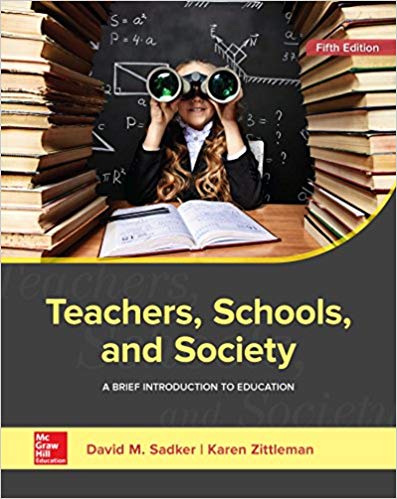
Teachers, Schools, and Society A Brief Introduction to Education 5th Edition by David M. Sadker -Test Bank

Teachers, Schools, and Society A Brief Introduction to Education 5th Edition by David M. Sadker -Test Bank   Instant Download - Complete Test Bank With Answers     Sample Questions Are Posted Below   Teachers Schools and Society: Brief Intro to Ed, 5e (Sadker) Chapter 5   The Multicultural History of American Education   1) In …

$19.99

Teachers, Schools, and Society A Brief Introduction to Education 5th Edition by David M. Sadker -Test Bank


Instant Download – Complete Test Bank With Answers


Sample Questions Are Posted Below


Teachers Schools and Society: Brief Intro to Ed, 5e (Sadker)

Chapter 5   The Multicultural History of American Education


1) In early colonial times, some women began to devote their time to teaching, converting their homes into schools. These women taught reading, writing, and computation, and their homes became known as ________.

  1. A) public schools
  2. B) dame schools
  3. C) charter schools
  4. D) common schools


Answer:  B

Topic:  Colonial New England Education: God’s Classrooms

Learning Objective:  5.2: Explain the characteristic features and objectives of colonial education.


2) The Old Deluder Satan Law of 1647 required that:

  1. A) all citizens of Massachusetts must present themselves periodically to recite the Scripture.
  2. B) every town of fifty households must appoint and pay a teacher of reading and writing.
  3. C) every household must appoint an individual to read the Scripture on behalf of the family.
  4. D) all citizens of Massachusetts must be assessed to determine their reading and writing skills.


Answer:  B

Topic:  Colonial New England Education: God’s Classrooms

Learning Objective:  5.2: Explain the characteristic features and objectives of colonial education.


3) Many colonies required that masters teach reading and writing as well as ________ skills.

  1. A) fighting
  2. B) swimming
  3. C) household
  4. D) vocational


Answer:  D

Topic:  Colonial New England Education: God’s Classrooms

Learning Objective:  5.2: Explain the characteristic features and objectives of colonial education.


4) Nathan was a young man receiving an education during the colonial period. As his family was business-oriented, he was enrolled in a private school devoted to teaching accounting, and that helped him take over his family business. Based on the description above, Nathan most likely attended a school in the ________ colonies.

  1. A) northern
  2. B) middle
  3. C) southern
  4. D) eastern


Answer:  B

Topic:  Colonial New England Education: God’s Classrooms

Learning Objective:  5.2: Explain the characteristic features and objectives of colonial education.


5) How did Benjamin Franklin help in severing American educational thought from its European roots?

  1. A) He gave importance to religious education and the establishment of religious schools.
  2. B) He was committed to offering free education to all Americans, whether rich or poor.
  3. C) He was committed to a practical program of nonsectarian study, offering elective courses.
  4. D) He gave importance to the value of mastering Greek and Latin classics in grammar schools.


Answer:  C

Topic:  Colonial New England Education: God’s Classrooms

Learning Objective:  5.2: Explain the characteristic features and objectives of colonial education.


6) In 1749, ________ penned Proposals Relating to the Youth of Pennsylvania, suggesting a new kind of secondary school to replace the Latin grammar school—the academy.

  1. A) Booker T. Washington
  2. B) Benjamin Franklin
  3. C) Jean-Jacques Rousseau
  4. D) Johann Herbart


Answer:  B

Topic:  A New Nation Shapes Education

Learning Objective:  5.3: Analyze the transformation of American education brought about by the ideas that led to the American Revolution.


7) Historians consider ________ to be the outstanding proponent of education for the common person (the Common School Movement), and he is often referred to as “the father of the public school.”

  1. A) Johann Herbart
  2. B) John Dewey
  3. C) Horace Mann
  4. D) Booker T. Washington


Answer:  C

Topic:  The Common School Movement

Learning Objective:  5.4: Understand the role of the Common School Movement in promoting public education.


8) Horace Mann became the nation’s leading advocate for the establishment of a ________ school open to all.

  1. A) private
  2. B) charter
  3. C) dame
  4. D) common


Answer:  D

Topic:  The Common School Movement

Learning Objective:  5.4: Understand the role of the Common School Movement in promoting public education.


9) ________ American students have the highest dropout rate of all students and are more likely to struggle with alcohol and drug addiction.

  1. A) African
  2. B) Native
  3. C) Hispanic
  4. D) Asian


Answer:  B

Topic:  Native American Tribes: The History of Miseducation

Learning Objective:  5.5: Indicate how education was used against Native Americans to repress their culture.


10) By the early part of the twentieth century, women constituted upward of ________ percent of teachers.

  1. A) 50
  2. B) 10
  3. C) 90
  4. D) 20


Answer:  C

Topic:  Spinsters, Bachelors, and Gender Barriers in Teaching

Learning Objective:  5.6: Criticize how teaching became a “gendered” career.

11) What was the new concern that arose as women came to dominate teaching and the gender tables turned in the twentieth century?

  1. A) Female teachers not receiving the same salaries as male teachers
  2. B) The fear that boys were being discriminated
  3. C) Male teachers not being recruited by the school districts
  4. D) The fear that female teachers were “feminizing” boys


Answer:  D

Topic:  Spinsters, Bachelors, and Gender Barriers in Teaching

Learning Objective:  5.6: Criticize how teaching became a “gendered” career.


12) As secondary schools spread, they generally took the form of ________ academies.

  1. A) free-for-all
  2. B) not-for-profit
  3. C) public, government-funded
  4. D) private, tuition-charging


Answer:  D

Topic:  The Secondary School Movement

Learning Objective:  5.7: List the factors that led to the development of secondary schools.


13) In the context of the development of American schools, which of the following statements is true about common schools?

  1. A) They were free, open to all social classes, and intended to bring democracy to the classroom.
  2. B) They prepared wealthy men for college and emphasized a classical curriculum, including Latin and some Greek.
  3. C) They were viewed as preparation for business careers and as a means of installing social graces.
  4. D) They were taught by women in their homes who offered child care for working parents.


Answer:  A

Topic:  The Secondary School Movement

Learning Objective:  5.7: List the factors that led to the development of secondary schools.

14) In the context of the development of American schools, ________ were open to all social classes and provided both precollege and career education.

  1. A) itinerant schools
  2. B) high schools
  3. C) private schools
  4. D) local schools


Answer:  B

Topic:  The Secondary School Movement

Learning Objective:  5.7: List the factors that led to the development of secondary schools.


15) Which of the following is one of the seven goals for high school identified by the report Cardinal Principles of Secondary Education?

  1. A) Command of fundamental academic skills
  2. B) Economic prosperity
  3. C) Excellence in sports
  4. D) Proficiency of foreign language


Answer:  A

Topic:  A Brief History of Educational Reform

Learning Objective:  5.8: Recall the role of National Education Association (NEA) in improving the quality of high school education.


16) The movement with which John Dewey was closely associated with is known as ________.

  1. A) materialism
  2. B) progressivism
  3. C) idealism
  4. D) constructivism


Answer:  B

Topic:  John Dewey and Progressive Education

Learning Objective:  5.9: Describe the fundamentals of progressive education.


17) When the Progressive Education Association released their Eight-Year Study, they reported that students who graduated from progressive schools:

  1. A) were judged to be more objective and more precise thinkers.
  2. B) earned a slightly lower grade point average.
  3. C) received slightly less academic honors.
  4. D) were judged to possess lower intellectual curiosity and lower drive.


Answer:  A

Topic:  John Dewey and Progressive Education

Learning Objective:  5.9: Describe the fundamentals of progressive education.

18) Many people are unaware that the responsibility for educating Americans is not even mentioned in the Constitution. Under the ________ Amendment, any area not specifically stated in the Constitution as a federal responsibility is automatically assigned to the states.

  1. A) Tenth
  2. B) Fourteenth
  3. C) Sixteenth
  4. D) Fifth


Answer:  A

Topic:  The Federal Government

Learning Objective:  5.10: Review the federal government’s involvement in American education.


19) In response to the Soviet launching of Sputnik, the ________ provided substantial funds for a variety of educational activities, including student loans, the education of school counselors, and the strengthening of instructional programs in science, mathematics, and foreign languages.

  1. A) Morrill Land Grant College Acts
  2. B) Land Ordinance Act and Northwest Ordinance
  3. C) Smith-Hughes Act (1917)
  4. D) National Defense Education Act (1958)


Answer:  D

Topic:  The Federal Government

Learning Objective:  5.10: Review the federal government’s involvement in American education.


20) The act that calls for standards and annual testing of math, reading, and science is called the ________.

  1. A) National Defense Education Act
  2. B) Elementary and Secondary Education Act
  3. C) No Child Left Behind Act
  4. D) Bilingual Education Act


Answer:  C

Topic:  The Federal Government

Learning Objective:  5.10: Review the federal government’s involvement in American education.

21) Aaron is a young man in his early twenties. He just returned home after serving in the U.S. Army for 3 years. Now he hopes to go to college at his state university to become an engineer. Which of the following federal acts would help Aaron to do so?

  1. A) National Defense Education Act
  2. B) Servicemen’s Readjustment Act
  3. C) Elementary and Secondary Education Act
  4. D) Individuals with Disabilities Education Act


Answer:  B

Topic:  The Federal Government

Learning Objective:  5.10: Review the federal government’s involvement in American education.


22) Which of the following provided funds for teacher training and program development in vocational education at the high school level?

  1. A) Elementary and Secondary Education Act
  2. B) Bilingual Education Act
  3. C) Morrill Land Grant College Acts
  4. D) Smith-Hughes Act


Answer:  D

Topic:  The Federal Government

Learning Objective:  5.10: Review the federal government’s involvement in American education.


23) Which of the following statements is true about Project Head Start (1964–1965)?

  1. A) This act provides financial assistance to local school districts to provide free and appropriate education for the nation’s 8 million children with disabilities who are between 3 and 21 years of age.
  2. B) This act protects the rights of both males and females from preschool through graduate school, in sports, financial aid, employment, counseling, school regulations and policies, admissions, and other areas.
  3. C) This act provides medical, social, nutritional, and educational services for low-income children from 3 to 6 years of age.
  4. D) This act established 69 institutions of higher education in various states, some of which are among today’s great state universities.


Answer:  C

Topic:  The Federal Government

Learning Objective:  5.10: Review the federal government’s involvement in American education.

24) Which of the following laws provided financial assistance to school districts with low-income families, to improve libraries and instructional materials, and to promote educational innovations and research?

  1. A) No Child Left Behind Act (2001)
  2. B) Every Student Succeeds Act (2015)
  3. C) Bilingual Education Act (1968)
  4. D) Elementary and Secondary Education Act (1965)


Answer:  D

Topic:  The Federal Government

Learning Objective:  5.10: Review the federal government’s involvement in American education.


25) In the landmark case of Plessy v. Ferguson (1896), the Supreme Court developed the doctrine of ________.

  1. A) separate but equal
  2. B) fundamental breach
  3. C) substantial performance
  4. D) repudiatory breach


Answer:  A

Topic:  Black Americans: The Struggle for a Chance to Learn

Learning Objective:  5.11: Recall the opposition faced by Black Americans in their struggle for education.


26) With the 1896 Plessy v. Ferguson Supreme Court decision, ________ became a legally sanctioned part of the American way of life.

  1. A) segregation
  2. B) homosexuality
  3. C) marijuana usage
  4. D) racial equality


Answer:  A

Topic:  Black Americans: The Struggle for a Chance to Learn

Learning Objective:  5.11: Recall the opposition faced by Black Americans in their struggle for education.

27) The ________ gave the federal government power to help local school districts desegregate (Title IV) and, when necessary, to initiate lawsuits or withhold federal school funds to force desegregation.

  1. A) Elementary and Secondary Education Act
  2. B) Civil Rights Act
  3. C) Smith-Hughes Act
  4. D) No Child Left Behind Act


Answer:  B

Topic:  Black Americans: The Struggle for a Chance to Learn

Learning Objective:  5.11: Recall the opposition faced by Black Americans in their struggle for education.


28) In 1949, ________ caused Congress to reverse more than a century of immigration quotas and naturalization and anti-miscegenation laws.

  1. A) the rise of “Chinatowns” in major cities throughout the United States
  2. B) the institution of a Communist government in mainland China
  3. C) the realization that Chinese immigrants were a boon to the U.S. economy
  4. D) the demand raised by U.S. citizens to grant refugee status to Chinese immigrants


Answer:  B

Topic:  Asian Americans and Pacific Islanders: The Magnitude of Diversity

Learning Objective:  5.12: Evaluate the factors that shaped the educational experiences of Asian Americans and Pacific Islanders.


29) Which of the following statements is true?

  1. A) Vast majority of Arab Americans living in the United States are Christian.
  2. B) All Arabs living in the Middle East follow Islam.
  3. C) Most Americans perceive Arabs as pro-American.
  4. D) Majority of America’s Muslims are Arabs.


Answer:  A

Topic:  Arab Americans: Moving beyond the Stereotype

Learning Objective:  5.14: Understand the effects of cultural differences on the education of a traditional Arab student.


30) Emma Hart Willard made an important contribution to education when she:

  1. A) opened the first school for specially abled children in the United States.
  2. B) opened the first institution of learning for African American women.
  3. C) became the first woman to attend an American university.
  4. D) established one of the earliest teacher training programs in U.S. history.


Answer:  D

Topic:  Women and Education: A History of Sexism

Learning Objective:  5.15: Illustrate the challenges girls and women have faced in the past in their struggle for educational opportunity.

31) In colonial America, female teachers were particularly attractive to school districts because:

  1. A) they were perceived to be more intelligent and effective than male teachers.
  2. B) they were typically paid one-third to one-half of the salary paid to male teachers.
  3. C) they would always work for longer hours than male teachers.
  4. D) they were way more educated and knowledgeable than male teachers.


Answer:  B

Topic:  Women and Education: A History of Sexism

Learning Objective:  5.15: Illustrate the challenges girls and women have faced in the past in their struggle for educational opportunity.


32) Which of the following statements about Title IX of the Education Amendments of 1972 is true?

  1. A) This law was created to protect only female students against gender discrimination.
  2. B) The federal government has penalized hundreds of schools for violating Title IX.
  3. C) The law has eradicated sexism from education institutes in the United States.
  4. D) The law is rarely enforced, and ignorance of the law is widespread.


Answer:  D

Topic:  Women and Education: A History of Sexism

Learning Objective:  5.15: Illustrate the challenges girls and women have faced in the past in their struggle for educational opportunity.


33) There is a belief that “In a very real way, today’s classrooms are living tributes to past achievements and sacrifices.” Bringing to bear what you have learned about the history of American education, describe how the current educational landscape represents both the successes and the struggles that educators and students have experienced to this day. Provide specific examples to support your discussion.


Answer:  Answers will vary.

Topic:  Colonial New England Education: God’s Classrooms; A New Nation Shapes Education; The Common School Movement; Native American Tribes: The History of Miseducation; Spinsters, Bachelors, and Gender Barriers in Teaching; The Secondary School Movement; A Brief History of Educational Reform; John Dewey and Progressive Education; The Federal Government; Black Americans: The Struggle for a Chance to Learn; Asian Americans and Pacific Islanders: The Magnitude of Diversity; Arab Americans: Moving beyond the Stereotype; Women and Education: A History of Sexism; Christopher Lamb’s Colonial Classroom; Hispanics: Growing School Impact

Learning Objective:  5.8: Recall the role of National Education Association (NEA) in improving the quality of high school education.

34) Discuss the role that wealth has played in education from colonial times to the present. In examining the educational environment today, what issues regarding the role of wealth have changed—for better or for worse? What seems to have stayed the same? Be sure to provide specific examples to support your analysis.


Answer:  Answers will vary.

Topic:  Colonial New England Education: God’s Classrooms; A New Nation Shapes Education; The Common School Movement; Native American Tribes: The History of Miseducation; Spinsters, Bachelors, and Gender Barriers in Teaching; The Secondary School Movement; A Brief History of Educational Reform; John Dewey and Progressive Education; The Federal Government; Black Americans: The Struggle for a Chance to Learn; Asian Americans and Pacific Islanders: The Magnitude of Diversity; Arab Americans: Moving beyond the Stereotype; Women and Education: A History of Sexism; Christopher Lamb’s Colonial Classroom; Hispanics: Growing School Impact

Learning Objective:  5.8: Recall the role of National Education Association (NEA) in improving the quality of high school education.


35) Following the American Revolution, a truly American education began to take shape. Describe the characteristics of “American” education, and what makes it specifically American. Be sure to provide examples in your discussion.


Answer:  Answers will vary.

Topic:  A New Nation Shapes Education

Learning Objective:  5.3: Analyze the transformation of American education brought about by the ideas that led to the American Revolution.


36) During his efforts to establish public common schools, Horace Mann encountered considerable opposition. Who were the groups who opposed Mann, and what was the reason for their opposition? What do you think these groups would make of the current educational system? Would they still be opposed? Be sure to explain your reasoning, and provide specific examples in your discussion.


Answer:  Answers will vary.

Topic:  The Common School Movement

Learning Objective:  5.4: Understand the role of the Common School Movement in promoting public education.


37) What do you feel has been Horace Mann’s influence on your education? Where have you seen the effects of his advocacy and actions during your schooling? Be sure to provide specific examples to support your discussion.


Answer:  Answers will vary.

Topic:  The Common School Movement

Learning Objective:  5.4: Understand the role of the Common School Movement in promoting public education.

38) How did teaching become a “gendered” career? How were the first women who became teachers in regular school setting viewed? Why did school districts prefer hiring unmarried women as teachers in the late nineteenth and early part of the twentieth century? How were these teachers perceived by the American society?


Answer:  Answers will vary.

Topic:  Spinsters, Bachelors, and Gender Barriers in Teaching

Learning Objective:  5.6: Criticize how teaching became a “gendered” career.


39) What are the components of progressive education? What is its philosophy? What kind of acceptance has it received in the United States?


Answer:  Answers will vary.

Topic:  John Dewey and Progressive Education

Learning Objective:  5.9: Describe the fundamentals of progressive education.


40) If you had the opportunity to speak with the framers of the Constitution of the United States, what would you suggest they include in terms of education? Why?


Answer:  Answers will vary.

Topic:  The Federal Government

Learning Objective:  5.10: Review the federal government’s involvement in American education.


41) Is the federal government’s role in education a help or a hindrance? Is there too much influence from the federal government, or not enough? Support your opinions.


Answer:  Answers will vary.

Topic:  The Federal Government

Learning Objective:  5.10: Review the federal government’s involvement in American education.


42) Describe the challenges faced by African Americans in their pursuit of education. How did White Americans respond to the education of African Americans? Explain how the doctrine of separate but equal affected the education of African Americans?


Answer:  Answers will vary.

Topic:  Black Americans: The Struggle for a Chance to Learn

Learning Objective:  5.11: Recall the opposition faced by Black Americans in their struggle for education.


43) How does second-generation segregation affect the education of African American students? Describe the Kerner Commission findings on race. How did these findings affect national efforts to increase the quality of education for African Americans?


Answer:  Answers will vary.

Topic:  Black Americans: The Struggle for a Chance to Learn

Learning Objective:  5.11: Recall the opposition faced by Black Americans in their struggle for education.

44) Asian Americans and Pacific Islanders are often referred to as a “model minority.” Provide the rationale behind this statement, and discuss how this stereotypes Asian Americans. What problems do Asian American and Pacific Islander students face that this label masks?


Answer:  Answers will vary.

Topic:  Asian Americans and Pacific Islanders: The Magnitude of Diversity

Learning Objective:  5.12: Evaluate the factors that shaped the educational experiences of Asian Americans and Pacific Islanders.


45) How has the American cultural perception of Arab Americans changed over time? How large and internally diverse is the Arab American population in the United States? What might be done to continue combating common misconceptions about this group?


Answer:  Answers will vary.

Topic:  Arab Americans: Moving beyond the Stereotype

Learning Objective:  5.14: Understand the effects of cultural differences on the education of a traditional Arab student.


46) What are some of the misperceptions you had regarding Title IX? What is the reality of the law compared to what you had previously perceived? How do people’s misperceptions of Title IX manifest themselves in schools? Be sure to provide specific examples to support your discussion.


Answer:  Answers will vary.

Topic:  Women and Education: A History of Sexism

Learning Objective:  5.15: Illustrate the challenges girls and women have faced in the past in their struggle for educational opportunity.

Additional information

Add Review

Your email address will not be published. Required fields are marked *