Subtotal: $1,880.00

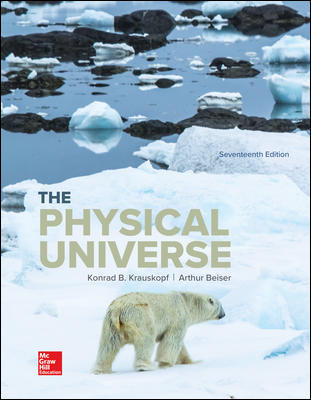
The Physical Universe 17Th edition By Konrad Krauskopf - Test Bank

The Physical Universe 17Th edition By Konrad Krauskopf - Test Bank   Instant Download - Complete Test Bank With Answers     Sample Questions Are Posted Below   Chapter 08 Test Bank KEY   The nucleus of an atom cannot be said to   contain most of the atom's mass.   be small in size. …

$19.99

The Physical Universe 17Th edition By Konrad Krauskopf – Test Bank


Instant Download – Complete Test Bank With Answers


Sample Questions Are Posted Below


Chapter 08 Test Bank KEY


  1. The nucleus of an atom cannot be said to


  1. contain most of the atom’s mass.


  1. be small in size.


  1. be electrically neutral.


  1. deflect alpha particles that come near it.


Accessibility: Keyboard Navigation


Blooms: 1. Remember


Gradable: automatic


Section: 08.01


Topic: Nuclear Physics


  1. Of the following particles, the one with the smallest mass is the


Accessibility: Keyboard Navigation


Blooms: 1. Remember


Gradable: automatic


Section: 08.02


Section: 08.03


Topic: Nuclear Physics


  1. Of the following particles, the one with the greatest mass is the


Accessibility: Keyboard Navigation


Blooms: 1. Remember


Gradable: automatic


Section: 08.02


Section: 08.03


Topic: Nuclear Physics


  1. Of the following particles, the only one that is not stable outside an atom is the


Accessibility: Keyboard Navigation


Blooms: 1. Remember


Gradable: automatic


Section: 08.03


Topic: Nuclear Physics


  1. The atomic number of the nucleus is


  1. 4.


Blooms: 2. Understand


Blooms: 3. Apply


Gradable: automatic


Section: 08.02


Topic: Nuclear Physics


  1. The mass number of the nucleus is


Blooms: 2. Understand


Blooms: 3. Apply


Gradable: automatic


Section: 08.02


Topic: Nuclear Physics


  1. The number of protons in the nucleus is


  1. 4.


Blooms: 2. Understand


Blooms: 3. Apply


Gradable: automatic


Section: 08.02


Topic: Nuclear Physics


  1. The number of neutrons in the nucleus is


  1. 4.


  1. 5.


Blooms: 2. Understand


Blooms: 3. Apply


Gradable: automatic


Section: 08.02


Topic: Nuclear Physics


  1. The chemical behavior of an atom is determined by its


  1. atomic number.


  1. mass number.


  1. binding energy.


  1. number of isotopes.


Accessibility: Keyboard Navigation


Blooms: 2. Understand


Gradable: automatic


Section: 08.02


Topic: Atomic Physics


  1. The atoms of the isotopes of a given element have the same number of


  1. protons.


Accessibility: Keyboard Navigation


Blooms: 1. Remember


Gradable: automatic


Section: 08.02


Topic: Nuclear Physics


  1. Which of the following is not an isotope of hydrogen?


A.


B.


C.


D.


Blooms: 2. Understand


Gradable: automatic


Section: 08.02


Topic: Nuclear Physics


  1. The number of neutrons in a nucleus


  1. is less than the number of protons it contains.


  1. is the same as the number of protons it contains.


  1. is more than the number of protons it contains.


  1. Any of the above, depending on the nucleus.


Accessibility: Keyboard Navigation


Blooms: 2. Understand


Gradable: automatic


Section: 08.02


Topic: Nuclear Physics


  1. Which, if any, of the following elements have no radioactive isotopes?


  1. hydrogen.


  1. potassium.


  1. uranium.


  1. All of these elements have radioactive isotopes.


Accessibility: Keyboard Navigation


Blooms: 1. Remember


Gradable: automatic


Section: 08.03


Topic: Nuclear Physics


  1. A molecule of heavy water contains


  1. two oxygen atoms instead of one.


  1. three hydrogen atoms instead of two.


  1. deuterium atoms instead of hydrogen atoms.


  1. a deuterium atom instead of an oxygen atom.


Accessibility: Keyboard Navigation


Blooms: 1. Remember


Gradable: automatic


Section: 08.02


Topic: Nuclear Physics


  1. The nucleus of a helium atom is called


  1. an alpha particle.


  1. a beta particle.


  1. a gamma ray.


  1. a quark.


Accessibility: Keyboard Navigation


Blooms: 1. Remember


Gradable: automatic


Section: 08.03


Topic: Nuclear Physics


  1. The electromagnetic waves emitted by a nucleus are called


  1. ultraviolet rays.


  1. X-rays.


  1. gamma rays.


  1. quarks.


Accessibility: Keyboard Navigation


Blooms: 1. Remember


Gradable: automatic


Section: 08.03


Topic: Nuclear Physics


  1. A particle never emitted in beta decay is the


  1. neutron.


Accessibility: Keyboard Navigation


Blooms: 1. Remember


Gradable: automatic


Section: 08.03


Topic: Nuclear Physics


  1. The mass of a positron is


  1. equal to the mass of an electron.


  1. more than the mass of an electron but less than the mass of a proton.


  1. equal to the mass of a proton.


  1. more than the mass of a proton.


Accessibility: Keyboard Navigation


Blooms: 1. Remember


Gradable: automatic


Section: 08.03


Topic: Elementary Particle Physics


  1. Which one or more of the following statements is true in general?


  1. Alpha particles are more able to penetrate matter than beta particles and gamma rays.
  2. Alpha particles are less able to penetrate matter than beta particles and gamma rays.


  1. Alpha particles are less able to penetrate matter than beta particles but more able to do so than gamma rays.


  1. Alpha particles are more able to penetrate matter than beta particles but less able to do so than gamma rays.


Accessibility: Keyboard Navigation


Blooms: 1. Remember


Figure: 08.08


Gradable: automatic


Section: 08.03


Topic: Nuclear Physics


  1. The atomic number of a nucleus decreases when it emits


  1. a proton.


  1. a neutron.


  1. an electron.


  1. a positron.


Accessibility: Keyboard Navigation


Blooms: 1. Remember


Blooms: 2. Understand


Gradable: automatic


Section: 08.02


Section: 08.03


Topic: Nuclear Physics


  1. When a nucleus undergoes radioactive decay, its new mass number is


  1. always less than its original mass number.


  1. always more than its original mass number.


  1. never less than its original mass number.


  1. never more than its original mass number.


Accessibility: Keyboard Navigation


Blooms: 1. Remember


Blooms: 2. Understand


Gradable: automatic


Section: 08.02


Section: 08.03


Topic: Nuclear Physics


  1. A nucleus with too few neutrons for stability may decay radioactively with the emission of


  1. a neutron.


  1. a proton.


  1. an electron.


  1. a positron.


Accessibility: Keyboard Navigation


Blooms: 2. Understand


Figure: 08.09


Gradable: automatic


Section: 08.03


Topic: Nuclear Physics


  1. As a sample of a radioactive nuclide decays, its half-life


  1. decreases.


  1. remains the same.


  1. Any of these choices could be correct, depending upon the nuclide.


Accessibility: Keyboard Navigation


Blooms: 2. Understand


Gradable: automatic


Section: 08.04


Topic: Nuclear Physics


  1. If radium and chlorine combine to form radium chloride, the compound is


  1. no longer radioactive.


  1. half as radioactive as its radium content.


  1. as radioactive as its radium content.


  1. twice as radioactive as its radium content.


Accessibility: Keyboard Navigation


Blooms: 2. Understand


Blooms: 3. Apply


Gradable: automatic


Section: 08.04


Topic: Nuclear Physics


  1. Most known nuclides


  1. are stable.


  1. are radioactive.


  1. can undergo fission.


  1. have more nuclear mass than the total mass of their constituent nucleons.


Accessibility: Keyboard Navigation


Blooms: 1. Remember


Gradable: automatic


Section: 08.03


Topic: Nuclear Physics


  1. The sievert is a unit of


  1. half-life.


  1. particle energy.


  1. radiation dosage.


Accessibility: Keyboard Navigation


Blooms: 1. Remember


Gradable: automatic


Section: 08.05


Topic: Nuclear Physics


  1. The most important single source of radiation dosage received by an average person in the United States is


  1. medical x-rays


  1. nuclear reactors.


Accessibility: Keyboard Navigation


Blooms: 1. Remember


Figure: 08.12


Gradable: automatic


Section: 08.05


Topic: Nuclear Physics


  1. By far the most dangerous diagnostic x-rays in medicine are


  1. dental x-rays.


  1. chest x-rays.


  1. CT scans.


Accessibility: Keyboard Navigation


Blooms: 1. Remember


Figure: 08.12


Gradable: automatic


Section: 08.05


Topic: Nuclear Physics


  1. The radiation dosage due to cosmic rays is greatest


  1. in orbiting spacecraft.


  1. in airplanes at high altitudes.


  1. at sea level.


Accessibility: Keyboard Navigation


Blooms: 1. Remember


Gradable: automatic


Section: 08.05


Topic: Nuclear Physics


  1. Which of the following is not a unit of energy?


  1. joule.
  2. kilowatt-hour.
  3. ampere-hour.
  4. electron volt.


Accessibility: Keyboard Navigation


Blooms: 4. Analyze


Gradable: automatic


Section: 08.06


Topic: Nuclear Physics


  1. The unit in which atomic masses are usually expressed is the


Accessibility: Keyboard Navigation


Blooms: 1. Remember


Gradable: automatic


Section: 08.06


Topic: Nuclear Physics


  1. An atomic nucleus has a mass that is


  1. less than the total mass of its constituent nucleons.


  1. the same as the total mass of its constituent nucleons.


  1. more than the total mass of its constituent nucleons.


  1. Any of theses choices could be correct, depending on the nucleus.


Accessibility: Keyboard Navigation


Blooms: 2. Understand


Figure: 08.13


Gradable: automatic


Section: 08.07


Topic: Nuclear Physics


  1. Nuclear fission and fusion reactions give off energy because


  1. the binding energy per nucleon is least for nuclei of intermediate size.


  1. the binding energy per nucleon is greatest for nuclei of intermediate size.


  1. they result in the production of neutrons.


  1. they result in the production of plutonium.


Accessibility: Keyboard Navigation


Blooms: 2. Understand


Figure: 08.15


Gradable: automatic


Section: 08.08


Topic: Nuclear Physics


  1. A chain reaction does not occur in


  1. ordinary nuclear reactors.


  1. breeder reactors.


  1. fusion reactors.


  1. fission nuclear weapons.


Accessibility: Keyboard Navigation


Blooms: 2. Understand


Gradable: automatic


Section: 08.09


Section: 08.13


Topic: Nuclear Physics


  1. A nuclear reactor itself does not produce


  1. electricity.


Accessibility: Keyboard Navigation


Blooms: 2. Understand


Gradable: automatic


Section: 08.10


Topic: Nuclear Physics


  1. The moderator in a nuclear reactor


  1. slows down neutrons emitted during fission.


  1. reduces the production of plutonium.


  1. reduces the production of radiation.


  1. prevents explosions.


Accessibility: Keyboard Navigation


Blooms: 2. Understand


Gradable: automatic


Section: 08.10


Topic: Nuclear Physics


  1. Enriched uranium contains


  1. more than natural uranium.
  2. more than natural uranium.


Blooms: 2. Understand


Gradable: automatic


Section: 08.10


Topic: Nuclear Physics


  1. Slightly enriched uranium can be the energy source of which of the following?


  1. Nuclear fission reactors.
  2. Nuclear fusion reactors.
  3. Nuclear weapons.
  4. X-rays


Accessibility: Keyboard Navigation


Blooms: 2. Understand


Gradable: automatic


Section: 08.10


Section: 08.13


Topic: Nuclear Physics


  1. A breeder reactor is designed to produce more nuclear fuel than it consumes. The new fuel is in the form of


A. .  
   
B. .  
   
C.  plutonium.  
D.  tritium.    
  Blooms: 2. Understand  
  Gradable: automatic  
  Section: 08.12  
  Topic: Nuclear Physics  


  1. The number of major accidents that have occurred at nuclear power plants is


  1. 3.


Accessibility: Keyboard Navigation


Blooms: 1. Remember


Gradable: automatic


Section: 08.14


Topic: Nuclear Physics


  1. A possible fuel for a fusion reactor is


  1. .


B.

  1. plutonium.


  1. tritium.


Blooms: 2. Understand


Gradable: automatic


Section: 08.13


Topic: Nuclear Physics


  1. The particle that most resembles the proton is the


Accessibility: Keyboard Navigation


Blooms: 2. Understand


Gradable: automatic


Section: 08.14


Topic: Elementary Particle Physics


  1. The process of pair production cannot produce


  1. a proton and an antiproton.


  1. a neutron and an antineutron.


  1. a neutron and a neutrino.


  1. an electron and a positron.


Accessibility: Keyboard Navigation


Blooms: 2. Understand


Gradable: automatic


Section: 08.14


Topic: Elementary Particle Physics


  1. Protons and neutrons are held together to form nuclei by the


  1. gravitational interaction.


  1. strong interaction.


  1. weak interaction.


  1. electromagnetic interaction.


Accessibility: Keyboard Navigation


Blooms: 2. Understand


Figure: 08.29


Gradable: automatic


Section: 08.15


Topic: Elementary Particle Physics


  1. The strongest of the fundamental interactions is the


  1. gravitational interaction.


  1. strong interaction.


  1. weak interaction.


  1. electromagnetic interaction.


Accessibility: Keyboard Navigation


Blooms: 2. Understand


Gradable: automatic


Section: 08.15


Topic: Elementary Particle Physics


  1. The electromagnetic interaction is


  1. the fundamental interaction with the shortest range.


  1. responsible for the structures of atoms, molecules, liquids, and solids.


  1. responsible for holding nucleons together to form nuclei.


  1. responsible for radioactive decays.


Accessibility: Keyboard Navigation


Blooms: 2. Understand


Figure: 08.29


Gradable: automatic


Section: 08.15


Topic: Elementary Particle Physics


  1. The number of quarks in a proton or a neutron is


Accessibility: Keyboard Navigation


Blooms: 1. Remember


Figure: 08.32


Gradable: automatic


Section: 08.16


Topic: Elementary Particle Physics


  1. Quarks are not present in


  1. electrons.


Accessibility: Keyboard Navigation


Blooms: 2. Understand


Gradable: automatic


Section: 08.16


Topic: Elementary Particle Physics


  1. All known charged particles have electric charges that are multiples of ±e except for


Accessibility: Keyboard Navigation


Blooms: 1. Remember


Gradable: automatic


Section: 08.16


Topic: Elementary Particle Physics


  1. A proton is annihilated when it interacts with which one or more of the following particles?


  1. An electron.
  2. A neutron.
  3. An antineutron.
  4. An antiproton.


Accessibility: Keyboard Navigation


Blooms: 2. Understand


Gradable: automatic


Section: 08.14


Topic: Elementary Particle Physics

  1. The product of the alpha decay of the uranium isotope is


A..


B.

.


C.


.


  1. .


Blooms: 4. Analyze


Blooms: 5. Evaluate


Gradable: automatic


Section: 08.03


Topic: Nuclear Physics

  1. The helium isotope undergoes beta decay with the emission of an electron. The product of the decay is


A..


  1. .


  1. .


  1. .


Blooms: 4. Analyze


Blooms: 5. Evaluate


Gradable: automatic


Section: 08.03


Topic: Nuclear Physics


A.


B.


C.


D.

  1. The bismuth isotope, decays into the polonium isotope by

emitting an electron. capturing an electron. emitting a positron. emitting an alpha particle.


Accessibility: Keyboard Navigation


Blooms: 4. Analyze


Blooms: 5. Evaluate


Gradable: automatic


Section: 08.03


Topic: Nuclear Physics

  1. When a nucleus of the copper isotope  captures an electron, it becomes


A.

.


  1. .
C. .  
   
D. .  
   

Blooms: 4. Analyze


Blooms: 5. Evaluate


Gradable: automatic


Section: 08.03


Topic: Nuclear Physics

  1. When a nucleus of the copper isotope emits a positron, it becomes


A.

.


B.

.


  1. .
  2. .


Blooms: 4. Analyze


Blooms: 5. Evaluate


Gradable: automatic


Section: 08.03


Topic: Nuclear Physics


  1. The product of the gamma decay of the strontium isotope is


  1. .
  2. .
  3. .
  4. .


Blooms: 2. Understand


Gradable: automatic


Section: 08.03


Topic: Nuclear Physics

  1. The nuclide that decays by electron capture to become is


  1. .
  2. .
  3. .
  4. .


Blooms: 4. Analyze


Blooms: 5. Evaluate


Gradable: automatic


Section: 08.03


Topic: Nuclear Physics


  1. After 2 h has elapsed, one-sixteenth of the original quantity of a certain radionuclide remains undecayed. The half-life of this radionuclide is


  1. 15 min.


  1. 30 min.


  1. 45 min.


  1. 60 min.


Accessibility: Keyboard Navigation


Blooms: 4. Analyze


Blooms: 5. Evaluate


Gradable: automatic


Section: 08.04


Topic: Nuclear Physics


  1. The half-life of tritium is 12.5 years. If we start out with 1 g of tritium, after 25 years there will be


  1. no tritium left.


  1. 1/4 g of tritium left.


  1. 1/2 g of tritium left.


  1. a total of 4 g of tritium.


Accessibility: Keyboard Navigation


Blooms: 4. Analyze


Blooms: 5. Evaluate


Gradable: automatic


Section: 08.04


Topic: Nuclear Physics


Chapter 08 Test Bank Summary


Category # of Questions
Accessibility: Keyboard Navigation 45
Blooms: 1. Remember 23
Blooms: 2. Understand 29
Blooms: 3. Apply 5
Blooms: 4. Analyze 9
Blooms: 5. Evaluate 8
Figure: 08.08 1
Figure: 08.09 1
Figure: 08.12 2
Figure: 08.13 1
Figure: 08.15 1
Figure: 08.29 2
Figure: 08.32 1
Gradable: automatic 59
Section: 08.01 1
Section: 08.02 13
Section: 08.03 20
Section: 08.04 4
Section: 08.05 4
Section: 08.06 2
Section: 08.07 1
Section: 08.08 1
Section: 08.09 1
Section: 08.10 4
Section: 08.12 1
Section: 08.13 3
Section: 08.14 4
Section: 08.15 3
Section: 08.16 3
Topic: Atomic Physics 1
Topic: Elementary Particle Physics 10
Topic: Nuclear Physics 48


Additional information

Add Review

Your email address will not be published. Required fields are marked *